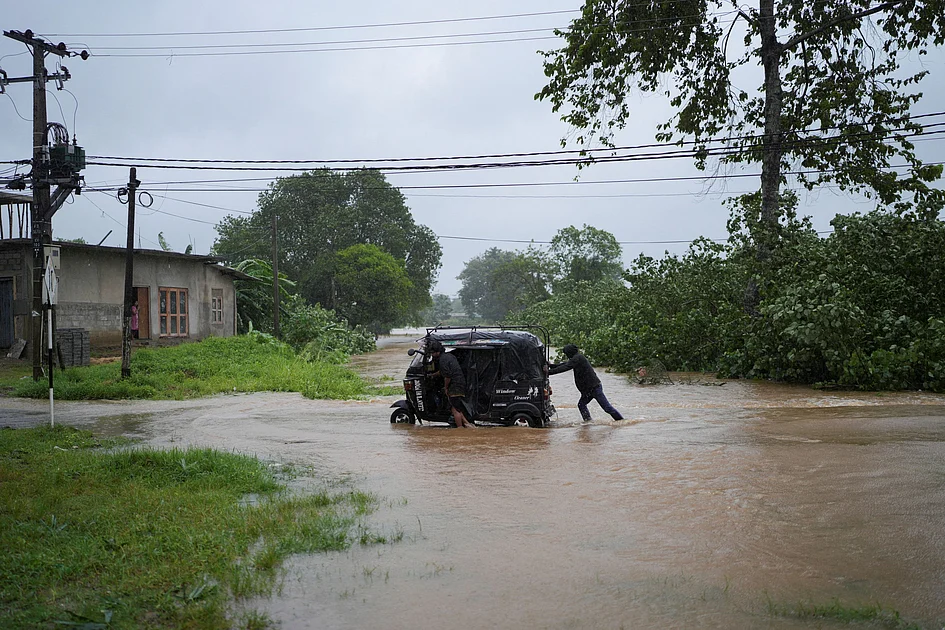
China is intensifying efforts to secure its autumn grain harvest, a critical component of the nation’s annual grain production, despite adverse weather conditions affecting several regions. According to the Ministry of Agriculture and Rural Affairs, over 60% of the autumn grain crops have already been harvested. Autumn grains typically constitute approximately 75% of the country’s total annual grain output. The harvest progress varies by crop type, with 70% of mid-season rice, 50% of corn, and 80% of soybeans already collected. Persistent rainfall since September has posed significant challenges, prompting both central and local governments to implement urgent measures. These include accelerated funding support to expedite the harvest process. The Ministry of Finance has allocated 484 million yuan (approximately $68 million) from the central budget to aid agricultural disaster prevention and relief efforts, particularly in seven provinces: Hebei, Shanxi, Jiangsu, Anhui, Shandong, Henan, and Shaanxi. These funds will support the use of agricultural machinery, drying damp grains, and draining waterlogged farmlands. Vice-Premier Liu Guozhong has emphasized the need for coordinated efforts to ensure a successful harvest, including the timely drying of grains to prevent spoilage. Concurrently, Chinese authorities are promoting food security awareness through themed activities during World Food Day, encouraging the public to reduce food waste. Recent years have seen campaigns like ‘clean your plates’ gain traction, fostering a culture of food conservation. Government data highlights China’s robust food security during the 14th Five-Year Plan period (2021-2025), with annual grain output consistently exceeding 650 million tonnes. In 2024, grain output surpassed 700 million tonnes for the first time, with per capita grain possession reaching 500 kilograms, well above the international food security benchmark of 400 kilograms. Liu Huanxin, head of the National Food and Strategic Reserves Administration, affirmed China’s self-sufficiency in grains and absolute security in staple foods. Additionally, China is enhancing international cooperation in agriculture, sharing expertise with developing nations through technology exchanges, joint research, and training programs, thereby contributing to global food security.
作者: admin
-

Giorgio Armani group names luxury veteran and longtime manager Giuseppe Marsocci as new CEO
The Armani fashion house announced on Thursday the appointment of Giuseppe Marsocci as its new Chief Executive Officer, marking a pivotal moment for the iconic Italian brand following the passing of its founder, Giorgio Armani, last month at the age of 91. Marsocci, a seasoned luxury industry executive with 23 years of experience in top roles within the Armani group, steps into the leadership role during a critical juncture for the company, one of Italy’s most valuable and globally recognized fashion empires.
-

From streets to forever homes: UAE residents rescue pets, turn strays into family
Across the United Arab Emirates, a growing number of residents are transforming the lives of abandoned animals by providing them with care, shelter, and a place to call home. From pigeons to kittens, these once-stray animals are now cherished members of families, thanks to the compassion of their rescuers. One such story is that of Boots, a pigeon rescued by Tiffany Dickinson in Dubai. Found struggling on a pavement, Boots was diagnosed with a neurological virus that left her unable to survive in the wild. Today, she thrives in Tiffany’s apartment, enjoying showers, short flights, and even her own Instagram page. Boots’ story is just one of many. Shirin Zemmo and her husband rescued two newborn kittens left in a crate near their Arjan building. Initially planning to care for them temporarily, the couple soon found themselves inseparable from the affectionate felines. Similarly, Natasha D’Souza, a long-time animal rescuer, has opened her home to multiple cats over the years, including senior cats Boney and Mindy, and more recent additions like Rosie and Ruby. These heartwarming tales highlight a broader trend in the UAE, where residents are stepping up to address the plight of abandoned animals, turning strays into beloved family members.
-

Nestle to cut 16,000 jobs worldwide over next two years, says CEO
Nestle, the global leader in packaged foods, has unveiled plans to eliminate 16,000 jobs worldwide over the next two years as part of a broader strategy to enhance operational efficiency and drive sales growth. The announcement was made by newly appointed CEO Philipp Navratil during a press briefing on Thursday. Navratil, who previously headed Nespresso, assumed the role following the abrupt departure of his predecessor, Laurent Freixe, in September due to undisclosed personal misconduct. Despite the organizational upheaval, Nestle reported a 1.5% increase in real internal growth (RIG) for the third quarter, significantly surpassing analysts’ expectations of a 0.3% rise. This growth was attributed to strong performance in coffee and confectionery segments, driven by strategic pricing adjustments. The job cuts will include 12,000 white-collar positions and an additional 4,000 roles in manufacturing and supply chain operations. Nestle, which employs approximately 277,000 people globally, has faced mounting investor pressure amid rising costs, increasing debt levels, and a declining share price. The company, known for iconic brands such as KitKat, Nespresso, and Maggi, is striving to revitalize its sales momentum and regain market confidence. The restructuring initiative marks a pivotal moment for Navratil as he seeks to establish his leadership and steer Nestle toward sustainable growth.
-

EU sets 2027 target for anti-drone system to defend against Russia
The European Union is ramping up its defence capabilities in response to escalating tensions with Russia, as outlined by EU foreign policy chief Kaja Kallas. Speaking in Brussels, Kallas emphasized that the threat to Europe would persist even after the conclusion of the war in Ukraine. The EU’s comprehensive ‘defence roadmap’ aims to establish a fully operational anti-drone system by the end of 2027 and achieve full defence readiness by 2030. This initiative includes strengthening the EU’s eastern borders and developing European air and space ‘shields’ to counter potential Russian aggression. Kallas highlighted the transformative role of drones in modern warfare, stating that robust drone defences are now essential for all nations. The plan also calls for closing critical capability gaps in air and missile defence through joint development and procurement among member states. European Defence Commissioner Andrius Kubilius underscored the roadmap’s milestones, which are designed to deter Russian aggression, prevent conflict, and maintain peace. The EU’s executive Commission stressed the need for the 27-member bloc to be prepared to respond to high-intensity crises by 2030. The proposal, which requires approval at an upcoming leaders’ summit, has already garnered support from several EU states for a multi-layered ‘drone wall’ to detect, track, and destroy Russian drones. Recent incursions into the airspace of NATO members Poland, Romania, and Estonia have further heightened tensions, with experts suggesting that Russia is testing NATO’s resolve and attempting to sow discord within the alliance. In response, NATO members have bolstered their eastern flank with troops, artillery, and air defence systems. While no cost estimates were provided, Kubilius assured that the investments would not reach ‘hundreds of billions.’ The EU’s defence projects will be closely coordinated with NATO to avoid duplication of efforts.
-

Abu Dhabi’s Zayed National Museum to open on December 3, ticket sales begin
Abu Dhabi’s much-anticipated Zayed National Museum is set to open its doors on December 3, 2025, marking a significant milestone in the UAE’s cultural landscape. Located in the Saadiyat Cultural District, the museum is a tribute to the legacy of Sheikh Zayed bin Sultan Al Nahyan, the founding father of the UAE, and his enduring commitment to cultural heritage, education, and national identity. Designed by renowned architect Lord Norman Foster, the museum’s innovative design features five steel structures inspired by the wings of a falcon, symbolizing a key aspect of Emirati culture. The museum offers a journey through the UAE’s history, from ancient artifacts like a 300,000-year-old stone tool discovered in Al Ain to the life and values of Sheikh Zayed. Ticket sales have commenced, with adult tickets priced at Dh70, while minors, senior Emiratis, residents, people of determination, and journalists on assignment can enter free of charge. Students and teachers can avail discounted tickets for Dh35. The museum’s opening reaffirms Abu Dhabi’s position as a global hub for culture and learning.
-

Seychelles’ president-elect set to halt tourist development on tiny island
Patrick Herminie, the president-elect of Seychelles, has pledged to suspend the construction of a contentious luxury resort funded by Qatar on Assumption Island, an ecologically sensitive area. In an interview with the BBC, Herminie, who is set to assume office on October 26, criticized the current agreement as ‘unacceptable,’ stating that Seychelles received minimal benefits from the deal. The resort project, managed by the Qatari investment firm Assets Group, includes 40 luxury villas and an upgraded airstrip for executive jets. Environmental activists have raised concerns over the potential ecological damage to Assumption Island, which serves as a gateway to the Aldabra atoll, a UNESCO World Heritage site renowned for its unique biodiversity. The issue became a focal point during last month’s presidential election, with Herminie defeating incumbent Wavel Ramkalawan in a runoff. Ramkalawan had defended the project, emphasizing the need for foreign investment. Herminie plans to halt the project, engage with investors, and address environmental concerns, ensuring that only existing structures remain.
-

The EU unveils a plan to be ready within 5 years to fend off any Russian attack
In response to escalating concerns over potential security threats, the European Union has introduced a robust defense strategy aimed at fortifying the continent against external attacks by the end of the decade. The plan, announced on Thursday, comes amid growing apprehensions that Russia is actively testing Europe’s defenses. A central component of this initiative is the European Drone Defense Initiative, designed to detect, track, and neutralize unauthorized drones following a series of alarming airspace violations across Europe, particularly near borders with Russia, Belarus, and Ukraine. This initiative is part of a broader framework called Eastern Flank Watch, which seeks to enhance defenses along Europe’s eastern borders, including land, sea, and air domains, as well as counter hybrid threats. The drone defense system is expected to be fully operational by late 2027, with Eastern Flank Watch reaching full capacity by the end of 2028. Additionally, the EU plans to develop separate air and space defense shields. EU foreign policy chief Kaja Kallas emphasized the urgency of bolstering European defense capabilities, stating that while Russia currently lacks the capacity to attack the EU, the threat remains persistent even if the Ukraine conflict ends. The European Commission’s Defense Readiness Roadmap 2030, set to be presented to EU leaders next week, outlines a comprehensive checklist of equipment procurement and deadlines for member states. The plan calls for significant funding, with EU defense spending projected to reach 3.4 trillion euros ($4 trillion) over the next decade. A key aspect of the roadmap is fostering collaboration among member states, with at least 40% of military purchases to be conducted jointly by 2027. The EU also aims to provide security guarantees for Ukraine, recognizing its role as Europe’s first line of defense. Kallas highlighted the goal of establishing a drone alliance with Ukraine by early next year, underscoring the importance of a strong Ukrainian defense industry and military.
-

Microsoft: Russia, China increasingly using AI to escalate cyberattacks on the US
A recent report by Microsoft reveals a significant surge in the use of artificial intelligence (AI) by adversarial nations and criminal entities to orchestrate cyberattacks and disseminate disinformation. The findings, published in Microsoft’s annual digital threats report, highlight over 200 instances of AI-driven fake content creation in July alone—a stark increase compared to previous years. Russia, China, Iran, and North Korea are at the forefront of this trend, leveraging AI to automate cyberattacks, craft convincing phishing emails, and even generate digital clones of high-ranking officials. These tactics are employed to infiltrate sensitive systems, disrupt critical services, and spread inflammatory disinformation. Amy Hogan-Burney, Microsoft’s Vice President for Customer Security and Trust, emphasized the urgent need for robust cybersecurity measures as attackers increasingly target governments, businesses, and vital infrastructure like hospitals and transportation networks. Despite the escalating threats, many U.S. organizations continue to rely on outdated defenses. The U.S. remains the primary target for cyberattacks, followed by Israel and Ukraine, reflecting the spillover of geopolitical conflicts into the digital domain. While adversarial nations deny their involvement in cyber espionage, evidence suggests otherwise. North Korea, for instance, has pioneered the use of AI personas to create fake American identities, enabling hackers to infiltrate remote tech jobs and steal sensitive data. Nicole Jiang, CEO of Fable, a San Francisco-based security firm, underscored the dual role of AI in both enabling cyberattacks and defending against them. As AI continues to evolve, the digital landscape is poised for an intensified cat-and-mouse game between attackers and defenders.
-

Magnitude 6.5 earthquake strikes Indonesia’s Papua
A significant earthquake measuring 6.5 on the Richter scale struck the eastern Indonesian province of Papua on Thursday, according to the United States Geological Survey (USGS). The seismic event occurred at approximately 2:48 PM local time (0548 GMT), with its epicenter located roughly 200 kilometers (125 miles) from Jayapura, the provincial capital. The quake originated at a depth of 35 kilometers. Despite the substantial magnitude, no tsunami warning was issued, and there have been no immediate reports of damage or casualties. Papua, a region known for its seismic activity due to its position along the Pacific Ring of Fire, frequently experiences earthquakes. The USGS continues to monitor the situation, and local authorities are assessing the impact on affected areas. This event serves as a reminder of the region’s vulnerability to natural disasters and the importance of preparedness in earthquake-prone zones.