作者: admin

  • The ICC removed Karim Khan from his own investigation in Venezuela. Now Israel wants it to do the same over Gaza

    The ICC removed Karim Khan from his own investigation in Venezuela. Now Israel wants it to do the same over Gaza

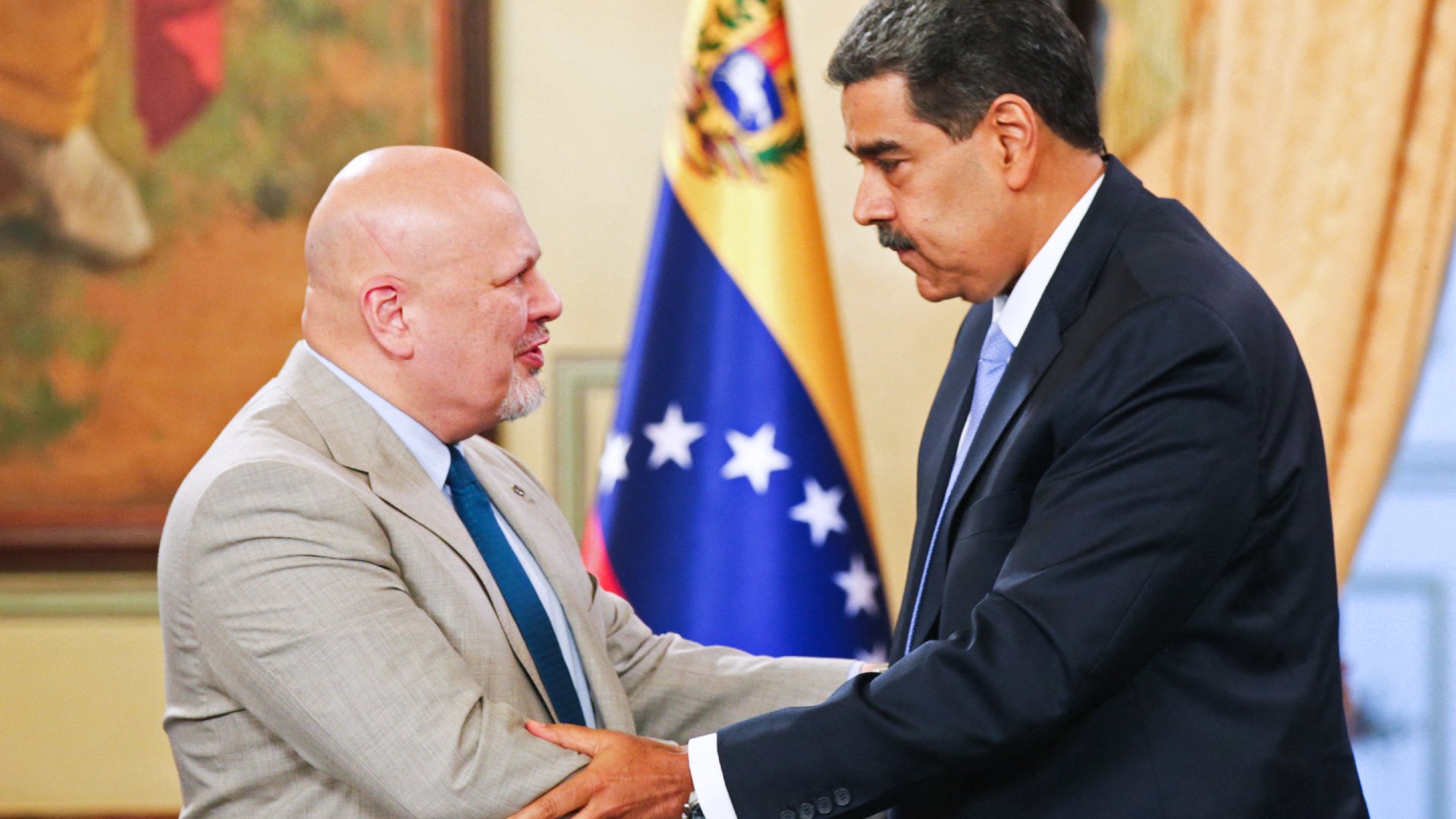
    A Washington-based advocacy group that previously secured the recusal of International Criminal Court (ICC) Chief Prosecutor Karim Khan from a Venezuela investigation has now accused him of ‘acting in unprecedented haste’ in pursuing arrest warrants against Israeli leadership. The Arcadia Foundation, recognized by the ICC as representing Venezuelan victims, successfully challenged Khan’s impartiality in August based on familial connections to Venezuela’s legal team, creating a precedent that Israel now seeks to leverage in its own case against the prosecutor.

    The ICC’s appeals chamber, comprising the same five judges who ordered Khan’s recusal in the Venezuela matter, is currently reviewing Israel’s November complaint seeking his removal from investigations into Israeli officials. Israel’s submission argues that Khan’s impartiality might ‘reasonably be doubted’ due to allegations that his pursuit of warrants against Prime Minister Benjamin Netanyahu and Defense Minister Yoav Gallant was motivated by a desire to deflect attention from sexual misconduct allegations—claims Khan vehemently denies.

    Robert Carmona-Borjas, Arcadia’s CEO, told Middle East Eye that their challenge was ‘strictly juridical and institutional’ rather than a personal campaign or geopolitically motivated action. He emphasized demands for ‘consistency in the application of its own law and ethical standards’ from the court.

    The Prosecutor’s Office, in its response signed by Deputy Prosecutor Nazhat Shameem Khan, dismissed Israel’s complaint as without standing and argued the Venezuela and Israel cases were ‘incomparable.’ The office maintained that the decision to seek warrants followed ‘a robust review process and analysis of the evidence’ and was independently assessed by ICC judges.

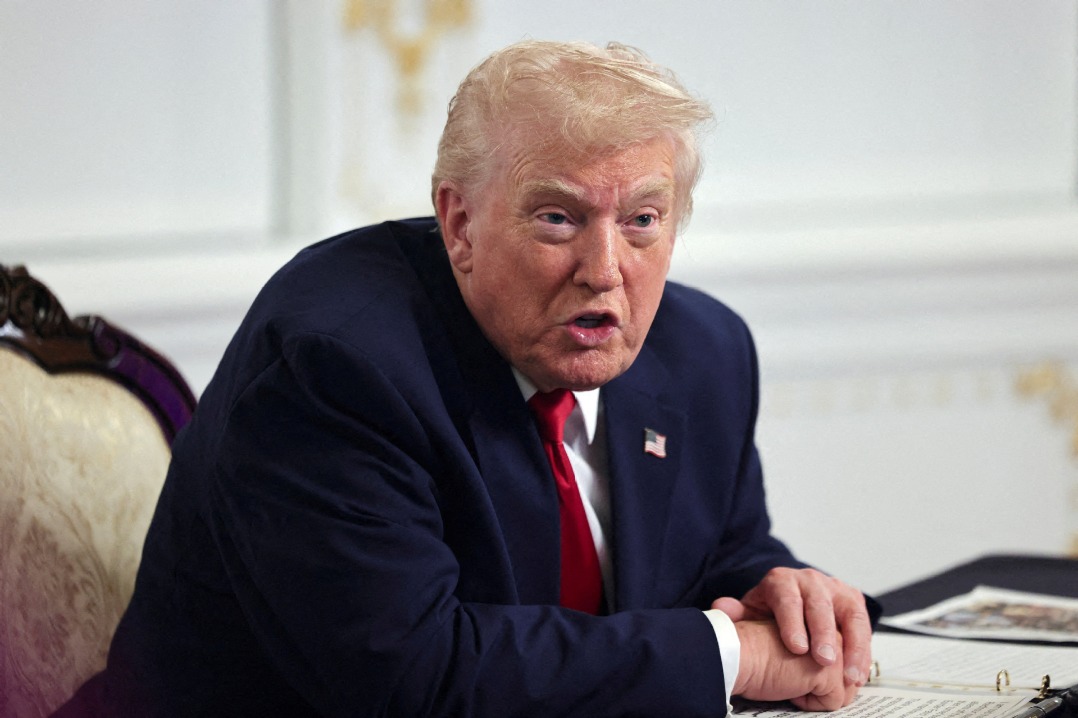
    This legal battle unfolds against a backdrop of intense external pressure on the ICC, including U.S. sanctions against Khan and other court officials. The Trump administration has imposed measures against ICC personnel, accusing the court of ‘illegitimate actions’ targeting Israel and the United States. During the ICC’s annual meeting in The Hague, numerous countries condemned such external pressure without explicitly naming the U.S., while some urged serious consideration of the misconduct allegations against Khan.

    Legal experts familiar with the case have characterized Israel’s complaint as ‘frivolous,’ noting that Khan actually delayed the warrant process rather than accelerated it. An investigation revealed that Khan’s decision to apply for warrants predated the misconduct allegations by six weeks, undermining claims of ulterior motives.

  • Dell family to seed Trump accounts for kids with $250

    Dell family to seed Trump accounts for kids with $250

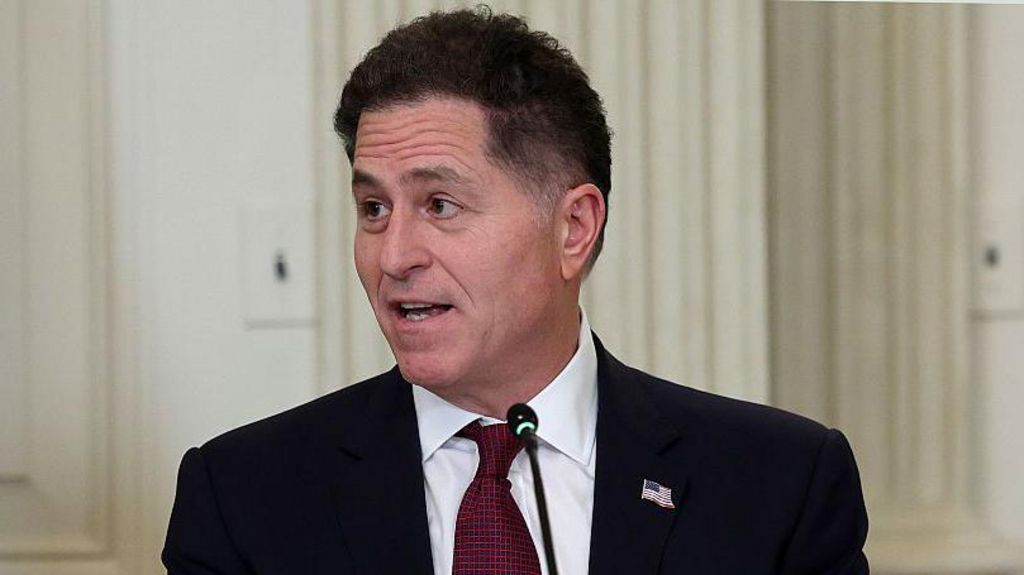
    In an unprecedented move within American philanthropy, technology magnate Michael Dell and his spouse Susan have pledged a monumental $6.25 billion donation. This initiative will directly benefit approximately 250 million children across the United States by providing seed funding for newly created investment accounts.

  • Palestinians evacuated from Gaza face tough adjustment in Greece

    Palestinians evacuated from Gaza face tough adjustment in Greece

    ATHENS – Palestinian adolescents evacuated from the Gaza conflict zone confront profound physical and psychological hurdles as they attempt to reconstruct their lives in Greece, where governmental support remains inconsistent despite widespread public solidarity.

    Raghad Al Fara, 15, navigates her new existence in Athens on crutches, her body bearing the scars of an Israeli bombardment in Khan Younis that crushed her right leg and back beneath rubble. Evacuated with her mother and younger sister in February while the rest of her family remains in Gaza, she resides in a women’s refugee shelter, still awaiting comprehensive psychological care. “I never thought I would survive, let alone set foot on European soil,” Raghad stated.

    According to Heracles Moskoff, Secretary General for Vulnerable Persons at Greece’s migration ministry, Raghad is among ten Gazan minors suffering from complex orthopedic and psychological injuries. Her mother, Shadia Al Fara, expressed frustration with the support system, noting her daughter bedwetted for months due to trauma and that families receive no financial assistance. “Greece took responsibility for us but then abandoned us,” she lamented.

    Conversely, 20-year-old Sara Al Sweirki represents a more hopeful narrative. Evacuated in September, she will commence psychology studies at the private Deree American College of Greece in January, aiming to help others overcome trauma. “I want to be a girl my age like others, learn guitar and piano, and study,” Al Sweirki emphasized. “My dream was interrupted after October 7. But now I am more determined than ever to pursue my goal.”

    The Greek government’s approach appears contradictory to public sentiment. A recent study by aboutpeople revealed 74% of Greeks support recognizing Palestinian statehood, reflecting heightened solidarity following Israel’s military tactics in Gaza. This public stance contrasts with the conservative government’s position, which Palestinian official Latif Darwesh states lacks “political will” to host more injured Gazans despite community requests.

    Historically, Greece maintained strong ties with Palestine under socialist leader Andreas Papandreou in the 1980s, when many Palestinian students found refuge there. Today, evacuees face an uncertain future, balancing gratitude for evacuation against concerns about long-term stability and family members left behind in what Shadia Al Fara describes as “hell.”

  • Trump weighs options on Venezuela after Maduro reportedly refuses to step down

    Trump weighs options on Venezuela after Maduro reportedly refuses to step down

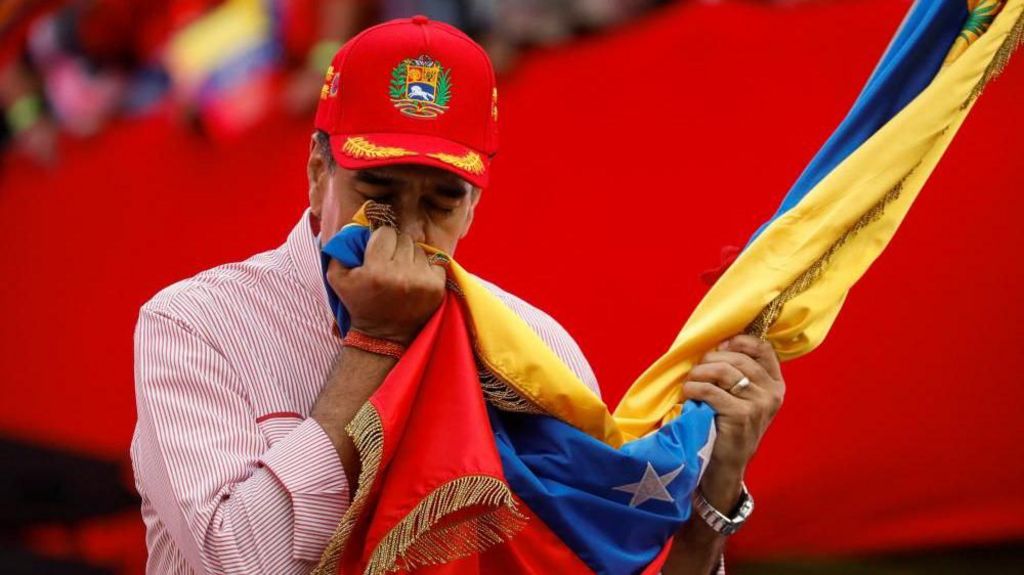
    The White House is evaluating potential military options against Venezuela following President Nicolás Maduro’s refusal to comply with a U.S. ultimatum demanding his resignation. President Donald Trump convened with senior national security advisors Monday evening to deliberate next steps, including the possibility of ground operations.

    According to multiple media reports, Trump issued a direct deadline during a November 21st phone conversation, requiring Maduro to relinquish power and depart the oil-rich nation with his family by last Friday. The Venezuelan leader reportedly rejected these demands, instead requesting comprehensive global amnesty for himself and associates, alongside maintained control of military forces.

    Trump confirmed the unprecedented diplomatic exchange occurred, offering limited commentary: “I wouldn’t say it went well or badly, it was a phone call.” The Miami Herald reported Trump delivered a “blunt message” emphasizing immediate resignation as Maduro’s sole pathway to safety for himself and his inner circle.

    This diplomatic confrontation unfolds alongside significant U.S. military mobilization in the Caribbean region. Approximately 15,000 troops and a dozen warships have deployed to waters bordering Venezuela—the largest such buildup in over three decades. Since September, U.S. forces have conducted at least 21 documented strikes against vessels suspected of narcotics trafficking, resulting in numerous casualties.

    Defense Secretary Pete Hegseth has defended these operations as “lawful,” despite allegations regarding excessive force, including a September incident where military personnel reportedly received orders to “kill everyone” aboard a targeted vessel.

    While Trump hinted during Thanksgiving addresses that land-based anti-trafficking operations could commence “very soon,” analysts remain skeptical about actual invasion prospects. Michael O’Hanlon of the Brookings Institution noted presidential temptation toward regime change in nearby nations but expressed doubt regarding genuine invasion intentions. Saint Anselm College professor Christopher Galdieri highlighted the administration’s failure to build public consensus for intervention, contrasting it with the extensive campaigning preceding the 2003 Iraq invasion. Galdieri further questioned the credibility of using narcotics enforcement as primary justification, noting the contradiction with Trump’s previous non-interventionist foreign policy rhetoric.

  • Glenn Maxwell rules himself out of IPL 2026 auctions

    Glenn Maxwell rules himself out of IPL 2026 auctions

    Australian cricket all-rounder Glenn Maxwell has announced his decision to withdraw from the upcoming Indian Premier League (IPL) 2026 player auctions, marking the conclusion of his remarkable 13-season tenure in the world’s premier T20 competition. The 37-year-old explosive batter made his declaration via an official statement on Instagram, expressing profound gratitude for the league’s role in his professional development.

    The announcement follows a challenging final season with Punjab Kings, who acquired Maxwell for 42 million rupees ($467,000) only to witness modest returns of 48 runs and four wickets across seven appearances. The franchise subsequently released the veteran player in November 2025.

    In his emotional farewell, Maxwell reflected on his IPL journey: “It’s a big call, and one I make with a lot of gratitude for everything this league has given me. The IPL has helped shape me as a cricketer and as a person. I’ve been lucky to play with world-class teammates, represent incredible franchises, and perform in front of fans whose passion is unmatched.”

    Maxwell’s departure coincides with other high-profile exits from the 2026 season. Former South African captain Faf du Plessis has opted to participate in the Pakistan Super League, while West Indies powerhouse Andre Russell has transitioned to a coaching role with Kolkata Knight Riders.

    The IPL 2026 player auctions are scheduled for December 16th in Abu Dhabi, where franchises will assemble their squads without one of the league’s most dynamic historical performers.

  • Why is Trump threatening Venezuela’s Maduro?

    Why is Trump threatening Venezuela’s Maduro?

    The Trump administration has significantly intensified its campaign against Venezuelan President Nicolás Maduro through military, diplomatic, and economic measures. In recent developments, the United States has doubled the monetary reward for information leading to Maduro’s capture while deploying substantial naval assets to the Caribbean region.

    This strategic military mobilization represents the largest U.S. force presence in the area since the 1989 invasion of Panama. The deployment includes 15,000 troops, aircraft carriers, guided-missile destroyers, and amphibious assault ships. Officially designated as a counter-narcotics operation, the mission has already conducted more than 20 strikes on vessels suspected of drug trafficking in international waters, resulting in over 80 casualties.

    The administration has characterized these actions as part of a ‘non-international armed conflict’ with drug traffickers, labeling targeted individuals as ‘narco-terrorists.’ However, international legal experts have questioned the legality of these strikes, with a former International Criminal Court prosecutor describing the campaign as ‘a planned, systematic attack against civilians during peacetime.’

    President Trump has personally engaged with the situation, confirming a November 21st phone conversation with Maduro. While Trump has not disclosed specific details, reports indicate he delivered an ultimatum for Maduro to leave Venezuela within one week. Following the expiration of this deadline, Trump declared the airspace around Venezuela closed to all traffic.

    The administration justifies its aggressive stance by citing Venezuela’s role in drug trafficking and migration patterns. Trump has accused Maduro of ’emptying his prisons and insane asylums’ to force migrants toward the U.S., though these claims remain unsubstantiated. Additionally, the U.S. has designated two Venezuelan criminal groups—Tren de Aragua and Cartel de los Soles—as Foreign Terrorist Organizations, with Trump alleging Maduro personally leads the latter.

    Maduro has vehemently denied these accusations, countering that the U.S. is using the ‘war on drugs’ as a pretext to orchestrate regime change and gain access to Venezuela’s substantial oil reserves. Meanwhile, regional analysts note that Venezuela primarily serves as a transit country for drugs produced elsewhere, with most cocaine reaching the U.S. via Pacific routes rather than Caribbean channels.

    The White House has not ruled out ground operations in Venezuela, with Trump’s press secretary acknowledging that ‘there’s options at the president’s disposal that are on the table.’ Military analysts observe that the current deployment far exceeds what would be necessary for purely counter-narcotics operations, suggesting broader strategic objectives may be underway.

  • ‘Time for a deal’ say some Ukrainians escaping war-ravaged Donbas

    ‘Time for a deal’ say some Ukrainians escaping war-ravaged Donbas

    In Ukraine’s war-torn Donetsk region, the cessation of rail services stands as a stark symbol of Russia’s relentless advance. With trains now terminating west of the Donetsk border, civilians and soldiers congregate at the final station, awaiting transport toward relative safety—a literal train out of the conflict zone. This development coincides with Vladimir Putin’s increasingly assertive posture following leaked U.S. peace proposals, which many interpret as aligning with his maximalist territorial demands. Ukrainian President Volodymyr Zelensky acknowledges that territorial sovereignty remains the most contentious issue in U.S.-led peace discussions.

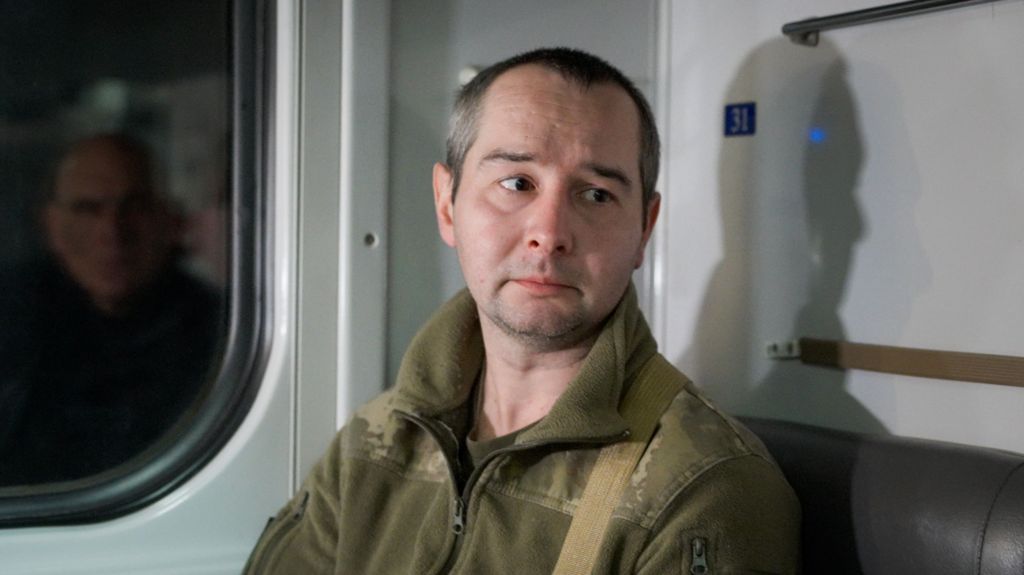
    At the terminal station, soldier Andrii shares a poignant farewell with his girlfriend Polina before returning to the frontlines. When questioned about peace negotiations—which have involved Donald Trump’s envoys engaging with Ukrainian officials before Moscow visits—Andrii dismisses them as mere ‘chatter.’ His skepticism is echoed by fellow soldier Denys, who vehemently opposes ceding Donbas to Russia in any peace agreement.

    Russian forces currently control approximately 85% of the Donbas region, comprising Luhansk and Donetsk. Their recent claim of capturing Pokrovsk—a strategic Donetsk hub—was countered by Ukrainian assertions that combat persists in the area. Soldiers boarding westbound trains for their 20-day leave exhibit profound exhaustion, with many immediately succumbing to sleep. Denys, a two-year army veteran, describes universal fatigue: ‘Everyone’s drained, everyone’s tired mentally and physically.’ His unit has been engaged in the besieged city of Kostyantynivka, where he characterizes drone presence as being ‘like flies.’ Despite the terror, he emphasizes their refusal to surrender after immense sacrifices: ‘Nobody will give Putin the Donbas. No way, it’s our land.’

    The potential cession of Donetsk’s ‘fortress belt’ cities—Slovyansk, Kramatorsk, and Druzhkivka, home to over 250,000 Ukrainians—proves unacceptable to most citizens. While Russia has spent over a year attempting to capture Pokrovsk, U.S. assessments indicate Ukraine is both outnumbered and outgunned.

    Civilian evacuation from Donbas continues unabated during peace talks. Dozens of refugees arrive daily at the Lozova border reception center, exploiting foggy conditions that reduce drone visibility. Approximately 200 displaced persons receive basic supplies and financial assistance each day. Among them, Yevheniy and Maryna escaped Kramatorsk with their two children due to escalating drone threats. Maryna recounts: ‘It’s getting harder to even go outside. Everything is dangerous—even going to the shop, you might not come back.’ While the family plans to relocate to Kyiv, Yevheniy expresses pessimism about negotiations: ‘That side [Russia] won’t agree to our terms.’

    Conversely, some civilians demonstrate willingness to exchange territory for peace. Oleksandr, whose children already relocated to Germany, acknowledges Russia’s demands as ‘probably unacceptable’ yet contemplates territorial compromise. He states: ‘Personally I would agree to those terms,’ referencing the leaked U.S. draft proposing de facto Russian control over Ukrainian-held Donbas areas. Inna, evacuating with five children aged nine months to 12 years, concurs: ‘The main thing is that there will be peace.’ She had previously disguised explosions as fireworks while sheltering in their cellar.

    Desertion rates further complicate Ukraine’s military position. Nearly 300,000 cases of desertion or unauthorized absence have occurred since Russia’s full-scale invasion began, with numbers rising dramatically over the past year. ‘Serhii’ (pseudonym), who volunteered initially, deserted in May after his understrength, poorly equipped battalion faced chaos near Pokrovsk. He claims most unit members were forcibly mobilized—’taken off the street’—and lacked proper training or leadership. Although considering rejoining the army, Serhii echoes U.S. assessments of Ukraine’s disadvantage: ‘A country of 140 million against us with 32 million—logically it doesn’t add up.’

  • Protecting pristine NW China plateau lake from waste

    Protecting pristine NW China plateau lake from waste

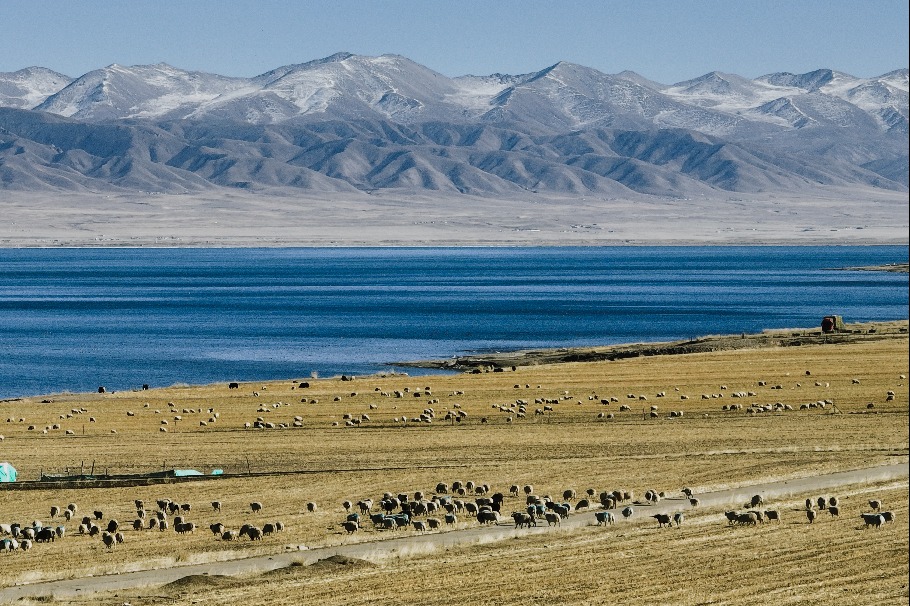
    On the windswept Qinghai-Tibet Plateau, herder Sonam Tsering recalls when winter gales transformed his pastures into plastic wastelands. “It was heartbreaking to see my pasture littered with plastic bags,” said Tsering from Gangcha county, noting the lethal threat to livestock that accidentally ingested the debris. Today, his reality has transformed dramatically through a simple phone call that ensures prompt waste collection.

    This change stems from a fundamental shift in waste management strategies around Qinghai Lake, one of the world’s highest plateau lakes and a crucial ecological barrier for Northwest China. For two decades, more than ten landfills occupying over 500,000 square meters have processed household waste in ecologically sensitive grasslands and valleys. The plateau’s extreme cold and low oxygen levels severely delayed natural degradation, while seasonal winds scattered plastic waste across fragile ecosystems.

    In 2023, Qinghai province launched its first large-scale waste-to-energy facility in Xining, triggering a systematic overhaul. Counties surrounding the lake now collect and transport waste through township and county-level networks to Xining for incineration. Between June 2024 and May 2025, nearly 30,000 tonnes of waste made this journey in approximately 2,000 truckloads.

    The incineration process operates at temperatures exceeding 850°C, effectively breaking down harmful substances through fermentation and high-temperature combustion. “Flue gas undergoes rigorous treatment through de-acidification, absorption and dust removal processes,” explained Wang Yongpeng, head of the Xining project, ensuring emissions meet environmental standards. The process has additionally generated approximately 15 million kilowatt-hours of electricity.

    This waste management transformation coincides with remarkable ecological recovery. Qinghai Lake has experienced expanding water levels for twenty consecutive years, with satellite data from September 2024 recording a surface area of 4,650.08 square kilometers. Biodiversity has flourished alongside these conservation efforts.

    China’s national waste management paradigm has shifted dramatically from landfill dependence to advanced incineration. Over 1,000 large-scale incineration plants now process more than 1.1 million tonnes daily nationwide—equivalent to filling 440 Olympic-sized swimming pools. The Qinghai Lake initiative provides a pioneering model for waste disposal in high-altitude, low-oxygen environments globally.

  • ‘No work, no money’: Somali migrants in Yemen long to return home

    ‘No work, no money’: Somali migrants in Yemen long to return home

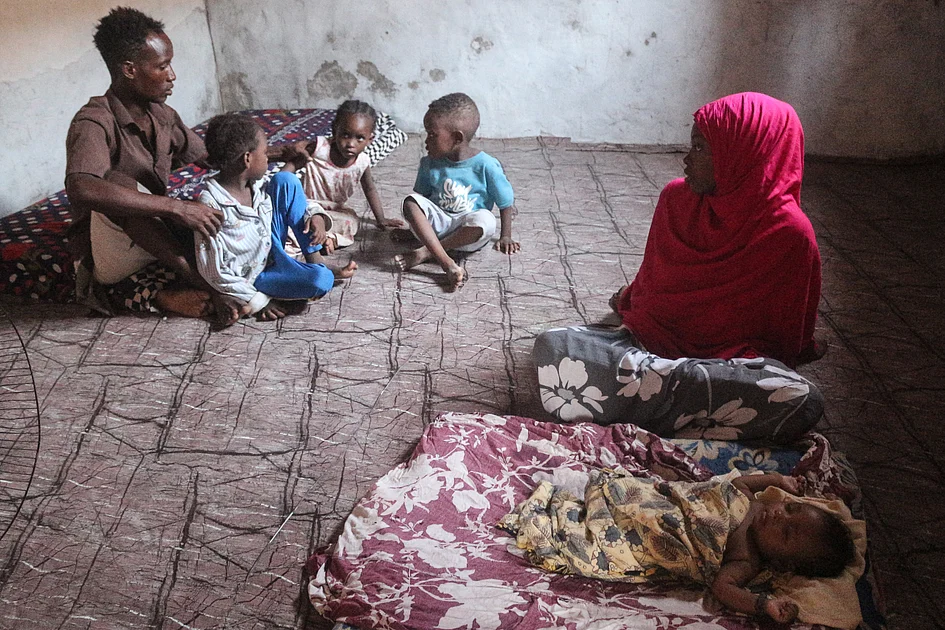
    In the sprawling settlement known as ‘Little Mogadishu’ within Yemen’s port city of Aden, thousands of Somali migrants endure crushing poverty amidst makeshift shelters surrounded by garbage piles and unpaved roads. These displaced individuals, who initially envisioned Yemen as a transit point toward prosperous Gulf states, now find themselves trapped in a worsening humanitarian catastrophe.

    Yemen, recognized as the Arabian Peninsula’s most impoverished nation, has become an unintended destination rather than a thoroughfare for African migrants. Despite the country’s own devastating civil war that has claimed hundreds of thousands of lives and decimated infrastructure, approximately 17,000 Africans arrived in Yemen in October 2025 alone—representing a startling 99 percent increase from previous months according to United Nations data.

    The reality for these migrants stands in stark contrast to their aspirations. Somali refugees, who constitute 63 percent of Yemen’s 61,000 registered refugees and asylum seekers, face extreme hardship with limited access to employment, education, or basic necessities. Men line roadways daily seeking temporary work, while many resort to scavenging through refuse heaps for edible items to sustain their families.

    Abdullah Omar, a 29-year-old Somali father of four, exemplifies this struggle. Having invested $500 with human traffickers to escape Somalia’s instability, he now survives on occasional car washing jobs that yield mere dollars per day. ‘Some days we eat, some days it’s up to God. That’s life,’ Omar told journalists, explaining his decision to enroll in a UN repatriation program after finding ‘no work, no money, and no schooling for the children.’

    The UN Refugee Agency reports that 56 percent of returning Somalis cite ‘lack of income opportunities’ in Yemen as their primary reason for repatriation. A voluntary return program provides transportation and transitional financial assistance, having facilitated the return of over 500 Somalis in 2025 with additional flights planned.

    Ahmed Abu Bakr Marzouk, a 58-year-old contractor who lived in Yemen for 25 years, represents another dimension of this crisis. Once prosperous enough to build homes in Mogadishu, he now sees returning to Somalia’s relative stability as his only option. ‘If peace returns, I’ll come back,’ Marzouk stated. ‘If not, I won’t.’

    This migration paradox continues despite Yemen’s overwhelming challenges: 19.5 million people requiring humanitarian assistance, mass unemployment, currency depreciation, halted oil exports, and insufficient international funding create an environment where neither locals nor migrants can thrive.

  • Large quantities of German ammunition stolen from lorry

    Large quantities of German ammunition stolen from lorry

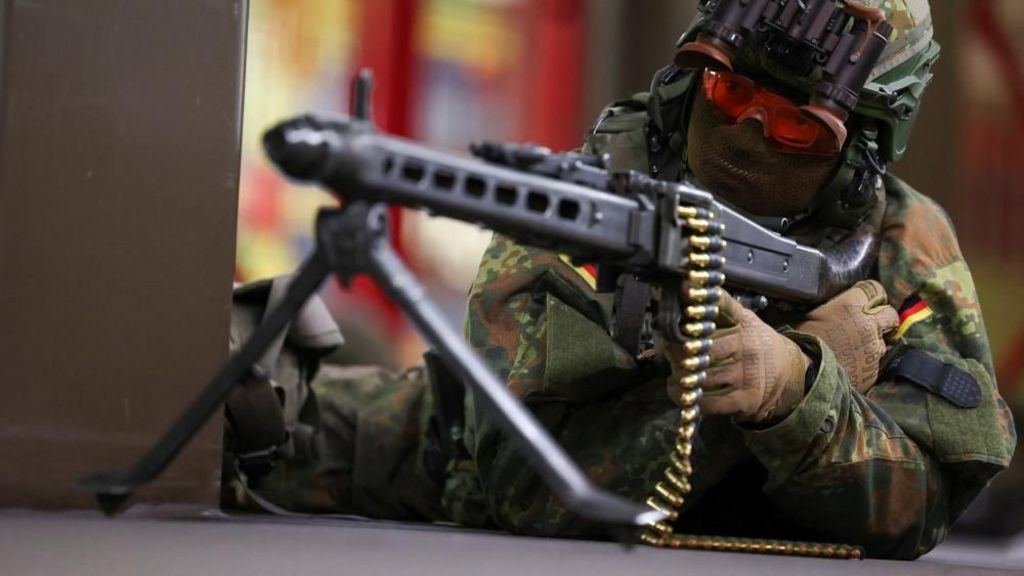
    German authorities are investigating a significant security breach after approximately 20,000 rounds of military ammunition were stolen from a delivery truck in the eastern town of Burg. The theft occurred on November 25th when a civilian transport driver contracted by Germany’s Bundeswehr left his vehicle unattended in an unguarded parking lot overnight.

    According to defense ministry officials speaking to DPA news agency, the missing shipment included 10,000 rounds of live pistol ammunition, 9,900 blank assault rifle cartridges, and smoke grenades. The discovery was made the following day when the truck arrived at its destination, the Clausewitz Barracks, with the cargo compartment compromised.

    The incident has raised serious security concerns within German defense circles about the potential misuse of the stolen materials. ‘We take the theft very seriously – this kind of ammunition must not fall into the wrong hands,’ a defense ministry representative told German media outlets.

    An ongoing joint investigation between military police and civilian authorities is examining why the driver failed to utilize available security protocols. Public broadcaster MDR reported that specialized hotlines and military escorts were available to transport personnel but apparently not utilized in this case. The driver reportedly parked the vehicle in an unsecured area and spent the night at a nearby hotel.

    This marks the third such incident in Saxony-Anhalt region within recent months. In August, Bernburg police reported 90 missing ammunition rounds, followed by another 180 rounds disappearing in Eisleben weeks later. While no direct connections have been established between these cases, the pattern has prompted reviews of military material transport procedures.

    Defense officials have not confirmed any arrests or identified suspects in connection with the Burg theft, leaving open questions about who may have acquired the military-grade materials and for what purpose.