作者: admin

  • DPP’s RedNote ban undermines democracy and youth freedom

    DPP’s RedNote ban undermines democracy and youth freedom

    Mainland Chinese officials have issued strong condemnation against Taiwan’s Democratic Progressive Party (DPP) administration for implementing a comprehensive ban on the popular social media application RedNote (Xiaohongshu). The controversial prohibition, enacted on December 4th, 2025, mandates a full-year restriction on the platform that reportedly serves over 3 million Taiwanese users, with approximately 70% belonging to the millennial demographic.

    Chen Binhua, spokesperson for China’s State Council Taiwan Affairs Office, characterized the prohibition as politically motivated rather than security-driven during a Wednesday press briefing. While Taiwanese authorities justified the measure as necessary for combating cyber fraud and addressing security vulnerabilities, Chen dismissed these explanations as pretextual.

    “The DPP’s administrative measures represent a deliberate assault on democratic principles and digital freedoms,” Chen stated. “This action effectively denies Taiwanese citizens, particularly younger generations, their fundamental right to information access and cross-strait cultural exchange.”

    Chen emphasized the platform’s significant role in facilitating genuine understanding between mainland Chinese citizens and Taiwanese users. According to his assessment, RedNote has served as a vital channel through which Taiwanese youth could bypass what he described as government-curated information ecosystems and engage directly with mainland perspectives.

    The spokesperson further highlighted the economic repercussions of the ban, noting that numerous Taiwanese content creators and businesses reliant on RedNote for livelihood purposes now face substantial financial uncertainty.

    In a comparative analysis, Chen referenced statistical data indicating that established platforms like Facebook have documented significantly higher instances of fraudulent activity than those attributed to RedNote, questioning the consistency of the DPP’s regulatory approach.

    The spokesman concluded with a warning about the inevitable consequences of such restrictive policies, suggesting they would ultimately fail to suppress the growing desire among Taiwanese youth for meaningful connections with mainland compatriots.

  • Why the World Obsesses Over Mummies

    Why the World Obsesses Over Mummies

    A global fascination with ancient Egyptian mummies that began over a century ago continues to exert profound influence on contemporary culture and design. The 1922 discovery of Tutankhamun’s tomb, featuring the legendary golden mask that had rested undisturbed for three millennia, ignited what historians term ‘Egyptomania’ – a cultural phenomenon that transcended archaeological circles to permeate modern aesthetics.

    This enduring obsession with Egyptian antiquities has manifested across diverse creative industries. Jewelry designers incorporate scarab motifs and hieroglyphic patterns, while architectural elements echo pyramid structures and obelisk forms. Hollywood’s film industry has consistently drawn inspiration from ancient Egyptian themes, producing iconic movies that fuel public imagination about the mysterious civilization.

    What explains this sustained captivation with mummified remains from a millennia-old culture? Experts suggest that mummies represent a unique intersection of preservation and mystery, offering tangible connections to human history while maintaining an aura of the unknown. The scientific revelations from mummy studies, combined with the artistic mastery displayed in burial artifacts, create a powerful narrative that continues to resonate across generations.

    The recent release of an English-dubbed documentary episode examining this phenomenon provides fresh insights into how ancient Egyptian culture maintains its grip on the modern psyche, demonstrating that some historical discoveries never truly lose their ability to astonish and inspire.

  • Xinjiang empowers women’s dreams

    Xinjiang empowers women’s dreams

    In a demonstration of regional progress in gender equality, Xinjiang is witnessing a remarkable transformation in professional opportunities for women. The inspiring stories of Haliya Ersibek, a practicing lawyer, and Suofeiyan, a fashion designer, exemplify this shift as they successfully pursue their ambitions in both Xinjiang and China’s capital Beijing.

    Their professional journeys highlight how institutional support and equitable platforms are enabling female talent to thrive in diverse sectors. Rather than facing traditional barriers, these women are accessing unprecedented career pathways that align with their personal aspirations and professional qualifications.

    This development reflects broader social changes within the region, where educational investments and policy initiatives are creating environments conducive to women’s professional advancement. The emergence of such success stories indicates a significant evolution in gender dynamics across Xinjiang’s professional landscape.

    The growing number of young women excelling in fields ranging from legal services to creative industries suggests a structural transformation in employment patterns. This trend not only benefits individual women but also contributes to the region’s economic diversification and social modernization.

    As more women like Haliya and Suofeiyan achieve professional recognition, they create visible role models for younger generations, potentially establishing a virtuous cycle of aspiration and achievement throughout Xinjiang’s communities.

  • Canada’s ambassador to the US to step down ahead of key trade talks

    Canada’s ambassador to the US to step down ahead of key trade talks

    In a significant diplomatic development, Canada’s Ambassador to the United States Kirsten Hillman has declared her intention to resign from her position in the coming year. The announcement comes during a particularly delicate phase in Canadian-American relations, with the crucial review of the Canada-United States-Mexico Agreement (CUSMA) currently underway.

    Ambassador Hillman, who assumed her role in March 2020, communicated her decision through social media platform X on Monday evening. While acknowledging that no ideal moment exists for such transitions, she expressed confidence in the timing, stating this period allows for the establishment of a new team that will shepherd the trade agreement through its comprehensive review process.

    The veteran trade lawyer and career diplomat emphasized her continued availability to Canada’s negotiation team during the challenging months ahead. Her diplomatic tenure encompassed navigating the complex COVID-19 pandemic landscape and playing an instrumental role in securing the release of Canadian citizens Michael Kovrig and Michael Spavor from detention in China.

    Reactions to her departure have been notably positive from both sides of the border. United States Trade Representative Jamieson Greer characterized Ambassador Hillman as ‘a class act,’ while former Canadian Prime Minister Justin Trudeau praised her as ‘a real patriot who has served Canadians proudly,’ specifically acknowledging her contributions to resolving trade disputes and strengthening economic ties.

    The resignation occurs against the backdrop of substantial trade tensions initiated by President Donald Trump’s imposition of tariffs on Canadian metals, lumber, and automotive products. These measures form part of a broader protectionist policy agenda that includes a sweeping 35% tariff on all goods, though most Canadian products have remained exempt under the current trade agreement.

    Trade negotiations faced additional complications in late October when President Trump suspended talks following his objection to an anti-tariff advertisement commissioned by Ontario and broadcast in American markets. The ongoing CUSMA review process involves public hearings and stakeholder consultations, with all three nations potentially agreeing to renew, renegotiate, or allow the agreement to expire.

    While both Canadian and Mexican authorities have indicated their preference for maintaining the existing agreement, and U.S. business interests have expressed similar support during December hearings, President Trump has suggested openness to either letting the pact expire or negotiating an entirely new arrangement. Market analysts and diplomatic observers are closely monitoring the situation, as the outcome will significantly impact North American trade dynamics and economic cooperation.

  • China Coast Guard fleet patrols around Diaoyu Islands

    China Coast Guard fleet patrols around Diaoyu Islands

    The China Coast Guard announced on Wednesday, December 10, 2025, that it had deployed a specialized task force to conduct a lawful patrol within the territorial waters surrounding the Diaoyu Islands. The maritime operation was led by the flagship vessel No. 2501, which spearheaded the fleet’s activities in the contested region.

    According to an official statement released by the coast guard authorities, this patrol constituted a legitimate rights protection mission executed in strict compliance with Chinese law and international maritime protocols. The deployment demonstrates China’s ongoing commitment to maintaining sovereignty and monitoring activities in what it considers its traditional fishing grounds and territorial waters.

    These routine patrols occur amid longstanding territorial disputes in the East China Sea, where multiple nations have overlapping maritime claims. The Diaoyu Islands, known as the Senkaku Islands in Japan, have been a persistent point of contention between the two Asian powers, with both countries asserting historical claims to the strategically significant archipelago.

    The coast guard’s announcement emphasizes China’s continued assertion of its maritime rights through measured law enforcement operations rather than military deployments, reflecting Beijing’s preferred approach to asserting its territorial claims in disputed waters.

  • Photographer captures record 17 collared falconets in Yunnan

    Photographer captures record 17 collared falconets in Yunnan

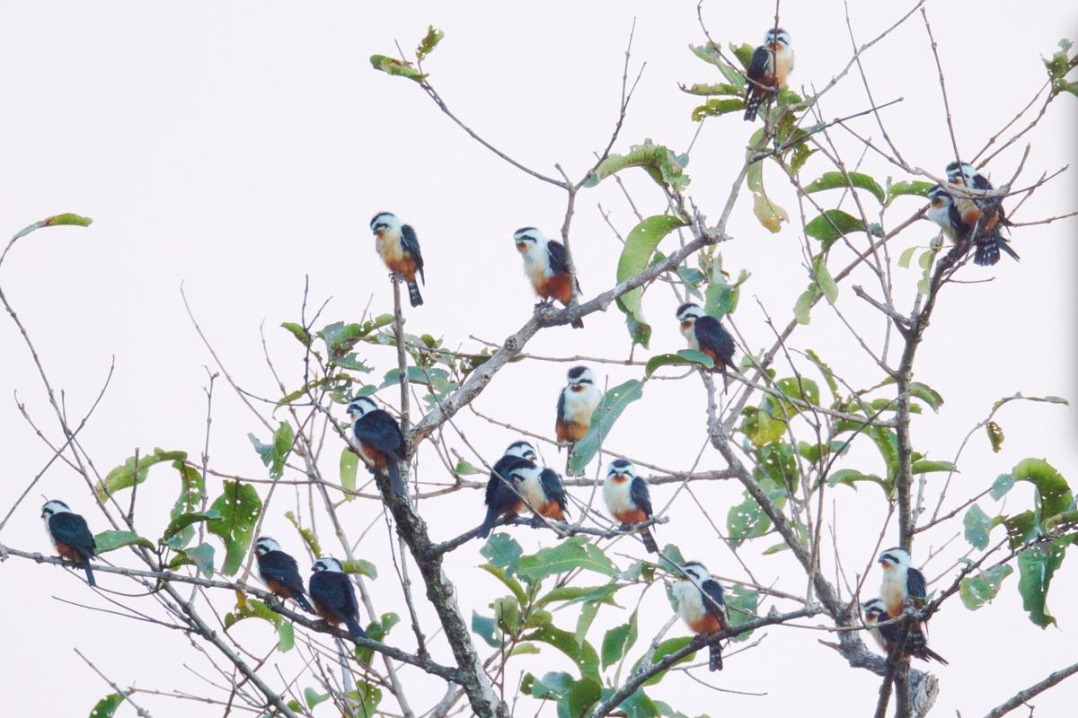
    In a remarkable wildlife photography achievement, a photographer in Yingjiang county, Yunnan province has set a new national record by capturing seventeen collared falconets (Microhierax caerulescens) in a single photographic frame. The unprecedented sighting occurred on December 5, 2025, within the Chinese Hornbill Valley sector of the Tongbiguan Provincial Nature Reserve’s Benghe area.

    The observation significantly surpasses the previous national benchmark established in 2022, when fifteen of these diminutive raptors were photographed together. Footage from the recent encounter reveals the falconets exhibiting natural behaviors while perched serenely on branches, with several individuals engaged in mutual preening—a social behavior that underscores their complex interpersonal dynamics.

    Collared falconets rank among the smallest raptors globally, with adults typically measuring 14-18 centimeters in length and weighing approximately 35-50 grams. Their presence in such substantial numbers within Tongbiguan Nature Reserve provides compelling evidence of the region’s robust ecosystem health and conservation success. The nature reserve, recognized for its exceptional biodiversity, serves as critical habitat for numerous endangered species.

    This record-breaking documentation offers valuable insights into the collective behavior and population density of these elusive birds, contributing significantly to ornithological research and conservation efforts. The photographic evidence has been authenticated by local wildlife authorities, confirming both the species identification and count accuracy.

    The achievement highlights the growing importance of photographic documentation in contemporary wildlife research and monitoring, demonstrating how technological advancements continue to expand our understanding of avian behavior and population dynamics in their natural habitats.

  • Venezuela opposition leader Machado to miss Nobel Peace Prize ceremony

    Venezuela opposition leader Machado to miss Nobel Peace Prize ceremony

    In a development highlighting Venezuela’s ongoing political tensions, opposition leader Maria Corina Machado will be conspicuously absent from Wednesday’s Nobel Peace Prize ceremony in Oslo. The Nobel Institute confirmed to AFP that the 58-year-old activist, who currently lives in hiding, will not personally accept the prestigious award.

    Erik Aasheim, spokesperson for the Nobel Institute, stated ahead of the 1:00 PM (1200 GMT) event that ‘She is not coming to the ceremony.’ Instead, Machado will be represented by her daughter at the formal proceedings honoring her achievements in promoting democracy and human rights.

    The absence underscores the precarious situation facing Venezuelan opposition figures. Machado’s current whereabouts remain undisclosed, and it was uncertain prior to the ceremony whether she had successfully exited Venezuela amid the country’s political repression. Her inability to travel to Norway personally to receive one of the world’s highest honors serves as a stark reminder of the challenges facing democratic movements in authoritarian states.

    The Nobel Peace Prize recognition represents a significant international endorsement of Machado’s pro-democracy efforts against the Maduro government, even as she remains constrained within her nation’s borders.

  • US sanctions network it says recruits Colombian fighters for Sudan civil war

    US sanctions network it says recruits Colombian fighters for Sudan civil war

    The United States has taken decisive action against an international mercenary recruitment network allegedly supplying foreign fighters to Sudan’s Rapid Support Forces (RSF) paramilitary group. On Tuesday, the Treasury’s Office of Foreign Assets Control (OFAC) announced sanctions against eight entities and individuals primarily of Colombian nationality accused of facilitating the transfer of combat personnel to the conflict-ravaged African nation.

    According to official statements, hundreds of Colombian mercenaries have deployed to Sudan since 2024, with many serving in critical combat roles including infantry operations and drone warfare operations. The targeted network stands accused of providing tactical expertise and even training children for combat operations, significantly intensifying the devastating conflict that began in April 2023.

    The phenomenon of Colombian soldiers participating in foreign conflicts traces back decades to US-led wars in Afghanistan and Iraq, where military assistance agreements created a generation of combat-experienced personnel. A retired military officer turned academic explained to BBC Mundo that this historical context produced numerous soldiers now retiring without adequate income sources, making them vulnerable to recruitment by sophisticated human trafficking networks operating under false pretenses of low-risk employment.

    Treasury Under-Secretary for Terrorism and Financial Intelligence John Hurley condemned the RSF’s pattern of targeting civilians, including infants and children, noting that their brutality has profoundly destabilized the region and created conditions conducive to terrorist expansion. The State Department has previously determined that RSF members committed genocide, with both paramilitary and regular army forces facing repeated war crime allegations.

    The sanctioned network includes four entities and four individuals, among them a dual Colombian-Italian national and former military officer currently based in the United Arab Emirates—a nation repeatedly accused of arming the RSF despite denying such allegations. All US-based assets belonging to designated persons have been frozen under the sanctions regime.

    On the battlefield, the RSF has achieved significant victories including October’s capture of el-Fasher following a 500-day starvation siege that killed over 5,000 people. The conflict has recently expanded into Kordofan, home to nearly eight million people, where Monday’s strikes on a kindergarten and hospital killed 114 people including 63 children according to WHO reports. Director-General Tedros Adhanom Ghebreyesus described the attack as ‘senseless’ while renewing ceasefire appeals.

    The humanitarian catastrophe continues to worsen with nearly 12 million people displaced and famine conditions emerging across parts of Sudan. Last month, President Donald Trump pledged to address the ‘tremendous atrocities’ through coordinated efforts with Egypt, Saudi Arabia, and the UAE.

  • Watch: Toronto’s trash-filled basin gets a dramatic lakeside revival

    Watch: Toronto’s trash-filled basin gets a dramatic lakeside revival

    In a remarkable environmental turnaround, a dedicated university professor and his team of students have successfully revitalized Toronto’s severely polluted Peter Street Basin after a three-year cleanup initiative. The project, which began as an academic exercise, has yielded tangible ecological results, transforming what was once a trash-filled urban eyesore into a swimmable waterfront area.

    The restoration effort involved systematic removal of accumulated debris and pollutants that had plagued the basin for decades. Through coordinated clean-up drives and environmental rehabilitation techniques, the academic team addressed both surface-level waste and underlying water quality issues. Their work demonstrates how targeted intervention can reverse environmental degradation in urban water systems.

    This lakeside revival represents more than just aesthetic improvement—it marks a significant achievement in urban ecological restoration. The project’s success has drawn attention from city officials and environmental organizations, potentially serving as a model for similar rehabilitation efforts in other urban waterways. The transformation from contaminated basin to functional aquatic space highlights the powerful impact of community-academic partnerships in addressing environmental challenges.

    The team’s approach combined scientific methodology with practical fieldwork, creating valuable learning experiences for students while delivering measurable environmental benefits to the community. Their achievement underscores the importance of sustained effort in environmental conservation and the potential for academic institutions to drive meaningful urban improvement projects.

  • Chinese robotaxis take the wheel in the Middle East

    Chinese robotaxis take the wheel in the Middle East

    In a strategic move reshaping urban mobility landscapes, leading Chinese autonomous vehicle firms are accelerating their presence across Middle Eastern markets through government-sanctioned testing and commercial deployment initiatives. This expansion represents a significant technological export from China to a region actively pursuing smart city transformations.

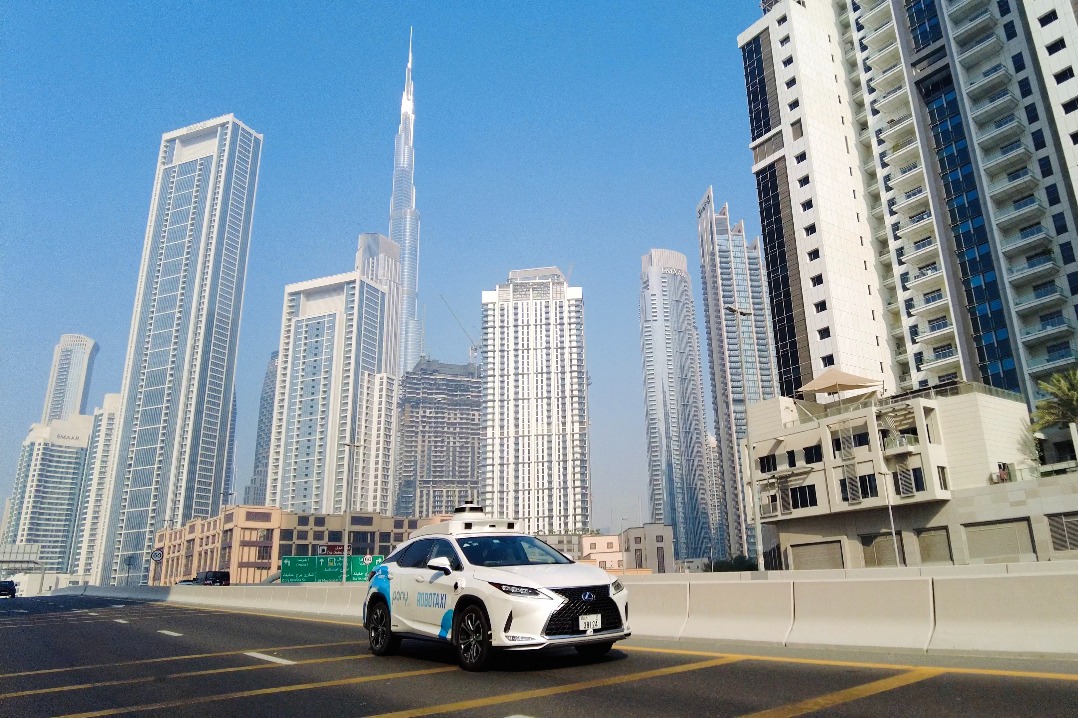
    Dubai’s Roads and Transport Authority (RTA) has granted inaugural autonomous driving permits to three Chinese mobility pioneers—Pony.ai, WeRide, and Baidu’s Apollo Go—enabling extensive urban testing of their self-driving fleets. This regulatory milestone aligns with Dubai’s ambitious target of converting 25% of all transportation to autonomous modes by 2030.

    RTA Director General Mattar Al Tayer emphasized the transformative potential: “Autonomous taxis will enhance quality of life for residents and visitors, improve road safety, and provide greater mobility convenience while supporting our first and last mile strategy for public transport integration.”

    The robotaxi operational model mirrors conventional ride-hailing services: users within designated zones access vehicles through mobile applications, confirm destinations, verify vehicle identification, and initiate journeys through app controls. In-vehicle experiences include real-time route visualization and entertainment options.

    Regional enthusiasm for the technology is palpable. UAE engineer Ibrahem Al Mohammedy observed: “Chinese technology is game-changing, having surpassed European and American counterparts in making advanced technology accessible to broader populations earlier than many developed nations.”

    Market projections underscore the sector’s potential. NVIDIA founder Jensen Huang identifies robotaxis as a paramount growth segment for the coming decade, while Goldman Sachs anticipates global market valuation reaching $40-45.7 billion by 2030, representing 60% compound annual growth.

    Pony.ai CEO James Peng cited Dubai’s “robust infrastructure, supportive policies, and public technological acceptance” as catalysts for confidence in large-scale autonomous technology adoption. The company demonstrated its seventh-generation Level 4 autonomous platform in Dubai, utilizing AI-driven sensor fusion (lidar, radar, cameras) for diverse environmental navigation.

    Cost reduction breakthroughs are enabling accelerated expansion. Pony.ai’s Ann Shi revealed nearly 70% reduction in autonomous kit material costs, partly driven by China’s electric vehicle industry scale. This efficiency facilitates plans deploying 1,000 robotaxis across the Middle East within three years.

    The UAE’s comprehensive self-driving adoption strategy extends beyond Dubai. Abu Dhabi has established partnerships with WeRide for autonomous taxi testing on Yas and Saadiyat islands, targeting 25% smart driverless transportation by 2040. WeRide recently launched the Middle East’s first fully driverless commercial robotaxi service on Yas Island using its van-type GXR vehicle without onboard safety supervisors.

    Ryan Zhan, WeRide’s Middle East and Africa regional manager, identified multiple driving factors: “The UAE faces high labor costs and driver shortages while pursuing smart urban upgrades across tourism, logistics, and public transport sectors. Autonomous addressing addresses practical needs while supporting strategic green transportation goals.”

    Regional expansion continues across borders. Saudi Arabia’s Vision 2030 initiative mandates 15% autonomous public transport by 2030, with WeRide conducting tests in Riyadh and Al-Ula ahead of anticipated commercial services. The company has additionally introduced robobus deployments and the region’s first monetized autonomous sanitation project.

    Pony.ai’s September partnership with Qatar’s Mowasalat “Karwa” transport service provider further demonstrates regional momentum. Qatar-based consultant Thaha Muhammed Abdul Kareem noted: “The Middle East possesses the infrastructure, capital, and ambition essential for rapid adoption, creating competitive positioning among technology providers.”

    Integration with global platforms provides additional scaling pathways. All three Chinese firms have established partnerships with Uber, enabling their autonomous vehicles to be accessed through Uber’s platform boasting 171 million monthly active users across 500 cities worldwide.

    China Institute of New Economy founding director Zhu Keli concluded: “Overseas demand, supportive regulatory environments, and open markets provide ideal testing grounds and development space for Chinese companies. Their global expansion will accelerate autonomous technology maturation, deepen global industrial chain integration, optimize resource allocation, and inject fresh momentum into worldwide self-driving development.”