作者: admin

  • Buddhist body urges followers not to release lifeless items into the natural environment

    Buddhist body urges followers not to release lifeless items into the natural environment

    The Buddhist Association of China has issued a formal condemnation against the growing practice of releasing inanimate objects into natural environments under the guise of religious observance. This statement comes in response to recent incidents in Liaoning province where individuals were documented pouring substantial quantities of rice into the ocean and ‘releasing’ bottled water as purported acts of Buddhist devotion.

    The Association clarified that traditional Buddhist ‘life release’ practices (fang sheng) exclusively involve liberating living creatures facing imminent slaughter or danger, allowing them to thrive in suitable habitats. This ancient ritual embodies the core Buddhist principles of unconditional compassion and the sacred precept against killing. The organization emphasized that plant seeds like rice and manufactured items such as bottled water lack consciousness and cannot be classified as sentient beings, making their ‘release’ doctrinally invalid.

    Beyond theological concerns, the Association highlighted significant environmental and social consequences. These practices contradict traditional Chinese virtues of frugality, constitute wasteful resource expenditure, and potentially damage delicate ecosystems. The statement further warned that improper release methods often achieve opposite results from their intended purpose, potentially endangering more lives and disrupting ecological balance.

    The Association specifically addressed several problematic scenarios: introducing terrestrial animals to aquatic environments, releasing domesticated species into the wild, introducing invasive species or pathogen-carrying animals, and conducting releases in protected areas or urban water sources. These activities not only violate environmental regulations but also foster commercial markets that exploit wildlife specifically for release ceremonies.

    In response to these concerns, the Buddhist Association has implemented new guidelines approved on June 30th to promote civilized and environmentally responsible practices. The directive mandates that all release activities must comply with national laws and receive supervision from environmental, agricultural, forestry, marine, and quarantine authorities. Group releases outside formal Buddhist venues now require approval as large religious events with thorough review of species, quantities, timing, and locations. Commercialization of release activities is strictly prohibited, with specific bans on protected areas, urban water bodies, transportation routes, and residential zones.

    The Association concluded by committing to incorporate education about proper release practices into Buddhist teachings, ensuring followers understand the authentic meaning and appropriate methods of this traditional practice while protecting both environmental integrity and religious sanctity.

  • Average age of China’s workforce nearing 40, report says

    Average age of China’s workforce nearing 40, report says

    China’s labor landscape is undergoing a profound demographic transformation as the nation’s workforce approaches a pivotal age milestone. According to the China Human Capital Report 2025 released by the Central University of Finance and Economics’ research center, the average age of Chinese workers is now nearing 40 years, signaling significant implications for the country’s economic future.

    The comprehensive study reveals distinct patterns across geographic and gender dimensions. In rural areas, workers averaged 39.66 years in 2023, with men significantly older at 41.6 years compared to women at 39.06 years. Urban centers showed slightly younger demographics, with male workers averaging 40.26 years and female workers 38.07 years.

    This aging trend represents a dramatic shift from previous decades. Between 1985 and 2023, China’s overall workforce age increased from 32.25 to 39.66 years—a seven-year maturation that reflects both improved life expectancy and declining birth rates. Urban workers aged from 33.03 to 39.25 years during this period, while rural workers experienced an even more pronounced aging from 31.99 to 40.54 years.

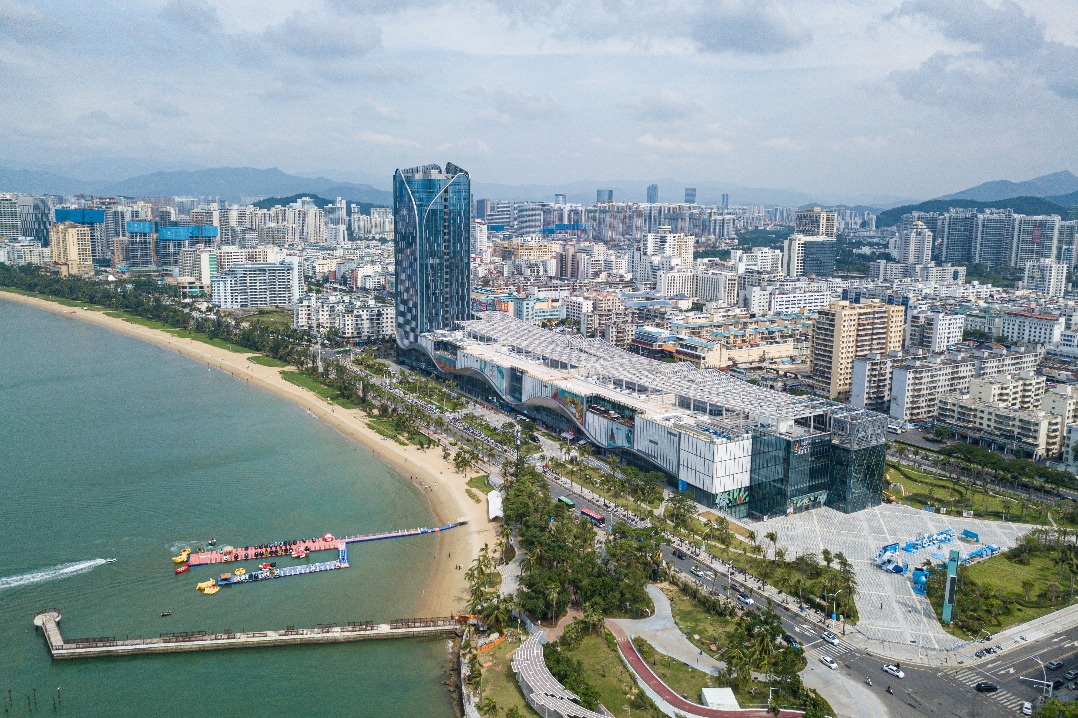
    Regional analysis reveals substantial disparities across China. The oldest workforce concentrations are found in Inner Mongolia Autonomous Region and the northeastern provinces of Heilongjiang, Liaoning, and Jilin, alongside southwestern Sichuan Province. Conversely, the youngest labor forces are located in Hainan Province, Tibet Autonomous Region, Guangdong Province, Guizhou Province, and Xinjiang Uygur Autonomous Region, presenting very different demographic challenges and opportunities across China’s economic landscape.

    The report underscores how this demographic evolution intersects with China’s broader population aging challenges, potentially affecting productivity, innovation capacity, and social welfare systems in coming decades.

  • Key Dubai corridor to see travel time cut from 20 minutes to five

    Key Dubai corridor to see travel time cut from 20 minutes to five

    Dubai’s Roads and Transport Authority (RTA) has launched a transformative infrastructure project that will dramatically reduce travel times along a critical transportation corridor. The newly awarded contract focuses on redeveloping the intersection of Sheikh Zayed bin Hamdan Al Nahyan Street with Al Awir Road and Al Manama Street, cutting journey times from 20 minutes to just 5 minutes.

    The comprehensive development plan includes constructing 2,300 meters of bridges, expanding existing lanes, and paving new service roads along both Sheikh Zayed bin Hamdan Al Nahyan Street and Al Awir Road. The project will replace the current roundabout at the main intersection with a grade-separated interchange, enabling seamless traffic flow in all directions without signal interruptions.

    Scheduled for completion in Q3 2028, the upgrade will boost traffic capacity by 176%—from 5,200 to 14,400 vehicles per hour in both directions. This expansion directly addresses the needs of residential and development areas housing over 600,000 residents and visitors, ensuring improved mobility and reduced congestion.

    Additional components include a new bridge at the intersection of Al Awir Road with Emirates Road to facilitate traffic toward Al Awir and Sharjah. The project will also enhance surface roads by widening Sheikh Zayed bin Hamdan Al Nahyan Street from two to four lanes in each direction and optimizing signalized intersections for greater operational efficiency.

    This initiative represents the latest phase in RTA’s ongoing program to upgrade Sheikh Zayed bin Hamdan Al Nahyan Street, following previous developments that included a 25-kilometer stretch from Dubai–Al Ain Road to Al Yalayis Street and the construction of dual bridges at Dubai Silicon Oasis intersection.

  • ‘It was pandemonium’: Jewish community targeted in Australia’s deadliest shooting in decades

    ‘It was pandemonium’: Jewish community targeted in Australia’s deadliest shooting in decades

    Sydney’s iconic Bondi Beach became the scene of Australia’s deadliest mass shooting in nearly three decades when gunmen opened fire on a Jewish Hanukkah celebration Sunday evening. The attack, which authorities have declared a terrorist incident, left 11 dead and more than two dozen injured, including children, marking a devastating blow to a nation that prides itself on public safety.

    More than 1,000 attendees had gathered for the festival’s first day celebrations when chaos erupted shortly before 7pm local time. Assailants positioned on a small footbridge mere meters from a children’s playground fired into fenced-in crowds enjoying the final sunlight of a sweltering summer day. A vehicle containing improvised explosive devices was discovered nearby, though the bombs failed to detonate.

    Eyewitnesses described scenes of pandemonium as beach-goers screamed and fled through the park. ‘It was simply an unbelievable scene… that families and kids on Bondi could be completely mowed down for being Jewish,’ said one attendee identified only as Barry. Video footage captured a bystander now hailed as a ‘genuine hero’ by state officials wrestling a firearm from one attacker.

    The tragedy occurs against a backdrop of rising antisemitic incidents across Australia since the October 7 Hamas attack on Israel and subsequent Gaza offensive. Prime Minister Anthony Albanese condemned the ‘act of evil antisemitism’ and ‘vile act of violence and hate,’ while facing criticism from Israeli officials for not adequately addressing preceding warning signs.

    Jewish community leaders expressed profound grief, with Robert Gregory of the Australia Jewish Association noting many would question their future in the country. ‘To be confronted with this horrific act of antisemitic violence during the Jewish festival of light and hope is shattering,’ the Jewish Council of Australia stated.

    NSW Police Commissioner Mal Lanyon urged calm and discouraged online speculation as investigators work to determine the attackers’ identities and motivations. One gunman was killed by police, another remains hospitalized in critical condition, and authorities are investigating potential accomplices.

    The attack represents Australia’s most lethal shooting since the 1996 Port Arthur massacre, which prompted sweeping gun control reforms. Bondi’s tragedy comes less than two years after a mass stabbing at nearby Bondi Junction, further shaking the nation’s self-perception as a safe haven free from such public violence.

  • Watch: Rain triggers waterfalls in UAE mountains as downpour hits some parts of country

    Watch: Rain triggers waterfalls in UAE mountains as downpour hits some parts of country

    The United Arab Emirates experienced a remarkable meteorological phenomenon on Sunday, December 14, 2025, as unusual winter rainfall dramatically altered the nation’s typically arid landscape. The National Centre of Meteorology’s earlier predictions materialized into reality when substantial precipitation generated spontaneous waterfalls cascading through the mountainous regions of Jebel Jais in Ras Al Khaimah, creating breathtaking natural spectacles rarely witnessed in the region.

    Visual documentation from Storm Centre, a prominent weather monitoring entity, captured the extraordinary transformation of wadis into flowing waterways and the formation of temporary waterfalls along rugged mountain terrain. The footage revealed vehicles navigating cautiously through rain-soaked roads with headlights illuminating the precipitation-filled atmosphere during what would typically be daylight hours.

    Simultaneously, coastal areas experienced dramatic electrical storms with lightning displays illuminating the Ras Al Khaimah coastline. The meteorological disturbance created striking visual contrasts against the UAE’s normally consistent blue skies, with thick cloud formations presenting varying shades of gray over Dubai and surrounding emirates.

    Authorities including Abu Dhabi Police and Dubai Police issued coordinated safety advisories, urging residents to exercise caution and adhere to official guidelines during the ongoing weather event. The unusual conditions prompted adjustments to daily routines, with many companies implementing remote work policies in response to the National Centre of Meteorology’s warnings.

    Meteorologist Dr. Ahmed Habib from the NCM indicated that this weather pattern represents part of a broader multi-system convergence affecting the region, with projections suggesting peak intensity between December 16-19. The current conditions include scattered showers, potential heavy downpours, thunder, possible hail, and significantly reduced temperatures across the country.

  • China steps up cultural heritage protection to keep its past alive for the future

    China steps up cultural heritage protection to keep its past alive for the future

    China is implementing a comprehensive strategy to safeguard its extensive cultural legacy, combining legislative reinforcement, technological innovation, and international partnerships to preserve its 5,000-year civilization for future generations.

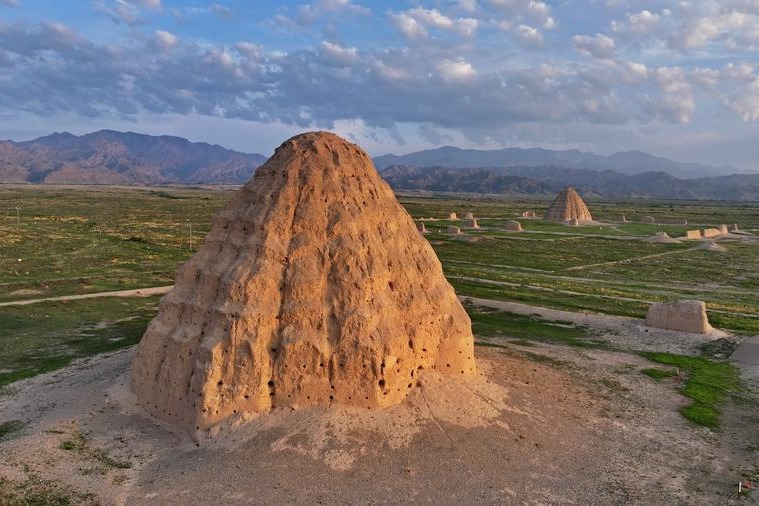
    Between 2021 and 2025, China successfully secured UNESCO World Heritage status for four significant sites: the Beijing Central Axis, Jingmai Mountain’s Ancient Tea Forests, the Xixia Imperial Tombs, and the historic maritime trade hub of Quanzhou. These additions bring China’s total World Heritage count to 60, positioning the nation second globally, trailing only Italy’s 61 recognized sites.

    The National Cultural Heritage Administration (NCHA) reveals several promising candidates in the nomination pipeline, including Jingdezhen’s porcelain heritage, Sichuan’s Sanxingdui and Jinsha archaeological sites, Yangtze River waterfront towns, and the Maritime Silk Road corridor.

    Underpinning this expansion is China’s evolving preservation philosophy, transitioning from reactive restoration toward an integrated approach combining emergency response with preventive conservation. The country has established a robust legal framework anchored by the Cultural Relics Protection Law, supplemented by six administrative regulations, ten ministerial directives, and over 400 local statutes.

    Technological advancements are revolutionizing heritage monitoring and public engagement. Satellite remote sensing, drone surveillance, and artificial intelligence enable continuous assessment of site conditions, facilitating early risk detection. Digital archiving initiatives have created intricate 3D models of Longmen Grottoes sculptures and high-resolution virtual tours of Dunhuang’s Mogao Caves.

    Public accessibility has dramatically improved through expanded cultural infrastructure. Over 7,000 museums nationwide—91% offering free admission—record approximately 1.5 billion annual visits. The network includes 65 national archaeological parks and 200+ thematic heritage routes connecting urban and rural communities through shared historical resources.

    Internationally, China has pioneered the Alliance for Cultural Heritage in Asia—the continent’s inaugural intergovernmental preservation body—and leads the ISO technical committee on heritage conservation standards. Chinese experts have conducted six restoration projects across four nations and initiated 49 joint archaeological programs involving 28 countries.

    Additionally, repatriation efforts have successfully recovered 537 lost cultural artifacts across 35 separate batches over the past five years, with commitments to strengthen institutional mechanisms for further returns.

  • Philippines says fishermen hurt, boats damaged as China fired water cannon

    Philippines says fishermen hurt, boats damaged as China fired water cannon

    Tensions flared in the disputed South China Sea waters on Friday as Chinese coast guard vessels employed aggressive tactics against Philippine fishing boats near Sabina Shoal, resulting in injuries to three Filipino fishermen and substantial damage to two vessels. According to the Philippine Coast Guard (PCG), nearly two dozen Filipino fishing boats encountered water cannon attacks and deliberate blocking maneuvers by Chinese maritime authorities.

    The confrontation intensified when a smaller Chinese coast guard vessel severed anchor lines of multiple Philippine boats, creating hazardous conditions for the crews. The PCG issued a formal statement condemning the actions, urging China to ‘adhere to internationally recognized standards of conduct that prioritize preservation of life at sea over questionable law enforcement pretensions.’

    Despite repeated attempts to provide assistance, Philippine coast guard vessels faced continued obstruction from Chinese ships before finally reaching the injured fishermen on Saturday morning. Medical attention and essential supplies were delivered to those affected by the incident.

    The contested Sabina Shoal (known as Xianbin Reef in China and Escoda Shoal in the Philippines) lies within the Philippine Exclusive Economic Zone, approximately 150 kilometers west of Palawan province. This latest incident occurs against the backdrop of China’s expansive claims over nearly the entire South China Sea, despite a 2016 international arbitral ruling that found these claims without legal basis under international law—a decision Beijing continues to reject.

    China’s coast guard had previously stated on Friday that it had implemented ‘control measures’ against Philippine vessels, which Manila interprets as an admission of responsibility for the aggressive actions. The Chinese embassy in Manila had not responded to requests for comment at the time of reporting.

  • Delhi air quality turns ‘severe’, worst of the season; India steps up pollution measures

    Delhi air quality turns ‘severe’, worst of the season; India steps up pollution measures

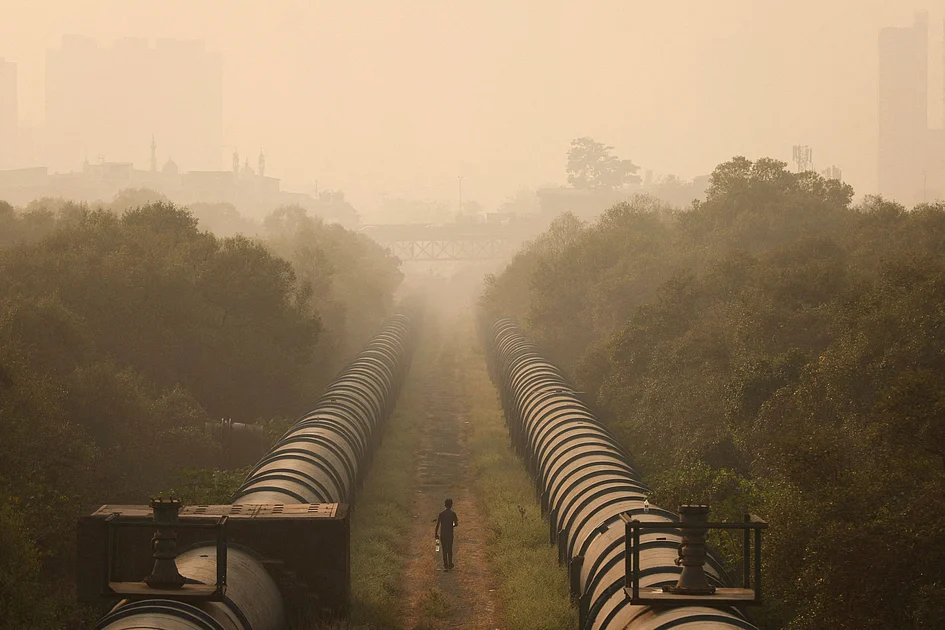
    India’s capital has activated its highest-level pollution emergency protocol as Delhi’s air quality deteriorated to its worst levels this season, prompting severe public health measures. On Sunday, official monitoring stations recorded Air Quality Index (AQI) readings exceeding 450—categorized as ‘severe’—marking a significant escalation from Saturday’s 430 reading and representing the most hazardous atmospheric conditions witnessed this winter.

    The Commission for Air Quality Management implemented Stage Four of the Graded Response Action Plan on Saturday evening, triggering comprehensive restrictions across the National Capital Region. The emergency measures include prohibiting entry of older diesel trucks into the city, suspending all construction activities including public infrastructure projects, and transitioning educational institutions to hybrid learning models.

    Meteorological conditions have significantly contributed to the crisis, with elevated moisture levels and shifting wind patterns creating atmospheric conditions that trap pollutants and prevent their dispersion. This meteorological phenomenon, combined with emissions from vehicles, construction sites, and agricultural burning in neighboring states, has enveloped the 30-million-person metropolitan area in a thick layer of smog.

    Health authorities have issued urgent advisories recommending all residents, particularly children and individuals with pre-existing respiratory or cardiac conditions, to remain indoors. Those venturing outside have been advised to utilize protective masks as the particulate matter concentration reaches levels deemed most hazardous to human health. The region consistently ranks among the world’s most polluted urban centers during winter months, presenting chronic public health challenges that intensify with seasonal meteorological changes.

  • Xi Focus: Navigating headwinds and charting new blueprint

    Xi Focus: Navigating headwinds and charting new blueprint

    Beijing has concluded its high-level Central Economic Work Conference, establishing a comprehensive roadmap for China’s economic strategy as the nation prepares to launch its 15th Five-Year Plan period (2026-2030). Chaired by President Xi Jinping, the conference outlined key priorities including implementing proactive macroeconomic policies, expanding domestic demand, optimizing supply chains, and developing a unified national market.

    The meeting occurred against a backdrop of global trade tensions and domestic challenges, yet China’s economy has demonstrated remarkable resilience. Daily economic indicators reveal substantial vitality: approximately 24,000 new businesses emerge nationwide each day, while over 120 billion yuan worth of goods cross borders daily. Cloud data transmission exceeds 1.43 million gigabytes per second, with approximately 6,000 parcels entering logistics networks every second.

    International financial institutions have responded positively to China’s economic performance. The International Monetary Fund recently raised its 2025 growth forecast for China to 5%, with the World Bank, Asian Development Bank, and OECD subsequently increasing their projections. “China’s economy has shown notable resilience despite facing multiple shocks in recent years,” noted IMF representative Sonali Jain-Chandra.

    Throughout the year, President Xi conducted extensive inspections across China’s economic landscape, from northeastern industrial bases to eastern innovation hubs. These visits emphasized the critical importance of maintaining the real economy as the nation’s backbone while advancing manufacturing through high-end, intelligent, and green development pathways.

    Private sector development received particular attention, with enacted legislation promoting private economy growth, targeted measures stimulating private investment, and accelerated clearance of overdue payments to companies. Technological innovation emerged as a central focus, exemplified by companies like Infinigence AI, which has rapidly expanded its cloud capacity to over 25,000 petaflops across 53 data centers in 26 cities.

    The strategy emphasizes that reform and opening-up remain China’s primary tools for navigating challenges and unlocking growth potential. Recent symbolic inspections of Hainan Free Trade Port and Guangdong province highlighted China’s commitment to high-standard opening-up and comprehensive reform. In 2025, key measures included accelerating unified market development, enforcing anti-unfair competition laws, and further trimming negative lists for foreign investment.

    Multinational corporations have demonstrated continued confidence in China’s market. FAW-Volkswagen produced its 30 millionth vehicle in October, while Tesla launched its first overseas Megafactory in Shanghai. Siemens Healthineers is constructing new facilities in Shenzhen, and Airbus inaugurated its second Final Assembly Line in Tianjin.

    President Xi has personally reassured international business representatives of China’s commitment to widening market access, ensuring equal treatment for foreign businesses, and maintaining fair competition. The forthcoming five-year plan emphasizes opening wider to the outside world, promoting innovative trade development, expanding two-way investment cooperation, and pursuing high-quality Belt and Road collaboration.

    Spanish economist Pedro Barragán characterized China’s five-year plan as “an anchor of stability” in an unsettled global environment, noting that “as China manages to maintain orderly economic growth and advance reforms, its role as an engine of the global economy will be strengthened.”

  • Poyang Lake water levels fall below extreme low threshold

    Poyang Lake water levels fall below extreme low threshold

    China’s largest freshwater lake has reached a critical hydrological milestone as Poyang Lake’s water levels dropped below the extreme low threshold on Sunday morning. According to data from Xingzi Station, the key monitoring point, water levels fell to eight meters at 6 am on December 14, 2025, marking a severe environmental challenge for the Jiangxi province ecosystem.

    The current water surface connecting Poyang Lake to the Yangtze River has dramatically shrunk by 90% compared to peak levels, continuing a troubling pattern of earlier and more prolonged dry periods. This year, the lake dipped below the 12-meter mark on August 8—87 days ahead of the historical average—and has experienced 217 days of below-threshold water levels in 2023 alone.

    Scientific data reveals an accelerating trend of hydrological extremes. Since 2022, when water levels hit a record low of 4.6 meters, Poyang Lake has consistently broken records for early onset, extended duration, and severity of low-water periods. The transition from high to low water levels has become increasingly abrupt, with 2024 witnessing unprecedented daily drops of 0.45 meters and weekly declines of 2.68 meters.

    The ecological consequences are substantial. Hydrological experts warn that hundreds of thousands of migratory birds—including protected species like white cranes and oriental storks—face severe wintering challenges. The Yangtze finless porpoise and other aquatic species similarly confront breeding and survival threats due to the shrinking habitat.

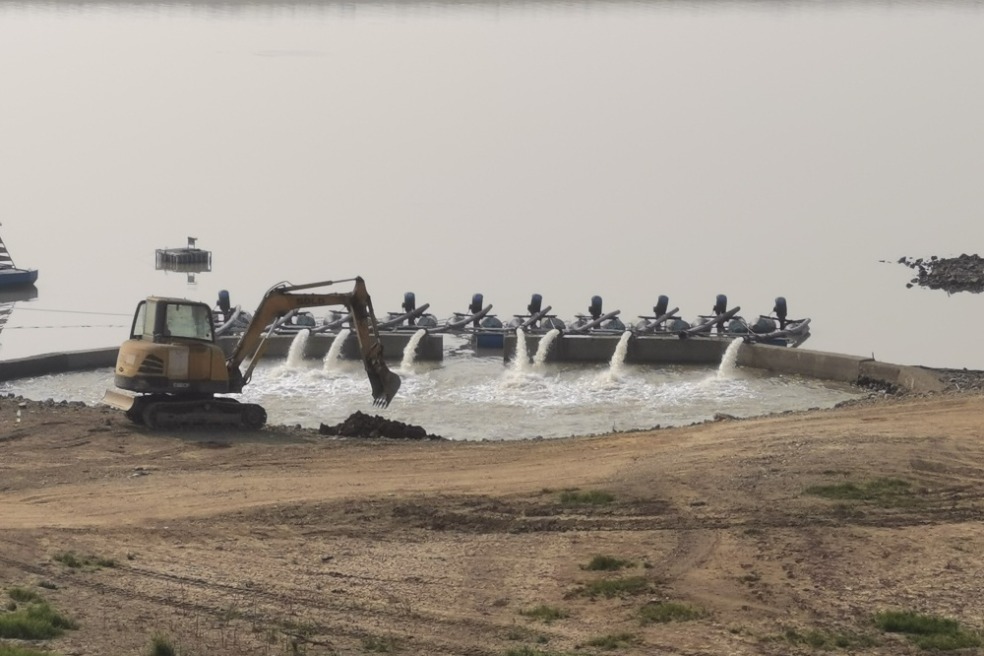
    Local authorities have implemented emergency measures to address the crisis. At Guanhu Water Plant, all ten water pumps operate at maximum capacity, with additional pumps installed to extract water from the receding lake. Enhanced inspection protocols and water quality testing ensure safe drinking water for approximately 160,000 residents in surrounding communities.

    Environmental managers are employing scientific water management strategies, including dredging operations and ecological water replenishment projects, to mitigate the impact of persistent low-water conditions. Continuous monitoring and adaptive management approaches remain crucial for balancing ecological protection and human water security needs.