作者: admin

  • Guangxi’s new mineral named Jinxiuite

    Guangxi’s new mineral named Jinxiuite

    Chinese geologists have achieved a significant scientific breakthrough with the International Mineralogical Association’s official recognition of Jinxiuite, a newly discovered mineral from Guangxi’s Jinxiu Yao Autonomous County. The mineral was identified in June by researchers from the Chinese Academy of Geological Sciences working in the Longhua nickel-cobalt deposit.

    Senior Engineer Tang Hejun, who led the discovery team, revealed that Jinxiuite contains several strategically important metals including nickel, cobalt, and bismuth. “Determining extraction feasibility is crucial,” Tang emphasized, “as it will directly impact both recovery rates and the economic viability of fully utilizing this mineral deposit in future operations.”

    The discovery carries particular significance for China’s industrial sector, given the country’s substantial reliance on imported cobalt and limited domestic resources. Nickel and cobalt are essential components in aerospace technology, chemical manufacturing, and advanced battery production due to their exceptional resistance to high temperatures and corrosion, combined with remarkable structural strength.

    Yan Jiayong, Director of the Academy’s Deep Mineral Exploration Theory and Technology Research Division, characterized the finding as a landmark achievement that extends beyond mere resource identification. “This discovery expands our fundamental understanding of the material world and provides a natural blueprint for materials science,” Yan explained. “Such natural formations frequently inspire the synthesis of novel materials with unique properties and capabilities.”

    Geoscientists note that new minerals like Jinxiuite serve as historical records of Earth’s geological evolution, offering insights into elemental behavior under extreme conditions. By analyzing mineral associations within deposits, researchers can meticulously reconstruct the complete evolutionary history of these formations from initial development to final maturation.

    The Jinxiu region has emerged as a particularly promising area for mineral exploration, with recent nickel-cobalt discoveries establishing it as a vital zone for nonferrous metal production and resource development within Guangxi Zhuang Autonomous Region.
  • What does TikTok’s deal mean for America’s users?

    What does TikTok’s deal mean for America’s users?

    The landmark partnership between TikTok and Oracle Corporation continues to generate uncertainty regarding the platform’s operational future for its American user base. While the arrangement nominally addresses national security concerns raised by U.S. regulators, industry observers note the conspicuous absence of detailed specifications governing user experience modifications.

    This strategic alliance, formed under intense geopolitical pressure, ostensibly creates a new entity called TikTok Global to oversee U.S. operations. Oracle’s role as a “trusted technology partner” provides the architectural framework for data security compliance, yet the practical implications for content delivery algorithms, data processing protocols, and feature accessibility remain deliberately vague in public disclosures.

    The arrangement’s ambiguity stems from complex negotiations involving multiple stakeholders: ByteDance (TikTok’s Chinese parent company), U.S. regulatory bodies, and now Oracle as the primary American technology partner. This tripartite dynamic creates inherent tensions between national security priorities, commercial interests, and user experience consistency.

    Technology analysts suggest the partnership could potentially introduce differentiated user experiences across geographical regions, with American users possibly encountering modified content recommendation algorithms or altered data retention policies. The fundamental architecture of TikTok’s service—particularly its critically acclaimed content discovery mechanism—may undergo significant recalibration to satisfy regulatory requirements.

    Market response indicates cautious optimism tempered by practical concerns. While the partnership prevents immediate platform prohibition in the United States, preserving access for TikTok’s approximately 100 million American users, the long-term user experience implications warrant continued scrutiny as implementation details emerge.

  • Japan’s security moves draw sharp criticism

    Japan’s security moves draw sharp criticism

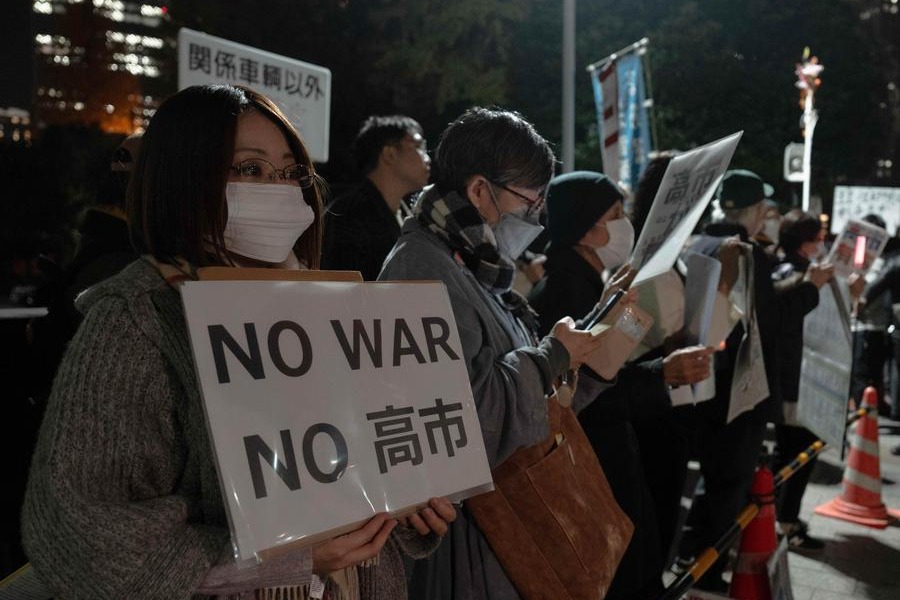
    North Korea has issued a stern condemnation of Japan’s reported considerations to revise its longstanding Three Non-Nuclear Principles, characterizing the move as indicative of alarming militaristic tendencies. Through an editorial published in state-run newspaper Rodong Sinmun on Thursday, the Democratic People’s Republic of Korea asserted that Prime Minister Sanae Takaichi’s administration has orchestrated substantial adjustments to Japan’s defense and security frameworks.

    The criticism highlights Japan’s escalated defense expenditures, enhanced preemptive strike capabilities, relaxed arms export regulations, and the contemplated revision of nuclear principles that have formed the cornerstone of Japan’s post-war pacifist stance. Rodong Sinmun declared that these developments mark a critical and perilous phase in Japan’s multi-decade remilitarization efforts following its World War II defeat.

    According to Kyodo News reports, the Japanese government anticipates revising its National Security Strategy and associated documents by late next year. Prime Minister Takaichi is reportedly evaluating modifications to the third principle—which currently prohibits nuclear weapons from entering Japanese territory—despite the strategy’s 2022 affirmation that ‘the basic policy of adhering to the Three Non-Nuclear Principles will remain unchanged.’

    Established in 1967 by then-Prime Minister Eisaku Sato, the three principles prohibit Japan from possessing, producing, or permitting the introduction of nuclear weapons within its borders. Analysts confirm that any amendment would represent a seismic shift in Japan’s security paradigm.

    The North Korean newspaper further warned that such revisions would dramatically expand the scope and depth of Japan’s remilitarization, constituting a blatant provocation against regional peace. Drawing parallels to Japan’s wartime imperial ambitions, the editorial evoked historical memories of nationwide indoctrination preceding aggressive wars and the pursuit of the ‘Greater East Asia Co-Prosperity Sphere.’

    In related developments, Prime Minister Takaichi’s coalition agreement with the Japan Innovation Party, signed October 20, included provisions regarding submarines featuring ‘next-generation propulsion systems’—potentially including nuclear technology. When questioned about nuclear submarine acquisition, Chief Cabinet Secretary Minoru Kihara stated the government wasn’t ‘ruling out any options’ regarding enhanced deterrence capabilities.

    Concurrently, China has repeatedly criticized Prime Minister Takaichi’s comments on Taiwan, with Foreign Minister Wang Yi cautioning against repeating historical mistakes where Japanese militarists justified wars under pretexts of ‘survival-threatening situations.’

    Diplomatic support for the one-China principle has intensified throughout November, with Myanmar, Cambodia, Laos, Jordan, Saudi Arabia, and the United Arab Emirates all reaffirming their adherence to the policy and opposing external interference in China’s internal affairs regarding Taiwan.

  • China offers to resolve Thailand-Cambodia rift

    China offers to resolve Thailand-Cambodia rift

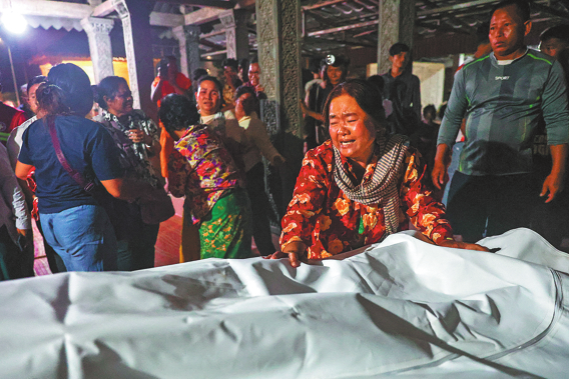
    In a significant diplomatic intervention, Chinese Foreign Minister Wang Yi has issued an urgent appeal for an immediate ceasefire between Cambodia and Thailand amid intensifying border hostilities that have resulted in substantial civilian casualties. The high-level diplomatic engagement occurred during separate telephone consultations with Cambodian Deputy Prime Minister Prak Sokhonn and Thai Foreign Minister Sihasak Phuangketkeow on Thursday.

    The border conflict, which reignited on December 7 despite a joint peace declaration signed just two months prior, has claimed the lives of 18 Cambodian civilians according to Xinhua News Agency reports. The timing of this resurgence underscores the fragility of previous diplomatic achievements in the restive border region.

    Minister Wang articulated China’s position as both a friend and close neighbor to both nations, emphasizing Beijing’s profound concern over the escalating violence. “China is most reluctant to see the two nations engage in conflict, and is deeply saddened by the civilian casualties resulting from the clashes,” Wang stated during the exchanges. He characterized the current confrontation as more intense than previous episodes and warned that continued hostilities would damage regional stability and undermine ASEAN unity.

    Concurrent with these diplomatic conversations, China’s Special Envoy for Asian Affairs Deng Xijun embarked on a shuttle diplomacy mission to both capitals, building upon his previous mediation efforts in September. This demonstration of China’s proactive diplomatic approach aims to bridge differences and facilitate dialogue between the conflicting parties.

    Wang emphasized China’s commitment to impartiality in the dispute, stating Beijing’s support for both bilateral resolution efforts and ASEAN’s mediation role. Notably, he also expressed concerns about potential misinformation campaigns that might jeopardize China’s relations with either nation and called for enhanced protection of Chinese projects and personnel in both countries.

    Both Cambodian and Thai foreign ministers acknowledged China’s balanced stance and welcomed Beijing’s diplomatic involvement. In a positive development, the nations have agreed to deploy an ASEAN observer team as part of confidence-building measures, signaling potential openness to third-party mediation in the protracted border dispute.

  • Age limit for blood donors may be raised

    Age limit for blood donors may be raised

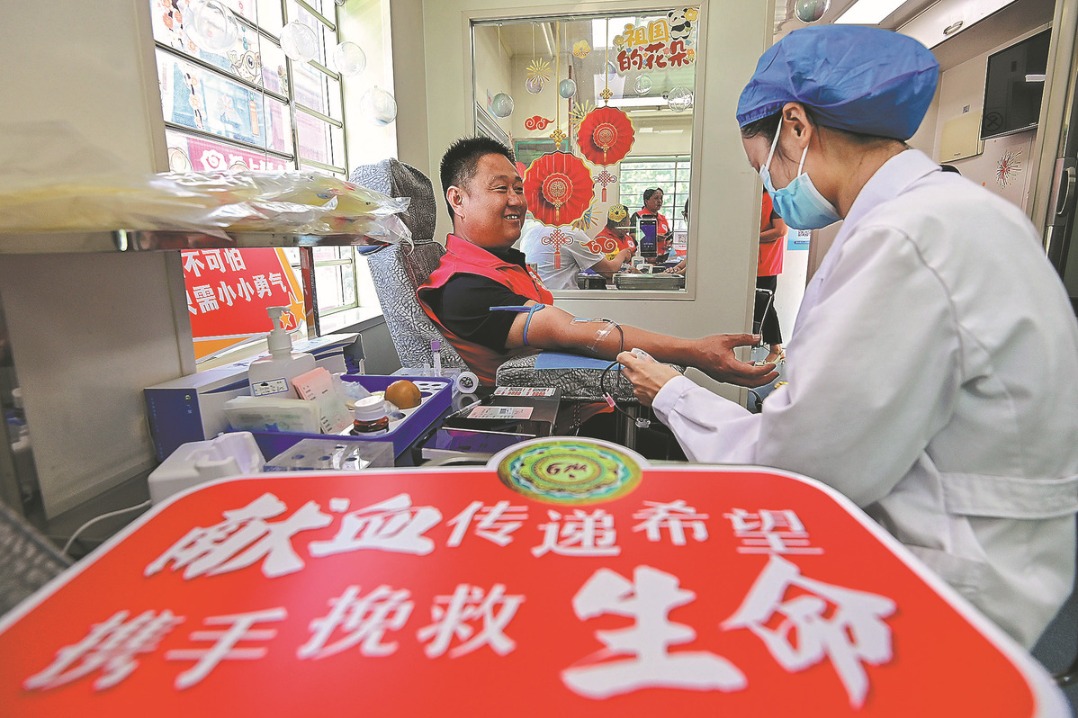
    China is poised to significantly revise its blood donation policies by potentially raising the maximum donor age from 55 to 65 years and reducing the minimum donation interval from six months to just 90 days. The National Health Commission announced these proposed changes on Wednesday as part of a draft amendment to the country’s Blood Donation Law, which has remained unchanged since its inception in 1997.

    The initiative aims to align China’s blood donation standards with international practices and contemporary medical research. According to the commission, these adjustments would help address the nation’s persistent blood shortages while maintaining strict safety protocols. All prospective donors will continue to undergo comprehensive health screenings to ensure donation safety.

    The proposed revisions draw support from both global benchmarks and successful regional implementations. The World Health Organization recommends an donor age range of 18-65 years, while several developed nations including the United States, Canada, Australia, and Japan have either adopted similar upper age limits or eliminated them entirely. Chinese provinces such as Hainan and Jiangxi, along with the city of Shenzhen, have already demonstrated the feasibility of these relaxed standards through local regulations.

    Medical evidence presented by the commission indicates that donating 400 milliliters of blood represents less than 10% of total blood volume in adults, causing no harm to healthy individuals. Blood regeneration typically completes within one to two weeks following donation.

    The draft legislation also introduces enhanced protections and incentives for donors, including financial subsidies, additional paid leave, and prioritized access to medical services. Donors would receive exemptions from blood processing costs, while their immediate family members would qualify for either full exemptions or reduced fees. The proposal further mandates establishing at least one fixed donation station in each county-level region, with additional facilities in high-demand areas.

    Despite a national blood donation rate of 11.4 donors per 1,000 people, China continues to experience seasonal, regional, and blood-type-specific shortages exacerbated by an aging population and evolving lifestyles. The commission emphasized that safeguarding donor health and ensuring blood safety remain fundamental principles throughout this modernization effort.

  • Putin tells his annual news conference that the Kremlin’s military goals will be achieved in Ukraine

    Putin tells his annual news conference that the Kremlin’s military goals will be achieved in Ukraine

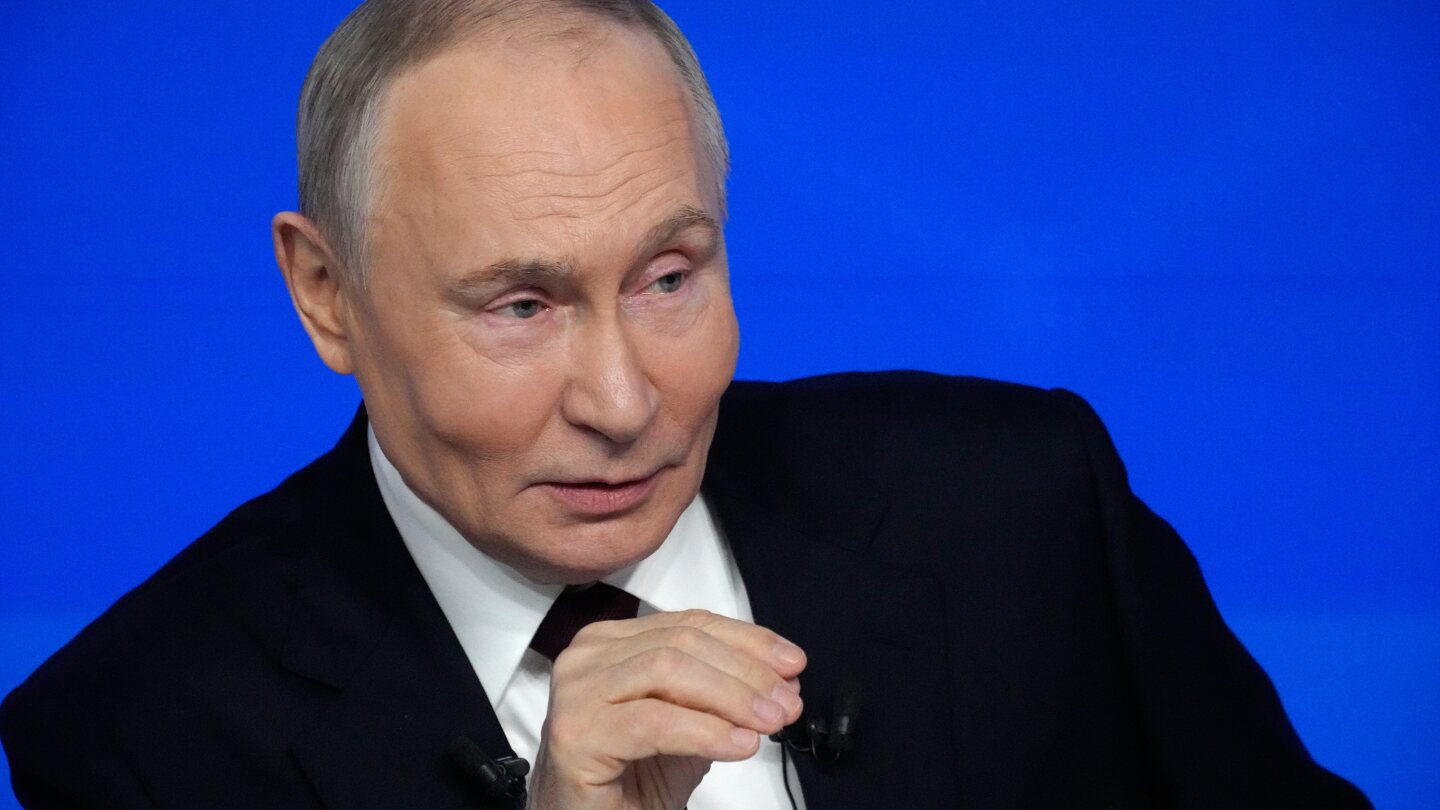
    Russian President Vladimir Putin asserted during his annual year-end press conference that Moscow’s military forces have gained complete strategic initiative in the ongoing Ukraine conflict. Addressing the nation in a carefully orchestrated event that combined a live news conference with a nationwide call-in program, the Russian leader expressed unwavering confidence that the Kremlin’s military objectives would ultimately be achieved.

    Putin emphasized that Russian troops are consistently advancing across the entire line of contact, though he acknowledged the pace varies across different sectors. ‘Our troops are progressing throughout the combat zone, with some areas witnessing faster advancement than others, but the enemy continues to retreat across all fronts,’ the Russian president stated.

    The conflict, which approaches its fourth anniversary since Putin initially ordered troops into Ukraine, has evolved significantly from its initial phase when Ukrainian forces successfully repelled Russia’s attempt to capture Kyiv. The warfare has since transformed into a grueling battle of attrition, with Moscow’s military making gradual but persistent territorial gains despite failing to achieve the rapid victory many analysts had anticipated.

    Regarding potential peace negotiations, Putin reaffirmed Moscow’s readiness for a diplomatic settlement that would address what he termed the ‘root causes’ of the conflict. However, the Russian leader’s conditions remain extensive and largely unacceptable to Kyiv. These demands include international recognition of Russia’s claimed annexation of four Ukrainian regions and Crimea, which Moscow illegally seized in 2014. Additionally, Putin insists Ukraine must withdraw its forces from certain eastern territories not currently under Russian control.

    The Kremlin further demands that Ukraine abandon its aspirations to join the NATO alliance and cease all military cooperation with Western nations. Putin has repeatedly stated that any NATO troop deployments would be considered ‘legitimate targets.’ Other conditions include mandatory limitations on the size of Ukraine’s military forces and granting official status to the Russian language within Ukraine’s governmental and administrative structures.

    Earlier this week, Putin warned that Moscow would continue expanding its territorial control if Kyiv and its Western allies reject these demands. The statement comes as international observers closely monitor Putin’s response to peace proposals reportedly put forward by the United States, though diplomatic efforts have encountered significant obstacles due to the fundamentally incompatible positions of both warring parties.

  • A sunrise crowd gathers at Bondi Beach in solace and defiance after a massacre

    A sunrise crowd gathers at Bondi Beach in solace and defiance after a massacre

    SYDNEY — Five days after a horrific antisemitic shooting claimed 15 lives at a Hanukkah celebration near Bondi Beach, thousands of Sydney residents returned to the iconic waterfront Friday for a powerful demonstration of communal healing and solidarity. The hastily organized gathering marked the first full day of the beach’s reopening since Sunday’s tragedy, with participants forming a massive human circle in the ocean waters as a symbolic gesture of unity.

    Against a backdrop of emerging questions about protection for Jewish communities and concerns about potential Muslim backlash, armed police stood guard at both synagogues and mosques across Sydney. The emotional commemoration saw strangers embracing and weeping along the shoreline, where remnants of crime scene tape and abandoned shoes served as haunting reminders of the panic that unfolded during the attack.

    The ceremony included a minute’s silence honoring the victims, the wounded, and those who risked their lives to save others. Even as grief permeated the gathering, normalcy gradually returned to the famous beachfront, with joggers, dog walkers, and coffee drinkers resuming their daily routines amid the enduring hum of Bondi’s characteristic vitality.

    In a nation where mass shootings remain exceptionally rare, Australians have been particularly shaken by the violence. Many sought comfort in their familiar coastal rituals—dawn swims, surfing, and community connection—expressing fervent hopes that the country’s relaxed way of life would endure undisturbed.

    Heroic narratives have emerged as central to the national response, with particular attention given to Ahmed al Ahmed, an Australian Muslim store owner born in Syria who tackled and disarmed one gunman before being shot by the other. From his hospital bed, al Ahmed delivered a message of unity: ‘They deserve to enjoy and it’s their right… to stand together, all human beings.’ His subsequent declaration of Australia as ‘the best country in the world’ and his spirited ‘Aussie, Aussie, Aussie’ chant have become symbols of national pride.

    The tragedy has sparked both profound solidarity and difficult conversations. Record-breaking blood donations—nearly 35,000 donations with over 100,000 appointments booked—demonstrated the communal response, while Jewish leaders expressed both grief and rage that such violence could occur. As bouquets accumulated at makeshift memorials, residents emphasized the importance of genuine connection over political opportunism in the healing process.

    Bondi Beach’s lifeguards prepared to return to duty Saturday, six days after they responded to the emergency barefoot with first aid kits in hand. The planting of their red and yellow flags in the sand will signal another step toward restoration at Australia’s most famous shoreline.

  • US suspends green card lottery scheme after Brown shooting

    US suspends green card lottery scheme after Brown shooting

    In response to a tragic shooting incident at Brown University that resulted in multiple casualties, the Trump administration has implemented an immediate suspension of the Diversity Visa Lottery program. The decisive action comes after authorities identified Claudio Neves Valente, a 48-year-old Portuguese national, as the prime suspect in both the university shooting and the separate killing of an MIT professor.

    Homeland Security Secretary Kristi Noem announced the program’s suspension under presidential directive, stating the suspect ‘should never have been allowed in our country.’ Valente had originally entered the United States through the diversity lottery system in 2017 and subsequently obtained permanent residency.

    The DV-1 program, which annually allocates up to 50,000 visas through randomized selection from countries with historically low immigration rates to the U.S., faces renewed scrutiny following this incident. Secretary Noem referenced previous security concerns, noting that the 2017 New York truck attack perpetrator had similarly entered through the program.

    Law enforcement officials concluded a six-day multistate manhunt when Valente was discovered deceased in a New Hampshire storage facility from an apparent self-inflicted gunshot wound. Investigators connected Valente to both crimes through vehicular evidence, CCTV footage, and witness accounts. Authorities recovered two firearms and a satchel at the scene.

    The tragic events began on December 13th when a gunman opened fire in Brown University’s engineering building during final examinations, resulting in two student fatalities and nine injuries. Just two days later, Massachusetts Institute of Technology professor Nuno Loureiro was fatally shot at his Brookline residence. Police confirmed both men had attended the same Portuguese university in the late 1990s, though no motive has been established for either attack.

  • World’s longest expressway tunnel to open to traffic in Xinjiang by year-end

    World’s longest expressway tunnel to open to traffic in Xinjiang by year-end

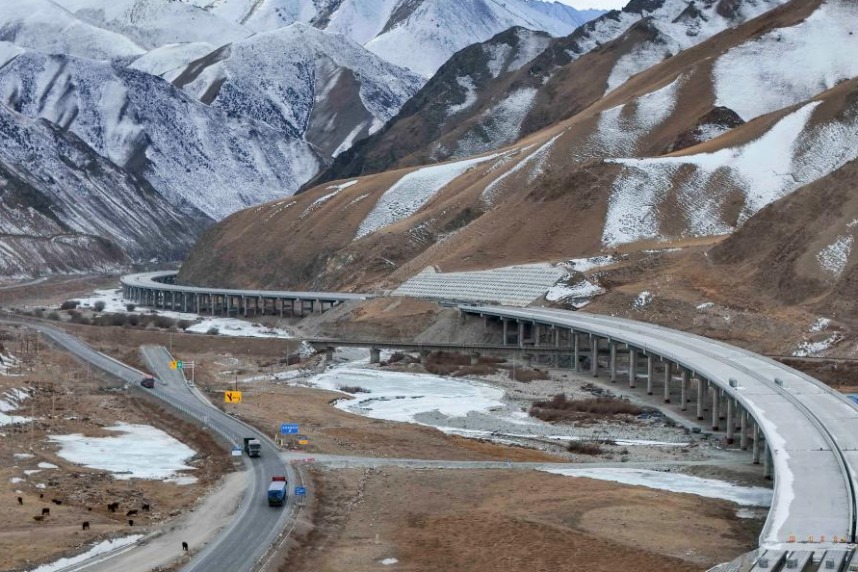
    URUMQI – A monumental engineering achievement is poised to transform transportation in Northwest China as the Tianshan Shengli Tunnel, now recognized as the world’s longest expressway tunnel, prepares to open to traffic by the conclusion of 2025. This 22.13-kilometer engineering marvel will forge a critical new thoroughfare directly through the formidable Tianshan Mountains, effectively bridging the northern and southern regions of Xinjiang Uygur Autonomous Region for the first time.

    The announcement was formally made by Guo Sheng, Deputy Director of the regional transport department, during a press conference hosted by the Information Office of the Xinjiang regional government on Thursday. Guo emphasized that the tunnel constitutes the centerpiece of the new Urumqi-Yuli Expressway, a project specifically designed to eliminate a persistent transportation bottleneck. This bottleneck has historically impeded economic integration and coordinated development between the northern and southern areas of the vast region.

    The operational impact of the tunnel will be dramatic. The arduous journey across the central Tianshan range, which previously consumed several hours on treacherous mountain roads, will be reduced to a smooth and safe 20-minute drive. On a broader scale, travel between the regional capital of Urumqi, located north of the mountains, and the major southern city of Korla will be slashed from a seven-hour undertaking to approximately three hours. This unprecedented connectivity is expected to unlock significant economic potential, facilitate cultural exchange, and enhance logistical efficiency across Xinjiang, marking a new chapter in the region’s development.

  • HKSAR govt releases first-ever Chinese medicine development blueprint

    HKSAR govt releases first-ever Chinese medicine development blueprint

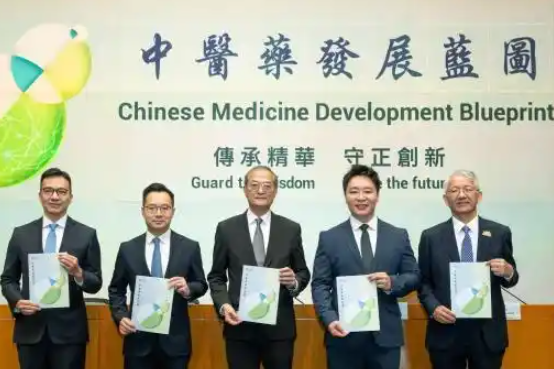
    HONG KONG – In a landmark move for healthcare development, the Hong Kong Special Administrative Region (HKSAR) government has formally launched its inaugural Chinese Medicine Development Blueprint on December 19, 2024. This comprehensive strategic document represents the region’s first systematic framework for advancing traditional Chinese medicine (TCM) within its healthcare ecosystem.

    The blueprint establishes a multi-phase implementation strategy with clearly defined short-term, medium-term, and long-term objectives across five critical domains: TCM clinical services, professional development, pharmaceutical advancement, cultural preservation, and international expansion. The strategic plan specifically emphasizes enhancing clinical service excellence through clearly defining TCM’s role within Hong Kong’s broader healthcare infrastructure.

    A key component of the initiative involves establishing sophisticated interprofessional collaboration mechanisms that will integrate TCM services more effectively with conventional medical practices. The development plan also addresses pharmaceutical quality control, outlining rigorous standards and management protocols to elevate the overall quality and safety of Chinese medicinal products.

    Health Secretary Lo Chung-mau emphasized the blueprint’s dual purpose during the announcement: “This strategic framework aims to provide Hong Kong residents with higher quality, more comprehensive healthcare services through traditional Chinese medicine, while simultaneously positioning Hong Kong as the premier bridgehead for TCM’s global expansion.”

    The development blueprint emerges as part of Hong Kong’s broader commitment to healthcare innovation and cultural preservation, potentially establishing new international standards for traditional medicine integration within modern healthcare systems.