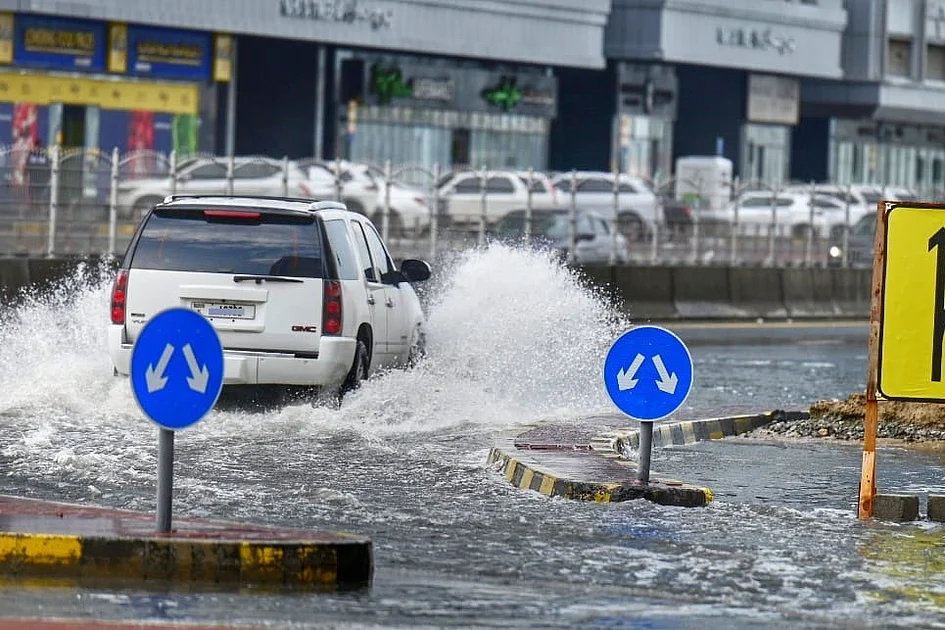
The Philippines has narrowly avoided a catastrophic disaster as Typhoon Fung-wong, once a super typhoon, weakened significantly after making landfall. The storm, which initially carried winds of 185 km/h (115 mph) and gusts of 230 km/h (143 mph), struck Aurora province in Luzon, the country’s most populous island, on Sunday evening. Despite the ferocity of the storm, the damage was less severe than anticipated, thanks to extensive preemptive measures. Approximately 1.4 million people were evacuated before the typhoon hit, and hundreds of flights were canceled. Buildings were secured, and residents in vulnerable areas were urged to move to higher ground. The Philippine government had declared a state of calamity nationwide, granting agencies enhanced powers to access emergency funds and expedite the delivery of essential goods and services. The storm’s impact was felt most acutely in low-lying and coastal areas, where flooding has isolated several communities. Power outages have affected much of Luzon, and roads and bridges have been rendered impassable by high water levels. The civil defense office reported two fatalities: one person drowned, and another woman was found dead under debris in Catbalogan City. Two others sustained injuries. The Philippines, located in a region prone to tropical cyclones, is no stranger to such natural disasters. About 20 tropical cyclones form in the area annually, with half directly affecting the country. While climate change is not believed to increase the number of cyclones, it is thought to intensify their severity, potentially leading to higher wind speeds, heavier rainfall, and increased coastal flooding. The recent back-to-back impacts of Typhoons Kalmaegi and Fung-wong have underscored the country’s vulnerability to such extreme weather events. Kalmaegi, one of the strongest typhoons this year, left at least 204 people dead in the Philippines and more than 100 missing. The storm also claimed five lives in Vietnam, where it caused widespread destruction. Despite the challenges, the Philippines’ proactive response to Typhoon Fung-wong has been credited with minimizing casualties and damage, offering a glimmer of hope in the face of increasingly unpredictable weather patterns.
作者: admin
-

BBC chief Tim Davie quits amid Trump speech editing scandal
In a significant shake-up at the British Broadcasting Corporation (BBC), Director General Tim Davie and Head of News Deborah Turness have stepped down following a scandal involving the editing of a documentary about former US President Donald Trump. The resignations, announced on Sunday, November 9, 2025, come in the wake of allegations that the BBC’s flagship program, Panorama, manipulated a speech by Trump in a misleading manner. The broadcaster confirmed the departures, which have sparked widespread debate about journalistic integrity and editorial standards. The controversy centers on claims that the documentary misrepresented Trump’s statements, raising concerns about bias and the ethical responsibilities of public service media. Davie, who has led the BBC since 2020, expressed regret over the incident, stating that the organization must uphold the highest standards of accuracy and fairness. Turness, a veteran journalist, also acknowledged the need for accountability in her resignation statement. The resignations mark a pivotal moment for the BBC, which faces mounting scrutiny over its editorial practices and its role in shaping public discourse. The incident has also reignited discussions about the challenges of reporting on polarizing political figures in an era of heightened media skepticism.
-

Typhoon Fung-wong blows away from the Philippines, leaving 2 dead and 1.4 million displaced
Typhoon Fung-wong, a powerful super typhoon, wreaked havoc across the northern Philippines, causing widespread flooding, landslides, and power outages before moving toward Taiwan on Monday. The storm, with sustained winds of up to 185 kph (115 mph) and gusts reaching 230 kph (143 mph), made landfall in Aurora province on Sunday night. It weakened as it traversed mountainous regions and agricultural plains, eventually exiting into the South China Sea. The disaster claimed at least two lives—one due to flash floods in Catanduanes and another from a collapsed house in Catbalogan city—and displaced over 1.4 million people, with 318,000 still in evacuation centers. The typhoon compounded the devastation left by Typhoon Kalmaegi, which had earlier killed 224 people in central provinces and impacted Vietnam. Philippine President Ferdinand Marcos Jr. declared a state of emergency, while authorities closed schools, government offices, and canceled hundreds of flights and maritime operations. The Philippines, one of the world’s most disaster-prone nations, faces frequent typhoons, earthquakes, and volcanic activity, highlighting the urgent need for robust disaster preparedness and response.
-

Homes underwater, no power: Filipinos share harrowing videos as back-to-back typhoons hit
The Philippines is facing unprecedented devastation as two powerful typhoons, Kalmaegi and Super Typhoon Fung-wong, have wreaked havoc across the archipelago. Residents have turned to social media to share harrowing videos of their experiences, showcasing the scale of destruction and the resilience of affected communities. Entire neighborhoods are submerged, with only rooftops visible above the floodwaters, as families grapple with fear and uncertainty. In Dinapigue, Isabela, Super Typhoon Fung-wong intensified on November 9, with landfall expected in Aurora province later that evening. Videos posted by residents, such as Princess Joeuana Ramos, depict massive waves crashing through fences and floodwaters carrying debris into homes, accompanied by the panicked cries of those caught in the storm. The situation is compounded by the aftermath of Typhoon Kalmaegi, which struck the Central Visayas region days earlier, claiming at least 188 lives and leaving hundreds missing. In Cebu, residents still reeling from Kalmaegi’s impact shared their struggles online. A viral TikTok post by a woman named Chine showed her family stranded on their rooftop, waiting in vain for rescue. Her caption highlighted public frustration over alleged corruption and inadequate flood-control projects. Another video by @bernheizelflores, viewed over 3.7 million times, showed cars swallowed by muddy torrents, with the caption criticizing the lack of infrastructure planning. Amid the chaos, acts of bravery have emerged as symbols of hope. In one viral clip, residents rescued eight people trapped in a car amid raging floodwaters, embodying the Filipino spirit of bayanihan—communal unity in times of crisis. As the nation begins to assess the damage, the focus shifts to recovery and addressing systemic issues that exacerbated the disaster.
-

Miss Universe official dismissed after ‘malicious acts’; legal action to be taken
The 74th Miss Universe pageant in Thailand has been overshadowed by controversy, culminating in the dismissal of host Nawat Itsaragrisil following allegations of misconduct. The drama unfolded during a meeting where Nawat reportedly insulted Mexico’s delegate, Fatima Bosch, calling her a ‘dumbhead’ during a dispute over promotional content. Bosch staged a dramatic walkout, supported by other contestants, including Miss Iraq, who stood in solidarity with her. Miss Universe President Raúl Rocha condemned Nawat’s actions, stating that ‘the values of respect and dignity toward women’ had been violated. Rocha announced that Nawat’s participation in the event would be restricted, and legal action would be pursued for his ‘malicious acts.’ Nawat later appeared at a press conference, tearfully claiming he had been ‘betrayed’ and offering a public apology during the opening ceremony. This incident is not Nawat’s first controversy; last year, he faced criticism during the Miss Grand International pageant for poor treatment of contestants. The Miss Universe pageant, one of the ‘big four’ global beauty contests, has also been marred by other issues, including an investigation into participants allegedly promoting an online casino. Despite the turmoil, the final is scheduled for November 21 in Nonthaburi province.
-

UAE winter: 8 camping spots where you can pitch a tent this season
As winter sets in across the UAE, with temperatures dropping to single digits in some regions, the season beckons outdoor enthusiasts to explore the country’s diverse camping destinations. From the towering peaks of Jebel Jais to the serene sands of Al Qudra, the UAE offers a variety of terrains perfect for an adventurous escape. Here are eight must-visit camping spots to make the most of the cooler weather:
1. **Jebel Jais**: Standing at 1,900 metres, this is the UAE’s highest and coldest mountain. Temperatures range from 9°C at dawn to 20°C by midday, ideal for cozy nights and scenic hikes. The fully paved road ensures easy access.
2. **Jebel Hafeet**: A favorite among Dubai and Abu Dhabi residents, this Al Ain mountain offers a milder climate, with lows of 14°C and highs of 27°C. Its well-lit, winding roads and picnic spots make it a convenient choice.
3. **Jebel Yibir**: Lesser-known but equally stunning, this spot features rougher terrain and temperatures between 14°C and 30°C. A 4×4 vehicle is recommended for exploring its rugged paths.
4. **Al Suhub Rest House**: Located 600 metres above sea level, this Sharjah gem sees temperatures from 16°C at night to 31°C during the day, offering a comfortable camping experience.
5. **Wadi Shawka**: Perfect for hikers, this area boasts temperatures between 18°C and 28°C, providing a classic UAE camping adventure.
6. **Hatta**: Situated at 300-400 metres elevation, Hatta’s temperatures range from 20°C to 30°C, making it pleasant for camping near Hatta Dam or Wadi Hub.
7. **Hanging Gardens**: Just outside Kalba, this lush spot offers a green retreat with temperatures between 19°C and 31°C, accessible by regular vehicles.
8. **Al Qudra Desert**: Ideal for a quick escape, Al Qudra’s temperatures range from 22°C to 32°C, perfect for stargazing and overnight camping.
**Tips for Campers**: Check weather forecasts, carry essentials, use designated fire pits, and avoid loud music or feeding wildlife. Embrace the season responsibly and enjoy the UAE’s natural beauty.
-

Should you ‘feed a cold and starve a fever’? Find out if the adage is true
The age-old adage ‘feed a cold and starve a fever’ has been passed down through generations as a piece of sick-day wisdom. However, experts now reveal that this advice is little more than an old wives’ tale. Dr. David Schneider, chair of the department of family and community medicine at the University of Texas Southwestern Medical Center, emphasizes that there is no scientific basis for this claim. Instead, the focus should be on maintaining proper nutrition and hydration to support the body’s immune system during illness.
Benjamin Hurrell, an assistant professor of nutrition and immunology at the University of California, Davis, points out the logical flaw in the adage: it’s possible to have both a cold and a fever simultaneously, making the advice impractical. Research shows that being well-nourished is crucial for immune function. Chronic undernutrition or severe nutritional deficiencies can impair the body’s ability to fight infections, such as pneumonia or gastrointestinal illnesses, by reducing the production of infection-fighting immune cells.
Dr. Geeta Sood, assistant professor of medicine at Johns Hopkins University, notes that while eating nutritious foods like fruits and vegetables can help meet the body’s energy needs during illness, there is no strong evidence that specific foods significantly impact recovery. If you lack appetite for a day or two, it’s generally safe to rely on your body’s energy reserves. However, prolonged weakness warrants medical attention.
Supplements like zinc or vitamin C have limited proven benefits. While some studies suggest zinc may slightly reduce the duration of colds, others show no effect. Honey, on the other hand, has been shown to soothe coughs, according to a 2021 review of clinical trials.
Hydration is critical during illness, especially when experiencing a fever or cold. Dr. Michael Hanak, a family medicine physician at Rush University Medical Center, recommends drinking two to four liters of fluids daily to thin mucus and replenish lost fluids. Electrolyte drinks can be particularly helpful for fever-related dehydration.
Ultimately, the best advice for recovering from a cold or fever is to stay hydrated, rest, and let time do its work. As Dr. Hanak aptly puts it, ‘Time heals all wounds.’
-

Guangdong urged to drive high-quality development
President Xi Jinping has emphasized the need for Guangdong province to spearhead high-quality development through comprehensive reform and opening-up. During a two-day inspection tour concluding on Saturday, Xi, who also serves as the General Secretary of the Communist Party of China Central Committee and Chairman of the Central Military Commission, highlighted Guangdong’s pivotal role in shaping the nation’s 15th Five-Year Plan (2026-30). This plan, adopted during the fourth plenary session of the 20th CPC Central Committee, outlines China’s developmental trajectory over the next five years. Guangdong, with a GDP of 14.16 trillion yuan ($1.99 trillion) in 2024, has consistently led the nation’s economic rankings for 36 years. Xi urged the province to leverage its strengths in science and technology, foster a modern industrial system, and deepen cooperation with Hong Kong and Macao to advance the Guangdong-Hong Kong-Macao Greater Bay Area (GBA) into a world-class city cluster. The GBA, comprising Hong Kong, Macao, and nine cities in Guangdong’s Pearl River Delta, is seen as a bridgehead for China’s reform and high-level opening-up. Xi’s visit also included a stop in Meizhou, where he inspected efforts to revitalize rural areas and support old revolutionary base areas. Experts noted that Xi’s tour underscores China’s commitment to deepening reform and opening-up, with the GBA playing a crucial role in integrating global industrial chains and driving domestic innovation.
-

Trial for suspect of deadly Magdeburg market attack begins
A high-profile trial commenced on Monday in Magdeburg, Germany, for a Saudi Arabian doctor accused of orchestrating a devastating attack on a Christmas market last December. The incident, which occurred on December 20, 2024, resulted in the deaths of six individuals and left over 300 others injured. The suspect, identified as Taleb A. in accordance with German privacy laws, allegedly drove a rented BMW at speeds of up to 48 km/h through the crowded market in the heart of Magdeburg. The attack, which lasted just over a minute, took place at 19:02 local time, when the market was bustling with holiday revelers. Taleb A., now 51, faces charges of murdering six people, including a nine-year-old boy and five women aged between 45 and 75. Additionally, he is accused of attempted murder in relation to 338 others, as well as causing grievous bodily harm to 309 individuals and dangerous interference with road traffic. Prosecutors in Naumburg, Saxony-Anhalt, stated that Taleb A. was not under the influence of alcohol or similar substances during the rampage. They believe he acted out of frustration over a civil dispute and the failure of various criminal complaints, aiming to kill an indeterminate number of people. The crime was reportedly planned and prepared meticulously over several weeks without accomplices. Taleb A. has been in custody since the day of the attack and faces life imprisonment if convicted. Due to the large number of victims, a temporary courthouse has been erected in Magdeburg for the trial. This incident adds to a history of attacks on Germany’s Christmas markets, primarily by extreme Islamists. However, Taleb A. was described as an ‘untypical’ attacker, being a refugee from Saudi Arabia who was critical of Islam and expressed support for the far-right Alternative for Germany (AfD) party on social media, praising their efforts to ‘protect Germany.’
-

A Kremlin target? Exiled Church man hits back at claims of spying
Metropolitan Hilarion, the former head of foreign relations for the Russian Orthodox Church, has broken his silence following a series of serious allegations against him. Once a prominent figure in the Church and a potential successor to Patriarch Kirill, Hilarion’s fall from grace began after Russia’s full-scale invasion of Ukraine in 2022. While no official reason was given for his exile to Hungary, many observers attribute it to his neutral stance on the war, which contrasted sharply with Patriarch Kirill’s vocal support for Vladimir Putin’s policies. In Putin’s Russia, where criticizing the war is a criminal offense, Hilarion’s refusal to endorse the conflict likely cost him his position. The allegations against Hilarion escalated in June 2024 when George Suzuki, a former aide, accused him of sexual misconduct and collaboration with Russia’s FSB intelligence agency. Suzuki, a 23-year-old Japanese citizen, began working for Hilarion after his arrival in Budapest and has since posted video and audio clips on his YouTube channel to support his claims. Hilarion denies all allegations, stating that some of the evidence has been doctored. He has vowed to refute the accusations in court. Hilarion admits to mistakes in his treatment of Suzuki, including agreeing to financial demands from Suzuki’s family, but maintains his innocence regarding harassment and espionage. The case has gained urgency as the Czech government considers imposing sanctions on Hilarion, potentially forcing him to return to Russia. Despite the ordeal, Hilarion remains loyal to the Russian Orthodox Church and Patriarch Kirill. His supporters fear that Kremlin hardliners are targeting him to tarnish his reputation. The former Archbishop of Canterbury, Rowan Williams, suggested that the Kremlin’s modus operandi is recognizable in this case. Hilarion’s future remains uncertain as he navigates legal battles and political pressures.