作者: admin

  • Bangladesh editors warn of ‘fight for survival’ as mob violence targets media

    Bangladesh editors warn of ‘fight for survival’ as mob violence targets media

    Media executives in Bangladesh issued urgent warnings on Monday that the nation’s press corps faces an existential threat following a wave of targeted mob violence against news organizations. The alarming escalation comes after the assassination of prominent youth activist Sharif Osman Hadi, whose death triggered widespread protests that rapidly devolved into coordinated attacks on major media institutions.

    Hadi, a 32-year-old key figure in the student-led uprising that ousted long-serving Prime Minister Sheikh Hasina last year, was fatally shot by masked assailants in Dhaka while campaigning for February’s parliamentary elections. His killing on Thursday served as the catalyst for subsequent arson and vandalism attacks targeting the offices of leading publications including The Daily Star and Prothom Alo.

    Assailants explicitly accused these media outlets of “serving the interests of India and Sheikh Hasina,” allegations that editors have vehemently denied. Hasina, who fled to India following her removal from power, remains in New Delhi despite extradition requests from Bangladeshi authorities.

    During an emergency meeting convened by the Editors’ Council and Newspaper Owners’ Association of Bangladesh, The Daily Star editor Mahfuz Anam revealed that journalists are receiving direct death threats through social media channels. “We have seen messages specifically calling for hunters to target and kill journalists from The Daily Star and Prothom Alo in their homes,” Anam stated. “This situation has moved beyond concerns about freedom of expression—it has become a fundamental struggle for the right to remain alive.”

    The crisis unfolds against Bangladesh’s troubling position at 149th out of 180 countries on the World Press Freedom Index. Human rights organizations warn that continued attacks on journalists and activists could severely constrict civic freedoms ahead of the February 12 parliamentary elections.

    Adding to the gravity of the situation, New Age editor and Editors’ Council president Nurul Kabir reported being physically assaulted while attempting to rescue colleagues during the attacks. Kabir accused the assailants of attempting to immolate journalists inside their offices.

    The interim administration led by Nobel laureate Muhammad Yunus, which currently governs Bangladesh, has characterized the violence as the work of fringe elements and promised full accountability. Yunus’ press office confirmed on Monday that police have identified 31 suspects and made nine arrests in connection with the assaults.

  • Pro-Israel groups target Miss Palestine Nadeen Ayoub after MEE interview

    Pro-Israel groups target Miss Palestine Nadeen Ayoub after MEE interview

    Nadeen Ayoub, the pioneering Miss Palestine contestant who made history at the recent Miss Universe competition, has become the target of organized harassment campaigns by pro-Israel groups following her appearance on Middle East Eye’s Real Talk podcast. The 27-year-old beauty queen discussed her experience representing Palestinian identity on the global stage, which triggered immediate backlash across social media platforms.

    Betar USA, the American division of the Revisionist Zionist Betar movement known for its aggressive campaigns against Palestinian voices, initiated personal attacks targeting Ayoub’s previous marriage to Sharaf Barghouti, son of imprisoned Palestinian political leader Marwan Barghouti. The incarcerated Barghouti, often compared to Nelson Mandela and viewed as a potential unifying figure in Palestinian politics, is serving multiple life sentences in Israeli prison since 2002 for his role in the Second Intifada.

    During her interview, Ayoub expressed admiration for her former father-in-law, who recently faced physical assault by Israeli prison guards. ‘Palestinians are proud of Marwan – the world sees him as a peace symbol,’ she stated, adding that the attacks had inadvertently created a platform to discuss Palestinian causes.

    The controversy extended to StopAntisemitism, an American pro-Israel organization previously known for targeting children’s content creators, which questioned Ayoub about her family connections on social media. This occurred amid a global campaign for Barghouti’s release supported by prominent figures including Richard Branson, Benedict Cumberbatch, and Bassem Youssef.

    Ayoub also revealed experiencing racism and identity denial throughout the competition, including being labeled a ‘tiara-rist’ by media outlets and facing skepticism about her Palestinian heritage. She described tense interactions with Miss Israel contestant Melanie Shiraz, who allegedly pursued her with Israeli flags during photo sessions. Shiraz later denied these allegations despite viral footage suggesting otherwise.

    The situation unfolds against the backdrop of ongoing violence in Gaza, where Israeli forces have committed numerous ceasefire violations resulting in hundreds of Palestinian casualties since October, effectively transforming established demarcation lines into firing zones.

  • Carney names ex-Blackrock executive as new US ambassador

    Carney names ex-Blackrock executive as new US ambassador

    Prime Minister Mark Carney has selected prominent financier Mark Wiseman, a former BlackRock executive, to serve as Canada’s ambassador to the United States during a period of crucial trade negotiations with the Trump administration. The appointment comes as Canada seeks to reset its strained bilateral relationship with its southern neighbor while preparing for a complex review of the existing free trade agreement.

    Wiseman, 55, brings substantial financial expertise to the diplomatic role, currently serving as senior advisor and chairman of Canada at Lazard financial services and as a senior advisor at Boston Consulting Group. The Yale-educated lawyer has previously worked in New York and Paris with Sullivan & Cromwell, and reportedly maintains a close personal friendship with Prime Minister Carney.

    The new ambassador’s appointment follows current ambassador Kirsten Hillman’s decision to conclude her tenure in Washington. Carney emphasized Wiseman’s “immense experience, extensive contacts and deep commitment” in a statement, noting the appointment comes at a “crucial time of transformation” for both nations. “As a core member of our negotiating team, he will help advance the interests of Canadian workers, businesses, and institutions, while building opportunities for both Canada and the United States,” Carney stated.

    Wiseman’s background includes co-founding the Century Initiative, a charitable organization advocating for increased Canadian immigration to reach 100 million people by 2100 to stimulate economic growth. This association has drawn criticism from Conservative party leader Pierre Poilievre, who accused Wiseman of promoting policies that “inflate the cost of living, take away jobs and put pressure on our health care system.”

    The diplomatic assignment presents significant challenges as Wiseman will navigate a relationship strained by Trump’s imposition of sector-specific tariffs on Canadian metals, lumber and automotive products. Tensions escalated in late October when Trump halted trade talks following an anti-tariff advertisement commissioned by Ontario province and aired in the US markets.

    A scheduled review of the Canada-United States-Mexico Agreement (CUSMA) is currently underway, beginning with public hearings and stakeholder consultations. The outcome could result in renewal or expiration of the trade pact that currently exempts most Canadian goods from Trump’s sweeping 35% tariff rate on all imports. Wiseman is scheduled to assume his ambassadorial responsibilities in mid-February.

  • Wildfire-hit town wins €468m in Spain’s Christmas lottery

    Wildfire-hit town wins €468m in Spain’s Christmas lottery

    In a remarkable turn of fortune, Spain’s famed Christmas lottery has brought transformative hope to northwestern regions recently ravaged by catastrophic wildfires. The El Gordo jackpot, distributing hundreds of millions of euros, primarily benefited residents of León province where devastating summer fires had previously wrought destruction.

    The small town of La Bañeza, with approximately 11,000 residents, emerged as a major beneficiary with collective winnings reaching €468 million. Among the celebrants were members of the local football club, whose community had endured the loss of 8,000 hectares to wildfires just four months prior, including the tragic death of 35-year-old Abel Ramos.

    Mayor Javier Carrera characterized the windfall as “an injection of excitement and hope” for a community that had also suffered from the recent closure of a sugar-beet factory resulting in significant job losses. The sentiment was echoed in neighboring Villablino, where residents received €200 million in lottery winnings. Mayor Mario Rivas acknowledged that while the money couldn’t compensate for the loss of lives in recent mining accidents, it represented welcome positive news.

    The winning tickets in Villablino were predominantly sold by a local Alzheimer’s association, adding institutional benefit to the individual windfalls. Additional substantial prizes were distributed in La Pola de Gordón (€60 million) and a working-class Madrid district (€64 million).

    Maribel Martín, a Villablino resident who won €400,000, described the community’s emotional state before the lottery: “We were really down.” She plans to “spread it around a bit and enjoy life” with her winnings.

    The northwestern regions of Spain, though accustomed to seasonal wildfires, experienced particularly severe blazes during record-breaking summer conditions. Firefighters battled enormous fires throughout August across León and neighboring Galicia, with 0.8% of the country’s total surface area burned during the summer crisis.

  • US signs new health deals with 9 African countries that mirror Trump’s priorities

    US signs new health deals with 9 African countries that mirror Trump’s priorities

    The United States has initiated a fundamental restructuring of its global health assistance through newly negotiated bilateral agreements with at least nine African nations. This strategic shift, implemented under the Trump administration’s ‘America First’ foreign policy doctrine, replaces previous USAID-managed programs with government-to-government compacts emphasizing mutual benefits over traditional aid.

    Kenya, Nigeria, Rwanda, Cameroon, Eswatini, Lesotho, Liberia, and Mozambique have entered these pioneering health partnerships that tie funding to specific policy conditions and domestic financial commitments. The arrangements mark a dramatic departure from conventional assistance models by requiring recipient nations to substantially increase their own health expenditures while accepting reduced American funding—averaging a 49% decrease compared to previous allocations according to the Center for Global Development.

    Notably, Nigeria’s agreement includes specialized provisions emphasizing support for Christian-based health facilities despite the country’s slight Muslim majority, with the State Department explicitly linking this funding to Nigeria’s efforts in protecting Christian populations from violence. Several signatory nations—including Rwanda and Uganda—have separately accepted controversial U.S. deportation agreements, though officials deny direct linkage between these arrangements.

    Conspicuously absent from the partnerships is South Africa, which lost approximately $436 million in annual HIV funding following diplomatic tensions with the administration. The new compacts prioritize disease surveillance, HIV treatment, and malaria prevention while demanding increased financial self-sufficiency from recipient nations, fundamentally redefining the terms of U.S. global health engagement.

  • Justice Department sues DC over block of semi-automatic guns

    Justice Department sues DC over block of semi-automatic guns

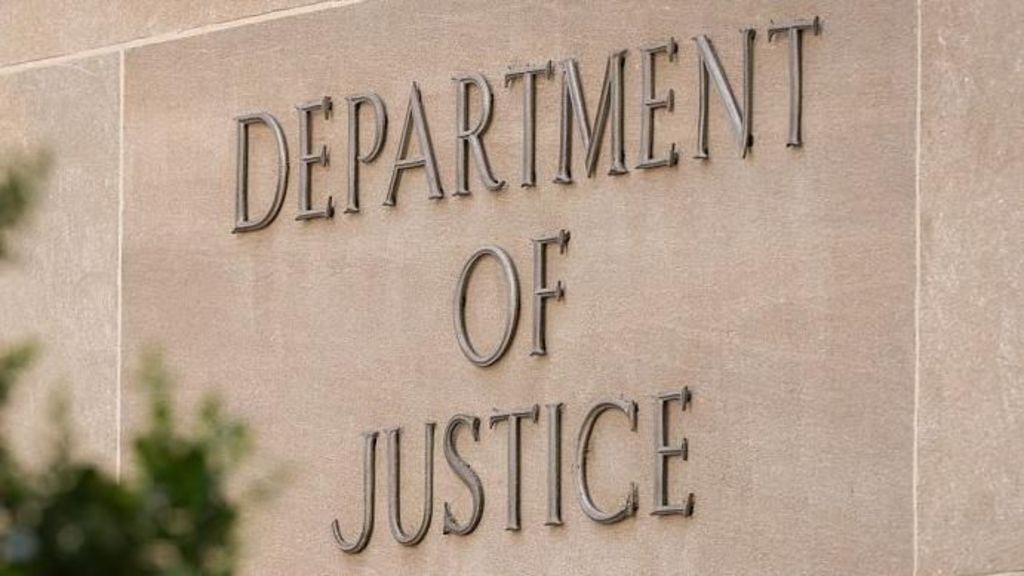
    The U.S. Department of Justice has initiated legal action against the District of Columbia concerning its prohibition on registering semi-automatic firearms, marking the latest development in the ongoing national debate over gun control measures. Filed in federal court on Monday, the lawsuit targets DC’s existing legislation that effectively bans residents from legally possessing AR-15 style rifles and other rapid-loading firearms through registration restrictions.

    Attorney General Pam Bondi characterized the district’s firearm regulations as “an unconstitutional infringement on the Second Amendment” in an official statement. The legal challenge emerges from the Justice Department’s recently established gun rights division, whose attorneys argue that current DC statutes prevent law-abiding citizens from possessing these commonly owned firearms for lawful domestic purposes.

    This litigation represents the most recent confrontation between the federally Republican administration and the predominantly Democratic district regarding firearm legislation. Washington DC’s unique status as the national capital subjects its local laws and budgetary decisions to congressional oversight, with previous Republican lawmakers having overturned several local gun control initiatives.

    Concurrent with this legal action, the Trump administration has pursued measures to relax federal firearm restrictions within the district. U.S. Attorney for DC Jeanine Pirro, a former television commentator, announced earlier this summer that her office would cease pursuing felony charges against individuals found carrying rifles or shotguns.

    DC maintains comprehensive firearm regulations that permit only residents without criminal convictions to register limited numbers of firearms following mandatory safety training. The district additionally requires specific registrations for carrying weapons outside residential premises and imposes restrictions on public areas where firearms may be carried.

    The legal proceedings unfold against a backdrop of heightened security concerns following two significant shooting incidents earlier this year. In May, a shooter targeted Israeli embassy personnel near the city’s Jewish museum, while another attack last month resulted in the death of one West Virginia National Guard officer and injury to another.

    In response to these security challenges, President Trump declared a crime emergency in August, deploying National Guard troops and additional federal officers to the district. The administration has subsequently extended the Guard’s presence through at least February, with recent judicial approval allowing their continued deployment pending resolution of a separate legal challenge.

    According to Metropolitan Police Department statistics, violent crime incidents through Monday showed a 28% reduction compared to the corresponding period in 2024, with homicides decreasing by approximately one-third. The department has declined to comment on the pending litigation, as has the DC attorney general’s office when contacted by news organizations.

  • Netflix refinances part of $59 billion bridge loan tied to Warner Bros deal

    Netflix refinances part of $59 billion bridge loan tied to Warner Bros deal

    In a strategic move to solidify one of the largest media acquisitions in history, Netflix has successfully refinanced a significant portion of its $59 billion bridge loan originally secured for the Warner Bros Discovery takeover. According to Monday’s regulatory filing, the streaming pioneer has arranged a comprehensive $25 billion financing package consisting of a $5 billion revolving credit facility and two separate $10 billion delayed-draw term loans.

    The remaining $34 billion of the bridge facility will undergo syndication in the coming months. These financial instruments are specifically designated to cover the cash portion of the landmark transaction, associated fees, and various expenses. Additionally, the proceeds may be allocated toward refinancing existing obligations and general corporate purposes.

    Netflix emerged victorious from a highly competitive bidding war that included an unsolicited all-cash offer of $108.4 billion from Paramount Skydance. Despite Paramount’s proposal offering $30 per share and presenting higher immediate valuation, Warner Bros Discovery’s board maintained their endorsement of Netflix’s bid, emphasizing superior strategic alignment and financing reliability.

    The sweeping acquisition encompasses Warner Bros Discovery’s extensive portfolio, including its renowned film and television studios, streaming assets, and the prestigious HBO and HBO Max platforms. The transaction timeline anticipates finalization in the third quarter of 2026, following the planned spin-off of Warner Bros’ Global Networks unit.

    This corporate separation, announced in mid-2025, strategically isolates high-growth streaming and studio operations from legacy network assets, enabling each entity to pursue specialized business strategies and maximize shareholder value. The initial bridge loan, secured on December 4th, provided Netflix with the financial certainty required during the competitive bidding process, with bridge loans typically serving as interim financing solutions for major transactions before being replaced by more permanent debt structures.

  • Hawaii’s YouTube kicker dubbed the ‘Tokyo Toe’ used grit to become an AP All-American with NFL hopes

    Hawaii’s YouTube kicker dubbed the ‘Tokyo Toe’ used grit to become an AP All-American with NFL hopes

    HONOLULU — Kansei Matsuzawa’s extraordinary transformation from a disillusioned Japanese youth to a record-breaking American football star represents one of the most remarkable sports narratives of the season. The University of Hawaii kicker, who taught himself the art of placekicking through YouTube tutorials, has captivated the football world with his unprecedented accuracy and inspiring backstory.

    Matsuzawa’s breakthrough moment arrived during Hawaii’s dramatic 23-20 victory over Stanford, where he delivered both game-tying and game-winning field goals. His subsequent performance throughout Hawaii’s 8-4 season achieved legendary status, as he converted 25 consecutive field goals to match a 43-year-old Football Bowl Subdivision record. These accomplishments earned him first-team Associated Press All-American honors and placed him as a finalist for the Lou Groza Award, recognizing the nation’s premier placekicker.

    The journey began in 2019 when Matsuzawa, having failed college entrance exams twice in Japan, found himself directionless at age 20. ‘I had nothing. I lost my purpose in life,’ Matsuzawa recalled during an interview. His father’s gift of a trip to California exposed him to NFL football for the first time, where despite understanding little about the game, he became captivated by the stadium energy and fan enthusiasm.

    Returning to Japan, Matsuzawa embarked on an improbable mission: mastering American football kicking through online videos, particularly studying Seattle Seahawks kicker Jason Myers. With few proper football fields available in Japan, he negotiated practice time at a facility owned by the Fujitsu Frontiers industrial team in exchange for performing team errands.

    After two years of dedicated practice while working at a steakhouse, Matsuzawa sent kicking videos to U.S. junior colleges. Hocking College in Nelsonville, Ohio, offered him an opportunity despite significant language and cultural barriers. His resilience caught the attention of Hawaii special teams coordinator Thomas Sheffield, who recognized both technical proficiency and extraordinary mental fortitude.

    ‘That’s what it’s going to take to be successful,’ Sheffield noted, emphasizing Matsuzawa’s ability to overcome adversity. The kicker eventually earned a scholarship, reducing financial burden on his family who had downsized their home and contributed significantly to his education costs.

    Matsuzawa credits his success to a refined mindset developed through twice-weekly sessions with a sports psychologist. While previously focused on statistical outcomes, he now emphasizes process-oriented thinking and maintaining positivity. ‘Luckily my job is simple—making field goals—and that’s what I want to do. Just one at a time,’ Matsuzawa stated.

    Teammates have dubbed him ‘Tokyo Toe,’ celebrating both his heritage and exceptional skill. Holder Caleb Freeman emphasized Matsuzawa’s humility despite his achievements: ‘He has always just shined the light on everyone else.’

    As Matsuzawa prepares for his final Hawaii Bowl appearance against California before graduation, he stands on the precipice of potentially becoming the first genuinely Japan-developed NFL player. While the league has featured players with Japanese ancestry, most were military children born overseas. Hawaii coach Timmy Chang expresses confidence in Matsuzawa’s future: ‘If he continues his mindset and the track in which he’s at, I think he’s going to do well.’

    The story transcends sports, representing a testament to determination, cross-cultural adaptation, and the transformative power of digital learning resources in the modern athletic landscape.

  • What Trump’s embrace of cryptocurrencies has unleashed

    What Trump’s embrace of cryptocurrencies has unleashed

    The cryptocurrency landscape has undergone a seismic transformation under former President Donald Trump’s unprecedented endorsement, creating both unprecedented opportunities and systemic vulnerabilities within global financial markets. Trump’s self-proclaimed status as the ‘first crypto president’ has catalyzed a regulatory overhaul, prompted aggressive pro-crypto legislation, and inspired the creation of his official ‘memecoin’ $TRUMP.

    This political shift has unleashed a wave of financial innovation with far-reaching consequences. More than 250 publicly traded companies have incorporated substantial cryptocurrency holdings into their balance sheets, while new investment products have democratized access to digital assets through conventional brokerage accounts and retirement plans. The most ambitious proposals even envision a crypto-powered alternative stock market where tokenized company shares would trade continuously on blockchain networks.

    The euphoric expansion, however, carries significant risks. This autumn’s dramatic crypto market collapse exposed the fragility of this new financial ecosystem, with numerous companies experiencing catastrophic losses. Particularly concerning is the massive leveraging occurring within the sector—public companies have accumulated over $20 billion in debt to finance crypto acquisitions, while investors have placed more than $200 billion in leveraged bets on future coin prices.

    The situation exemplifies what experts describe as the dangerous blurring of lines between speculative betting and legitimate investing. Timothy Massad, former Treasury Department assistant secretary for financial stability, expressed grave concerns: ‘It’s very worrisome to me. The line between betting, speculating and investing has largely disappeared.’

    The October flash crash demonstrated how quickly leveraged positions can unravel, with $19 billion in crypto bets liquidated in a single day affecting 1.6 million traders worldwide. Technical failures at major exchanges like Coinbase and Binance during the crisis prevented investors from managing their positions, exacerbating losses.

    Despite these warning signs, industry leaders continue pushing boundaries. Companies like Plume and Kraken are actively developing tokenization platforms that would represent real-world assets as digital coins, arguing blockchain technology creates more transparent and efficient markets. Their efforts have received serious consideration from regulators, including SEC Chair Paul Atkins who has expressed enthusiasm for tokenized securities.

    The Trump family’s deepening involvement in crypto ventures—particularly through World Liberty Financial and its connections to publicly-traded DAT companies—has further complicated the regulatory landscape. These developments raise questions about appropriate boundaries between commercial interests and public policy in this rapidly evolving sector.

    As the crypto industry continues its integration with traditional finance, economists at the Federal Reserve have warned that tokenization could transmit financial shocks from crypto markets into the broader economy, potentially undermining the stability of payment systems during periods of market stress.

  • Administrative organs must secure people’s interests: senior judge

    Administrative organs must secure people’s interests: senior judge

    China’s judicial system has demonstrated strengthened oversight of administrative agencies through public interest litigation, with courts nationwide concluding 733 first-instance administrative public interest cases between July 2024 and September 2025, excluding environmental and resource-related matters. Supreme People’s Court official Wang Xiaobin revealed that approximately 21% of these cases were successfully resolved through mediation procedures.

    The case distribution revealed concentrated focus areas, with food and drug safety, state-owned property protection, and state-owned land use right transfers collectively accounting for 14.9% of litigation. Cases concerning the rights protection of martyrs, minors, and women represented a smaller but significant portion of the judicial docket. Geographically, Hebei and Anhui provinces recorded the highest case volumes, followed by Henan and Hubei provinces.

    Judicial outcomes showed a substantial proportion of rulings confirming illegal administrative acts, revoking improper administrative decisions, or mandating performance of statutory duties. The courts have established a significant legal principle that “post-litigation performance does not exempt liability for illegality,” effectively discouraging speculative or litigation-driven rectification efforts by government bodies.

    The judiciary has developed innovative approaches to address complex public welfare challenges, particularly those involving overlapping administrative functions, jurisdictional gaps, or cross-regional issues. Courts have coordinated with procuratorial organs to resolve dilemmas in specific public welfare domains, while simultaneously connecting individual case resolution with broader social governance improvements. By analyzing patterns in frequently occurring cases, courts provide systematic recommendations to relevant departments to enhance administrative effectiveness and protect citizens’ fundamental interests.