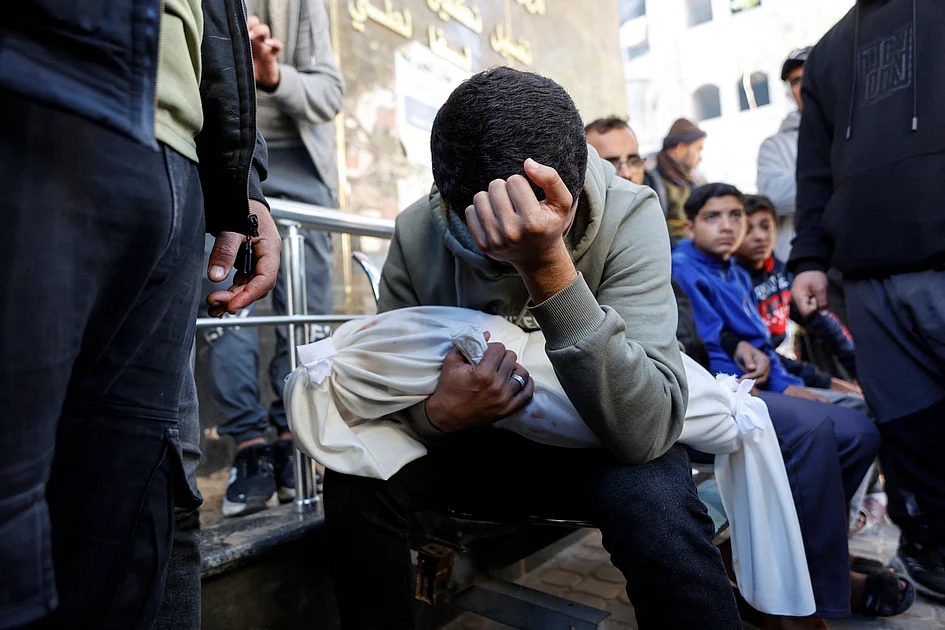
In a rare move, US Secretary of State Marco Rubio has publicly criticized the escalating violence by Israeli settlers in the occupied West Bank. Speaking from Hamilton International Airport in Canada following a G7 foreign ministers’ meeting, Rubio highlighted the strong condemnations issued by Israeli President Isaac Herzog and senior military officials regarding recent settler attacks. These attacks, which included arson and property destruction in Beit Lid and Deir Sharaf, also saw settlers targeting Israeli military and police forces sent to quell the violence. Several Palestinians were injured, and significant damage was inflicted on their land and property. Israeli President Herzog described the incidents as ‘shocking and serious,’ urging decisive action to eradicate such violence. Army Chief Eyal Zamir and Major General Avi Bluth also condemned the attacks, with Bluth labeling the settlers as an ‘anarchist fringe’ that hinders military counterterrorism efforts. Despite these official condemnations, settler violence has surged to near-daily occurrences since the October 7, 2023, Hamas-led attacks on southern Israel and the subsequent war on Gaza, which the United Nations has recognized as a genocide. The Israeli military has faced accusations of complicity in these attacks. The UN Office for the Coordination of Humanitarian Affairs recorded 264 settler violence incidents in October alone—the highest monthly figure since records began in 2006. This year, around 1,500 settler attacks have been documented. While the Biden administration has imposed sanctions on some Israeli settlers and settlement-related entities, the Trump administration had lifted these sanctions in January. Rubio emphasized the US administration’s commitment to preventing West Bank violence from undermining the Gaza peace deal. The G7 ministers also expressed concern over the deteriorating security situation in the West Bank, condemning extremist settler violence and urging all parties to refrain from actions that could jeopardize a two-state solution. Israeli settler violence persisted on Thursday, with settlers setting fire to a mosque in Deir Istiya and vandalizing walls with racist graffiti, while also using bulldozers to expand a new settlement outpost on Jabal al-Najma in Qaryut. Israeli settlements are illegal under international law.
作者: admin
-

US senator John Fetterman jokes from hospital after fall caused by heartbeat flare-up
Democratic Senator John Fetterman, known for his distinctive hoodie and candid demeanor, is currently under medical observation after a fall that resulted in facial injuries. The incident occurred following a ventricular fibrillation episode, a serious heart rhythm disorder, near his home in Braddock, Pennsylvania. At 56, Fetterman has faced significant health challenges, including a stroke during his 2022 Senate campaign and a subsequent battle with severe depression. His team has reassured the public that he is ‘doing well’ and remains in the hospital for routine monitoring and medication adjustments. Fetterman humorously remarked on his condition, stating, ‘If you thought my face looked bad before, wait until you see it now!’ Ventricular fibrillation, as explained by the Cleveland Clinic, involves rapid and irregular heartbeats that disrupt normal blood flow, often linked to underlying heart conditions or electrolyte imbalances. Fetterman’s health struggles have not deterred his political engagement. Recently, he published a memoir titled ‘Unfettered,’ where he candidly discusses his mental health journey and its impact on his family. He emphasized the bipartisan nature of depression, stating, ‘It doesn’t check: ‘Hey, are you a Republican? Are you rural? Are you urban? Are you liberal?’ It happens to anybody.’ Fetterman has also been active in the Senate, notably voting to end the longest US government shutdown, expressing regret for the hardships faced by military personnel, SNAP recipients, government workers, and Capitol Police. His unique approach to politics, characterized by his hoodie and straightforward communication, has earned him the reputation of being ‘the consummate anti-politician.’
-

Suriname and Curacao move closer to historic World Cup qualification
In a commanding performance on Thursday, Suriname triumphed over El Salvador with a resounding 4-0 victory in the CONCACAF World Cup qualifiers, edging closer to securing their first-ever spot in the prestigious tournament. The match, held in Paramaribo, saw Richonell Margaret shine with two rapid-fire goals in the 74th and 76th minutes, cementing Suriname’s dominance. Earlier, Tjaronn Cherry opened the scoring with a penalty kick in the 44th minute, while Dhoraso Moreo Klass added a final goal in the 83rd minute. With this win, Suriname remains undefeated in Group A, tied with Panama at nine points but holding a superior goal difference. The team will face Guatemala next Tuesday, while Panama hosts El Salvador. Twelve teams across three groups are competing for three direct spots in next year’s World Cup, with the United States, Canada, and Mexico already qualified as co-hosts. Suriname, a founding member of CONCACAF in 1961, is making its first appearance in the final round of qualifying since 1978. Meanwhile, El Salvador’s fourth consecutive loss eliminates them from contention. In other qualifiers, Curacao delivered a stunning 7-0 victory over Bermuda, with Jordi Paulina scoring twice, and Nicaragua upset Honduras 2-0, leaving Group C undecided heading into the final round.
-

Ex-Bangladesh leader tells BBC she’s not guilty of crimes against humanity
Bangladesh’s former Prime Minister Sheikh Hasina is confronting the possibility of a death penalty as a special tribunal prepares to deliver its verdict on her alleged involvement in crimes against humanity. The charges stem from a violent crackdown on student-led protests in 2024, which resulted in her ousting from power. Hasina, who fled to India in August 2024, has vehemently denied the allegations, labeling her trial as a “farce” orchestrated by a “kangaroo court” controlled by her political adversaries. Prosecutors have accused her of being the primary architect behind the deaths of hundreds during the mass protests against her autocratic rule. In an interview with the BBC, Hasina categorically denied issuing orders to fire on unarmed civilians, though leaked audio verified by the BBC suggests she authorized the use of “lethal weapons” in July 2024. The tribunal, set to announce its verdict on Monday, has heightened security measures in Dhaka. Hasina’s legal team has raised concerns about fair trial violations, filing an urgent appeal with the UN. The case has drawn international attention, with UN investigators estimating up to 1,400 deaths during the protests. Separately, Hasina faces additional charges of corruption and human rights abuses, which she also denies. The outcome of this trial marks a pivotal moment for Bangladesh and the families of those who lost their lives during the protests.
-

Nagelsmann backs Woltemade to shine for injury-hit Germany
Germany’s head coach Julian Nagelsmann has expressed strong confidence in Newcastle striker Nick Woltemade to lead the national team’s attack during their crucial 2026 World Cup qualifiers. The Germans are set to face Luxembourg on Friday before hosting Slovakia on Monday in a decisive match that will likely determine the Group A winner. Woltemade, 23, has emerged as a key figure for Germany, scoring the winning goal in their 1-0 victory over Northern Ireland in October. Despite having only six caps to his name, his recent form and versatility have made him indispensable for the injury-plagued squad. Nagelsmann praised Woltemade’s pressing, ball retention, and goal-scoring abilities, highlighting his seamless transition to the Premier League with Newcastle, where he scored in four of his first five games. However, Germany’s injury woes continue to mount, with captain Joshua Kimmich ruled out of the Luxembourg match due to an ankle injury. Bayern Munich’s Jonathan Tah will step in as captain in his absence. Other notable absentees include Kai Havertz, Jamal Musiala, and Marc-Andre ter Stegen, among others. Germany, currently level on points with Slovakia but ahead on goal difference, must secure a win on Monday to guarantee direct qualification for the World Cup. Slovakia, who face Northern Ireland on Friday, will also be vying for the top spot in Leipzig. With Luxembourg already out of contention after four consecutive losses, Germany remains focused on maintaining their perfect World Cup qualification record.
-

UAE, US join forces to build AI-powered drones in Abu Dhabi
In a significant leap for defence technology, the United Arab Emirates (UAE) and the United States have announced a groundbreaking collaboration to develop AI-powered autonomous drones. The partnership involves American high-tech arms developer Anduril Industries and Abu Dhabi’s EDGE Group, marking a pivotal moment in the UAE’s quest to enhance its domestic defence manufacturing capabilities and integrate cutting-edge artificial intelligence into aerial warfare systems. The joint venture will focus on designing and producing a new generation of combat-ready drones, named Omen, at a state-of-the-art 50,000-square-foot research and development centre in Abu Dhabi. The UAE is set to acquire the first 50 units, underscoring the government’s commitment to fostering home-grown advanced defence technologies. The Omen drone, characterized by its sleek and lightweight design, combines the vertical take-off capabilities of a helicopter with the range and speed of an airplane, making it ideal for deployment in diverse terrains, including maritime patrols, border security, and disaster relief. Shane Arnott, Anduril’s senior vice-president, emphasized that the project aims to disrupt traditional maritime patrol and special mission aircraft systems. Under the agreement, EDGE gains access to Anduril’s Lattice AI operating system, an advanced software platform enabling real-time coordination of multiple autonomous aircraft through a 3D command-and-control network. This AI-driven architecture is expected to provide militaries with unparalleled situational awareness and coordination, potentially revolutionizing air combat strategies. The Omen project is the first of several systems anticipated to emerge from this partnership, with EDGE investing nearly $200 million and Anduril committing $850 million in prior technology development. Production is slated to begin by 2028, with prototypes set for testing in the UAE next year. This collaboration builds on the US-UAE defence partnership announced during President Donald Trump’s visit to Abu Dhabi in May, which aims to promote joint capability development between the two allies. Since the launch of EDGE in 2019, the UAE has been steadily advancing its defence industry, reducing reliance on foreign suppliers and boosting exports of advanced military technology. For Anduril, founded by tech entrepreneur Palmer Luckey, this venture reflects growing confidence in the UAE’s defence ecosystem. For Abu Dhabi, it solidifies its position as a regional innovation hub for next-generation autonomous systems, where artificial intelligence and air power converge to shape the future of warfare.
-

Hindujas to shift EV-bus plant to Ras Al Khaimah from UK
In a strategic move that underscores the UAE’s growing prominence in the global electric vehicle (EV) industry, the Hinduja Group’s Switch Mobility, the EV-bus division of India’s Ashok Leyland, is shifting its production base from the UK to Ras Al Khaimah (RAK). This relocation marks the first large-scale, dedicated manufacturing shift by a global EV bus company into the UAE, positioning the country as a hub for production and export. The decision reflects the emirate’s cost-efficient manufacturing ecosystem, regional market access, and ambition to serve Europe, the UK, and the GCC. The UK facility in Sherburn, deemed economically unviable, will be replaced by an upgraded RAK plant, with an investment of under $3 million. Ashok Leyland’s existing RAK facility, operational since 2008, has produced over 25,500 buses and sources over 55% of its parts locally. The upgrade for EV bus production transforms the plant into a regional manufacturing hub for high-voltage electric buses. For the Hinduja Group and Ashok Leyland, this move is a significant step in their global EV strategy, enabling cost reduction, streamlined logistics, and access to the UAE’s business-friendly environment. The UAE’s industrial policy and investment incentives align with manufacturers seeking logistics advantages into Europe, Africa, and Asia. While the UAE already manufactures EV parts and related technologies, this relocation is a rare instance of a global bus-maker shifting full production into the emirate. Trial runs of the buses are expected in the UAE and Saudi Arabia by summer 2025, with a commercial rollout in the GCC by Q4 2025. The shift also strengthens supply-chain linkages, with components flowing from India and beyond, turning the RAK facility into an integrated production node. This transition signals the UAE’s industrial pivot into sustainable mobility and advanced manufacturing, while the Hinduja Group moves from import-centric operations to locally grounded manufacturing with global reach. For Ashok Leyland, it consolidates its role as a global EV-bus player with production capabilities in India, the UK, and soon the UAE. The move also positions Switch Mobility to win large fleet contracts across the Gulf as regional governments accelerate the adoption of electric public transport vehicles.
-

UAE’s creator economy emerges as entrepreneurial powerhouse
The United Arab Emirates (UAE) is witnessing a transformative shift in its creator economy, with content creators increasingly adopting entrepreneurial roles. A recent report by Visa, unveiled at Web Summit 2025, highlights this evolution, revealing that about one-third of UAE creators have launched new ventures following their content success. This underscores a robust entrepreneurial mindset within the region. The report, titled ‘Monetized: 2025 Creator Report,’ conducted in collaboration with Morning Consult, surveyed over 1,000 TikTok creators across five regions, including the UAE. It emphasizes a global trend where creators are transitioning from influencers to small business owners, driving commerce and community engagement. In the UAE, this trend is particularly pronounced, with most creators expressing confidence in the sector’s long-term viability and having clear plans for future expansion. Despite their ambitions, many UAE creators face financial challenges, relying on personal funds and credit cards to finance their work. Over 35% use secondary personal accounts to separate expenses, indicating a lack of dedicated business banking tools tailored for creators. Payment delays also remain a significant issue, with 42% receiving payments within a week, but late settlements often disrupting cash flow. Interestingly, UAE creators exhibit one of the highest levels of financial confidence globally, with 61% expressing optimism about managing their finances. However, their strong interest in financial education suggests a gap in specialized training that could help creators scale effectively. To address these challenges, Visa announced a pilot program in partnership with Karat Financial, a fintech firm specializing in creator-focused banking solutions. Initially launching in the US, the program aims to provide creators with credit cards and business banking services designed around their unique revenue models. Features under consideration include automated payment tracking, invoice reminders, and fraud-prevention tools. While the pilot will start in the US, Visa plans to gauge regional interest and expand to other markets, potentially including the UAE, by FY27. This move builds on Visa’s 2024 commitment to recognize creators as small businesses and provide them with the same financial tools available to traditional enterprises. The UAE’s creator economy is poised for significant growth, driven by high digital adoption, strong entrepreneurial spirit, and increasing brand collaborations. However, unlocking its full potential will require tailored financial solutions, faster payment systems, and educational resources that empower creators to manage their businesses with confidence. Visa’s latest initiatives—and its research-driven approach—signal a broader industry shift: the creator economy is no longer a niche; it’s a cornerstone of modern commerce. For UAE creators, the next chapter could be defined by how quickly financial ecosystems adapt to their needs.
-

Iraq’s 2025 elections reveal a democracy without belief
Iraq held its parliamentary elections on November 11, 2025, with Prime Minister Mohammed Shia al-Sudani’s coalition emerging as the frontrunner. However, no political bloc secured a governing majority in the 329-seat parliament, setting the stage for months of elite negotiations to form the next government. This pattern of coalition-building has persisted since the fall of Saddam Hussein in 2003, turning elections into a ritual of continuity rather than a catalyst for change. While officials celebrated a rise in voter turnout to 55%, this figure masks a deeper issue: only 21.4 million of Iraq’s 32 million eligible voters registered, a decline from 24 million in 2021. Early voting, which saw an 82% turnout among soldiers, police, and displaced persons, further inflated the overall participation rate. Over the past two decades, voter turnout has steadily declined, from 79% in 2005 to 44% in 2018, reflecting growing disillusionment among citizens. Iraq’s oil-dependent economy fuels a vast public sector, with nearly 38% of the workforce employed by the state. This system blurs the line between voter and employee, making elections less about choice and more about compliance. Political parties often control ministries as private fiefdoms, distributing jobs and contracts to supporters. The 2019 protest movement, which demanded an end to sectarianism and corruption, was met with violent repression, further eroding public faith in the political process. The assassination of Sunni candidate Safaa al-Mashhadani ahead of the election underscored the dangers of dissent. For many Iraqis, especially the youth, politics is seen as a source of danger rather than opportunity, with 46% expressing a desire to emigrate. The 2025 election reveals a deeper crisis: a society trapped in a cycle of learned helplessness, where hope for change has been extinguished. Substantial economic and political reforms are needed to break this cycle and restore faith in Iraq’s democratic process.
-

What lies ahead in Iraq: The hard task of forming a government
Following Iraq’s recent parliamentary elections, the nation braces for a complex and potentially protracted process of government formation. Incumbent Prime Minister Mohammed Shia Al Sudani, whose coalition emerged as the largest bloc, faces the formidable task of securing support from other parties, particularly within the Shia majority, to secure a second term. Preliminary results indicate that his coalition lacks the majority needed to form a government outright, setting the stage for weeks or even months of intense negotiations.