Australia’s preparations for the first Ashes Test in Perth have suffered a significant setback with the confirmation that Josh Hazlewood has been ruled out due to a hamstring strain. The veteran fast bowler, who has claimed 295 wickets in 76 Tests, had initially been cleared after scans following a hamstring issue during a New South Wales match on Wednesday. However, subsequent imaging revealed a muscle strain, forcing him to withdraw from the series opener. This adds to Australia’s bowling woes, as captain Pat Cummins is already sidelined with a back injury. The absence of two key bowlers leaves Mitchell Starc as the sole member of Australia’s famed pace trio, with Scott Boland stepping in and Brendan Doggett poised for a Test debut. Michael Neser, 35, has been called up as cover, marking his potential return to Test cricket after a hiatus since 2022. Meanwhile, England received a boost with Mark Wood cleared of his hamstring issue. Hazlewood’s injury history is concerning, having missed most of the last Ashes in Australia due to a side injury. While Cummins is expected to return for the second Test in Brisbane, Hazlewood’s availability beyond Perth remains uncertain. Australia’s statement emphasized that initial scans can sometimes underestimate low-grade muscle injuries, leading to the late confirmation of Hazlewood’s strain. With backup seamer Sean Abbott also injured and long-term absentees Spencer Johnson and Lance Morris unavailable, Australia’s bowling depth is severely tested. Jhye Richardson, recovering from shoulder surgery, remains a potential option later in the series as he continues his comeback in domestic cricket.
作者: admin
-

Once a shadowy dealmaker, one-time Zelenskyy associate is accused in Ukrainian corruption scandal
A sweeping corruption scandal involving Ukraine’s state nuclear energy company has thrust Tymur Mindich, a once-shadowy figure with deep ties to President Volodymyr Zelenskyy, into the spotlight. Mindich, a former business partner of Zelenskyy, is accused of orchestrating a $100 million embezzlement scheme, according to a 15-month investigation by Ukraine’s anti-corruption agencies. The probe alleges that Mindich wielded significant influence over top officials, including former Energy Minister Herman Haluschenko, who resigned following the revelations. Mindich has since fled the country, leaving criminal proceedings to likely unfold in absentia. His rise to power, activists argue, was facilitated by his privileged relationship with Zelenskyy and his inner circle, enabling him to dominate lucrative sectors like energy and agriculture. The scandal has also implicated Mindich in alleged dealings with Ukraine’s top drone manufacturer, Fire Point, though no findings have been disclosed. This case underscores the pervasive corruption challenges Ukraine faces, particularly during wartime, as it seeks to stabilize its energy infrastructure and combat external threats.
-

At least 8 killed in huge blast at a police station in Indian-controlled Kashmir
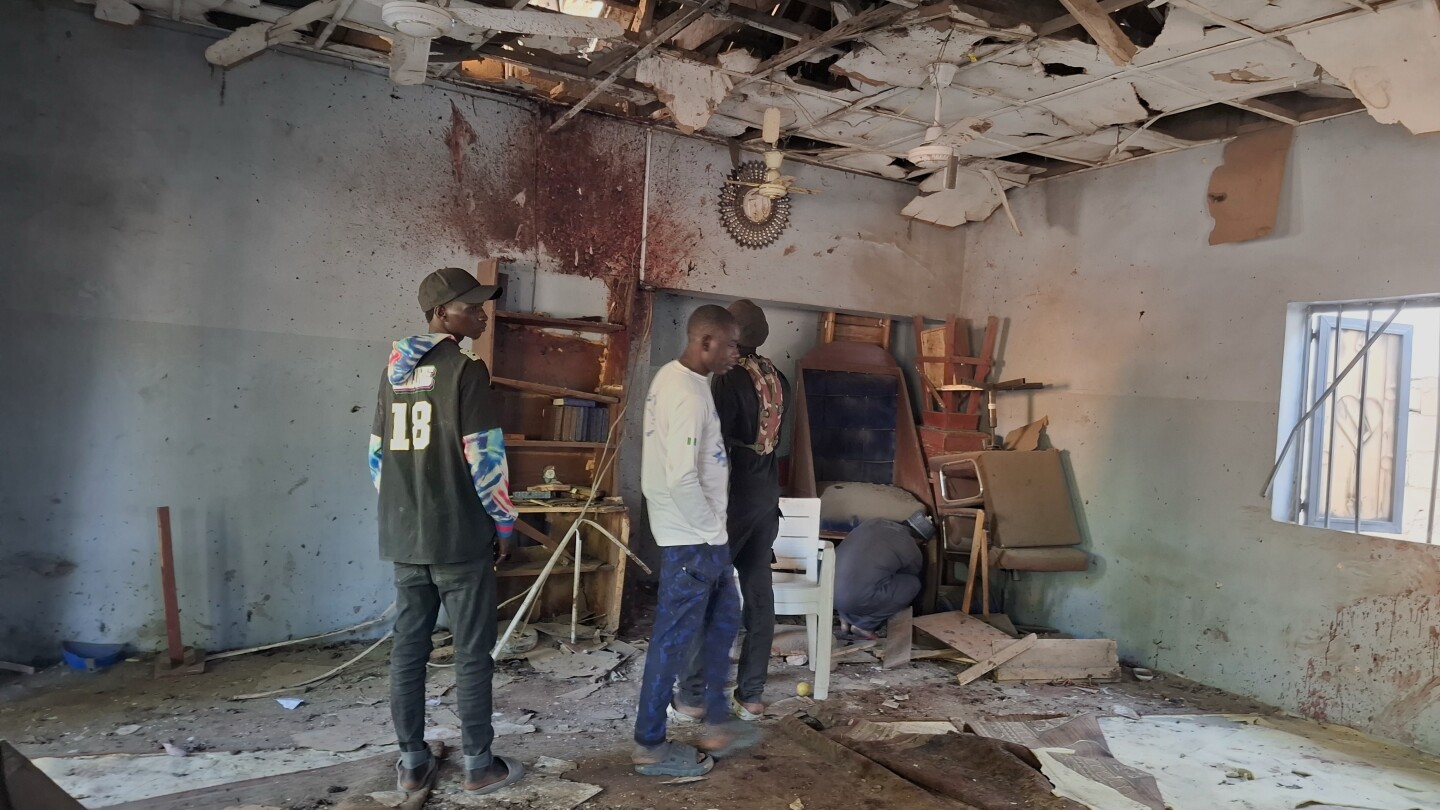
A devastating explosion at a police station in Srinagar, the main city of Indian-administered Kashmir, has resulted in at least eight fatalities and 27 injuries, according to authorities. The incident occurred late Friday in the Nowgam area when forensic experts and police officers were examining a cache of confiscated explosives. The powerful blast destroyed the police station, ignited fires across the compound, and damaged multiple vehicles. Rescue efforts were hampered by subsequent smaller explosions, delaying the bomb disposal squad’s response. Most of the victims were police and forensic personnel, with several injured individuals reported to be in critical condition. This tragedy follows a car explosion in New Delhi earlier in the week, which claimed eight lives and was labeled a terror attack by Indian officials. The Srinagar explosion is believed to be connected to an ongoing investigation into a suspected militant cell operating from Kashmir to the outskirts of New Delhi. Recent raids in Kashmir have led to arrests and the seizure of weapons and bomb-making materials. The explosive material involved in the police station blast was reportedly part of the evidence collected during these operations. The Kashmir region remains a contentious issue between India and Pakistan, with both nations claiming sovereignty over the territory. Militants in Indian-controlled Kashmir have been resisting New Delhi’s rule since 1989, with India accusing Pakistan of sponsoring terrorism, a claim Pakistan denies. Many Kashmiris view the conflict as a legitimate struggle for freedom.
-

German Baumkuchen ‘tree cake’ survived a disaster and world wars to become a Japanese favorite
Baumkuchen, a traditional German cake, has found an unexpected home in Japan, where it has evolved into a symbol of longevity and prosperity. This culinary journey began over a century ago on the small island of Ninoshima, near Hiroshima, where Karl Juchheim, a German prisoner of war, first introduced the treat during World War I. Today, Baumkuchen is celebrated across Japan, with festivals dedicated to the cake and various Japanese adaptations, such as those incorporating matcha and sweet potatoes, becoming popular gifts for weddings and birthdays. The cake is widely available, from luxury department stores to convenience stores, reflecting its deep integration into Japanese culture. However, the origins of Baumkuchen in Japan are intertwined with the island’s wartime history. Ninoshima served as a quarantine station during Japan’s militarist expansion and later as a treatment center for victims of the Hiroshima atomic bombing. Juchheim’s resilience and dedication to his craft, despite the devastation of war, left a lasting legacy. His story, as told by Kazuaki Otani of the Juccheim Ninoshima Welcome Center, serves as a poignant reminder of the human desire for peace and the power of cultural exchange. Visitors to Ninoshima can now participate in Baumkuchen-making activities while learning about the island’s historical significance. Juchheim’s journey from prisoner to confectionery pioneer highlights the enduring impact of his work, which continues to bring joy and reflection to people across Japan.
-

Trump targets longtime MAGA ally Marjorie Taylor Greene
Former President Donald Trump has publicly severed ties with Republican Congresswoman Marjorie Taylor Greene, a staunch conservative who once championed his agenda but has recently voiced criticism of his policies. In a lengthy social media post, Trump accused Greene of leaning “far left” and urged her constituents to replace her in the upcoming midterm elections. The rift emerged after Greene questioned Trump’s commitment to his “America First” agenda, particularly his foreign policy focus and handling of the Jeffrey Epstein case files. Greene suggested that Trump’s attacks were aimed at deterring other Republicans from supporting the release of the Epstein documents. Trump, in his post, dismissed Greene as a “ranting lunatic” and claimed her district was weary of her antics. The Epstein case has long been a contentious issue for Trump, who has denied any wrongdoing despite his past association with the disgraced financier. Greene, along with three other House Republicans, joined Democrats in pushing for the release of the Epstein files, a move Trump appears determined to block. Greene has also criticized Trump’s economic policies and involvement in foreign conflicts, while emphasizing her support for the women affected by the Epstein scandal. The escalating feud highlights deepening divisions within the Republican Party as it approaches the 2026 midterms.
-

China’s investment drop highlights property-driven pressures
China’s fixed asset investment (FAI) experienced a significant downturn in October, reflecting mounting pressures on the real economy as the ongoing property crisis continues to dampen economic activity. According to the National Bureau of Statistics (NBS), the cumulative FAI for the first ten months of 2023 stood at 40.89 trillion yuan ($5.7 trillion), marking a 1.7% year-on-year contraction. This represents a sharp deterioration compared to the 0.5% decline recorded in the first nine months of the year. In October alone, FAI plummeted by 12% to 3.74 trillion yuan, down from 4.25 trillion yuan in the same period last year. All three major sectors—primary, secondary, and tertiary industries—registered declines, with residential property development investment dropping 13.8% year-on-year to 5.66 trillion yuan in the first ten months. The property sector’s slump has been a significant drag on overall investment, accounting for a three-percentage-point reduction in growth. Despite these challenges, NBS spokesperson Fu Linghui emphasized that excluding real estate, FAI grew by 1.7% during the same period. He also highlighted robust expansion in high-tech industries, with aerospace manufacturing up 19.7% and information services investment surging 32.7%. However, analysts caution that China’s economy is entering the final quarter on a weakening trajectory, with softer industrial output and sluggish household consumption exacerbating the slowdown. The property market’s downward spiral, triggered by the Evergrande Group debt crisis in 2020, continues to weigh heavily on consumer confidence and investment. Home prices in major cities have shown broad-based declines, with first-tier cities experiencing a 4.4% year-on-year drop in October. Experts predict further adjustments in housing prices over the next three years, with some regions potentially hitting historic lows. The prolonged correction in the property sector reflects a deliberate policy shift away from property-led growth, but a genuine recovery will depend on rebuilding fundamentals such as employment, income growth, and social protections. Meanwhile, falling home prices are eroding household wealth, with over 70% of family assets tied to property, leading to reduced consumption and job market pressures. As China navigates these challenges, policymakers face the delicate task of balancing structural reforms with short-term stabilization measures.
-

UAE: Will Smith excited to dig into ‘thousands of years of stories in Middle East’
The Sharjah International Book Fair (SIBF) witnessed an electrifying evening as Hollywood icon Will Smith graced the event, captivating audiences with his insights on storytelling and personal growth. The 57-year-old actor, dressed in a crisp white shirt and radiating his trademark charm, engaged in a heartfelt conversation with Emirati entrepreneur Anas Bukhash, leaving the crowd inspired and reflective. Smith’s appearance was met with enthusiastic cheers, with children perched on shoulders and attendees standing on seats to catch a glimpse of the star. A montage of his iconic film moments set the stage for his entrance, building anticipation for the evening’s dialogue. Smith, who authored the bestselling memoir ‘Will’ in 2021, described the writing process as a transformative experience that deepened his humility and self-awareness. ‘I encourage everyone to write your story,’ he urged. ‘It’s an enlightening process to articulate your experiences.’ He emphasized the universal power of storytelling, noting that narratives transcend cultural and racial boundaries. ‘There are universally relatable ideas that connect us all,’ he said. ‘My gift is identifying those elements that don’t require language to resonate.’ Smith expressed his excitement about the Middle East’s untapped storytelling potential, describing the region as a treasure trove of narratives spanning thousands of years. ‘I’m thrilled to collaborate with creatives here, uncover these stories, and bring them to the world,’ he shared. Reflecting on his personal journey, Smith spoke candidly about the pitfalls of social media and the importance of self-esteem. ‘Success in the material world doesn’t equate to happiness,’ he observed. ‘True fulfillment comes from knowing your work and gifts benefit others.’ He advised the audience to disconnect from digital distractions and embrace solitude for mental clarity. Smith also revealed his ongoing quest to reclaim his self-esteem from external validation, a process he described as a quiet but profound transformation. The event concluded with resounding applause, as attendees left with a renewed appreciation for storytelling and self-discovery.
-

Prashant Kishor: Why India’s political start-ups rarely succeed
Prashant Kishor, once India’s most sought-after political strategist, faced a stark reality when his newly formed party, Jan Suraaj (People’s Good Governance), failed to secure a single seat in the Bihar state elections. Despite his extensive two-year grassroots campaign and a well-organized effort to field candidates across all 243 seats, Jan Suraaj garnered only a fraction of the votes, while the BJP-led alliance swept to power. Kishor’s transition from a behind-the-scenes strategist to a frontline political leader proved challenging, as his party struggled to convert media attention into electoral success. Political analysts attribute this failure to the lack of a deep-rooted social base and the absence of a mass movement or crisis that typically propels new parties to relevance. Unlike successful new parties such as the Aam Aadmi Party (AAP), which emerged from a strong anti-corruption movement, Jan Suraaj was perceived as a strategic project rather than an organic political force. Kishor’s decision not to contest a seat himself further raised doubts about his commitment. The Bihar elections underscored a critical lesson in Indian politics: media hype and visibility alone cannot substitute for ground strength and a loyal constituency. However, some experts believe that if Jan Suraaj can sustain its grassroots presence and cultivate local leadership, it may gradually build influence in Bihar’s evolving political landscape.
-

Dubai: Nicolai Hojgaard surges into three-shot lead at DP World Tour Championship
Nicolai Højgaard has taken a commanding three-shot lead at the 2025 DP World Tour Championship in Dubai, showcasing a masterful display of golf at Jumeirah Golf Estates. The Danish golfer, who began the day three strokes behind leader Michael Kim, surged ahead with an eagle and five birdies, carding a flawless 65—the lowest round of the tournament so far. This impressive performance propelled him to 12 under par, firmly establishing his position at the top of the leaderboard.
Højgaard, a two-time participant in this season-ending event, has a strong affinity for the Earth Course. He debuted in 2021 with a fourth-place finish and clinched the title in 2023. Reflecting on his performance, Højgaard emphasized patience and precision as key factors in his success. ‘It’s great to be back. This is one of my favorite tournaments and courses to play,’ he said. ‘I stayed really patient, and it paid off.’
The chasing pack includes notable names such as Justin Rose, Shane Lowry, and Rory McIlroy, all tied at nine under par. Rose, Lowry, and McIlroy, Højgaard’s 2023 European Ryder Cup teammates, remain within striking distance, alongside Daniel Hillier and fellow Dane Rasmus Neergaard-Petersen. Neergaard-Petersen briefly challenged Højgaard, reaching ten under par before a bogey on the final hole dropped him back.
Højgaard’s dominance was evident from the start, with an opening birdie and a crucial eagle at the second hole. His strategic play and mid-iron precision have been instrumental in navigating the challenging course. ‘It suits my eye,’ he remarked. ‘It’s a mix of driver and mid-irons, which plays into my strengths.’
Away from the competition, the event attracted notable figures, including Nottingham Forest manager Sean Dyche and Barcelona legend Andres Iniesta, who were spotted around the Jumeirah Golf Estates. As the tournament progresses, all eyes will be on Højgaard to see if he can maintain his lead and secure another victory at this prestigious event.
-

From nukes to AI-powered drones: Saudi Arabia’s sophisticated wishlist for Washington
Saudi Arabia’s Crown Prince Mohammed bin Salman (MBS) is set to embark on a high-stakes visit to Washington, aiming to secure a landmark defense agreement that surpasses Qatar’s recent deals. His ambitious agenda includes acquiring advanced AI chips, AI-powered drones, and potentially positioning American nuclear weapons on Saudi soil. This visit underscores MBS’s growing confidence as a regional leader, having navigated intense geopolitical pressures, including calls to normalize ties with Israel amid the ongoing conflict in Gaza and maintaining neutrality during the Israel-Iran tensions earlier this year.
On the other side of the negotiating table is President Donald Trump, who appears willing to leverage America’s cutting-edge nuclear and AI technologies to forge a robust partnership with Saudi Arabia. Analysts suggest that Trump’s focus on boosting foreign sales aligns with Saudi Arabia’s financial capacity to invest heavily in defense and technology, despite global economic uncertainties.
MBS’s visit marks a departure from traditional Middle Eastern leaders’ approaches to Washington. Unlike past deals that primarily benefited American defense contractors like Boeing and Lockheed Martin, MBS’s sophisticated wishlist reflects Saudi Arabia’s vision of a modern, forward-thinking kingdom. Ayham Kamel, Middle East president at Edelman Public and Government Affairs, notes that MBS seeks to strengthen long-term US-Saudi cooperation, emphasizing a two-way flow of technology and trade.
A key area of focus is Saudi Arabia’s push for inclusion under the US nuclear umbrella, a move that would elevate its strategic position in the region. This follows a recent defense pact with Pakistan, the only nuclear-armed Muslim state, which has raised eyebrows in Washington. Experts suggest that extending US nuclear protection to Saudi Arabia could serve as a counterbalance to Pakistan’s influence and enhance Riyadh’s regional standing.
However, the negotiations are not without challenges. The Trump administration’s approval of an Israeli attack on Qatar in 2023 has undermined the US’s role as a regional security guarantor, prompting Saudi Arabia to seek more credible and binding defense arrangements. Riyadh is wary of symbolic gestures and is pushing for concrete commitments, including the potential deployment of US nuclear weapons systems on its soil.
In addition to defense, Saudi Arabia is eyeing significant advancements in AI and nuclear energy. The kingdom aims to enrich uranium domestically, a move that aligns with its economic ambitions and national pride. While the US has historically opposed uranium enrichment in the region, experts speculate that Trump may offer concessions in exchange for lucrative business deals with American companies like Westinghouse and Bechtel.
MBS’s visit also highlights Saudi Arabia’s efforts to decouple its bilateral agreements with the US from the contentious issue of normalizing ties with Israel. Despite Trump’s claims that Riyadh will establish diplomatic relations with Israel by year-end, Saudi officials remain reluctant, insisting on progress toward an independent Palestinian state.
As MBS arrives in Washington with a delegation of 1,000 officials, the visit is poised to consolidate a raft of deals announced during Trump’s trip to the Gulf in May, including $142 billion in defense sales. Potential agreements on F-35 fighter jets, MQ-9 Reaper drones, and AI technologies are on the table, though concerns about maintaining Israel’s military edge and preventing Chinese access to US technology persist.
This visit underscores Saudi Arabia’s strategic pivot to leverage its relationship with the US to bolster its defense capabilities, technological advancements, and regional influence, while navigating the complexities of Middle Eastern geopolitics.