作者: admin

  • England win staggering two-day Test in Melbourne

    England win staggering two-day Test in Melbourne

    In an unprecedented display of cricketing chaos, England shattered an 18-match winless streak on Australian soil with a breathtaking four-wicket victory in a mere two days at Melbourne Cricket Ground. The fourth Ashes Test concluded on December 27, 2025, delivering one of the most extraordinary matches in cricket history amid intensely bowler-friendly conditions.

    The match unfolded at breakneck speed, with Australia collapsing to 152 in their first innings courtesy of Josh Tongue’s 5-45, before England responded with 110 as Michael Neser claimed 4-45. Australia’s second innings proved equally disastrous, bundled out for 132 with Brydon Carse’s exceptional 4-34 and captain Ben Stokes’ 3-24 exposing the batting frailties of both sides.

    Chasing 175 for victory, England’s ‘Bazball’ approach finally found its ideal conditions as openers Zak Crawley (37) and Ben Duckett (34) blasted a rapid 51-run partnership—their highest opening stand of the series. The tactical surprise came when Carse was promoted to number three as pinch-hitter, though it was Jacob Bethell’s composed 40 that provided the crucial middle-order stability.

    The victory, sealed when Harry Brook deflected the winning runs off his thigh pad, triggered euphoric celebrations among England’s traveling supporters who witnessed their first Test win in Australia since 2011. The match marked only the 27th Test in history to conclude within two days, and the first Ashes series since 1896 to feature two such abbreviated Tests.

    While questions immediately arose about the suitability of the grassy MCG pitch for Test cricket, the extraordinary conditions created theater of the highest drama. Australia maintains a 3-1 series lead heading into the final Test in Sydney, but England’s victory provides much-needed respite for captain Stokes, coach Brendon McCullum, and their under-fire leadership team after a challenging tour.

  • Libya holds funeral for military officials killed in plane crash in Turkey

    Libya holds funeral for military officials killed in plane crash in Turkey

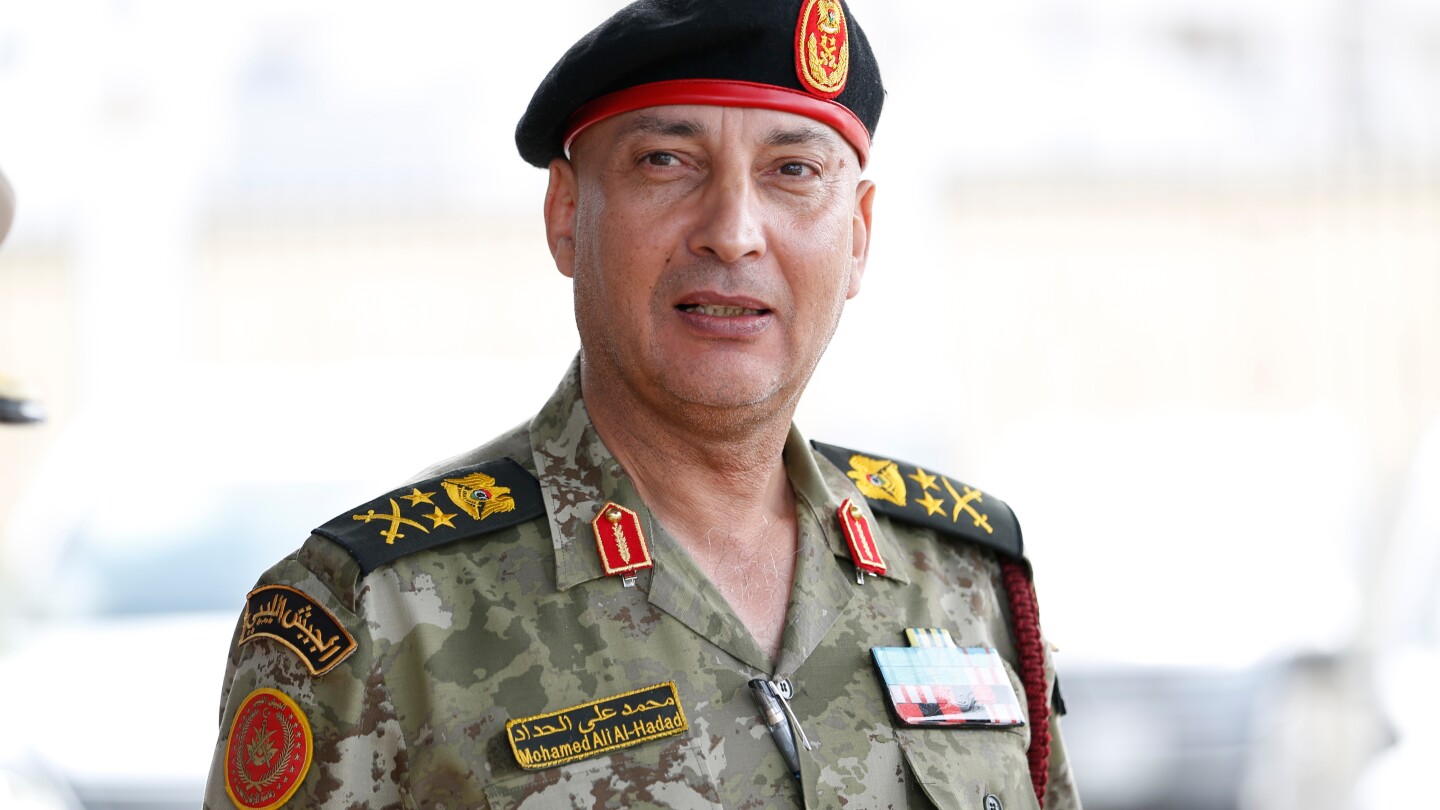
    TRIPOLI, Libya — The Libyan government conducted a solemn military funeral on Saturday for Western Military Commander General Muhammad Ali Ahmad al-Haddad and four senior officers who perished in a tragic aircraft accident in Turkey. Their flag-draped caskets arrived at Tripoli International Airport, where a solemn procession of honor guards carried photographs of the deceased through the capital.

    The fatal incident occurred Tuesday when the private jet carrying General al-Haddad, four military officials, and three crew members crashed shortly after departure from Ankara. While preliminary investigations indicate technical failure as the probable cause, Turkish and Libyan authorities continue joint examination of the wreckage to determine the exact circumstances.

    This tragedy strikes at a critical juncture in Libya’s fractured political landscape. Since the 2011 revolution that overthrew longtime ruler Moammar Gadhafi, the nation has remained divided between rival administrations in Tripoli and Benghazi, each supported by separate armed factions and international patrons. Prime Minister Abdul-Hamid Dbeibah leads the internationally recognized government in Tripoli, while Prime Minister Ossama Hammad heads the eastern-based administration.

    During the funeral oration, Prime Minister Dbeibah eulogized General al-Haddad as a pivotal figure who maintained military organization ‘amid overwhelming darkness and outlaw groups.’ The late commander had been instrumental in United Nations-mediated negotiations to reunify Libya’s divided military establishment.

    ‘Our martyrs were not merely military leaders but statesmen of wisdom and discipline who carried profound responsibility,’ Dbeibah stated. ‘They believed the national Libyan army represents the nation’s shield and that institutional development provides the genuine path toward stability and security.’

    The delegation had been returning from Ankara where they participated in defense coordination talks aimed at enhancing military cooperation between Libya and Turkey. Ankara has traditionally supported Tripoli’s western government but has recently pursued diplomatic overtures toward the eastern administration.

    Turkey conducted a separate memorial ceremony at Murted airbase near Ankara attended by Defense Minister Yaşar Güler and Military Chief General Selcuk Bayraktaroglu, who subsequently accompanied the remains to Libya aboard a military transport aircraft. The fallen officers will be laid to rest Sunday in Misrata, approximately 200 kilometers east of Tripoli.

  • Thailand and Cambodia agree ceasefire after weeks of deadly clashes

    Thailand and Cambodia agree ceasefire after weeks of deadly clashes

    In a significant diplomatic breakthrough, Thailand and Cambodia have announced an immediate cessation of hostilities following weeks of intense border conflicts that resulted in substantial casualties and mass displacement. The agreement was formalized through a joint statement issued by defense ministers Tea Seiha of Cambodia and Natthaphon Narkphanit of Thailand after emergency negotiations at a border checkpoint in Chanthaburi province.

    The ceasefire, which took effect at noon local time (05:00 GMT) on Saturday, mandates both nations to freeze all military movements and facilitate the safe return of civilians to border regions. The accord stipulates that if the truce holds for 72 consecutive hours, Thailand will release 18 Cambodian soldiers currently in detention.

    The joint declaration outlines specific de-escalation measures, including the cessation of “attacks on civilians, civilian objects and infrastructures, and military objectives of either side.” It explicitly prohibits unprovoked firing or advancement of troops toward opposing positions.

    This resolution references the spirit of the Kuala Lumpur Declaration, a previous ceasefire agreement brokered in October with involvement from Malaysian mediators and U.S. President Donald Trump. That earlier accord, dubbed the “Kuala Lumpur Peace Accords,” had mandated weapon withdrawals from disputed territories and established monitoring mechanisms before collapsing earlier this month.

    The recent conflict escalation began when Thailand reported responding to Cambodian fire in Si Sa Ket province, resulting in two Thai soldiers injured. Cambodia countered that Thai forces initiated aggression in Preah Vihear province. Hostilities intensified throughout December, culminating in Thailand conducting airstrikes on Friday that Cambodia described as “indiscriminate attacks” on civilian areas.

    Historical tensions between the Southeast Asian neighbors date back over a century, with notable escalation occurring in May when a Cambodian soldier was killed. July witnessed five days of intense fighting that claimed dozens of lives and displaced thousands before the October ceasefire temporarily halted violence.

  • Thailand and Cambodia sign new ceasefire agreement to end border fighting

    Thailand and Cambodia sign new ceasefire agreement to end border fighting

    BANGKOK — In a significant diplomatic breakthrough, Thailand and Cambodia formalized a ceasefire accord on Saturday, effectively terminating weeks of intense military confrontation along their disputed border region. The pact, which became operational at noon local time, establishes stringent measures to prevent further escalation.

    The agreement explicitly prohibits all military movements and bans any incursions into either nation’s airspace for combat purposes. This provision holds particular significance given Thailand’s acknowledged use of airstrikes against Cambodian positions, with the most recent offensive occurring just hours before the ceasefire implementation, as confirmed by Cambodia’s defense ministry.

    A pivotal component of the arrangement mandates Thailand’s repatriation of 18 Cambodian soldiers detained since July’s initial hostilities, contingent upon the ceasefire remaining intact for 72 consecutive hours. The prisoners’ release had emerged as Cambodia’s primary negotiating objective throughout the discussions.

    Both nations have reaffirmed their commitment to previous de-escalation frameworks, including the July ceasefire mediated by Malaysia under substantial international pressure. That initial agreement gained momentum after U.S. President Donald Trump threatened trade sanctions against both countries unless they pursued peaceful resolution. The terms were further elaborated during an October regional summit in Malaysia attended by Trump.

    Despite these earlier diplomatic efforts, bilateral relations deteriorated through aggressive propaganda campaigns and persistent low-level border incidents throughout autumn. This friction culminated in early December with a severe outbreak of large-scale combat operations, necessitating the current reinforced ceasefire agreement.

  • Kosovo heads to a snap vote to end political deadlock

    Kosovo heads to a snap vote to end political deadlock

    PRISTINA, Kosovo — Citizens of Kosovo are heading to the polls for the second time this year in a crucial snap parliamentary election aimed at breaking a political impasse that has plunged the Balkan nation into its most severe governmental crisis since declaring independence in 2008. The extraordinary Sunday vote follows Prime Minister Albin Kurti’s Self-Determination Movement’s inability to form a governing coalition despite securing a plurality in February’s ballot.

    This electoral deadlock represents unprecedented political paralysis for Kosovo, which hasn’t faced such governmental formation difficulties throughout its fifteen-year history as an independent state. Current projections suggest Kurti’s party remains the frontrunner, though political analysts question whether it can secure the necessary 61-seat majority in the 120-member Assembly.

    The prolonged political vacuum has prevented legislative approval of next year’s national budget, raising concerns about potential economic repercussions for one of Europe’s poorest nations. The crisis compounds existing challenges for Kosovo’s 2 million citizens, who already grapple with soaring inflation and economic instability.

    Further complicating the political landscape, lawmakers must elect a new president by March as current President Vjosa Osmani’s term concludes in early April. Failure to reach consensus on presidential selection could trigger yet another snap election, extending the period of governmental uncertainty.

    Regional security concerns loom large over the electoral process. Serbia continues to reject Kosovo’s sovereignty, while Russia’s invasion of Ukraine has heightened anxieties about potential instability in the volatile Balkans region, where Moscow maintains influence through its Serbian alliance.

    In February’s contest, Self-Determination captured approximately 42% of votes, narrowly outpacing the combined opposition bloc of the Democratic League of Kosovo and Democratic Party of Kosovo, which secured about 40%. Political analyst Leart Hoxha notes that marginal voting shifts could dramatically alter power dynamics, potentially enabling Kurti to form minority coalitions or forcing him into opposition.

    Kurti faces criticism from mainstream opposition parties accusing him of authoritarian tendencies and damaging relations with key Western allies. The United States and European Union have imposed punitive measures in response to Kurti’s uncompromising stance in EU-mediated normalization talks with Belgrade.

    Despite these challenges, Kurti has campaigned vigorously, urging Kosovo’s 1.9 million voters to deliver a decisive mandate. “We must achieve another victory that ensures rapid constitution of the national assembly and a stable government with full mandate,” he declared at a recent campaign rally.

    The campaign has centered on Kosovo’s persistent economic difficulties and national security concerns. Bedri Hamza, former governor of the Kosovo National Bank, highlighted widespread public frustration: “Wherever I go, citizens tell me the same thing—life has become too expensive, salaries are insufficient, prices rise daily.”

    Security remains paramount following 2023’s violent clashes with ethnic Serb communities in northern Kosovo, which injured numerous NATO peacekeepers. A recent positive development saw ethnic Serb mayors assume power peacefully after municipal elections.

    In a controversial move, Kurti’s administration has agreed to accept third-country migrants deported from the United States under Trump-era immigration policies, with one individual already transferred according to authorities.

    As one of six Western Balkan nations pursuing EU membership, Kosovo faces the additional requirement of normalizing relations with Serbia before accession talks can advance—a diplomatic challenge that will confront whichever government eventually emerges from this electoral process.

  • Cypriot fishermen battle invasive lionfish and turn them into a tavern delicacy

    Cypriot fishermen battle invasive lionfish and turn them into a tavern delicacy

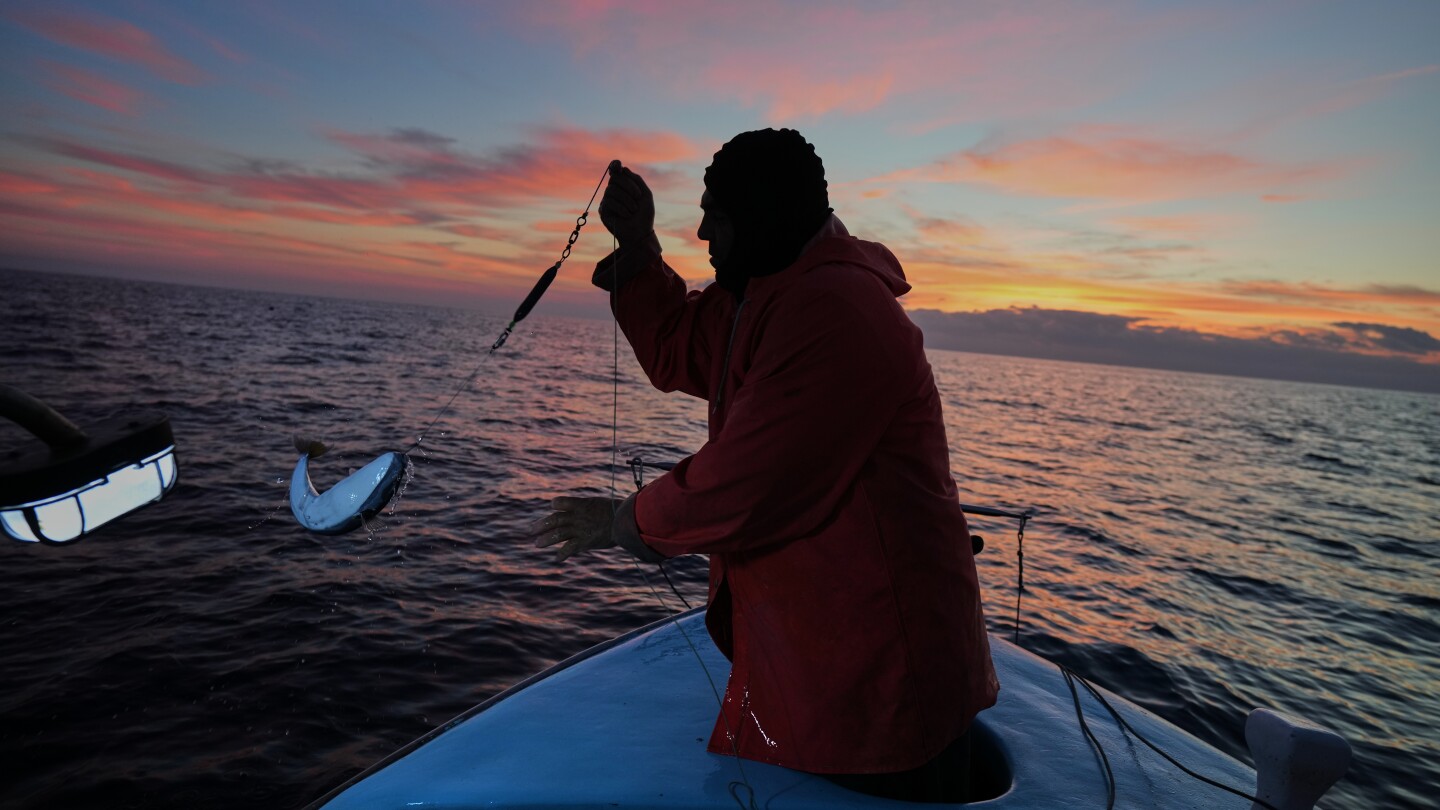
    CYPRUS — Veteran fisherman Photis Gaitanos carefully disentangles the venomous spines of a lionfish from his net, a routine that has become emblematic of the ecological transformation occurring in Mediterranean waters. The 60-year-old marine hunter now primarily captures invasive species rather than the traditional sea bream, red mullet, and bass that once dominated his catches.

    The Mediterranean Sea, warming at a rate 20% faster than the global average according to the General Fisheries Commission for the Mediterranean, has become a welcoming environment for non-native species migrating from the Red Sea through the expanded Suez Canal. Two particularly destructive invaders—the strikingly striped lionfish and the silver-cheeked toadfish—are decimating local fish populations and threatening the livelihoods of approximately 150 professional fishermen in Cyprus.

    Lionfish, with their dramatic crimson stripes and defensive barbs, have spread as far north as the Ionian Sea, prompting Italian authorities to request public assistance in tracking sightings. The toadfish presents additional challenges with its powerful jaws capable of destroying fishing nets and a lethal toxin that renders it inedible.

    EU Fisheries Commissioner Costas Kadis, himself Cypriot, told The Associated Press that climate-linked extreme weather events are creating increasingly hospitable conditions for these invasive species. “The native marine biodiversity faces heightened competition and pressure,” Kadis stated, “with implications for local ecosystems and industries dependent on them.”

    The economic impact has been severe, with fishermen reporting diminished catches and increased costs due to damaged equipment. Gaitanos, who inherited his father’s boat in 1986, lamented that he hasn’t caught a red mullet in over two years—a species once abundant in the waters off Larnaca.

    European authorities have implemented multiple strategies to address the crisis. EU-funded compensation programs pay fishermen €4.73 per kilogram for toadfish catches, though the toxic fish must be incinerated. The RELIONMED project, initiated in 2017, enlists scuba divers to cull lionfish populations around wrecks and protected marine areas.

    A culinary solution is emerging simultaneously. The #TasteTheOcean social media campaign, launched in 2021, features top European chefs promoting invasive species as sustainable alternatives. Renowned Cypriot chef Stavris Georgiou has developed specialized lionfish recipes, while local tavernas are gradually introducing the species to customers.

    At Larnaca’s harbor fish market, lionfish now costs less than half the price of popular species like sea bass. Stephanos Mentonis, who operates a fish tavern in Larnaca, includes lionfish on his meze menu and reports positive customer responses. “When they try it, it’s not any less tasty than any other fish,” Mentonis noted, describing the meat as fluffy and tender.

    Commissioner Kadis emphasized the dual benefit of this approach: “By incorporating invasive species such as lionfish into our diet, we can turn this challenge into an opportunity for the fisheries sector while helping limit the environmental threat.”

  • Millions of Afghans face hunger as aid cuts deepen a humanitarian crisis

    Millions of Afghans face hunger as aid cuts deepen a humanitarian crisis

    KABUL, Afghanistan — A severe humanitarian catastrophe is unfolding across Afghanistan, where millions of citizens face extreme hunger and destitution following drastic cuts to international aid. The crisis has been exacerbated by a collapsing economy, recurrent natural disasters, and the mass return of refugees, creating a perfect storm of suffering as the harsh winter sets in.

    Rahimullah, a 29-year-old former soldier, epitomizes the struggle. After being deported from Pakistan, he now sells socks on the streets of Kabul, earning a meager $4.50 to $6 daily to support his family of five. His situation is precarious. ‘If I were to face a serious illness,’ he lamented, ‘it would be very difficult for me to handle because I don’t have any extra money.’ His plight is shared by an estimated 22.9 million people—nearly half the population—who required humanitarian assistance in 2025, according to the International Committee of the Red Cross.

    The World Food Program (WFP) issued a dire warning last week, stating that over 17 million people are now confronting crisis levels of hunger this winter, a staggering increase of 3 million from the previous year. This alarming surge is directly linked to the suspension of critical aid programs, including those previously funded by the United States. Tom Fletcher, the U.N. humanitarian chief, informed the Security Council that this winter marks ‘the first in years with almost no international food distribution.’ Consequently, aid reached only about 1 million of the most vulnerable people during the 2025 lean season, a drastic drop from the 5.6 million assisted the year before.

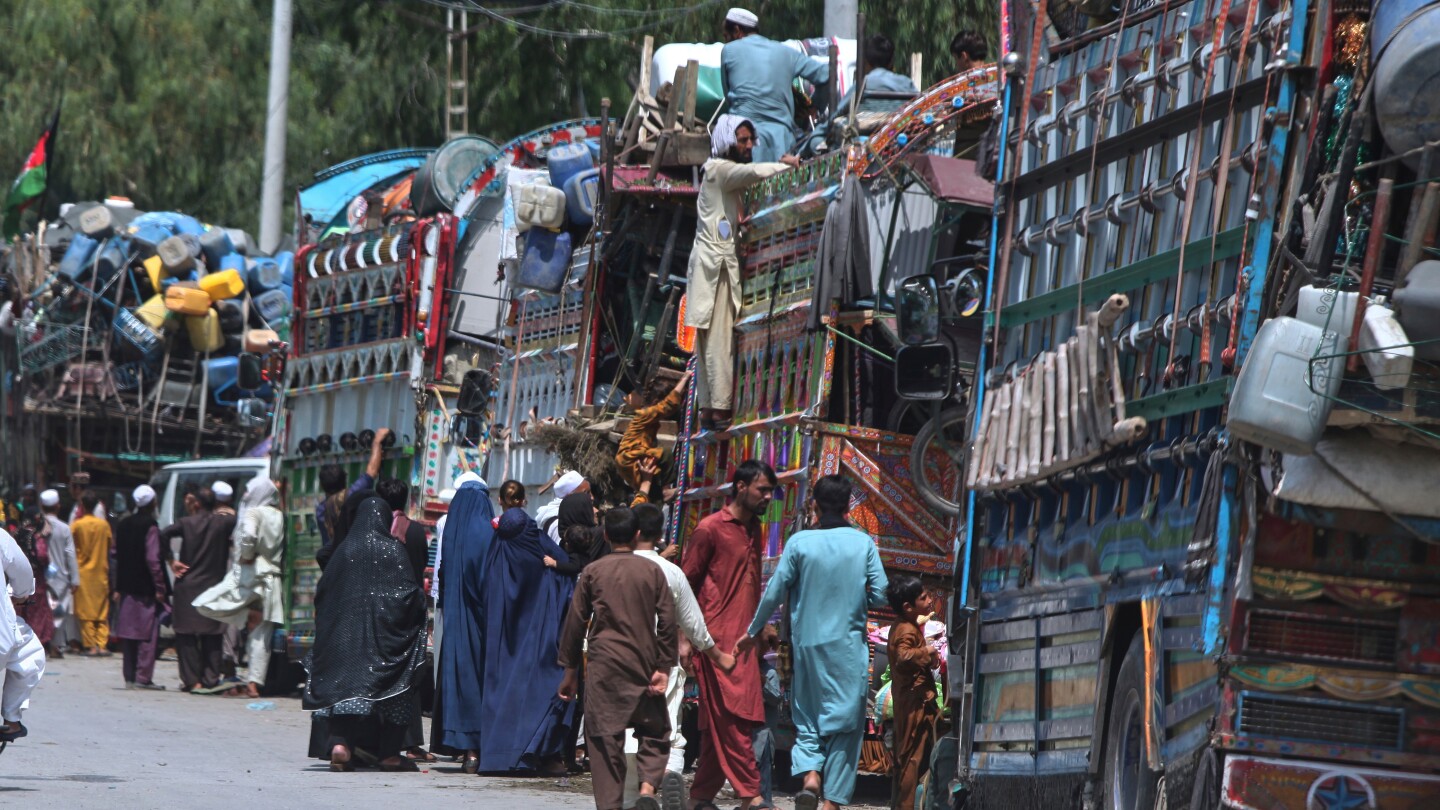
    Compounding the emergency are ‘overlapping shocks,’ as described by Fletcher. Afghanistan has been battered by two deadly earthquakes, severe droughts, and an unprecedented influx of returning refugees. The Ministry of Refugees and Repatriation Affairs reported that 7.1 million Afghan refugees have returned over the past four years. This massive return has strained resources to the breaking point, causing rents to skyrocket and further impoverishing families like Rahimullah’s, who now faces eviction after his rent nearly doubled.

    The Taliban government’s draconian restrictions on women have further crippled household economies. Rahimullah’s wife, once a teacher, is now barred from employment. This policy has had a devastating nationwide impact, depriving countless families of a vital source of income and pushing them deeper into poverty.

    In the northern province of Badakhshan, the cold winter intensifies the misery. Sherin Gul, a mother of ten, described the desperate situation her family endures. With her husband too weak to work and a ban preventing her from her former job as a cleaner, the family relies solely on her 23-year-old son’s sporadic construction work—which halts entirely in the snow. ‘There have been times when we have nothing to eat at night,’ she revealed. ‘My little children have fallen asleep without food… crying.’

    The U.N. appeals for urgent support, warning that with reduced donor contributions, life-saving assistance will contract further in 2026 just when needs are rising most acutely. The convergence of economic collapse, natural disaster, and policy-driven unemployment has created one of the world’s most severe humanitarian emergencies, leaving millions to face the winter with no safety net.

  • UAE strongly condemns deadly blast at Syria mosque, rejects all forms of violence

    UAE strongly condemns deadly blast at Syria mosque, rejects all forms of violence

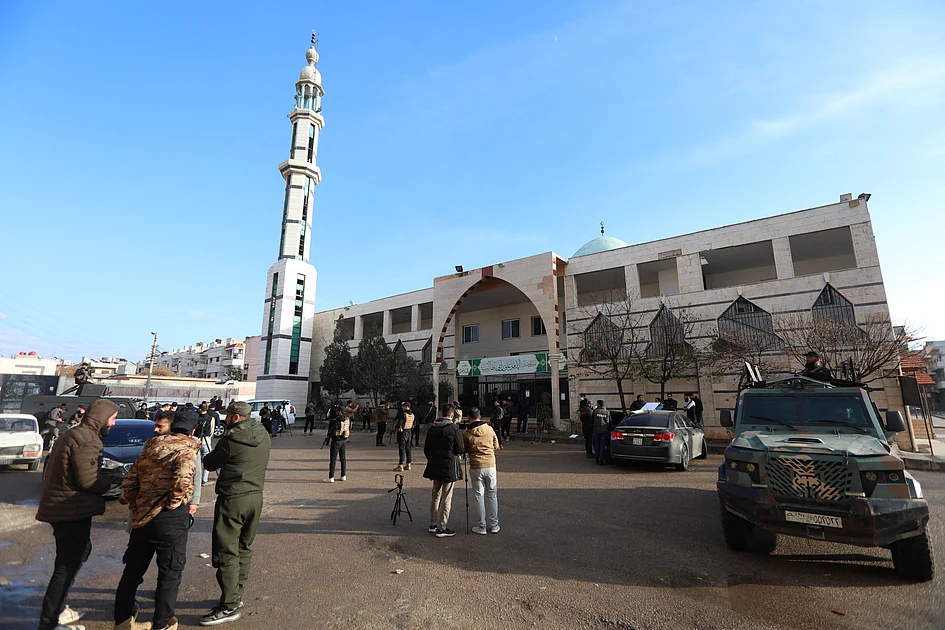
    The United Arab Emirates has issued a forceful condemnation of a lethal bombing that struck a mosque in Homs, Syria, during Friday prayers. The attack, which resulted in significant civilian casualties, has been met with international reproach from the Gulf nation.

    According to reports from the Syrian state news agency SANA, the explosion claimed eight lives and left at least eighteen individuals wounded. Syrian Health Ministry official Najib al-Naasan indicated these casualty figures were preliminary and subject to increase. Local official Issam Naameh confirmed to Reuters that the blast occurred during the congregation’s noon prayers.

    In an official statement, Afra Al Hameli, Director of Strategic Communications at the UAE’s Ministry of Foreign Affairs, articulated the nation’s position: “In the strongest terms, the UAE denounced the terrorist attack that took place inside a mosque in Homs, central Syria, which resulted in the death and injury of a number of innocent civilians.” The Ministry emphasized its unequivocal rejection of all manifestations of violence and terrorism that seek to destabilize regional security.

    The UAE extended profound condolences and sympathy to the bereaved families, the Syrian government, and its people, while also expressing wishes for the swift recovery of those injured in the assault.

    Responsibility for the attack has been claimed by Saraya Ansar al-Sunnah, an ultra-conservative Sunni Muslim Syrian faction, which announced its involvement through Telegram channels. This same group previously claimed responsibility for a suicide bombing at a Damascus church in June that resulted in twenty fatalities.

  • US airlines cancel over 1,000 flights, winter storm warnings issued

    US airlines cancel over 1,000 flights, winter storm warnings issued

    A severe winter storm system wreaked havoc on US air travel during the critical holiday period, forcing major carriers to cancel over 1,000 flights and delay thousands more. According to flight tracking data from FlightAware, the aviation industry experienced massive disruptions on Friday, December 26th, 2025, with 1,139 cancellations and 3,808 delays recorded by midday Eastern Time.

    The National Weather Service had issued urgent winter storm warnings covering the Great Lakes region, northern Mid-Atlantic, and southern New England, predicting hazardous travel conditions through Saturday morning. Major airports including John F. Kennedy International, LaGuardia, and Detroit Metropolitan Wayne County proactively alerted passengers about potential disruptions through social media channels.

    JetBlue Airways bore the brunt of the cancellations with 225 scrapped flights, followed closely by Delta Air Lines with 186 cancellations. Republic Airways canceled 155 flights, while American Airlines and United Airlines called off 96 and 82 flights respectively. In response to the deteriorating conditions, American Airlines implemented a travel waiver policy, allowing affected passengers to rebook without incurring change fees.

    The massive disruption occurred during one of the busiest travel periods of the year, stranding thousands of holiday travelers attempting to return home after Christmas celebrations. Airlines struggled to manage the cascading effects of the severe weather while maintaining communication with passengers about the evolving situation.

  • Wickets continue to fall in the Ashes at the MCG: Australia is 6 down in its 2nd innings

    Wickets continue to fall in the Ashes at the MCG: Australia is 6 down in its 2nd innings

    MELBOURNE, Australia — In a stunning reversal of fortunes, England’s bowling attack staged a remarkable resurgence on Day 2 of the fourth Ashes Test at Melbourne Cricket Ground, reducing Australia to a precarious 98-6 in their second innings by lunchtime Saturday.

    The dramatic collapse came after Australia had dominated the opening day, skittling England for a mere 110 runs. The match has witnessed an extraordinary 26 wickets falling across just four sessions of play, highlighting the intensely bowler-friendly conditions.

    England’s fightback was spearheaded by their pace attack, with Josh Tongue continuing his impressive form from Friday’s performance where he claimed a career-best 5-45. The English bowlers exploited a pitch that has drawn criticism from cricket legends including Michael Vaughan, Stuart Broad, Brett Lee, and Mark Waugh, who collectively described the surface as offering excessive sideways movement.

    Australia’s innings began unraveling early Saturday after resuming at 4-0. The hosts suffered two quick losses as Gus Atkinson removed Scott Boland (6) caught behind, while captain Ben Stokes struck in his first over, clean bowling Jake Weatherald (5) who offered no shot.

    The pressure intensified as Marnus Labuschagne (8) fell to Tongue’s bowling at 61-3, followed by the crucial dismissal of Travis Head (46) who was bowled by Brydon Carse at 82-4. The collapse continued with Usman Khawaja departing for a duck and Alex Carey (4) caught at second slip.

    With Steve Smith (16*) and Cameron Green (6*) at the crease, Australia holds a 140-run overall lead but faces significant challenges in setting a substantial target on this unpredictable pitch. The match situation remains delicately poised as both teams battle not only each other but also the demanding playing conditions.