作者: admin

  • IEA warns of looming oil glut as supply outpaces demand

    IEA warns of looming oil glut as supply outpaces demand

    The International Energy Agency (IEA) has issued a stark warning about a potential global oil surplus, projecting a significant imbalance between supply and demand by 2026. In its October Oil Market Report, the agency revised its supply growth estimates upward, forecasting an increase of 3.0 million barrels per day (bpd) in 2025, up from the previous 2.7 million bpd. This is expected to be followed by a further 2.4 million bpd rise in 2026. Meanwhile, demand growth is anticipated to remain sluggish, with the IEA trimming its 2025 estimate to 710,000 bpd and predicting a modest 700,000 bpd increase in 2026. This marks a sharp deceleration in oil consumption, attributed to macroeconomic challenges and the accelerating shift toward electrification in transportation. The IEA predicts that global supply could exceed demand by as much as 4 million bpd in 2026, a significant jump from its earlier forecast of a 3.3 million bpd surplus. This potential glut is driven by aggressive production increases from OPEC+ and non-OPEC+ producers, including the US, Canada, Brazil, and Guyana. In contrast, OPEC maintains a more optimistic outlook, expecting supply and demand to balance in 2026 due to stronger global consumption. Price forecasts reflect the uncertainty, with analysts predicting Brent crude to average $67.61 per barrel in 2025, while Barclays and Goldman Sachs have revised their projections downward, citing supply pressures. Despite the near-term challenges, some industry leaders anticipate a medium-term rebalancing as higher-cost producers reduce output. The IEA’s warning underscores the growing tension between production ambitions and the realities of the global energy transition.

  • UAE growth forecast leapfrogs global trend, IMF report says

    UAE growth forecast leapfrogs global trend, IMF report says

    The International Monetary Fund (IMF) has significantly revised its growth projections for the United Arab Emirates (UAE), highlighting the nation’s economic resilience amidst global uncertainties. In its latest World Economic Outlook, the IMF now anticipates the UAE’s real GDP to grow by 4.8% in 2025, up from its April estimate, with a further acceleration to 5.0% in 2026. This optimistic outlook contrasts with a global economic slowdown, where growth is expected to decline from 3.3% in 2024 to 3.1% in 2026. Advanced economies are projected to grow at a modest 1.5%, while emerging markets hover just above 4%. The Middle East and Central Asia are set to see growth rise from 2.6% in 2024 to 3.8% in 2026, with the UAE leading the charge. The IMF attributes the UAE’s robust performance to its diversified economy, strong financial buffers, and strategic reforms. Key drivers include a widening current account surplus, bolstered by non-hydrocarbon exports, and deepening trade agreements with nations like India, Indonesia, Türkiye, and South Korea. The UAE’s financial sector remains stable, with well-capitalized banks, declining non-performing loans, and innovative measures such as the Digital Dirham and stablecoin regulation. The real estate market continues to thrive, supported by population growth and foreign investment, though the IMF cautions against potential shifts in capital flows. Structural reforms in infrastructure, sustainability, and AI further cement the UAE’s position as a forward-looking economic hub. Looking ahead, the UAE’s growth trajectory remains promising, underpinned by sound fiscal policies, regulatory advancements, and a commitment to long-term reforms.

  • ‘You’ve been calling a lot!’: How 2 AP reporters landed an interview with Madagascar’s coup leader

    ‘You’ve been calling a lot!’: How 2 AP reporters landed an interview with Madagascar’s coup leader

    In a dramatic turn of events, Madagascar witnessed a military coup led by Col. Michael Randrianirina, who toppled President Andry Rajoelina following weeks of widespread protests. The unrest, driven by issues such as water and power shortages, soaring living costs, and pervasive poverty, culminated in the ousting of the president. Randrianirina, head of the elite CAPSAT military unit, confirmed his intention to assume the presidency in an exclusive interview with The Associated Press (AP). The interview, conducted shortly after the coup, revealed his plans to be sworn in as the nation’s new leader within days. The AP’s coverage of the coup began with a chance encounter between Randrianirina and AP photographer Brian Inganga during an anti-government protest in the capital, Antananarivo. Inganga’s persistence in securing the interview provided a rare glimpse into the inner workings of the coup. The interview took place at the CAPSAT barracks, where Randrianirina, surrounded by his officers, outlined his vision for Madagascar’s future. Despite the tense atmosphere, the colonel maintained a calm demeanor, assuring the journalists of his intentions to stabilize the country. This coup marks a significant shift in Madagascar’s political landscape, raising questions about the nation’s future stability and governance.

  • Irish presidential candidate concerned by EU ‘militarisation’

    Irish presidential candidate concerned by EU ‘militarisation’

    Independent Irish presidential candidate Catherine Connolly has voiced her concerns over the European Union’s increasing militarization, describing it as a persistent worry. Speaking on RTE’s Katie Hannon Interview Live, Connolly emphasized her unease as a woman and mother, criticizing the trend of nations allocating more resources to arms while reducing welfare spending. She also clarified that her campaign’s focus on an Irish border poll was not a concession to secure Sinn Féin’s political support. Connolly highlighted her longstanding advocacy for allowing Northern Ireland residents to vote in Irish presidential elections, noting growing public support for this initiative. Addressing controversy over her hiring of a former Éirígí member with a criminal record, Connolly defended her decision, citing the individual’s strong recommendations and her belief in rehabilitation. She also justified her 2018 trip to Syria, funded by the Parliamentary Activities Allowance, as a fact-finding mission, denying any association with pro-Assad militias. Connolly reiterated her commitment to serving only one term if elected, pledging to dedicate her energy fully to the presidency. She also expressed support for greater transparency in the office of the presidency, subjecting all expenses to Public Accounts Committee scrutiny. When asked about her husband’s potential public role, Connolly left the decision to him.

  • How many wars has President Trump really ended?

    How many wars has President Trump really ended?

    President Trump has recently asserted on social media that he has ‘ended 8 wars in just 8 months,’ dubbing himself ‘the president of peace.’ Among these, the most notable is the two-year conflict between Israel and Hamas. The other conflicts he claims to have resolved include those between Israel and Iran, Pakistan and India, Rwanda and the Democratic Republic of Congo, Thailand and Cambodia, Armenia and Azerbaijan, Egypt and Ethiopia, and Serbia and Kosovo. While some of these conflicts were short-lived, they stemmed from deep-rooted tensions, and in some cases, there was no active fighting to cease. The durability of these peace agreements remains uncertain. BBC Verify has scrutinized these conflicts to assess the extent of Trump’s involvement in their resolution. Trump has been widely praised for brokering a ceasefire between Israel and Hamas, which involved the exchange of Israeli hostages for Palestinian prisoners. However, achieving lasting peace in the region requires addressing complex issues such as Hamas disarming and establishing a new government in Gaza. Michael O’Hanlon, a defense and foreign policy expert at the Brookings Institution, acknowledges Trump’s efforts but emphasizes the fragility of these achievements. ‘This is only stage one,’ O’Hanlon notes, ‘and getting to a two-state solution will be even harder.’ Trump’s role in other conflicts, such as the 12-day war between Israel and Iran, has also been highlighted. The US carried out strikes on Iranian nuclear sites, which many believe hastened the conflict’s end. However, Iran’s Supreme Leader Ayatollah Ali Khamenei claimed a ‘decisive victory,’ and Israel has hinted at future strikes. Similarly, Trump’s mediation in the India-Pakistan conflict over Kashmir led to a ceasefire, though India downplayed US involvement. In the case of Rwanda and the Democratic Republic of Congo, a peace agreement was signed in Washington, but accusations of ceasefire violations persist. Trump’s intervention in the Thailand-Cambodia border dispute resulted in an immediate ceasefire, with both countries praising his efforts. However, the long-standing tensions between Armenia and Azerbaijan over Nagorno-Karabakh remain unresolved, despite Trump’s hosting of their leaders at the White House. The dispute between Egypt and Ethiopia over the Grand Ethiopian Renaissance Dam also remains unresolved, with Trump’s comments risking further tensions. Lastly, Trump’s claim to have prevented a war between Serbia and Kosovo is disputed, as no active conflict was occurring at the time. While Trump has made significant diplomatic efforts, the long-term success of these peace agreements is still in question.

  • How UAE’s next decade will be run by digital-first natives with ‘more productivity’

    How UAE’s next decade will be run by digital-first natives with ‘more productivity’

    The United Arab Emirates (UAE) is poised to lead the next decade with a generation of digital-first natives, according to Omar Sultan Al Olama, the UAE’s Minister of State for Artificial Intelligence, Digital Economy, and Remote Work Applications. Speaking at the World Economic Forum’s Annual Meetings of the Global Future Councils and Cybersecurity, Al Olama emphasized the transformative potential of this tech-savvy generation in addressing global challenges such as climate change and social inequality. He urged global leaders to adopt bold, forward-thinking strategies, rejecting the tendency to dwell on past limitations. Al Olama highlighted the UAE’s own journey, from a modest vision in 1991 to its current leadership in AI and blockchain innovation. He underscored the importance of audacious visions, citing the UAE’s success in creating a blockchain network that mobilized 20 gigawatts of power globally in just 12 years. Addressing concerns about AI, Al Olama provided data-driven optimism, noting that AI-generated content has plateaued at 52% online, countering fears of an AI takeover. He concluded by sharing a powerful lesson from Sheikh Mohammed bin Rashid Al Maktoum: ‘If you don’t have a vision, you will be part of someone else’s vision.’ The UAE’s commitment to innovation and its digital-first approach positions it as a global leader in shaping the future.

  • Trump claims India will stop buying Russian oil, escalating pressure on Moscow over Ukraine war

    Trump claims India will stop buying Russian oil, escalating pressure on Moscow over Ukraine war

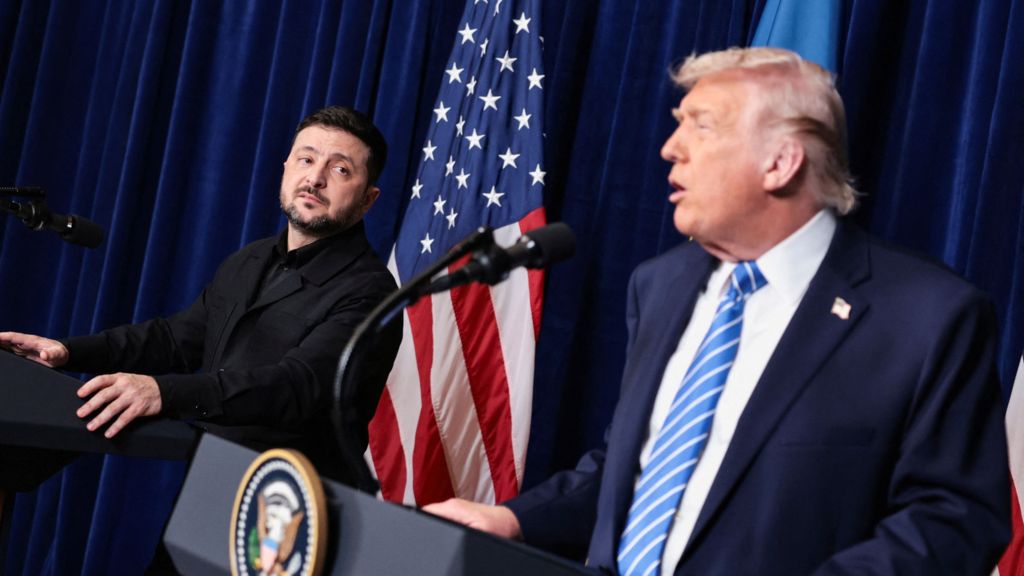
    In a significant development, former U.S. President Donald Trump announced on Wednesday that Indian Prime Minister Narendra Modi had personally guaranteed India would cease purchasing Russian oil. This claim, yet to be verified by the Indian government, aligns with Trump’s broader strategy to exert pressure on Moscow to negotiate an end to the ongoing conflict in Ukraine. ‘There will be no oil. He’s not buying oil,’ Trump stated, adding that the transition would not be immediate but would occur ‘within a short period of time.’ The Indian embassy in Washington has not yet commented on the matter. Trump has been vocal about his frustrations over the prolonged war in Ukraine, which began with Russia’s invasion nearly four years ago. He has increasingly criticized Russian President Vladimir Putin, labeling him as the main impediment to peace. Trump is scheduled to meet with Ukrainian President Volodymyr Zelenskyy on Friday. India, the second-largest buyer of Russian oil after China, faced U.S. tariffs in August as part of Trump’s efforts to curb its economic ties with Russia.

  • Nasdaq Dubai welcomes CNY1 billion bond listing by Emirates NBD

    Nasdaq Dubai welcomes CNY1 billion bond listing by Emirates NBD

    Nasdaq Dubai has marked a significant milestone with the listing of a CNY1 billion (approximately US$140 million) bond by Emirates NBD Bank. This issuance, part of the bank’s US$20 billion Euro Medium Term Note (EMTN) Programme, features 2.40 percent Notes maturing in 2028. The move signifies Emirates NBD’s re-entry into the Dim Sum market, a platform that facilitates global investors’ access to renminbi-denominated bonds outside mainland China. This strategic issuance not only diversifies the bank’s funding sources but also underscores the robust investor demand for high-quality financial instruments from UAE institutions. With this listing, Emirates NBD’s total debt instruments on Nasdaq Dubai now stand at $5.4 billion across nine issuances, cementing its status as one of the UAE’s most active financial entities on the exchange. The transaction also highlights Dubai’s deepening ties with Asian markets, as renminbi-denominated bonds gain prominence in international capital markets. To commemorate the occasion, Hesham Abdulla Al Qassim, Vice Chairman and Managing Director of Emirates NBD, rang the market-opening bell at Nasdaq Dubai, joined by Hamed Ali, CEO of Nasdaq Dubai and Dubai Financial Market (DFM). Al Qassim emphasized the bank’s commitment to wealth creation for clients, supported by significant capital inflows and a diverse product portfolio. He praised Nasdaq Dubai’s international reputation and regulatory excellence as key factors in choosing the platform for listings. Ali, in turn, highlighted Dubai’s role as a trusted gateway for UAE issuers to connect with global investors, noting the growing appeal of the market and its ability to facilitate diversified funding across currencies and geographies. The total outstanding value of debt securities listed on Nasdaq Dubai has now reached $140 billion, further solidifying the exchange’s position as a leading hub for fixed income in the region.

  • Japan postpones extraordinary Diet session to elect new PM

    Japan postpones extraordinary Diet session to elect new PM

    The Japanese government has announced the postponement of an extraordinary parliamentary session initially slated for this week to elect a new prime minister. The session is now rescheduled for October 21, though the precise timing of the vote remains undecided. This delay comes amidst a backdrop of political maneuvering and uncertainty within Japan’s ruling and opposition parties. Sanae Takaichi, the newly elected leader of the ruling Liberal Democratic Party (LDP), expressed determination to secure the premiership despite skepticism from some quarters. Takaichi’s path to the top job has been complicated by the withdrawal of the LDP’s junior coalition partner, Komeito, which cited dissatisfaction with the party’s handling of a political funding scandal. Komeito has declared it will not support Takaichi in the upcoming Diet vote. Meanwhile, opposition parties are actively strategizing to unite behind Democratic Party for the People (DPFP) leader Yuichiro Tamaki as their preferred candidate for prime minister. The LDP, which holds 196 seats in the House of Representatives and 100 in the House of Councillors, is navigating a fragmented political landscape. The election process will involve both chambers of parliament, with the lower house’s decision taking precedence in case of a tie. If no candidate secures a majority in the first round, a runoff will be held between the top two contenders.

  • Alec Holdings gains 0.71% on  DFM debut in UAE’s largest-ever construction sector IPO

    Alec Holdings gains 0.71% on DFM debut in UAE’s largest-ever construction sector IPO

    Alec Holdings, a prominent engineering and construction group based in Dubai, marked its debut on the Dubai Financial Market (DFM) with a modest 0.71% gain over its listing price. Opening at Dh1.47, the company’s shares climbed to Dh1.50 before settling, with over 128 million shares traded, amounting to a total value of Dh186.4 million. This listing represents the UAE’s largest-ever initial public offering (IPO) in the construction sector, both in terms of valuation and size, and the first in the sector in over 15 years. The IPO, fully subscribed, raised Dh1.4 billion through the sale of 1 billion existing ordinary shares, representing 20% of the company’s issued share capital. The Investment Corporation of Dubai (ICD), Alec’s sole selling shareholder, retains an 80% stake post-listing. Barry Lewis, CEO of Alec Holdings, highlighted the significance of the listing as a milestone in the company’s journey, emphasizing enhanced governance and transparency. Helal Al Marri, Chairman of the DFM Board of Directors, and Hamed Ali, CEO of DFM and Nasdaq Dubai, also underscored the listing’s role in diversifying Dubai’s capital markets and reinforcing its position as a global financial hub. Alec’s IPO, while modest compared to recent IPOs like Parkin (+31%) and Dubai Taxi (+19%), reflects disciplined pricing and cautious investor sentiment toward private-sector companies. The company plans to distribute dividends, starting with Dh200 million in April 2026, followed by Dh500 million for the 2026 financial year, representing a 7.1% dividend yield at listing. Analysts view Alec’s steady trading range as a sign of healthy consolidation, driven by solid fundamentals rather than speculative gains. The IPO is expected to pave the way for other engineering and infrastructure firms to go public, signaling the UAE’s maturing equity capital markets and positive outlook for future construction-sector floatations.