作者: admin

  • How AI boom is pressuring videogame console industry in race for memory chips

    How AI boom is pressuring videogame console industry in race for memory chips

    The relentless expansion of artificial intelligence infrastructure is creating a severe supply chain crisis for the global videogame industry, as soaring demand for high-performance memory chips diverts resources away from consumer electronics. This market shift is placing unprecedented pressure on console manufacturers, including Sony, Microsoft, and Nintendo, potentially leading to significant price increases and delayed product launches throughout 2026.

    At the core of this supply bottleneck are Dynamic Random Access Memory (DRAM) chips, essential components in gaming consoles like PlayStation 5, Xbox Series X/S, and the anticipated Nintendo Switch 2. These chips enable critical gaming performance features including rapid loading times, seamless frame rates, and overall system responsiveness. With AI developers aggressively acquiring available memory supplies for data center applications, semiconductor manufacturers are prioritizing higher-margin data-center chips over consumer-grade components.

    This strategic reallocation has already triggered industry-wide responses. Micron Technology announced the discontinuation of its longstanding Crucial brand, a cornerstone for PC enthusiasts and system builders. Meanwhile, gaming hardware specialists including CyberPowerPC have implemented price increases, with industry reports indicating similar moves planned by Dell Technologies and Lenovo.

    According to Joost van Dreunen, games professor at NYU’s Stern School of Business, memory constitutes approximately 20% of total PC component costs. He projects console prices could escalate by 10-15% over the coming years, with gaming PCs potentially facing increases up to 30% as memory prices continue their upward trajectory through 2026.

    Market analytics firm Counterpoint Research documented a 50% price surge for memory chips throughout 2025, with projections indicating an additional 30% increase in Q4 2025 followed by possible 20% growth in early 2026. These inflationary pressures compound existing challenges including tariff-related manufacturing cost increases and subdued consumer spending.

    Industry trackers report concerning market indicators, with Circana noting a 27% decline in gaming hardware spending during November 2025—the weakest monthly unit sales since 1995—while average device prices reached record highs. Current premium consoles retail between $650-750, prices that may become standard across the industry.

    The supply constraints may also impact upcoming product launches, potentially affecting Valve Corporation’s Steam Machine and other anticipated gaming platforms. As Emarketer analyst Jacob Bourne observes, manufacturers may opt to delay releases rather than risk poor sales in an increasingly price-sensitive market, fundamentally altering the product roadmap for the entire gaming hardware sector.

  • UAE Polo Federation Cup 2026: Eight elite teams gear up for high-stakes showdown

    UAE Polo Federation Cup 2026: Eight elite teams gear up for high-stakes showdown

    Dubai prepares to host the prestigious UAE Polo Federation Cup from January 5-17, 2026, with eight premier teams confirmed for what promises to be a spectacular display of equestrian sport excellence. The Dubai Polo & Equestrian Club will serve as the venue for this highly anticipated tournament, following the official live draw that revealed the participating teams and match schedule.

    The competing organizations include UAE Polo, Noon Polo, Banghash Polo, Bhansali Polo, Jehangiri Polo, El Basha Polo, Equiti Polo, and Bindrai Polo—each featuring accomplished players from the international polo community. These teams will engage in intense matches throughout the nearly two-week competition, building toward the championship finale on January 17.

    Tournament director Santiago Torreguitar of the UAE Polo Federation emphasized the event’s significance: ‘The UAE Polo Federation Cup remains a fundamental component of our competitive calendar, showcasing regional talent and our dedication to advancing polo at the highest caliber. With eight exceptional teams and a meticulously planned fixture, spectators can anticipate exhilarating matches and world-class polo throughout the season.’

    Shokry Abouelsoud, General Manager of Dubai Polo & Equestrian Club, expressed pride in hosting both the draw and the upcoming tournament: ‘Our club provides a distinctive environment where sport, tradition, and community converge. We eagerly anticipate welcoming players, families, and polo enthusiasts for a memorable tournament experience both on and off the field.’

    Beyond the competitive action, the event offers a complete cultural experience with premium amenities including the Terrace dining area, à la carte options at the Dubai Polo Bar, and picnic accommodations for lawn seating. The tournament blends high-level athletic competition with social engagement, providing visitors an immersive introduction to the UAE’s vibrant polo lifestyle.

  • Loylogic shares 2026 vision to advance the global rewards marketplace

    Loylogic shares 2026 vision to advance the global rewards marketplace

    Loylogic, a prominent player in global loyalty rewards management, has announced its comprehensive strategic vision for 2026, positioning itself at the forefront of the rapidly evolving rewards marketplace. This announcement comes as the Middle East loyalty market demonstrates remarkable growth, projected to reach $3.27 billion in 2025 with a 16.3% year-on-year expansion, driven by digital-first approaches, personalized experiences, and coalition-based models.

    The company’s forward-looking strategy emphasizes three core pillars: advanced AI-powered marketplace intelligence, sophisticated catalog curation, and enhanced integration capabilities. Rather than pursuing mere expansion of reward options, Loylogic is focusing on intelligent marketplace design that balances consumer relevance with operational efficiency and sustainable value creation within a unified global platform.

    Underpinning this technological advancement is a robust compliance and security framework that meets international standards including ISO 27001, GDPR, PCI DSS, and AES-256 encryption protocols. The company maintains strict adherence to the European Accessibility Act 2025 and WCAG 2.0 guidelines while ensuring adaptability to regional data residency requirements and varying regulatory landscapes.

    Gabi Kool, CEO of Loylogic, emphasized the shifting priorities in the loyalty sector: ‘As programs mature, brands are seeking smarter, more relevant, and commercially viable reward ecosystems. Our 2026 strategy centers on redefining how global rewards marketplaces are architected, governed, and experienced through the integration of intelligence, trust, and flexibility.’

    Amit Bendre, COO, further elaborated on the technological direction: ‘Our innovation initiatives aim to create more adaptive and intelligent marketplace experiences, delivering superior insights and decision-support capabilities while maintaining uncompromising standards for privacy, security, and regulatory compliance.’

    Looking toward 2026, Loylogic plans to intensify collaboration with global partners, engage more actively with industry stakeholders, and strengthen capabilities across commercial, product, and technology functions. The company’s established infrastructure and marketplace expertise continue to support enterprise clients across financial services, travel, and consumer sectors, transforming routine customer engagement into sustained, meaningful loyalty relationships.

  • Beyoncé declared a billionaire by Forbes

    Beyoncé declared a billionaire by Forbes

    Forbes has officially designated global music icon Beyoncé Knowles-Carter as a billionaire, cementing her position as the fifth musical artist to enter its prestigious ranking of the world’s wealthiest individuals. This landmark achievement places her within an exclusive circle of musicians boasting ten-figure fortunes, a group that includes Taylor Swift, Rihanna, Bruce Springsteen, and her husband, Jay-Z—the latter of whom Forbes estimates holds a net worth of $2.5 billion.

    The publication had previously projected this financial milestone earlier in the month, noting her estimated net worth of $800 million and anticipating her imminent ascension to billionaire status following a period of extraordinary commercial success. A primary driver of this growth was the monumental Renaissance World Tour in 2023, which generated nearly $600 million in revenue. This tour not only solidified her status as a premier pop icon but also led to a concert film. Distributed directly through a partnership with the AMC theater chain, the film allowed her to retain nearly half of its $44 million global box office earnings.

    Further amplifying her financial and critical acclaim, her 2024 album, ‘Cowboy Carter,’ was hailed for its celebration of the Black origins of country music. The project earned the Album of the Year award at the Grammy Awards—her first win in the category after four prior nominations. The subsequent Cowboy Carter tour, featuring appearances by Jay-Z, two of their children, and former Destiny’s Child members, accrued over $400 million in ticket sales and an additional $50 million in merchandise revenue.

    Despite breaking attendance records at venues like London’s Tottenham Hotspur Stadium and the Stade de France in Paris, the tour encountered challenges with slower ticket sales in some markets, prompting promoters to reduce prices to ensure full attendance. Nonetheless, it featured the highest top-tier ticket price for any artist performing in the UK in 2025, reaching £950, with entry-level tickets priced at £71.

    Additional revenue streams contributing to her billionaire status include an estimated $50 million performance fee for a special halftime show during Netflix’s inaugural Christmas Day NFL broadcast, alongside a $10 million endorsement deal for a series of Levi’s commercials.

    In a note on industry valuations, Forbes addressed a discrepancy with Bloomberg’s billionaire index, which listed Selena Gomez with a net worth of $1.3 billion in 2024. Forbes contested this assessment, instead estimating Gomez’s wealth at approximately $700 million.

  • Education, job skills: New rehab initiative in RAK gives inmates shot at life after prison

    Education, job skills: New rehab initiative in RAK gives inmates shot at life after prison

    Ras Al Khaimah has introduced a groundbreaking rehabilitation initiative designed to equip inmates with essential skills for successful societal reintegration. Launched at the Ras Al Khaimah Correctional and Rehabilitation Facility, this comprehensive program combines educational development, vocational training, and psychological support to address the root causes of criminal behavior.

    The Sheikh Saud bin Saqr Al Qasimi Foundation for Policy Research (AQF) developed this evidence-based initiative aligned with international correctional best practices. The program employs a data-driven assessment model where participants undergo thorough evaluations measuring literacy, numeracy, language proficiency, life skills, and psychological well-being. These assessments inform personalized rehabilitation pathways tailored to individual needs.

    Structured around three core pillars, the program first focuses on foundational education and life skills enhancement. The second pillar provides accredited vocational training through partnerships with Lootah Technical Center and Spearhead Training, delivering job-ready skills to improve employability. The third component offers psychological support through professional counseling and behavioral therapy services provided by specialized organizations including Erada Rehabilitation Center.

    Dr. Natasha Ridge, Executive Director of AQF, emphasized that the initiative represents a long-term investment in social stability. ‘Effective rehabilitation begins with understanding individual needs,’ she stated. ‘Delivering education and training within correctional settings provides inmates with genuine opportunities to rebuild their lives.’

    Colonel Thiab Al Harash, Director of the Correctional Facility, noted the program strengthens the institution’s rehabilitative mission by creating an environment that encourages personal responsibility and positive behavioral change. The program will run through 2027 with structured evaluations conducted after each cycle to measure educational, psychological, and social outcomes, potentially serving as a replicable model for broader application across the UAE.

  • Video: PLA conducts drills on assault against maritime targets to the southeast of Taiwan

    Video: PLA conducts drills on assault against maritime targets to the southeast of Taiwan

    The People’s Liberation Army Eastern Theater Command executed extensive military exercises southeast of Taiwan on December 29, 2025, demonstrating advanced operational capabilities in maritime security. The drills featured coordinated task forces comprising strategic bombers, amphibious assault ships, and anti-ship missile units engaging in sophisticated warfare simulations.

    The comprehensive exercises focused on multiple tactical dimensions including vessel-aircraft coordination protocols, precision strikes against maritime targets, long-distance raid operations, and integrated support systems. These operations were conducted across both maritime and aerial domains, representing one of the most complex military demonstrations in the region.

    Military analysts note these drills specifically tested the PLA’s capacity for integrated operations both inside and outside island chain formations, while evaluating the effectiveness of neutralizing capabilities at maximum operational ranges. The timing and location of these exercises reflect ongoing developments in regional security dynamics and defense preparedness.

    The Eastern Theater Command, responsible for operations in the Taiwan Strait and East China Sea regions, has increasingly conducted such exercises to maintain combat readiness and technological superiority. These drills occur within the context of China’s ongoing commitment to territorial integrity and national sovereignty principles.

  • Why Israel’s recognition of Somaliland as an independent state is controversial

    Why Israel’s recognition of Somaliland as an independent state is controversial

    In a groundbreaking diplomatic move that has sent shockwaves through international relations, Israel has become the first nation to officially recognize the breakaway territory of Somaliland as an independent sovereign state. This controversial decision, announced on Friday, has triggered widespread condemnation from numerous countries and international organizations while being hailed by Somaliland’s leadership as a historic milestone.

    The recognition follows more than three decades of Somaliland’s de facto independence from Somalia, declared in 1991 following the overthrow of military dictator Siad Barre. Despite maintaining its own government institutions, currency, and security forces, the semi-desert territory along the Gulf of Aden has remained internationally unrecognized until Israel’s unexpected declaration.

    China has emerged among the most vocal critics, with Foreign Ministry spokesperson Lin Jian asserting that “no country should encourage or support other countries’ internal separatist forces for its own selfish interests.” This condemnation comes ahead of an emergency UN Security Council session convened to address the escalating diplomatic crisis.

    Somalia has reacted with fury, characterizing Israel’s move as a direct assault on its territorial integrity. President Hassan Sheikh Mohamud labeled the recognition an “existential threat” to national unity, while Somalia’s parliament unanimously rejected what it termed a violation of international law.

    Strategic analysts suggest Israel’s motivation extends beyond mere diplomatic recognition. According to research from the Institute for National Security Studies, Somaliland offers Israel a strategic foothold in the Red Sea region, potentially providing operational access near conflict zones involving Yemen’s Houthi rebels. Israeli Prime Minister Benjamin Netanyahu confirmed in a phone call with Somaliland President Abdirahman Mohamed Abdullahi that the recognition acknowledges Somaliland’s “right of self-determination” and presents “a great opportunity for expanding” bilateral partnership.

    The Houthi movement has responded with threats, warning that any Israeli presence in Somaliland would be considered legitimate military targets. This development occurs against the backdrop of reported discussions about potential resettlement of Palestinians from Gaza, though Somaliland has denied any connection between recognition and the Palestinian issue.

    Regional powers including Turkey, Saudi Arabia, and the African Union have joined the condemnation, expressing concern that this recognition could establish a dangerous precedent for separatist movements across the continent. The African Union specifically warned of potential chain reactions where other regions might seek external alliances without central government consent.

    Notably, traditional Somaliland allies including the United Arab Emirates and Ethiopia have maintained cautious silence. Analysis suggests the UAE aligns with Israeli interests in the region, while Ethiopia—which recently secured port access through Somaliland—appears to be adopting a wait-and-see approach despite potentially benefiting from the recognition.

    The United States has shown reluctance to follow Israel’s lead, with former President Donald Trump questioning general awareness of Somaliland’s status. The international community remains deeply divided, setting the stage for continued diplomatic confrontation as this unexpected geopolitical realignment unfolds.

  • Peruvian shamans predict Maduro’s fall, continued global conflicts in 2026

    Peruvian shamans predict Maduro’s fall, continued global conflicts in 2026

    High above Lima, Peru, a gathering of traditional shamans convened on the sacred San Cristobal hill Monday to perform their annual divination ceremony, offering prophetic insights into global affairs for the coming year. Clad in colorful Andean ponchos and ceremonial headdresses, the spiritual practitioners conducted ancient rituals that blended indigenous traditions with contemporary geopolitical forecasting.

    The shamans delivered several striking predictions during the heightened spiritual state achieved through ceremonial consumption of plant-based hallucinogens, including Ayahuasca and San Pedro cactus extracts. Their foremost prophecy indicated Venezuelan President Nicolás Maduro would face removal from office, with shaman Ana María Simeón specifically referencing potential involvement from former U.S. President Donald Trump in this political transition.

    Beyond Venezuelan politics, the seers forecast continued international conflicts, particularly emphasizing the ongoing warfare between Ukraine and Russia. The ceremony also included appeals for Middle Eastern peace and addressed concerns about natural disasters, including seismic events and extreme climatic phenomena.

    The historical accuracy of these annual predictions presents a complex picture. While last year’s warning of nuclear conflict between Israel and Gaza failed to materialize, the group correctly anticipated the December 2024 passing of imprisoned former Peruvian President Alberto Fujimori, who died from cancer at age 86.

    The ritual itself incorporated traditional elements including ceremonial blankets adorned with yellow flowers, ritualistic placement of coca leaves, symbolic swords, and other sacred objects. Participants engaged in circular dances accompanied by ancestral musical instruments, creating an atmosphere believed to channel positive energy and influence global decision-making among world leaders.

  • Smart vertical farming takes off in Chengdu

    Smart vertical farming takes off in Chengdu

    Chengdu is pioneering a new era of agricultural technology with fully automated vertical farming systems that achieve unprecedented production efficiency. The Sichuan provincial capital now hosts an advanced plant factory that generates 50 metric tons of lettuce annually within a compact 100-square-meter facility.

    This cutting-edge agricultural installation stands 8.8 meters tall with 20 separate growing tiers, creating a controlled environment where every aspect of plant development is meticulously managed. According to Shi Xianglian, a representative from Sichuan Zhongnong Yixiang Agricultural Technology Company (a subsidiary of the Chinese Academy of Agricultural Sciences’ Institute of Urban Agriculture), the system employs robotic automation throughout the entire production cycle.

    “Our vertical farming technology enables complete regulation of lighting conditions, temperature parameters, hydration levels, nutrient delivery, and atmospheric composition,” Shi explained. “The process is entirely automated—from initial seeding and transplantation phases through to final harvesting and packaging operations—all performed without human intervention.”

    This technological breakthrough represents a significant advancement in urban agriculture, demonstrating how high-density food production can be achieved in limited spaces. The Chengdu facility serves as a model for sustainable farming practices that could potentially address food security challenges in increasingly urbanized environments. The integration of robotics and environmental control systems sets a new standard for agricultural productivity while reducing traditional farming’s land and resource requirements.

  • Nepal to scrap ‘failed’ Mount Everest waste deposit scheme

    Nepal to scrap ‘failed’ Mount Everest waste deposit scheme

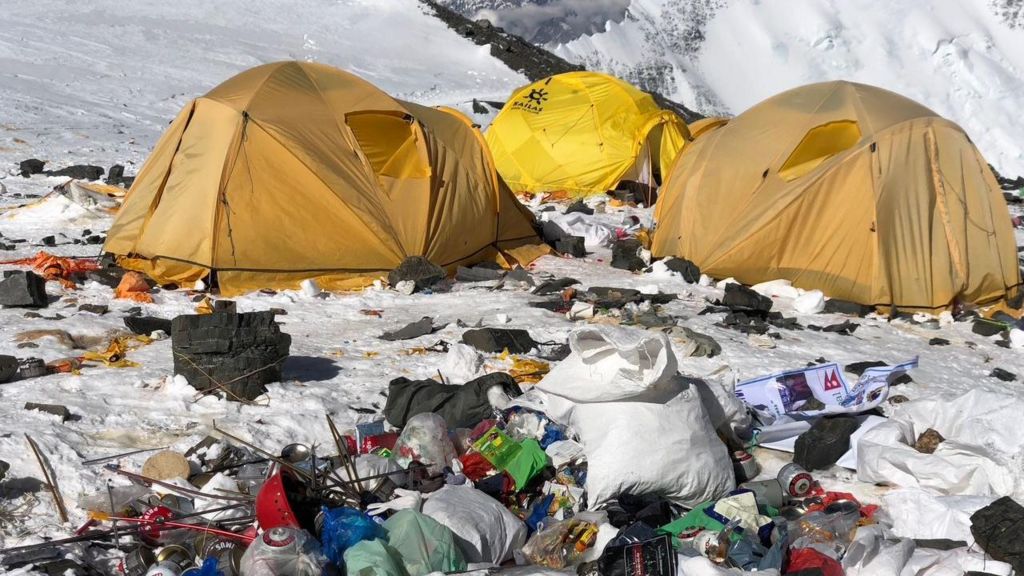
    Nepalese authorities have terminated an 11-year-old deposit scheme designed to combat Mount Everest’s worsening waste crisis, declaring the program an outright failure. The controversial system required climbers to pay a $4,000 refundable deposit, reimbursable only if they descended with at least 8kg of trash. Despite most climbers technically complying with the requirement, officials confirmed the initiative failed to address the critical accumulation of waste at higher altitudes where the problem is most severe.

    Himal Gautam, director at Nepal’s tourism department, revealed to the BBC that the program had ‘become an administrative burden’ while failing to resolve the garbage issue. The fundamental flaw lay in climbers’ tendency to retrieve easily accessible waste from lower camps rather than tackling the more challenging debris at extreme elevations. Tshering Sherpa, CEO of the Sagarmatha Pollution Control Committee, noted that ‘from higher camps, people tend to bring back oxygen bottles only,’ leaving behind tents, food containers, and packaging that contributes to the estimated 50 tonnes of litter covering the mountain.

    A revolutionary approach will replace the discontinued program. Authorities plan to implement a non-refundable $4,000 clean-up fee per climber, creating a dedicated fund for environmental management. This financial reservoir will finance the establishment of a monitoring checkpoint at Camp Two and deploy specialized mountain rangers to ensure proper waste removal from critical high-altitude zones. Mingma Sherpa, chairperson of the Pasang Lhamu rural municipality, emphasized that this structural change responds to long-standing concerns from the Sherpa community about the previous system’s ineffective enforcement mechanisms.

    The new fee structure integrates with a comprehensive five-year mountain clean-up action plan designed to immediately address Everest’s ecological crisis. The growing mountaineering industry—averaging 400 climbers annually plus supporting staff—generates approximately 12kg of waste per person during six-week expeditions. Particularly problematic is human excrement, which remains preserved indefinitely in freezing high-altitude conditions. Tourism ministry spokesperson Jaynarayan Acarya stated the revised approach aims to create sustainable mountaineering practices while preserving the world’s highest peak for future generations.