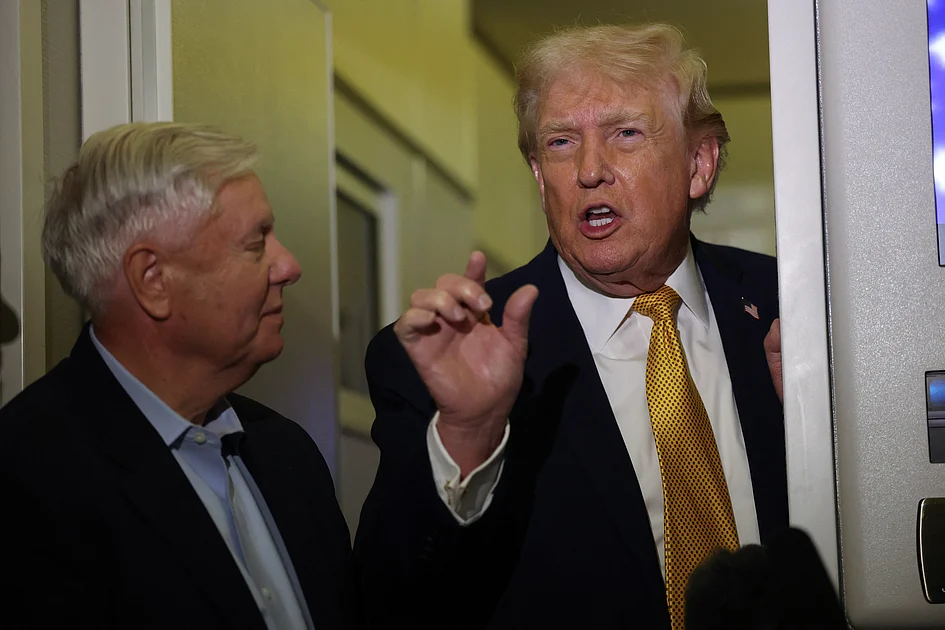
During his recent Asia tour, US President Donald Trump signed a series of agreements with Japan, Malaysia, Thailand, Vietnam, and Cambodia to secure access to rare earth minerals, a sector long dominated by China. These deals, varying in scope and detail, aim to diversify the US supply chain for these critical materials, essential for advanced manufacturing in industries ranging from electric vehicles to smartphones. While the tangible impact of these agreements remains uncertain, they represent a strategic move to reduce reliance on China ahead of Trump’s high-stakes meeting with Chinese President Xi Jinping.
作者: admin
-

Dodgers outlast Blue Jays in World Series epic
In a historic and marathon showdown, Freddie Freeman delivered a walk-off home run in the bottom of the 18th inning, propelling the Los Angeles Dodgers to a dramatic 6-5 victory over the Toronto Blue Jays in Game 3 of the World Series. This epic clash, lasting over six-and-a-half hours, tied the record for the longest postseason game in Major League Baseball history in terms of innings. The Dodgers now lead the best-of-seven series 2-1, with the next game set to take place at Dodger Stadium on Tuesday.
Japanese sensation Shohei Ohtani showcased his brilliance with two home runs, but it was Freeman, the 2024 World Series MVP, who stole the spotlight. The game was a rollercoaster of emotions, with both teams exchanging leads and opportunities. Toronto initially surged ahead in the fourth inning, thanks to Alejandro Kirk’s three-run homer, but the Dodgers clawed back to tie the score at 4-4 in the fifth inning, fueled by Ohtani’s clutch hitting and Freeman’s RBI.
The Blue Jays regained the lead in the seventh inning, but Ohtani’s second homer of the night leveled the score again at 5-5. From there, the game descended into a tense stalemate, with both teams stranding multiple baserunners and failing to capitalize on loaded bases. Dodgers manager Dave Roberts, who had earlier apologized for complaining about travel delays, finally savored a hard-fought home victory.
The game also featured notable moments, including Ohtani being intentionally walked four times and veteran pitcher Clayton Kershaw making a brief appearance in his final series before retirement. Ultimately, Freeman’s heroics in the 18th inning ended the marathon, leaving fans breathless and setting the stage for an intense Game 4.
-

India closes schools and evacuates thousands as Cyclone Montha approaches
Indian authorities have initiated large-scale evacuations and closed schools as Cyclone Montha approaches the eastern coastline. The severe cyclonic storm, currently swirling over the Bay of Bengal, is expected to make landfall near Kakinada in Andhra Pradesh late Tuesday. With winds predicted to reach 90-110 kph (55-68 mph), the storm has prompted the issuance of red alerts—the highest weather warning level—for 19 districts in Andhra Pradesh. Neighboring states, including Tamil Nadu, Telangana, Kerala, and Karnataka, are also bracing for moderate to heavy rainfall. Disaster teams have evacuated 38,000 people from low-lying areas to relief camps, with an estimated 4 million residents in vulnerable zones. Andhra Pradesh has prepared 1,906 relief camps and 364 school shelters to accommodate evacuees from 1,238 at-risk villages. Schools and colleges remain closed until Wednesday, and fishermen have been warned against venturing into the sea. Train and flight services have been partially disrupted. In Odisha, around 32,000 people have been relocated to relief camps. Climate scientists attribute the increasing frequency and intensity of such storms to global warming, which fuels warmer oceans and more extreme weather patterns. India, one of the world’s largest emitters of greenhouse gases, is also among the most vulnerable regions to climate impacts. The 2023 cyclone season was particularly devastating, claiming 523 lives and causing $2.5 billion in damages. Tropical cyclones, known as hurricanes or typhoons in other regions, are among the most destructive natural disasters, especially in densely populated coastal areas. As global warming continues to escalate, the frequency and severity of such events are expected to rise, posing significant challenges for vulnerable regions like South Asia.
-

US, China edge toward fragile truce ahead of Trump-Xi meeting
In a significant development aimed at de-escalating their protracted trade dispute, the United States and China have established a preliminary framework to prevent further tensions. This breakthrough comes as both nations prepare for a high-stakes meeting between their leaders, US President Donald Trump and Chinese President Xi Jinping, on the sidelines of the APEC Summit in South Korea. The agreement follows intensive negotiations between US Treasury Secretary Scott Bessent and Chinese Vice Premier He Lifeng in Kuala Lumpur, Malaysia. Key concessions include China’s commitment to resume soybean purchases from the US and a one-year delay in implementing proposed rare-earth export controls. Bessent emphasized that the framework would avert the imposition of a 100% tariff on Chinese goods, which had been threatened by Trump. Additionally, the two nations are set to discuss broader issues, including the fentanyl crisis and Trump’s peace plan for Ukraine and Russia. In a separate development, Bessent confirmed that a final deal on TikTok’s US operations has been reached, with details to be finalized during the leaders’ meeting. The agreement reportedly involves the sale of TikTok’s American operations to a consortium of US investors, with ByteDance retaining a minority stake. This tentative truce marks a critical step in stabilizing US-China relations, though underlying tensions in technology and trade remain unresolved.
-

Red Cross transfers body of hostage held by Hamas to Israel
In a significant development amid the ongoing ceasefire between Israel and Hamas, the International Committee of the Red Cross (ICRC) facilitated the transfer of the body of a deceased hostage from Gaza to Israel on Monday night. The hostage, whose identity remains undisclosed, had been held by Hamas since the October 7, 2023, attack. The transfer was part of a broader ceasefire agreement and a hostage-prisoner swap deal between the two parties. Hamas handed over the coffin to the ICRC in Gaza City, which subsequently delivered it to the Israeli military and the Shin Bet security agency. The body will undergo identification at the National Center of Forensic Medicine in Tel Aviv, after which the family will be officially notified. A Hamas source revealed that the body was recovered earlier in the day from the Al-Tuffah neighborhood in eastern Gaza City. This exchange marks the latest in a series of transfers under the ceasefire, which has seen Hamas release all 20 living Israeli hostages and Israel free approximately 2,000 Palestinian detainees. Israel estimates that the bodies of 28 hostages remain in Gaza, with some killed before capture and others dying in captivity. Hamas has previously returned 15 bodies.
-

Ford’s enormous F-150 becomes unlikely part of Japan’s efforts to woo Trump
In a symbolic move to strengthen economic ties with the United States, Japanese Prime Minister Sanae Takaichi showcased an American Ford F-150 truck during her meeting with U.S. President Donald Trump at the Akasaka Palace in Tokyo. The gesture was aimed at fostering goodwill, as Trump has long criticized Japan’s stringent vehicle safety standards and the scarcity of American cars in the country. The Ford F-150, a favorite of Trump, was prominently displayed as part of Takaichi’s efforts to align with U.S. trade interests. However, the practicality of large American vehicles in Japan remains questionable due to the country’s narrow roads, limited parking, and consumer preferences for compact or European models. Despite Trump’s enthusiasm for the idea, Japanese consumers and experts highlight challenges such as left-hand steering, lower fuel efficiency, and insufficient maintenance networks as barriers to the success of American car brands in Japan. This diplomatic maneuver comes amid ongoing trade negotiations, where Trump has pushed for increased purchases of American goods and investments in U.S. infrastructure. While Japan has committed to significant investments, it seeks to prioritize its own vendors and contractors in these deals.
-

India’s hopes hit as Pratika Rawal ruled out of Women’s Cricket World Cup semifinals
India’s aspirations for clinching their maiden Women’s Cricket World Cup title have suffered a significant setback with the injury-induced withdrawal of star opening batter Pratika Rawal. Rawal, who has been in stellar form throughout the tournament, sustained an ankle injury during India’s final league-stage match against Bangladesh on Sunday. The match ended in a washout, but Rawal’s absence looms large as India prepares to face defending champions Australia in the semifinals.
-

Wall Street makes modest gains ahead of Fed rate announcement, Trump-Xi meeting
Wall Street showed signs of modest gains early Tuesday as investors awaited a series of corporate earnings reports and a highly anticipated meeting between President Donald Trump and China’s top leader later this week. Futures for the S&P 500 edged up by less than 0.1%, while the Dow Jones Industrial Average futures rose 0.3%. Nasdaq futures also saw a slight increase of 0.1% before the market opened.
-

1st US heavy rare earths separation facility planned in Louisiana
Aclara Resources Inc., a Canadian mining company based in Vancouver, has announced a significant $277 million investment to establish the first heavy rare earth separation facility in the United States. Located at the Port of Vinton in Louisiana’s Calcasieu Parish, the facility aims to refine rare earth metals essential for various industries, including consumer electronics, technology, and defense. The company plans to mine rare earth deposits in South America and process them at the Louisiana site using hydrochloric acid to extract and separate the metals from clay mineral deposits. The facility is expected to create 140 direct jobs and will occupy an LED Certified Site, prequalified for industrial development through rigorous environmental and engineering reviews. Louisiana’s robust chemical industry, skilled workforce, and strategic access to key reagents were pivotal factors in Aclara’s decision. The state has also offered a $3 million infrastructure grant and a job-creation grant covering up to 22% of wages, along with eligibility for the Industrial Tax Exemption Program, which provides significant property tax relief. Construction is slated to begin in 2026, with completion expected by 2027. Aclara emphasizes its sustainable mining practices, which include recirculating 95% of water used and replanting trees post-mining. The company plans to commence mining operations in Chile in 2027 and Brazil in 2028.
-

Zanzibar is seeing a seaweed boom. Can the women collecting it cash in?
In the picturesque coastal waters of Zanzibar, Tanzania, women clad in vibrant dresses wade through the shallows, their baskets filled with seaweed. This seemingly idyllic scene, often captured by tourists, belies the harsh realities of their labor-intensive work. Seaweed farming, a cornerstone of Zanzibar’s economy, employs thousands of women, yet it comes with significant physical and environmental challenges.
Seaweed, primarily exported for use in the global food, cosmetics, and pharmaceutical industries, has seen a surge in demand. This has spurred increased private investment and donor funding, making seaweed the third-largest contributor to Zanzibar’s economy after tourism and spices. However, the women who form the backbone of this industry often face grueling conditions.
Mwanaisha Makame Simai, a seaweed farmer, describes the physical toll: ‘I experience pain in my back, waist, and chest due to the labor in the sea. There are also risks of being stung or bitten. Sometimes strong waves sweep you away. I have personally witnessed three cases of people drowning.’
The industry’s growth is part of Zanzibar’s ‘blue economy’ initiative, aimed at leveraging sustainable marine resources for economic development. Global players like Cargill have invested in the sector, partnering with organizations like The Nature Conservancy to improve yields and farmers’ incomes. NGOs such as the Global Seaweed Coalition are also stepping up efforts to ensure the sector’s safety and sustainability.
Despite these advancements, the majority of Zanzibar’s 25,000 seaweed farmers, predominantly women, work independently or in collectives, selling to local middlemen with little to no protections. Long hours under the equatorial sun lead to backaches, skin irritation, and the risk of stings from sea creatures. Rising sea temperatures due to climate change have further compounded these challenges, forcing women to venture into deeper waters.
Efforts to empower these women are underway. Organizations like Milele Zanzibar Foundation are teaching women to swim to combat the growing drowning crisis. Mwani Zanzibar, a boutique seaweed farm and factory, is training women in cosmetics manufacturing, offering them higher-paying jobs and reducing their time spent in the sea.
However, concerns remain about the equitable distribution of benefits from the industry’s growth. Simai notes, ‘Most of the money ends up with those who have office jobs, rather than the hardworking farmers.’ As Zanzibar’s seaweed industry continues to expand, ensuring that its benefits reach those at the grassroots level remains a critical challenge.