作者: admin

  • In ‘big trouble’? The factors determining Iran’s future

    In ‘big trouble’? The factors determining Iran’s future

    Iran’s theocratic leadership confronts its most formidable challenge in years as nationwide demonstrations evolve from economic discontent into explicit demands for systemic political change. The protest movement, which initiated with strikes at Tehran’s bazaar in late December, has rapidly escalated into mass rallies challenging the clerical establishment that has governed since the 1979 revolution.

    According to international rights organizations, the government’s aggressive crackdown has resulted in hundreds of casualties, though the authority of 86-year-old Supreme Leader Ayatollah Ali Khamenei remains ostensibly intact. Analysts note that while the scale and political nature of these protests represent a significant threat to the Islamic Republic, predicting its immediate collapse would be premature.

    Professor Nicole Grajewski of Sciences Po Centre for International Studies in Paris observed, “These protests arguably represent the most serious challenge to the Islamic republic in years, both in scale and in their increasingly explicit political demands.” She emphasized the resilience of Iran’s repressive apparatus as a critical factor in the regime’s stability.

    Several key elements will determine the outcome of this crisis. The sustainability and growth of protests remain crucial, though current demonstrations haven’t reached the critical mass necessary for irreversible change. The cohesion within Iran’s political and military elite shows no significant fractures thus far, with all major institutions including the Revolutionary Guards maintaining allegiance to Khamenei.

    International dimensions complicate the situation, with former US President Donald Trump implementing economic measures and not excluding military options. Any direct foreign intervention would fundamentally alter the crisis trajectory, according to analysts. Meanwhile, the opposition movement struggles with internal divisions and lacks cohesive leadership capable of unifying various factions.

    The health and succession planning for Khamenei introduce additional uncertainty, with potential scenarios ranging from his son Mojtaba assuming power to a collective leadership structure or even a takeover by the Revolutionary Guards. The regime’s vulnerability appears heightened both domestically and geopolitically, reaching levels not seen since the Iran-Iraq war of 1980-1988.


  • UAE: New system to update marriage, divorce records automatically

    UAE: New system to update marriage, divorce records automatically

    The United Arab Emirates has inaugurated a groundbreaking digital transformation initiative that automatically updates marriage and divorce records through its new ‘Emirati Family Data’ package. This innovative system, jointly developed by the Ministry of Justice and the Federal Authority for Identity, Citizenship, Customs, and Ports Security, represents a significant advancement in government service efficiency.

    The integrated digital platform enables seamless data exchange between government entities, proactively updating family records and Emirates ID cards without requiring separate applications or physical visits to service centers. This transformation ensures unprecedented data accuracy, accelerates processing times, and enhances the reliability of the national data infrastructure while substantially reducing administrative burdens on UAE residents.

    The initiative aligns strategically with the leadership’s declaration of 2026 as the ‘Year of the Family’ and marks a major milestone in the government’s ambitious ‘Zero Bureaucracy’ program. By fostering digital integration across multiple agencies, the system supports family stability and improves quality of life through streamlined governmental processes.

    Mubarak Ali Al Neyadi, Undersecretary of the Ministry of Justice, emphasized that the package embodies the government’s commitment to inter-agency digital collaboration and represents a proactive approach to developing shared services that simplify family-related procedures. The system operationalizes the ‘one-time data request’ principle, significantly enhancing the efficiency and quality of judicial and legal services.

    Major General Suhail Juma Al Khaili, Acting Director-General of the General Directorate of Nationality, affirmed that the initiative reflects the Authority’s dedication to providing intelligent, customer-centric services that prioritize needs-based design while improving institutional integration and overall quality of life for Emirati families.

  • Pocket power: How mobile photography changed the lives of these Middle East creators

    Pocket power: How mobile photography changed the lives of these Middle East creators

    DUBAI – The recent 1 Billion Followers Summit in Dubai became a showcase for mobile photography’s dramatic evolution from casual pastime to professional storytelling medium. Saudi visual storyteller Rashed Alsubaie and Kuwaiti photographer Abdulaziz Alsorayai demonstrated how the iPhone 17 Pro has fundamentally transformed creative workflows during a live Al Sadu weaving performance workshop.

    Both creators represent a new generation of Middle Eastern digital artists who have built substantial careers around mobile technology. Alsorayai, previously focused on commercial projects including brand films and documentaries, discovered an unexpected demand for educational content about gear and techniques. ‘What made me take content creation seriously was realizing how in-demand it became and how many people genuinely want guidance,’ Alsorayai told Khaleej Times.

    The transition to mobile dominance emerged organically through experimentation rather than strategic planning. ‘When people respond to what you share,’ Alsorayai noted, ‘you start to understand what you’re truly known for and what value you’re adding.’ Despite operating in a region known for rapidly shifting creative trends, both artists have consciously avoided chasing viral content, instead focusing on establishing distinctive creative identities.

    The technological advantages of modern smartphones have made traditional camera equipment increasingly obsolete for many professional applications. Alsorayai emphasized the critical importance of immediacy: ‘It’s always with me. I can shoot and publish quickly without slowing the moment down.’ Alsubaie highlighted the technical maturation of mobile devices: ‘The iPhone has reached a level of potential that is professional enough for documenting daily life. It’s not heavy. There are no lenses to carry.’

    Interestingly, both creators believe mobile technology actually elevates creative expectations. ‘It raises the bar,’ Alsorayai asserted. ‘If you truly understand the tool, you can get results that beat bigger gear by a long margin.’ They particularly praised the iPhone 17 Pro’s professional-grade features including ProRes video capabilities and the equivalent of eight lenses across three cameras, from 8x zoom to Ultra Wide capabilities.

    The fourth edition of the 1 Billion Followers Summit, concluded January 9, 2026, featured over 500 speakers representing a combined audience of 3.5 billion followers, alongside 150 CEOs and global experts participating in various sessions dedicated to shaping the future of content creation.

  • Why Judd Apatow ‘quietly boycotted’ the Golden Globes for 10 years

    Why Judd Apatow ‘quietly boycotted’ the Golden Globes for 10 years

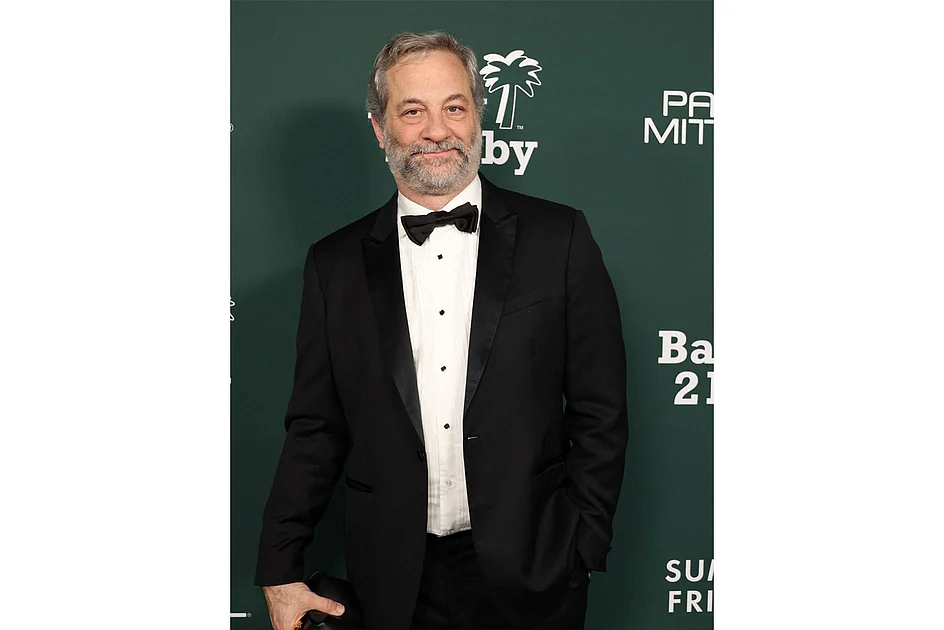
    Filmmaker Judd Apatow made a startling revelation during his appearance as a presenter at the recent Golden Globe Awards ceremony, disclosing a nearly decade-long personal boycott of the prestigious event. The director behind the 2015 comedy “Trainwreck” confessed to maintaining what he described as a “very quiet boycott” since 2016, when his film lost the Best Comedy award to Ridley Scott’s “The Martian.”

    Apatow’s unexpected return to the Golden Globes stage became a moment of both humor and candor as he addressed the audience. “This is very surprising that I am here, because I’ve been boycotting the ceremony for about 10 years,” Apatow stated, adding wryly that his protest had gone largely unnoticed within the industry.

    The director specifically highlighted his ongoing “beef” with the awards organization since the 2016 ceremony, where he believed a genuine comedy lost to a film he considered outside the genre. Apatow delivered a pointed yet humorous critique by referencing Scott’s filmography, naming “Gladiator,” “Blade Runner,” and “Alien” as examples of what he jokingly called “hilarious comedies” from America’s “favorite comedy director.”

    The revelation came during a ceremony that saw unexpected winners in the comedy categories, including “One Battle After Another” and “Hamnet”—the latter being a historical drama about William Shakespeare that Apatow referenced with additional sarcasm regarding its classification as comedy material.

    The incident highlights ongoing debates within the entertainment industry about award categorization and the subjective nature of artistic recognition, while demonstrating how personal professional disappointments can resonate through Hollywood careers for years.

  • Pingtan to pioneer cross-Strait ‘common market’ during 15th Five-Year Plan period

    Pingtan to pioneer cross-Strait ‘common market’ during 15th Five-Year Plan period

    The Pingtan Comprehensive Pilot Zone in Fujian province is positioned to spearhead groundbreaking economic integration between mainland China and Taiwan during China’s 15th Five-Year Plan period (2026-2030). Building upon substantial growth achieved in previous years, this strategic initiative aims to transform Pingtan into a central hub for cross-Strait commerce, standard alignment, and goods circulation.

    According to official statements, the zone will implement unprecedented market access liberalization for Taiwanese capital across key sectors including trade, investment, and information services. Wen Xuelin, deputy secretary of the zone’s Party Working Committee, emphasized the commitment to “maximize the relaxation of access restrictions” to facilitate deeper economic cooperation.

    The comprehensive plan includes expanding mutual recognition mechanisms for professional qualifications, enterprise credentials, and product certifications. This standardization effort particularly targets agricultural and construction industries, aiming to create parallel regulatory frameworks that ease business operations across the Strait.

    Pingtan officials plan significant upgrades to the region’s small-commodity trading market, enabling broader variety of Taiwanese products to enter mainland markets through what they describe as “the most convenient and preferred channel” for Taiwan goods.

    The initiative follows a period of remarkable trade growth during the 14th Five-Year Plan period (2021-2025), which saw cross-Strait trade increase at an average annual rate of 21.7%. Total trade volume surged from 9.1 billion yuan ($1.3 billion) in 2020 to approximately 15 billion yuan in 2025.

    Huang Jianbo, director of the Pingtan Management Committee, noted the zone has already emerged as one of mainland China’s primary entry points for Taiwan’s agricultural and fishery products, with cross-border e-commerce volumes ranking among the nation’s highest.

    Beyond commercial dimensions, Pingtan is developing comprehensive social integration mechanisms. The Cross-Strait Professional Qualification Integrated Service Center has issued nearly 6,000 certificates recognized across multiple provinces. Additional innovations include mutual recognition of Taiwan resident permits and travel documents, plus the establishment of mainland China’s exclusive cross-Strait arbitration center. These measures collectively aim to facilitate Taiwanese compatriots’ integration into local life and social governance structures.

  • Uganda imposes an internet blackout ahead Thursday’s election

    Uganda imposes an internet blackout ahead Thursday’s election

    Uganda’s telecommunications landscape has been plunged into digital darkness as the nation’s communications regulator mandated a comprehensive internet shutdown preceding Thursday’s pivotal general election. The Uganda Communications Commission (UCC) issued directives to all service providers to suspend internet connectivity effective Tuesday at 18:00 local time (15:00 GMT), citing imperative public safety concerns.

    The regulatory body justified this drastic measure as necessary to combat potential ‘online misinformation, disinformation campaigns, electoral fraud mechanisms, and prevention of violence incitement’ during this sensitive electoral period. This decision represents a stark reversal from the UCC’s earlier position this month, when the commission dismissed internet blackout speculation as ‘mere rumors’ while reaffirming its commitment to maintaining uninterrupted nationwide connectivity.

    This digital censorship strategy mirrors the government’s approach during the contentious 2021 elections, which witnessed widespread protests and numerous fatalities amid a week-long internet blackout. While regular mobile data services have been disabled across the country, some business establishments including major hotels continue to access wireless connectivity. Basic communication channels including voice calls and SMS services remain operational despite the internet restrictions.

    According to official correspondence, the UCC implemented this suspension following ‘strong recommendations’ from national security agencies including the military and police forces. The commission characterized the blackout as ‘a precautionary intervention to ensure peace, protect national stability, and prevent communication platform misuse during a sensitive national exercise.’

    The presidential election features an historic rematch between 81-year-old incumbent Yoweri Museveni, who has maintained power for four decades, and 43-year-old opposition leader Bobi Wine (born Robert Kyagulanyi), a former pop star representing generational change. Museveni campaigns under the banner of ‘Protecting the Gains’ emphasizing continuity, while Wine mobilizes supporters with his ‘Protest Vote’ movement advocating for political transformation.

    In response to the internet restrictions, the opposition leader publicly shared the UCC’s directive on social media platform X and encouraged supporters to utilize Bluetooth-enabled communication applications as alternatives. The UCC subsequently warned it possesses technical capabilities to restrict such alternative communication platforms from operating within the country.

  • Operation against Nigerian kidnapping gang kills ‘200 bandits’ – official tells BBC

    Operation against Nigerian kidnapping gang kills ‘200 bandits’ – official tells BBC

    Nigerian security forces have launched a decisive multi-agency offensive against criminal networks in central Nigeria, resulting in the elimination of more than 200 suspected armed bandits according to official statements. The large-scale operation, which commenced on Saturday across densely forested areas of Kogi state, represents one of the most significant counter-insurgency actions in recent months.

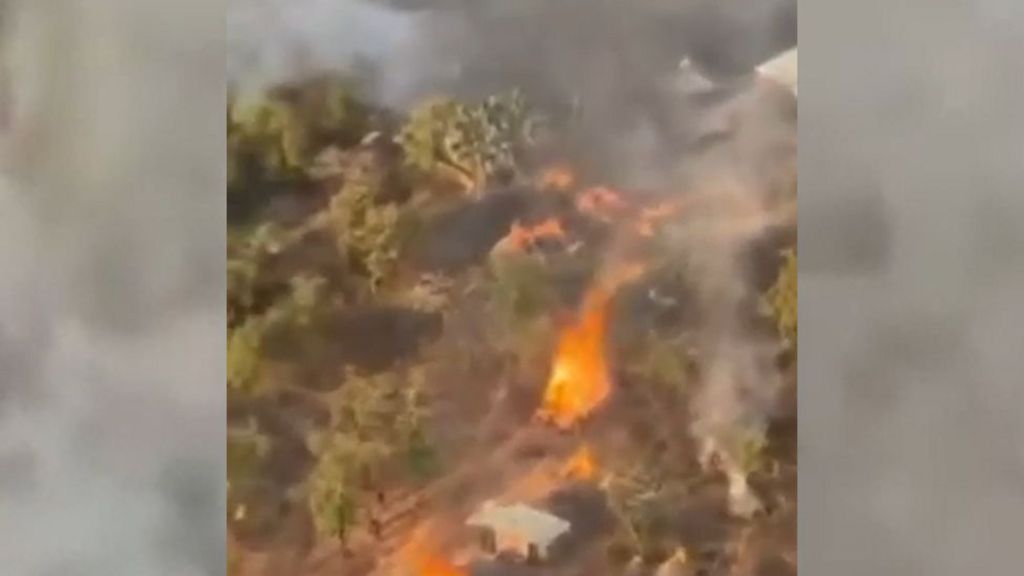
    Dramatic aerial footage captured by police helicopters and shared with international media shows extensive bandit encampments engulfed in flames as coordinated strikes targeted multiple hideouts. Kingsley Fanwo, Kogi State’s Information Commissioner, confirmed that several criminal bases were destroyed during the weekend operations involving combined Nigerian security and paramilitary units.

    The offensive follows escalating national outrage over mass abductions, including targeted attacks on educational institutions that have plagued northwestern regions. While criminal elements have traditionally operated in Nigeria’s northwest, security analysts note their recent expansion into central states like Kogi, whose strategic forest corridors connecting northern and southern regions provide ideal terrain for cross-border criminal operations.

    Security operations face particular challenges as bandits reportedly utilize kidnapped civilians as human shields to prevent full-scale assaults. “Security forces have put them in disarray wherever they try to regroup,” Fanwo stated, while acknowledging that “the bandits have kidnapped several individuals which they are using as human shields.”

    The operation aligns with President Bola Tinubu’s recent directive to security chiefs to intensify efforts against armed groups. However, security expert Bashir Galma, a retired army major, cautioned that casualty figures might be exaggerated for political purposes with elections approaching, while conceding that surprise attacks could indeed yield significant results.

    Nigeria’s complex security landscape includes not only kidnapping gangs but also Islamist insurgencies, resource conflicts, and separatist movements. International support has emerged with the United States military recently delivering “critical military supplies” to Abuja, emphasizing their “shared security partnership.” This follows December airstrikes by US forces against Islamist militant camps in northwestern Nigeria.

    The government maintains that all citizens, regardless of faith, remain vulnerable to attacks in a nation with over 250 ethnic groups and mixed religious demographics. Foreign ministry spokesman Alkasim Abdulkadir recently reaffirmed Nigeria’s commitment to “protecting all citizens, Christians and Muslims alike, without discrimination” amid international concerns about religiously-motivated violence.

  • India has told Pakistan to control ‘drone intrusions’, Indian army chief says

    India has told Pakistan to control ‘drone intrusions’, Indian army chief says

    India has formally escalated diplomatic pressure on Pakistan regarding unauthorized aerial surveillance activities along their contested border. General Manoj Pande, India’s Chief of Army Staff, confirmed on Tuesday that his nation’s military leadership has directly contacted Pakistan’s Director General of Military Operations regarding repeated drone intrusions originating from Pakistani territory.

    According to Indian defense sources, the most recent incident occurred on Sunday evening when five separate drone incursions were detected along the sensitive frontier in the Jammu sector of Indian-administered Kashmir. This strategically significant region has long been a focal point of territorial disputes between the nuclear-armed neighbors.

    The formal military communication represents a significant escalation in how India is addressing border security concerns. Rather than handling the matter through lower-level channels, the involvement of both nations’ top military operational commanders indicates the seriousness with which New Delhi is treating these aerial violations.

    These developments occur amid ongoing regional tensions and reflect the continuing technological evolution of border surveillance and potential security threats. Drones have increasingly become tools of modern military intelligence gathering and potential provocations in conflict zones worldwide.

    The Jammu and Kashmir region has witnessed numerous border skirmishes and diplomatic standoffs between India and Pakistan over decades. The latest drone incidents add a technological dimension to these longstanding territorial disputes, challenging traditional border security protocols and requiring updated defense responses.

  • Frozen waterfalls bring winter magic to Jinan

    Frozen waterfalls bring winter magic to Jinan

    The Jiuru Mountain region in Jinan, Shandong province, has undergone a breathtaking metamorphosis into an icy paradise, captivating visitors with its stunning winter phenomena. As temperatures plunged dramatically across eastern China, nature’s artistry emerged across the mountain’s cliff faces where cascading waterfalls have transformed into magnificent frozen sculptures.

    The geological formations provide a perfect canvas for winter’s touch, with layered ice structures creating transparent, intricate patterns against the rugged rock backgrounds. This dramatic interplay between solid stone and crystalline ice produces visual contrasts that define Jiuru Mountain’s unique winter appeal. The natural spectacle has established the destination as a premier cold-weather attraction, drawing photographers, nature enthusiasts, and winter sightseers to witness the seasonal transformation.

    Local tourism authorities note that the frozen waterfall phenomenon occurs under specific meteorological conditions when temperatures remain consistently below freezing while moisture continues to flow from mountain springs. The resulting ice formations vary daily depending on temperature fluctuations and water volume, creating an ever-changing natural exhibition throughout the winter months.

    The mountain’s accessibility and proximity to Jinan’s urban center make it an ideal destination for day trips, offering city dwellers an opportunity to experience dramatic winter landscapes without extensive travel. Visitors are advised to wear appropriate footwear for icy conditions and time their visits for optimal lighting conditions when sunlight illuminates the translucent ice formations.

  • Salah-Mane rivalry renewed in Afcon semi-finals

    Salah-Mane rivalry renewed in Afcon semi-finals

    Tangier, Morocco – The 2025 Africa Cup of Nations semifinal presents a narrative far surpassing a mere football match, evolving into a deeply personal quest for legacy. Egyptian captain Mohamed Salah, 33, confronts not only the formidable Senegalese squad but also the specter of past disappointments on the continental stage. His opponent, and former Liverpool teammate, Sadio Mane, has been the architect of Salah’s most painful international defeats.

    Egypt, the record seven-time champions, last lifted the trophy in 2010. Salah’s journey has been marked by near-misses: finishing as runner-up in 2017 and 2021, a round-of-16 exit in 2019, and an injury-plagued 2023 tournament. ‘Nobody, even in Egypt, wants to win this trophy more than me,’ Salah declared after his decisive goal secured a quarter-final victory against Ivory Coast. ‘I have won almost every prize. This is the title I am waiting for.’

    The historical context adds immense weight to the clash. In the 2021 Afcon final, a tense stalemate led to a penalty shootout where Mane redeemed an earlier missed penalty by converting the winning spot-kick, securing Senegal’s first continental title while a distraught Salah watched, unused. Just months later, their World Cup qualifying playoff again went to penalties. Salah blazed his effort over the bar, and Mane once again scored the decisive penalty, sending Senegal to the 2022 World Cup in Qatar.

    This semifinal arrives amid a tumultuous period for Salah. His participation followed public comments expressing frustration with his situation at Liverpool, revealing a strained relationship with manager Arne Slot and sparking intense transfer speculation. However, the tournament has offered a sanctuary. He has found prolific form, netting four times in four matches—equaling his Premier League goal tally for the season—and stands just one goal shy of Egypt’s all-time Afcon scoring record.

    Conversely, Mane has seamlessly transitioned into a leadership role for the Teranga Lions. While scoring once and providing three assists, his influence extends beyond statistics. ‘His role is an inspiration for his team-mates. Beyond his on-field skills, his leadership is vital,’ noted BBC Afrique journalist Babacar Faye. Senegal boasts a multifaceted attack, featuring talents like Iliman Ndiaye and Ismaila Sarr, reducing their reliance on any single player.

    With the Afcon transitioning to a quadrennial schedule after the 2027 edition, this tournament likely represents the final opportunity for both aging superstars to claim Africa’s ultimate prize. For Salah, it is a chance to cement his legacy, validate his individual accolades with team glory, and finally overcome his Senegalese nemesis. For Mane, it is a mission to defend his crown and reaffirm his continental supremacy.