作者: admin

  • China had a record $1.2 trillion trade surplus in 2025, as exports rose 6.6% in December

    China had a record $1.2 trillion trade surplus in 2025, as exports rose 6.6% in December

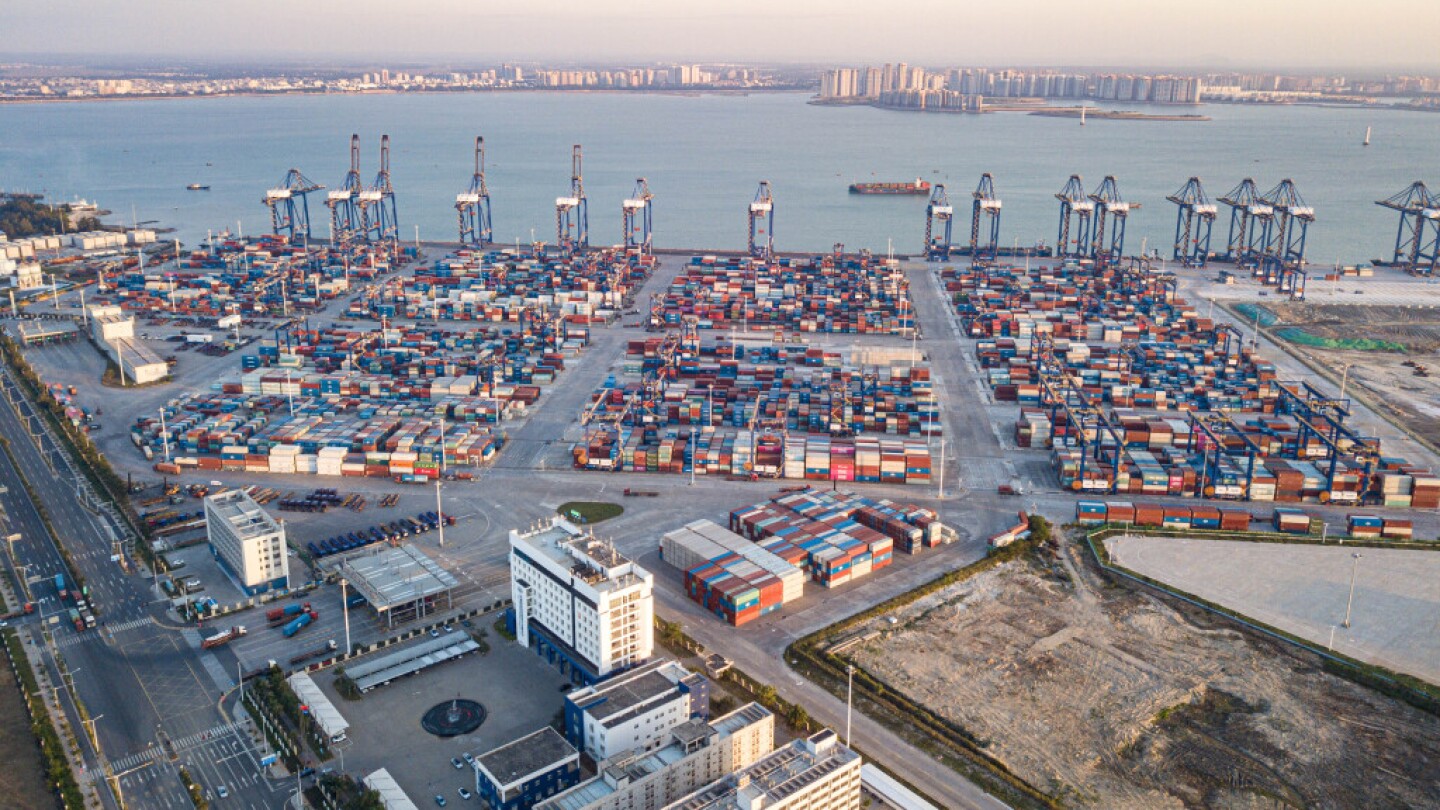
    China achieved an unprecedented trade surplus of nearly $1.2 trillion in 2025, according to official data released Wednesday, marking a significant expansion from the previous year’s $992 billion. The record imbalance emerged as robust exports to emerging markets compensated for declining shipments to the United States amid escalating trade tensions.

    Customs statistics reveal China’s annual exports grew 5.5% to reach $3.77 trillion, while imports remained stagnant at $2.58 trillion. December performance exceeded expectations with exports climbing 6.6% year-on-year in dollar terms, accelerating from November’s 5.9% increase. Import growth simultaneously strengthened to 5.7% from 1.9% the previous month.

    The export surge has become a crucial economic stabilizer, maintaining growth near Beijing’s 5% target despite domestic challenges including a prolonged property sector crisis that continues to suppress consumer confidence. This export momentum has simultaneously triggered international concerns about market disruption from competitively priced Chinese goods.

    Geographic trade patterns show a dramatic realignment as shipments to South America, Southeast Asia, Africa, and Europe have substantially offset reduced exports to the United States following the return of President Donald Trump and his intensified trade policies.

    Financial institutions project sustained export performance through 2026. BNP Paribas’ chief China economist Jacqueline Rong notes: “We continue to expect exports to act as a major growth driver this year.” Natixis senior economist Gary Ng forecasts approximately 3% export growth for 2026, slightly moderating from 2025’s 5% expansion, with the trade surplus expected to remain above $1 trillion.

    The International Monetary Fund has meanwhile urged Chinese authorities to address economic imbalances by accelerating the transition from export dependency toward domestic demand stimulation and investment diversification.

  • US official says Venezuela freeing Americans in ‘important step’

    US official says Venezuela freeing Americans in ‘important step’

    In a significant diplomatic development, Venezuela’s interim government has initiated the release of multiple American detainees from its prisons. The move comes just days after U.S. military operations resulted in the capture of former president Nicolás Maduro and his wife on January 3rd, an operation that reportedly resulted in over 100 casualties according to official accounts.

    The U.S. State Department, through an anonymous official, characterized the prisoner release as ‘an important step in the right direction’ by Venezuela’s transitional authorities. While specific details regarding the number of freed individuals or their identities remain undisclosed, confirmation has been provided that multiple American citizens are involved in this humanitarian gesture.

    This development occurs against the backdrop of Venezuela’s tumultuous political landscape following the controversial 2024 presidential election. Maduro had been declared victorious amid widespread allegations of electoral manipulation, leading to substantial protests and subsequent detentions of demonstrators. The recent U.S. military intervention that apprehended Maduro and his spouse, who now confront drug trafficking charges in American courts, precipitated this diplomatic shift.

    Concurrently, Venezuela has restored access to the social media platform X, ending a blockade imposed by Maduro’s administration in August 2024 following his contested reelection. The platform had served as a crucial communication channel until its suspension, which occurred after Elon Musk, X’s owner, engaged in public disputes with the Venezuelan leadership.

    Delcy Rodríguez, previously Maduro’s vice president and now acting president, has signaled a transitional approach. Her updated social media profile emphasizes national unity and economic stability while the Maduro account continues to display messages supporting the deposed leader.

    The United States has consistently prioritized the liberation of citizens detained abroad, having previously negotiated similar arrangements with Maduro’s government. This latest prisoner release represents a tangible outcome of the shifting power dynamics in Caracas following the change in leadership.

  • ‘Brother, lifelong companion’: UAE President gifts Sheikh Mohammed photo album

    ‘Brother, lifelong companion’: UAE President gifts Sheikh Mohammed photo album

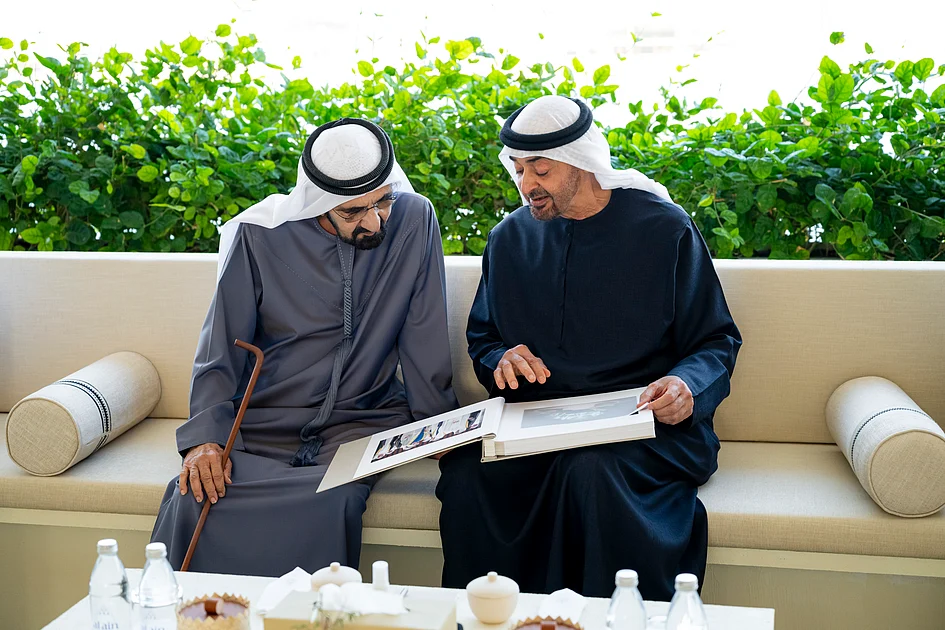
    In a significant gesture marking two decades of transformative leadership, UAE President Sheikh Mohamed bin Zayed Al Nahyan presented a specially curated photo album to Sheikh Mohammed bin Rashid Al Maktoum during their meeting at Qasr Al Bahr in Abu Dhabi on Tuesday. The commemorative gift celebrates Sheikh Mohammed’s twenty-year tenure leading the federal government, highlighting pivotal moments from their shared journey in service to the nation’s development. The album contains carefully selected photographs documenting key achievements and milestones during this period of unprecedented national progress. President Sheikh Mohamed personally inscribed the album with a heartfelt message addressing his counterpart as “my brother and lifelong companion,” expressing profound pride in their collaborative work. The inscription further praised Sheikh Mohammed’s exceptional and inspirational leadership while offering prayers for his continued health and wellbeing to further serve the UAE and its citizens. This symbolic presentation underscores the strong partnership between the nation’s leadership and reflects on the remarkable transformation Dubai has undergone since Sheikh Mohammed assumed leadership of the emirate on January 4, twenty years ago. Under his visionary guidance, Dubai has evolved into a global benchmark for innovation, infrastructure development, and ambitious urban transformation, routinely achieving what was once considered impossible.

  • At least 100,000 foreign national visas revoked since Trump took office

    At least 100,000 foreign national visas revoked since Trump took office

    The United States Department of State has officially confirmed the revocation of more than 100,000 visas since President Donald Trump assumed office nearly one year ago. This significant figure, announced through the Department’s social media channels on Monday, includes approximately 8,000 student visas and 2,500 specialized visas belonging to individuals who had encounters with U.S. law enforcement for criminal activities.

    The Department emphasized its commitment to national security, stating, “We will continue to deport these thugs to keep America safe.” This declaration aligns with President Trump’s reinforced stance during a recent address at the Detroit Economic Club, where he asserted that any naturalized citizens convicted of defrauding American citizens would face citizenship revocation, explicitly mentioning Somali citizens and individuals from “anywhere else.”

    According to a CNN report from December 8th, the State Department had previously revoked 85,000 visas, indicating that an additional 15,000 visas were canceled in just over a month. The targeting of both legal and illegal immigrants has become a cornerstone policy of Trump’s second term, manifesting through increased deportations, visa cancellations, and the implementation of stricter regulations and more extensive vetting procedures for U.S. visa applicants.

    This aggressive immigration policy has ignited national controversy, particularly following the January 7th shooting death of Renee Nicole Good, a U.S. citizen and mother of three, by an Immigration and Customs Enforcement (ICE) officer during a crackdown in Minneapolis, Minnesota.

    In a statement to Middle East Eye, Tommy Pigott, Principal Deputy Spokesperson at the U.S. State Department, elaborated that the administration has revoked visas from thousands of foreign nationals charged or convicted of crimes, including assault, theft, and driving under the influence. Pigott also highlighted the recent launch of the “Continuous Vetting Center,” an initiative designed to ensure compliance with U.S. laws and swiftly revoke visas of those deemed a threat.

    This center subjects all 55 million individuals holding valid U.S. visas to ongoing review, encompassing scrutiny of social media activity and potential deportation for violations. While this expansion signifies an escalation in the surveillance of legal immigrants, some legal experts question the efficacy and limitations of technological systems tasked with monitoring such a vast population.

    Notably, the crackdown has extended to international students engaged in campus activism, particularly concerning Israel’s military actions in Gaza. An executive order signed on January 29th labeled such “alien students” as antisemitic, authorizing actions for their removal. Students like Ranjani Srinivasan, Rumeysa Ozturk, and permanent legal resident Mahmoud Khalil have been targeted for their pro-Palestinian advocacy. Critics argue that deportation for expressing political opinions violates the First Amendment, and several students have successfully challenged these actions.

    The scope of scrutiny is not limited to those already in the country. Since June, prospective student visa applicants have faced increased examination of their political views. Further measures include plans for enhanced vetting of H1-B visa holders, re-interviewing refugees admitted under the previous administration, and expanding the list of countries subject to full or partial travel bans, which now totals 39 nations.

    Additional policies involve increased H-1B visa fees to deter foreign workers, a refined iteration of the so-called “Muslim ban,” a drastic reduction in refugee admissions, and attempts to revoke Temporary Protected Status (TPS) for citizens from nations like Afghanistan, Syria, Haiti, and Somalia. Consequently, the number of people entering through U.S. borders has dropped precipitously.

  • K-pop heartthrobs BTS to kick off world tour in April

    K-pop heartthrobs BTS to kick off world tour in April

    Global K-pop phenomenon BTS is poised to make a triumphant return to the international stage with their first worldwide tour in four years, according to an official announcement from their management agency HYBE. The groundbreaking tour, scheduled to commence in April, marks the septet’s highly anticipated comeback following the completion of mandatory military service by all seven members.

    The record-breaking ensemble, renowned for chart-topping hits including “Dynamite” and “Butter,” will embark on what industry analysts are calling the most extensive concert series ever undertaken by a K-pop act. The itinerary spans 34 cities with 79 scheduled performances, representing the widest geographical coverage achieved by any South Korean musical artist in history.

    The tour will initiate in Goyang, South Korea on April 9th with two additional concerts in the city before progressing to neighboring Japan. Subsequent legs will include extensive engagements across the United States and Europe, culminating in a final performance in Manila scheduled for March 2027. HYBE has indicated additional cities will be announced, including supplementary Japanese dates and Middle Eastern destinations.

    This monumental tour follows the group’s planned album release in March, their first new musical offering since the 2022 anthology “Proof” which dominated South Korean sales charts. The group’s dedicated global fanbase, known as ARMY, responded with overwhelming excitement across social media platforms, with many humorously referencing their willingness to make significant sacrifices to secure concert tickets.

    The economic implications are substantial, with pre-hiatus economic impact estimates reaching approximately 5.5 trillion won ($3.7 billion) annually according to South Korea’s Culture and Tourism Institute. Financial markets responded positively to the announcement, with HYBE’s shares climbing approximately 3% during Wednesday’s trading session. Investment analysts project the company’s operating profits could experience a tenfold increase compared to 2025 projections, with an estimated 4.5 million attendees expected across the tour’s extensive schedule.

  • India: Delhi airport to halt flight operations for 2.5 hours every day from Jan 11-26

    India: Delhi airport to halt flight operations for 2.5 hours every day from Jan 11-26

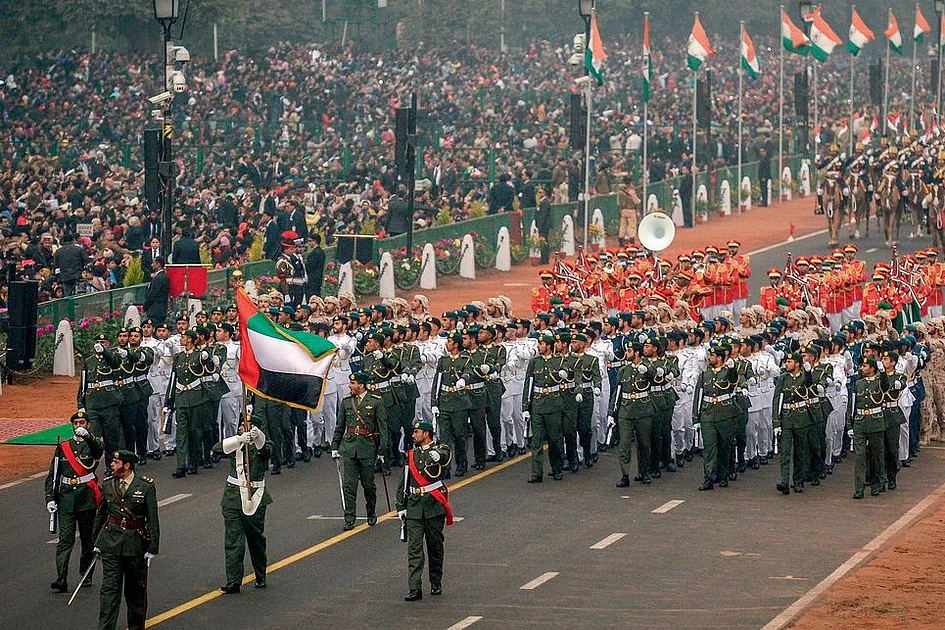
    In preparation for India’s Republic Day celebrations, Delhi’s Indira Gandhi International Airport will suspend all flight operations for two and a half hours daily from January 21 to January 26. The temporary closures, scheduled from 10:20 AM to 12:45 PM each day, are part of enhanced security measures to facilitate military rehearsals and aerial displays for the national event.

    The Notice to Airmen (NOTAM) issued by Indian authorities confirms the operational pause, which aviation analytics firm Cirium estimates could affect over 600 flights during the six-day period. The shutdowns will allow for comprehensive rehearsals of the Republic Day parade, including aerial flypast exercises, defense demonstrations, and cultural processions scheduled for January 26.

    This security measure coincides with challenging weather conditions in northern India, where dense fog and severe cold have already been disrupting flight operations, compounding travel inconveniences for passengers. The timing presents particular challenges for airlines and travelers during this period.

    Republic Day, observed annually on January 26, commemorates the adoption of India’s Constitution in 1950 and features elaborate celebrations in the capital city. The airport restrictions reflect the heightened security protocols typically implemented for major national events in India.

    Aviation authorities advise passengers with travel plans during this period to consult their airlines for schedule adjustments and alternative arrangements. The temporary measures demonstrate the balance between national security requirements and civilian air travel infrastructure.

  • Danish foreign minister heads to White House for high-stakes Greenland talks

    Danish foreign minister heads to White House for high-stakes Greenland talks

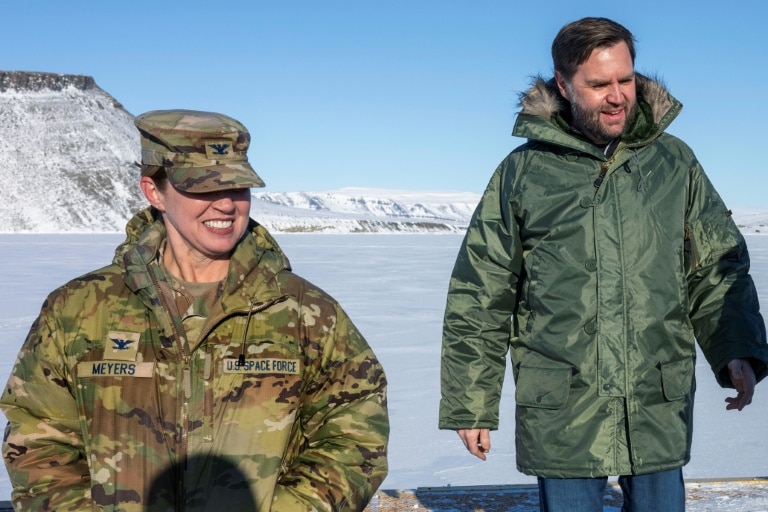
    In a high-stakes diplomatic confrontation, Danish Foreign Minister Lars Lokke Rasmussen is scheduled for critical talks at the White House regarding escalating tensions over Greenland’s sovereignty. The meeting comes amid increasingly assertive statements from former President Donald Trump about acquiring the strategically vital Arctic territory, regardless of local preferences.

    The diplomatic engagement, requested by Rasmussen with US Secretary of State Marco Rubio, will include Vice President JD Vance following his unexpected participation. This development occurs against the backdrop of Trump’s recent declarations that the United States requires Greenland to counter potential Russian or Chinese expansion in the Arctic, despite neither nation having territorial claims on the Danish autonomous territory.

    Greenland’s leadership has maintained an unequivocal position against any transfer of sovereignty. Prime Minister Jens-Frederik Nielsen explicitly stated: “Greenland does not want to be owned by the United States. Greenland does not want to be governed by the United States. Greenland does not want to be part of the United States.” This position has received full backing from the Danish government, with Prime Minister Mette Frederiksen characterizing Trump’s pressure as “completely unacceptable” from a NATO ally.

    The geopolitical significance of Greenland has intensified due to climate change transforming Arctic accessibility, prompting increased great power competition. Denmark has emphasized its substantial military investments in the region, totaling approximately $14 billion, to reinforce Arctic security within the NATO framework.

    Analysts suggest the meeting’s outcome hinges on whether the Trump administration maintains its uncompromising stance or demonstrates diplomatic flexibility. Penny Naas of the German Marshall Fund noted that insistence on acquisition “at all cost” could prematurely terminate discussions, while a nuanced approach might foster productive dialogue.

    Concurrently, a bipartisan congressional delegation predominantly comprising Democrats plans to visit Copenhagen in a show of solidarity, with Senate Democratic Whip Dick Durbin criticizing Trump’s threats as detrimental to NATO cohesion. The diplomatic standoff represents one of the most significant challenges to US-Denmark relations in recent history, with implications for Arctic governance and transatlantic alliance stability.

  • Qatari PM receives call from Iranian official, says Doha backs efforts to ‘de-escalate’

    Qatari PM receives call from Iranian official, says Doha backs efforts to ‘de-escalate’

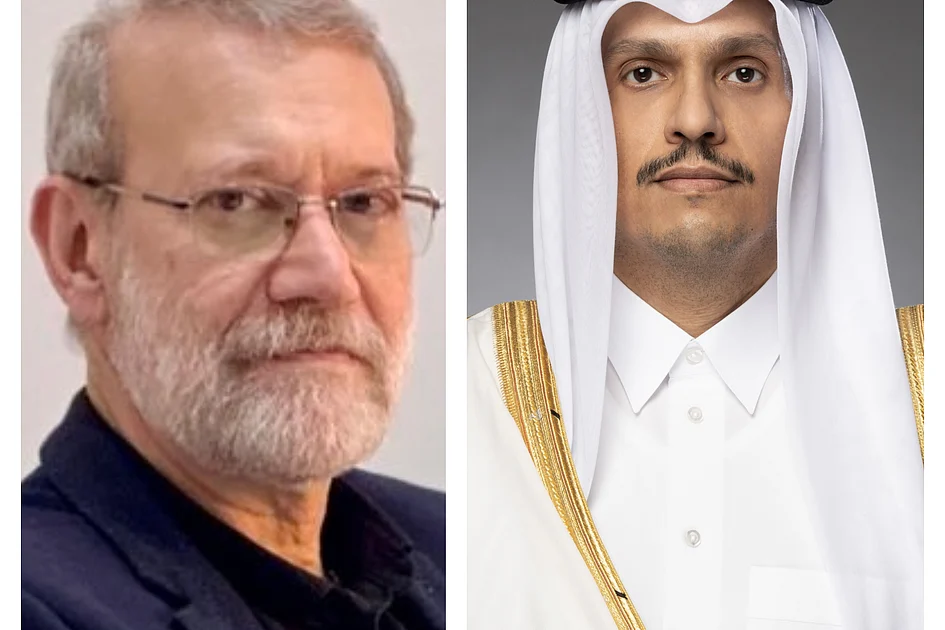
    Qatar’s Prime Minister Sheikh Mohammed bin Abdulrahman al-Thani has affirmed Doha’s diplomatic support for regional stability initiatives during a telephone conversation with Iranian official Ali Larijani on Tuesday. The discussion between the Qatari premier and Iran’s Supreme National Security Council Secretary focused on bilateral cooperation frameworks and ongoing developments across the Middle Eastern landscape.

    According to an official statement released via the Qatari Foreign Ministry’s social media channel, Sheikh Mohammed reiterated Qatar’s commitment to “all efforts aiming to de-escalate and peaceful solutions” while emphasizing Doha’s support for initiatives that promote regional security and stability. The high-level dialogue addressed multiple areas of mutual interest and potential pathways for strengthening diplomatic ties between the Gulf nation and the Islamic Republic.

    This diplomatic exchange occurs against the backdrop of significant civil unrest within Iran, where widespread anti-government demonstrations have reportedly resulted in several thousand casualties according to independent assessments. The protests, primarily fueled by deteriorating economic conditions, represent the most substantial internal challenge to Iran’s clerical leadership in recent years.

    Concurrently, international pressure on Tehran has intensified following military actions by Israeli and American forces last year. U.S. President Donald Trump has actively encouraged the protest movement, urging Iranians to continue demonstrations and promising external support. The administration has implemented substantial economic measures including 25% import tariffs on nations maintaining commercial relations with Iran, alongside openly considering additional military options to penalize the Iranian government for its handling of domestic dissent.

  • US ends protection for Somalis amid escalating migrant crackdown

    US ends protection for Somalis amid escalating migrant crackdown

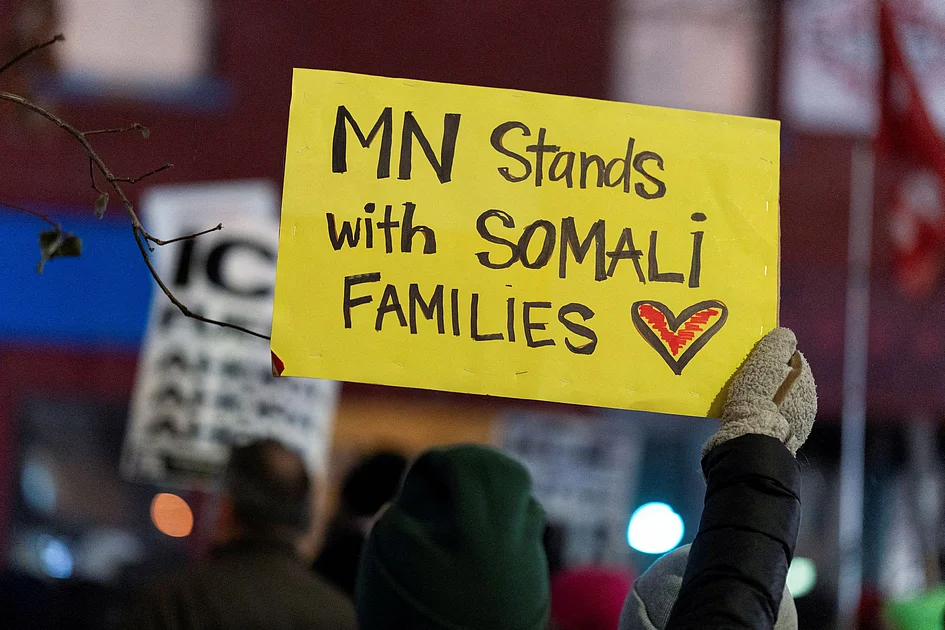
    The United States has officially terminated Temporary Protected Status (TPS) for Somali nationals, mandating their departure by mid-March 2026. This decisive action represents a significant escalation in the Trump administration’s immigration enforcement measures, particularly targeting Minnesota’s substantial Somali community of approximately 80,000 people.

    The Department of Homeland Security announced the policy shift via social media, stating unequivocally: “Our message is clear. Go back to your own country, or we’ll send you back ourselves.” The TPS program traditionally provided deportation protection and work authorization for foreigners from disaster-stricken regions.

    This development follows weeks of intensified immigration enforcement operations across Minnesota, where Immigration and Customs Enforcement (ICE) officers have conducted widespread raids. The operations turned fatal last week when an ICE agent shot and killed 37-year-old Renee Nicole Good during an encounter in Minneapolis, sparking widespread protests and generating $2 million in police overtime costs over four days.

    The administration justifies its crackdown by citing a massive public benefits fraud case involving 98 defendants, 85 of whom are of Somali descent. Federal prosecutors allege these individuals orchestrated a $300 million scheme that diverted funds intended for child nutrition programs, with 57 convictions already secured. While the case initially emerged in 2022, it has gained renewed political attention in recent months.

    President Trump personally amplified the situation through his Truth Social platform, accusing Minnesota Democrats of enabling fraud and promising “reckoning & retribution” for the state. The political dimension has intensified as Republican officials claim Democratic leaders ignored warnings due to the Somali community’s involvement.

    Meanwhile, Somalia remains classified as one of the world’s least developed nations by the UN, with the US State Department maintaining its most severe travel advisory against visiting the conflict-ridden Horn of Africa nation.

  • Bill and Hillary Clinton refuse to testify in Republican-led Jeffrey Epstein probe

    Bill and Hillary Clinton refuse to testify in Republican-led Jeffrey Epstein probe

    Former President Bill Clinton and former Secretary of State Hillary Clinton have formally declined to testify before a Republican-led congressional committee investigating the Jeffrey Epstein case, characterizing the probe as a politically motivated exercise rather than a legitimate investigation. The high-profile refusal sets the stage for a significant constitutional confrontation between political figures and congressional oversight authority.

    In a strongly worded letter addressed to Representative James Comer, Chairman of the House Oversight Committee, the Clintons articulated their position that the investigation has deviated from its purported purpose. They asserted they had already provided what limited information they possessed regarding Epstein, whose crimes they described as “horrific,” while accusing Comer of redirecting focus away from alleged failures during the Trump administration.

    The Clintons’ communication explicitly challenged the committee’s motives, stating: “There is no plausible explanation for what you are doing other than partisan politics.” They further indicated they anticipate being held in contempt of Congress for their refusal to comply with the subpoena, a move that could potentially lead to criminal charges.

    This development occurs amidst the Trump administration’s directive to the Justice Department to release files related to criminal investigations of Epstein, complying with congressional transparency legislation. The late financier had previously maintained associations with numerous high-profile figures across political spectrums, including both Trump and the Clintons, adding complexity to the ongoing investigation and its perceived political dimensions.