作者: admin

  • Russia fires 450 drones and 70 missiles at Ukraine, a day before US-brokered talks

    Russia fires 450 drones and 70 missiles at Ukraine, a day before US-brokered talks

    In a significant escalation of hostilities, Russian forces unleashed approximately 450 long-range drones and 70 missiles across multiple Ukrainian regions overnight Tuesday. This coordinated assault represents one of the most extensive bombardments in recent months, specifically targeting Ukraine’s already compromised energy infrastructure during the harshest winter conditions in years.

    The massive offensive occurred just days before scheduled diplomatic negotiations in Abu Dhabi, where representatives from both nations were set to participate in U.S.-brokered discussions aimed at resolving the nearly four-year conflict. Ukrainian President Volodymyr Zelenskyy condemned the timing as strategically calculated to maximize civilian suffering, stating that “taking advantage of the coldest days of winter to terrorize people is more important to Russia than diplomacy.”

    According to Ukrainian officials, the bombardment affected at least five regions, wounding a minimum of 10 civilians. The attacks damaged residential buildings, educational facilities, and critical energy infrastructure, including thermal power plants operated by DTEK, Ukraine’s largest private energy company. This marked the ninth major assault on the country’s power grid since October.

    In Kyiv alone, the strikes left 1,170 apartment buildings without heating, severely undermining recent repair efforts that had nearly restored power to the capital’s residents. The northeastern Kharkiv and southern Odesa regions also reported significant damage and injuries.

    Adding symbolic significance to the destruction, the bombardment damaged the Hall of Fame at the National Museum of the History of Ukraine in the Second World War, located beneath the iconic Motherland Monument in Kyiv. Ukrainian Culture Minister Tetiana Berezhna characterized the attack as “symbolic and cynical,” noting the historical parallels between current aggression and past conflicts.

    Despite previous descriptions of recent negotiations as constructive, the latest assault casts doubt on diplomatic prospects. Key issues remain unresolved, including the status of Russian-occupied Ukrainian territories, with a comprehensive settlement appearing increasingly distant as military actions intensify.

  • China, Egypt mark 70 years of formal ties

    China, Egypt mark 70 years of formal ties

    As China and Egypt commemorate seven decades of formal diplomatic relations, cultural and educational exchanges are emerging as the cornerstone of this enduring partnership. The bilateral relationship, which began when Egypt became the first African nation to establish ties with China on May 30, 1956, has evolved into a comprehensive strategic friendship characterized by deepening people-to-people connections.

    Cultural diplomacy has taken center stage in the anniversary celebrations, with experts from both nations emphasizing the role of arts and education in strengthening bilateral relations. Fan Di’an, Chairman of the China Artists Association, recently noted during his visit to Egypt that both civilizations share remarkable historical parallels visible in pottery, ceremonial masks, and symbolic elements like the lotus flower. “Egypt and China possess world-class museums and iconic heritage sites,” Fan stated, “which stand as enduring symbols of their civilizations and reflect deep cultural connections from ancient times to the present.”

    The public appetite for cross-cultural exchange was demonstrated by the overwhelming success of the ‘On Top of the Pyramid’ exhibition in Shanghai, which attracted over 2.7 million visitors and extended to 24-hour operations during its final week due to unprecedented demand.

    Educational cooperation has seen substantial growth over the past decade, with Chinese language programs expanding across Egyptian institutions. Major universities including Cairo University, Ain Shams University, and Suez Canal University now host Confucius Institutes or dedicated Chinese language departments, while more than 14 Egyptian colleges offer comprehensive Chinese programs nationwide.

    In the technological sphere, experts like Samir Mohamed, an independent technology and education specialist, advocate for integrating artificial intelligence and modern technologies into cultural production to ensure the civilizational bond extends into a digitally advanced future. The two nations have conducted over 60 joint cultural events and artistic workshops in recent years, spanning traditional music, folk arts, and youth educational programs.

    Archaeological collaboration represents another significant dimension of the partnership. Joint excavation efforts at the Karnak Temple Complex in Luxor, involving teams from the Chinese Academy of Social Sciences and Egypt’s antiquities authorities, recently uncovered a previously unknown sacred lake and other artifacts that promise to provide valuable insights into ancient Egyptian history.

    Hassan Wasfi, Head of the Fine Artists Syndicate in Alexandria, summarized the relationship as “anchored in history and evidenced by countless cultural events,” while Chinese Consul-General in Alexandria Yang Yi emphasized that the anniversary provides ample opportunities for further exchange and cooperation between these two ancient civilizations.

  • Retiree stages second act as short-film star

    Retiree stages second act as short-film star

    In Zhengzhou, Henan province, 60-year-old Pan Yihong has transformed retirement into an unexpected acting career, becoming one of China’s most recognizable faces in the booming micro-drama industry. After decades as a discipline official in a state-owned enterprise, Pan has appeared in over 300 short-form productions since retiring, specializing in villainous grandmother and mother-in-law roles that have earned her the nickname ‘Rong Momo’ after Chinese television’s iconic antagonist.

    Pan’s journey to micro-drama stardom represents a deferred dream finally realized. In 1984, she completed drama training but prioritized practical career concerns, keeping her faded pink certificate through multiple moves as a silent reminder of her unrealized passion. Her father had named her Yihong, meaning ‘artistic rainbow,’ in hopes she would someday achieve artistic heights.

    That aspiration culminated in late 2025 when Pan received the Golden Leaf Honor at the Weibo TV and Internet Video Summit in Beijing—a moment she commemorated by visiting her father’s grave to share her accomplishment. ‘Your daughter didn’t just become an actress,’ she told him. ‘She won an award.’

    Unlike actors who resist typecasting, Pan embraces her villain specialization. ‘It shows that I have successfully portrayed these images and they recognize my acting skills,’ she explained. Her approach to villainy focuses on capturing characters’ ‘human logic’ through subtle details rather than exaggerated outbursts.

    Off-screen, Pan’s personality contrasts sharply with her on-screen personas. Younger colleagues affectionately call her ‘Auntie Pan,’ and her husband of decades, Qiao Rui, notes that despite rarely watching her productions, he fully supports her career. ‘This is just acting,’ he said. ‘In real life, she is very kind-hearted.’

    As a pioneer in China’s rapidly evolving micro-drama industry, Pan has witnessed significant changes in production quality and audience expectations. ‘I have watched this industry rise from the ground,’ she observed. ‘From mindless thrilling dramas with all kinds of exaggeration to content that now requires warmth and social value.’

    With nearly 700 million micro-drama viewers nationwide as of June 2025—representing nearly 70% of China’s internet users—the industry continues to expand rapidly. Pan remains highly motivated despite the industry’s demanding schedules, viewing age as merely symbolic. ‘Sixty can be the start of a new life,’ she said. ‘Retirement isn’t about the end. It means finding a new stage to shine on.’

    Looking forward, Pan hopes to expand beyond her villain niche into comedy and spy films, aspiring to work in long-form dramas with veteran actors she admires.

  • Nanocrystal analysis system bolsters sci-tech self-reliance

    Nanocrystal analysis system bolsters sci-tech self-reliance

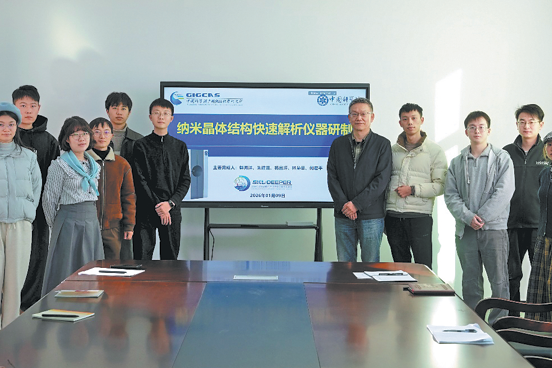
    Chinese scientists have achieved a major technological milestone with the development of the nation’s first fully domestic micro-nanocrystal analysis system. The breakthrough instrument, named RaSAS (Rapid Analysis System), was unveiled by researchers at the Guangzhou Institute of Geochemistry after five years of intensive development.

    The advanced system represents a significant step toward China’s technological self-reliance, ending decades of dependence on expensive imported equipment for high-precision crystal analysis. With this achievement, China becomes only the third nation worldwide—after Japan and Switzerland—capable of producing such sophisticated analytical instrumentation.

    RaSAS operates at scales beyond the reach of traditional X-ray diffraction technology, enabling researchers to examine crystal structures at submicron to nanometer levels. The system features proprietary 3D electron diffraction technology with complete hardware and software autonomy, addressing previous limitations where foreign instruments lacked customization capabilities for specialized research applications.

    According to Dr. Zhu Jianxi, deputy director of GIG, the technology holds transformative potential across multiple scientific disciplines. “RaSAS opens new frontiers in Earth and planetary sciences, materials development, and biomedical research,” he stated.

    The research team, co-led by Dr. Xian Haiyang, emphasized the system’s practical applications have already yielded significant discoveries. Scientists using RaSAS have identified and named two new minerals—Wangyanite and Oxyplumbopyrochlore—both officially recognized by the International Mineralogical Association. The technology also contributed to groundbreaking research published in Science journal, confirming that early deep-Earth water can be stored within Bridgmanite crystal structures, fundamentally altering understanding of planetary evolution.

    Economically, the domestic system offers substantial advantages, with expected pricing approximately 40% lower than comparable Japanese instruments that typically cost around 12 million yuan ($1.71 million) per unit. The development involved overcoming complex engineering challenges, including localization of critical components like field-emission electron guns and high-voltage power supplies.

    Mass production is anticipated within three to six months following technology transfer, a development eagerly awaited by the scientific community. Professor Qin Liping from the University of Science and Technology of China noted that widespread adoption of this equipment will be crucial for China’s advancement in high-end manufacturing and strategic research domains.

  • ‘Tech ears’ hear Bangladesh’s rare dolphins

    ‘Tech ears’ hear Bangladesh’s rare dolphins

    In a groundbreaking conservation achievement, Chinese-developed acoustic technology has successfully detected 146 endangered Ganges River dolphins in Bangladesh’s Jamuna River, providing unprecedented insights into one of the world’s most elusive aquatic species. The scientific breakthrough occurred in January during a joint China-Bangladesh research initiative that deployed real-time acoustic monitoring systems originally created for protecting China’s Yangtze finless porpoise.

    The innovative system, affectionately dubbed ‘tech ears’ by researchers, represents a paradigm shift in wildlife monitoring by focusing on sound rather than sight. Developed by the Institute of Hydrobiology at the Chinese Academy of Sciences, the technology filters through complex river noise to identify unique dolphin sonar pulses with remarkable precision. This approach proves particularly crucial for the effectively blind Ganges River dolphins, which navigate and hunt exclusively using echolocation in sediment-heavy waters.

    The research collaboration forms part of the Belt and Road Initiative’s scientific cooperation framework, supported by the Alliance of International Science Organizations. During the survey, Chinese acoustic engineer Chen Yuwei continuously refined the system’s 26 adjustable parameters to adapt to local river conditions, significantly reducing false alarms while achieving detection rates ‘far higher than visual monitoring alone.’

    Complementing the underwater acoustic data, researchers deployed aerial drones to map habitats and capture rare footage of surfacing dolphins. The comprehensive approach identified multiple key dolphin habitats, including high-density activity zones near downstream sandbars.

    Researchers emphasize that the technology transfer represents more than equipment sharing—it introduces an entirely new conservation philosophy. As habitat degradation, sand mining, and fishing pressure continue threatening the species, the accurate population data will enable evidence-based conservation policies and targeted protection measures for this critically endangered freshwater mammal.

  • Vatican’s ‘trial of the century’ resumes after prosecutors suffer embarrassing setbacks on appeal

    Vatican’s ‘trial of the century’ resumes after prosecutors suffer embarrassing setbacks on appeal

    The Vatican’s landmark financial misconduct trial entered a pivotal appeals phase this week following significant setbacks for papal prosecutors that could fundamentally alter the outcome of the high-profile case. The proceedings, involving former Cardinal Angelo Becciu and eight co-defendants convicted of financial crimes in December 2023, face unprecedented challenges after the Vatican’s Supreme Court upheld a lower court’s decision to dismiss the prosecution’s appeal.

    The case suffered another major blow when chief prosecutor Alessandro Diddi abruptly resigned from the proceedings rather than face potential removal by the Cassation court. This development follows the emergence of controversial WhatsApp conversations that have raised serious questions about the trial’s integrity. These communications document extensive behind-the-scenes efforts to target Cardinal Becciu and suggest questionable conduct involving Vatican police, prosecutors, and even Pope Francis himself.

    Defense attorneys successfully argued that the chats demonstrated Diddi’s partiality in handling evidence and witnesses, rendering him unfit to continue his prosecutorial role. Although Diddi maintained the allegations were “unfounded,” he ultimately recused himself to prevent further damage to the judicial process.

    The original trial, initiated in 2021, centered on the Vatican’s controversial €350 million investment in London real estate. Prosecutors alleged that brokers and church officials defrauded the Holy See of millions through excessive fees and commissions, subsequently extorting additional funds to relinquish property control. While the tribunal convicted defendants on several charges including embezzlement and fraud, it rejected the prosecution’s broader conspiracy theory.

    The appeals process now focuses on defense arguments regarding Pope Francis’s direct involvement in the investigation. Defense teams contend their clients cannot receive a fair trial within an absolute monarchy where the pope wields supreme judicial power. Critical to this argument are four secret executive decrees signed by Francis in 2019-2020 that granted prosecutors extraordinary surveillance powers without judicial oversight or official publication.

    Legal experts have criticized these decrees for violating fundamental fair trial principles, particularly the “equality of arms” between defense and prosecution. The Vatican maintains that all defendants received fair proceedings, despite internal acknowledgments that the secrecy surrounding the papal decrees created significant legal problems. The appeals court must now navigate the complex theological and legal dilemma that the pope, while theoretically subject only to divine judgment, cannot promulgate laws violating fundamental rights.

  • Hazlewood set to miss first half of T20 World Cup

    Hazlewood set to miss first half of T20 World Cup

    Australia’s preparations for the T20 World Cup have encountered a significant setback with confirmation that veteran fast bowler Josh Hazlewood will miss the tournament’s initial phase due to ongoing injury complications. The 35-year-old paceman, who last featured in international T20 cricket against India on October 31st, continues to battle recovery challenges that have sidelined him since mid-November.

    Initially suffering a hamstring strain that caused him to miss the Ashes series opener against England, Hazlewood subsequently developed an Achilles injury during rehabilitation that further delayed his return. While head coach Andrew McDonald had previously expressed optimism about Hazlewood’s availability for the tournament’s commencement, recent assessments suggest a more cautious timeline.

    Test captain Pat Cummins, himself ruled out of the global tournament with a back injury, revealed insights into his teammate’s condition after their recent consultation. ‘I caught up with Josh a couple of days ago and he’s working so hard. I really feel for him – he’s had a few setbacks,’ Cummins told Australian broadcaster Nine Network. ‘He’s doing everything he can. I don’t think he will be there for the start of the tournament, but he’s trying his best to be there about halfway through.’

    Cricket Australia selectors have adopted a pragmatic approach, allowing Hazlewood to continue his rehabilitation program in Sydney rather than joining the squad in Sri Lanka. National selector Tony Dodemaide explained this decision prioritizes ‘more practical and beneficial’ recovery outcomes for the experienced bowler.

    As contingency planning, bowling all-rounder Sean Abbott has been elevated to traveling reserve status. Meanwhile, other squad members including Glenn Maxwell, Nathan Ellis and Tim David are scheduled to join the team in Sri Lanka ahead of Thursday’s warm-up encounter against the Netherlands.

    Hazlewood’s absence represents a substantial blow to Australia’s bowling arsenal, given his impressive record of 79 wickets at an economy rate of 7.47 across 60 T20 internationals. His contribution was particularly instrumental in Australia’s 2021 T20 World Cup triumph, where he delivered match-winning figures of 3-16 in the final against New Zealand.

    The defending champions commence their campaign against Ireland on February 11th, with the Super Eight stage scheduled to begin on February 21st.

  • Why China is building so many coal plants despite its solar and wind boom

    Why China is building so many coal plants despite its solar and wind boom

    In a striking energy development paradox, China simultaneously achieved unprecedented growth in renewable energy while dramatically accelerating coal power plant construction throughout 2025. According to a comprehensive joint study by the Centre for Research on Energy and Clean Air and Global Energy Monitor, the world’s largest carbon emitter commissioned over 50 large-scale coal units last year, each boasting generating capacity of 1 gigawatt or more.

    This coal expansion represents a dramatic surge from the previous decade’s average of fewer than 20 such units annually. Cumulatively, China integrated 78 gigawatts of new coal-fired capacity into its national grid—a development that climate analysts find particularly concerning given the simultaneous massive growth in renewable infrastructure.

    The renewable sector witnessed extraordinary progress, with official National Energy Administration statistics confirming the addition of 315 gigawatts of solar capacity and 119 gigawatts of wind power in 2025. This clean energy boom actually reduced coal’s share in China’s overall power generation by approximately 1%, successfully meeting the nation’s entire increased electricity demand through renewable sources.

    Energy experts point to multiple factors driving this contradictory approach. The 2021-2022 regional blackouts triggered significant government concerns about energy security, prompting a wave of approvals for coal plant construction. Christine Shearer of Global Energy Monitor noted the astonishing scale of development, stating that ‘China commissioned more coal power capacity in 2025 alone than India did throughout the entire previous decade.’

    Qi Qin, an analyst at the Centre for Research on Energy and Clean Air, explained that once construction permits were issued during the 2022-2023 surge, project reversals became practically impossible. Current data indicates construction commenced on 83 gigawatts of additional coal capacity last year, suggesting further expansions in the coming period.

    Official policy positions coal as a necessary stabilizing backup for weather-dependent renewables, with the National Development and Reform Commission emphasizing coal’s ‘important underpinning and balancing role’ for foreseeable future. However, environmental researchers warn that excessive coal capacity could potentially delay the transition to cleaner energy by creating political and financial incentives to maintain operation of the new plants.

    The report urgently recommends accelerating retirement of aging coal facilities and ensuring China’s next five-year plan commits to preventing power sector emission increases between 2025 and 2030.

  • Forum pins hope on younger generation to grow US-China relations

    Forum pins hope on younger generation to grow US-China relations

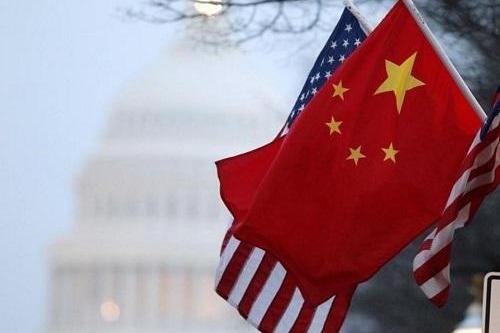
    ATLANTA – A specialized forum dedicated to examining the trajectory of Sino-American relations has concluded that engaging younger generations represents the most promising pathway toward stabilizing the increasingly complex bilateral relationship. The 2026 Jimmy Carter Forum on US-China Relations, held January 30 in Atlanta, brought together veteran diplomats, academics, and professionals who have built careers navigating the evolving dynamics between the world’s two largest economies.

    The conference, exclusively featuring female speakers to highlight women’s contributions to bilateral relations, opened with a keynote address from Sarah Beran, former deputy chief of mission at the US embassy in Beijing and senior director for China and Taiwan affairs on the White House National Security Council. Beran characterized the relationship as demonstrating ‘notable resilience’ despite nearly a decade of strategic competition, while acknowledging a concerning ‘structural decline with no clear endpoint.’

    Veteran participants like Jan Berris, vice-president of the National Committee on US-China Relations and a ping pong diplomacy participant since 1971, described current conditions as ‘the worst time in the relationship.’ This assessment stood in stark contrast to the ‘golden age’ experienced by younger panelists including Elizabeth Knup of The Asia Society, Caroline Pan of the 1990 Institute, and Rosie Levine of the US-China Education Trust, all of whom had formative professional experiences in China during more cooperative eras.

    Despite acknowledging significant challenges in people-to-people exchanges – from policy restrictions to funding limitations – participants identified digital platforms as unexpected bridges between American and Chinese youth. Levine highlighted how social media content on Instagram and TikTok has generated genuine curiosity about contemporary Chinese life among American youth, often contradicting mainstream media narratives.

    Practical examples of continued engagement emerged from younger attendees. Mackenzie Miller, program manager of The Penn Project on the Future of US-China Relations, reported observing ‘very engaged and very interested’ American students currently studying in China. Emily Conrad, a PhD candidate at Fudan University building a literal US-China family with her Chinese husband, noted the democratizing effect of Chinese social platforms like Xiaohongshu (Little Red Book) in making Chinese culture accessible to Americans.

    The consensus emerged that while returning to previous eras of cooperation remains unlikely, cultivating mutual understanding through digital exchanges, educational programs, and cultural curiosity represents the most viable strategy for managing strategic competition and preventing escalation.

  • Air India grounds Boeing jet after pilot flags possible fuel control switch defect

    Air India grounds Boeing jet after pilot flags possible fuel control switch defect

    Air India has temporarily removed a Boeing 787-8 Dreamliner from service after a flight crew member identified a potential malfunction in the aircraft’s fuel control mechanism. The carrier confirmed in an official communication that it has prioritized inspection of the reported concern while maintaining dialogue with both Boeing manufacturers and Indian aviation authorities.

    The incident occurred following a routine flight from London to Bengaluru, where the operating pilot notified engineers of anomalous readings related to the fuel system controls. While specific technical details remain undisclosed, the event has garnered significant attention due to its temporal proximity to last year’s catastrophic Air India Dreamliner crash near Ahmedabad.

    Boeing’s corporate communications team acknowledged the situation, stating: “We maintain ongoing coordination with Air India and are providing technical assistance to facilitate their operational assessment.”

    This development emerges against the backdrop of India’s Aircraft Accident Investigation Bureau (AAIB) progressing toward final conclusions regarding the June 2023 tragedy that claimed 260 lives. Preliminary findings from that investigation indicated the crashed aircraft’s fuel switches unexpectedly transitioned from ‘run’ to ‘cutoff’ position during initial ascent, resulting in dual engine failure.

    Both the U.S. Federal Aviation Administration and India’s Directorate General of Civil Aviation (DGCA) previously conducted comprehensive reviews of Boeing’s fuel switch systems following last year’s accident. Air India maintains that its fleet-wide inspection of 787 Dreamliners conducted under DGCA mandate revealed no pre-existing defects in switch locking mechanisms.