作者: admin

  • Trump backs Chagos handover deal, says No 10

    Trump backs Chagos handover deal, says No 10

    The United States has formally endorsed the United Kingdom’s landmark agreement to transfer sovereignty of the Chagos Islands to Mauritius while securing a long-term lease for the strategic military installation on Diego Garcia. This development follows weeks of diplomatic uncertainty after former President Donald Trump’s contradictory statements regarding the arrangement.

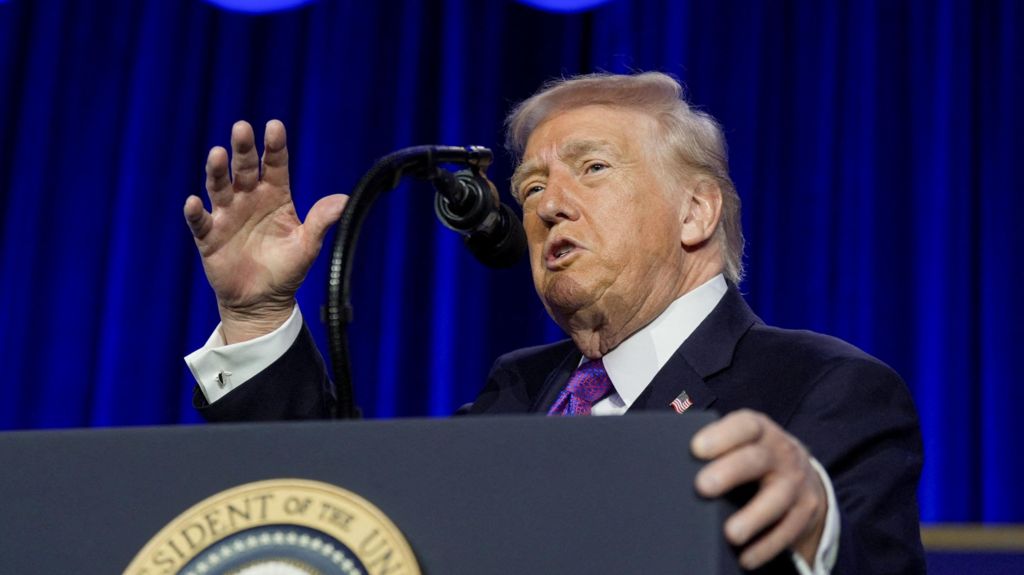
    In a significant diplomatic reversal, Trump publicly expressed support for Prime Minister Keir Starmer’s negotiated settlement, characterizing it as “the best he could make” during their recent discussions. This endorsement came as a relief to British officials who had grown concerned when Trump previously denounced the agreement as an “act of great stupidity” and “total weakness” last month.

    The complex arrangement, initially announced last year, facilitates the formal transfer of Chagos Islands sovereignty to Mauritius while guaranteeing continued UK and US military access to the Diego Garcia base through a 99-year leaseback provision. This joint UK-US facility serves as a critical strategic asset for both nations’ military operations in the Indian Ocean region.

    Downing Street confirmed that both leaders “agreed on the importance” of maintaining the base’s operational security during their Thursday conversation. A spokeswoman emphasized that the two nations would “continue to work closely on the implementation of the deal,” signaling ongoing cooperation despite previous tensions.

    Trump’s conditional support, communicated via his Truth Social platform, included a significant caveat: “If the lease deal, sometime in the future, ever falls apart, or anyone threatens or endangers US operations and forces at our base, I retain the right to militarily secure and reinforce the American presence in Diego Garcia.”

    White House Press Secretary Karoline Leavitt clarified the administration’s position, stating that while Trump understands and supports Starmer’s position, the United States “reserves the right to protect our assets.” This sentiment was echoed by US Ambassador to the UK Warren Stephens, who acknowledged that while maintaining UK sovereignty would be the “ideal” outcome, the current arrangement represents the “best deal on the table.”

    The agreement has faced substantial domestic criticism in the UK, particularly from Conservative and Reform UK parties who argue that Mauritius’s ties to China pose national security risks. Shadow Foreign Secretary Dame Priti Patel characterized Trump’s statement as recognizing “a critical weakness in the surrender deal” and pledged continued opposition.

    A draft law to ratify the Chagos Islands agreement is currently progressing through Parliament, though the legislative process experienced delays following Trump’s previous critical comments. Prime Minister Starmer has consistently maintained that the arrangement is necessary to protect the base’s continued operation amid previous legal challenges from Mauritius regarding British sovereignty.


  • Watch: What’s happened since Savannah Guthrie’s mother disappeared?

    Watch: What’s happened since Savannah Guthrie’s mother disappeared?

    Law enforcement agencies have intensified their investigation into the mysterious disappearance of Nancy Guthrie, mother of NBC News anchor Savannah Guthrie, with the FBI now examining two ransom notes received by the family. The case has taken a dramatic turn as authorities pursue multiple leads in their search for the missing woman.

    Police departments across jurisdictions have coordinated efforts, offering a substantial $50,000 reward for any information that could lead to resolving the case. This financial incentive aims to encourage potential witnesses to come forward with crucial details that might break the investigation open.

    The FBI’s involvement signifies the seriousness of the situation, with federal agents bringing additional resources and forensic capabilities to analyze the ransom communications. Law enforcement officials have maintained regular contact with the Guthrie family while carefully managing the flow of information to protect the integrity of their investigation.

    Community response has been significant, with local volunteers organizing search parties and distributing flyers throughout the area where Nancy Guthrie was last seen. The case has drawn national attention due to Savannah Guthrie’s high profile as a morning news anchor, putting additional pressure on authorities to produce results.

    Investigators continue to pursue all possible angles, from personal motives to random criminal activity, while urging the public to report any suspicious behavior or information, no matter how insignificant it might seem.

  • India to travel to Colombo despite Pakistan’s boycott call, captain Suryakumar Yadav says

    India to travel to Colombo despite Pakistan’s boycott call, captain Suryakumar Yadav says

    Indian cricket captain Suryakumar Yadav has confirmed his team’s intention to travel to Colombo for their scheduled T20 World Cup match against Pakistan, despite their arch-rivals’ formal boycott announcement. The statement came during a press conference at Mumbai’s Wankhede Stadium on Thursday, where India prepares to launch their campaign against the United States this Saturday.

    Yadav clarified India’s position regarding the controversial February 15 fixture: “We haven’t declined to play against Pakistan—they have initiated this boycott. Our travel arrangements are confirmed, and we will be present in Colombo as planned.”

    The tournament, jointly hosted by Sri Lanka and India, has encountered significant political complications during its lead-up. Bangladesh was previously disqualified for refusing to compete in India, prompting Pakistan’s government to order their team to boycott the high-profile match in solidarity with Bangladesh.

    According to tournament regulations, India must appear at the stadium prepared to play to secure the two points awarded for a match forfeiture. The teams have not engaged in bilateral cricket for over a decade, meeting exclusively during international tournaments.

    Yadav acknowledged India’s favorite status to retain the title they won two years ago, noting their strong recent form. However, he emphasized competitive caution: “While our performance suggests we’re favorites, there are nineteen other quality teams in this tournament. Every match demands our top-level performance.”

    The captain specifically referenced the United States’ stunning victory over Pakistan in the 2024 tournament, vowing that no opponent would be underestimated. “Each game carries tremendous importance,” Yadav stated, highlighting the competitive balance of the global event.

  • Trump’s nuclear arms control push with Russia hinges on China

    Trump’s nuclear arms control push with Russia hinges on China

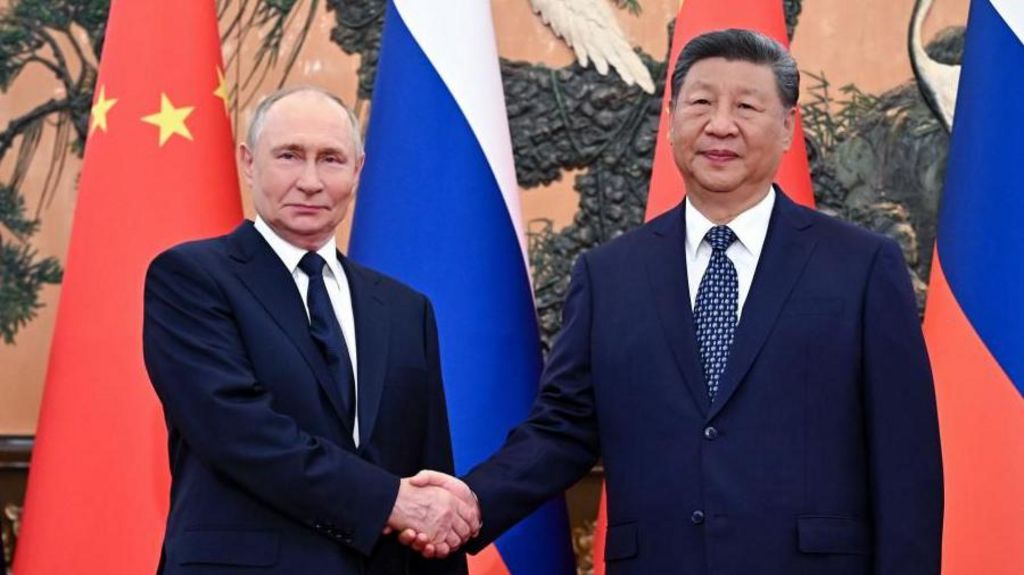
    The expiration of the New Strategic Arms Reduction Treaty (New START) has created an unprecedented nuclear governance vacuum between the United States and Russia, marking the first time in the 21st century that the world’s two largest nuclear powers operate without major arms control constraints. President Donald Trump’s administration now seeks to negotiate a comprehensive trilateral agreement involving China, a proposition that experts warn faces formidable diplomatic and technical challenges.

    The treaty’s lapse has triggered international concerns about potential nuclear proliferation and heightened geopolitical tensions. Former Obama administration negotiator Rose Gottemoeller characterized the situation as “a dangerous moment” due to the absence of concrete follow-up arrangements. The expiration eliminates critical verification mechanisms, including on-site inspections and data sharing protocols that enabled mutual monitoring of nuclear arsenals.

    Trump’s unconventional negotiation approach, deploying son-in-law Jared Kushner and envoy Steve Witkoff for arms control discussions in Abu Dhabi, has raised questions about the administration’s capacity to handle complex technical negotiations. Experts emphasize that establishing compliance and verification frameworks typically requires years of specialized diplomacy, not improvisational bargaining.

    The geopolitical landscape presents additional complications. Russia’s deepening alliance with China and ongoing Ukraine conflict have strained relations with Western powers. Meanwhile, China maintains its refusal to participate in trilateral talks until the US and Russia significantly reduce their existing arsenals. Beijing’s nuclear expansion program, projected to reach 1,000 warheads by 2030, adds urgency to arms control efforts.

    Historical precedent offers limited comfort. While brief gaps in arms control occurred during the Cold War, current tensions involving three nuclear powers create unprecedented complexity. The absence of restrictions on tactical nuclear weapons in Europe further compounds security concerns, especially given Russia’s ambiguous nuclear posture regarding Ukraine.

    The administration’s consideration of separate bilateral tracks with Russia and China suggests recognition of the trilateral approach’s difficulties. However, with both Moscow and Washington declaring themselves free from New START obligations, the path toward a new comprehensive treaty appears increasingly uncertain, potentially ending five decades of continuous bilateral nuclear arms control.

  • Venezuela advances amnesty bill that could lead to mass release of political prisoners

    Venezuela advances amnesty bill that could lead to mass release of political prisoners

    CARACAS, Venezuela — Venezuela’s National Assembly has taken significant steps toward approving a sweeping amnesty bill that could result in the liberation of hundreds of political prisoners, including opposition figures, journalists, and human rights activists detained under controversial circumstances.

    The legislation, proposed by Acting President Delcy Rodríguez, passed its initial legislative hurdle on Thursday and now awaits a second debate before potentially becoming law. The move comes just weeks after the dramatic capture of former President Nicolás Maduro by U.S. military forces, marking a potential turning point in Venezuela’s prolonged political crisis.

    While human rights organizations and opposition groups have long demanded such amnesty measures—a position strongly supported by the United States—the specific contents of the bill remain undisclosed to the public. This lack of transparency has prompted cautious optimism among advocacy groups, who simultaneously call for greater disclosure about the legislation’s exact provisions.

    In a pre-recorded television address late last month, Rodríguez addressed gathered justices, magistrates, ministers, military leaders, and government officials, emphasizing the urgency with which the ruling party-controlled legislature would handle the bill. “May this law serve to heal the wounds left by the political confrontation fueled by violence and extremism,” she stated. “May it serve to redirect justice in our country, and may it serve to redirect coexistence among Venezuelans.”

    According to available reports, the proposed amnesty would cover a extensive period spanning from 1999 through the current year, encompassing both the administration of late President Hugo Chávez and his successor Maduro. The legislation would reportedly exclude individuals convicted of murder, drug trafficking, and serious human rights violations.

    Human rights organizations including PROVEA (Venezuelan Program for Education-Action in Human Rights) have issued statements stressing the urgent need for public disclosure of the bill’s contents, citing its profound potential impact on victims’ rights and Venezuelan society at large. These groups express particular concern that certain political detainees might be excluded from amnesty protections and are demanding detailed information about eligibility requirements before any final legislative vote.

  • UAE minister honours mother who went to class with her son at old school tent

    UAE minister honours mother who went to class with her son at old school tent

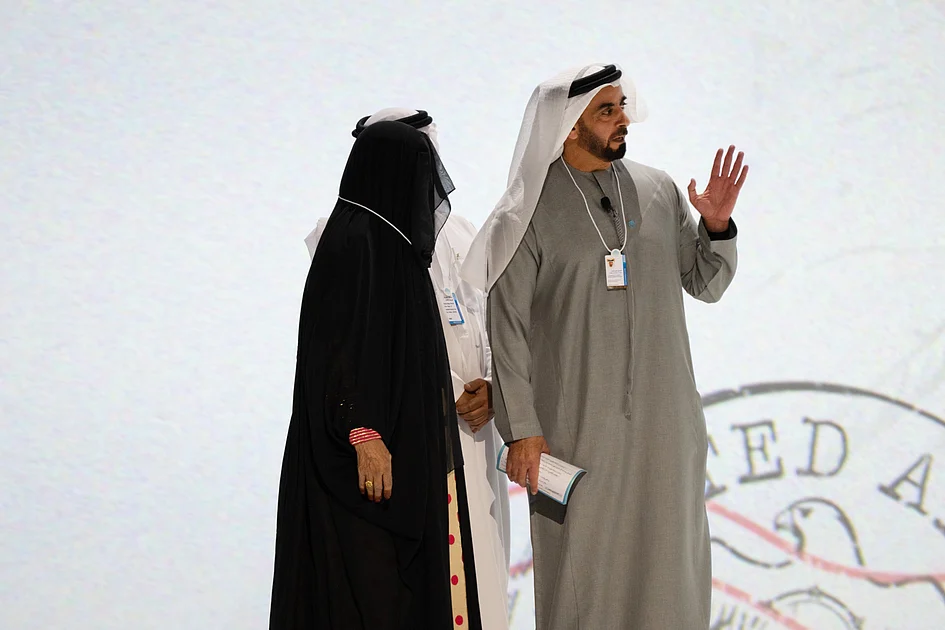
    In a profoundly moving tribute at the World Governments Summit, Sheikh Saif bin Zayed Al Nahyan, UAE Deputy Prime Minister and Minister of Interior, recognized Emirati mother Dhahira Al Ameri for her extraordinary dedication to education during the nation’s formative years. The ceremony during the “The Impregnable Fortress” session revealed a historic photograph of Al Ameri sitting with her young son under a simple tent in Al Wagan, Al Ain—one of the UAE’s first makeshift schools established when formal education remained a novel concept.

    Sheikh Saif personally addressed Al Ameri, emphasizing her remarkable perseverance despite lacking contemporary resources. “Dhahira, there was no one to help you, and you did not have what mothers have today,” he stated. “But you were keen to be with him.” This recognition highlighted the challenging conditions faced by early education pioneers who responded to the call of the late Sheikh Zayed bin Sultan Al Nahyan, the UAE’s Founding Father, to embrace education despite widespread uncertainty.

    The emotional impact deepened as Al Ameri’s son, now an adult, stood beside his mother on stage and shared how her sacrifice created an educational legacy. “I studied and graduated from America,” he announced, “and today, I have four daughters who are graduates of UAE University, and another daughter studying cybersecurity in Australia.”

    This narrative powerfully connects a mother’s determination in a desert tent classroom to multiple generations of academically accomplished Emirati women making global contributions. The story transcends personal achievement, embodying the UAE’s developmental journey through core values of leadership trust, women’s essential role in nation-building, and education as the fundamental catalyst for progress.

  • Japan’s Ogiwara tops qualifying for men’s big air as snowboarding kicks off at Olympics

    Japan’s Ogiwara tops qualifying for men’s big air as snowboarding kicks off at Olympics

    LIVIGNO, Italy — The 2026 Winter Olympics witnessed an extraordinary display of athletic prowess as snowboarding events commenced with the men’s big air qualifiers on Thursday. Hiroto Ogiwara, Japan’s 20-year-old phenom, delivered a stunning performance that secured his position atop the leaderboard with 178.5 combined points from his two best runs.

    Ogiwara, who previously revolutionized the sport at the 2025 Aspen X Games by landing the first-ever 2,340-degree jump (equivalent to six-and-a-half rotations) in competitive history, demonstrated why he’s considered the athlete to beat in this discipline. His technical mastery and aerial control left judges and spectators in awe.

    Local favorite Ian Matteoli provided Italian fans with thrilling moments, capturing second position with 174.5 points. The competition intensified with another Japanese contender, Kira Kimura, claiming third place at 173.25 points, narrowly edging out China’s reigning gold medalist Su Yiming, who finished fourth with 172.25 points.

    The American contingent faced challenges, with only Oliver Martin advancing to Saturday’s final after securing ninth position. The qualification format required athletes to execute three jumps off the massive 40-meter ramp, with their two highest scores determining advancement to the finals.

    The nighttime event in Livigno—a picturesque Alpine town transformed into an extreme sports arena—showcased athletes soaring under floodlights against a dramatic mountain backdrop. Big air, characterized by single massive jumps incorporating complex spins, flips, and board manipulations, represents one of three snowboarding park events alongside halfpipe and slopestyle competitions.

    Livigno will additionally host freestyle skiing aerials and moguls throughout the Olympic Games, cementing its status as a hub for winter action sports during the Milan Cortina Olympics.

  • Bamboo-based drone completes maiden flight in Tianjin

    Bamboo-based drone completes maiden flight in Tianjin

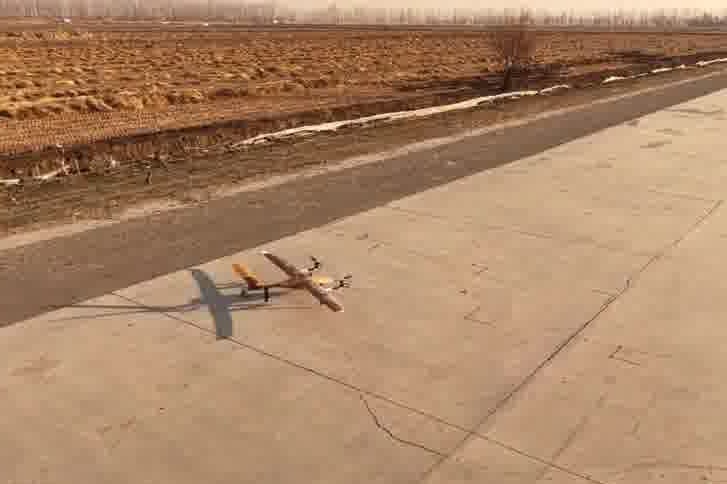
    In a groundbreaking development for sustainable aviation technology, a tilt-rotor drone constructed primarily with bamboo-based composite materials has successfully completed its inaugural flight in Tianjin. This achievement represents the world’s first fixed-wing unmanned aerial vehicle to incorporate such a significant proportion of bamboo-derived components, according to the International Centre for Bamboo and Rattan.

    The innovative aircraft, developed through a collaborative effort between the International Centre for Bamboo and Rattan, Beihang University’s Ningbo Innovation Research Institute, and Long Bamboo Technology Group, features over 25% of its structural components made from advanced bamboo composites. This milestone demonstrates the viability of environmentally conscious materials in high-performance aviation applications.

    Technical specifications reveal a drone with a 2.5-meter wingspan and approximately 7-kilogram weight, capable of vertical takeoff and landing operations. The aircraft achieves cruise speeds exceeding 100 kilometers per hour with an endurance rating of more than one hour per flight cycle.

    The bamboo composite technology delivers substantial advantages over conventional materials, reducing overall weight by more than 20% compared to lightweight carbon fiber alternatives while simultaneously cutting material costs significantly. The bamboo-based composite cloth costs approximately one-quarter of standard carbon fiber materials and proves even more economical than specialized aeronautical-grade alternatives.

    Project lead researcher Qin Daochun emphasized the technical challenges overcome during development, noting that the research team conducted over 100 experiments adhering to strict airworthiness standards. These efforts resulted in a bamboo composite material exhibiting exceptional strength, toughness, and formability characteristics suitable for aviation applications.

    This successful demonstration marks a crucial advancement in China’s expanding low-altitude economy initiatives, potentially establishing new pathways for greener, lighter, and more cost-effective development within the drone industry and broader aviation sector.

  • Hunan emerging as China-Africa trade hub

    Hunan emerging as China-Africa trade hub

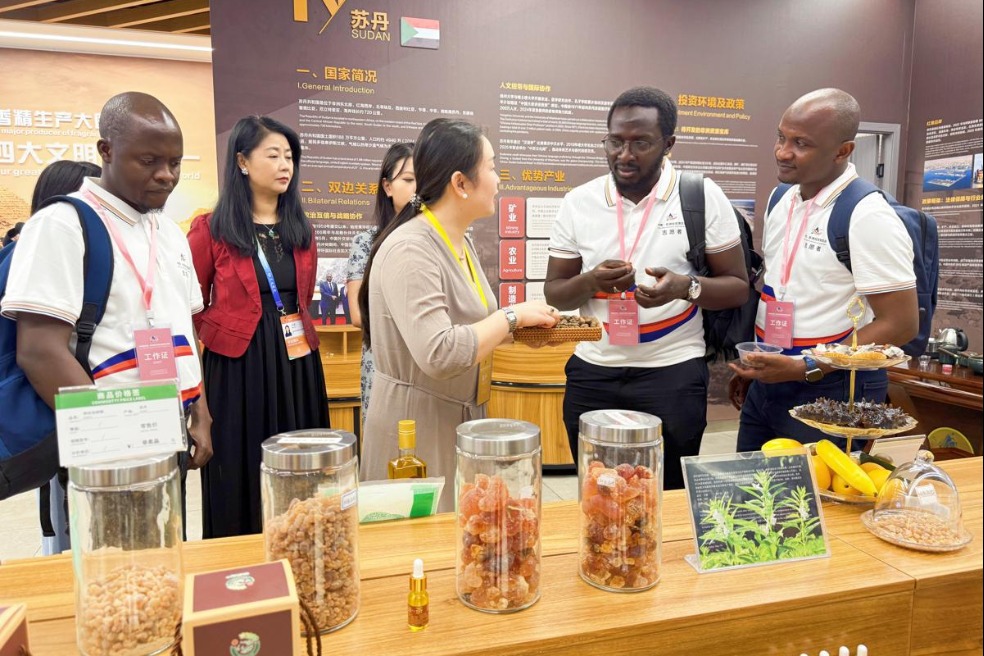
    Hunan Province is rapidly solidifying its position as China’s central hub for African trade relations, with African specialty products becoming increasingly integrated into local consumption patterns. As the Lunar New Year approaches, households across Hunan are stocking celebration supplies featuring South African wines and Tanzanian nuts among other African commodities.

    The province has launched extensive promotional activities since January 23rd, showcasing nearly 300 products from over a dozen African nations through pop-up events in multiple cities including Yiyang and Yueyang. At the permanent exhibition hall of the China-Africa Economic and Trade Expo (CAETE) in provincial capital Changsha, consumers can explore a comprehensive range of African goods spanning food, beverages, and skincare products.

    Hunan’s strategic importance in China-Africa trade relations is demonstrated by impressive economic metrics. According to the Hunan Department of Commerce, the province recorded 58 billion yuan ($8.36 billion) in trade with African nations last year, maintaining its leading position in central and western China for seven consecutive years. The province has hosted four editions of the CAETE, significantly strengthening its role in facilitating cross-continental commerce.

    Shen Yumou, head of the Hunan Department of Commerce, revealed during the ongoing provincial legislative session that more than 3,000 Hunan-based enterprises currently operate across 111 countries and regions, indicating the province’s extensive global business footprint.

    Changsha, internationally recognized as the ‘construction machinery capital,’ has pioneered innovative export standards for second-hand engineering equipment. The city addressed previous challenges with inconsistent international regulations by establishing national-first class standards for remanufactured and repaired machinery.

    Tan Haoran, deputy director of the administrative office of the China (Hunan) Pilot Free Trade Zone, explained: ‘To address these challenges, we released standards for the export of remanufactured and repaired engineering machinery—a national first.’ These standards have significantly enhanced product quality and export competitiveness, resulting in over 3 billion yuan worth of remanufactured equipment exported from Hunan globally during the past two years.

  • Libya: Gaddafi supporters left without rallying figure after Saif al-Islam’s killing

    Libya: Gaddafi supporters left without rallying figure after Saif al-Islam’s killing

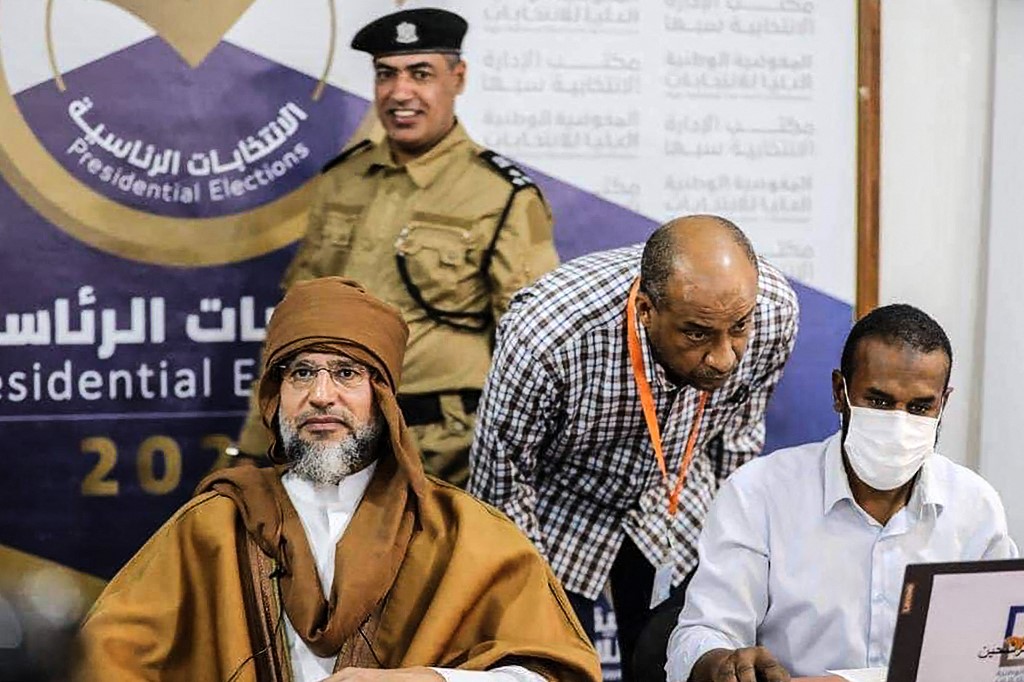
    The confirmed assassination of Saif al-Islam Gaddafi, son of the late Libyan leader Muammar Gaddafi and his designated successor, has ignited widespread agitation across Libyan social media and raised profound questions about the nation’s political future. Libya’s attorney general officially confirmed the killing in the early hours of Wednesday, following hours of intense speculation and the subsequent circulation of graphic images showing Gaddafi’s lifeless body in a desert area.

    According to political advisers close to the former heir apparent, the operation was conducted by a four-man commando unit that breached his residence, disabled security systems, and executed him during a direct confrontation. The incident occurred in the Zintan region, approximately 100 kilometers south of Tripoli, where Saif al-Islam had been detained following the 2011 revolution that overthrew his father’s regime.

    Saif al-Islam, born in 1972, stood apart from his siblings as the only member of the Gaddafi family to play a significant political role during the Jamahiriya era. Educated with a PhD from the London School of Economics, he positioned himself as a reformist and operated through the Gaddafi International Charity and Development Foundation, which served as an instrument of parallel diplomacy to counter his father’s pariah status in Western nations.

    Despite being subject to an International Criminal Court arrest warrant for crimes against humanity during the 2011 uprising, and subsequent psychological trauma from his imprisonment, Saif al-Islam had announced intentions to contest the presidential election originally scheduled for 2021. His potential candidacy, which reportedly garnered substantial popular support, was among the factors that led to the election’s cancellation.

    The United Nations Support Mission in Libya has strongly condemned what it described as a ‘targeted killing,’ while the attorney general’s office has opened an investigation. However, many analysts express skepticism about the prospect of accountability, given Libya’s entrenched culture of impunity regarding political assassinations.

    The assassination has exposed the deep divisions within Libyan society. While segments of the population, particularly in historic Gaddafi strongholds like Sirte, have openly mourned his death, his existence had long represented a political embarrassment for most armed factions. His strategy of positioning himself outside the two dominant power structures—Prime Minister Abdul Hamid Dbeibah’s internationally recognized government in Tripoli and the Haftar family’s administration in Benghazi—ultimately isolated him from centers of power while appealing to those disillusioned with post-revolutionary elites.

    The attribution of responsibility remains intensely contested. Social media speculation initially pointed toward Mahmoud Hamza, commander of the 444 Brigade and a key Dbeibah ally, though his forces promptly denied involvement. Alternative unverified claims suggest possible responsibility from Saddam Haftar, son of eastern commander Khalifa Haftar, while Gaddafi loyalists have even suggested foreign involvement linked to French political scandals involving Libyan financing.

    Analysts at the Royal United Services Institute suggest the operation likely resulted from local tensions within Zintan rather than a broader conspiracy. The city has long been characterized by internal divisions between factions aligned with either Tripoli or Benghazi, and Saif al-Islam’s presence under the protection of his own armed brigade had created growing tensions over years.

    The elimination of Saif al-Islam removes a central figure from Libya’s political narrative, particularly for pro-Gaddafi elements and non-aligned groups seeking alternatives to the dominant power structures. With all of Muammar Gaddafi’s other children either deceased or exiled, the event leaves pro-Gaddafi sentiments without any symbolic leadership, potentially altering the political calculations of various security actors who had instrumentalized residual sympathy for the former regime.