作者: admin

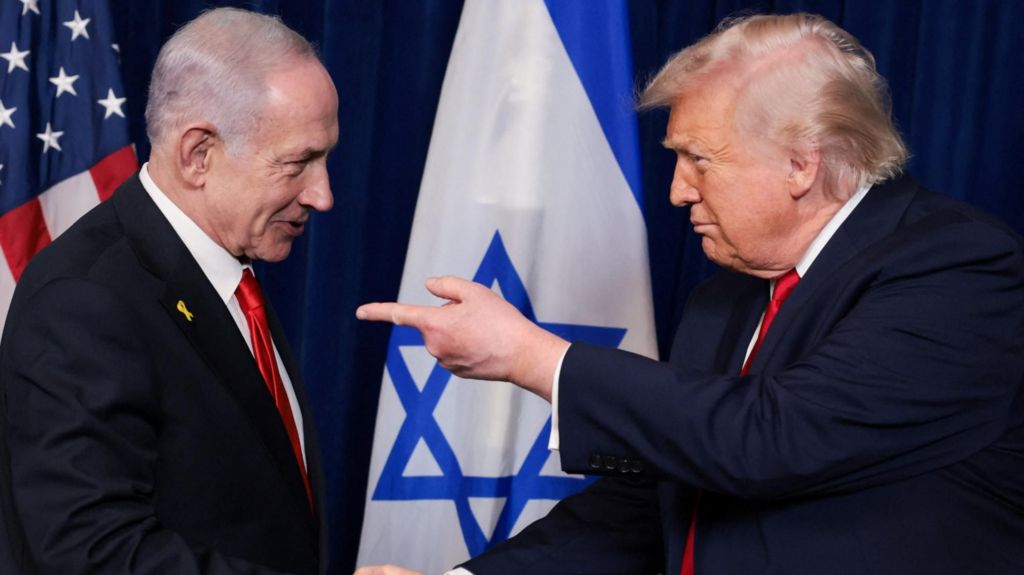
  • Israeli PM Netanyahu agrees to join Trump’s Board of Peace

    Israeli PM Netanyahu agrees to join Trump’s Board of Peace

    A significant geopolitical development has emerged as Israeli Prime Minister Benjamin Netanyahu confirmed his participation in former U.S. President Donald Trump’s newly established Board of Peace. This international organization, conceptualized to promote stability and lawful governance in conflict zones, has sparked both interest and skepticism within the global community.

    The Board’s charter, obtained by media sources, reveals unconventional membership terms: nations can secure renewable three-year positions or obtain permanent status through a $1 billion financial contribution. While the United Arab Emirates, Bahrain, Albania, Armenia, Azerbaijan, Belarus, Hungary, Kazakhstan, Morocco, and Vietnam have agreed to participate, several key nations including Norway, France, and Sweden have expressed reservations or declined involvement entirely.

    Trump will assume dual roles as permanent chairman and U.S. representative, wielding exclusive authority to create, modify, or dissolve subsidiary entities. The Executive Board features prominent international figures including U.S. Secretary of State Marco Rubio, Middle East special envoy Steve Witkoff, Jared Kushner, and former British Prime Minister Tony Blair.

    A particularly contentious aspect involves the Gaza Executive Board, which includes representatives from Turkey and Qatar—a development that Netanyahu’s office claims was “not coordinated with Israel and runs contrary to its policy.” This board will work alongside a Palestinian technocratic government to oversee reconstruction efforts and stabilization initiatives in Gaza.

    The initiative unfolds against a fragile ceasefire following the devastating 2023-2026 Israel-Hamas conflict that resulted in over 71,550 Palestinian and 1,200 Israeli casualties. While phase one of Trump’s peace plan achieved a temporary ceasefire and prisoner exchange, phase two faces substantial challenges regarding Hamas disarmament and complete Israeli withdrawal from Gaza—issues that remain unresolved amid ongoing violence that has claimed hundreds of lives since the ceasefire began.


  • Trump says ‘brokering peace’ between India, Pakistan ‘key success’ of first year in office

    Trump says ‘brokering peace’ between India, Pakistan ‘key success’ of first year in office

    In a comprehensive review of his administration’s accomplishments, former President Donald Trump has identified his purported mediation between India and Pakistan as a cornerstone achievement during his first year back in office. The White House released a document titled “365 Wins in 365 Days” cataloging these achievements, prominently featuring diplomatic efforts in South Asia under the section “Reasserting American Leadership on the World Stage.”

    During a press briefing commemorating his administration’s anniversary, Trump elaborated on his claims with heightened dramatic effect, notably increasing the number of aircraft he stated were shot down in the conflict from seven to eight. “I ended eight unendable wars in 10 months. Pakistan and India. They were really going at it. Eight planes were shot down,” Trump asserted. “They were going to go nuclear, in my opinion. The Prime Minister of Pakistan was here, and he said ‘President Trump saved 10 million people.’”

    The former president has repeatedly invoked this narrative since May of the previous year, positioning himself as the decisive factor in preventing catastrophic escalation between the nuclear-armed neighbors. These assertions appear strategically linked to his aspirations for the Nobel Peace Prize, an award he has consistently expressed grievance over not receiving.

    However, these claims stand in stark contrast to official positions from New Delhi. Indian authorities have consistently refuted any third-party involvement in conflict resolution, maintaining that peace negotiations were conducted exclusively through bilateral channels between the two nations. The initial military confrontation followed the devastating Pahalgam terror attack in Jammu and Kashmir in April 2025, which resulted in 26 casualties and triggered a significant escalation in cross-border tensions.

  • Nigeria police confirm mass church abductions after previous denial

    Nigeria police confirm mass church abductions after previous denial

    Nigerian authorities have executed a dramatic reversal, officially confirming the mass abduction of Christian worshippers from three churches in northern Kaduna state after initially denying the incident occurred. The police retracted their previous statements on Tuesday night, acknowledging that operational units and intelligence sources had verified the kidnapping in Kurmin Wali village.

    According to local residents who spoke with BBC, approximately 177 congregants were seized during Sunday morning services, with 11 managing to escape captivity. Police spokesperson Benjamin Hundeyin declined to provide specific numbers but confirmed security forces had been fully deployed to conduct search-and-rescue operations and area patrols.

    Eyewitness accounts describe armed militants surrounding the village during the attack at approximately 10:00 local time on Sunday. “Some people attempted to flee but found themselves encircled,” one witness reported. “The assailants gathered people together and forced them to march into the surrounding bush.”

    The targeted churches included two branches of the Cherubim and Seraphim Movement Church and one Evangelical Church Winning All (ECWA) congregation. This confirmation contradicts earlier statements from Kaduna state police commissioner Alhaji Muhammad Rabiu, who on Monday challenged journalists to “list the names of the kidnapped victims” while claiming no evidence supported the abduction reports.

    Amnesty International has condemned what it characterized as “the desperate denial” by Nigerian authorities. The human rights organization urged immediate action to address the escalating abduction crisis gradually becoming normalized across Nigeria.

    This incident occurs against a backdrop of severe security challenges confronting Africa’s most populous nation. Criminal gangs conducting ransom kidnappings, Islamist insurgency in the northeast, separatist violence in the southeast, and persistent conflicts between herders and farmers collectively strain national security resources. Experts attribute the crisis to systemic corruption, inadequate intelligence sharing, and chronically underfunded local policing.

    The kidnapping follows November’s abduction of over 300 students and teachers from a Catholic school in neighboring Niger state. The deteriorating security situation prompted Nigeria’s defense minister to resign last month, officially for health reasons, and triggered unprecedented US military involvement with airstrikes against Islamist militant camps on Christmas Day.

    President Donald Trump subsequently warned of additional strikes if attacks against Christians in the West African nation continue. Nigeria’s foreign ministry responded that the country remains committed to protecting all citizens regardless of faith, emphasizing constructive engagement with international partners including the United States.

  • Macron urges EU to consider trade ‘bazooka’ in response to US tariffs threat

    Macron urges EU to consider trade ‘bazooka’ in response to US tariffs threat

    BRUSSELS — The European Union is mobilizing its substantial economic defenses in response to escalating tensions with the United States, particularly concerning President Donald Trump’s aggressive posture toward Greenland. As a primarily trade-oriented bloc of 27 nations, the EU’s countermeasures center on powerful financial instruments that could potentially cost American companies billions.

    The centerpiece of Europe’s defensive strategy is the Anti-Coercion Instrument (ACI), colloquially termed the ‘trade bazooka’ by French President Emmanuel Macron. This mechanism, established in 2021 following China’s trade restrictions against Lithuania over Taiwan relations, enables the EU to sanction individuals or institutions exerting undue pressure on member states.

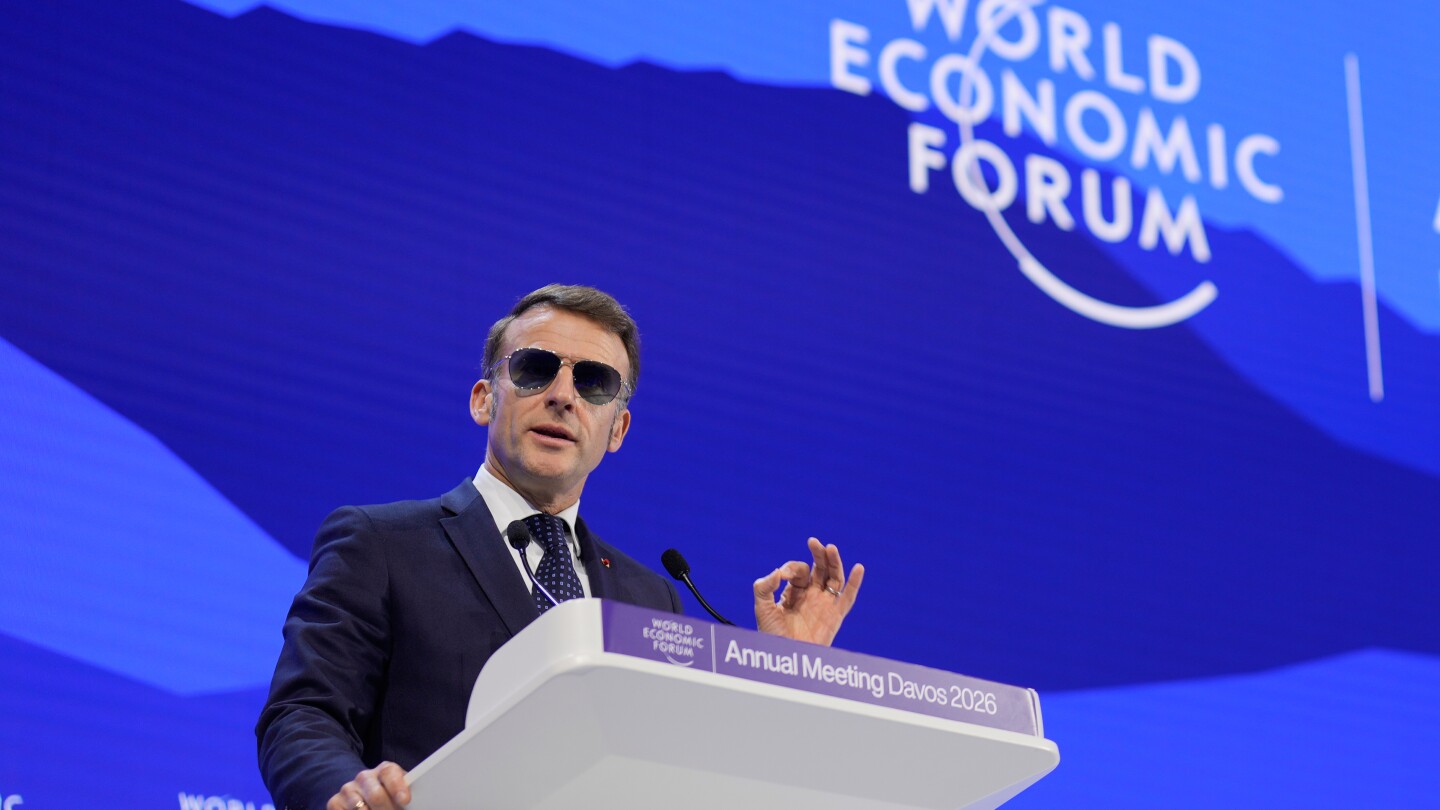
    Speaking at the Davos forum on Tuesday, Macron issued a stark warning that additional U.S. tariffs could compel the EU to deploy its anti-coercion mechanism for the first time against its American allies. ‘The crazy thing is that we could find ourselves in a situation where we use the anti-coercion mechanism for the very first time against the United States,’ Macron stated, expressing regret over what he termed ‘unnecessary aggressiveness.’

    The potential sanctions under the ACI framework include restrictive market access measures, exclusion from EU public procurement contracts, limitations on foreign direct investment, and constraints on goods and services trade. Despite the powerful nature of these tools, significant hesitation exists among EU members, with France currently standing as the primary advocate for their potential deployment.

    EU leaders are convening an emergency summit in Brussels on Thursday to address the growing tensions. The timing is particularly sensitive as the bloc emphasizes the need for allied cooperation in addressing the conflict in Ukraine.

    The economic stakes are enormous: EU-U.S. trade in goods and services reached €1.7 trillion ($2 trillion) in 2024, averaging €4.6 billion daily. Europe’s major exports to the American market include pharmaceuticals, automobiles, aircraft, chemicals, medical instruments, and premium alcoholic beverages.

    According to European Commission documentation, the ACI requires at least six months to activate, with its primary objective being deterrence rather than punishment. As the commission previously stated, ‘The instrument will, therefore, be most successful if there is no need to use it.’

  • Davidovich Fokina criticises ‘ignorant drunks’ in crowd

    Davidovich Fokina criticises ‘ignorant drunks’ in crowd

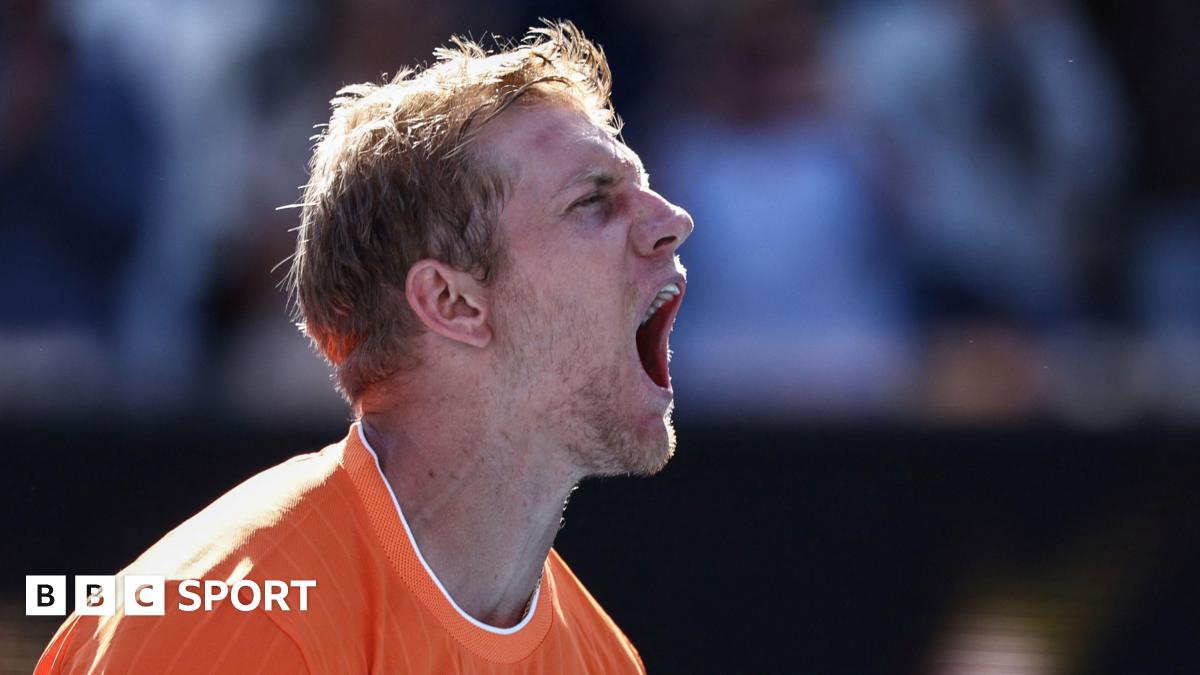
    Spanish tennis professional Alejandro Davidovich Fokina unleashed a vehement critique against disruptive spectators he labeled as “ignorant drunks” during his intense five-set victory at the Australian Open. The incident erupted during the fourth set of his match against American Reilly Opelka on Kia Arena, where the 14th-seeded player abruptly stormed toward the front rows, gesticulating angrily and shouting at a specific group of attendees. The chair umpire promptly intervened, descending from his position to de-escalate the situation and instruct Davidovich Fokina to retreat while addressing the concerned spectators directly.

    Reflecting on the altercation during post-match commentary, Davidovich Fokina expressed frustration with fan behavior that transcends geographical boundaries. “It can happen here, it can happen wherever in the world,” he stated. “So there were four ignorant drunks that I can do nothing about. Nothing more.” Despite the confrontation, the Spaniard secured a hard-fought 6-3, 7-6 (7-3), 5-7, 4-6, 6-4 triumph, celebrating emotionally by shouting skyward before discarding his cap and clenching his fist triumphantly toward his support team.

    This incident represents part of a broader pattern of player-spectator tensions at this year’s Melbourne tournament. Russia’s Anastasia Potapova vocally challenged a spectator who disrupted play during her match against Britain’s Emma Raducanu, while Spain’s Jaume Munar expressed visible frustration when fans initiated chants during critical service moments. These occurrences echo previous years’ controversies, including British player Harriet Dart’s comparison of her 2025 match atmosphere to a “football match” and American Danielle Collins facing hostile heckling from local crowds during her matches against Australian opponents.

    The tournament has historically grappled with crowd management challenges, including last year’s relocation of Davidovich Fokina’s match against Felix Auger-Aliassime due to excessive noise pollution from adjacent courts. These recurring incidents highlight ongoing debates about spectator etiquette and player concentration in professional tennis environments.

  • Harry Brook feels lucky to still be England cricket captain after nightclub incident

    Harry Brook feels lucky to still be England cricket captain after nightclub incident

    COLOMBO, Sri Lanka — England’s white-ball cricket captain Harry Brook has publicly acknowledged what he describes as a “terrible mistake” following a physical altercation with a nightclub bouncer in New Zealand, an incident that nearly cost him his leadership position ahead of the current Sri Lanka tour.

    The confrontation occurred on October 31 in Wellington, just before the final ODI match against New Zealand, when Brook was reportedly denied entry to an establishment. The England and Wales Cricket Board responded by imposing a substantial £30,000 (approximately $40,300) fine and issuing a final conduct warning. Despite the disciplinary action, the board opted to retain Brook as both white-ball captain and test vice-captain following Australia’s 4-1 Ashes victory.

    Addressing journalists on Wednesday before England’s six-match white-ball series opener in Sri Lanka, Brook expressed deep remorse: “I made a terrible mistake, not only as a player but as a captain. My actions were profoundly unprofessional. As a leader, I should be setting the standard for professional conduct rather than placing myself in compromising situations.”

    The cricketer extended apologies to teammates and supporters, recognizing particularly those “who travel far and wide and spend considerable money to watch us play.” He clarified that while the team had initially gone out for drinks together, he had “taken it upon myself to go out for a few more alone.”

    When questioned about potentially resigning his captaincy, Brook revealed the thought never crossed his mind, though he would have accepted dismissal: “I left that decision to the hierarchy. Had they sacked me as captain, I’d have been perfectly fine with it so long as I could continue playing for England.” He conceded feeling “probably slightly” fortunate to retain his leadership role.

    As England prepares for three ODIs and three T20 matches in Sri Lanka—critical preparation for the T20 World Cup commencing February 7 in India and Sri Lanka—Brook recognizes the work ahead to rebuild trust: “I’ve apologized to the players and acknowledge I have work to do to regain their full confidence.”

  • Olympic visitors to Milan get a rare chance to glimpse restoration of a long-hidden Leonardo gem

    Olympic visitors to Milan get a rare chance to glimpse restoration of a long-hidden Leonardo gem

    MILAN — In an extraordinary cultural initiative timed with the Milan Cortina Olympics, heritage authorities are granting public access to a long-concealed Leonardo da Vinci masterpiece during its ongoing restoration. The monumental wall and ceiling painting, hidden for centuries within Milan’s historic Sforza Castle, will be visible to visitors through a unique scaffolding viewing platform from February 7 to March 14.

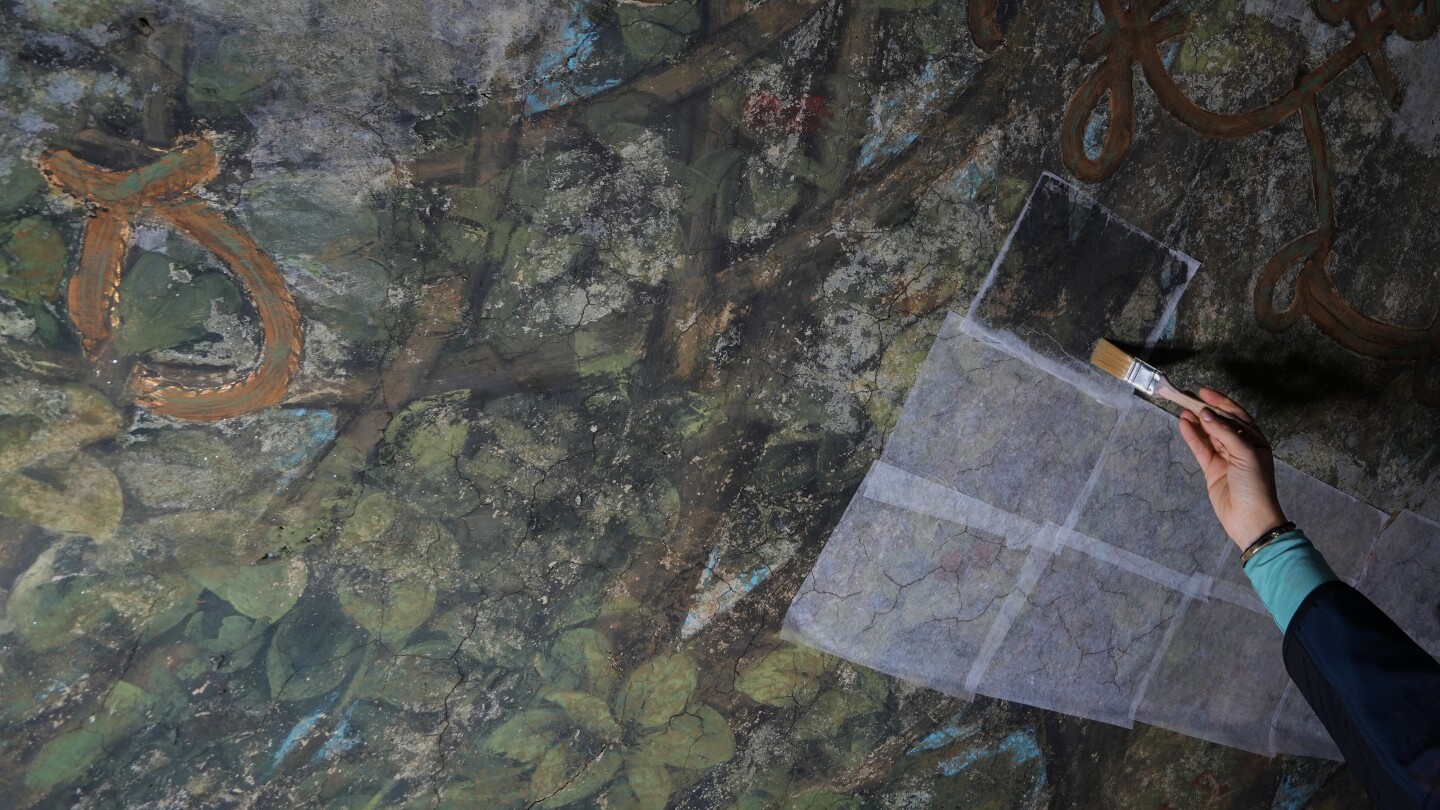
    The artistic treasure, depicting an intricate pergola adorned with flowering branches, occupies the Sala delle Asse in Sforza Castle—located within the same Sempione Park that will host the Olympic flame during the Winter Games. Historical records confirm Leonardo initiated this work in 1498 but abandoned it unfinished when French forces invaded Milan, forcing the artist to flee. Subsequently, the castle was converted into military barracks, and the painting was concealed beneath layers of plaster for centuries.

    Early 20th-century restorers rediscovered the work by removing the plaster but unfortunately overpainted substantial sections, compromising its authenticity. “Leonardo scholars consequently dismissed it as a repainted version rather than a genuine work—essentially a fabrication using popular terminology,” explained Luca Tosi, heritage curator at Sforza Castle.

    Current restoration employs sophisticated techniques using Japanese rice paper and demineralized water to extract salts that have penetrated the walls. Conservators are meticulously cleaning the surface centimeter by centimeter due to the extreme fragility of Leonardo’s original brushwork. “The painting exhibits some liftings and vulnerable areas requiring utmost precision and care,” Tosi noted.

    According to Tomasso Sacchi, Milan’s cultural director, the artwork represents a botanical study reflecting Leonardo’s scientific curiosity, showcasing various plant species with remarkable accuracy. “This experience reveals another dimension of Leonardo’s genius and his extraordinary dedication to multidisciplinary knowledge,” Sacchi stated.

    Following the brief viewing window, the site will close for an additional 18 months to complete restoration. This temporary access provides a once-in-a-generation opportunity to witness both a Renaissance masterpiece and the painstaking process of art conservation.

  • Social media mobilize to find Boro, a dog who survived Spain’s train crash

    Social media mobilize to find Boro, a dog who survived Spain’s train crash

    MADRID — In the devastating aftermath of Spain’s catastrophic rail collision that claimed 42 lives and injured over 150 passengers, an unexpected story of hope and compassion has captured the nation’s attention. Ana García, a 26-year-old survivor bearing visible injuries from the tragedy, has ignited a massive search effort for her missing dog Boro, who vanished during the chaos of the rescue operation.

    The tragedy unfolded when the high-speed train from Malaga to Madrid derailed under unclear circumstances, resulting in a catastrophic collision with an oncoming train that sent cars tumbling down an embankment. García, who was traveling with her pregnant sister, managed to escape the wreckage with rescue crews’ assistance but lost sight of her canine companion during the evacuation.

    Following medical treatment, García immediately returned to the disaster perimeter, delivering an emotional public appeal while visibly fighting back tears. “Please, if you can help, look for the animals,” she implored, emphasizing that Boro was “family, too” after their family weekend trip.

    Spanish citizens have responded with extraordinary solidarity, transforming social media platforms into a nationwide search network. Videos of García’s heartfelt plea have been shared thousands of times, while photos of Boro—a medium-sized black dog with distinctive white eyebrows and chest markings—have gone viral across multiple platforms.

    The search gained significant momentum when television broadcaster TVE captured footage of a dog resembling Boro running through a field near the crash site during their Monday afternoon coverage. Although the sighting provided a moment of hope, the elusive dog remained unlocated despite extensive efforts.

    In a remarkable demonstration of institutional support, Spain’s animal rights political party secured official permission from the Interior Ministry to deploy specialized animal rescue teams within the investigation perimeter. Party president Javier Luna announced in a video statement that rescue patrols would commence on Wednesday, expressing confidence that the operation would successfully locate the missing dog.

    This extraordinary display of collective empathy highlights how personal stories of loss and hope can emerge even from the most devastating tragedies, uniting a nation in support of survivors grappling with multiple layers of trauma.

  • Chinese researchers develop eye surgery robot

    Chinese researchers develop eye surgery robot

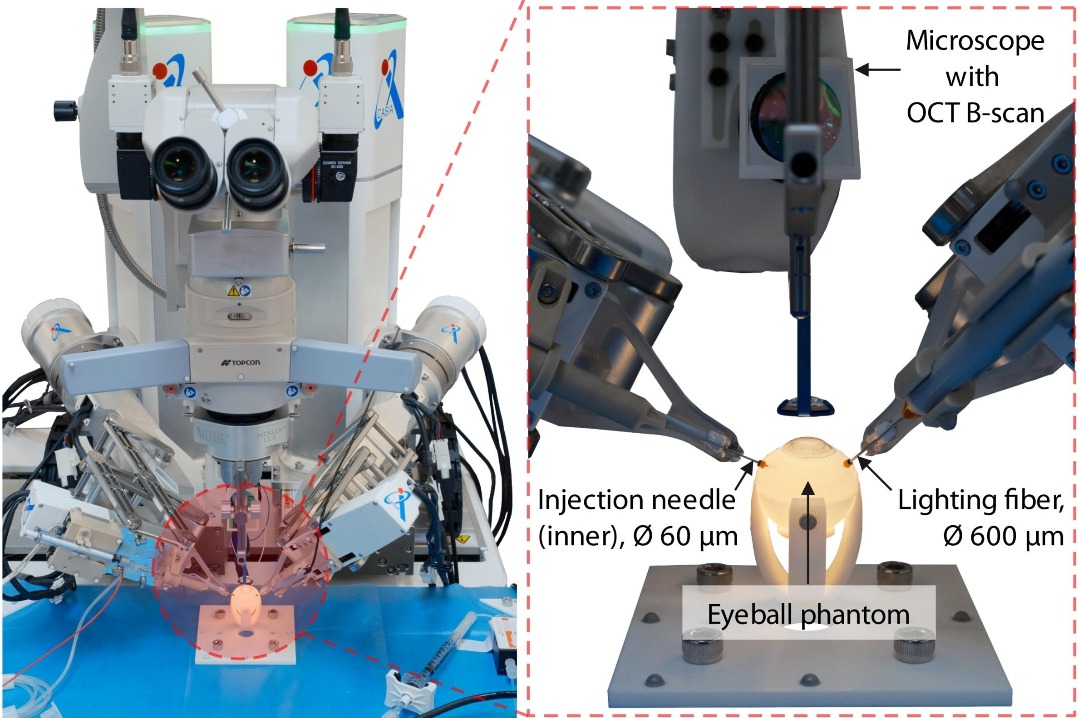
    Chinese researchers have achieved a groundbreaking advancement in medical robotics with the development of an autonomous system capable of performing delicate ocular injections. The robotic platform, created by scientists at the Institute of Automation under the Chinese Academy of Sciences, represents a significant leap forward in ophthalmic microsurgery technology.

    The innovative system employs sophisticated algorithms for three-dimensional spatial perception, cross-scale precise positioning, and trajectory control to navigate the challenging environment of the human eye. Retinal surgery has traditionally been among the most demanding medical procedures due to the eye’s minute and delicate structures, requiring exceptional surgical precision.

    Experimental results published in Science Robotics demonstrate remarkable performance metrics. During animal testing, the autonomous robot achieved a 100 percent success rate in both subretinal and intravascular injections. Comparative analysis revealed the system reduced average positioning errors by approximately 80 percent compared to manual procedures and by 55 percent relative to surgeon-controlled robotic operations.

    The technology’s potential extends beyond precision enhancement. Researchers indicate the autonomous system could standardize surgical outcomes, reduce the extensive training period required for ophthalmic surgeons, and potentially enable complex eye operations in remote locations or extreme environments where specialist surgeons are unavailable. This development may significantly improve accessibility to advanced eye care in underserved regions.

    The successful implementation in animal models using eyeball phantoms, ex vivo porcine, and in vivo animal eyeballs confirms the clinical feasibility of autonomous intraocular microsurgical robots. The research team’s work establishes a new benchmark for robotic-assisted medical procedures in ophthalmology and demonstrates China’s growing capabilities in advanced medical technology innovation.

  • High-speed train staff members in Beijing busy preparing for Spring Festival travel rush

    High-speed train staff members in Beijing busy preparing for Spring Festival travel rush

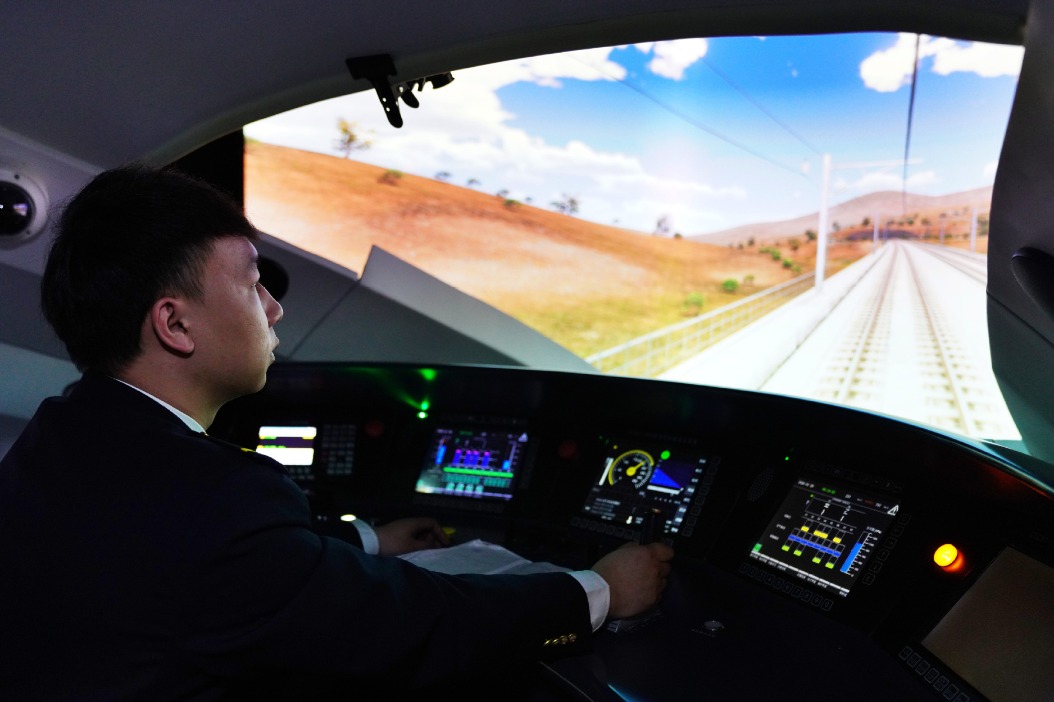
    As the 2026 Spring Festival approaches, Beijing’s high-speed railway workforce has entered a phase of intensive preparation to accommodate the monumental travel demand characteristic of China’s annual migration period. At specialized training facilities throughout the capital, personnel ranging from train operators to service staff are undergoing rigorous simulation exercises to ensure operational excellence during the challenging travel season.

    Simulation training bases across Beijing have become hubs of activity where drivers meticulously practice handling various scenarios on advanced simulator equipment. These exercises replicate diverse weather conditions, technical challenges, and passenger management situations that might occur during actual operations. The comprehensive training regimen focuses on both technical proficiency and emergency response capabilities, emphasizing passenger safety and service quality.

    The preparation extends beyond driving simulations to include customer service training, maintenance drills, and logistical coordination exercises. Station staff are rehearsing crowd management techniques while technical crews are conducting preventive maintenance checks on rolling stock and infrastructure. This multilayered approach addresses both the visible passenger services and the behind-the-scenes operational requirements necessary for smooth festival travel.

    Authorities have implemented these preparation measures recognizing that the Spring Festival travel rush represents the largest periodic human migration globally, with hundreds of millions expected to travel via high-speed rail. The preparations reflect China’s continuous effort to enhance transportation capacity and service quality during peak travel periods, building upon experiences from previous years while incorporating new technological solutions and operational protocols.