
In the coastal mangroves of Tsokomey, Ghana, Beatrice Nutekpor, a 45-year-old oyster farmer, continues a family tradition that has sustained her community for generations. Despite the challenges posed by climate change and economic instability, Nutekpor and other women in her community are determined to preserve their way of life. Oyster farming, a practice dominated by women, has been a vital source of income for families in this region. However, the depletion of mangroves due to rising sea levels, coastal development, and deforestation has threatened this livelihood. The Development Action Association, a nonprofit organization, once provided training in eco-friendly farming methods, including mangrove preservation and selective harvesting, to mitigate these challenges. However, the organization lost its U.S. funding following cuts to foreign aid, leaving the women to fend for themselves. Despite these setbacks, the women’s efforts to replant mangroves are yielding results, with oysters beginning to attach to the newly planted trees. Yet, the struggle persists. A single basin of oysters sells for approximately $4, barely enough to sustain families. The loss of mangroves forces farmers like Nutekpor to dive deeper into dangerous waters to find oysters, increasing the risk of drowning. The Densu Oyster Pickers Association has implemented strict guidelines to protect the mangroves, including penalties for unauthorized cutting. For Nutekpor, the fight is not just about survival but also about preserving a family legacy. ‘I want to teach my daughter so she can teach her child,’ she says. The battle to save Ghana’s mangroves and oyster farming is a testament to the resilience of these women, who are determined to secure a future for their families and generations to come.
作者: admin
-
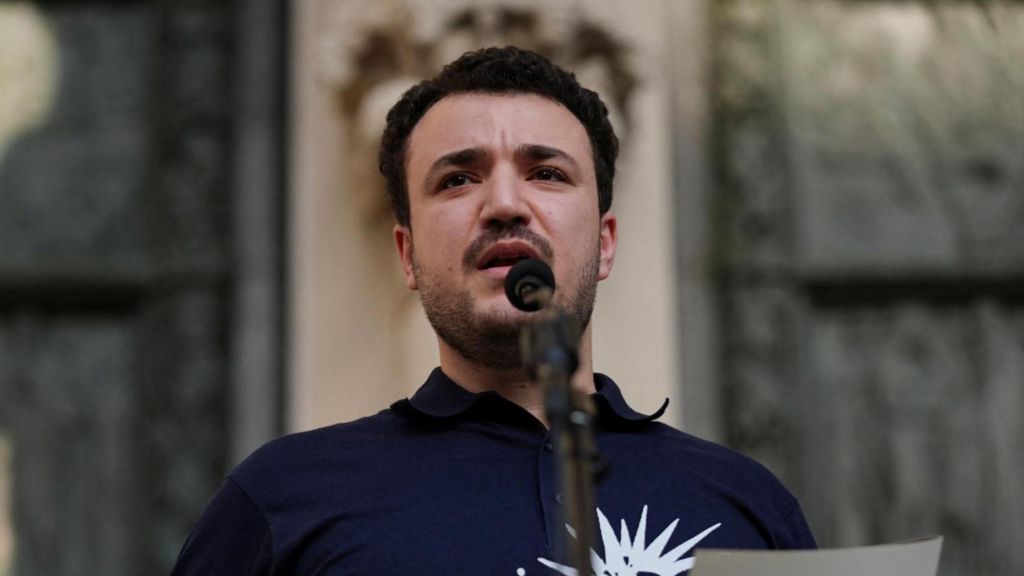
US judge orders deportation of Palestinian activist Mahmoud Khalil
A US immigration judge has mandated the deportation of Mahmoud Khalil, a pro-Palestinian activist, to either Algeria or Syria, citing alleged omissions in his green card application. Judge Jamee Comans of Louisiana asserted that Khalil intentionally misrepresented facts to bypass immigration procedures. Khalil, a permanent US resident of Palestinian descent, gained prominence during the 2024 Gaza war protests at Columbia University, where he was a student. His legal team has announced plans to appeal the decision, emphasizing that existing federal court orders prevent his deportation or detention. Khalil was previously detained by Immigration and Customs Enforcement (ICE) in March as part of the Trump administration’s crackdown on universities accused of failing to address antisemitism. After three months in a Louisiana immigration facility, a federal judge ruled his release, citing no flight risk or community threat. During his detention, Khalil’s wife, a US citizen, gave birth to their son. The US government has also accused Khalil of omitting details about his past affiliations, including his work with UNRWA and the British Embassy in Beirut. Khalil has condemned the deportation order as a retaliatory measure for his activism, stating, ‘They resorted to fabricating baseless allegations to silence me.’ In June, his lawyers filed a $20 million damages claim for false imprisonment and malicious prosecution. Trump has labeled pro-Palestinian activists, including Khalil, as Hamas supporters, advocating for their deportation. Khalil played a significant role in Columbia University’s 2024 protests, mediating between activists and university officials. While accused of leading the Columbia University Apartheid Divest (CUAD) group, Khalil denies the claim, stating he merely served as a spokesperson and mediator.
-
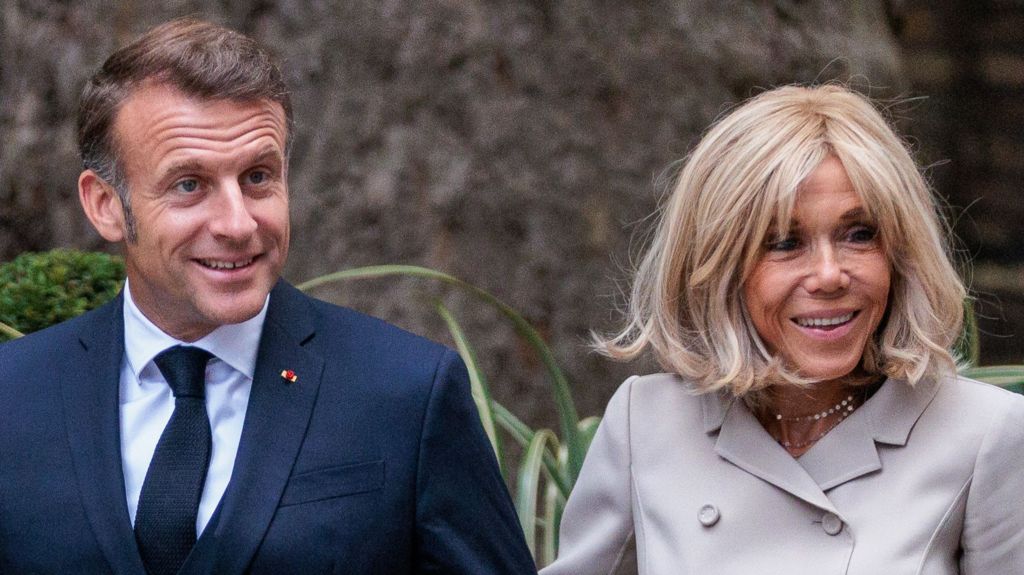
Macrons to offer ‘scientific evidence’ to US court to prove Brigitte is a woman, lawyer says
French President Emmanuel Macron and his wife, Brigitte Macron, are preparing to present photographic and scientific evidence in a US court to refute claims that Brigitte was born male. The couple has filed a defamation lawsuit against right-wing influencer Candace Owens, who has repeatedly asserted this controversial belief. Owens’ legal team has responded with a motion to dismiss the case. The Macrons’ lawyer, Tom Clare, emphasized that the allegations have been deeply distressing for Brigitte and have served as a significant distraction for the president. Clare stated that the couple is determined to disprove the claims through expert testimony and scientific evidence, though the specifics of the evidence remain undisclosed at this stage. Clare also mentioned that the Macrons possess photographs of Brigitte during her pregnancies and raising her children, which will be presented in court. Owens, a former commentator for the conservative outlet Daily Wire, has millions of social media followers and has staked her professional reputation on the allegation. The claim originated in fringe online spaces, notably through a 2021 YouTube video by French bloggers Amandine Roy and Natacha Rey. Although the Macrons initially won a defamation case in France against Roy and Rey in 2024, the ruling was overturned on appeal in 2025 on freedom of expression grounds. The Macrons are appealing this decision. In July 2024, they filed a lawsuit against Owens in the US, accusing her of knowingly spreading false information. Owens’ lawyers argue that the case should not be heard in Delaware, claiming it would cause her significant financial and operational hardship. Emmanuel Macron has defended the legal action, stating it is about defending his honor and countering harmful, ideologically driven misinformation.
-
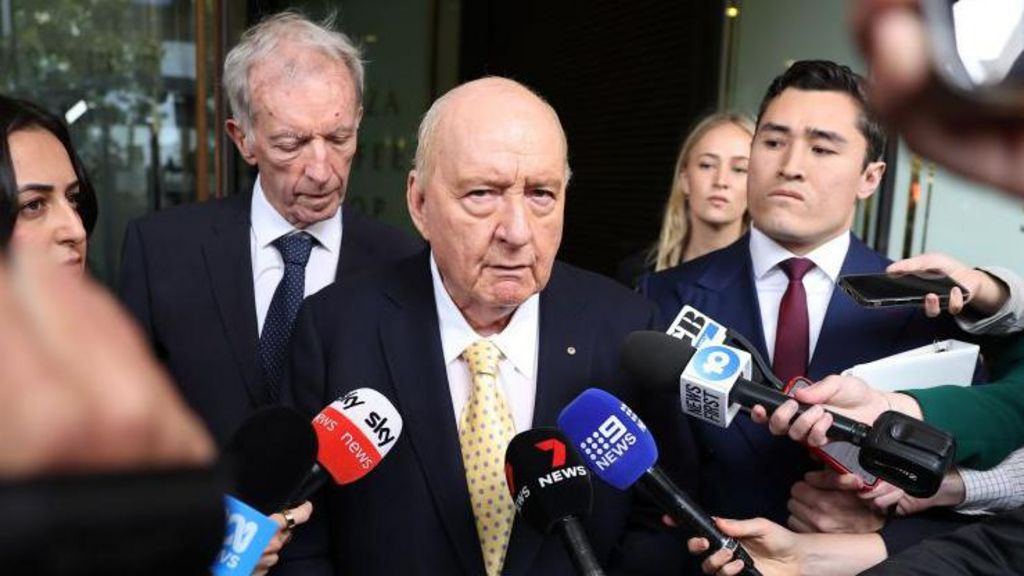
Sex abuse charges against top Australian radio host downgraded
In a significant legal development, veteran broadcaster and former Wallabies coach Alan Jones, 84, has pleaded not guilty to 27 charges of indecent assault and sexual touching. The charges stem from allegations that he assaulted nine men over two decades. During a court hearing on Thursday, prosecutors downgraded 11 of the most serious charges, which were related to alleged assaults on individuals under his authority, and dropped some charges entirely. The case, now set to be heard by a magistrate rather than a jury, will return to court next month. Deputy Chief Magistrate Sharon Freund noted that the case was restructured after two alleged victims withdrew, though no explanation was provided for their departure. Jones’ lawyer, Bryan Wrench, described the dropped charges as a ‘very big development’ and a ‘significant concession,’ emphasizing that there was no evidence of Jones having authority over the complainants. Police have indicated that some of the alleged victims knew Jones personally, with at least one having been employed by him. Others reportedly faced assault during their first encounter with him. Jones, a polarizing figure in Australian media, has consistently denied the allegations, calling them ‘baseless’ or ‘distortions of the truth.’ Known for his controversial remarks, Jones has faced multiple defamation lawsuits and advertiser boycotts throughout his career. The case continues to draw significant public attention as it unfolds.
-

Europe struggles with chronic drug shortages, auditors warn
Europe continues to grapple with the risk of critical medicine shortages, including essential antibiotics and painkillers, according to a recent report by the European Court of Auditors (ECA). The report, released on Wednesday, highlights the fragility of supply chains and the EU’s heavy reliance on manufacturers in Asia as primary causes of the ongoing crisis. The European Commission has identified these vulnerabilities as a significant threat to public health, particularly in the face of future health emergencies. In July, European crisis chief Hadja Lahbib announced plans to stockpile critical medical equipment and vaccines, alongside creating a network to enhance coordination among member states. However, the ECA cautioned that stockpiling in some countries could exacerbate shortages in others. Between January 2022 and October 2024, EU countries faced critical shortages of 136 medicines, with the situation peaking in 2023 and 2024. The ECA described the issue as a ‘chronic headache for the EU,’ emphasizing the lack of a robust system to address severe shortages. Auditors noted that the current framework to prevent drug shortages lacks a solid legal foundation and timely information sharing. The European Medicines Agency (EMA), the region’s drug regulator, has limited powers outside of health crises, further complicating the situation. Klaus Heiner Lehne, the ECA member leading the audit, warned that medicine shortages can have severe consequences for patients, compromise public health, and impose high costs on healthcare providers and countries. Regulatory barriers within the EU’s medicine market also hinder cross-border redistribution, exacerbating shortages and unequal access. The European Commission has proposed legal changes aimed at reducing reliance on countries like China and India, which, if implemented, could significantly improve the system.
-

Katty Kay: Why America is at a dangerous crossroads following the Charlie Kirk shooting
The United States finds itself in a tumultuous period, grappling with a surge in political violence and deepening societal divisions. The recent assassination of Charlie Kirk, a prominent conservative figure, has only exacerbated the nation’s fractured state. Utah Governor Spencer Cox has called for calm, urging Americans to ‘log off, turn off, touch grass, hug a family member, go out and do good in the community.’ However, his plea for unity seems unlikely to be heeded, as the country’s political camps have already retreated to opposing narratives. The incentives driving American political life reward those who escalate tensions rather than those who seek to bridge divides. This dynamic is further fueled by social media, which amplifies extreme voices and stokes outrage. Governor Cox has pointedly criticized social media platforms, attributing them to the rise in political violence. ‘I believe that social media has played a direct role in every single assassination and assassination attempt that we have seen over the last five, six years,’ he stated. The situation is reminiscent of past eras of political violence, such as the 1960s and 1970s, but the current climate is uniquely shaped by the pervasive influence of digital platforms. Despite the grim outlook, some remain hopeful. Democratic Senator Raphael Warnock of Georgia, one of the country’s most senior black officials, condemned political violence but also highlighted the progress America has made on issues like race. ‘The story of any family is always more complicated than the stories we tell ourselves at the family reunion,’ he remarked. Yet, the path to reconciliation remains unclear. As historian Ken Burns noted, ‘History doesn’t repeat itself, but it often rhymes.’ This moment of tension feels like it rhymes with so many other periods of discord in American history, but it isn’t quite repeating them. The United States’ internal divisions are not just a domestic issue; they are a national security concern. Former Defence Secretary Bob Gates once identified the three greatest threats to America’s national security as a rising China, a declining Russia, and the country’s own internal divisions. As America’s adversaries exploit these divisions online, the nation’s ability to heal and unite remains in question.
-

Italy enacts AI law covering privacy, oversight and child access
Italy has become the first European Union nation to enact a comprehensive artificial intelligence (AI) law, aligning with the EU’s landmark AI Act. Approved by the Italian parliament on Wednesday, the legislation, championed by Prime Minister Giorgia Meloni’s government, establishes human-centric, transparent, and safe AI use as its guiding principles. The law emphasizes innovation, cybersecurity, and privacy protections, setting a precedent for AI governance across the bloc.
-
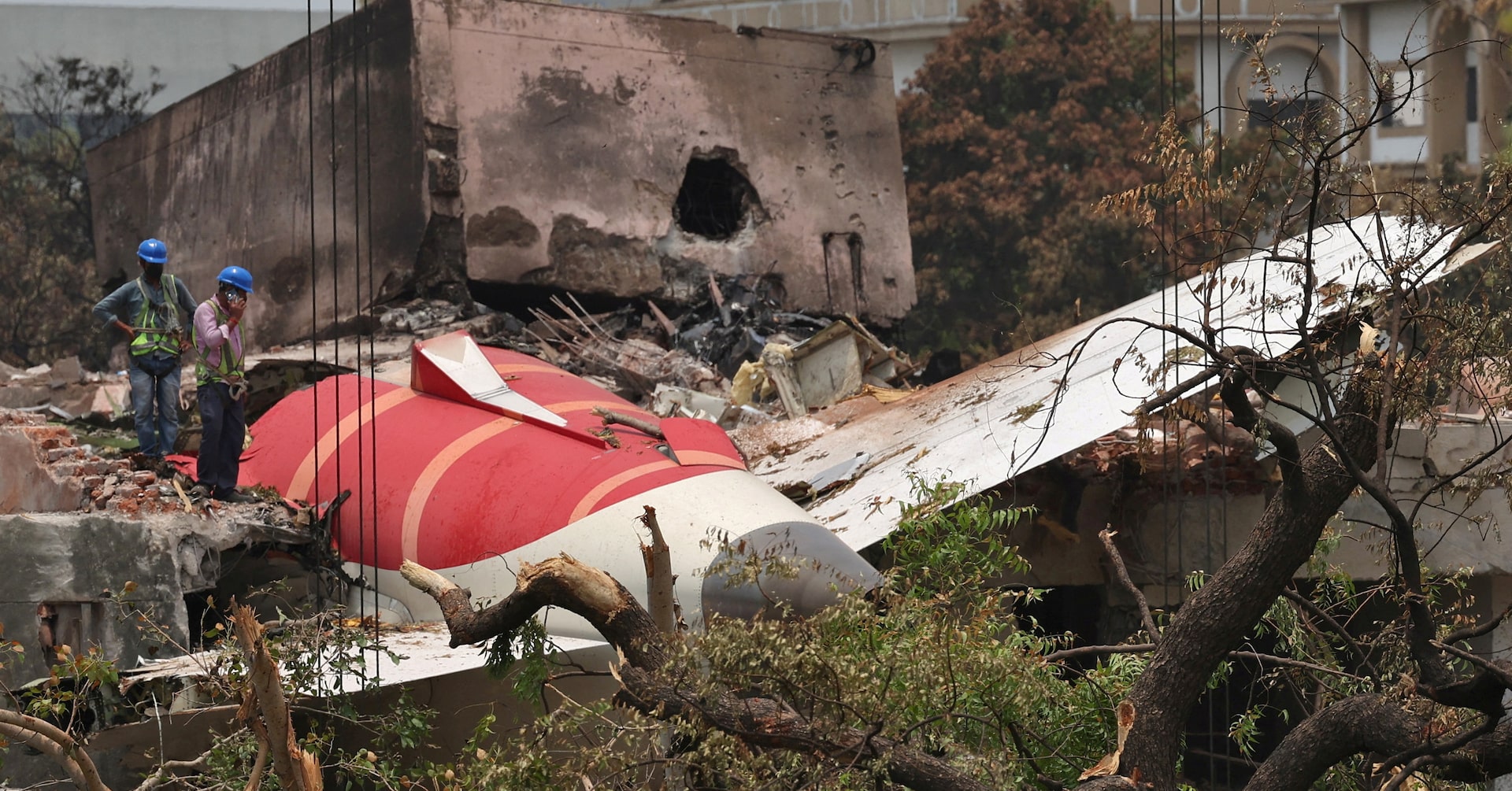
Boeing, Honeywell sued by Air India crash victim families
In a tragic incident that shook the aviation world, Air India Flight 171, bound for London’s Gatwick Airport, crashed shortly after takeoff from Ahmedabad, India, on June 12, 2025. The disaster claimed the lives of 260 people, including 229 passengers, 12 crew members, and 19 individuals on the ground. Only one passenger survived. The families of four victims have now filed a lawsuit against Boeing and Honeywell, alleging that faulty fuel cutoff switches were responsible for the crash. The lawsuit, filed in Delaware Superior Court, claims that the switches, manufactured by Honeywell, were defectively designed and positioned in a manner that made them susceptible to accidental activation during normal cockpit operations. The plaintiffs cite a 2018 Federal Aviation Administration (FAA) advisory that recommended inspections of the switches’ locking mechanisms to prevent inadvertent movement. However, Air India reportedly did not conduct these inspections. The preliminary investigation by India’s Aircraft Accident Investigation Bureau (AAIB) found that the throttle control module, which includes the fuel switches, had been replaced in 2019 and 2023 on the ill-fated aircraft. The report also noted that all applicable airworthiness directives and alert service bulletins had been complied with. Despite this, the lawsuit argues that the switches’ design and placement ‘effectively guaranteed that normal cockpit activity could result in inadvertent fuel cutoff.’ Aviation safety experts, however, have expressed skepticism, stating that the switches’ location and design make accidental activation unlikely. Boeing has declined to comment, and Honeywell has not yet responded to requests for comment. The lawsuit seeks unspecified damages for the deaths of Kantaben Dhirubhai Paghadal, Naavya Chirag Paghadal, Kuberbhai Patel, and Babiben Patel. Legal experts suggest that targeting manufacturers like Boeing and Honeywell is a strategic move, as they do not enjoy the same liability limits as airlines. Additionally, U.S. courts are perceived as more favorable to plaintiffs compared to many foreign jurisdictions. This case marks the first lawsuit in the United States related to the Air India Flight 171 crash.
-

Polish missile likely hit house during Russian drone incursion, says minister
In a recent development that underscores the escalating tensions in Eastern Europe, a house in the village of Wyryki-Wola, Lublin Voivodeship, Poland, was damaged by a missile likely fired by a Polish F-16 fighter jet. The incident occurred on September 10, 2025, during a night when 21 Russian drones violated Polish airspace. Initially, Polish authorities believed the damage was caused by one of these drones, but subsequent reports suggest that the missile was fired by a Polish aircraft with a malfunctioning guidance system. Minister Tomasz Siemoniak, responsible for Poland’s Special Services, confirmed this likelihood, stating that the missile was part of Poland’s defense efforts. Polish President Karol Nawrocki has called for a thorough investigation into the incident, while Prime Minister Donald Tusk has placed the blame squarely on Russia, accusing it of orchestrating a provocation. Russia, however, denies any intention to target Polish territory, with its U.N. Ambassador Vassily Nebenzia arguing that the drones used could not physically reach Poland. Poland has dismissed these claims, asserting that the drone incursions were a deliberate test of NATO’s response capabilities.
-

Body found in car registered to D4vd identified as missing teen
A decomposing body discovered in a Tesla registered to singer D4vd has been identified as Celeste Rivas, a 15-year-old girl who had been missing since April 2024, according to US authorities. The remains were found in the trunk of the impounded vehicle on September 8 at a Hollywood tow yard in Los Angeles, following reports of a foul odor. The cause and time of death remain undetermined. Rivas, from Lake Elsinore, California, was last seen on April 5, 2024, when she was 13 years old, as per a missing person flyer cited by CBS. The Tesla, with Texas license plates, had been abandoned in the Hollywood Hills five days prior and was likely at the tow yard for several days before the discovery. The car is registered to David Anthony Burke, the legal name of singer D4vd. The Los Angeles County Medical Examiner described the remains as belonging to a 5ft 2in (157cm) individual with wavy black hair, wearing a tube top and black leggings, and bearing a tattoo on the right index finger that reads ‘Shhh.’ Law enforcement sources cited by NBC News indicated the remains were not intact, suggesting the girl had been deceased for an extended period. D4vd, known for his viral hits ‘Here With Me’ and ‘Romantic Homicide,’ released his debut album in April and was on tour when the remains were found. His scheduled show in Seattle was subsequently canceled. Police confirmed that D4vd is cooperating with the ongoing investigation.