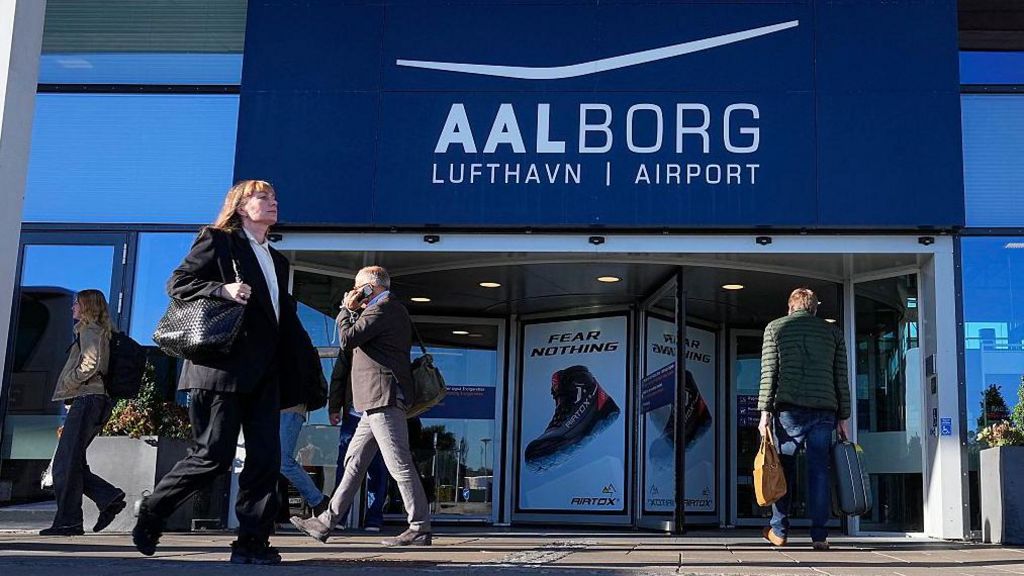
A series of drone incidents across Denmark’s airports and military bases in Jutland has exposed vulnerabilities in the nation’s defense systems, raising concerns about hybrid warfare tactics. Although no harm or damage was reported, the events have highlighted Denmark’s susceptibility to such attacks, prompting urgent discussions on national security measures. Aalborg and Billund airports were forced to close, while drones were also spotted at Esbjerg, Sonderborg, and Skrydstrup, the latter housing the Danish Air Force’s F-35 and F-16 fighter jets. Additionally, drones were observed over the Jutland Dragoon regiment in Holstebro and near Denmark’s North Sea oil and gas platforms. Defense officials opted not to shoot down the drones, citing safety concerns, but acknowledged the need for long-term solutions. Denmark’s Defense Minister Troels Lund Poulsen described the incidents as a “hybrid attack,” though no concrete evidence points to Russia. However, Prime Minister Mette Frederiksen emphasized Russia’s ongoing threat to Europe. The Danish government is now considering invoking NATO’s Article 4 for consultation, as neighboring countries like Poland and Estonia have done following similar incidents. Denmark’s cautious approach contrasts with Poland’s more aggressive stance, where Russian drones were shot down recently. The Danish government has announced plans for an “integrated layered air defense” system and investments in long-range precision weapons. Meanwhile, discussions are underway with NATO allies and Ukraine to establish a “drone wall” along the EU’s eastern borders, focusing on early detection systems. The incidents have served as a stark reminder of Denmark’s need to bolster its defenses in an era of evolving hybrid warfare.
作者: admin
-
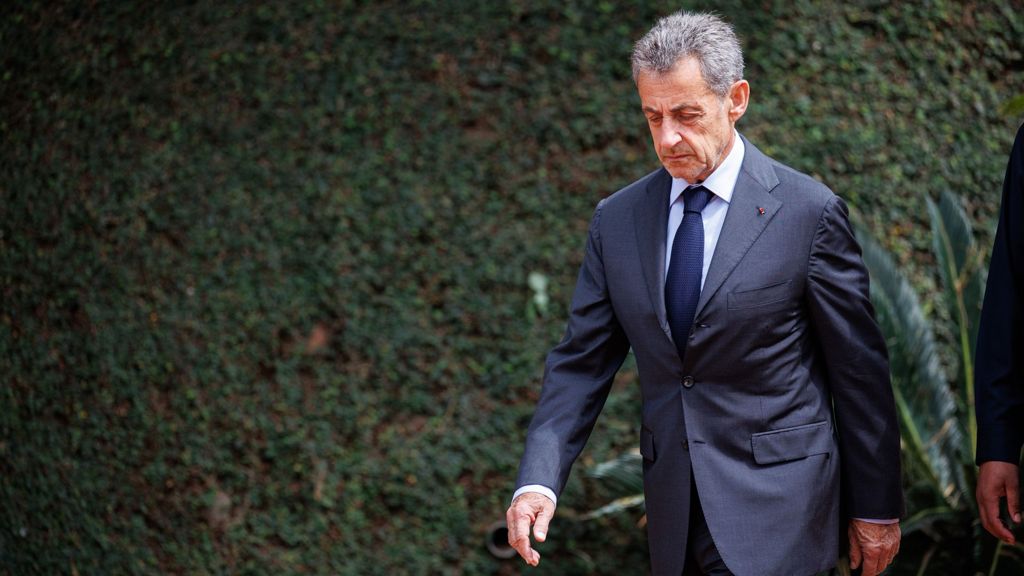
From former president to future prisoner: Sarkozy’s conviction divides France
Former French President Nicolas Sarkozy has been sentenced to five years in prison, marking a historic moment as he becomes the first ex-president of France to face such a fate. The verdict, delivered on Thursday in the high-profile ‘Libyan money’ trial, has reignited the polarizing debates that have long surrounded Sarkozy’s political career. Convicted of criminal conspiracy, Sarkozy expressed vehement outrage, claiming to be a victim of ‘limitless hatred’ from his adversaries. This case has once again highlighted the deep-seated divisions within French society and its political landscape. Sarkozy, who has consistently portrayed himself as a target of a left-wing judicial and media conspiracy, now faces a humiliating punishment that his supporters argue is disproportionate. The court acquitted him of three charges—illegal party funding, embezzlement of Libyan funds, and corruption—but convicted him on the broader charge of ‘criminal association,’ often used in cases involving organized crime. Critics question the severity of the sentence, especially given the 20-year gap since the alleged offense and the non-suspensive nature of the punishment, which means Sarkozy will serve time even if he appeals. The case has drawn sharp reactions from both ends of the political spectrum. Marine Le Pen, leader of the far-right National Rally, condemned the verdict as an example of judicial overreach, while the left views it as evidence of systemic privilege among the powerful. Sarkozy’s legal troubles are not new; he has previously been convicted on charges of corruption and illegal campaign financing. This latest chapter underscores the enduring influence of his controversial legacy on French politics, even as he remains a figure of the past. The trial has laid bare the fractures in a nation already deeply divided, with Sarkozy’s supporters and detractors clashing over the implications of his sentencing.
-

Amazon agrees to pay $2.5bn over claims it tricked Prime customers
Amazon has reached a landmark $2.5 billion settlement with the U.S. government to resolve allegations of deceptive practices related to its Prime membership program. The Federal Trade Commission (FTC) accused the tech giant of misleading millions of consumers into signing up for Prime and making it excessively difficult to cancel subscriptions. Under the proposed settlement, $1.5 billion will be allocated to refund affected customers, marking the largest civil penalty ever secured by the FTC. The agreement was finalized just days after the trial commenced in Seattle. Amazon neither admitted nor denied the allegations and has not publicly commented on the matter. Prime, which offers benefits like free shipping and streaming services, boasts hundreds of millions of global subscribers, with annual fees of $139 in the U.S. and £95 in the UK. The FTC highlighted Amazon’s use of manipulative tactics, such as pop-ups during checkout that encouraged Prime sign-ups without clear disclosure of terms or cancellation procedures. Additionally, the agency criticized the company’s one-month free trials, which automatically enrolled users into paid subscriptions without explicit consent. FTC Chairman Andrew Ferguson emphasized that Amazon’s practices violated consumer protection laws, stating, ‘We are putting billions of dollars back into Americans’ pockets and ensuring Amazon never repeats these actions.’ An estimated 35 million U.S. customers affected between June 2019 and June 2025 could receive refunds of up to $51. Amazon has agreed to automatically refund users who utilized Prime benefits fewer than three times annually, while those who used it fewer than 10 times must file a claim. As part of the settlement, Amazon is prohibited from using misleading buttons like ‘No, I don’t want free shipping’ and must simplify the cancellation process for Prime memberships.
-

US economic growth revised up on strong consumer spending
The US economy demonstrated remarkable resilience in the second quarter of 2025, with revised government data revealing a stronger-than-expected growth rate. Gross Domestic Product (GDP) expanded at an annualized rate of 3.8% from April through June, surpassing the earlier estimate of 3.3%. This marked the fastest pace of growth in nearly two years, a significant rebound from the 0.6% contraction experienced in the first quarter. The surge was primarily driven by robust consumer spending, which increased by 2.5% year-on-year, up from a prior estimate of 1.6%, and a decline in imports. Despite the positive momentum, economists highlighted lingering uncertainties, particularly concerning the impact of former President Donald Trump’s tariffs and broader policy challenges. Retail sales also outperformed expectations, rising 0.6% in August, underscoring the resilience of American consumers. However, the labor market showed signs of strain, with only 22,000 jobs added in August and the unemployment rate edging up to 4.3%. On a brighter note, initial unemployment claims dropped to their lowest level since July, suggesting potential stabilization in the job market. Analysts remain cautiously optimistic, noting that while economic momentum has held steady, the long-term effects of tariffs and policy uncertainty could lead to slower growth and higher inflation.
-

Stockholm marathon winner Alene dies aged 30
The world of athletics is mourning the untimely death of Ethiopian marathon star Shewarge Alene, who passed away at the age of 30. The tragic news was confirmed by the organizers of the Stockholm Marathon, where Alene had claimed victory in May 2025, marking her most recent competitive triumph. Alene, who had been a professional marathon runner since 2011, participated in 27 marathons over her illustrious career, securing an impressive 12 wins. Her personal best time of 2:27:26 was achieved in Cape Town, South Africa, in 2023. The Stockholm Marathon team expressed their grief on Instagram, stating, ‘It is with deep sorrow that we have received the news of the passing of Shewarge Alene, winner of adidas Stockholm Marathon 2025. Shewarge Alene became unwell during a training session and was taken to hospital, where sadly, her life could not be saved. Our thoughts are with her family and loved ones.’ Alene’s sudden demise has left the global running community in shock, as they remember her remarkable contributions to the sport.
-
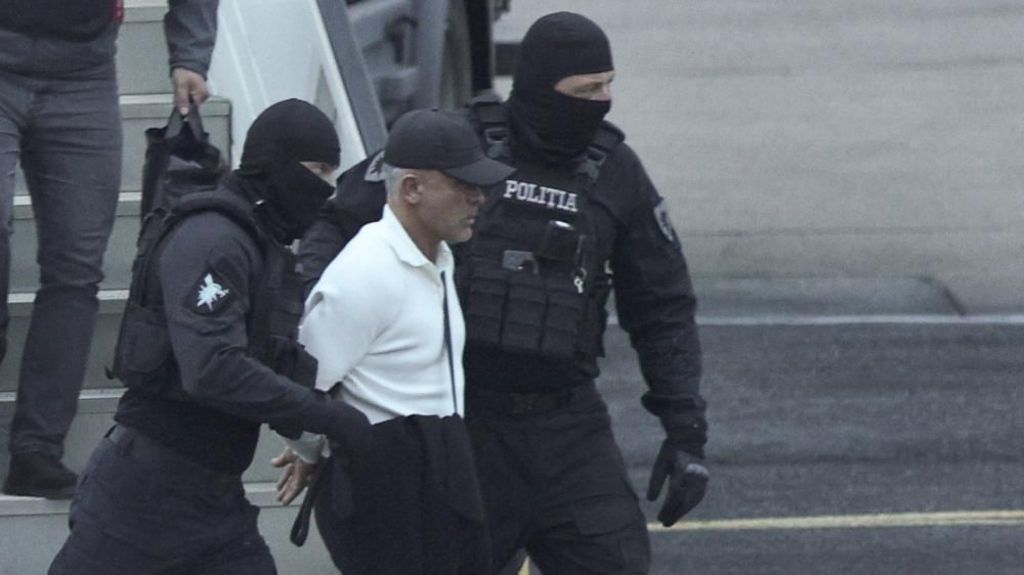
Greece extradites oligarch to Moldova in $1bn fraud case
Vladimir Plahotniuc, a prominent Moldovan oligarch and former political figure, has been extradited from Greece to Moldova, facing allegations of involvement in a $1 billion bank fraud case. The 59-year-old tycoon, who fled Moldova in 2019 after his Democratic Party lost power, was escorted by masked Moldovan police and Interpol officials upon his arrival at Chisinau airport on Thursday morning. Plahotniuc, who has repeatedly denied any wrongdoing, was swiftly transported to a detention center in the capital. His extradition occurs just days before Moldova’s pivotal parliamentary elections on September 28, which will determine the country’s future alignment—either toward European integration or a return to Russian influence. Moldovan President Maia Sandu, a staunch pro-European leader, has warned of Russia’s attempts to destabilize the nation through violence and disinformation. In a social media post, Sandu emphasized the importance of perseverance in the fight for justice, stating that even seemingly invincible criminals can be held accountable. Plahotniuc’s lawyer, Lucian Rogac, criticized the extradition as a politically motivated spectacle orchestrated by Sandu’s government. The oligarch is a key suspect in the 2014 “theft of the century,” where $1 billion—equivalent to over 10% of Moldova’s GDP—was siphoned from three banks. The case has long symbolized the country’s struggle with corruption and oligarchic influence. Meanwhile, Sandu has accused Russia of pouring significant resources into Moldova to undermine its democratic processes. Recent investigations by the BBC have exposed a disinformation network linked to Moscow and fugitive Moldovan businessman Ilan Shor, aimed at destabilizing the government ahead of the elections. Ukrainian President Volodymyr Zelensky, speaking at the UN General Assembly, highlighted the broader geopolitical stakes, warning that Europe cannot afford to lose Moldova to Russian influence. Pro-Russian parties in Moldova have accused Sandu’s government of intimidation and insufficient anti-corruption efforts, while Russia’s SVR intelligence service has baselessly claimed that the EU plans to falsify election results and deploy troops. Moldova, which declared independence in 1991, remains a battleground for geopolitical influence, with its Russian-speaking population and the Moscow-backed breakaway region of Transnistria adding to the complexity.
-
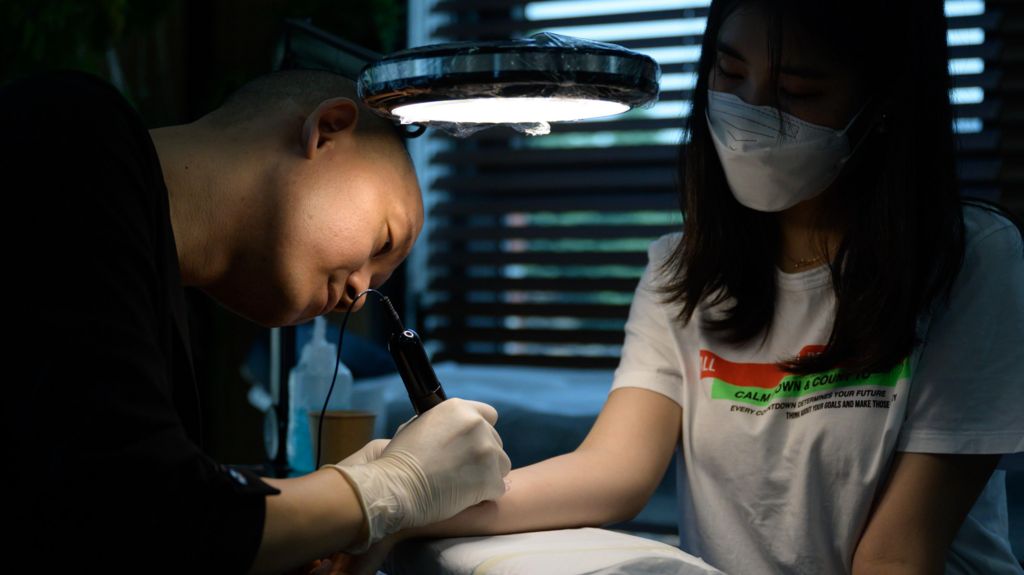
South Korea legalises tattooing by non-medical professionals
In a landmark decision, South Korea has officially legalized tattoo artistry by non-medical professionals, marking the end of a three-decade-long prohibition. The Tattooist Act, passed by the General Assembly on Thursday, grants licenses to non-medical practitioners, who constitute the majority of the industry. This historic move follows years of advocacy by tattoo artists seeking to practice their craft without fear of prosecution or harassment. Since 1992, offering tattoos had been restricted to medical professionals under a Supreme Court ruling, with violators facing up to five years in prison or hefty fines. Lim Bo-ran, president of the Korea Tattoo Federation, expressed overwhelming gratitude, describing the law’s passage as ‘a dream come true.’ Despite the widespread popularity of tattoos in South Korea, the industry has operated in a legal gray area, with artists often subjected to threats or legal action from disgruntled clients. Recent court acquittals of tattoo artists signaled a shift in societal attitudes, paving the way for this legislative change. However, the new law has faced opposition from the medical community, which argues that tattooing poses health risks and should remain a medical procedure. The law will take effect in two years, requiring artists to pass a national exam, complete safety training, and maintain detailed records. While the change is celebrated by many, it may not immediately erase the stigma surrounding tattoos, as recent polls indicate that a majority of South Koreans still view them negatively. The journey toward full societal acceptance of tattoos in South Korea is likely to be gradual and complex.
-
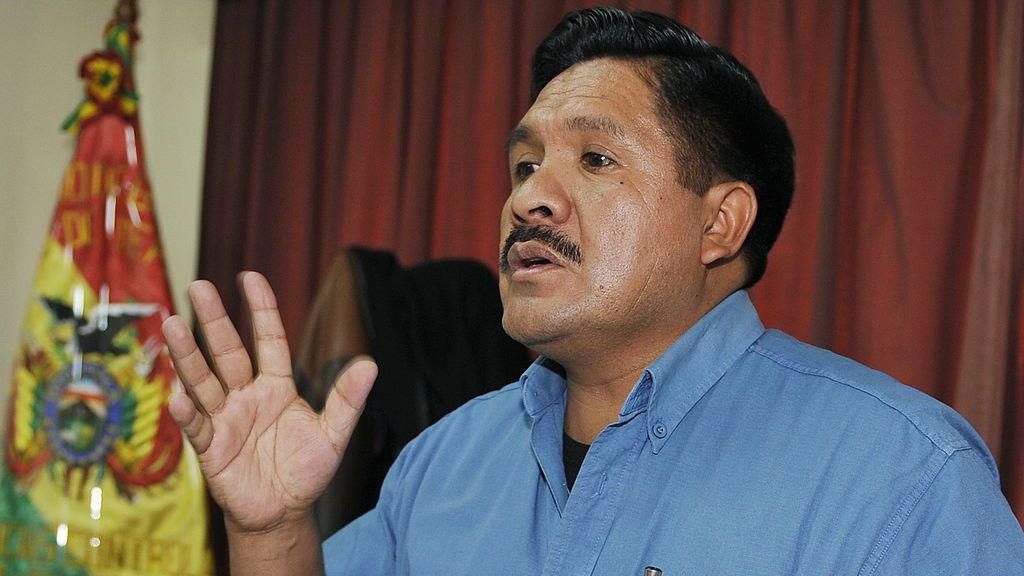
Cocaine lab found on property of Bolivia’s former anti-drug czar
In a startling development, Bolivia’s former counternarcotics czar, Felipe Cáceres, has been arrested following the discovery of a cocaine laboratory on one of his properties. Cáceres, who led the government department for controlled substances from 2006 to 2019, was a key figure in Bolivia’s fight against illegal drugs. The arrest took place in Puerto Villarroel, Cochabamba, a region known for its coca cultivation. While it remains unclear whether Cáceres was aware of the lab’s existence, the discovery has cast a shadow over Bolivia’s anti-drug efforts. The lab, capable of employing 10 people, was found on land owned by Cáceres, though investigations are ongoing to determine his direct involvement. Bolivia’s Interior Minister, Roberto Ríos, stated that Cáceres was detained near a sand and gravel plant he owns, located 500 meters from the lab. This incident adds to a series of scandals involving Bolivian anti-drug officials. Maximiliano Dávila, a former head of the counternarcotics police, is currently awaiting trial in the US on drug smuggling charges, while another former chief, René Sanabria, served a 14-year sentence in the US for drug trafficking. Bolivia, the world’s third-largest cocaine producer after Colombia and Peru, allows the legal cultivation of coca leaves for medicinal and traditional purposes. However, any production beyond the legally permitted 22,000 hectares is subject to destruction. Cáceres, a former leader in a coca-growers’ union, had close ties to former President Evo Morales, who has dismissed the arrest as a ‘set-up’ and accused the government of using it to divert attention from its own scandals. A lawyer for Morales’s party emphasized that investigators must prove a direct link between Cáceres and the cocaine lab.
-
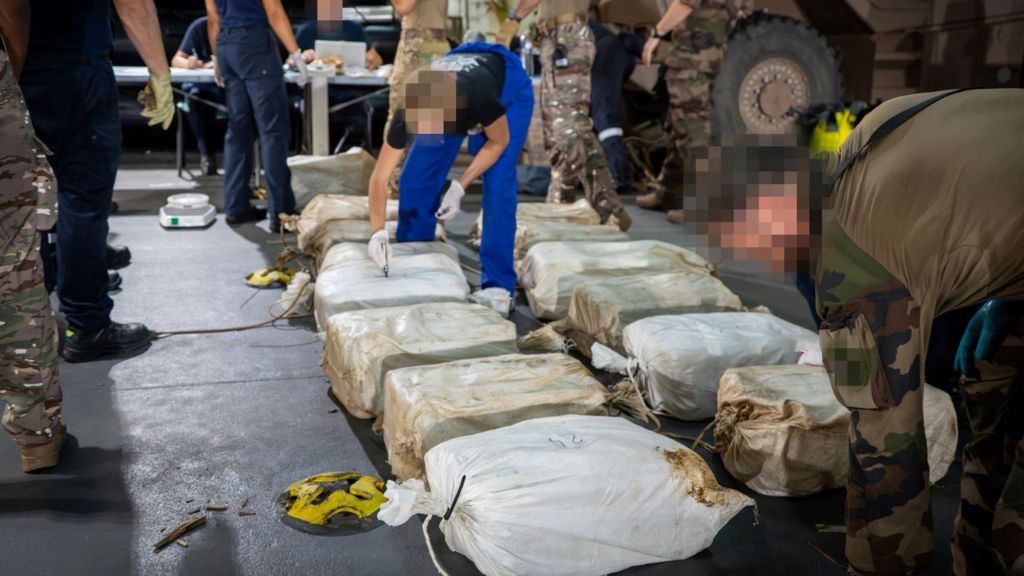
French navy seizes nearly 10 tonnes of cocaine off West African coast
In a significant blow to international drug trafficking, the French navy has seized nearly 10 tonnes of cocaine, valued at $610 million, from an unflagged fishing vessel off the Gulf of Guinea. The operation, conducted on Monday, was part of France’s long-standing Corymbe naval mission, which has been active in the region since 1990 to combat piracy and ensure maritime security. The interception was made possible through coordinated efforts involving maritime intelligence, anti-drug authorities, and the British National Crime Agency. This latest seizure adds to the 54 tonnes of drugs intercepted by the French navy in the area since the beginning of the year. The Gulf of Guinea, a notorious hotspot for piracy and drug trafficking, has seen multiple significant drug busts in recent months. The region serves as a critical transit point for cocaine shipments from South America to Europe. France’s Atlantic Maritime Prefecture highlighted the ‘seamless cooperation by national and international actors’ that led to this ‘remarkable seizure.’ This operation underscores the ongoing challenges and successes in combating drug trafficking in one of the world’s most dangerous maritime regions.
-

Over 1,000 children fall ill from free school lunches in Indonesia
Indonesia’s ambitious free school lunch program, a flagship initiative of President Prabowo Subianto, has come under intense scrutiny following a series of mass food poisoning incidents affecting thousands of children. Since its launch in January, the program, which aims to provide nutritious meals to 80 million students, has been marred by health and safety concerns, sparking calls for its suspension. Authorities reported over 1,000 cases of food poisoning this week alone, adding to a growing tally that has seen more than 6,400 children fall ill since the program’s inception. Symptoms among victims include stomach aches, dizziness, nausea, and even shortness of breath, raising alarms about the quality and preparation of the meals. The National Nutrition Agency attributed a recent outbreak in Cipongkor to a technical error by the Nutrition Fulfillment Service Unit, which has since been suspended. Critics, including non-governmental organizations, have urged the government to halt the program temporarily for a thorough evaluation, with some proposing alternative solutions such as direct funding to parents. Despite the backlash, the government has reaffirmed its commitment to the initiative, citing its potential to combat malnutrition and stunting among children. However, experts warn that the program’s massive $28 billion budget could also make it a target for corruption, further complicating its implementation. As Indonesia grapples with these challenges, the future of its free school lunch program remains uncertain.