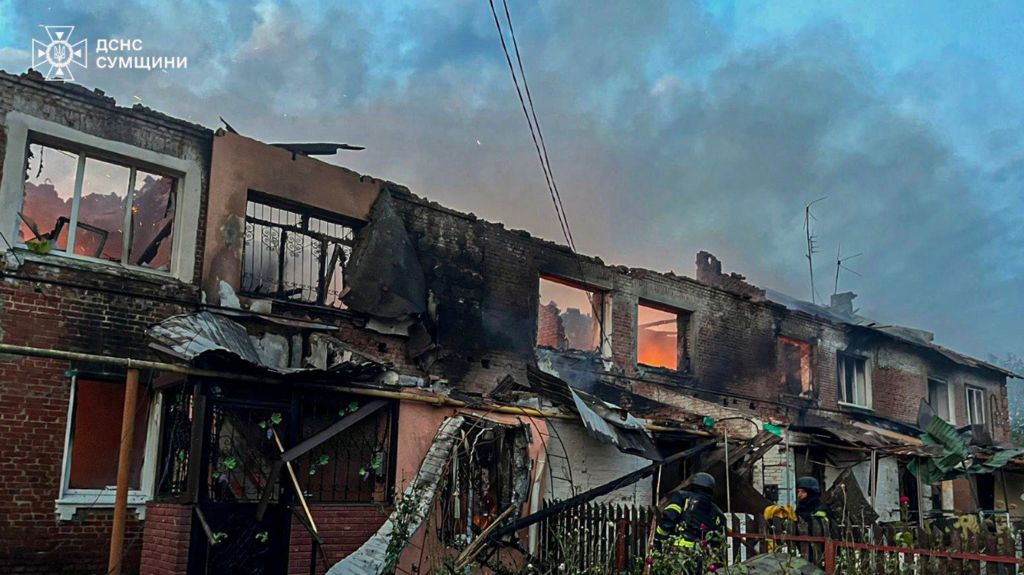
A devastating Russian drone strike in the village of Chernechchyna, located in Ukraine’s north-eastern Sumy region, has claimed the lives of an entire family. The victims included a married couple and their two young sons, aged four and six. Regional head Oleh Hryhorov confirmed that a residential building was directly hit, and the bodies were later recovered from the wreckage. Ukraine’s air force reported that 46 out of 65 Russian drones were intercepted across the country, but 19 managed to hit six different locations. Russia’s military, which has not commented on the specific attack, stated that 81 Ukrainian drones were destroyed overnight in five Russian regions, with no casualties reported. This incident marks another grim chapter in the ongoing conflict that began with Russia’s full-scale invasion of Ukraine in February 2022. Hryhorov accused Russian forces of deliberately targeting civilian infrastructure, describing the loss of the family as ‘a tragedy that we will never forget or forgive.’ Ukraine’s state emergencies service DSNS reported that two residential buildings were partially destroyed, and images shared online showed firefighters battling blazes in the aftermath. In recent weeks, Russia has escalated its aerial assaults, deploying hundreds of drones and missiles. Ukraine continues to appeal to its Western allies for advanced air defense systems and long-range missiles capable of striking major Russian cities, arguing that such capabilities could weaken Russia’s military industry and pressure President Vladimir Putin into negotiations. Last week, US Vice-President JD Vance revealed that Washington is considering Ukraine’s request for long-range Tomahawk missiles. Meanwhile, European Commission President Ursula von der Leyen announced a €2 billion investment in drones for Ukraine, aimed at enhancing its defense capabilities. Despite international efforts to broker peace, Putin has repeatedly rejected ceasefire calls, as the conflict persists with high casualties and slow battlefield progress.
作者: admin
-
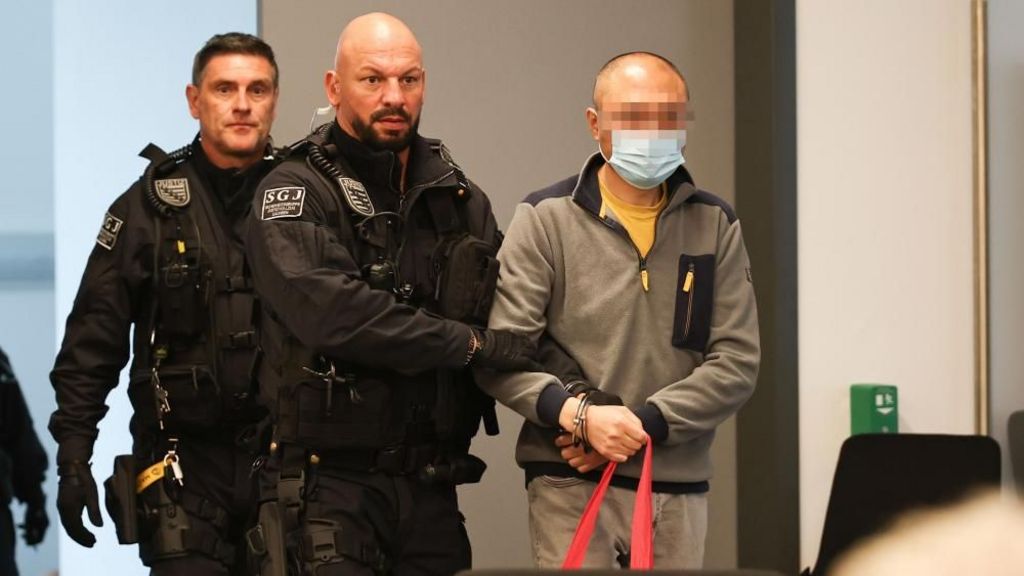
Former aide to far-right German politician jailed for spying for China
A former aide to a prominent member of Germany’s far-right Alternative for Germany (AfD) party has been sentenced to four years and nine months in prison for espionage activities on behalf of China. Jian Guo, who worked in Brussels for Maximilian Krah, a member of the European Parliament, was convicted by a court in Dresden for gathering and transmitting confidential information to Chinese authorities. Krah, now a member of the German parliament, claimed he only became aware of the allegations against Guo through media reports. Prosecutors alleged that Guo had been working for Chinese intelligence since 2002, raising concerns about China’s espionage activities within the European Union. Guo, a German national, was also accused of monitoring Chinese dissidents and opposition figures in Germany. Despite maintaining his innocence throughout the trial, the court deemed the case particularly severe. In a related case, a Chinese national working at Leipzig airport was given a suspended sentence for providing data on cargo, flights, and passengers. Krah stated that he had enhanced security measures in his office following Guo’s arrest.
-

Afghan women lose their ‘last hope’ as Taliban shuts down internet
Fahima Noori, a young Afghan woman, once harbored ambitious dreams. After graduating with a law degree, completing a midwifery program, and working in a mental health clinic, her aspirations were shattered when the Taliban regained power in 2021. The militant group banned girls over 12 from attending school, severely limited women’s employment opportunities, and recently removed books authored by women from university curricula. For Fahima, the internet became her sole connection to the outside world—a lifeline that was abruptly severed on Tuesday when the Taliban imposed a nationwide internet shutdown, set to last indefinitely. ‘Our last hope was online learning. Now that dream has been destroyed,’ she lamented. Her identity, along with others interviewed, has been concealed for safety. Over recent weeks, the Taliban began cutting fiber-optic connections across provinces, citing the prevention of immorality. This move culminated in a ‘total internet blackout,’ according to internet watchdog Netblocks, crippling essential services and disrupting mobile internet, satellite TV, and flights from Kabul airport. The shutdown has devastated countless lives. Shakiba, a resident of Tahkar province, shared her despair: ‘We want to study, be educated, and help people in the future. When I heard the internet was cut, the world felt dark.’ Fahima, now feeling ‘helpless,’ described how she and her sisters relied on the internet to study, stay informed, and acquire new skills. ‘We dreamed of finishing our education and helping our father financially, but now we sit at home doing nothing,’ she said. Since 2021, the Taliban have enforced strict interpretations of Islamic Sharia law, including banning books by women and outlawing the teaching of human rights and sexual harassment. Around 140 books, including ‘Safety in the Chemical Laboratory,’ were deemed ‘anti-Sharia.’ The Taliban claim to respect women’s rights within their cultural and religious framework, but their actions tell a different story. The internet shutdown has also impacted teachers like Zabi, who relied on online English classes to support his students preparing for the IELTS exam. ‘Two days ago, 45 of my students were mid-exam when the internet was cut. It was heartbreaking,’ he said. Zabi, like many others, faces an uncertain future. ‘I’ll need to leave the country if the internet isn’t restored soon,’ he admitted. The shutdown has also disrupted businesses, with Anas, a money changer in Takhar, reporting a 90% drop in operations. ‘My brother couldn’t even send an email to a client,’ he said. Anas’s primary concern, however, is his three daughters, who can no longer access online education. ‘Their last opportunity to study is gone. Seeing them so helpless is the hardest thing,’ he said. The Taliban have yet to provide an official reason for the shutdown, leaving millions in limbo.
-

Tributes to family as mother, father and son die
A tragic incident in rural County Louth has left the community in mourning after the deaths of Mark and Louise O’Connor, along with their adult son Evan, who was autistic. The family, described as passionate advocates for autism support services, were found deceased in their home in Dromgowna on Monday morning. A man in his 30s remains in custody as investigations continue, though authorities have stated there is no ongoing threat to the public.
The O’Connors were instrumental in establishing Drogheda Abacas Special School, where Evan was a former pupil. The school expressed profound sadness, highlighting their tireless efforts to support autistic individuals and their families. ‘Mark and Louise were passionate advocates for their son Evan and for all autistic people,’ the school stated. ‘Their legacy will forever be remembered.’
Post-mortem examinations are underway to determine the cause of death, with the scene cordoned off for forensic analysis. Irish broadcaster RTÉ reported that the bodies were discovered by a staff member who had arrived to take Evan to a daycare center. Gardaí have ruled out the use of a firearm in the incident.
Mark O’Connor was also a board member of Autism Support Louth and Meath and a professional advocate for disability rights. His involvement with North East Runners Dundalk was celebrated, with the club expressing ‘immense sadness and shock’ at the loss. ‘His kindness and spirit enriched our entire community,’ the club stated, planning to organize support for members in the coming days.
An Incident Room has been established at Ardee Garda Station, and a family liaison officer has been appointed to assist relatives. Gardaí have urged anyone with information to come forward as the investigation continues.
-

13-hour flight and future Chelsea wonderkid – Real’s visit to Kairat
Kairat Almaty, the debutants of the UEFA Champions League, are set to host Real Madrid in a historic first home fixture on Tuesday, marking a monumental moment for Kazakh football. Despite facing immense geographical challenges, Kairat’s journey to this stage has been nothing short of extraordinary. The team traveled a staggering 6,900 kilometers across three time zones for their opening match against Sporting Lisbon, where they suffered a 4-1 defeat. Now, they prepare to face the 15-time European champions, Real Madrid, in Almaty, a city closer to Beijing than Madrid. The Spanish giants will endure a 13-hour flight to reach the 24,000-seater Ortalyq Stadion, a logistical hurdle that could level the playing field. Kairat’s defender, Damir Kassabulat, emphasized the home advantage, stating, ‘With our fans, it will be like a fortress.’ Kairat’s qualification for the Champions League is a historic achievement for Kazakhstan, a nation that joined UEFA in 2002. Club president Kairat Boranbayev highlighted the financial and national significance of this milestone, joking, ‘We congratulate Europe for expanding its borders.’ Despite being massive underdogs with a squad valued at just £10.9 million compared to Real Madrid’s £1.2 billion, Kairat’s determination remains unshaken. Manager Rafael Urazbakhtin described the campaign as ‘the toughest exam’ but also ‘a dream come true.’ Kairat’s journey to the Champions League proper was sealed with a dramatic 3-2 penalty shootout victory over Celtic, a moment that saw goalkeeper Temirlan Anarbekov become a national hero. The club’s success is also a testament to their investment in youth development, with 17-year-old striker Dastan Satpaev emerging as a rising star. Satpaev, who is set to join Chelsea next summer, has already made waves in the Champions League qualifying rounds, showcasing his talent and work ethic. As Kairat prepares to face Real Madrid, they carry the hopes of a nation, proving that even the most daunting challenges can be overcome with resilience and determination.
-

Russian mum and children found living in Indian cave return home
Nina Kutina, a 40-year-old Russian woman, and her two young daughters, aged five and six, have returned to Russia after being rescued from a cave in Karnataka, India, in July. The family was discovered during a routine police patrol in the Gokarna forest, near the tourist hub of Goa. The rescue made international headlines due to the unusual circumstances of their living conditions. Kutina, who lacked valid documentation to remain in India, was detained along with her daughters at a foreigners’ detention center. Last week, the Karnataka High Court intervened, directing the federal government to issue travel documents for their repatriation. They departed for Russia on September 28, accompanied by Kutina’s minor son from a previous relationship, who was later found living in Goa. The court’s decision followed a custody petition filed by Dror Shlomo Goldstein, an Israeli businessman based in Goa, who claimed paternity of the two girls. Goldstein argued against their deportation, citing India’s commitments under the United Nations Convention on the Rights of the Child and the Goa Children Act, 2003. However, the court ruled in favor of Kutina, noting her expressed desire to return to Russia. The Russian embassy facilitated their travel, offering an emergency window between September 26 and October 9. Kutina had defended her unconventional lifestyle, stating that she and her children were content living in nature. However, authorities emphasized the dangers of their isolated living conditions, particularly during the monsoon season. The case has sparked debates over child welfare, parental rights, and the complexities of international custody disputes.
-
‘I can kill and not be convicted’: The Ukrainian convicts swapping jail for the battlefield
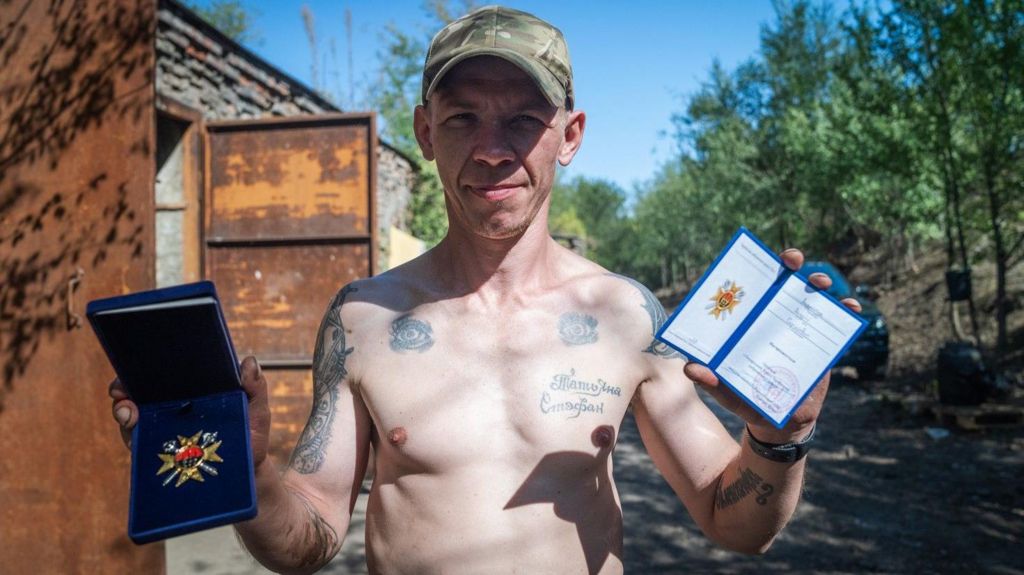
In the shadow of Ukraine’s ongoing conflict with Russia, a unique and controversial initiative is unfolding within the nation’s penal system. At Penal Colony No. 4, a medium-security prison with an imposing atmosphere, inmates like Andrii Askerov and Roman Chech are trading their prison jumpsuits for military fatigues. Under a law enacted last year, over 10,000 prisoners, including drug dealers and even murderers, have volunteered to join the Ukrainian army in exchange for early release. Their mission? To fight on the front lines until the war ends. For many, this is not just a path to freedom but a chance for redemption and revenge. Roman, whose sister was killed by a Russian missile in Kharkiv in 2023, sees this as an opportunity to avenge her death. ‘I would have a lifelong label as a convict, but if I serve, I’d be a serviceman,’ he says. The recruits, many of whom have no prior military experience, undergo a month of training before being deployed to some of the most dangerous sectors of the front line. According to the governor of Penal Colony No. 4, half of the thousand inmates who volunteered have already perished. Despite the high mortality rate, morale among these convict soldiers remains surprisingly high. For them, the battlefield offers a chance to rewrite their legacies. Andrii Andriichuk, a former career burglar turned soldier, proudly displays his ‘Hero of Ukraine’ medal, the nation’s highest honor. ‘I’ve committed many evil deeds for this country,’ he admits. ‘There is a price to pay for everything. I’ll just go back to the job I’m good at: fighting.’ The initiative has drawn comparisons to Russia’s earlier strategy of recruiting prisoners, which was widely criticized. However, Ukraine’s Deputy Justice Minister, Evhen Pikalo, insists there is a fundamental difference. ‘The Russians are paid per hundred meters, and Ukrainians are driven by patriotic feelings,’ he claims. Pikalo views the program as a form of rehabilitation, offering convicts a chance to contribute to their country’s defense. Yet, the moral implications of releasing serious offenders remain contentious. Pikalo emphasizes that these are conditional releases, not pardons, and that the program aims to resocialize rather than exploit. As Ukraine’s war effort continues, the search for motivated soldiers grows increasingly desperate. For these convicts, the battlefield is both a proving ground and a path to redemption, even as the odds of survival remain grim.
-
Thousands of workers in limbo as US-Africa trade deal set to expire
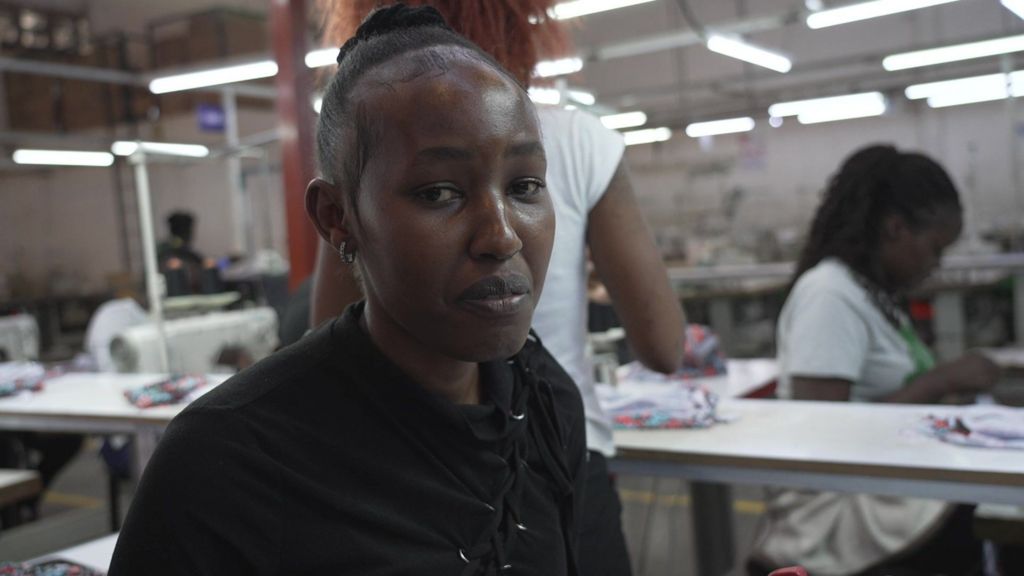
At Shona EPZ, a bustling garment factory in Nairobi, Kenya, the hum of sewing machines and the chatter of workers typically create a reassuring rhythm. However, today’s atmosphere is tinged with anxiety as the factory’s future hangs in the balance due to the impending expiration of the African Growth and Opportunity Act (Agoa). This landmark US trade policy, which has granted duty-free access to the US market for African goods for 25 years, is set to expire on Tuesday, leaving thousands of workers like Joan Wambui uncertain about their livelihoods. Joan, a 29-year-old mother, has been employed at Shona EPZ for six months, sewing sportswear exclusively for the American market. Her salary supports her four-year-old daughter, two college-going sisters, and her mother. Losing her job would not only disrupt her family’s stability but also strip her of the dignity and hope that come with a steady income. Shona EPZ, which employs 700 people, has already seen a significant drop in output due to buyer hesitancy amid the uncertainty. Factory director Isaac Maluki warns that without an Agoa extension, layoffs and even shutdowns may be inevitable. The stakes are high not just for Kenya but for over 30 African countries that rely on Agoa to export over 6,000 products to the US. Kenyan Trade Minister Lee Kinyanjui is pushing for at least a short-term extension to allow for transition mechanisms, while President William Ruto seeks a bilateral trade deal with the US. Meanwhile, trade experts like Teniola Tayo urge African nations to diversify their markets and leverage the African Continental Free Trade Area to reduce overreliance on the US. For workers like Joan, the urgency of feeding their families overshadows the slow pace of diplomatic negotiations. Her plea to governments is simple: provide young people with opportunities to showcase their potential.
-
Trump’s Gaza plan is a significant step – but faces fundamental obstacles
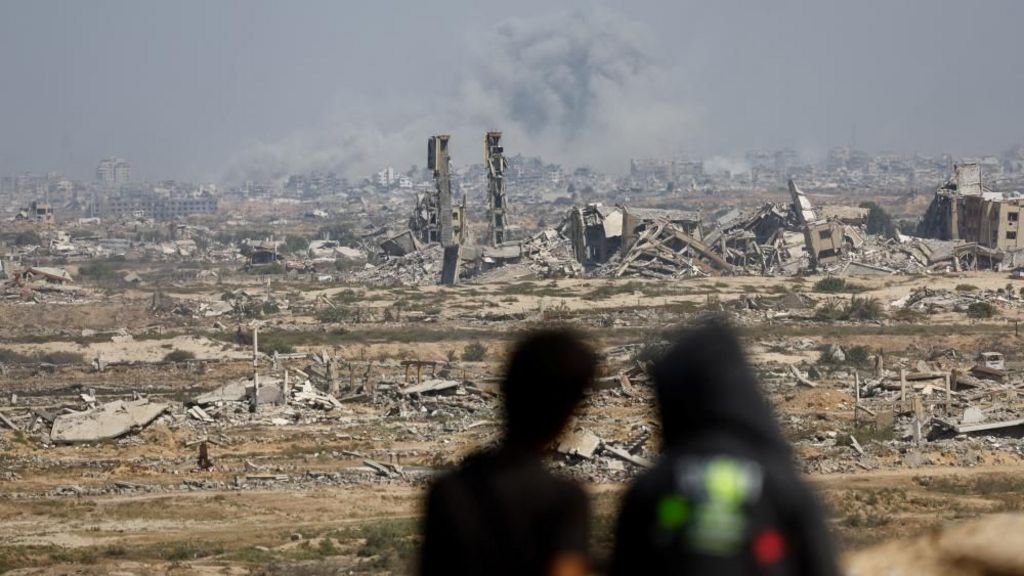
In a high-profile announcement at the White House, U.S. President Donald Trump and Israeli Prime Minister Benjamin Netanyahu unveiled a 20-point peace plan aimed at ending the protracted war in Gaza. Trump hailed the proposal as a historic milestone, potentially ushering in “eternal peace in the Middle East.” However, the plan, while ambitious, remains a framework for further negotiations rather than a detailed roadmap to resolution. The proposal marks a significant shift in the Trump administration’s stance on Gaza’s post-war future and increases pressure on Netanyahu to accept a deal. Key elements include a ceasefire, limited Israeli withdrawal, the release of hostages and Palestinian prisoners, and the establishment of a technocratic administration in Gaza overseen by a U.S.-led “Board of Peace.” The plan also vaguely references Palestinian statehood, contingent on reforms within the Palestinian Authority. While Arab nations view the proposal as a breakthrough, Hamas remains skeptical, with one figure criticizing its failure to safeguard Palestinian interests. Netanyahu’s domestic opponents also question his commitment, citing his history of derailing deals for political gain. The plan’s success hinges on overcoming longstanding obstacles, including Hamas’s demands for Israeli withdrawal and Netanyahu’s coalition’s resistance to concessions. The proposal, crafted by Trump’s envoy Steve Witkoff and Jared Kushner, draws on previous diplomatic efforts, including the Saudi-French plan and Tony Blair’s involvement. Despite its lofty goals, the plan’s ambiguity leaves room for both sides to exploit negotiations, potentially stalling progress. As the world watches, the path to peace remains fraught with challenges, with the response from Hamas and Netanyahu’s government likely to determine the plan’s fate.
-

Chinese woman convicted after ‘world’s biggest’ bitcoin seizure
In a landmark case, Zhimin Qian, also known as Yadi Zhang, has been convicted for her pivotal role in what is now recognized as the largest cryptocurrency seizure globally, valued at over £5.5 billion ($7.4 billion). Qian, a 47-year-old Chinese national, pleaded guilty on Monday at Southwark Crown Court in London to charges of illegally acquiring and possessing cryptocurrency. The Metropolitan Police revealed that between 2014 and 2017, Qian orchestrated a massive scam in China, defrauding more than 128,000 victims and converting the stolen funds into Bitcoin assets. Her arrest followed a seven-year international investigation into a complex money laundering network. Detective Sergeant Isabella Grotto, who led the investigation, noted that Qian had been evading justice for five years before her capture, which required coordinated efforts across multiple jurisdictions. Qian fled China using falsified documents and entered the UK, where she attempted to launder the stolen money through property purchases. She was aided by Jian Wen, another Chinese national, who was sentenced to six years and eight months in prison last year for her involvement. Robin Weyell, deputy chief Crown prosecutor, emphasized the growing use of cryptocurrencies by organized criminals to conceal and transfer illicit assets. The Crown Prosecution Service (CPS) is actively working to prevent the fraudsters from accessing the stolen funds. Many victims have already received partial compensation through a scheme established in China. Qian remains in custody awaiting sentencing, with the date yet to be determined. This case underscores the increasing challenges posed by cybercrime and the critical need for international cooperation in combating such sophisticated financial frauds.