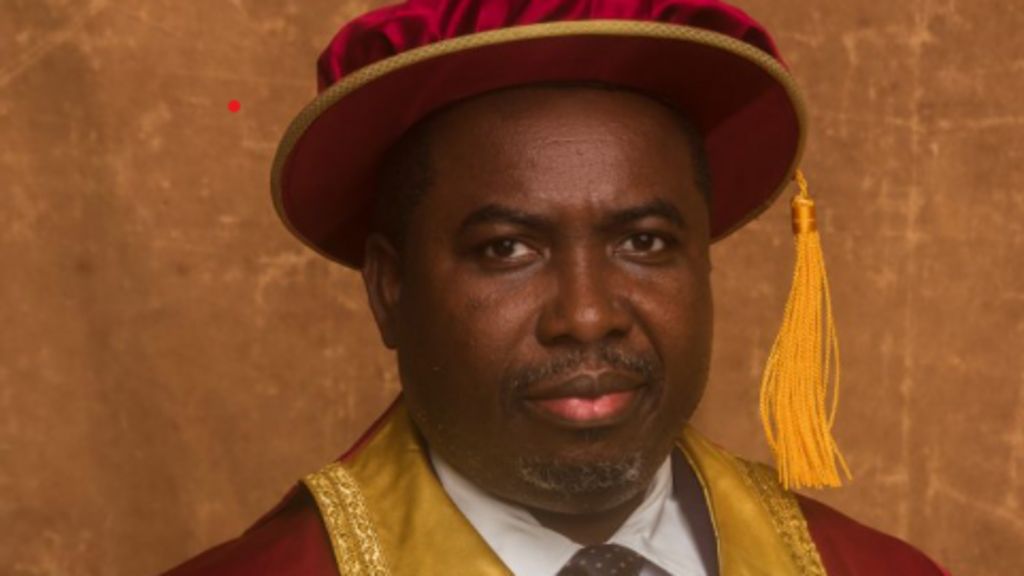
In a significant move to address growing concerns over Nigeria’s electoral system, President Bola Tinubu has nominated Joash Ojo Amupitan, a distinguished law professor, as the country’s new electoral chief. The nomination, announced on Thursday by presidential spokesman Bayo Onanuga, awaits confirmation by the senate. If approved, the 58-year-old scholar from Kogi state would become the first native of the north-central region to lead the Independent National Electoral Commission (INEC). Amupitan, currently serving as the deputy vice-chancellor at the University of Jos, brings over three decades of academic and legal expertise to the role. His nomination follows the departure of Professor Mahmood Yakubu and comes at a critical juncture for INEC, which faces mounting demands for greater transparency, technological advancements, and faster election result announcements. Amupitan, recognized as a Senior Advocate of Nigeria (SAN) in 2014, has focused his academic work on public law, corporate governance, and electoral law reform. His appointment is seen as a potential turning point for Nigeria’s electoral process, with hopes that his expertise will restore voter confidence, strengthen the integrity of the voter register, and ensure technology enhances electoral outcomes. Opposition parties, including the African Democratic Congress (ADC), have urged Amupitan to prioritize public trust over political loyalty, while the ruling All Progressives Congress (APC) has endorsed him as the ‘perfect choice’ for the role. If confirmed, Amupitan’s first major task will be overseeing the Anambra governorship election scheduled for next month.
作者: admin
-
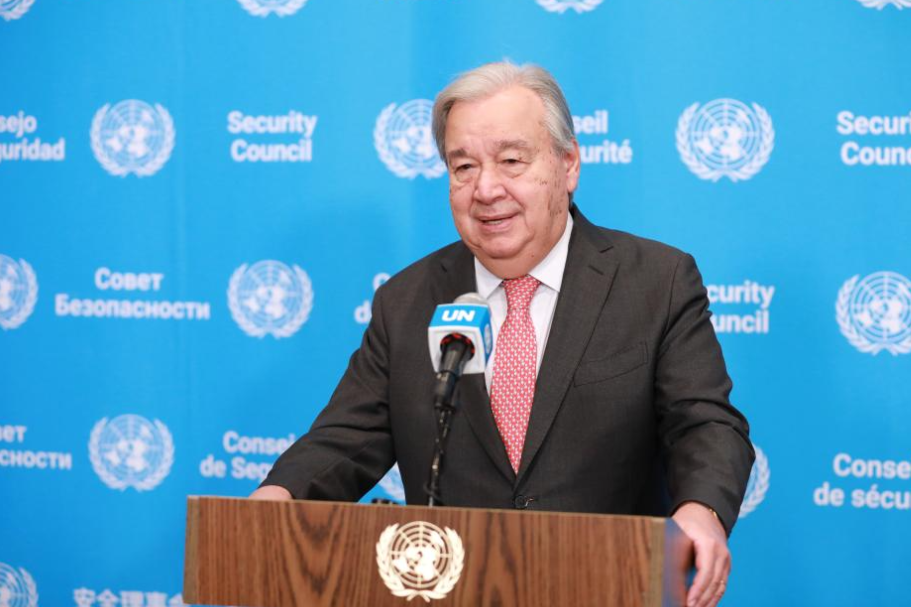
UN ready to scale up humanitarian relief to Gazans following ceasefire deal: Guterres
UN Secretary-General Antonio Guterres announced on Thursday that the United Nations is poised to significantly enhance humanitarian assistance to Gaza in the wake of a newly brokered ceasefire agreement. Speaking to reporters at the UN headquarters in New York, Guterres emphasized the organization’s readiness to mobilize resources immediately. ‘The United Nations will provide its full support. We and our partners are prepared to act now,’ he stated. ‘We have the expertise, distribution networks, and community relationships in place. Supplies are ready, and our teams are on standby. We can scale up food, water, medical, and shelter assistance without delay.’ Guterres underscored that the cessation of hostilities alone is insufficient to ensure lasting progress. ‘We need full, safe, and sustained access for humanitarian workers; the removal of bureaucratic obstacles; and the reconstruction of damaged infrastructure. Additionally, UN Member States must ensure that humanitarian operations are adequately funded to address the immense needs,’ he added. The UN chief highlighted the ceasefire as a pivotal moment for both Israelis and Palestinians, urging all parties to seize this opportunity to forge a credible political path toward peace. ‘This agreement offers a glimmer of relief, which must evolve into the dawn of peace and the beginning of the end of this devastating war,’ Guterres remarked. He called for the recognition of Palestinian self-determination, the end of occupation, and the realization of a two-state solution, emphasizing that such measures are essential for achieving a just and lasting peace in the Middle East. Guterres also praised the diplomatic efforts led by the United States, Qatar, Egypt, and Turkiye in facilitating the ceasefire and hostage release, based on a proposal by former US President Donald Trump. He urged all parties to fully adhere to the agreement’s terms and to embrace the opportunities it presents for lasting stability.
-
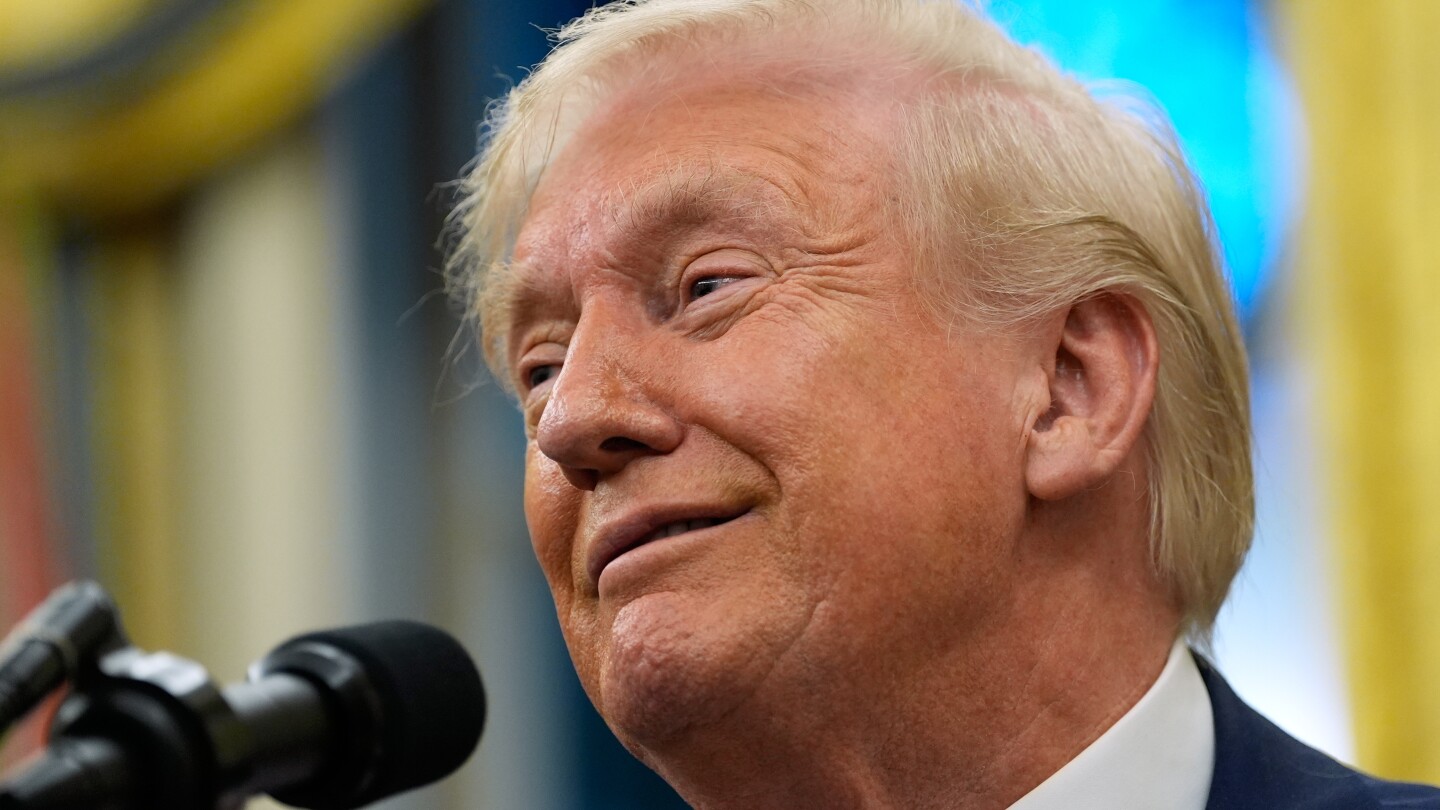
Trump’s quest for the Nobel Peace Prize falls short again despite high-profile nominations
In a turn of events that left President Donald Trump empty-handed, the Nobel Peace Prize for 2024 was awarded to Venezuelan opposition leader María Corina Machado. Despite fervent lobbying from Trump’s Republican allies, world leaders, and even the president himself, the Norwegian Nobel Committee chose to recognize Machado for her relentless efforts to promote democratic rights in Venezuela and her struggle for a peaceful transition from dictatorship to democracy. Machado, in a gracious gesture, dedicated her win to Trump, acknowledging his support for her cause. Her campaign manager confirmed that Trump congratulated her in a phone call shortly after the announcement. At the White House, Trump expressed a mix of disappointment and pride, recounting how Machado had honored him during her acceptance speech. He also suggested that the award might have been intended for 2024 achievements, hinting at his ongoing political ambitions. The White House, however, initially struck a sour note, with Communications Director Steven Cheung accusing the Nobel Committee of prioritizing politics over peace, particularly in light of the recent Gaza ceasefire deal brokered by the Trump administration. Trump’s long-standing desire for the Nobel Peace Prize has been a recurring theme throughout his presidency, with his supporters citing his role in brokering the Abraham Accords and other diplomatic efforts. Yet, the committee’s decision underscores the complex and often contentious nature of global peace initiatives. The Nobel Peace Prize, established in 1901 to honor those who advance fraternity among nations and promote peace, has been awarded to three sitting U.S. presidents in the past. Trump’s detractors argue that his nominations are often politically motivated, aimed at currying favor rather than recognizing genuine contributions to peace. Meanwhile, global reactions to the decision have been mixed, with some leaders, including Israeli Prime Minister Benjamin Netanyahu and Belarusian President Alexander Lukashenko, voicing their support for Trump. Russian President Vladimir Putin, while refraining from direct judgment, praised the Gaza ceasefire deal and criticized past Nobel Committee decisions. As Trump continues to push for peaceful resolutions to conflicts abroad, his domestic policies remain deeply divisive, reflecting the broader political polarization in the United States.
-
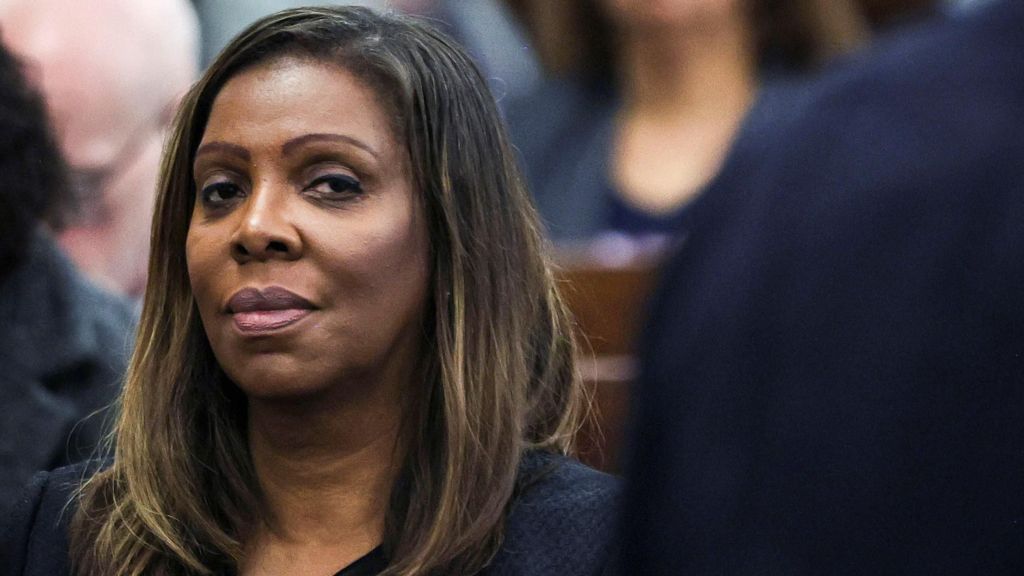
What to know about the charges against Letitia James in the US
New York Attorney General Letitia James has been indicted on federal bank fraud charges related to a property she purchased in Norfolk, Virginia. The U.S. Department of Justice (DoJ) alleges that James misrepresented the property as her secondary residence to secure a favorable mortgage, while in reality, she rented it out to a family. Prosecutors claim this misrepresentation saved her $18,933, including a lower interest rate. James denies the charges, calling them a “desperate weaponization of our justice system” and accusing former President Donald Trump of orchestrating the case as political retribution. Trump has publicly pushed for legal action against James and other political opponents, including former FBI Director James Comey and Democratic Senator Adam Schiff. James’s attorney, Abbe Lowell, stated she would vigorously defend against the charges, expressing concern that the case is driven by Trump’s desire for revenge. The indictment follows a contentious history between James and Trump, including her successful civil fraud case against him in 2023, which resulted in a $500 million penalty later overturned on appeal. The legal battle underscores the ongoing political tensions between the two figures, with James vowing to continue her fight against what she calls baseless accusations.
-

China tightens rules to block Pakistan rare earths exports to US
China has introduced stringent measures to restrict the export of rare-earth extraction technologies, following revelations that Pakistan is utilizing Chinese equipment to produce specialized metals for the United States. The new regulations, issued by the Chinese Commerce Ministry, encompass rare-earth production, processing, and separation equipment, along with related raw and auxiliary materials. Overseas producers must now obtain export licenses from the Chinese government to access these technologies and equipment.
-
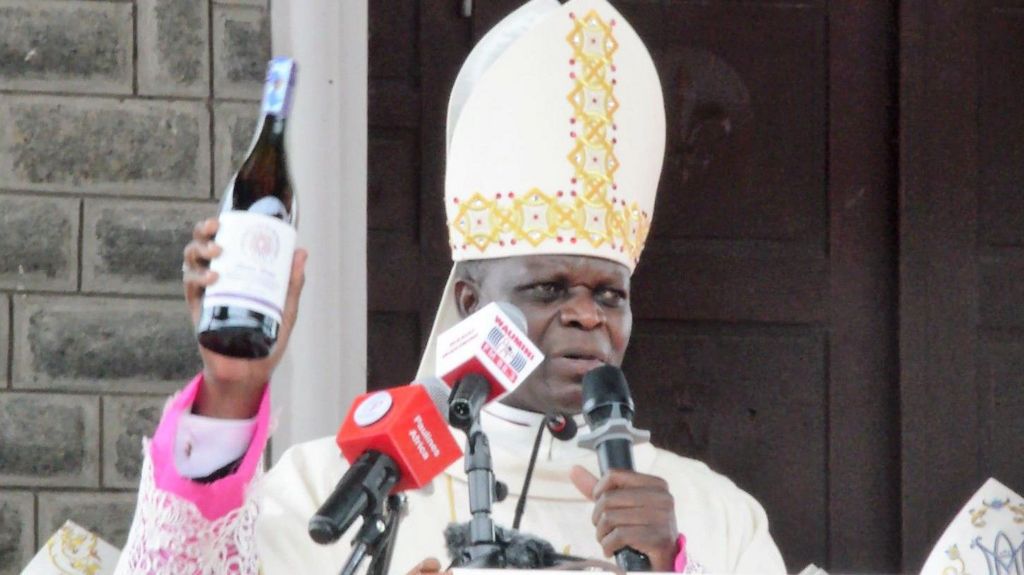
Catholic altar wine replaced after becoming a favourite in Kenyan bars
The Kenyan Catholic Church has unveiled a new brand of altar wine, exclusively for use in Holy Mass, to address concerns over the previous brand’s widespread availability in secular outlets. The new wine, labeled ‘Mass Wine,’ features the official coat of arms of the Kenya Conference of Catholic Bishops (KCCB) and a signature certifying its authenticity. Archbishop Anthony Muheria of Nyeri emphasized that the wine is not for commercial sale but is imported and owned by the KCCB, distributed solely to dioceses. The decision follows the discovery that the former wine, supplied by a local alcohol manufacturer, was being sold in bars, hotels, and supermarkets, diminishing its sacred significance. The new wine, sourced from South Africa, was officially introduced during Kenya’s National Prayer Day at the Subukia National Marian Shrine in Nakuru. Archbishop Maurice Muhatia Makumba, KCCB chairman, announced that this wine will be the only one used in Mass celebrations nationwide, urging priests to adhere to the new distribution guidelines. The label on the wine reads, ‘The fruit of the vine and the work of human hands will become our cup of joy,’ reflecting its sacred purpose. The move has been praised by the Catholic faithful, who view it as a step toward preserving the sanctity of the Eucharist. Altar wine, known as ‘divai’ in Swahili, is consumed variably across dioceses, with demand peaking during major religious events like Easter and Christmas. Kenya’s Catholic community, comprising about 10 million people or 20% of the population, has welcomed the change, expressing relief that the new wine ensures proper reverence in liturgical practices.
-

Israel approves peace plan, while international community welcomes ‘first phase’ of Gaza truce
In a significant development, the Israeli government has approved a comprehensive peace plan aimed at ending the prolonged conflict in Gaza. The decision, reached after prolonged deliberations late into Thursday night, includes a ceasefire agreement and the release of hostages held by Hamas. Israeli Prime Minister Benjamin Netanyahu hailed the approval as “a great day for Israel.” The initial phase of the plan entails the immediate release of 20 living hostages and the remains of 28 others believed to be deceased. In return, Israel has agreed to release approximately 2,000 Palestinian prisoners and withdraw its troops from half of Gaza. The agreement was brokered through indirect negotiations in Egypt, based on a 20-point framework proposed by US President Donald Trump. Following the prisoner-hostage exchange, the second phase will focus on restoring humanitarian aid to Gaza and establishing a transitional committee to oversee public services. The deal has garnered widespread support from Western and Arab nations, who are set to discuss the deployment of an international peacekeeping force and reconstruction assistance for Gaza. The international community has welcomed the truce, expressing optimism for lasting peace and urging both Israel and Hamas to honor their commitments. Hamas has also confirmed the agreement but emphasized the need for Israel to fully implement the ceasefire, calling on Trump and guarantor states to ensure compliance.
-
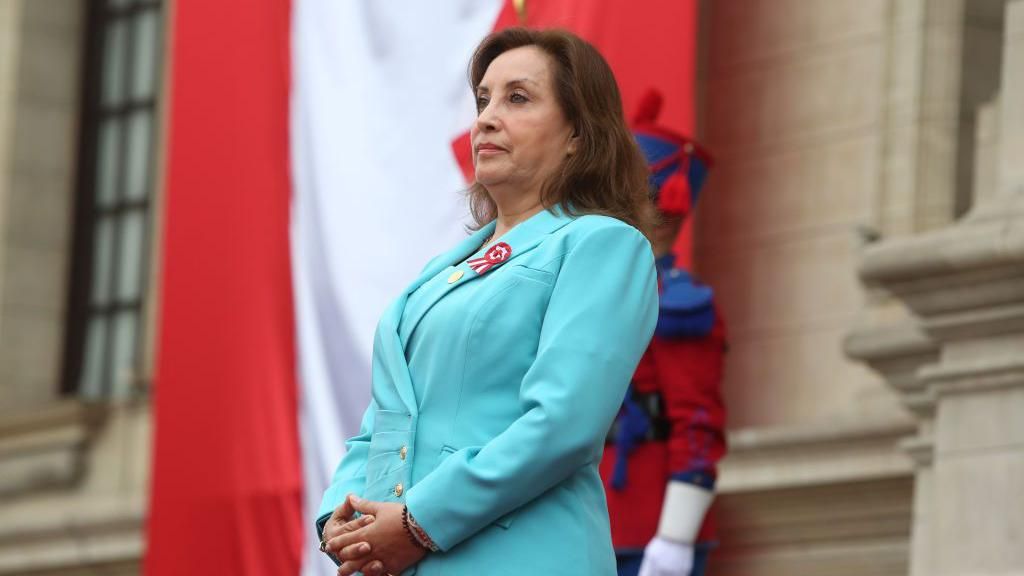
Peru’s president removed from office amid soaring crime
In a decisive move, Peru’s Congress has voted overwhelmingly to remove President Dina Boluarte from office, citing ‘permanent moral incapacity’ as the primary reason. The late-night session, which culminated in a 122-8 vote, marked the end of Boluarte’s tumultuous presidency, characterized by widespread protests, corruption allegations, and a surge in gang violence. Following the vote, Congress leader Jose Jeri was swiftly sworn in as interim president, as Peru currently lacks a vice-president. Boluarte, whose approval rating had plummeted to a mere 2-4%, addressed the nation post-removal, emphasizing her commitment to unity and the welfare of Peru’s 34 million citizens. Her presidency, which began in December 2022 after the impeachment of her predecessor Pedro Castillo, was marred by numerous investigations, including the infamous ‘Rolexgate’ scandal and allegations of abandoning her post during a medical absence. The decision to double her salary earlier this year further fueled public outrage. The recent impeachment bid, supported by factions once loyal to Boluarte, underscores the deep political divisions in Peru. As the country braces for elections next April, the ousting of Boluarte signals a pivotal moment in Peru’s ongoing struggle for political stability.
-
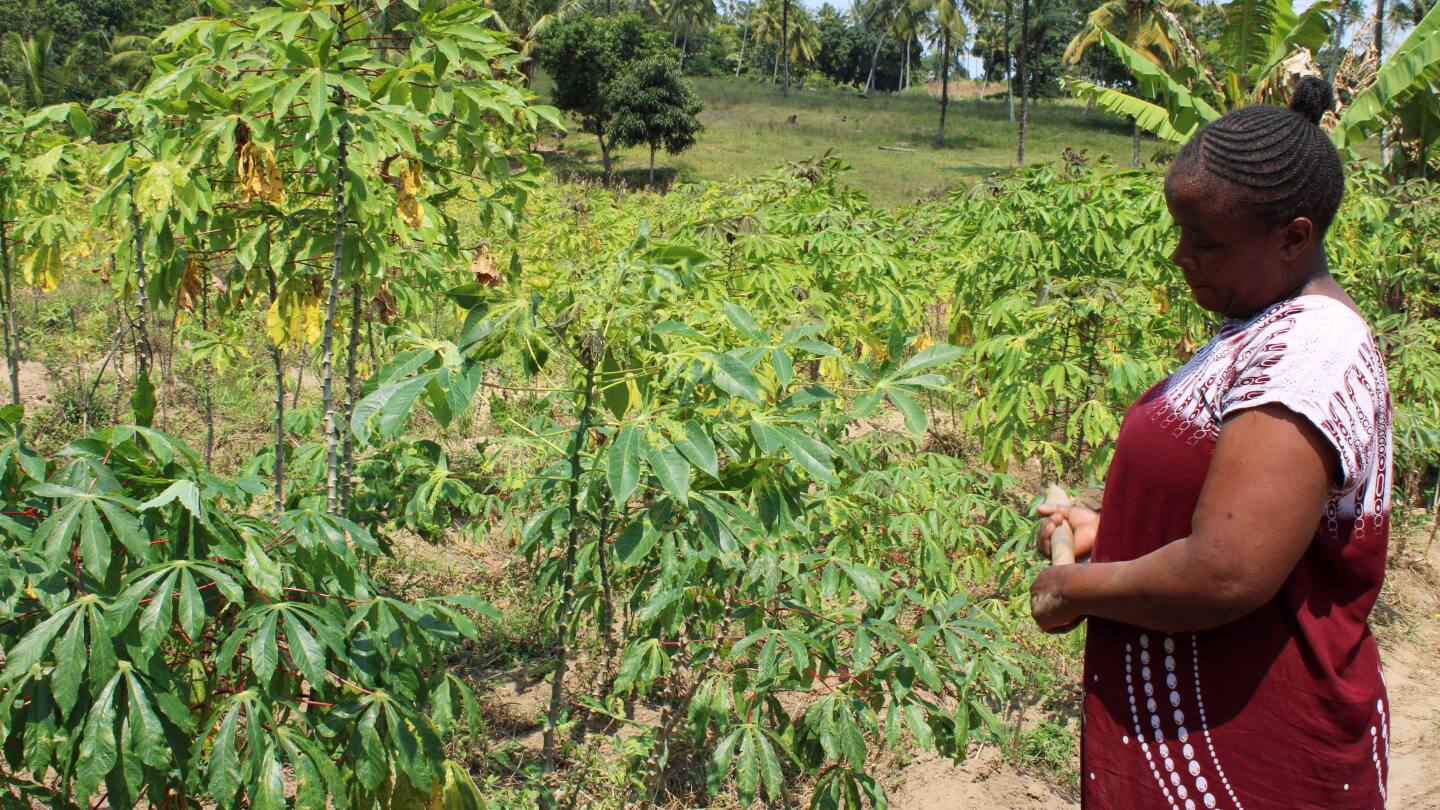
In Kenya, a search for links between a changing climate and mental health
In the arid landscapes of Kilifi County, Kenya, the daily struggle to secure food and water is a relentless burden, particularly for women who shoulder the majority of household responsibilities. The region, one of Kenya’s poorest, faces the dual challenges of poverty and a changing climate, which exacerbates the stress and anxiety of its residents. Women traverse miles with buckets of water, while maize crops wither under the scorching sun, leaving families with little to sustain themselves. This dire situation has profound implications for mental health, especially among women, who are often the primary caregivers in their families. Zul Merali of The Aga Khan University, which has established a local institute for mental and brain health, highlights the immense pressure these women endure. “They are responsible for ensuring their families are fed, yet they face constant uncertainty due to unpredictable weather patterns,” he explains. Kilifi County is one of Kenya’s most studied populations, with community health workers conducting monthly visits to assess the well-being of residents. These workers, like Humphrey Kitsao, who oversees 115 households, have witnessed firsthand the devastating impact of climate change on livelihoods. “Farming remains the primary source of income, but yields have drastically declined, leaving families with little to no harvest,” Kitsao notes. Jasmit Shah, a data scientist at The Aga Khan University’s Brain and Mind Institute, has been researching the link between climate change and mental health in rural Kenyan women. His study, which surveyed nearly 15,000 women, revealed alarming correlations between climate shocks—such as droughts and heatwaves—and increased suicidal thoughts. Elizabeth Amina Kadenge, a 41-year-old farmer and mother of four, exemplifies this struggle. Her maize crops have failed repeatedly due to erratic weather, leaving her family without food or income. To cope, she has turned to planting cassava, a more resilient crop, but its long growth cycle means families often harvest it prematurely for food, sacrificing potential income. Despite these challenges, mental health remains a neglected issue in rural Kenya. Mercy Githara of the Kenya Red Cross emphasizes the need for greater awareness and access to mental health services. “Climate change-induced disasters like droughts and floods have severe psychological impacts, leading to conditions such as depression,” she says. Shah is optimistic about the government’s efforts, including the community health promoters program, which includes mental health training. However, Merali stresses that long-term support is essential. “Climate change is not a temporary crisis; it’s a persistent reality that demands sustained action,” he asserts.
-
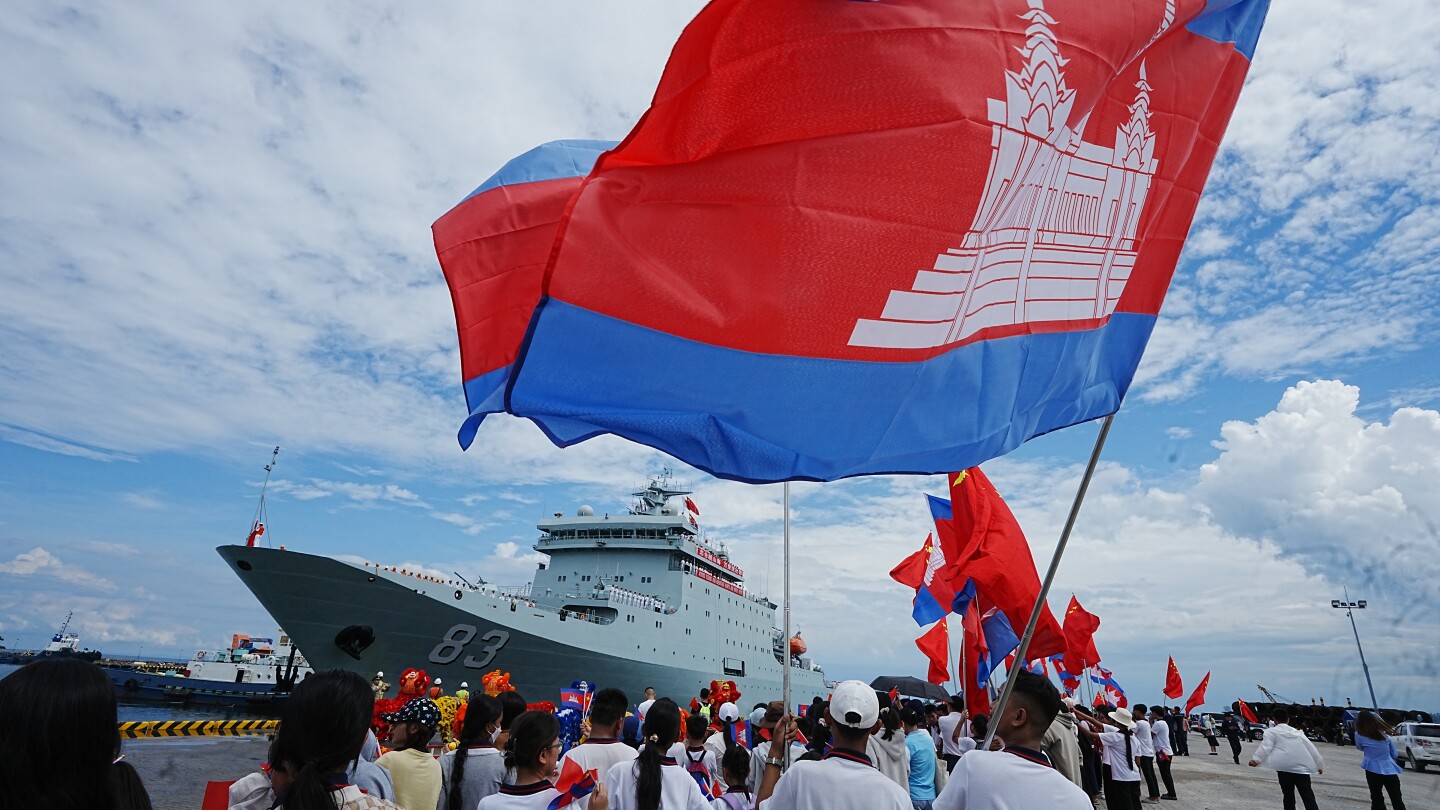
Chinese navy ships make a friendship visit to Cambodia as concerns over military links linger
Two Chinese warships, the amphibious warfare ship Yimeng Shan and the training ship Qijiguang, arrived at Sihanoukville’s civilian port in Cambodia on Friday for a friendship and training visit. This visit underscores China’s strategic ties with Cambodia, its closest ally in Southeast Asia, amidst ongoing regional tensions. The warships are scheduled to depart next Tuesday and will subsequently visit Thailand and Singapore. The visit coincides with heightened diplomatic sensitivities, particularly between Cambodia and Thailand, which recently engaged in a five-day armed conflict over border disputes. China’s military support to Cambodia has reportedly caused friction with Thailand, and the unresolved border issues continue to strain relations. Cambodian navy spokesperson Sam Sokha emphasized that the visit aims to strengthen cooperation rather than signal support in the border dispute. Notably, the ships docked at a commercial port instead of the nearby Ream Naval Base, a move seen as an effort to ease political concerns. The Ream Naval Base has been a point of contention, with U.S. suspicions that China has secured exclusive access, a claim denied by Cambodian officials. The Gulf of Thailand, where Sihanoukville is located, is adjacent to the South China Sea, a region of strategic importance for China’s naval operations. Rear Adm. In Sokhemra of the Ream Naval Base highlighted that foreign ships frequently visit Cambodia for cooperative exercises, including those from China, the Philippines, Australia, and the United States. On the same day, the Australian Navy’s frigate HMAS Ballarat also docked nearby, part of its Regional Presence Deployment aimed at fostering regional security and cooperation. China’s Ambassador to Cambodia, Wang Wenbin, reiterated China’s commitment to supporting Cambodia’s sovereignty and development. The visit was met with enthusiasm from local ethnic Chinese communities, who welcomed the ships with traditional dragon dances and Chinese flags. Sihanoukville, a hub for Chinese investment, has also been associated with Chinese-run criminal activities, including scam centers exploiting foreign workers.