作者: admin

  • Climber Alex Honnold summits 101-floor skyscraper without safety gear

    Climber Alex Honnold summits 101-floor skyscraper without safety gear

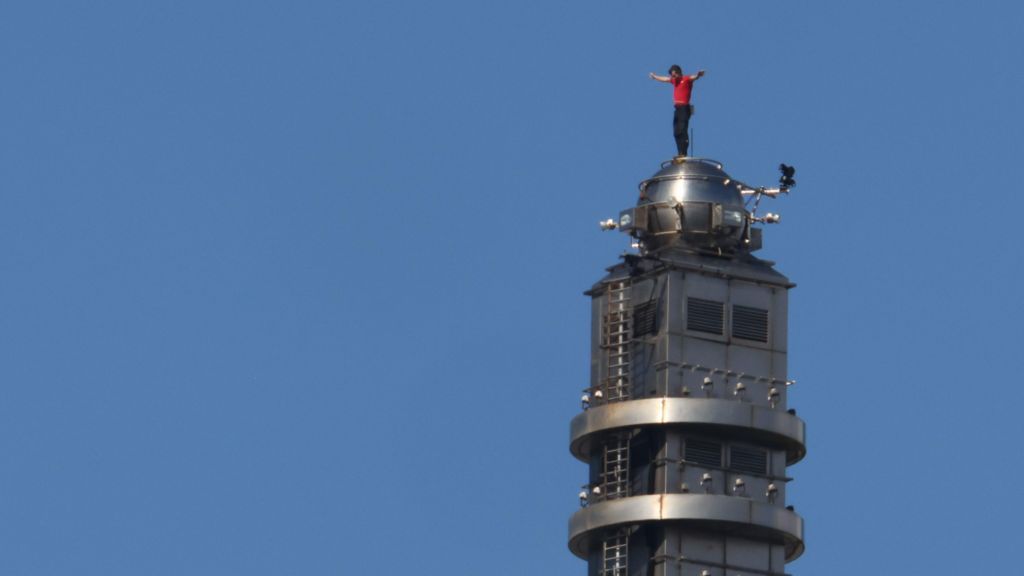
    In a breathtaking display of human endurance and concentration, American free solo climber Alex Honnold has conquered Taipei 101, one of the world’s tallest skyscrapers, employing no ropes, harnesses, or safety equipment. The daring ascent of the 508-meter (1,667-foot) tower in Taiwan’s capital was completed in a record-breaking one hour and thirty-one minutes.

    The climb, initially postponed from Saturday due to adverse weather conditions, was broadcast live with a strategic delay by Netflix. Honnold’s methodical progression up the bamboo-inspired glass and steel facade captivated a global audience. Upon reaching the summit, the climber succinctly celebrated his vertigo-inducing achievement with the exclamation, ‘Sick.’

    This remarkable feat more than halved the previous record set by French climber Alain Robert—nicknamed ‘Spiderman’—who scaled the then-world’s tallest building using safety ropes and a harness in four hours in 2004.

    The climb was not without its distractions. As Honnold approached the 89th floor, enthusiastic fans waved and cheered from behind the windows, creating an unexpected challenge. Undeterred, he continued his climb, a moment captured on video and shared widely on social media.

    Taiwan’s Vice President Hsiao Bi-khim publicly congratulated Honnold on X, humorously admitting the climb made her ‘feel sick, too, barely able to watch.’ Honnold was greeted at the top by his wife, who had expressed concerns about the challenging wind and heat conditions during his ascent.

    Honnold, who gained global fame as the first person to free solo El Capitan in Yosemite National Park—a feat documented in the Academy Award-winning film ‘Free Solo’—has once again redefined the limits of his extreme sport.

  • 2026 Australian of the Year Awards held in Canberra as winners announced

    2026 Australian of the Year Awards held in Canberra as winners announced

    In a landmark celebration of national excellence, Katherine Bennell-Pegg—Australia’s inaugural officially qualified astronaut—has been distinguished as the 2026 Australian of the Year. The prestigious accolade, announced at a formal ceremony in Canberra, recognizes her pioneering contributions to the nation’s burgeoning space sector and her role as an inspirational figure for future generations.

    Ms. Bennell-Pegg earned her place in history by graduating from the European Astronaut Centre in Germany in 2024, outperforming 22,500 international candidates to secure one of six coveted positions. She is the first individual to qualify as an astronaut under the Australian flag, a moment she described as profoundly emotional. “It signified something far greater than myself,” she reflected during her acceptance address. “It represented Australia’s rightful place at the forefront of human exploration and kindled hope for more Australians to venture into space.”

    Her journey began in childhood, gazing at the stars from her backyard. However, with no national space agency at the time, she pursued her ambitions overseas, accumulating expertise on international space missions before returning to catalyze Australia’s space industry. As a prominent advocate for STEM diversity, she emphasized the importance of inclusion: “For years, I was often the only woman in the room. We must encourage young women to contribute their unique perspectives to scientific fields.”

    The awards ceremony also honored other exceptional Australians: Professor Henry Brodaty, named Senior Australian of the Year for his transformative research in dementia prevention; ultra-marathon runner Nedd Brockmann, recognized as Young Australian of the Year for raising over $8 million to combat homelessness; and Indigenous entrepreneur Frank Mitchell, awarded Local Hero for creating vocational opportunities for Aboriginal communities.

    Prime Minister Anthony Albanese presided over the event, announcing a government partnership with FightMND, the foundation led by 2025 Australian of the Year Neale Daniher, to establish a dedicated clinical network for motor neurone disease research. The national honors underscore a collective commitment to innovation, compassion, and social progress.

  • Rescuers recover more bodies from landslide in Indonesia, with 72 still missing

    Rescuers recover more bodies from landslide in Indonesia, with 72 still missing

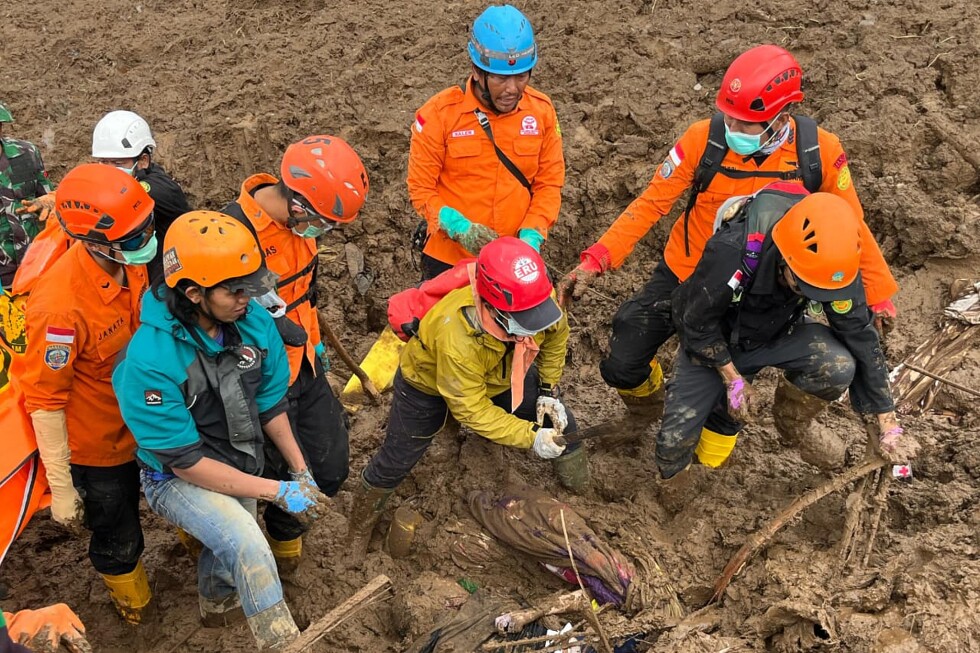
    BANDUNG, Indonesia — Rescue operations intensified in West Java’s Pasir Langu village Sunday as improved weather conditions allowed emergency teams to continue searching for dozens missing following a devastating landslide. The disaster, which struck Mount Burangrang’s slopes before dawn Saturday, completely buried approximately 34 homes under massive mudflows, rocks, and uprooted trees.

    Search and rescue coordinator Ade Dian Permana reported recovery efforts had yielded 25 confirmed fatalities by Sunday, with remains being carefully extracted using basic farm tools and manual labor due to unstable terrain preventing heavy equipment deployment. The 250-strong rescue team worked meticulously through mud mounds reaching 5 meters (16 feet) in height, with drones and K-9 units deployed to scan the extensive 2-kilometer (1.2-mile) landslide path.

    The incident has displaced approximately 230 residents now sheltering in government facilities, while 72 individuals remain unaccounted for. At temporary relief centers, anxious families monitored updated missing persons lists as forensic teams worked to identify recovered remains for release to relatives.

    Indonesian Vice President Gibran Rakabuming Raka visited the disaster zone Sunday, pledging governmental action to prevent future tragedies. He specifically urged West Bandung district officials to address problematic land conversion practices in high-risk areas.

    Environmental organizations have characterized the catastrophe as fundamentally human-exacerbated. Wahyudin Iwang of Walhi West Java emphasized that Saturday’s landslide resulted from prolonged environmental degradation in the North Bandung Area conservation zone, where development projects have consistently violated spatial-planning regulations. This protected highland region serves as a critical water-catchment zone for the densely populated Bandung Basin, making ecological preservation imperative.

    The disaster occurs during Indonesia’s annual rainy season (October-April), when the archipelago nation frequently experiences flooding and landslides. Millions reside in vulnerable mountainous regions and fertile floodplains across the 17,000-island chain.

  • Trump’s Greenland ambitions strain MAGA ties with Europe’s far-right

    Trump’s Greenland ambitions strain MAGA ties with Europe’s far-right

    A significant diplomatic schism has emerged between former U.S. President Donald Trump’s political movement and its traditional European far-right allies, triggered by growing concerns over American interventionism. The fracture became particularly evident through widespread condemnation of Trump’s proposed acquisition of Greenland, which multiple European nationalist leaders characterized as a hostile act threatening national sovereignty.

    Despite previous ideological alignment demonstrated during the ‘Make Europe Great Again’ gathering in Madrid less than a year ago, prominent figures including France’s National Rally president Jordan Bardella, Italy’s Prime Minister Giorgia Meloni, and Reform UK’s Nigel Farage have publicly criticized Trump’s approaches to Greenland, Venezuela, and Iran. Bardella specifically denounced what he termed ‘commercial blackmail’ regarding Greenland, while Meloni directly informed Trump that his tariff threats represented ‘a mistake.’

    The divergence highlights a fundamental tension within the trans-Atlantic nationalist alliance, where shared ideological convictions on immigration and sovereignty appear insufficient to overcome concerns about American overreach. This development occurs amidst substantial gains by far-right parties across the European Union, which now hold approximately 26% of seats in the European Parliament according to security analyses.

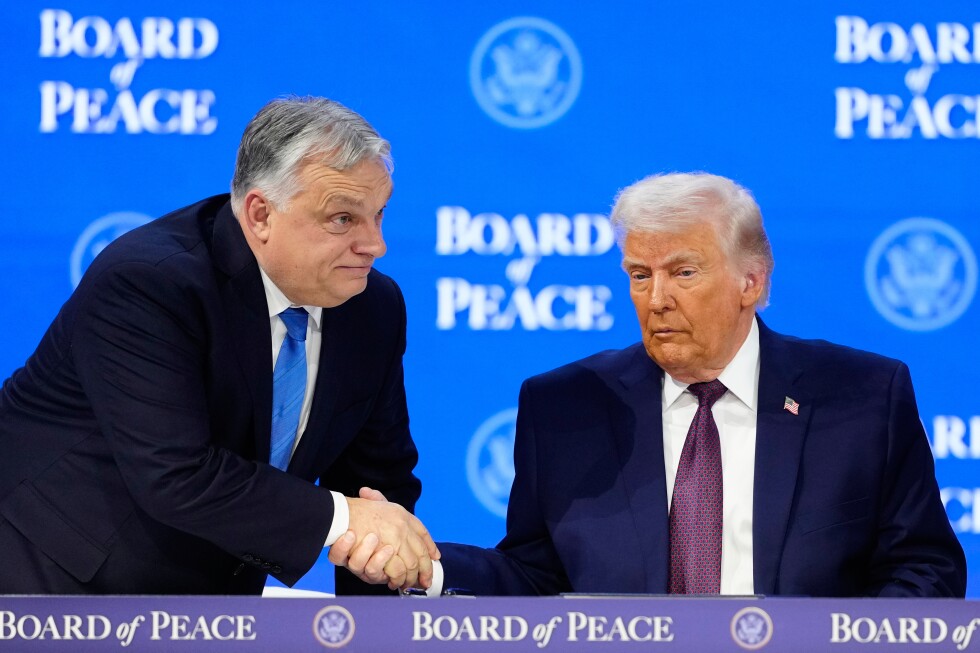
    Not all European nationalist leaders have joined the criticism, however. Hungarian Prime Minister Viktor Orbán, facing his most challenging election in sixteen years, has carefully avoided criticizing Trump, instead positioning the former president as Europe’s best hope for peace in Ukraine and a guarantor of national sovereignty. Similar restraint has been observed among Eastern European allies including Poland’s President Karol Nawrocki and Czech Prime Minister Andrej Babiš, who cautioned against allowing the Greenland issue to escalate into broader EU-U.S. conflict.

    Analysts suggest this division within the trans-Atlantic nationalist movement may force a recalibration of political alliances, with cooperation potentially continuing on shared grievances such as opposition to EU migration policies and trade agreements, while sovereignty concerns create enduring fractures regarding American foreign policy approaches.

  • Watch: Federal and state officials give conflicting accounts of Alex Pretti’s death

    Watch: Federal and state officials give conflicting accounts of Alex Pretti’s death

    A cloud of official contradiction hangs over the investigation into the death of Alex Pretti, as federal and state authorities have provided starkly divergent accounts of the circumstances surrounding the incident. The case has drawn intensified public scrutiny as it marks the second controversial law enforcement-related death in the city within a three-week period.

    The developing story follows the fatal shooting of Renee Good by an immigration enforcement officer less than twenty-one days prior, creating a pattern that has raised serious concerns among community advocates and civil rights organizations. While details remain heavily contested between agencies, the absence of a unified official narrative has compounded public distrust in law enforcement institutions.

    This latest incident has sparked renewed debate about transparency in officer-involved fatalities and interagency coordination during critical investigations. Community leaders are demanding a comprehensive, independent review of both cases to address what they describe as systemic issues in accountability procedures. The conflicting reports have further complicated the grieving process for affected families while highlighting potential jurisdictional tensions between state and federal law enforcement operations.

  • Watch: BBC at protests near scene where Alex Pretti was shot dead

    Watch: BBC at protests near scene where Alex Pretti was shot dead

    Minneapolis streets filled with demonstrators chanting the name of Alex Pretti, who became the second individual fatally shot by federal agents in the city this month. The protests erupted near the location where the shooting occurred, with participants demanding justice and transparency in law enforcement operations.

    The incident has reignited tensions in a community still grappling with police accountability issues, marking a concerning pattern of deadly force encounters. BBC journalists documented the unfolding demonstrations, capturing raw emotional responses from community members who expressed frustration over recurring violent incidents involving federal authorities.

    This shooting follows another fatal encounter earlier in the month, creating a pattern that has alarmed civil rights advocates and community leaders. The protests remained largely peaceful but emotionally charged, with participants holding signs and chanting slogans calling for systemic reform in policing practices and greater accountability for federal agents operating in urban communities.

    Local organizations have begun mobilizing to demand a thorough investigation into both shooting incidents, while community leaders urge calm amid growing tensions. The federal agency involved has stated it will conduct an internal review of the shooting protocol while cooperating with local investigations.

  • Syria frees 126 minors from Raqqa prison as SDF ceasefire extended

    Syria frees 126 minors from Raqqa prison as SDF ceasefire extended

    In a significant development within Syria’s ongoing conflict resolution, government forces have assumed control of al-Aqtan prison in Raqqa province following a negotiated ceasefire with the Syrian Democratic Forces (SDF). This transfer facilitated the immediate release of 126 minors previously detained at the facility, as confirmed by official state media reports.

    Digital footage disseminated across social platforms captured emotional scenes of local communities welcoming the liberated juveniles, all confirmed to be under eighteen years of age. Several children provided harrowing testimonies in videos, detailing experiences of severe maltreatment during their incarceration. One minor, featured in a report by Syria’s state news agency Sana, described being subjected to electrocution, whipping, and solitary confinement with cold water exposure, stating visible sores remain on his body as evidence.

    Concurrent with the release, Syrian judicial authorities announced the establishment of special committees to comprehensively review the cases of all remaining detainees. Sana further published a list of names still held in custody, creating a mechanism for families to search for missing relatives online.

    This prison transfer represents the final facility handed over to Syrian government control from the SDF, which previously operated with U.S. support. Al-Aqtan primarily held individuals with alleged connections to the Islamic State (IS) group. This action follows similar recent takeovers of al-Hol detention camp—housing approximately 24,000 people, mostly women and children linked to IS—and al-Shaddadi prison.

    The strategic handover occurred within the framework of a four-day ceasefire agreement announced last week. Subsequently, on Saturday, both conflicting parties agreed to extend this truce by an additional fifteen days. This extension aims to facilitate the SDF’s planned integration into the Syrian national army and their eventual disarmament, significantly reducing tensions after government forces recently captured extensive territories in northeastern Syria.

    The extended ceasefire also enables continued transfers of IS detainees, with the U.S. Central Command announcing the initial evacuation of 7,000 prisoners to secured facilities in Iraq earlier this week. A subsequent transfer batch commenced this Saturday, addressing concerns about prison security following chaotic SDF withdrawals that previously allowed some IS affiliates to briefly escape.

    Northeast Syria remains home to numerous facilities incarcerating thousands of IS members, remnants from the group’s territorial defeat in 2019 where the SDF played a crucial combat role. Since then, the SDF has maintained control over several Arab-majority urban centers, including Manbij and Raqqa, as part of an autonomous administrative enclave.

  • Jay Vine wins the Tour Down Under after being knocked off his bike by a kangaroo

    Jay Vine wins the Tour Down Under after being knocked off his bike by a kangaroo

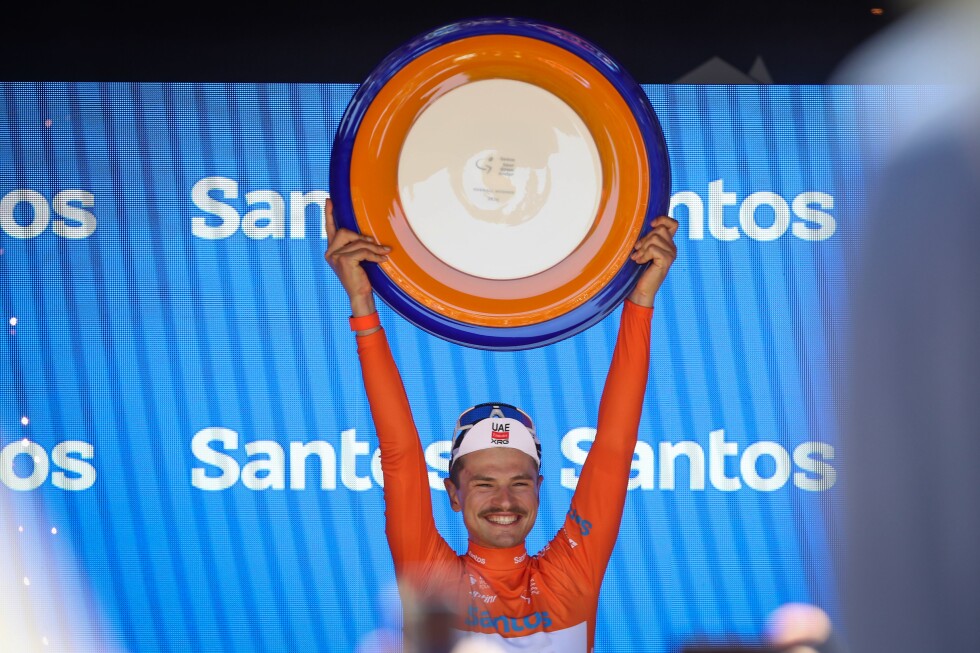
    ADELAIDE, Australia — Australian cyclist Jay Vine secured a remarkable victory at the Tour Down Under on Sunday, overcoming an extraordinary mid-race collision with a kangaroo that forced three riders to abandon the competition. The incident occurred during the final 169.8-kilometer stage through Adelaide’s hills, marking a dramatic conclusion to the opening event of the 2026 World Tour.

    With approximately 96 kilometers remaining, two large kangaroos unexpectedly bounded onto the road during a high-speed section. Vine was knocked from his bicycle upon impact, while riders Menno Huising, Lucas Stevenson, and Alberto Dainese were compelled to withdraw due to injuries sustained in the collision. The kangaroo involved also suffered injuries.

    Despite entering the final stage with a substantial 1-minute, 3-second lead on general classification, Vine faced significant challenges beyond the wildlife encounter. His UAE Team Emirates squad had been reduced to just three members following Saturday’s fourth stage, where defending champion Jhonatan Narvaez and another teammate crashed out. The team was further diminished when Juan Sebastian Molano withdrew due to fatigue before Sunday’s stage.

    Demonracing exceptional resilience, Vine immediately remounted after the kangaroo incident, changing bicycles twice before rejoining the peloton with 92 kilometers remaining. He maintained a strategic position near the front throughout the remainder of the stage, ultimately preserving his overall lead.

    The Australian champion finished 1:03 ahead of Switzerland’s Mauro Schmid (Team Jayco Alula), with Australian Harry Sweeny (EF Education-Easypost) trailing by an additional nine seconds. Britain’s Matthew Brennan (Team Visma) claimed the stage victory in a sprint finish ahead of New Zealand’s Finn Fisher-Black (Bora Hansgrohe) and Denmark’s Tobias Lund Andresen (Decathlon).

    Vine, who secured his second Tour Down Under victory in three years, humorously remarked on the incident: ‘Everyone asks me what’s the most dangerous thing in Australia and I always tell them it’s kangaroos. They wait and they hide in the bushes until you can’t stop and they jump out in front of you. Point proven today.’

    The champion described the mechanics of the collision: ‘Two of them blasted through the peloton when we were doing probably 50 kph (30 mph) and one of them stopped and went left, right, left right, left right and I ended up hitting its backside.’

    Reflecting on his team’s challenging week, Vine noted: ‘This year we started off really positive and we just had more and more bad luck as the race went on. Today was never going to be easy and I’ve been saying all week it’s not over until it’s over. But it’s proven to be not over till it’s over in this race for us.’

    The stage featured eight laps of a circuit incorporating a slow, steep climb to the finish in Stirling township, with two breakaways occurring during the race, the final one being reeled in with just one kilometer remaining.

  • 80 beaches in Sydney, regional NSW to be patrolled by shark drones after ‘unprecedented’ spate of attacks

    80 beaches in Sydney, regional NSW to be patrolled by shark drones after ‘unprecedented’ spate of attacks

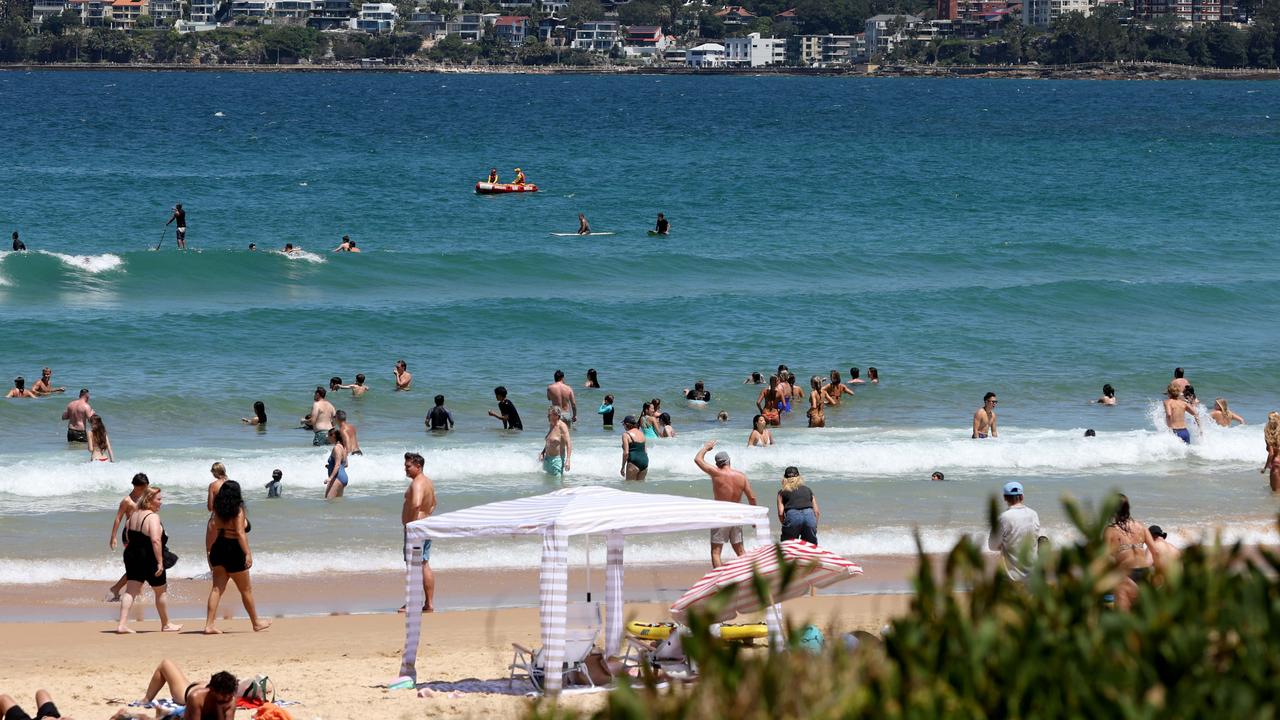
    The New South Wales government is implementing a significant expansion of its shark surveillance capabilities, deploying drone patrols to 80 beaches following what officials describe as an ‘unprecedented’ series of attacks. This emergency response comes after four separate shark incidents occurred within a concerning 48-hour window, including the tragic fatal attack on 12-year-old Nico Antic.

    The comprehensive $4.2 million funding package will dramatically enhance existing monitoring systems, adding 30 new patrol locations to the current network of 50 beaches covered by Surf Life Saving NSW’s drone operations. The expansion includes 19 Sydney beaches and 11 regional sites, creating the largest drone surveillance program in the southern hemisphere. From January 24 through the end of the April school holiday period, these aerial patrols will operate seven days per week, providing approximately 35,000 additional flight hours of monitoring.

    Beyond drone deployment, the initiative includes installing advanced shark listening stations in Sydney Harbour designed to provide rapid detection of tagged sharks. The scientific component of the program will focus specifically on bull sharks, investigating their population dynamics in Sydney Harbour, movement patterns, and potential high-risk periods.

    NSW Agriculture Minister Tara Moriarty emphasized that recent shark incidents following storm activity and heavy rainfall underscore the critical need for clear, practical safety information for beachgoers. ‘This funding will help expand drone surveillance, improve education and ensure timely warnings, so swimmers and surfers can make informed decisions about when to enter the water,’ Moriarty stated, while acknowledging that the measures do not constitute a ‘silver bullet’ solution.

    The enhanced surveillance comes as Surf Life Saving NSW CEO Steve Pearce reported that seven beaches were closed on a single Saturday following ten shark sightings. During the 2025/26 summer period, drone operations have already identified 461 sharks, triggering 170 countermeasures including beach evacuations, siren alerts, and rescue vessel deployments.

    The technology upgrade will enable semi-autonomous drone operations managed from a central headquarters, while the existing shark management tools—including 305 drumlines across 19 local government areas, 51 seasonal shark nets, and 37 existing listening stations—will remain operational. This expansion follows previous government trials removing shark nets at several beaches after scientific assessments questioned their effectiveness at preventing bites while creating a false sense of security.

  • Middle East shows resilience as global bond sell-off hits markets

    Middle East shows resilience as global bond sell-off hits markets

    Amid a turbulent week for global fixed-income markets, the Gulf Cooperation Council (GCC) nations have demonstrated remarkable resilience against a widespread bond sell-off that originated in Japan and rippled through major economies. While regional debt instruments experienced modest yield increases, the fundamental strength of Middle Eastern economies has contained the financial contagion to manageable levels.

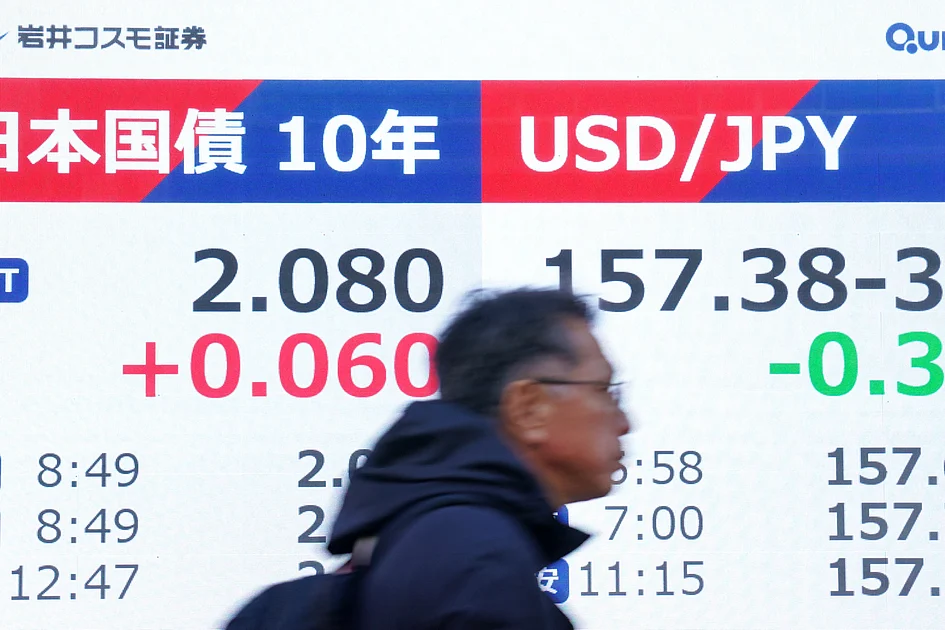
    The market volatility commenced when Japanese Government Bond (JGB) yields surged dramatically following Prime Minister Sanae Takaichi’s unexpected announcement of a snap election coupled with ambitious stimulus and tax-reduction proposals. This triggered a chain reaction that subsequently impacted US Treasuries and European sovereign debt, creating one of the most significant fixed-income disruptions in recent months.

    According to Emirates NBD’s Market Economics analysis, the 10-year JGB yield climbed to 2.296%, representing an 11 basis point weekly increase and nearly 25 basis points since January’s commencement. More dramatically, 30-year Japanese yields escalated by 28 basis points in just one week and approximately 40 basis points year-to-date.

    The contagion effect extended to US Treasury markets, where geopolitical tensions exacerbated the sell-off. President Donald Trump’s continued threats of tariffs against European allies contributed to the uncertainty, pushing the 10-year Treasury yield upward by 5 basis points to 4.276% with an 11 basis point increase since January began.

    Middle Eastern markets experienced comparatively moderate impact. Saudi Arabia’s 2036 USD bond witnessed a 6 basis point yield increase to 5.026%, while the UAE’s 2034 dollar-denominated bond rose 5 basis points to 4.385%. Türkiye’s 2036 dollar yield demonstrated the most significant regional movement, jumping 7 basis points to 6.872%. A Bloomberg index tracking regional debt declined approximately 0.5% weekly and 0.7% year-to-date.

    Critical technical factors contributed to this relative outperformance. The GCC region has witnessed substantial bond issuance in January 2026, totaling $28.4 billion as of January 21st—representing 15% of 2025’s total issuance and significantly exceeding the $21 billion raised during the same period last year. This supply dynamic temporarily pressured prices but reflects robust market access rather than structural weakness.

    The fundamental economic architecture of GCC nations provides substantial protection against global financial shocks. Saudi Arabia maintains a debt-to-GDP ratio of merely 33%, while Türkiye stands at approximately 25%—both dramatically lower than advanced economies. Even Bahrain, with a higher debt burden near 150% of GDP, is implementing comprehensive reforms including subsidy reductions, corporate tax implementation, and increased dividends from government-related entities.

    Emirates NBD’s analysis concludes that investor confidence will quickly return to regional markets due to the attractive combination of relatively high yields and strong credit ratings. The institution anticipates that GCC spreads will remain near record lows once global conditions stabilize.

    Edward Bell, Acting Chief Economist and Group Head of Research at Emirates NBD, emphasized that while global volatility persists, regional credit markets possess the necessary fiscal anchors and policy frameworks to withstand turbulence more effectively than their international counterparts.