作者: admin

  • Extreme cold threatens millions after storm kills 30 and incapacitates grid

    Extreme cold threatens millions after storm kills 30 and incapacitates grid

    A catastrophic winter storm of unprecedented scale has plunged vast regions of the United States into a deep freeze, resulting in at least 30 fatalities and creating life-threatening conditions for millions of Americans. The massive weather system, which delivered a destructive combination of heavy snowfall, freezing rain, and powerful winds, has left communities from New Mexico to Maine struggling to recover amidst dangerously low temperatures.

    Meteorological authorities have issued grave warnings about the lingering Arctic air mass that continues to threaten public safety. The National Weather Service reported that much of the northern United States will experience continuously subfreezing conditions through February 1, with particularly dangerous record-low temperatures affecting southern regions where power infrastructure remains compromised.

    The storm’s impact has been both widespread and severe. Northeastern states recorded extraordinary snowfall accumulations, with Connecticut measuring over 56 centimeters and Boston receiving more than 40.6 centimeters. The human toll continues to mount, with fatalities attributed to hypothermia, traffic accidents, and snow removal incidents—including one New Jersey man found unresponsive in the snow with a shovel still in hand.

    Energy infrastructure has been critically damaged, particularly across southern states unaccustomed to such extreme winter conditions. As of Tuesday morning, more than 540,000 customers remained without electricity according to Poweroutage.com, with Tennessee, Texas, Mississippi, and Louisiana experiencing the most severe outages.

    The scale of the disaster has overwhelmed emergency response capabilities. National Weather Service meteorologist Allison Santorelli emphasized the unique challenges of this recovery effort, noting that the simultaneous impact across multiple regions has prevented better-prepared northern states from assisting their southern counterparts. “Many of these locations don’t have the means or resources to clean up after these events,” Santorelli stated, expressing particular concern for those without power in increasingly frigid conditions.

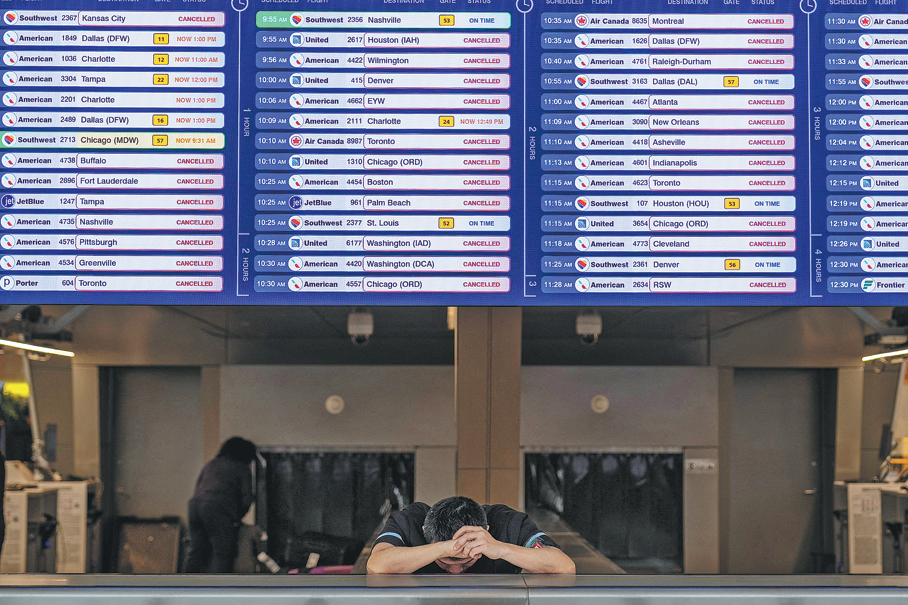
    Transportation networks have been paralyzed throughout affected regions, with thousands of flight cancellations and impassable road conditions hampering recovery efforts. At least 20 states, including Washington D.C., have declared states of emergency to mobilize personnel and resources against the ongoing crisis.

  • Students get ringside view of grassroots governance

    Students get ringside view of grassroots governance

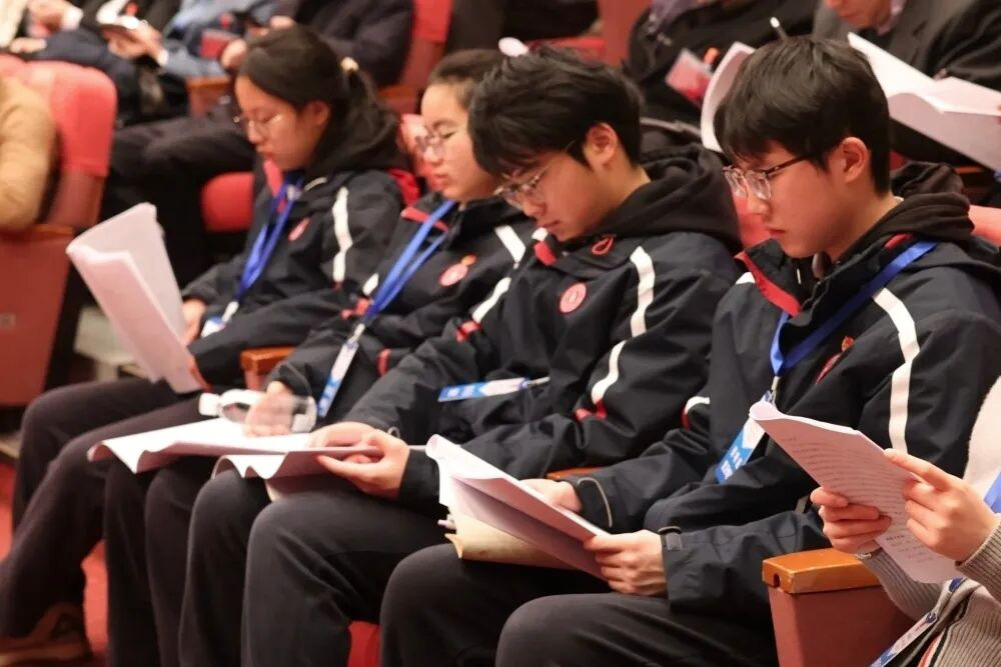
    In a groundbreaking educational initiative, Shanghai’s Hongkou district has transformed civic education by bringing high school students directly into the heart of grassroots governance. Eleven local schools participated in an immersive program that allowed student representatives to observe actual sessions of the district people’s congress as special observers, providing them with unprecedented access to China’s political processes.

    The program represents the nation’s first comprehensive demonstration district for youth education on the people’s congress system, established in 2023. According to Li Wenqing, deputy director of the education, science, culture and public health committee of Hongkou’s standing committee, the district has created a robust support system enabling students to interact directly with congressional deputies, visit legislative contact points, draft research reports, and even simulate standing committee meetings under professional guidance.

    Students reported profound shifts in their understanding of democracy and civic engagement. ‘When I first learned about whole-process people’s democracy in junior high school, it remained an abstract concept,’ reflected Zhang Yiwu, a student from Chengzhong High School affiliated with Tongji University. ‘Now, sitting in the congress hall, I recognize it as tangible reality embedded in representatives’ proposals that directly impact our daily lives.’

    The initiative has yielded concrete results, with student research proposals on regional development and livelihood issues being formally submitted to the congress. Tang Qun, principal of Shanghai Beijiao High School, confirmed that youth perspectives are now actively incorporated into local governance discussions.

    Congress deputies have praised the students’ engagement and intellectual maturity. Zhang Lei, a district deputy, noted that ‘although students under 18 cannot vote yet, they are vital society members. Listening to their voices demonstrates whole-process people’s democracy at its most inclusive and authentic.’ Another deputy, Xu Wei, remarked on students’ remarkable confidence and independent thinking during discussions about legislative authority and sports regulation amendments.

    Building on this successful pilot, Hongkou district is expanding people’s congress education to all high schools through elective courses, project-based learning, and immersive activities. The district education bureau, under Sun Lei’s leadership, is also exploring program extension to middle and elementary schools, with future initiatives focusing on student research into practical social issues including elderly care and community renovation.

  • Malaysia football officials quit over foreign-born players scandal

    Malaysia football officials quit over foreign-born players scandal

    The entire executive committee of Malaysia’s Football Association (FAM) has collectively resigned amidst an escalating international scandal involving allegedly falsified citizenship documents for seven foreign-born national team players. The unprecedented mass resignation follows FIFA’s investigation into player eligibility violations that has rocked Malaysian football.

    FIFA, world football’s governing body, initiated proceedings after Malaysia’s 4-0 victory against Vietnam in an Asian Cup qualifier last June. The investigation centered on seven athletes of diverse origins: Spanish-born Gabriel Felipe Arrocha, Facundo Tomas Garces, and Jon Irazabal Iraurgui; Argentinian-born Rodrigo Julian Holgado and Imanol Javier Machuca; Netherlands-born Hector Alejandro Hevel Serrano; and Brazilian-born Joao Vitor Brandao Figueiredo.

    The controversy involves FIFA’s ‘grandfather rule,’ which permits foreign-born players to represent nations where their biological parents or grandparents originated. According to FIFA investigators, FAM allegedly fabricated birth certificates to falsely indicate the players’ grandparents were born in Malaysian cities including Penang and Malacca, when original documentation showed their grandparents’ birthplaces corresponded with the players’ own countries of origin.

    FIFA’s disciplinary committee imposed 12-month playing suspensions and fines against the seven athletes while ordering FAM to pay 350,000 Swiss francs (approximately $440,000). The global body additionally overturned three of Malaysia’s previous match results—against Singapore, Palestine, and Cape Verde—awarding 3-0 defeats instead.

    FAM maintained the discrepancies resulted from an ‘administrative error’ and asserted the players’ citizenship legitimacy. After FIFA rejected their appeal, the association escalated the case to the Court of Arbitration for Sport (CAS). In a significant interim development, CAS lifted the players’ suspensions this week pending its final verdict expected in late February.

    The mass committee resignation aims to ‘safeguard FAM’s reputation and institutional interests’ while enabling necessary reforms ‘without distraction or perceived conflicts.’ Current operations will be managed by a reduced team led by FAM’s secretary-general with support from the Asian Football Confederation.

    This scandal highlights broader regional trends where Southeast Asian nations increasingly naturalize foreign athletes to enhance competitive performance. Indonesia has incorporated Dutch-born players of Indonesian descent, while Malaysia granted citizenship to 23 foreign athletes since 2018 specifically for national team representation.

  • Chinese tourists avoid Japan amid concerns

    Chinese tourists avoid Japan amid concerns

    A perfect storm of diplomatic tensions, safety warnings, and operational disruptions has precipitated a dramatic collapse in Chinese tourism to Japan, with travel industry experts reporting unprecedented cancellation rates and declining visitor numbers.

    The downturn began in November 2025 following controversial remarks by Japanese Prime Minister Sanae Takaichi regarding Taiwan, which sparked significant public backlash in China. This diplomatic friction coincided with multiple other concerns that have collectively diminished Chinese traveler confidence in Japan as a preferred destination.

    According to Yang Jinsong, a prominent researcher at the China Tourism Academy, the decline represents a complex convergence of factors. “Beyond the bilateral relations affecting public sentiment, travelers are growing increasingly wary of Japan’s public security situation, recent seismic activity, and disease outbreaks,” Yang explained.

    The aviation sector has manifested this trend through massive flight cancellations. Data from Flight Manager, an aviation analytics platform, reveals that cancellation rates for mainland China to Japan routes reached 47.2% in January 2026—a 7.8 percentage point increase from December 2025. By late January, carriers had already canceled February flights on 49 scheduled routes.

    China’s three major airlines—Air China, China Southern Airlines, and China Eastern Airlines—responded to the situation by offering unprecedented flexibility. On January 27, 2026, they announced that passengers who purchased tickets before noon that day for Japan-bound flights scheduled between March 29 and October 24, 2026, would be eligible for free refunds or changes.

    Official immigration statistics released by the Japanese government on January 15, 2026, quantify the impact: approximately 348,700 Chinese nationals (excluding those from Hong Kong, Macao, and Taiwan) traveled to Japan in December 2025. This represents a staggering 40% decrease from the previous year and a 35% drop from November 2025.

    The safety concerns received official validation when China’s Ministry of Foreign Affairs issued a travel advisory on January 27, 2026, warning that “public security in Japan has deteriorated in recent months.” The statement highlighted increased criminal cases targeting Chinese citizens and noted that earthquakes in several regions had caused injuries, with Japanese authorities warning of potential follow-up seismic activity.

    “Chinese citizens in Japan are facing serious safety threats,” the ministry declared, explicitly advising travelers to avoid visiting Japan and urging those already in the country to closely monitor security conditions along with earthquake and disaster alerts.

    Adding to the concerns, Japan’s Ministry of Agriculture, Forestry and Fisheries confirmed the country’s 18th avian influenza outbreak of the season at a poultry farm in Chiba prefecture, near Tokyo, where more than 100,000 quail were being raised.

    On Chinese social media platform Xiaohongshu (RedNote), users actively debate whether Japan remains a viable destination. One user, nicknamed Xiaoyu, posted seeking advice about a planned Spring Festival hiking trip along the Kumano Kodo trail, noting, “I am preparing a ‘Plan B’ amid fears of flight cancellations and other uncontrollable risks.”

    While some commenters expressed similar concerns, others reported that their December trips were largely unaffected. Industry expert Yang suggested that Chinese travelers are likely considering alternative destinations for the holiday period as uncertainty surrounding flights and safety conditions continues to influence travel decisions.

  • Djokovic gets lucky to join Pegula, Rybakina in Melbourne semi-finals

    Djokovic gets lucky to join Pegula, Rybakina in Melbourne semi-finals

    Melbourne witnessed a day of dramatic developments at the Australian Open quarterfinals where fortune favored the experienced while emerging stars demonstrated championship form. Novak Djokovic’s path to the semifinals took an unexpected turn when his opponent, Italy’s Lorenzo Musetti, retired due to injury while leading 6-4, 6-3, 1-3 on Rod Laver Arena.

    The Serbian champion, pursuing an unprecedented 25th Grand Slam title, acknowledged his extraordinary luck in advancing without completing the match. ‘I feel really sorry for him—he was the far better player,’ Djokovic confessed. ‘I was on my way home tonight. He should have been the winner today, no doubt. I am extremely lucky to get through this one.’

    Meanwhile, in the women’s draw, commanding performances defined the day. Jessica Pegula delivered a masterclass against compatriot Amanda Anisimova, securing a 6-2, 7-6(7/1) victory in an all-American encounter. The sixth seed has yet to drop a set throughout the tournament, demonstrating remarkable consistency as she pursues her first major title at age 31.

    Elena Rybakina produced the day’s most impressive upset, dismantling world number two Iga Swiatek 7-5, 6-1. The 2022 Wimbledon champion displayed composed dominance against the Polish star, who was seeking to complete her career Grand Slam. Rybakina attributed her success to evolved mental fortitude: ‘Now I feel like I’m just doing my job, trying to improve each day. So it’s kind of another day, another match.’

    The tournament now sets compelling semifinal matchups. Djokovic awaits the winner between Jannik Sinner and Ben Shelton, while Pegula and Rybakina prepare for their seventh career meeting, currently tied at three victories each. In the other women’s semifinal, defending champion Aryna Sabalenka will face Ukrainian twelfth seed Elina Svitolina.

  • US aircraft carrier arrives in Middle East amid Iran tensions

    US aircraft carrier arrives in Middle East amid Iran tensions

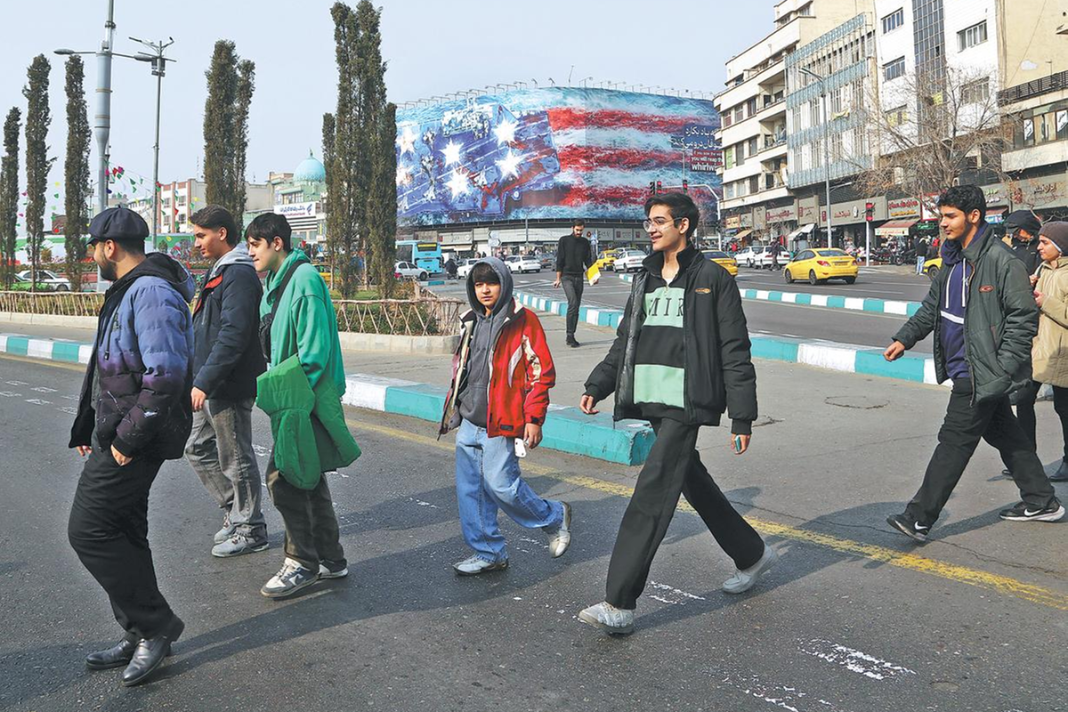
    A formidable US naval contingent spearheaded by the USS Abraham Lincoln aircraft carrier has entered Middle Eastern waters, significantly escalating military tensions with Iran amid stalled diplomatic efforts. The deployment marks the region’s first carrier presence since October, dramatically enhancing American offensive capabilities with F-35 fighter squadrons and destroyers armed with hundreds of missiles, including Tomahawk cruise missiles.\n\nRegional powers have responded with unequivocal declarations against hosting offensive operations. The United Arab Emirates, which maintains a US airbase within its territory, formally declared through its Foreign Ministry that it would not permit its airspace, territory, or territorial waters to be utilized for hostile actions against Iran. Emphasizing neutrality and regional stability, the UAE committed to withholding any logistical support for such operations and advocated for dialogue and de-escalation as the primary solution to the crisis.\n\nSaudi Arabia issued a parallel statement, similarly refusing access to its territory and airspace for attacks targeting Iran. These declarations from key Gulf nations present substantial operational complications for potential US military action, which would typically require regional basing rights.\n\nIran responded with defiant rhetoric and symbolic demonstrations. Foreign Ministry spokesman Esmaeil Baghaei warned of a \”comprehensive and regret-inducing response to any aggression,\\” asserting Iran’s confidence in its military capabilities. Tehran displayed public resolve through a newly erected billboard in the city center depicting a destroyed US aircraft carrier, accompanied by the prophetic caption: \”If you sow the wind, you will reap the whirlwind.\”\n\nFurther amplifying regional tensions, Iranian Navy Commander Shahram Irani characterized Iran’s naval power as \”an anchor of stability,\” while Yemen’s Houthi group threatened new attacks in the Red Sea through a menacing video. Hezbollah leader Naim Qassem warned from Lebanon that \”a war on Iran this time will ignite the region.\”\n\nThe escalating geopolitical situation has already impacted civilian aviation, with several airlines including India’s IndiGo canceling flights to multiple Middle Eastern destinations as a precautionary measure.

  • ASEAN top diplomats under pressure to end Myanmar war and finalize South China Sea pact

    ASEAN top diplomats under pressure to end Myanmar war and finalize South China Sea pact

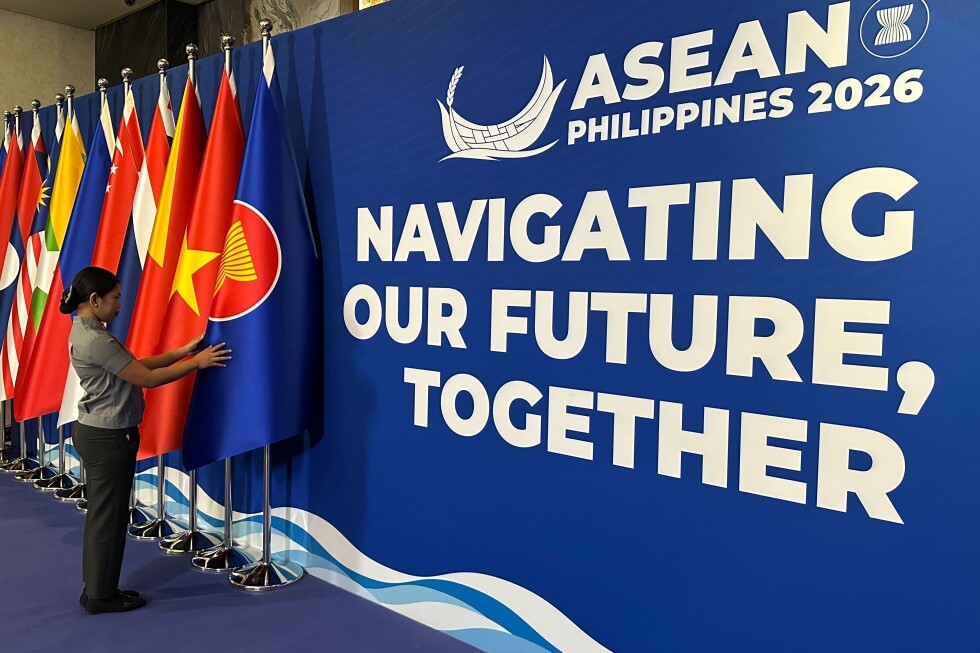
    Foreign ministers from the Association of Southeast Asian Nations convened in Cebu, Philippines, on Wednesday facing mounting challenges to regional stability. The two-day gathering confronted the bloc’s persistent difficulties in mediating Myanmar’s protracted civil conflict while racing against time to finalize a maritime conduct agreement with China.

    The 11-member regional organization, long criticized for its consensus-based approach, finds its unity tested by multiple crises. Myanmar remains suspended from leadership roles following the 2021 military coup that ousted Aung San Suu Kyi’s government, with ASEAN continuing to bar junta leaders from high-level meetings while permitting lower-level diplomatic participation.

    Philippine Foreign Secretary Theresa Lazaro, serving as ASEAN’s special envoy to Myanmar, presented findings from her recent mission to the conflict-ridden nation. Her report included observations from meetings with military leadership and outcomes from a Philippines-hosted conference of anti-junta political and ethnic factions. Participants examined implementation mechanisms for ASEAN’s five-point peace framework, originally adopted in 2021, which has thus far failed to curb violence that has claimed tens of thousands of lives and displaced millions.

    Parallel negotiations demand attention as ASEAN works toward a self-imposed December deadline for concluding a South China Sea code of conduct with China. The proposed agreement aims to manage territorial disputes involving four ASEAN members whose maritime claims overlap with Beijing’s expansive assertions. While Washington maintains no territorial claims, it has reaffirmed its defense commitment to treaty ally Philippines should confrontations escalate.

    Analysts remain skeptical about both initiatives. Australia-based researcher Lupita Wijaya noted fundamental disagreements persist regarding the code’s legal binding nature and interpretations of international law, suggesting conclusion remains ‘an uphill climb’ despite political declarations.

  • British leader’s trip to China is a balancing act between trade, national security and Trump

    British leader’s trip to China is a balancing act between trade, national security and Trump

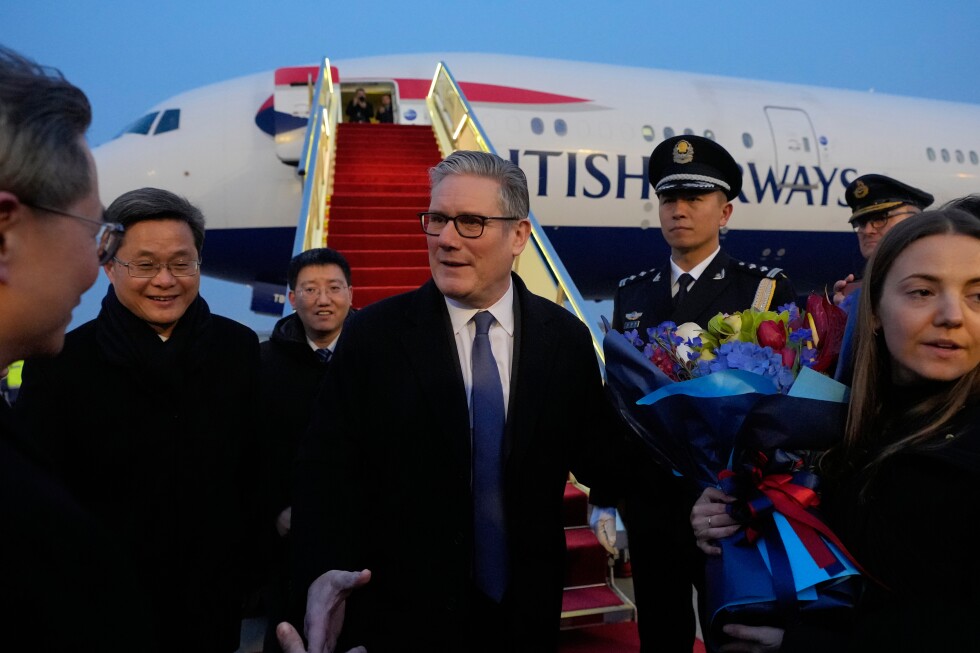
    British Prime Minister Keir Starmer commenced a pivotal four-day diplomatic mission to China on Wednesday, marking the first visit by a UK leader since Theresa May’s 2018 trip. Arriving in Beijing with a delegation exceeding 50 business executives from prominent firms including British Airways, HSBC, and Jaguar Land Rover, Starmer articulated a pragmatic approach to Sino-British relations.

    The Prime Minister emphasized that Britain would not face a binary choice between its transatlantic partnership with the United States and its economic relationship with China. “I’m a pragmatist, a British pragmatist applying common sense,” Starmer stated en route to Beijing, underscoring his intention to balance engagement with national security considerations.

    This diplomatic overture occurs against a backdrop of significantly strained relations following concerns over Chinese espionage activities, Beijing’s support for Russia in the Ukraine conflict, and the crackdown on civil liberties in Hong Kong. Both nations now appear focused on finding common ground while managing differences, as recently advocated by China’s Ambassador to the UK Zheng Zeguang in a Times of London commentary.

    The trade dynamics reveal substantial opportunities: China maintained an $85.1 billion goods trade surplus with Britain in 2025, while the UK held a services surplus. With China’s new policy directives encouraging domestic consumption and further opening its services sector, the China-Britain Business Council identifies significant growth potential for British companies in areas including finance, consulting, healthcare, and elderly care services.

    Global trade uncertainties under the Trump administration have added urgency to diversifying economic partnerships. Both China and Britain have been affected by U.S. tariff policies, prompting similar moves by other nations including Canada’s recent trade mission to Beijing. However, such approaches carry risks, as demonstrated by Trump’s threat of 100% tariffs on Canada should it pursue a trade deal with China.

    National security concerns remain paramount, with the UK having previously barred Chinese investment in sensitive telecommunications infrastructure and nuclear power projects. Notably, the British government recently approved plans for an expanded Chinese Embassy in London, despite concerns about potential espionage capabilities.

    The human rights situation in Hong Kong presents particular complications for UK-China relations given historical ties. The recent conviction of British citizen Jimmy Lai under Hong Kong’s national security law adds diplomatic complexity to Starmer’s visit, with former Hong Kong governor Chris Patten urging firmness on human rights issues during the Prime Minister’s engagements with Chinese leadership.

  • US withdraws from Paris Agreement; UN vows unwavering global climate action

    US withdraws from Paris Agreement; UN vows unwavering global climate action

    In a significant geopolitical development, the United States formally executed its withdrawal from the Paris Climate Agreement on Tuesday, January 28, 2026. This move marks a pivotal moment in global environmental diplomacy, removing the world’s second-largest greenhouse gas emitter from the international accord designed to combat climate change.

    The United Nations has responded with resolute determination to maintain climate action momentum. During a press briefing, a UN spokesperson addressed inquiries from China Daily, emphasizing that the organization’s climate initiatives would proceed without interruption despite the American departure.

    “The UN’s comprehensive efforts to address climate change, facilitate equitable transitions, and implement critical mitigation and adaptation measures for vulnerable nations will continue undeterred,” the spokesperson affirmed. This declaration underscores the international body’s commitment to preserving the agreement’s integrity and advancing its objectives regardless of individual national decisions.

    The Paris Agreement, adopted in 2015, represents a landmark global framework wherein signatory nations commit to substantially reducing carbon emissions to limit global temperature rise. The U.S. withdrawal process commenced in 2019 under the previous administration and has now reached formal completion, potentially altering the dynamics of international climate negotiations and implementation strategies.

    UN officials indicated that climate diplomacy would remain a top priority, with continued focus on supporting developing countries particularly susceptible to climate impacts. The organization’s steadfast position signals confidence that other signatory nations will maintain their commitments to the accord’s ambitious environmental targets.

  • South Korea’s ex-first lady jailed 20 months for bribery

    South Korea’s ex-first lady jailed 20 months for bribery

    In an unprecedented judicial ruling that marks a historic moment for South Korea’s political landscape, Kim Keon Hee, wife of imprisoned former President Yoon Suk Yeol, has been convicted on corruption charges and sentenced to 20 months imprisonment. The Seoul Central District Court delivered the landmark verdict on Wednesday, finding the former first lady guilty of accepting substantial bribes from the controversial Unification Church during her husband’s presidency.

    Presiding Judge Woo In-sung declared that Kim had systematically “misused her position as a means of pursuing personal gain,” emphasizing that “the higher one’s position, the more consciously one must guard against such conduct.” The court determined that the defendant had become “preoccupied with self-adornment” and failed to reject improper solicitations during her tenure as first lady.

    The prosecution’s investigation revealed that between April and July 2022, Kim accepted gifts valued at approximately 80 million won ($56,000), including an exquisite Graff diamond necklace and multiple Chanel handbags, from the Unification Church in exchange for political and business favors. While special prosecutors had sought a 15-year prison term and a 2 billion won fine across three charges, the court convicted her on one count, noting she had not actively solicited the bribes and lacked significant prior criminal history.

    In addition to the prison sentence, the court ordered confiscation of the diamond necklace and restitution of 12.85 million won in illicit gains. The verdict creates the extraordinary circumstance where both a former president and first lady are simultaneously serving prison sentences—a first in South Korea’s constitutional history.

    The court however acquitted Kim on separate charges related to stock price manipulation and receiving unauthorized opinion polling services during the 2022 presidential campaign that brought her husband to power. Additional pending cases allege her involvement in recruiting Unification Church members for the conservative People Power Party and trading government appointments for gifts.

    Kim maintained her innocence throughout the proceedings, describing the charges as “deeply unjust,” though she acknowledged receiving—and later returning—Chanel handbags. During August 2023 questioning, she offered a public apology, stating, “I am truly sorry that a nobody like me has caused concern to the people.”

    The investigation has produced wider repercussions, leading to the arrest of Unification Church leader Han Hak-ja. Separately, Kim faces academic integrity allegations after Sookmyung Women’s University revoked her 1999 graduate degree due to thesis plagiarism findings.

    This case represents the latest chapter in South Korea’s ongoing battle against corruption within its highest political circles, demonstrating the judiciary’s continued willingness to hold powerful figures accountable regardless of their status or connections.