
作者: admin

  • ‘Markets are nervous’: How geopolitical tensions feed food inflation risks

    ‘Markets are nervous’: How geopolitical tensions feed food inflation risks

    DUBAI – Rising geopolitical conflicts and shipping route disruptions are creating significant upward pressure on global food prices, according to expert analysis presented at Thursday’s Intercontinental Commodity Exchange summit in Dubai. Industry leaders warned that market nervousness is exacerbating inflationary trends despite adequate global grain supplies.

    Thierry Beaupied, Vice President of Romania-based Trans-Oil Group, emphasized that psychological market factors are now driving price increases. “Markets are extremely nervous,” Beaupied stated. “Even with sufficient global grain and corn inventories, regional bombings and transport disruptions trigger buying frenzies as purchasers anticipate potential shortages.”

    The Black Sea conflict emerged as a primary concern, with climate shocks and damaged Ukrainian energy infrastructure creating additional volatility in grain and vegetable oil markets. Beaupied noted that approximately 60% of global sunflower oil originates from the Black Sea region, maintaining “tight and bullish” market conditions for vegetable oils in the medium term.

    For the United Arab Emirates, the challenge centers on price stability rather than physical shortages. The Middle Eastern nation remains generally well-supplied, with vegetable oils primarily sourced from South America. However, intense competition from major buyers including India and Iran continues to support elevated pricing structures.

    Logistical complexities are compounding the situation, with many vessels now discharging cargo in India before proceeding to Arabian Gulf ports to optimize freight expenses. This rerouting adds layers of complexity to supply chain management.

    Red Sea security concerns are forcing exporters to reconsider traditional trade routes. While Egypt’s grain imports remain relatively unaffected due to their reliance on Black Sea and American sources, exports of processed wheat products to neighboring regions have noticeably slowed.

    Mahmoud Kalila, Managing Director of Elementra Commodities in Egypt, revealed that security concerns have prompted investments in alternative logistics infrastructure, including enhanced road networks and proprietary shipping fleets.

    The summit also highlighted financial technology’s expanding role in managing cross-border trade risk. Nabeel Ahmed, Managing Director of HexTrust, emphasized the UAE’s critical position as a regional financial hub where efficient payment systems are becoming increasingly vital.

    “When wealth moves, money has to move with it,” Ahmed explained. “Regulated digital solutions enable businesses to transfer value within seconds instead of weeks, providing crucial flexibility during periods of market volatility.”

    Experts concluded that food security will remain intrinsically linked to geopolitical stability, with UAE consumers increasingly exposed to global market forces that extend far beyond local supermarket shelves.

  • Why the US dollar hit a four-year low and could fall further

    Why the US dollar hit a four-year low and could fall further

    The US dollar has plunged to its weakest position in four years against a basket of major currencies, marking a dramatic reversal from earlier expectations of market stability. This significant depreciation has seen the dollar drop approximately 3% within a single week, reaching multi-year lows against both the Euro and British pound.

    The currency’s decline represents a continuation of last year’s 10% slump – its poorest performance since 2017 – which began following former President Trump’s controversial ‘Liberation Day’ tariff announcements. Recent tensions between the US and Europe over Greenland have further exacerbated the dollar’s weakness, while speculation about potential coordinated intervention with Japan to support the yen has added to market uncertainty.

    Financial analysts attribute the sustained pressure on the dollar to growing market concerns about the unpredictable nature of current US administration policies. Robin Brooks, senior fellow at the Brookings Institution and former Goldman Sachs FX strategist, noted that ‘markets are reacting to the haphazard nature of policy in this administration – the escalation, de-escalation,’ drawing parallels between the backlash over tariffs and recent Greenland tensions.

    The dollar’s weakness has broader implications beyond currency markets. American travelers abroad face reduced purchasing power, while sustained depreciation could potentially fuel domestic inflation through higher import costs. More significantly, the decline raises fundamental questions about the dollar’s long-standing status as the world’s premier reserve currency, a position that has historically helped maintain relatively low borrowing costs for the United States.

    Despite the currency’s struggles, other US assets have shown resilience. Equity markets continue trading near record highs, and movements in government debt markets have remained relatively contained. However, the dollar’s decline has contributed to a surge in gold prices, which have doubled over the past year as investors seek safe-haven alternatives.

    Looking forward, analysts at ING anticipate additional dollar weakness of 4-5% this year as growth prospects outside the US improve. The currency’s ultimate trajectory will depend significantly on Federal Reserve interest rate decisions and US economic performance, with potential rate cuts likely to exert further downward pressure on the dollar as investors pursue higher returns elsewhere.

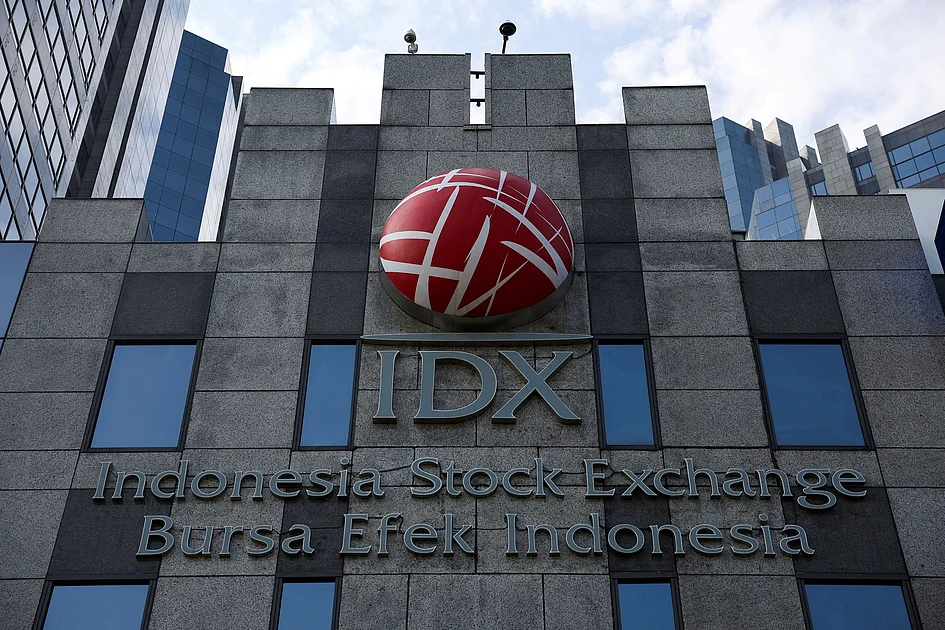
  • Indonesian authorities attempt to soothe worries after $80 billion market rout

    Indonesian authorities attempt to soothe worries after $80 billion market rout

    Indonesian financial regulators initiated emergency stabilization measures on Thursday following a massive two-day market selloff that erased approximately $80 billion in market valuation. The dramatic downturn was triggered by index provider MSCI raising serious concerns about ownership transparency and trading practices within the Indonesian equity market.

    The Jakarta Composite Index experienced extreme volatility, plummeting 7.4% on Wednesday followed by an additional 8% decline on Thursday that activated circuit-breaker trading halts. The benchmark ultimately closed with a moderated 1% loss following intervention announcements from authorities.

    Central to the crisis are investor apprehensions regarding President Prabowo Subianto’s economic policies, particularly the expansion of fiscal deficits and increased governmental involvement in financial markets. These concerns were exacerbated by recent controversial appointments, including the president’s nephew to the central bank and the dismissal of respected Finance Minister Sri Mulyani Indrawati last year.

    In response to MSCI’s potential downgrade warning, Indonesian authorities unveiled a comprehensive package of corrective measures. The Financial Services Authority (OJK) announced the doubling of free-float requirements for listed companies from 7.5% to 15%, alongside commitments to enhance ownership transparency through detailed disclosure of shareholdings above and below 5% thresholds.

    Mahendra Siregar, Head of OJK, indicated during a press conference that communications with MSCI have been constructive, with expectations for resolution by March. Meanwhile, the Indonesian rupiah continued its decline, trading at 16,745 against the US dollar, approaching recent record lows.

    International financial institutions responded decisively. Goldman Sachs and UBS both downgraded their recommendations for Indonesian equities, with Goldman warning of potential outflows reaching $7.8 billion in a worst-case downgrade scenario. Market analysts characterized the selloff as predominantly driven by structural concerns rather than fundamental economic weaknesses.

    Despite the aggressive measures, analysts anticipate continued market fragility in the near term, emphasizing that investor confidence will require demonstrable improvements in transparency and consistent policy implementation rather than merely announcements of intent.

  • Venezuela’s oil ghost towns hope Trump plan will revive their fortunes

    Venezuela’s oil ghost towns hope Trump plan will revive their fortunes

    Nestled along the eastern shores of Lake Maracaibo, the neighborhood of Miraflores stands as a haunting monument to Venezuela’s vanished prosperity. Its American-style suburban homes with manicured lawns and porches once housed executives from the world’s most powerful oil companies during the nation’s petroleum golden age. Today, many sit abandoned and looted, their windows shattered and wiring stripped bare—a stark contrast to the community that symbolized Latin American wealth just decades ago.

    This region, containing the world’s largest proven oil reserves at approximately 303 billion barrels, now represents both Venezuela’s catastrophic decline and its potential salvation through a proposed $100 billion U.S. investment initiative. Throughout the Lake Maracaibo basin, rusting oil pumps stand motionless between homes and in fields, while others freshly painted in Venezuela’s national colors continue limited operations.

    The area’s deterioration mirrors the nation’s broader economic collapse. Since President Nicolás Maduro took power in 2013, Venezuela’s GDP has plummeted by over 70%. Residents like Gladysmila Gil, who moved to the area in 1968 when her oil worker husband received company housing, describe dramatic declines in basic services. “The rubbish was collected every other day, and we didn’t have these power outages,” she recalls, noting that today garbage collection is sporadic and blackouts occur almost daily despite the region’s energy wealth.

    The industry’s downfall traces back through multiple political eras. Following nationalization in 1976, state-owned PDVSA managed production that once reached 3.5 million barrels daily. The 2002 oil workers’ strike against then-President Hugo Chávez triggered massive firings—reportedly up to 22,000 technical staff—which industry veterans identify as a critical turning point. “You can’t lose 22,000 technical people in a company and expect that nothing happens,” says Jorge, a pseudonym for a worker dismissed during the purge.

    Despite recent political developments including Maduro’s removal by U.S. forces to face narcotics charges, his loyalist Delcy Rodríguez has cooperated with the Trump administration to reform oil laws. Venezuela’s parliament approved significant legal changes allowing foreign and local companies to operate oilfields through new contract models.

    Local reactions to potential U.S. investment are mixed. Fisherman Carlos Rodríguez welcomes the prospect: “It would be better because then there would be work, and our children wouldn’t have to resort to fishing.” Others express caution, with fisherman José Luzardo stating, “We have no problem with foreign companies coming to exploit our resources… but we don’t want to be anyone’s colony.”

    Industry analysts remain skeptical about rapid recovery. ExxonMobil CEO Darren Woods recently labeled Venezuela “uninvestable” without stronger legal protections, noting the company had its assets seized there twice previously. Experts estimate that restoring former production levels could require a decade and hundreds of billions of dollars.

    Yet hope persists among Maracaibo residents like 93-year-old retired oil worker José Rodas, who maintains a classic American muscle car from the 1970s oil boom. “Things have become more difficult,” he acknowledges. “In the past, life was easier.” For many in Venezuela’s oil heartland, the promise of renewed investment represents not just economic opportunity but the potential restoration of vanished prosperity.

  • India sees 6.8%-7.2% growth next year, flags risks from geopolitics, weak exports

    India sees 6.8%-7.2% growth next year, flags risks from geopolitics, weak exports

    India’s economic trajectory remains strong with projected growth between 6.8% and 7.2% for the upcoming fiscal year starting April, according to the government’s annual economic survey presented Thursday. While this represents a slight moderation from the current year’s 7.4% expansion, the forecast underscores the resilience of domestic demand against mounting global challenges.

    The comprehensive assessment, presented to parliament by Finance Minister Nirmala Sitharaman, characterizes the outlook as ‘steady growth amid global uncertainty, requiring caution, but not pessimism.’ The report highlights several external pressures including slower growth among key trading partners, trade disruptions from tariff impositions, and capital flow volatility that may periodically affect export performance and investor sentiment.

    International institutions have echoed this cautiously optimistic assessment. The IMF recently upgraded India’s growth forecast by 0.7 percentage points to 7.3%, while the World Bank increased its projection by 0.9 points to 7.2% for the coming fiscal year.

    Currency dynamics present a particular challenge. The Indian rupee hit a historic low of 91.9850 per dollar on Thursday, with the survey noting the currency is ‘punching below its weight’ despite strong economic fundamentals. This depreciation, while partially offsetting the impact of higher U.S. tariffs, has contributed to significant capital outflows—foreign investors withdrew a record $19 billion from Indian equities in 2025.

    The report identifies recent structural reforms—including consumption-tax reductions, labor law modernization, and nuclear-power sector liberalization—as key drivers expected to bolster both investment and consumption. Additionally, ongoing trade negotiations with the United States could potentially reduce external uncertainties if concluded successfully within the year.

    Monetary policy has supported growth momentum, with the Reserve Bank of India implementing 125 basis points of rate cuts since February 2025—the most aggressive easing cycle since 2019. Current indicators suggest sustained demand buoyancy as the new year progresses, positioning India among the world’s fastest-growing major economies despite global headwinds.

  • US eases Venezuela sanctions after oil sector reforms

    US eases Venezuela sanctions after oil sector reforms

    In a significant shift in foreign policy, the United States has moved to ease key sanctions on Venezuela’s oil industry, responding directly to sweeping legislative reforms approved by the Venezuelan parliament. The U.S. Treasury Department issued a general license authorizing a wide range of transactions involving Venezuelan-origin oil, including its extraction, export, refining, and transportation, mere moments after lawmakers in Caracas voted to dismantle state controls that had long restricted private investment.

    The sanctions relief follows intensive diplomatic engagement between Washington and the administration of Venezuela’s interim President, Delcy Rodriguez. This development marks a dramatic reversal from the longstanding U.S. policy of maximum pressure, which was instituted during the socialist rule of Nicolas Maduro. The reform fundamentally alters the nation’s hydrocarbon law, which dated to 2006 and had mandated that the state oil company, PDVSA, retain a majority stake in all joint ventures with foreign entities.

    President Donald Trump, who has publicly praised Rodriguez, framed the policy shift as a strategic victory. He asserted that Washington is now ‘in charge’ of Venezuela’s vast energy resources, the largest proven oil reserves in the world. The administration pressured Caracas to open its oil fields to U.S. investors, a condition for its support of Rodriguez’s interim government following the ouster of Maduro.

    For Venezuela, the reform is touted by its leadership as a ‘historical leap’ essential for economic recovery. Years of crippling U.S. sanctions, compounded by profound mismanagement, corruption, and underinvestment, had decimated the nation’s oil production, which plummeted to just 300,000 barrels per day in 2020. The influx of foreign capital is seen as the only path to reviving the battered economy and stabilizing the struggling national currency, the bolivar. Rodriguez has already allocated $300 million from an initial crude sale to shore up the currency.

    While the reform paves the way for the return of U.S. energy majors like Exxon Mobil and ConocoPhillips—which exited in 2007—analysts note that the state retains some discretionary power in awarding contracts. The changes offer greater guarantees to private players, relinquish state control of exploration activities, and lower taxes and royalties. The industry, though showing a slow recovery with production reaching 1.2 million barrels per day, remains a shadow of its former capacity of 3 million barrels at the start of the century.

  • Man accused of impersonating FBI agent in bid to free Luigi Mangione

    Man accused of impersonating FBI agent in bid to free Luigi Mangione

    Federal authorities have apprehended a Minnesota man for allegedly attempting to impersonate an FBI agent in a brazen effort to secure the release of a high-profile inmate from a Brooklyn detention facility.

    Mark Anderson, 36, from Mankato, Minnesota, approached the Metropolitan Detention Center in Brooklyn on Wednesday while allegedly posing as a federal agent. According to court documents, Anderson presented himself to corrections officers claiming to possess judicial paperwork authorizing the immediate release of an incarcerated individual.

    The criminal complaint reveals that when officers requested proper identification, Anderson produced a Minnesota driver’s license while simultaneously asserting he was armed with weapons. Authorities report that the suspect then proceeded to display and throw numerous documents at jail staff members.

    Following his detention by Bureau of Prisons officials, a search of Anderson’s belongings yielded unconventional items including a large two-pronged barbecue fork and a pizza cutter-like implement. The suspect had reportedly traveled to New York City seeking employment opportunities and had been working at a local pizzeria prior to the incident.

    The intended beneficiary of this alleged scheme was identified by law enforcement sources as Luigi Mangione, who has been held at the Brooklyn facility since 2024. Mangione faces both state and federal charges for the fatal shooting of United Healthcare CEO Brian Thompson in 2024, to which he has pleaded not guilty.

    Anderson made an initial court appearance on Thursday but has not yet entered a formal plea. The charge of impersonating a federal officer carries significant potential penalties upon conviction.

    The Mangione case has generated substantial public attention, with the defendant attracting supporters both online and at court proceedings. The original homicide case sparked national discourse regarding healthcare costs in the United States, while the upcoming federal trial, with jury selection scheduled for September, continues to draw significant public interest.

  • Abu Dhabi real estate heads into 2026 with steady gains

    Abu Dhabi real estate heads into 2026 with steady gains

    Abu Dhabi’s real estate sector is positioned for a year of sustained expansion in 2026, bolstered by robust economic fundamentals and favorable demographic trends. According to the latest ValuStrat Market Outlook, the emirate’s property landscape demonstrates remarkable resilience across residential, commercial, and hospitality segments, creating an environment conducive to continued investor engagement and market stability.

    Residential markets are anticipated to experience accelerated capital appreciation, with values projected to surge by 16%—a notable increase from the 13% growth recorded in the previous year. Rental rates are expected to rise by an average of 6%, with apartments poised to outperform villas in capital gains. This shift reflects evolving buyer preferences emphasizing value optimization, convenience, and lifestyle amenities, alongside emerging affordability constraints in the villa rental segment.

    Supply dynamics continue to favor sellers, with approximately 6,500 new units expected to enter the market despite a theoretical pipeline of over 16,000 units. This persistent delivery delay pattern maintains occupancy rates at approximately 90%, sustaining upward pressure on prices across various submarkets.

    The commercial sector demonstrates even more pronounced tightness, particularly in Grade A office space. With minimal new supply additions—only 4,200 square meters of gross leasable area anticipated—and occupancy rates reaching 93%, prime office rents are forecast to increase by over 20%, while capital values may rise by 10%. The competition for premium, well-located office spaces remains intense as businesses prioritize building quality and strategic location.

    Hospitality indicators show promising improvement, with average occupancy projected at 82% alongside an average daily rate of Dh551 and revenue per available room of Dh452. The scheduled opening of several luxury properties, including Mondrian Abu Dhabi and The Mangroves Abu Dhabi, complements the emirate’s tourism strategy aiming to attract 39.3 million visitors annually by 2030.

    Underpinning this real estate momentum is Abu Dhabi’s strong economic outlook, with GDP growth anticipated around 5% and inflation remaining manageable at approximately 2%. Population growth toward 4.5 million residents, coupled with significant infrastructure developments including the Etihad Rail project and enhanced light rail connectivity, provides additional structural support for sustained real estate performance throughout 2026.

  • Federal judge blocks Trump administration from detaining refugees in Minnesota

    Federal judge blocks Trump administration from detaining refugees in Minnesota

    A federal court in Minneapolis has delivered a significant blow to the Trump administration’s immigration enforcement tactics by issuing a temporary restraining order against the arrest of lawfully resettled refugees in Minnesota. U.S. District Judge John Tunheim ruled Wednesday that Immigration and Customs Enforcement (ICE) agents likely violated multiple federal statutes through their targeted operations against refugees who had undergone proper admission procedures.

    Judge Tunheim’s order specifically mandates the immediate release of any refugees detained under Operation PARRIS (Post-Admission Refugee Reverification and Integrity Strengthening), a program announced by the Department of Homeland Security earlier this month that proposed reexamining thousands of refugee cases through new background checks.

    In his ruling, Tunheim emphasized that refugees possess legal rights to reside and work peacefully in the United States without facing “the terror of being arrested and detained without warrants or cause.” The judge articulated America’s historical role as “a haven of individual liberties in a world too often full of tyranny and cruelty,” warning that this ideal is abandoned “when we subject our neighbors to fear and chaos.”

    The court decision permits the administration to continue reviewing refugee status and enforcing immigration laws but prohibits the arrest and detention of lawfully admitted refugees. This nuanced approach acknowledges governmental authority while protecting individual rights.

    The ruling prompted immediate condemnation from White House deputy chief of staff Stephen Miller, the architect behind Trump’s immigration crackdown, who denounced it as “judicial sabotage of democracy” in a social media post.

    According to court documents, refugees affected by the operations had undergone rigorous background checks, received approval from multiple federal agencies, and were awaiting adjustment to permanent resident status while following all regulations. Reports from Minnesota described violent arrests where refugees were dragged from homes and vehicles, detained locally, then transferred to Texas facilities where judges are more likely to align with administration policies.

    Sarah Kahn, senior staff attorney at the Center for Human Rights and Constitutional Law, welcomed the decision, stating the judge recognized that “this brutal and senseless practice is illegal” and required governmental respect for longstanding refugee protections. The case highlights Minnesota’s emergence as a focal point in Trump’s immigration enforcement, where two U.S. citizens were killed by ICE agents during observation activities.

  • Abu Dhabi Airports closes 2025 with record traffic

    Abu Dhabi Airports closes 2025 with record traffic

    Abu Dhabi’s aviation sector has achieved an unprecedented milestone, with its airport network processing over 33 million passengers throughout 2025. This remarkable figure represents the highest annual passenger volume in the emirate’s history, cementing its position as a rapidly expanding global aviation hub.

    The crown jewel of this network, Zayed International Airport (AUH), has emerged as the fastest-growing mega airport across the Europe, Middle East, and Africa (EMEA) region. In its second full year of operations, AUH handled approximately 98% of all passenger traffic within the emirate’s airport system. The fourth quarter alone witnessed 8.59 million passengers passing through its gates, marking a substantial 13.8% increase compared to the same period in the previous year.

    This extraordinary growth was propelled by strategic network expansion that saw 39 new route launches and the addition of seven new airline partners. Major carriers including China Eastern Airlines, Ethiopian Airlines, Eurowings, Jazeera Airways, and Etihad Airways either initiated or enhanced services to key global destinations. The expanded connectivity now spans from established hubs like Addis Ababa, Atlanta, and Hong Kong to emerging markets such as Berlin, Hanoi, Pune, and Warsaw.

    The airport’s operational excellence was further demonstrated through multiple days where daily passenger traffic exceeded the 100,000 mark, underscoring AUH’s efficiency and its growing appeal as a preferred hub for both direct and transfer passengers.

    Ahmed Juma Al Shamisi, Acting Chief Executive Officer at Abu Dhabi Airports, emphasized that surpassing the 33 million passenger milestone reflects the organization’s operational readiness to meet escalating global demand. He attributed this performance to concerted efforts across all operational levels to fulfill the strategic vision set by leadership, with continued focus on maintaining momentum through operational excellence and expanded cargo capabilities.

    The achievement marks the 19th consecutive period of double-digit growth in passenger traffic—a record in itself—and the first time Abu Dhabi’s five airports collectively surpassed 30 million annual passengers. This consistent multi-year growth trajectory has been driven by strategic network expansion, strengthened airline partnerships, and sustained investment in capacity enhancement and passenger experience improvements.

    Complementing this success, cargo volumes experienced significant growth with nearly 770,000 tonnes handled across the emirate’s airports—a 12% year-on-year increase that highlights Abu Dhabi’s growing prominence as a strategic trade corridor.

    The year 2025 also brought multiple industry accolades, including Best Airport for Retail at the Frontier Awards and recognition as Highly Commended at the Aviation Business Awards. AUH further distinguished itself by achieving ACI’s Level 2 Accessibility Accreditation and the coveted Level 3 Customer Experience Accreditation, alongside awards for innovative technology systems and passenger experience initiatives.