作者: admin

  • Capital accelerates humanoid robot mass production

    Capital accelerates humanoid robot mass production

    Beijing has inaugurated a groundbreaking pilot manufacturing and validation platform for humanoid robotics, marking a significant leap from small-batch prototyping to large-scale production capabilities. The Beijing Innovation Center of Humanoid Robotics unveiled this first-of-its-kind facility in the capital on Thursday, equipped with 500 sets of specialized production and testing equipment capable of producing up to 5,000 embodied humanoid robots annually.

    The comprehensive platform addresses critical industry bottlenecks by providing end-to-end services including prototyping, performance validation, process optimization, module assembly, and complete robot testing. This initiative comes at a crucial juncture as the global humanoid robotics sector transitions from research and development phases to practical application scenarios and commercial deployment.

    Liu Yizhang, head of the pilot platform, identified the primary industry challenges: “The main bottlenecks lie in pilot manufacturing readiness, standardized production protocols, and insufficient data continuity from development to scale-up phases.” He noted that research institutions and startups typically rely on costly, inefficient small-scale trial lines with inconsistent quality standards and inadequate testing systems.

    The platform’s digital infrastructure represents a core innovation, featuring a unified master data system and open interfaces that connect information, logistics, and data flows throughout the production cycle. This integrated digital operation system enables seamless tracking from design and process planning to production and test feedback, significantly shortening iteration cycles.

    Located in Beijing’s Economic-Technological Development Area (E-town), the 9,700-square-meter facility aligns with national industrial priorities. In November 2025, China’s Ministry of Industry and Information Technology had specifically identified humanoid robotics as requiring accelerated development of manufacturing validation platforms to convert technological advances into productive capacity.

    The Beijing municipal government has established a tiered support system for such platforms, offering subsidies of up to 100 million yuan ($14.39 million) for newly established facilities. This policy framework complements the city’s growing robotics sector, which saw nearly 40% revenue growth in 2025 and leads the nation in specialized robotics enterprises.

  • In an increasingly hostile world, migrants are hopeful as Spain moves to integrate them

    In an increasingly hostile world, migrants are hopeful as Spain moves to integrate them

    In a landmark policy shift that diverges from restrictive immigration trends elsewhere in Europe and the United States, Spain has unveiled a sweeping regularization program for its undocumented population. The Spanish government announced this week it will grant residency and work permits to all foreign nationals who entered the country before December 31, 2025, provided they have resided in Spain for at least five months and maintain a clean criminal record.

    Prime Minister Pedro Sánchez, in a social media address, characterized the move as recognizing the substantial contributions of immigrants who have ‘built progress in this country together with us.’ The policy directly addresses the plight of an estimated half-million ‘sin papeles’ (without papers) who form an invisible workforce in agriculture, domestic care, and hospitality sectors—jobs typically shunned by Spanish citizens.

    This humanitarian approach stands in stark contrast to the intensified deportation measures and anti-immigrant rhetoric gaining traction elsewhere. The policy’s implementation window is notably brief, with applications accepted only between April and June 2024, creating both urgency and administrative challenges.

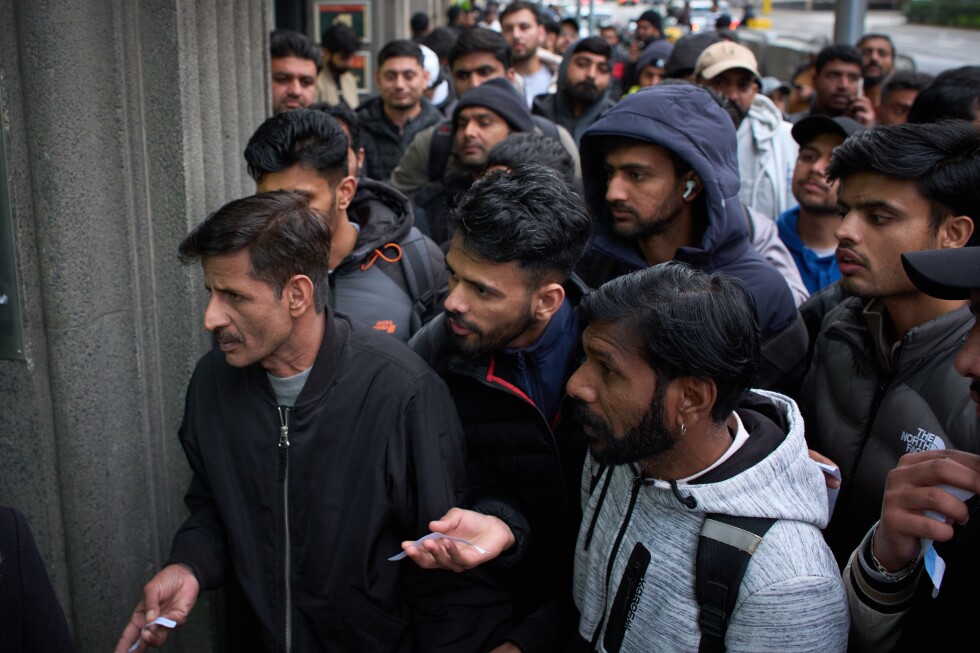
    The human impact is illustrated through several narratives: Ale Castañeda, a Colombian asylum-seeker fleeing anti-LGBTQ+ violence, expressed relief after living with ‘constant anxiety’ about his expiring permit. Paulina Valenzuela, a Chilean architect reduced to cleaning jobs after her professional credentials went unrecognized, described the announcement as hope she ‘didn’t have before.’ Hussain Dar, a Pakistani graduate left homeless after exhausting his savings, celebrated the opportunity to work legally and contribute taxes to the Spanish economy.

    Despite widespread celebration among immigrant communities, significant practical hurdles remain. Consulates face unprecedented demand for documentation, particularly criminal record certificates. Immigration offices, already notorious for appointment backlogs exploited by criminal networks selling slots for €50, must process hundreds of thousands of applications within months. Migration Minister Elma Saiz has pledged additional resources to ensure smooth implementation, stating ‘We want this to be a success.’

  • Vintage Djokovic dethrones Sinner to set up Alcaraz final at Australian Open

    Vintage Djokovic dethrones Sinner to set up Alcaraz final at Australian Open

    In a stunning display of veteran prowess, Novak Djokovic delivered a masterclass performance to overcome reigning champion Jannik Sinner in a gripping five-set semifinal clash at the Australian Open. The 38-year-old Serbian legend battled for over four hours at Rod Laver Arena to secure a 3-6, 6-3, 4-6, 6-4, 6-4 victory that propels him into his eleventh Melbourne final.

    The match represented a significant reversal of fortunes for Djokovic, who had suffered five consecutive defeats against the Italian world number two prior to this encounter. Displaying the mental fortitude that has defined his career, Djokovic overcame multiple break points in the decisive fifth set before finally breaking Sinner’s serve at 3-3. The tension reached its peak when Djokovic saved three additional break points in the subsequent service game, eventually holding with a crucial ace.

    Djokovic acknowledged the match’s intensity in his on-court remarks, drawing parallels to his legendary six-hour final against Rafael Nadal in 2012. ‘The level of intensity and quality was high, and that was the only way to have a chance to win,’ he stated. ‘He had my mobile number, so I had to change my number tonight.’

    The victory sets up a championship showdown against current world number one Carlos Alcaraz, who prevailed in the tournament’s longest semifinal against Alexander Zverev. Sunday’s final will see Djokovic pursuing an unprecedented 25th Grand Slam title and a record-extending 11th Australian Open championship, eighteen years after his first Melbourne triumph.

    This remarkable achievement makes Djokovic the oldest male finalist in the professional era at the Australian Open, demonstrating his enduring dominance in the sport despite approaching his 39th birthday.

  • US approves more than $6.5 billion in potential military sales to Israel, Pentagon says

    US approves more than $6.5 billion in potential military sales to Israel, Pentagon says

    The United States has authorized a significant military procurement package for Israel totaling over $6.5 billion, according to an official announcement from the Pentagon on Friday. The Defense Department confirmed the State Department’s approval of three distinct arms transactions that collectively represent one of the substantial defense agreements between the allied nations this year.

    The comprehensive arms package includes a $1.98 billion transaction for Joint Light Tactical Vehicles and associated equipment, with AM General LLC serving as the primary contractor. Additionally, the arrangement features a substantial $3.8 billion allocation for AH-64E Apache Helicopters, manufactured through a collaborative effort between aerospace giants Boeing and Lockheed Martin. A third contractual agreement, valued at $740 million, completes the military procurement package.

    This strategic defense arrangement occurs amidst ongoing regional tensions and demonstrates the continued strengthening of military cooperation between Washington and Tel Aviv. The advanced Apache helicopters represent some of the most sophisticated attack aircraft in the U.S. arsenal, while the Joint Light Tactical Vehicles are designed to provide enhanced protection and mobility for ground forces operating in diverse combat environments.

    The approval process for such significant arms transfers typically involves rigorous congressional review, though specific legislative details regarding this particular authorization were not immediately disclosed in the initial Pentagon statements. The transactions underscore the depth of the U.S.-Israel defense partnership and the continued flow of military technology between the two nations.

  • Video series unveils Hebei’s breathtaking ecology, landscape

    Video series unveils Hebei’s breathtaking ecology, landscape

    Northern China’s Hebei province has become the subject of an exquisite visual presentation through the launch of an innovative video series showcasing its remarkable ecological and cultural assets. Titled “Beautiful Hebei,” this ambitious photographic project represents a collaborative effort spearheaded by the Hebei Photographers Association to highlight the region’s diverse attractions.

    The comprehensive compilation features 198 meticulously curated photographs sourced from the association’s extensive image archives, specialized submissions, and targeted collections from prominent photographic organizations and accomplished visual artists. These images have been masterfully woven into eleven distinct video episodes, each designed to offer viewers an immersive visual experience.

    Organized around three fundamental themes, the series explores different dimensions of Hebei’s character. The first segment, comprising three episodes dedicated to “Natural Beauty,” captures the province’s dramatic topographical features—from soaring mountain ranges and meandering rivers to expansive forest ecosystems. Another three-episode segment titled “Ecological Beauty” documents Hebei’s environmental conservation initiatives and the successful integration of human development with natural preservation.

    The remaining five episodes, grouped under “Humanistic Beauty,” delve into the region’s profound historical legacy and cultural traditions. This section offers particularly detailed examinations of significant heritage sites including the Great Wall, the Grand Canal’s cultural influence, and ancient ceremonial practices that have endured through centuries.

    Serving as both an artistic achievement and promotional tool, the video series provides a compelling visual narrative of Hebei’s geographical wonders, environmental progress, and cultural richness. The project aims to enhance domestic and international appreciation for this strategically important province that borders China’s capital Beijing and the major municipality of Tianjin. The series continues to roll out with the second ecological installment released recently.

  • Venezuela’s Rodriguez announces mass amnesty proposal, plans to close El Helicoide prison

    Venezuela’s Rodriguez announces mass amnesty proposal, plans to close El Helicoide prison

    In a landmark address at Venezuela’s Supreme Court, Acting President Delcy Rodriguez unveiled transformative national reconciliation measures, including a comprehensive amnesty proposal and the planned closure of the notorious El Helicoide prison. The announcement marks the most significant reform initiative since the U.S.-led ouster of authoritarian leader Nicolas Maduro just weeks ago.

    Rodriguez detailed legislation that would grant general amnesty covering the entire period of political violence from 1999 to present, encompassing both the Hugo Chavez presidency and Maduro’s subsequent authoritarian rule. “This law will serve to heal the wounds left by political confrontation, fueled by violence and extremism,” Rodriguez declared before assembled government officials, framing the measure as essential for restoring judicial integrity.

    The acting president simultaneously announced plans to convert the infamous El Helicoide detention facility—where human rights organizations documented systematic torture of political prisoners—into a multipurpose community center. The massive structure, originally constructed as a shopping mall, will be repurposed as a “sports, cultural and commercial centre for police families and neighboring communities.”

    The reforms generated immediate emotional responses from affected families. Betsy Orellana, 63, expressed overwhelming joy at the prospect of her son’s release after six months without communication: “It’s wonderful! This is a huge joy, it’s an amnesty, my God, it’s total liberation.”

    These developments follow Rodriguez’s rapid implementation of U.S.-backed reforms since assuming power less than four weeks ago. The government has already passed legislation opening Venezuela’s critical oil sector to private investment—a key Washington demand—prompting the immediate rollback of U.S. sanctions targeting Venezuelan petroleum.

    However, opposition figures remain cautiously optimistic. Nobel Peace Prize laureate Maria Corina Machado characterized the amnesty as a response to American pressure rather than voluntary regime action, while opposition lawmaker Tomas Guanipa expressed hope that the measure would terminate “an era of repression” and initiate a genuine democratic transition.

    Concurrently, U.S. authorities confirmed the release of all known American prisoners in Venezuela, including Peruvian-American Arturo Gallino Rullier. In further normalization steps, the Trump administration lifted flight bans to Venezuela and prepared to reestablish diplomatic presence in Caracas, with seasoned diplomat Laura Dogu appointed as charge d’affaires.

  • Israel to partially reopen Gaza’s Rafah crossing on February 1

    Israel to partially reopen Gaza’s Rafah crossing on February 1

    In a significant development within the ongoing US-mediated ceasefire agreement, Israeli authorities have confirmed the partial reopening of the Rafah border crossing between Gaza and Egypt effective February 1st. The Coordination of Government Activities in the Territories (COGAT), an Israeli defense ministry body, declared the crossing would operate under stringent conditions permitting solely the “limited movement of people” following Israeli security clearance and under European Union supervision.

    This decision follows months of mounting international pressure from the United Nations, humanitarian organizations, and Palestinian civilians. The Rafah crossing represents Gaza’s sole access point bypassing Israeli territory, making its operational status critical for human mobility. The gateway has remained predominantly sealed since Israeli forces assumed control in May 2024, with only a brief reopening in early 2025.

    The reopening aligns with Phase Two provisions of the ceasefire brokered by the Trump administration, which stipulated border access restoration following the resolution of hostage situations. This milestone follows the recent recovery and burial of Ran Gvili, the final Israeli hostage held in Gaza.

    UN officials cautiously welcomed the announcement while emphasizing the urgent need for cargo movement reinstatement. Farhan Haq, spokesperson for Secretary-General Antonio Guterres, stressed that “reinstating the movement of cargo through the Rafah crossing is critical to increase the volume of humanitarian supplies entering Gaza,” adding that departures and returns must remain voluntary and safe.

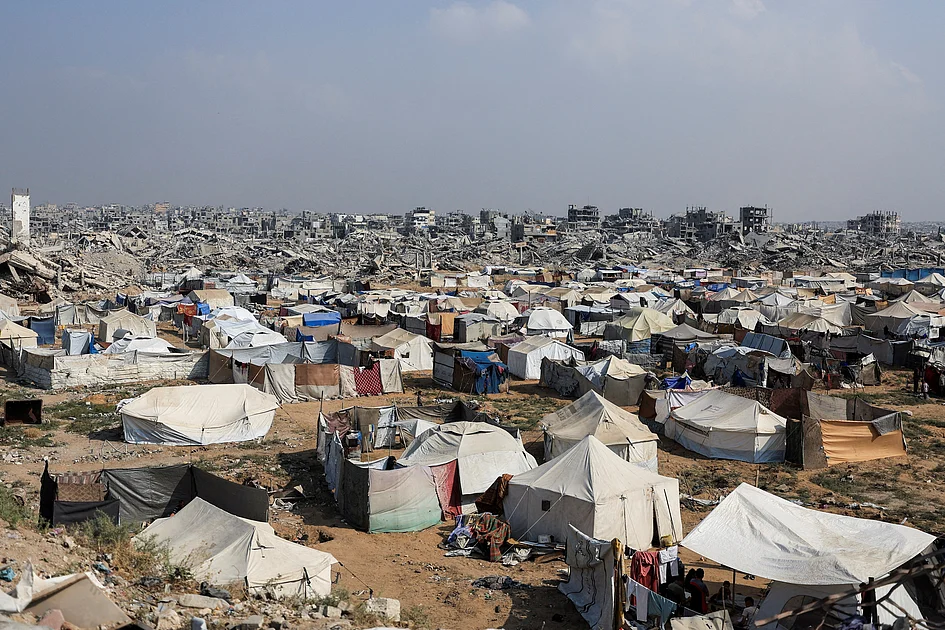
    The humanitarian crisis in Gaza remains severe, with over two million residents facing displacement, inadequate shelter, and minimal sanitation amid harsh winter conditions. Mirjana Spoljaric, President of the International Committee of the Red Cross, urged leveraging the ceasefire momentum to improve dire living conditions, including easing restrictions on dual-use infrastructure materials.

    Phase Two of the agreement additionally envisions Hamas disarmament and Israeli military withdrawal, potentially replaced by an international stabilization force. While US President Donald Trump expressed optimism regarding militant disarmament, Hamas maintains its weapons stance as a “red line,” though suggesting potential transfer to Palestinian governing authorities.

    The conflict originated from Hamas’s October 2023 attack that killed 1,221 Israelis according to official figures, triggering military retaliation that resulted in over 71,600 Palestinian fatalities per Gaza health ministry records.

  • UAE weather: Fog likely; Temperature to dip to 15°C in Abu Dhabi

    UAE weather: Fog likely; Temperature to dip to 15°C in Abu Dhabi

    Meteorological authorities in the United Arab Emirates have issued updated weather forecasts indicating significant temperature variations across the nation as January concludes. According to the National Center of Meteorology’s latest bulletin, UAE skies will present fair to partly cloudy conditions with low cloud formations anticipated along certain coastal and northern regions.

    The weather pattern is expected to bring increased humidity levels overnight through Sunday morning, particularly across internal areas, creating favorable conditions for fog or mist development. This atmospheric moisture combined with temperature fluctuations necessitates heightened awareness for early morning travelers.

    Wind patterns will feature light to moderate northwesterly flows, shifting to southeasterly directions with occasional intensification over maritime zones. Wind speeds are projected to range between 10-25 km/h, potentially reaching 35 km/h during peak periods. Maritime conditions in both the Arabian Gulf and Sea of Oman will remain slight to moderate throughout the forecast period.

    Temperature readings reveal considerable disparities between daytime highs and nighttime lows. Maximum temperatures across the emirates are expected to reach 28°C, while minimum temperatures may drop to 10°C in certain areas. Specifically, Abu Dhabi residents will experience temperatures ranging from 15°C to 23°C, while Dubai will see slightly warmer conditions between 16°C and 24°C.

    The meteorological data from Friday morning established a new benchmark for cold temperatures this season, with Raknah in the Al Ain region recording a brisk 6.6°C at 7:15 AM. This temperature measurement represents the lowest documented reading across the UAE territory during this period.

    Residents and visitors are advised to prepare for variable driving conditions during early morning hours due to reduced visibility from potential fog formation. The temperature differential between daytime and nighttime conditions necessitates appropriate clothing adjustments, particularly for those engaging in outdoor activities during morning and evening hours.

  • Is vaccine against deadly Nipah virus forthcoming?

    Is vaccine against deadly Nipah virus forthcoming?

    In a landmark development for global pandemic preparedness, the University of Oxford has initiated the world’s first Phase II clinical trial for a Nipah virus vaccine candidate. The trial, launched in Bangladesh—a region plagued by recurrent outbreaks—represents a critical advancement in combating one of the world’s deadliest pathogens, for which no approved vaccines or treatments currently exist.

    The study involves 306 healthy adult participants aged 18-55 and is being conducted through a strategic partnership between Oxford’s Pandemic Sciences Institute, the International Centre for Diarrhoeal Disease Research, Bangladesh (ICDDR,B), and the Coalition for Epidemic Preparedness Innovations (CEPI), which is providing primary funding. The research aims to evaluate both the safety profile and immune response generated by the ChAdOx1 NipahB vaccine.

    Professor Sarah Gilbert, a leading vaccinologist at Oxford, emphasized the trial’s significance: “This initiative in Bangladesh marks a pivotal advancement in our efforts to develop countermeasures against Nipah virus, a formidable health threat that continues to claim lives during periodic outbreaks.”

    Professor Brian Angus, Chief Investigator at the Oxford Vaccine Group, highlighted the importance of conducting trials in affected regions: “Initiating Phase II trials in countries experiencing regular Nipah outbreaks ensures that vaccine development remains both effective and contextually relevant to those most vulnerable.”

    Dr. Kent Kester, CEPI’s Executive Director of Vaccine Research, noted that Oxford’s candidate represents the most progressed vaccine initiative against the highly lethal Nipah virus, calling the trial “the culmination of years of cutting-edge research and international scientific cooperation.”

    The Serum Institute of India, the world’s largest vaccine manufacturer, produced the trial vaccines in collaboration with CEPI. Dr. K Zaman, Senior Scientist at ICDDR,B and Principal Investigator in Bangladesh, emphasized that hosting this trial aligns with their two decades of Nipah surveillance and research, representing a natural progression of their scientific commitment to global health security.

  • Injured Cummins not in Australia T20 World Cup squad

    Injured Cummins not in Australia T20 World Cup squad

    Australian cricket has been dealt a significant blow as Test captain Pat Cummins has been officially ruled out of the upcoming T20 World Cup due to a persistent back injury. The 32-year-old pace bowler, who made his Test debut in 2011, has been battling this physical setback for over six months, limiting him to just one appearance during Australia’s recent 4-1 Ashes victory over England.

    National selectors have moved decisively to restructure the squad, bringing in left-arm quick Ben Dwarshuis as Cummins’ replacement. Chief selector Tony Dodemaide emphasized Dwarshuis’ comprehensive skill set, noting his “ability to swing the ball at good pace along with clever variations” that align with expected tournament conditions. Dodemaide further highlighted the newcomer’s “dynamic fielding and late-order hitting” capabilities as valuable assets.

    In another strategic adjustment, Matthew Renshaw has been selected ahead of Matt Short, despite only making his T20 debut this week. The former Test opener provides left-handed batting variety to the middle order and additional support during the spin-heavy conditions anticipated in Sri Lanka’s pool stages.

    Notably absent from the final roster is veteran batsman Steve Smith, who failed to secure selection despite impressive performances in the Big Bash League. The Mitchell Marsh-captained squad is currently fine-tuning preparations through a three-match T20 series in Pakistan before opening their World Cup campaign against Ireland on February 11th in Colombo.

    The revised squad features a blend of experienced campaigners and emerging talent, with Tim David completing his return-to-play protocol during the tournament’s initial phase. Australia’s bowling arsenal remains formidable with Josh Hazlewood, Nathan Ellis, and Adam Zampa complementing the newly added Dwarshuis.