作者: admin

  • England’s resurgence threatens France’s and Ireland’s Six Nations dominance

    England’s resurgence threatens France’s and Ireland’s Six Nations dominance

    The Six Nations Championship is poised for a potential power shift as England emerges as a formidable challenger to the longstanding French-Irish supremacy. Under coach Steve Borthwick, England rides an impressive 11-game winning streak highlighted by their decisive 33-19 victory over New Zealand in November, which precipitated the departure of All Blacks coach Scott Robertson. This resurgent squad, featuring emerging talents like Immanuel Feyi-Waboso and Henry Pollock, faces its ultimate test in a climactic final-round showdown against defending champion France in Paris.

    France enters as tournament favorite despite autumn campaign concerns. The team benefits from an ideal schedule with home advantages against both Ireland and England, coupled with the return of inspirational captain Antoine Dupont from ACL injury. Coach Fabien Galthié has embraced a transitional phase toward the 2027 World Cup, surprisingly dropping established stars including record try-scorer Damian Penaud in favor of promising newcomers like Théo Attissogbe and Lenni Nouchi.

    Ireland confronts significant challenges including a humiliated front row against South Africa, lineout inconsistencies, and multiple injuries to key players. The team additionally faces disciplinary concerns after Bundee Aki’s six-week suspension for referee abuse, highlighting what former official Owen Doyle describes as a ‘growing and unacceptable culture’ of misconduct toward match officials.

    Scotland battles persistent reputation issues despite moments of brilliance, with notorious collapses stemming from weak benches and mental fragility. Coach Gregor Townsend received a contract extension through 2027 despite growing clamor for change. Italy demonstrates renewed optimism under Gonzalo Quesada but faces injury setbacks, while Wales struggles with ongoing performance issues and concerningly low ticket sales despite ending historic losing streaks in 2025.


  • Villagers enjoy Spring Festival gala in Shenshan village, China’s Jiangxi

    Villagers enjoy Spring Festival gala in Shenshan village, China’s Jiangxi

    In a heartwarming display of regional unity, Shenshan village in Jinggangshan city recently hosted an expansive Spring Festival gala that transcended provincial boundaries. The festive gathering on February 1, 2026, welcomed participants from seven neighboring counties across both Jiangxi and Hunan provinces, creating a colorful tapestry of cultural exchange and community bonding.

    The event, held as the Lunar New Year approached, transformed the village into a hub of celebration featuring traditional performances, local culinary specialties, and interactive activities that highlighted the rich cultural heritage of the region. Residents from both provinces shared customs, songs, and dances unique to their respective communities, fostering mutual understanding and strengthening cross-regional relationships.

    This innovative approach to Spring Festival celebrations demonstrates how rural communities are revitalizing traditional festivals to promote social cohesion. The gala served not only as entertainment but as a meaningful platform for preserving intangible cultural heritage while building bridges between neighboring areas that share historical connections but maintain distinct local traditions.

    The successful event has drawn attention from cultural preservation advocates who see such initiatives as models for maintaining traditional festivals in modern times while adapting them to contemporary community needs.

  • China criticizes decision to award a Grammy to the Dalai Lama

    China criticizes decision to award a Grammy to the Dalai Lama

    China has vehemently denounced the Grammy Award recognition bestowed upon the Dalai Lama, characterizing the prestigious music industry honor as an instrument of political warfare against Beijing. The Tibetan spiritual leader, residing in exile in India since 1959, received the award for Best Audio Book, Narration, and Storytelling Recording for his work “Meditations: The Reflections of His Holiness the Dalai Lama.”

    Foreign Ministry spokesperson Lin Jian articulated Beijing’s firm opposition during a press briefing on Monday, asserting that the 14th Dalai Lama represents not merely a religious figure but rather a political exile masterminding anti-China separatist activities under religious pretexts. “We firmly oppose the relevant party using the award as a tool for anti-China political manipulation,” Lin declared.

    The Dalai Lama, perceived globally as the symbolic leader of Tibet’s autonomy movement, expressed gratitude for the recognition, describing it in his official statement as an acknowledgment of “our shared universal responsibility” which he accepted with “gratitude and humility.”

    This diplomatic confrontation occurs against the backdrop of longstanding tensions between Beijing and Tibetan exile communities. China administers Tibet as an autonomous region despite persistent allegations of cultural suppression targeting Tibetan language, traditions, and identity. The dispute extends to the contentious matter of succession planning for the spiritual leadership, with Beijing insisting the next Dalai Lama must be born in Tibet and sanctioned by the Communist Party, while the current Dalai Lama maintains his successor should emerge from a free country without Chinese involvement.

  • 3 seasons in, PWHL set to enjoy international coming-out party during Milan Cortina Games

    3 seasons in, PWHL set to enjoy international coming-out party during Milan Cortina Games

    The landscape of women’s professional hockey has undergone a revolutionary transformation since Kendall Coyne Schofield’s emotional plea for greater visibility following the 2022 Beijing Winter Games. What was once considered a distant dream has materialized into the Professional Women’s Hockey League (PWHL), which now stands poised for its international showcase at the Milan Cortina Games.

    Four years after her tearful declaration that ‘the status quo is not good enough,’ Coyne Schofield’s vision has been validated through the PWHL’s successful launch in 2023. The league, financially backed by Los Angeles Dodgers owner Mark Walter, represents the first truly professional platform for female hockey players, distinguishing itself from previous iterations where athletes often played without salary or proper recognition.

    The Olympic tournament serves as a strategic launching point for the eight-team league, which features 61 PWHL players distributed across ten competing nations—notably comprising the majority of both Team USA and Team Canada rosters. The league is capitalizing on this global stage through extensive advertising campaigns aimed at converting casual Olympic viewers into dedicated PWHL followers.

    Hockey Hall of Famer Jayna Hefford, now PWHL executive vice president, emphasizes the critical opportunity: ‘Previous years, everybody falls in love with the Olympics. They hear stories about players, we have huge viewership numbers, and then it’s sort of like ‘What now?”

    The league’s growth metrics demonstrate remarkable progress: attendance has surpassed 500,000 fans nearing the midpoint of its third season, following the milestone of one million attendees achieved in under two seasons. Expansion plans include adding up to four new teams next season, with potential future establishment of European franchises.

    Despite these achievements, challenges persist. The PWHL lacks a national broadcaster in the United States, though games are available through local markets and YouTube. Additionally, international representation remains limited, with only 25 of the league’s 200-plus players hailing from outside North America. League executives acknowledge this gap and are actively pursuing global growth through potential exhibition games in Europe and enhanced scouting efforts.

    Veteran Swiss national team player Alina Muller, now with the Boston Fleet, believes the league’s stability will gradually attract more international talent: ‘Now being able to watch our games and think, ‘Yeah, I want to end up playing professionally,’ will change the attitude toward the sport completely.’

    The Milan Cortina Games thus represent not just another tournament, but a pivotal moment in women’s hockey history—the culmination of years of advocacy and the beginning of a new era of professional opportunities for female athletes worldwide.

  • ‘Technical issues’ delay Gaza committee’s entry via Rafah crossing: official

    ‘Technical issues’ delay Gaza committee’s entry via Rafah crossing: official

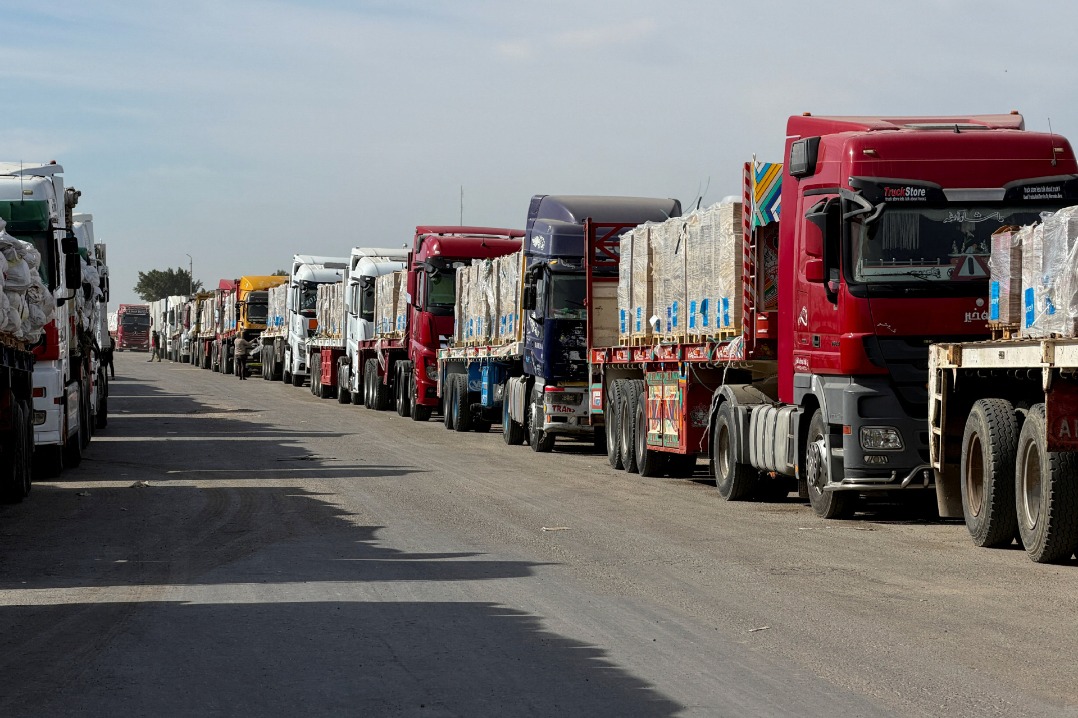
    The newly established National Committee for the Administration of Gaza faces unexpected delays in entering the Gaza Strip due to unresolved technical complications at the Rafah border crossing. Committee member Aed Yaghi confirmed from Cairo that unspecified ‘technical problems and obstacles’ have prevented the 15-member governing body from crossing into Gaza as originally planned on Monday.

    The administrative committee, formed to oversee governance transition in Gaza, continues to face operational challenges beyond border access issues. An anonymous committee member revealed the organization currently lacks both a physical headquarters and operational funding, though arrangements are underway to secure rental facilities in Gaza City shortly.

    Upon eventual entry, committee representatives plan immediate coordination meetings with Palestinian factions and government institutions to facilitate the transfer of ministerial responsibilities and administrative offices. This transitional process marks a critical phase in establishing functional governance structures within the territory.

    In parallel developments, Palestinian security officials indicate approximately 50 medical patients are scheduled to return to Gaza through the Rafah crossing on Monday. However, officials note that departure procedures for individuals seeking to leave Gaza remain undefined and inconsistent.

    The Rafah border crossing resumed partial operations on Sunday on experimental basis following an extensive 18-month closure, raising hopes for improved humanitarian access despite ongoing administrative complications.

  • UAE residents can now see air taxis up close near Dubai Mall

    UAE residents can now see air taxis up close near Dubai Mall

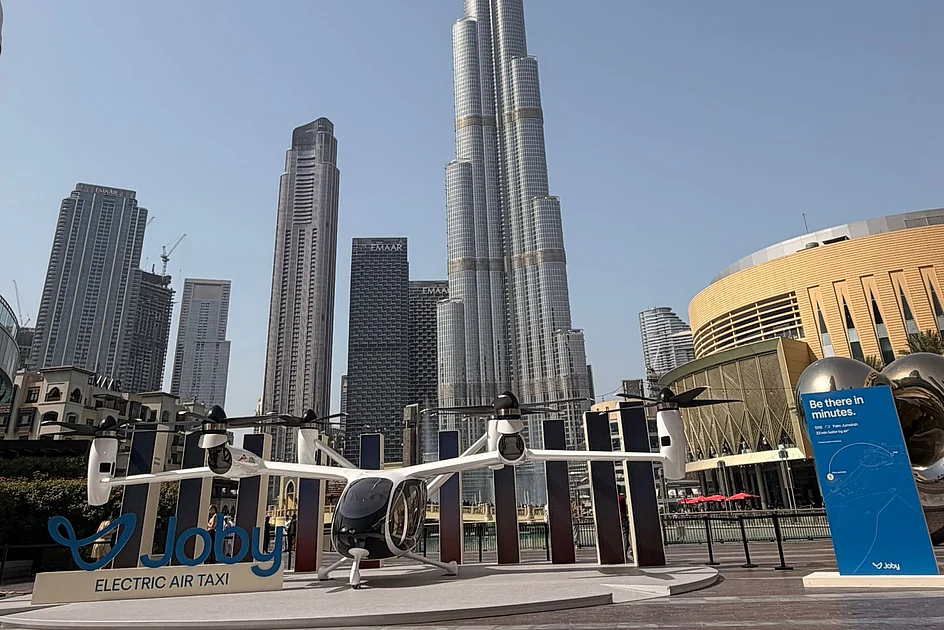
    Dubai has taken a significant step toward revolutionizing urban transportation by publicly displaying Joby Aviation’s electric air taxi near Dubai Mall. This exhibition allows residents and visitors to interact directly with the futuristic aircraft, marking a pivotal moment in the city’s advanced air mobility preparations.

    The eVTOL (electric vertical takeoff and landing) aircraft represents a new category of urban transport that combines helicopter-like vertical takeoff capabilities with airplane efficiency for forward flight. Featuring six tilting electric propellers, the vehicle operates with dramatically reduced noise levels—reportedly inaudible when flying at standard operational altitudes of approximately 1,000 feet.

    Joby Aviation’s UAE Flight Operations Manager Lorcan Lynch emphasized the importance of public engagement: “This initiative enables people to see, touch, and comprehend the forthcoming transportation revolution. We aim to foster familiarity before passengers ever book their inaugural flight.”

    The comprehensive urban air mobility network will initially connect four strategic vertiports across Dubai: Dubai International Airport (reportedly near completion), Palm Jumeirah, Dubai Marina near the American University, and Downtown Dubai. The Downtown vertiport will be strategically positioned atop a dedicated parking structure, optimizing urban space utilization.

    This public demonstration follows the successful completion of the UAE’s first eVTOL test flight in November 2025, a 17-minute journey that would typically require 50 minutes by conventional road transportation. Authorities have confirmed that pricing structures will align with public transportation affordability objectives as the service progresses toward commercial implementation.

  • McKenzie clarifies claim South Africa will host Wafcon 2026

    McKenzie clarifies claim South Africa will host Wafcon 2026

    South Africa’s Sports Minister Gayton McKenzie has clarified that no official decision has been made regarding the relocation of the 2026 Women’s Africa Cup of Nations (WAFCON) from Morocco, despite his deputy’s premature announcement that the country would host the tournament. The clarification came after Deputy Minister Peace Mabe publicly declared at an awards ceremony on Sunday that South Africa would step in as hosts following Morocco’s apparent withdrawal. Mabe later told SABC Sport: “When Morocco said ‘We are not able to host’, South Africa, we said ‘Yes, we are available’. We are going to take it.” However, Minister McKenzie emphasized that Morocco remains the officially designated host for the 2026 tournament, stating that Mabe’s remarks “do not constitute a formal confirmation or assumption of hosting responsibilities.” He noted that the Confederation of African Football (CAF) has not yet initiated any alternative hosting process, though South Africa has expressed willingness to support CAF if alternative arrangements become necessary. The potential hosting change comes as Morocco has invested significantly in football infrastructure while preparing to co-host the 2030 FIFA World Cup. The North African nation has been a crucial supporter of women’s football in recent years, with few other countries expressing interest in hosting WAFCON due to its significantly smaller supporter base compared to the men’s Africa Cup of Nations. With just 43 days remaining until the expanded 16-team tournament kicks off on March 17, South Africa would face substantial logistical challenges despite having 13 CAF-approved stadiums available.

  • Tariffs, rising debt expected to sow ‘mess’, ‘chaos’ in US

    Tariffs, rising debt expected to sow ‘mess’, ‘chaos’ in US

    A gathering of prominent US economic experts at the Brookings Institution has delivered a sobering assessment of America’s current trade and fiscal policies, warning that recent measures will inevitably yield long-term economic disruption despite demonstrating surprising short-term resilience.

    The panel discussion, titled “One Year of ‘America First’ Trade Policy: What Did We Learn, and What Comes Next?”, examined the paradoxical performance of an economy that continues expanding slowly despite implementing policies that mainstream economists would traditionally predict would trigger stagnation or collapse.

    Ben Harris, Vice-President and Director of Economic Studies at Brookings, identified four unprecedented policy shocks implemented throughout the past year: tariff rates skyrocketing from 2.4% to 28% on average; net immigration plunging to near zero or negative levels; trillions in new debt accumulated outside recession or wartime conditions; and erosion of Federal Reserve independence through White House pressure and investigations.

    Harris proposed several theories explaining the economy’s unexpected endurance, including possible overstatement of shock impacts due to evasion and muted retaliation, offsetting stimuli from emerging technologies like AI investment, potential flaws in traditional economic models regarding short-term predictions, and the simple reality that full effects require time to materialize.

    Former White House official Nora Todd detailed how corporations have implemented sophisticated mitigation strategies, including absorbing tariff costs rather than passing them to consumers, stockpiling goods preemptively, and restructuring production chains to avoid tariffs entirely.

    Wendy Edelberg, Senior Fellow in Economic Studies, presented data showing tariffs have already elevated consumer prices by approximately half a percentage point, with further inflation anticipated. She emphasized that both imported goods and competing domestic products have become more expensive, disproportionately burdening low-income households and small businesses while ironically reducing manufacturing employment due to increased costs of imported inputs.

    Daniel H. Rosen, cofounder of Rhodium Group, highlighted the geopolitical consequences of current policies, noting that US allies are increasingly seeking alternative markets and strengthening economic ties with China. He advocated for a more nuanced trade approach that distinguishes between genuinely sensitive security concerns and the vast majority of economic exchange that presents no security threat.

    The consensus among experts indicates that while immediate catastrophic collapse has been avoided, the accumulated policies are creating structural vulnerabilities that will manifest as persistent inflation, supply chain fragmentation, eroded geopolitical trust, and ultimately significant economic disruption in the longer term.

  • Minnesota bid to thwart ICE crackdown blocked

    Minnesota bid to thwart ICE crackdown blocked

    A federal court has rejected Minnesota’s emergency motion to suspend a widespread Immigration and Customs Enforcement (ICE) operation within the state, a crackdown that has resulted in two civilian fatalities and triggered nationwide demonstrations. The ruling, delivered on Saturday by Judge Katherine Menendez, determined that the balance of harms did not conclusively justify an immediate injunction against the federal agency’s activities.

    Simultaneously, in a separate legal proceeding, U.S. District Judge Fred Biery issued a stern condemnation of the government’s tactics and mandated the release of a five-year-old boy and his father detained during the raids. Judge Biery characterized the operation as an ‘ill-conceived and incompetently-implemented government pursuit of daily deportation quotas, apparently even if it requires traumatizing children.’

    The controversial ‘Metro Surge’ operation, involving masked and heavily armed agents, has led to the detention of thousands of individuals across Minnesota communities. The aggressive tactics have ignited protests from coast to coast, with tens of thousands marching in Minnesota and demonstrations organized in Southern California by the grassroots ‘50501 movement’ as part of a national ‘ICE Out of Everywhere’ day of action.

    The backlash has extended internationally, with hundreds gathering in Milan, Italy, to protest the anticipated deployment of ICE agents during the upcoming Winter Olympics. Milan Mayor Giuseppe Sala has explicitly stated these agents are not welcome in the city.

    According to data from the German publication Tagesspiegel, ICE officers have been involved in 31 firearm incidents since last summer, with at least 32 individuals dying in custody. The agency currently detains approximately 70,000 people, representing what critics describe as the tip of the iceberg regarding law enforcement violence in the United States. Research from the University of Illinois Chicago indicates approximately 250,000 people are injured annually during law enforcement encounters due to misconduct, with over 600 dying in police custody.

  • Robotic sector shifts from prototypes to production

    Robotic sector shifts from prototypes to production

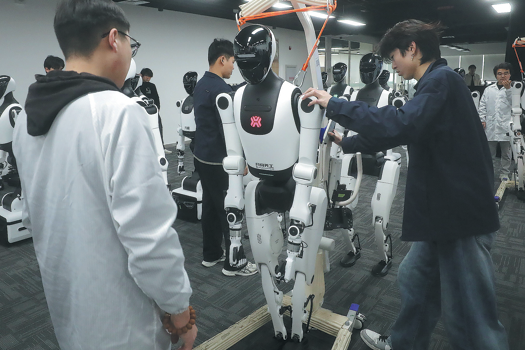
    Beijing has inaugurated a groundbreaking pilot manufacturing and validation facility specifically designed for humanoid robots, signaling a strategic shift from experimental prototyping to industrialized mass production. Operated by the Beijing Innovation Center of Humanoid Robotics, this first-of-its-kind facility represents a critical infrastructure development for China’s robotics sector.

    The newly commissioned platform spans approximately 9,700 square meters within Beijing’s Economic-Technological Development Area (E-town) and is equipped with 500 sets of specialized production and testing equipment. The facility boasts an annual pilot production capacity of up to 5,000 embodied humanoid robots, offering comprehensive services including prototyping, performance validation, process optimization, module assembly, and full robot integration.

    This initiative addresses significant bottlenecks that have hampered the global humanoid robotics industry’s transition from research and development to commercial implementation. According to Liu Yizhang, head of the pilot platform, the industry has struggled with inadequate pilot manufacturing readiness, inconsistent standardization protocols, and discontinuous data flow from development through scale-up phases.

    “Research institutions and startup ventures typically rely on costly, inefficient self-developed trial lines,” Liu explained. “The absence of standardized processes compromises quality consistency, while insufficient testing systems allow unresolved risks to persist before real-world deployment.”

    The digital infrastructure forms the core of Beijing’s innovative approach. The facility operates on a unified master data platform with an integrated digital operation system that connects information and logistics networks. This enables continuous data tracking from design through production to test feedback, significantly shortening iteration cycles between prototype validation and small-batch production.

    The platform’s establishment aligns with China’s broader industrial strategy. In November 2025, the Ministry of Industry and Information Technology identified humanoid robots as a priority sector requiring accelerated validation platform development. The Beijing government subsequently announced a tiered support system in January 2026, offering subsidies of up to 100 million yuan ($14.39 million) for newly established pilot facilities.

    The initiative already demonstrates tangible economic impact. According to the Beijing Municipal Bureau of Economy and Information Technology, the city’s robotics industry revenue grew by nearly 40% in the first half of 2025. Beijing additionally leads China in hosting specialized “little giant” enterprises within the robotics sector—small and medium-sized firms recognized for their innovation capabilities and market specialization.

    The center plans further expansion through national research and development projects, positioning Beijing at the forefront of global humanoid robotics manufacturing capabilities.