作者: admin

  • BBC joins Colombian commandos fighting ‘never-ending battle’ against drug gangs

    BBC joins Colombian commandos fighting ‘never-ending battle’ against drug gangs

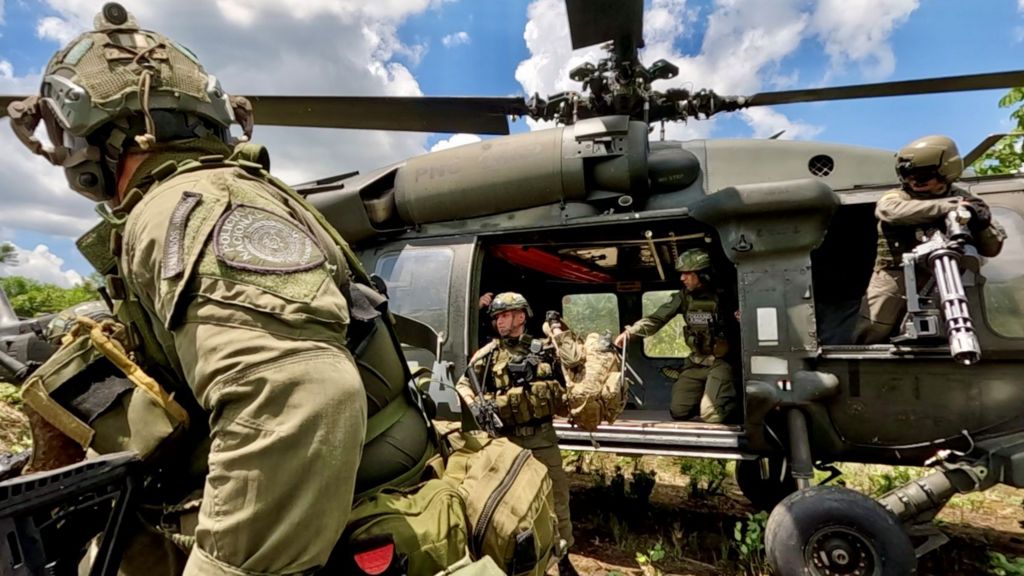
    Deep within the sweltering Colombian Amazon, Black Hawk helicopters slice through the oppressive humidity carrying elite Jungle Commandos on their daily mission. This specially trained police unit, originally established with British SAS expertise in 1989 and equipped with American weaponry, represents Colombia’s frontline defense against an ever-evolving narcotics industry that supplies approximately 70% of the world’s cocaine.

    The operational tempo remains relentless. Multiple times daily, weather permitting, these commandos descend into jungle clearings to discover and destroy makeshift cocaine laboratories. Recent United Nations data reveals coca cultivation now covers an area nearly double the size of Greater London and quadruple that of New York City, indicating the staggering scale of the challenge.

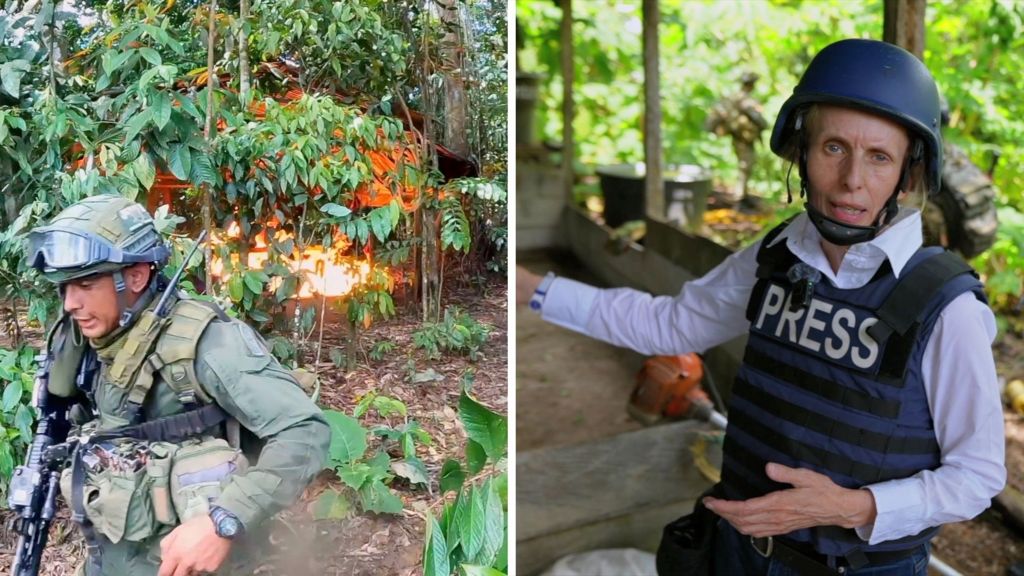
    During one recent mission documented by the BBC, commandos discovered a rudimentary processing facility partially concealed by banana trees. The site contained essential production components: chemical drums and fresh coca leaves awaiting transformation into paste. While workers fled into the jungle, no arrests were made—reflecting Colombia’s current strategy of targeting narcotics kingpins rather than impoverished farmers.

    The political context adds complexity to these operations. U.S. President Donald Trump has publicly criticized Colombian President Gustavo Petro’s administration, suggesting insufficient action against drug trafficking and even hinting at military intervention. President Petro counters that his government has achieved historic drug seizures while questioning UN methodology that shows cocaine production reaching record highs under his leadership.

    Major Cristhian Cedano Díaz, a 16-year veteran of this struggle, acknowledges the frustrating reality that destroyed labs can be rebuilt within days, sometimes mere meters from original locations. Yet he maintains that persistent operations impact criminal profitability by continuously eliminating crops and chemical precursors.

    The human dimension emerges most poignantly through farmers like ‘Javier’ (a pseudonym), who cultivates coca in the mountainous Catatumbo region bordering Venezuela. For Javier, growing the controversial plant represents survival rather than choice—the only means to support his five daughters in an area dominated by guerrilla groups including the ELN and FARC dissidents.

    ‘If you want to survive, you have to,’ Javier explains, acknowledging the moral dilemma while emphasizing the absence of alternatives. His makeshift laboratory processes paste when materials are available, though recent turf wars among armed groups have disrupted local markets.

    Both Major Díaz and farmer Javier, separated by only two years in age but worlds apart in circumstance, share hope that their children might inherit a Colombia transformed—where economic opportunity replaces the desperate calculus that fuels the global cocaine trade.
  • Israel rejects Gaza governing committee logo over similarity to PA emblem

    Israel rejects Gaza governing committee logo over similarity to PA emblem

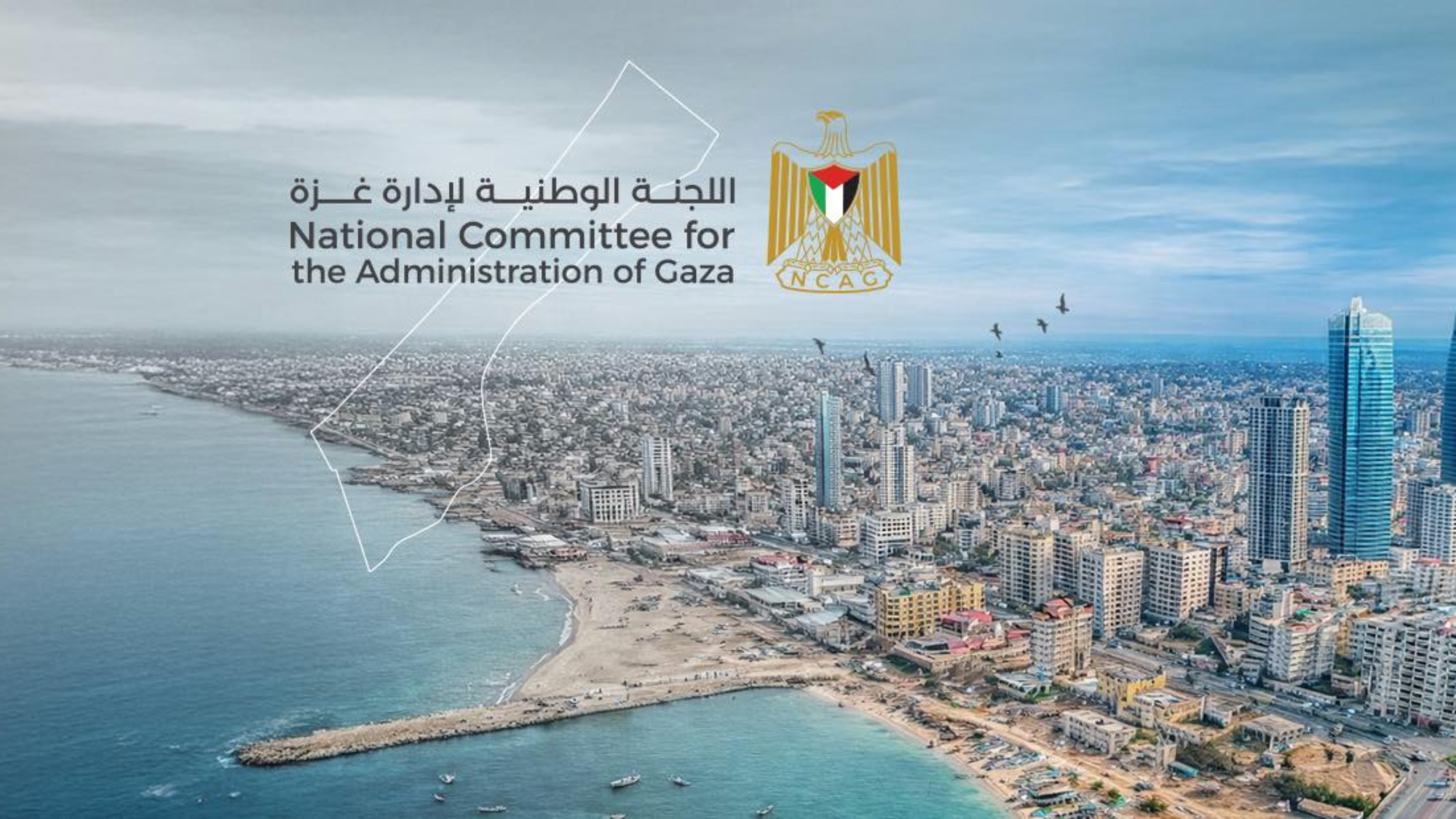
    The Israeli government has formally rejected the official emblem adopted by the newly-formed Palestinian technocratic committee designated to administer Gaza’s affairs, citing its striking resemblance to the Palestinian Authority’s insignia. Prime Minister Benjamin Netanyahu’s office issued a statement on Monday declaring Israel’s refusal to accept the symbol, emphasizing that the Palestinian Authority would not participate in Gaza’s administration.

    The National Committee for the Administration of Gaza (NCAG), a 15-member body composed of Palestinian technocrats, recently altered its social media logo to display a golden eagle centered on the Palestinian flag—a design nearly identical to the PA’s official emblem. The sole distinction lies in the Arabic text at the base, where the NCAG’s acronym replaces the word ‘Palestine.’ Previously, the committee’s logo featured a bird constructed from the colors of the Palestinian flag.

    Established last month through the US-led ‘Board of Peace’ initiative, the NCAG aims to assume governance responsibilities in the conflict-devastated territory, effectively replacing Hamas’s administrative control. The committee is chaired by former PA deputy minister Ali Shaath and incorporates Gaza representatives with no political faction affiliations.

    Hamas, which has governed Gaza since 2006, announced on Monday its completion of all preparatory measures to transfer authority to the NCAG. Committee members, having conducted recent meetings in Egypt, are anticipated to enter Gaza through the Rafah crossing imminently to commence their administrative duties.

    Supervision of the NCAG falls to Bulgarian diplomat Nickolay Mladenov, former UN Middle East peace coordinator, who serves as high representative of the Board of Peace. Mladenov’s mandate includes overseeing implementation of the second phase of the Gaza ceasefire agreement.

    The committee’s composition features Omar Shamali (communications), Abdul Karim Ashour (agriculture), Aed Yaghi (health), and Aed Abu Ramadan (industry and economy). Additional appointments include Jabr al-Daour (education), Bashir al-Rayes (finance), Ali Barhoum (water and municipalities), Hanaa Tarzi (relief and solidarity), and Adnan Salem Abu Warda (judiciary).

    Further positions are allocated to Rami Tawfiq Helles (endowments and religious affairs), Osama Hassan al-Saadawi (housing and public works), and Samira Helles (energy and transportation). Notably, Sami Nasman—a retired senior PA security official and longstanding Hamas critic—assumes the security portfolio, despite receiving a 15-year prison sentence in absentia from a Gaza court in 2015 for alleged assassination plots against Hamas leaders.

  • BBC on the front line with Colombia’s war on drugs

    BBC on the front line with Colombia’s war on drugs

    A BBC news team has been granted unprecedented access to Colombia’s intensified campaign against narcotics production, venturing into the country’s remote jungle regions where cocaine manufacturing thrives. Senior international correspondent Orla Guerin embedded with an elite counter-narcotics unit during a hazardous aerial mission over the cocaine production heartland.

    The operation focused on locating and demolishing clandestine cocaine laboratories strategically concealed within dense tropical forests. These rudimentary facilities represent the critical first stage in the global cocaine supply chain, where raw coca leaves undergo chemical processing into export-grade narcotics.

    Colombian authorities deployed specialized aircraft and tactical teams to identify these hidden installations despite sophisticated camouflage techniques employed by drug cartels. The mission involved precise aerial surveillance followed by targeted strikes to dismantle production infrastructure, significantly disrupting manufacturing capabilities.

    This frontline reporting reveals the ongoing challenges in combating drug trafficking organizations that continuously adapt their methods and relocate operations to evade detection. The Colombian government’s renewed offensive demonstrates the complex interplay between law enforcement strategies, geographical constraints, and the evolving tactics of narcotics producers seeking to maintain supply routes to international markets.

  • UAE-based actress recalls dancing to the now viral ‘Ramba Ho’

    UAE-based actress recalls dancing to the now viral ‘Ramba Ho’

    Dubai-based veteran actress and dancer Kalpana Iyer is experiencing an extraordinary digital renaissance as her iconic 1980s track ‘Ramba Ho’ experiences massive viral resurgence across social media platforms. The unexpected revival began when the song featured prominently in the Netflix film ‘Dhurandhar,’ triggering a chain reaction of online recognition that culminated in Iyer’s own impromptu wedding dance performance going viral globally.

    In an exclusive interview, the 70-year-old screen legend revealed the completely spontaneous nature of the now-famous clip. Recorded during a friend’s son’s wedding celebration in Siliguri, the video captures Iyer instinctively moving to the familiar rhythms of her hit song while wearing traditional saree attire, without any prior choreography or rehearsal. ‘I simply surrendered to the musical moment and allowed my body to respond naturally,’ Iyer explained, noting she initially shared the video casually before it rapidly spread across digital platforms within hours.

    The actress described experiencing emotional responses as friends and former colleagues began sending her notifications about the song’s trending status following its cinematic placement. Despite the widespread attention, Iyer confesses she hasn’t yet viewed the Netflix production that sparked her renewed fame.

    This digital phenomenon has ignited conversations about potential professional comebacks for the actress, who stepped away from Bollywood in 1999 before relocating to Dubai. Iyer expressed nostalgic sentiments about film production environments, specifically mentioning missing ‘the distinctive atmosphere of studio sets and the creative community of the industry.’

    Throughout the 1980s and 1990s, Iyer established herself as a prominent screen presence with performances in numerous successful productions including ‘Satte Pe Satta,’ ‘Hum Paanch,’ ‘Laadla,’ ‘Anjaam,’ and the ensemble family drama ‘Hum Saath Saath Hain.’ Her current viral moment demonstrates the powerful intersection between digital culture, nostalgia, and the enduring appeal of cinematic history.

  • Bus carrying pilgrims overturns in Brazil killing 15 on board

    Bus carrying pilgrims overturns in Brazil killing 15 on board

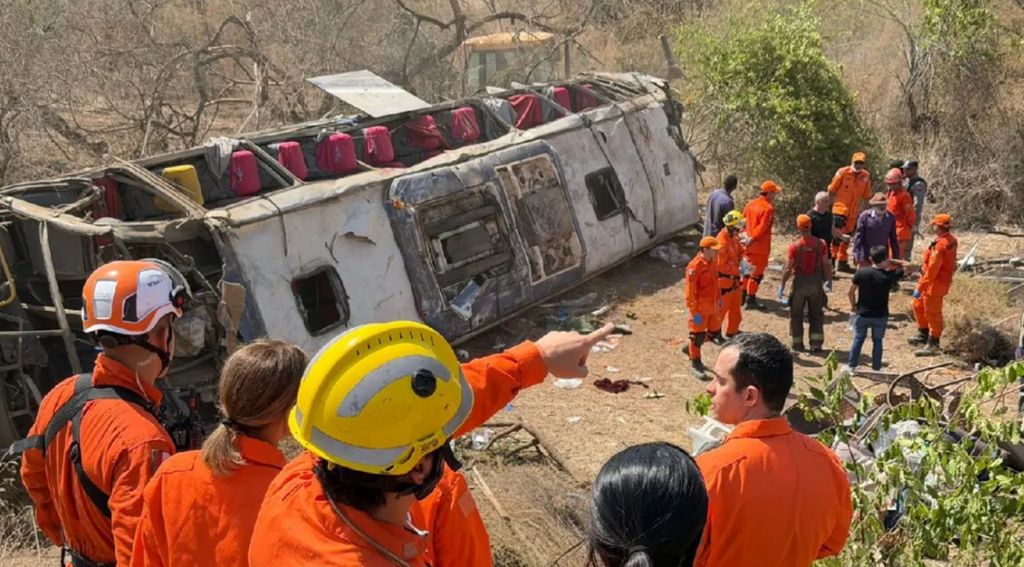
    A tragic bus accident in northeastern Brazil has resulted in the deaths of at least fifteen individuals, including three children, following the overturning of a pilgrimage vehicle on Tuesday morning. The incident occurred on a curved highway segment in São José da Tapera, within Alagoas state’s rural interior.

    Official reports indicate the bus was transporting approximately 60 passengers returning from the Our Lady of Candeiras religious festival in Ceará state. The vehicle was part of a larger convoy traveling from Coité do Noia to Juazeiro do Norte—a 563-kilometer (350-mile) journey typically lasting eight hours. The accident happened during the final leg of the return trip.

    Eyewitness footage circulating on social media depicts the overturned bus lying on its side amidst scattered debris, with emergency response teams actively working at the scene. Preliminary investigations suggest the driver lost control before the vehicle departed the roadway and rolled multiple times.

    Surviving passengers were evacuated via airlift to medical facilities, with a nine-year-old child suffering head injuries reported as the most critically injured patient. Local authorities have confirmed the demographic breakdown of fatalities: three children, seven women, and five men.

    Coité do Noia Mayor Bueno Higino Filho expressed profound grief, stating: ‘The loss is immense. They were all my friends… I woke today to this devastating news and am en route to the accident site to coordinate assistance.’

    In response to the tragedy, Alagoas State Governor Paulo Dantas declared three official days of mourning, posting on social media: ‘I stand in solidarity with family members and friends during this moment of profound sorrow.’ A formal investigation into the accident’s circumstances remains ongoing.

  • Philippine Congress suspends vote on Marcos impeachment complaints

    Philippine Congress suspends vote on Marcos impeachment complaints

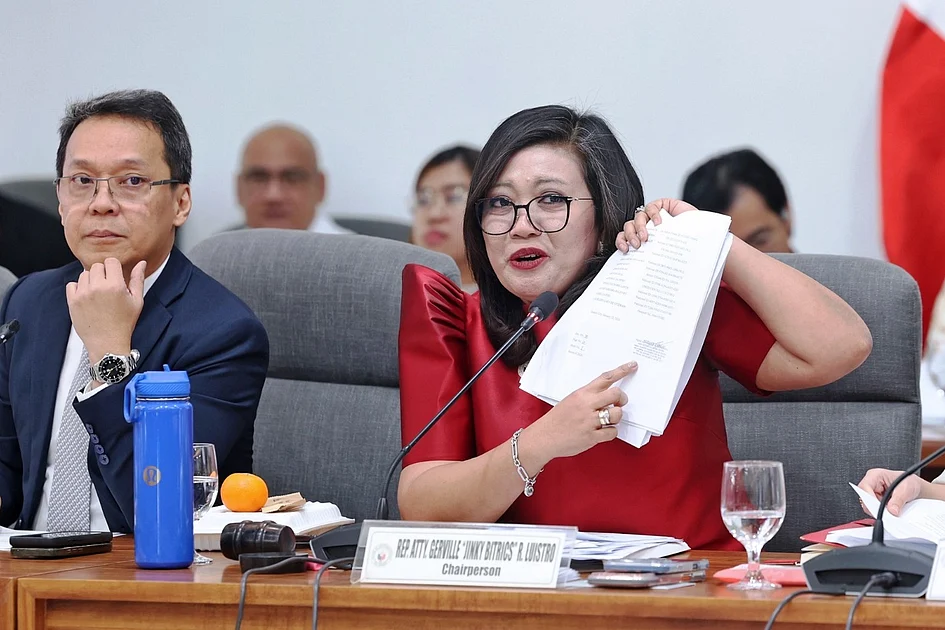
    In a significant development within Philippine politics, the House of Representatives’ Committee on Justice has postponed a decisive vote regarding the substantive merits of impeachment complaints against President Ferdinand Marcos Jr. The committee, following extensive deliberations on Tuesday, opted to suspend proceedings without reaching a determination on whether sufficient grounds exist to advance the first impeachment petition.

    Committee Chairperson Jinky Luistro granted requests from multiple members to defer the crucial substance vote until Wednesday. This delay comes after the 47-member panel previously validated both complaints as formally sufficient on Monday, February 1st, establishing the procedural foundation for substantive evaluation.

    The initial complaint, filed by lawyer Andre de Jesus on January 19th, alleges multiple constitutional violations including treason, bribery, graft, corruption, and betrayal of public trust. Meanwhile, activist organizations submitted a separate impeachment petition two weeks ago containing similar accusations against the president.

    During Tuesday’s proceedings, the first complaint encountered substantial opposition from the predominantly pro-Marcos committee. Members introduced an unprecedented requirement demanding the inclusion of annexes beyond traditional impeachment documentation, potentially complicating its passage. Representative Jett Nisay, who endorsed the initial complaint, faced intense questioning from committee members aligned with the administration.

    The second complaint, endorsed by activist legislators, focuses specifically on allegations of institutionalized corruption through unprogrammed appropriations within the national budget. These budgetary mechanisms allegedly facilitate kickbacks through anomalous flood control projects, with whistleblowers claiming Marcos personally ordered such arrangements to receive billions in illicit payments.

    Lawmakers from the Makabayan bloc emphasized that Marcos Jr., as the son and namesake of former dictator Ferdinand Marcos Sr., remains particularly vulnerable to fraud allegations given the family’s historical legacy. The postponed vote represents a critical juncture in determining whether impeachment proceedings will advance against the Philippine leader.

  • Two arrested over attempted sabotage of German naval vessels

    Two arrested over attempted sabotage of German naval vessels

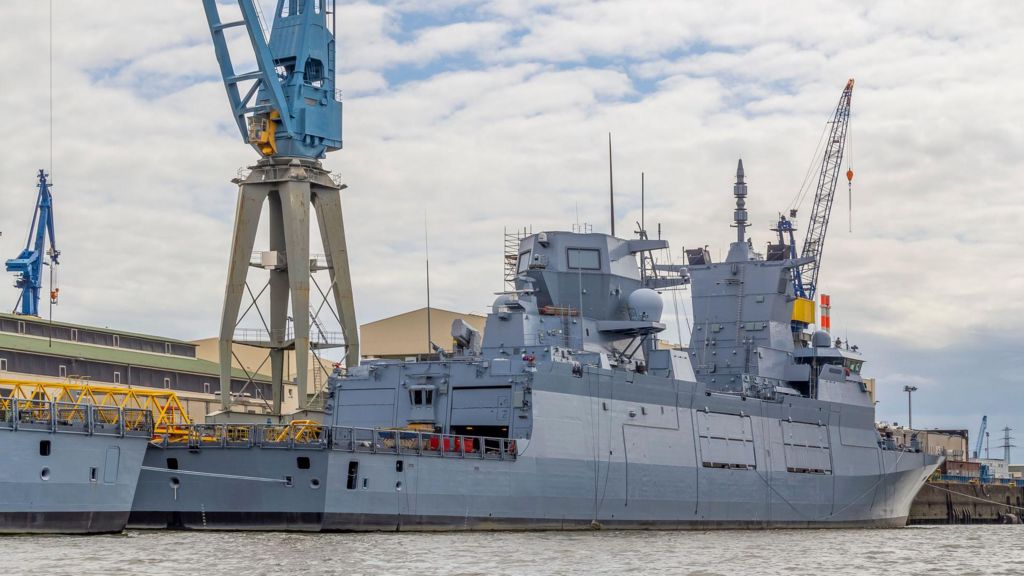
    European judicial authorities have confirmed the apprehension of two individuals allegedly involved in a sophisticated plot to incapacitate German naval vessels stationed at the Port of Hamburg. The suspects, identified as a 37-year-old Romanian national and a 54-year-old Greek citizen employed at the port facility, were detained this Tuesday through a meticulously coordinated operation involving German, Greek, and Romanian law enforcement agencies.

    According to Eurojust, the European Union’s judicial cooperation unit, the accused perpetrators executed multiple destructive acts targeting critical ship systems. Their alleged methods included disabling electronic safety mechanisms, removing fuel tank caps, deliberately puncturing water supply conduits, and introducing over 20 kilograms of abrasive gravel into a vessel’s propulsion system.

    The criminal investigation, which remains ongoing, revealed that these actions could have resulted in catastrophic mechanical failure and significant operational delays for the German Navy. Eurojust emphasized that the sabotage attempt, had it remained undetected, would have severely compromised naval readiness and endangered maritime security operations.

    Concurrent with the arrests, authorities conducted comprehensive searches of the suspects’ residences across all three involved nations, seizing electronic devices and documentary evidence believed relevant to the case. This development occurs against a backdrop of escalating security concerns across NATO member states regarding potential state-sponsored sabotage campaigns.

    Since Russia’s full-scale invasion of Ukraine in 2022, multiple European nations have reported incidents involving damaged underwater infrastructure, disrupted airport operations, and compromised military facilities. While German officials have not formally attributed the Hamburg incident to Russian operatives, the pattern aligns with broader continental security anxieties. The Kremlin has consistently denied involvement in any sabotage activities targeting European infrastructure.

    This case has prompted renewed focus on critical infrastructure protection within Germany, following earlier security incidents including a power grid attack that left thousands without electricity earlier this year.

  • Award-winning education leader Dr Richa Arora promoted to CEO; Named among Forttuna Global 100 Visionary Leaders

    Award-winning education leader Dr Richa Arora promoted to CEO; Named among Forttuna Global 100 Visionary Leaders

    The University of Stirling’s Ras Al Khaimah Campus has entered a transformative new chapter with the promotion of Dr. Richa Arora from Chief Operating Officer to CEO and Head of Institution in January 2026. This strategic leadership transition signals a significant development in the UAE’s higher education landscape, positioning the UK-based institution for accelerated growth under Dr. Arora’s internationally recognized expertise.

    Dr. Arora’s elevation follows an exceptionally productive tenure as COO, during which she engineered substantial institutional transformation through disciplined governance frameworks, automation-driven operational models, and employability-focused educational systems. Her leadership philosophy centers on building sustainable institutions rather than merely expanding campuses, evidenced by her successful implementation of robust academic governance structures aligned with both UK standards and UAE regulatory requirements.

    A hallmark of Dr. Arora’s approach has been the strategic integration of automation across all campus functions. She conceptualized digital systems not merely as efficiency tools but as comprehensive governance frameworks that enhance transparency, break down departmental silos, and enable data-informed decision-making. This technological foundation has been crucial in maintaining academic integrity while supporting responsible expansion.

    Under her guidance, graduate employability has been transformed from a peripheral service into an institutional strategic priority. The campus has established industry advisory boards, employer-led curriculum development initiatives, and technology-enabled tracking systems that monitor internships, employer feedback, and graduate outcomes as executive-level key performance indicators.

    Dr. Arora’s contributions have garnered significant international recognition, including the prestigious Forttuna Award for Education Leader of the Year and placement among the Forttuna Global 100 World’s Most Visionary Leaders for 2026. Her leadership profile was further elevated through feature appearances at New York’s Times Square, cementing her status as a global education innovator.

    Looking forward, Dr. Arora is spearheading the development of an AI-enabled and metaverse-integrated campus ecosystem. Her visionary roadmap includes intelligent academic analytics, predictive student success systems, virtual laboratories, and immersive learning environments designed to prepare students for emerging industries rather than historical roles. Simultaneously, she is introducing region-specific programs aligned with UAE economic priorities, including artificial intelligence, fintech, and digital transformation specialties.

    Beyond her institutional responsibilities, Dr. Arora serves as an advisor to education startups, sharing her expertise in regulatory compliance, academic governance, and future-ready program design. Her leadership represents a new paradigm in higher education management that balances technological innovation with sustainable institutional development, positioning the Ras Al Khaimah campus as a model for transnational education excellence.

  • Dubai unveils driverless pods to link 4 key locations with metro stations

    Dubai unveils driverless pods to link 4 key locations with metro stations

    Dubai has taken a revolutionary step in urban transportation by introducing an autonomous pod system designed to enhance metro connectivity across four strategic locations. The Roads and Transport Authority (RTA) unveiled the ‘Revolutionize Urban Mobility’ project during the World Government Summit 2026, showcasing prototype vehicles that promise to transform last-mile transportation solutions.

    The innovative system features compact, self-driving electric pods manufactured by California-based Glydways, each capable of accommodating 4-6 passengers. These vehicles operate on dedicated narrow tracks comparable to bicycle lanes, completely segregated from regular traffic. With an impressive range of 250 kilometers on a single charge and operational speeds of 50 km/h, the pods can transport over 10,000 passengers hourly in each direction.

    Initial deployment will connect metro stations to key destinations including Bluewaters Island (2.8km from National Paints station), Umm Suqeim (1.9km from Mall of the Emirates to Madinat Jumeirah), Al Quoz (2.6km from Onpassive station to Alserkal Avenue and Times Square Centre), and Dubai Festival City (7km with potential Blue Line integration). The Bluewaters route will serve as the initial trial corridor.

    The technology promises substantial economic advantages, requiring 90% less capital investment than traditional transit systems and potentially reducing operational costs by 70%. Passenger safety features include emergency SOS buttons, assistance request systems, and accessible design elements. The modular guideway infrastructure can be installed above ground, underground, or alongside existing roads without extensive additional wiring or track systems.

    This announcement follows Glydways’ ongoing collaboration with UAE authorities, including a recent agreement with the Abu Dhabi Investment Office to explore similar deployments in the capital. The initiative represents Dubai’s continued commitment to pioneering smart mobility solutions and reducing urban congestion through technological innovation.

  • We don’t have a ‘UAE agenda’ in Gaza: Top diplomat

    We don’t have a ‘UAE agenda’ in Gaza: Top diplomat

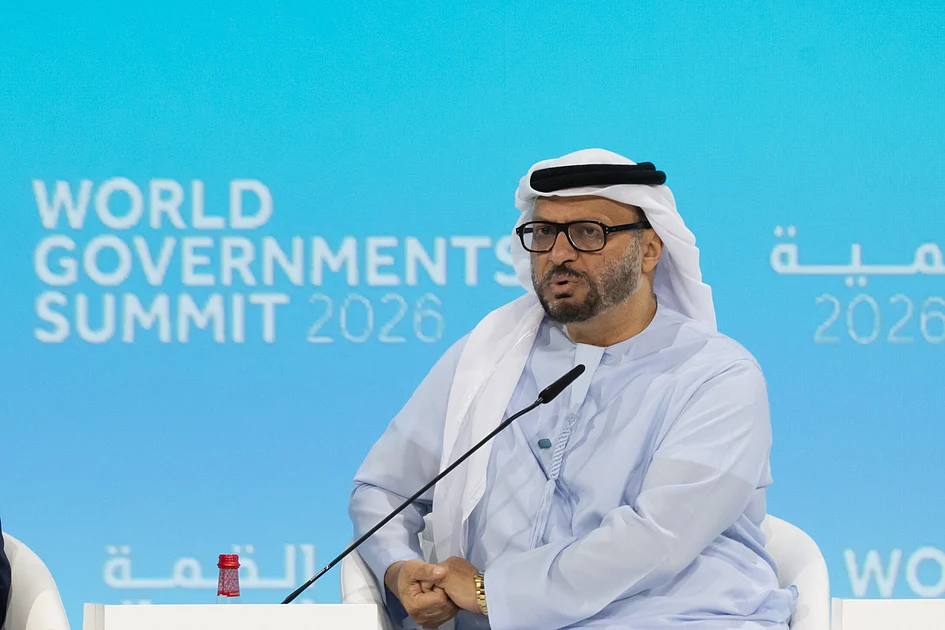
    In a definitive address at the World Government Summit, Dr. Anwar Gargash, Diplomatic Advisor to the UAE President, categorically refuted speculation regarding Emirati ambitions for a civilian administration role in Gaza. The senior statesman characterized such rumors as entirely unfounded, asserting that the UAE maintains no unilateral agenda in the contested territory.

    Dr. Gargash elaborated on the nation’s substantial humanitarian contributions, revealing that Emirati aid constitutes approximately 45% of all assistance delivered to Gaza during its most critical humanitarian crises. He emphasized that any sustainable resolution must emerge through collaborative multilateral engagement rather than unilateral action. “We must collaborate with Palestinians, Egyptians, Israelis, Jordanians, and under American leadership framework,” Gargash stated, framing the Palestinian issue as a fundamental regional concern requiring political rather than military solutions.

    The diplomat expanded on regional geopolitics, advocating for diplomatic de-escalation with Iran. He cautioned against further confrontational approaches, noting Iran’s geopolitical and economic vulnerabilities while urging direct US-Iran negotiations to resolve the nuclear impasse.

    Addressing coordinated anti-UAE media campaigns, Dr. Gargash dismissed critical rhetoric as noise disconnected from reality. He presented evidence of orchestrated social media attacks, noting how 45,000 daily critical tweets about UAE’s Sudan stance abruptly dropped to 3,000 when campaigns shifted focus to Yemen, demonstrating the manufactured nature of these criticisms.

    Concluding his remarks, Dr. Gargash reaffirmed the UAE’s commitment to economic diversification, multilateral world order building, and countering extremism. Despite acknowledging that proactive foreign policy inevitably attracts criticism, he declared the nation’s unwavering resolve: “You either do the right thing, or you can dig a hole and stay in the hole. We’ll do the right thing.”