作者: admin

  • Iran issues death sentence linked to January unrest, source tells Reuters

    Iran issues death sentence linked to January unrest, source tells Reuters

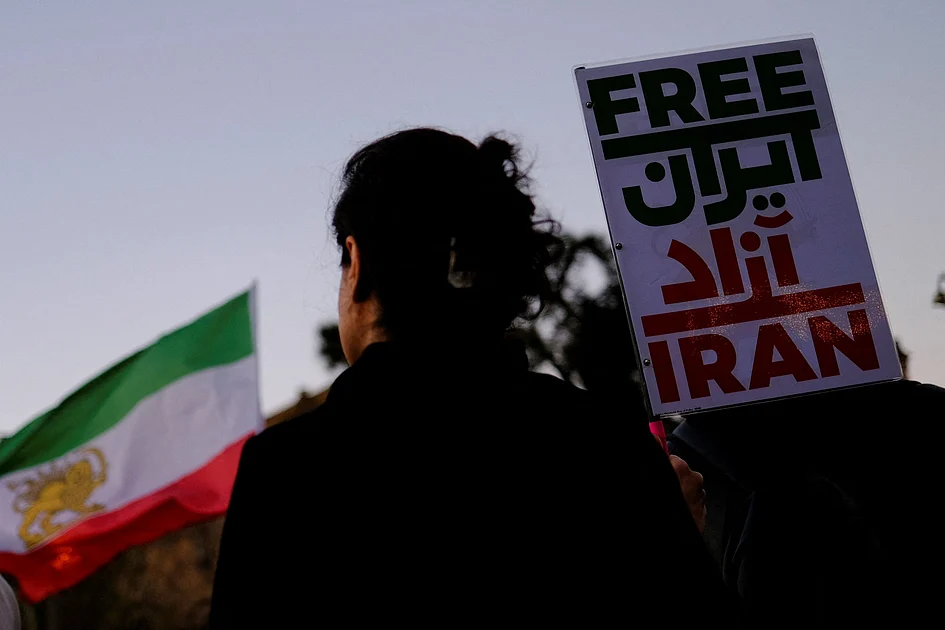
    An Iranian revolutionary court has delivered its first capital punishment verdict in connection with the widespread civil unrest that shook the nation in January, according to information received by Reuters. The sentence was imposed on Mohammad Abbasi, charged with ‘enmity against god’ (moharebeh), a capital offense under Iran’s Islamic legal code.

    The judicial decision emerges against the backdrop of what has been described as the most severe domestic turmoil since Iran’s 1979 Islamic Revolution. International observers estimate that thousands of protesters lost their lives during government crackdowns on the demonstrations that swept across multiple cities.

    The development occurs despite previous warnings from former U.S. President Donald Trump, who during the unrest period cautioned Tehran against carrying out executions, suggesting potential military response should such sentences be implemented. Notably, Iran’s judiciary has not formally announced Abbasi’s sentence through official channels.

    In a related development, Iranian authorities recently extended clemency to over 2,000 convicts, but explicitly excluded individuals detained in connection with protest-related cases from this amnesty initiative. This selective approach to pardons underscores the government’s firm stance against those participating in anti-establishment demonstrations.

    The January protests represented a significant challenge to Iran’s leadership, with citizens taking to the streets to voice grievances over various political and social issues. The judicial response, including this landmark death sentence, signals the establishment’s determination to suppress dissent through stringent legal measures.


  • Israel shuts down five Palestinian media outlets in Jerusalem

    Israel shuts down five Palestinian media outlets in Jerusalem

    In a significant escalation of media restrictions, Israeli Defense Minister Israel Katz has formally outlawed five Palestinian media organizations operating in occupied East Jerusalem, designating them as ‘terrorist organizations’. The banned outlets—Quds Plus, Miraj, Al-Maydan, Al Quds al-Asima, and Asima Agency—were targeted under the nation’s anti-terrorism legislation, a move that grants authorities sweeping powers to shutter operations, block digital content, and prohibit all journalistic activities.

    The government’s decision, announced via Israeli Army Radio on Sunday, was reportedly instigated by intelligence from the Shin Bet internal security agency. The agency alleged that Hamas was utilizing these media platforms as fronts to incite tensions throughout Jerusalem during the holy month of Ramadan. No specific evidence substantiating these claims was publicly disclosed by Israeli officials.

    Commentators and regional experts have interpreted the ban as a deliberate strategy to suppress reporting on Israeli activities at the Al-Aqsa Mosque, one of Islam’s most sacred sites. Abdullah Marouf, a professor specializing in Jerusalem studies, stated on social media platform X that the move signals an impending ‘decisive’ Israeli action in the city, intended to preemptively silence local media voices.

    In response to the order, Asima Agency announced a suspension of all its journalistic work. The outlet clarified that this was not an abandonment of its mission but a necessary measure to shield its reporters from ‘the oppression and aggression of the occupation,’ asserting its status as an independent, self-funded entity.

    The crackdown precedes the recent arrest of Palestinian journalist Nisreen Salem Al-Abd while she was reporting in Jerusalem. Although later released, she was placed under a 10-day house arrest, banned from using her phone or social media, and prohibited from entering Al-Aqsa Mosque for 180 days.

    The Palestinian Media Forum condemned Israel’s media ban as a ‘blatant violation of press freedom’ and an attempt to distort the Palestinian narrative internationally. This incident occurs against a backdrop of heightened restrictions; last week, Israeli authorities barred thousands of Palestinian worshippers with valid permits from attending the first Friday prayer of Ramadan at Al-Aqsa.

    The mosque remains a deeply symbolic site within the Israeli-Palestinian conflict, representing both the struggle for Palestinian identity and the aspirations of ultra-nationalist Israelis. Since Israel’s occupation of East Jerusalem in 1967, Palestinian access has been increasingly curtailed while Jewish presence is expanded—a breach of longstanding international agreements that preserve its Islamic character. Recent years have seen frequent Israeli police raids and the arrest of Islamic Waqf officials, further inflaming religious and political tensions.

  • Senegal decry imprisonment of fans after Afcon clashes

    Senegal decry imprisonment of fans after Afcon clashes

    Senegal’s government has expressed profound disappointment after a Moroccan court sentenced 18 Senegalese nationals to prison terms for their involvement in disturbances during the Africa Cup of Nations final in January 2025. The sentences range from three months to one year, accompanied by fines reaching 5,000 dirhams (approximately $545).

    The incident occurred during the highly contested final in Rabat when Morocco was awarded a controversial penalty during stoppage time. The decision triggered unrest among sections of Senegalese supporters, leading to attempted pitch invasions and clashes with security personnel. The situation escalated to the point where Senegalese players temporarily left the field in protest before eventually returning to play.

    Moroccan prosecutors had pursued maximum two-year sentences for some defendants, alleging deliberate attempts to disrupt the match through violence against security forces and property damage. All convicted individuals maintained their innocence but have opted against appeals, instead planning to seek a royal pardon from King Mohammed VI.

    Senegal’s Prime Minister Ousmane Sonko addressed parliament, characterizing the judicial response as exceeding sporting boundaries and damaging bilateral relations between the two traditionally friendly nations. The Senegal Football Federation described the verdicts as “incomprehensibly harsh” and expressed “profound dismay and distress” at the outcome.

    Prime Minister Sonko indicated Senegal might activate a bilateral prisoner transfer agreement to facilitate the supporters’ return, emphasizing that diplomatic efforts to secure their release had been exhausted. The incident has cast a shadow over what was otherwise a celebrated tournament victory for Senegal, who ultimately defeated Morocco 1-0 after extra time despite the controversial penalty decision.

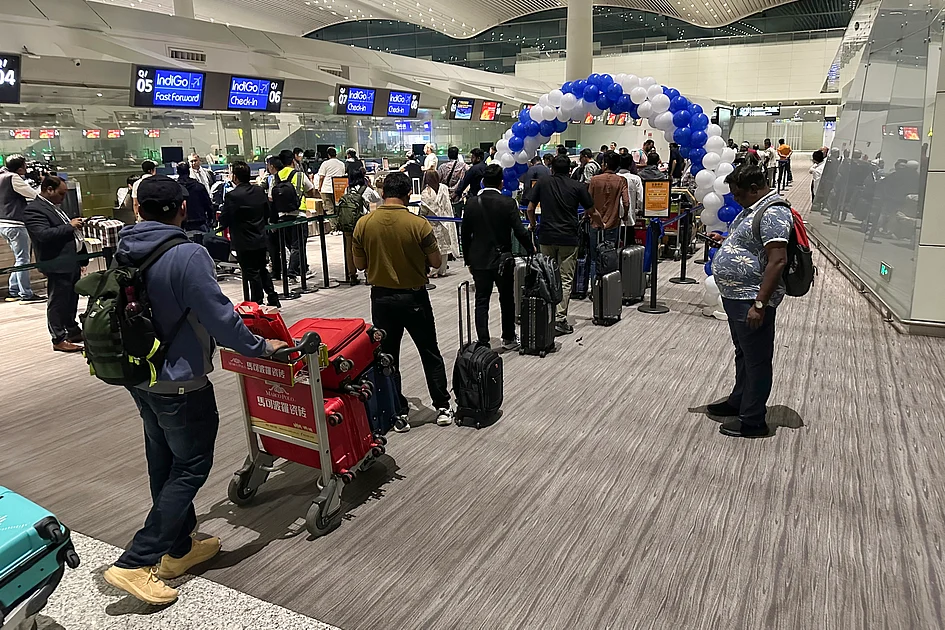
  • Indian government asked to resolve air fare hikes during holidays

    Indian government asked to resolve air fare hikes during holidays

    India’s Supreme Court has mandated the central government to formulate an official response within four weeks regarding escalating domestic airfare concerns, marking a significant judicial intervention in aviation consumer protection. The court’s directive addresses what it termed “very serious concerns” about volatile pricing structures and ancillary charges imposed by private carriers during peak travel periods.

    This judicial action follows a petition filed by social activist and frequent air traveler S. Laxminarayanan, who challenged what he described as “unchecked, opaque and exploitative” pricing practices within India’s domestic aviation sector. The petition argues that despite aviation services falling under the Essential Services Maintenance Act, passengers face excessive charges through dynamic pricing mechanisms that disproportionately affect middle-class and economically vulnerable travelers.

    The controversy centers on fare structures that multiply several times above normal rates during long weekends, school vacations, and major festivals. Judicial observations noted specific examples where fares between Prayagraj and Jodhpur tripled during popular festivals, creating financial barriers for families seeking to travel within the country.

    Additional Solicitor General Anil Kaushik informed the court that the government is examining the issue “at the highest level,” indicating serious administrative engagement with the pricing crisis. The government sought and received a four-week period to develop a comprehensive response, with the next hearing scheduled for March 23.

    Notably, the petition specifically addresses domestic airfares, excluding international routes including India-Gulf sectors that have previously drawn complaints from non-resident Indian communities. The Kerala High Court had previously directed advocacy groups to approach the Competition Commission of India regarding international fare concerns.

    The petition additionally highlights reduced free baggage allowances from 25kg to 15kg and steep excess baggage fees, calling for regulatory measures including binding fare norms, surge pricing limits, baggage fee regulation, and establishment of an independent aviation watchdog to protect consumer rights.

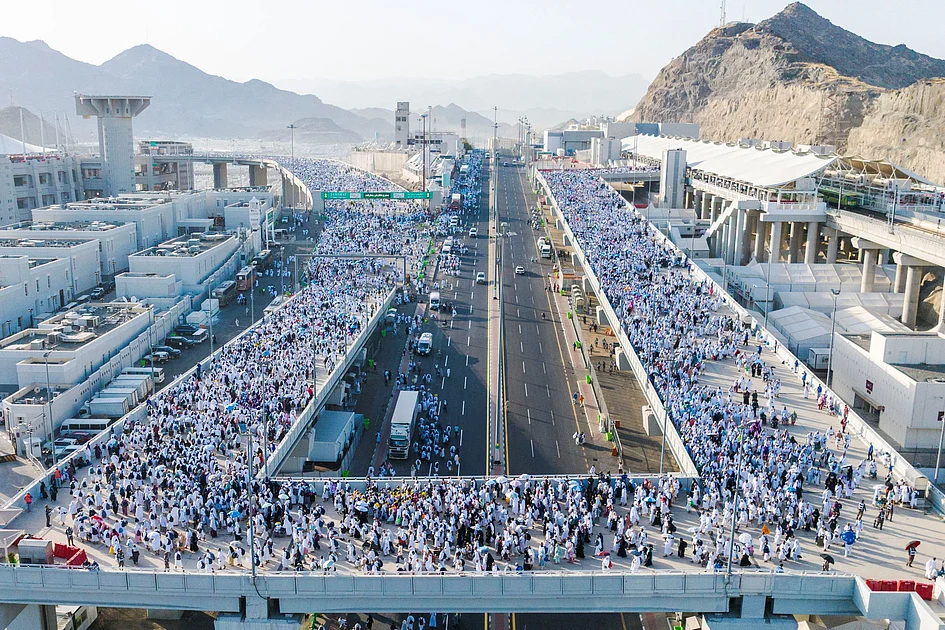
  • Hajj 2026 registrations begin for Saudi nationals, residents; who can apply?

    Hajj 2026 registrations begin for Saudi nationals, residents; who can apply?

    Saudi Arabia’s Ministry of Hajj and Umrah has officially commenced registration procedures for the 2026 Hajj pilgrimage, specifically targeting citizens and legal residents of the Kingdom. The registration portal opened on February 23, 2026 (Ramadan 6), with package bookings scheduled to begin on March 4 (Ramadan 15).

    Prospective pilgrims must apply exclusively through digital channels—either the official Nusuk application or the nusuk.sa website—as announced by the Saudi Press Agency. The ministry has established clear eligibility criteria: applicants must be at least 15 years old according to the Gregorian calendar and meet all approved health requirements. For expatriate residents, a valid residency permit is mandatory, with preference given to those who obtained their residency over one Gregorian year ago.

    A significant feature of this year’s registration is the priority allocation system. During the initial phase lasting until the end of Shawwal, priority will be granted to individuals who have never performed Hajj previously. Only if vacancies remain will registration open to repeat pilgrims.

    The ministry emphasized that all contractual arrangements must be processed through licensed companies featured on the Nusuk platform. The registration process requires personal account creation, comprehensive information submission, eligibility verification, package selection, and payment processing via the SADAD system to obtain the official Hajj permit.

    Authorities have encouraged prompt registration due to anticipated high demand and have directed inquiries to the dedicated hotline 1966.

  • Leicester riots: Inquiry finds Hindu nationalist ideas and disinformation played role in unrest

    Leicester riots: Inquiry finds Hindu nationalist ideas and disinformation played role in unrest

    A landmark independent investigation has concluded that the 2022 communal violence in Leicester resulted from a complex convergence of factors including Hindu nationalist influence, policing failures, and inadequate civic leadership. The comprehensive report titled ‘Better Together: Understanding the 2022 Violence in Leicester’ reveals that the unprecedented unrest was both preventable and exacerbated by institutional shortcomings.

    Conducted by researchers from SOAS University of London and the London School of Economics, the inquiry gathered extensive community testimony, digital evidence, and expert analysis. It documents how initial incidents beginning in May 2022 were inadequately addressed by authorities, ultimately escalating into major violence between Hindu and Muslim communities in August and September.

    Professor Juan Mendez, the international human rights lawyer who chaired the inquiry, emphasized that the violence emerged from multiple overlapping factors rather than the actions of any single community. The report identifies targeted attacks, local grievances, economic hardship, social fragmentation, and the spread of polarizing ideologies as key contributors to the crisis.

    The inquiry particularly criticized the Henry Jackson Society (HJS), describing it as a ‘motivated political actor’ whose narrative mirrored Hindutva-aligned groups and undermined reconciliation efforts. The report asserts that HJS helped legitimize supremacist ideologies in parliamentary and policy spaces while promoting distorted accounts of key events.

    Social media played a central role in accelerating the crisis through rapid circulation of misinformation and ‘fear messaging’ that amplified rumors and stoked inter-community hostility. The report highlights major gaps in intelligence-gathering, communication, and visible leadership from both Leicestershire Police and Leicester City Council during critical moments.

    Beyond immediate triggers, the inquiry points to deep-rooted economic and social deprivation affecting communities across Leicester, with young people particularly impacted by lack of opportunity, housing insecurity, and cuts to youth services. External political and ideological influences, including sustained disinformation campaigns by Hindu nationalist organizations in the UK and India, significantly intensified local tensions.

    The report documents numerous acts of cross-community solidarity during and after the violence but warns that these ‘powerful Leicester voices’ calling for peace were largely ignored by institutions. It calls for long-term investment in youth services, housing, education, and community regeneration, alongside more accountable policing with better understanding of communal dynamics.

    Recommendations include coordinated action to counter misinformation, digital literacy initiatives, and clear political leadership that rejects sectarian campaigning in favor of shared civic identity. The inquiry emphasizes the need to rebuild shared secular spaces that bring people together across religious lines, particularly led by young people from all communities.

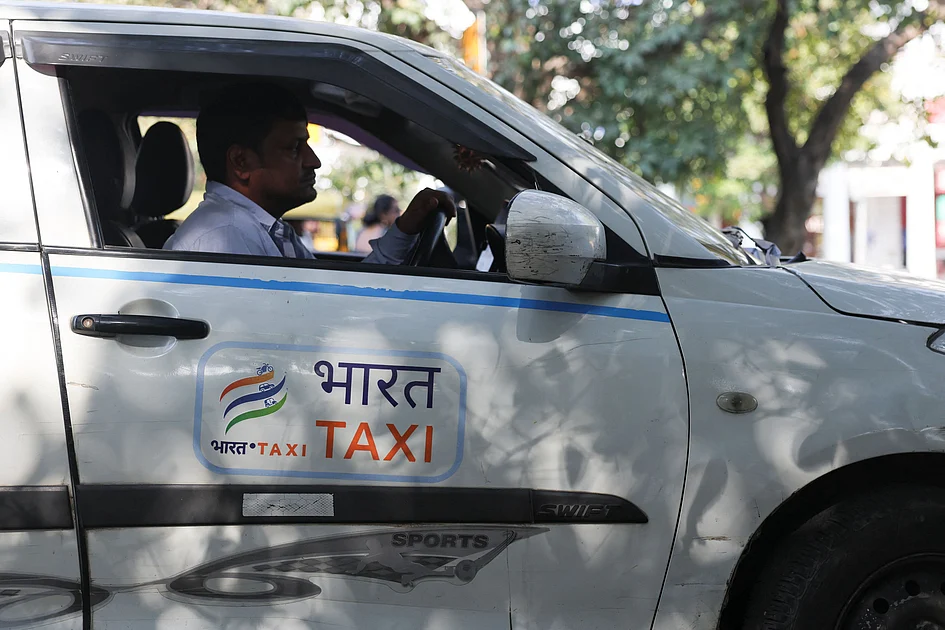
  • ‘Not to make profits’: India backs new ride-hailing service to challenge likes of Uber

    ‘Not to make profits’: India backs new ride-hailing service to challenge likes of Uber

    India has unveiled a groundbreaking government-supported ride-hailing platform that directly challenges international giants like Uber through an innovative cooperative business model. The service, named Bharat Taxi, represents a significant shift in the country’s mobility ecosystem by eliminating driver commissions and offering profit-sharing opportunities to participating drivers.

    Amit Shah, India’s Minister of Cooperation and Home Minister, announced the initiative during a Monday address to drivers, explaining that for a nominal investment of 500 rupees (approximately $5.50), drivers can become shareholders and receive profit distributions after three years of operation. “The fundamental objective of this taxi service is not to function as a conventional profit-driven corporation,” Shah emphasized during the launch event.

    The government-backed venture emerges amid widespread dissatisfaction among drivers working for established platforms such as Uber and its domestic competitor Ola. Primary grievances include excessive commission structures, inadequate fare rates, and overall financial pressures on drivers. Shah previously informed Parliament that unlike existing services, Bharat Taxi’s profits “will not be channeled to corporate tycoons.”

    While Uber maintains dominance alongside Ola and Rapido in India’s rapidly expanding $2 billion ride-hailing market—projected by Grand View Research to reach $11 billion by 2033—Bharat Taxi has already attracted over 250,000 drivers. Currently operational in select regions including New Delhi, the service plans nationwide expansion within two years.

    The platform offers comprehensive mobility options through its mobile application, enabling customers to book traditional cabs, three-wheeled autorickshaws, and motorcycle taxis. Additionally, Bharat Taxi provides financial services including vehicle mortgage assistance and loan facilitation for drivers.

    Uber responded to the development by acknowledging India’s “dynamic and rapidly evolving mobility ecosystem,” stating that “healthy competition ultimately benefits all stakeholders” while asserting its continued preference among both drivers and riders. Ola declined to comment on the new competitor.

    This marks the first federal government-backed challenge to established ride-hailing services in India, distinguishing itself from previous private sector attempts like BluSmart that failed to significantly disrupt market dominance.

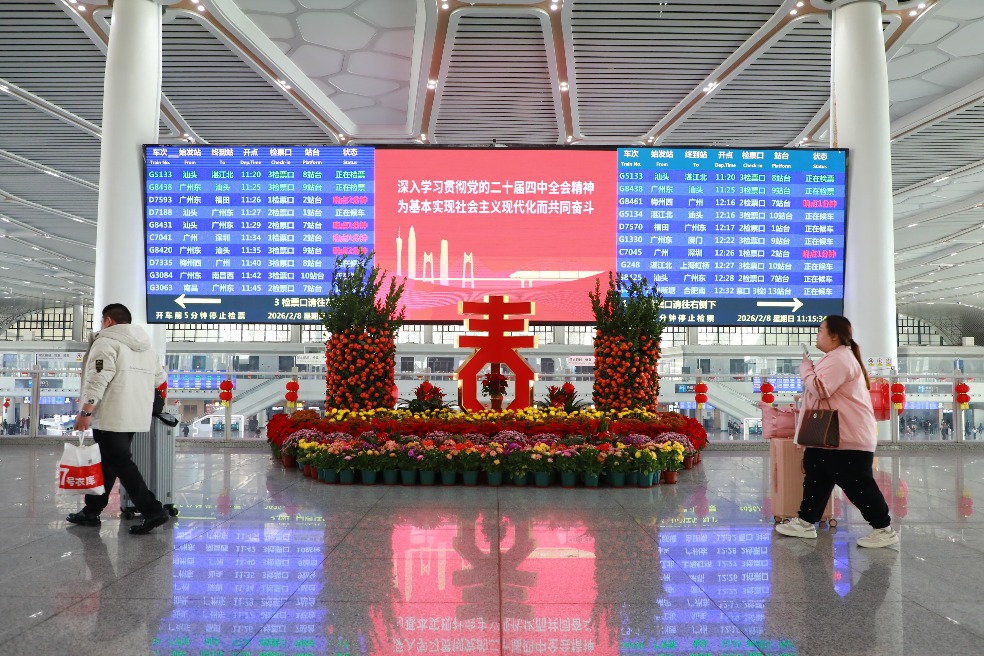
  • China Railway Guangzhou Group transports over 50m passengers since the start of travel rush

    China Railway Guangzhou Group transports over 50m passengers since the start of travel rush

    China Railway Guangzhou Group has achieved a monumental transportation milestone, moving over 50 million passengers since the commencement of the annual Spring Festival travel period. This massive operation underscores the critical role of rail infrastructure in facilitating China’s largest annual human migration event.

    The Guangzhou-based railway operator, serving as a primary transport hub in Southern China, reported handling approximately 2.512 million outbound passengers and receiving 2.619 million inbound travelers on Tuesday alone—the 23rd day of the travel rush that began on February 2.

    According to the company’s passenger transport department, this sustained high-volume traffic results from a convergence of factors including post-holiday business reopenings, university restarts, and returning family visitors. This overlapping demand has created unprecedented pressure on transportation systems throughout the region.

    To accommodate the massive passenger flow, the railway group has implemented extensive capacity expansion measures. On Tuesday, the operation included 3,946 scheduled trains, with 1,419 high-speed units running in multiple formations and an additional 745 supplemental services—469 of which were nighttime high-speed trains.

    Infrastructure enhancements have played a crucial role in managing the passenger surge. Guangzhou Baiyun Station, one of Guangdong’s major rail hubs, has significantly improved transfer efficiency through newly added entrances and upgraded passenger facilities. These improvements have enabled rapid station transfers within just five minutes.

    Additionally, the station has implemented security-free通道 for metro and Guangzhou-Qingyuan intercity train connections, reducing rail-to-subway transfer times to approximately 15 minutes. These operational optimizations represent significant advancements in China’s railway transportation capabilities during peak travel periods.

  • Ex-Nigerian minister confronted tycoons who bribed her, court told

    Ex-Nigerian minister confronted tycoons who bribed her, court told

    Southwark Crown Court became the stage for dramatic revelations as prosecutors presented recorded conversations featuring former Nigerian Oil Minister Diezani Alison-Madueke confronting two oil magnates from whom she allegedly accepted substantial bribes. The 65-year-old former minister, who served from 2010 to 2015, stands accused of orchestrating a corruption scheme that funded her extravagant lifestyle in the United Kingdom through illicit payments tied to lucrative Nigerian oil contracts.

    Forensic investigators extracted critical evidence from Alison-Madueke’s Samsung phone, seized during her 2015 arrest in London. The device contained two incendiary recordings from 2014 that captured the former minister’s confrontations with oil tycoons Olajide Omokore and Kolawole Aluko. Although neither businessman currently faces trial, prosecutors maintain they funneled bribes to Alison-Madueke during her tenure as petroleum resources minister.

    In the first recording from April 2014, Alison-Madueke confronted Omokore about his wife’s alleged disclosures, declaring with rising intensity: ‘We who are managing the thing have kept quiet. I do not react well to being blackmailed.’ The second conversation, recorded one month later, featured Alison-Madueke admonishing Aluko for his ‘lavish, lascivious lifestyle’ and high-profile associations, including with British supermodel Naomi Campbell. She warned that his public behavior would attract intelligence scrutiny.

    The most striking moment came when Alison-Madueke threatened collective imprisonment: ‘I will be happy to escort all of you to jail along with myself. You will be shocked what I will do because when it comes to that, I will come out and tell the Nigerian people this is what happened.’ Aluko responded by claiming he had never mentioned her name and had stored protective materials in a safety deposit box, describing himself as having ‘a million flaws’ but being ‘loyal like a dog.’

    Alison-Madueke has pleaded not guilty to five counts of bribery acceptance and one count of conspiracy to commit bribery. Also facing charges are oil executive Olatimbo Ayinde, who denies bribery counts related to the former minister, and Alison-Madueke’s brother, former bishop Doye Agama, who denies conspiracy charges. The trial continues as UK prosecutors seek to prove systematic corruption within Nigeria’s oil sector during Alison-Madueke’s administration.

  • Anthony Albanese evacuated from The Lodge due to security incident

    Anthony Albanese evacuated from The Lodge due to security incident

    Australian Prime Minister Anthony Albanese was abruptly evacuated from his official Canberra residence on Tuesday evening following an alleged security threat, prompting grave concerns about the deteriorating safety environment for the nation’s elected officials. The incident unfolded around 6 PM when security personnel relocated the Prime Minister from The Lodge to a secure facility while authorities conducted a thorough investigation. Albanese returned to his residence approximately three hours later after the all-clear was given. Australian Federal Police confirmed the operation but withheld specific details about the nature of the threat, stating only that a comprehensive search had been conducted and no suspicious items were located. Finance Minister Katy Gallagher expressed deep concern about the escalating political climate, noting she couldn’t recall a previous instance where an Australian Prime Minister had been forced to evacuate their residence due to security concerns. Opposition Leader Angus Taylor condemned the incident, stating that threats against parliamentarians were ‘utterly abhorrent’ in a democracy built on respectful debate. The event comes amid alarming statistics revealing a 42% increase in reported incidents involving harassment and threats against federal parliamentarians in 2023-24 compared to the previous year, with over 1,000 cases documented by the AFP.