作者: admin

  • How did Harry Potter villain become Chinese Lunar New Year symbol?

    How did Harry Potter villain become Chinese Lunar New Year symbol?

    In an unexpected cultural phenomenon, Draco Malfoy—the aristocratic antagonist from J.K. Rowling’s Harry Potter series—has emerged as an unconventional mascot for China’s Lunar New Year celebrations. The character’s sudden popularity stems from the Chinese translation of his surname, “Ma-er-fu,” which combines the words for “horse” and “fortune,” making it particularly auspicious for the Year of the Horse.

    Social media platforms across China have been inundated with images showcasing vibrant red posters featuring Tom Felton’s portrayal of the Slytherin student adorning household doors and commercial spaces. E-commerce platform Taobao reports robust sales of Malfoy-themed merchandise, with packages of four decorative posters selling for approximately 11 yuan ($1.60). One Rednote user encapsulated the trend by stating: “Year of the Horse’s blessing, so stick on a Malfoy.

    The phenomenon has reached monumental proportions, with photographs circulating online depicting a massive multi-story banner of Malfoy in his Hogwarts uniform draped across a shopping mall in central Henan province. This unusual adoption occurs despite the character’s villainous role in the original narrative.

    This cultural adaptation highlights the enduring popularity of the Harry Potter franchise in China, where foreign film representation remains limited due to strict import quotas and growing domestic content production. The wizarding world’s commercial presence continues expanding, with Warner Bros recently announcing collaboration with Jinjiang International to develop a Harry Potter Studio Tour in Shanghai. Additionally, Beijing’s Universal Studios features extensive Harry Potter-themed attractions, and the film series enjoyed successful re-releases in Chinese theaters during 2024.

  • France begins Six Nations title defense with five-try pounding of Ireland in 36-14 win

    France begins Six Nations title defense with five-try pounding of Ireland in 36-14 win

    In a spectacular display of rugby prowess, France launched their Six Nations championship defense with an emphatic 36-14 victory against Ireland on Thursday evening. The match, played under rainy conditions at Stade de France, saw the French squad demonstrate why they remain tournament favorites with a performance that blended tactical brilliance with raw athletic power.

    The opening half unfolded as a masterclass in offensive execution as France built a commanding 29-0 advantage before halftime. Young sensation Louis Bielle-Biarrey, last year’s tournament MVP, ignited the scoring frenzy in the 12th minute with a spectacular individual effort that saw him break multiple tackles before powering across the try line. Flyhalf Matthieu Jalibert quickly followed with his fourth international try, redeeming himself after previous disappointing performances in the French jersey.

    France’s third try emerged from an unexpected source as forwards Jean-Baptiste Gros and Mickaël Guillard orchestrated a brilliant sequence that culminated with lock Charles Ollivon scoring his 18th international try. The first-half dominance was capped by Bielle-Biarrey’s second score early in the second period, created by a remarkable soccer-style flick pass from Ramos that sent the winger sprinting into the corner.

    Ireland mounted a late resurgence with replacement players Nick Timoney and Michael Milne crossing for consecutive tries, both converted by Sam Prendergast. However, the comeback attempt proved insufficient against France’s overwhelming advantage. The match concluded with controversy as James Ryan delivered a heavy off-the-ball challenge on Jalibert, though the French flyhalf recovered to set up Théo Attissogbe for a final converted try in the closing seconds.

  • Bitcoin falls to lowest value since Trump took office

    Bitcoin falls to lowest value since Trump took office

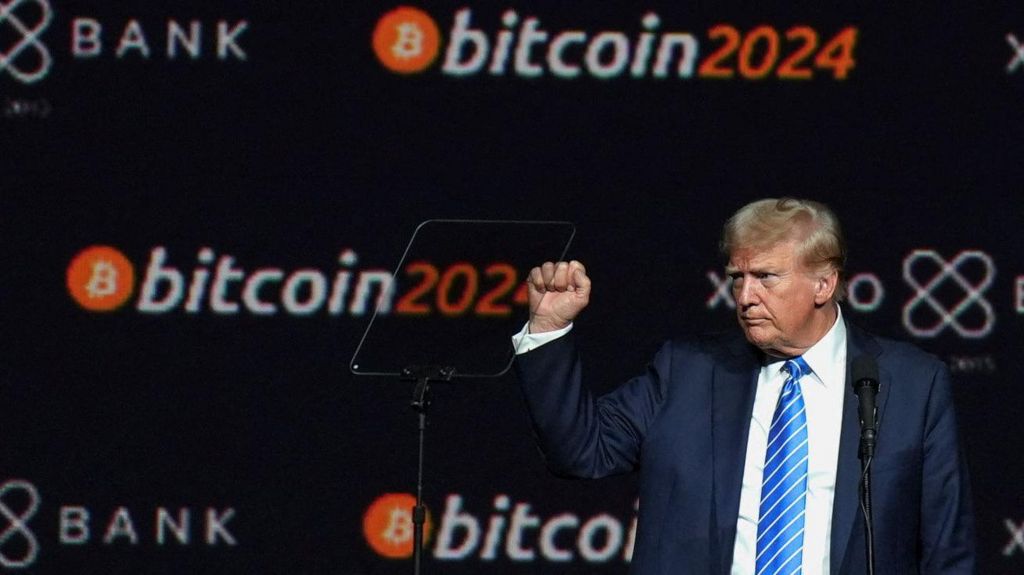
    Bitcoin has plunged to a 15-month low of $66,000, marking a 24% decline since January 2026 and a 32% drop over the past year. This significant downturn occurs despite former President Donald Trump’s vigorous personal and policy support for the cryptocurrency sector since returning to office in January 2025.

    Trump’s administration has implemented what Senate Democrats have termed a “pro-crypto agenda,” including an executive order positioning the U.S. as the “crypto capital of the planet,” federal backing legislation, dissolution of a Justice Department crypto enforcement team, and reduced SEC oversight. The president has personally benefited from these policies, amassing crypto holdings worth over $11 billion and generating $800 million in personal income from crypto transactions, according to Senate Judiciary Committee findings.

    The current decline follows Bitcoin’s October 2025 all-time high of $122,200, which was partially fueled by investor optimism about Trump’s policies. However, analysts from Deutsche Bank identify Trump’s nomination of Kevin Warsh as Federal Reserve chair as the trigger for the recent sell-off. The bank notes four consecutive months of declining prices and growing negative sentiment among traditional investors.

    Market data reveals broader crypto weakness, with Ethereum and Solana both down approximately 37% in 2026. According to CoinGecko, the cryptocurrency market has lost over $1 trillion in value in the past month and $2 trillion since its October peak.

    Investment firm Stifel predicts Bitcoin could fall as low as $38,000, citing a new correlation with the U.S. dollar’s performance after the currency recently hit a four-year low. Deutsche Bank suggests Bitcoin is transitioning from a “purely speculative asset” to one that “needs to find its specific role” in the financial ecosystem, indicating they don’t expect a return to Trump-driven highs despite cryptocurrency’s likely permanence.

  • Trump backs Chagos handover deal, says No 10

    Trump backs Chagos handover deal, says No 10

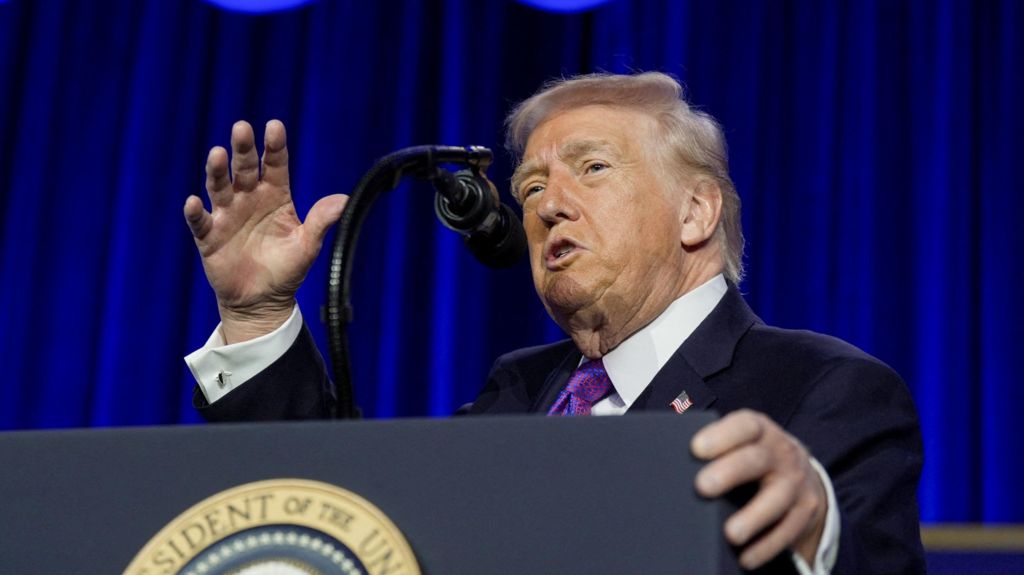
    The United States has formally endorsed the United Kingdom’s landmark agreement to transfer sovereignty of the Chagos Islands to Mauritius while securing a long-term lease for the strategic military installation on Diego Garcia. This development follows weeks of diplomatic uncertainty after former President Donald Trump’s contradictory statements regarding the arrangement.

    In a significant diplomatic reversal, Trump publicly expressed support for Prime Minister Keir Starmer’s negotiated settlement, characterizing it as “the best he could make” during their recent discussions. This endorsement came as a relief to British officials who had grown concerned when Trump previously denounced the agreement as an “act of great stupidity” and “total weakness” last month.

    The complex arrangement, initially announced last year, facilitates the formal transfer of Chagos Islands sovereignty to Mauritius while guaranteeing continued UK and US military access to the Diego Garcia base through a 99-year leaseback provision. This joint UK-US facility serves as a critical strategic asset for both nations’ military operations in the Indian Ocean region.

    Downing Street confirmed that both leaders “agreed on the importance” of maintaining the base’s operational security during their Thursday conversation. A spokeswoman emphasized that the two nations would “continue to work closely on the implementation of the deal,” signaling ongoing cooperation despite previous tensions.

    Trump’s conditional support, communicated via his Truth Social platform, included a significant caveat: “If the lease deal, sometime in the future, ever falls apart, or anyone threatens or endangers US operations and forces at our base, I retain the right to militarily secure and reinforce the American presence in Diego Garcia.”

    White House Press Secretary Karoline Leavitt clarified the administration’s position, stating that while Trump understands and supports Starmer’s position, the United States “reserves the right to protect our assets.” This sentiment was echoed by US Ambassador to the UK Warren Stephens, who acknowledged that while maintaining UK sovereignty would be the “ideal” outcome, the current arrangement represents the “best deal on the table.”

    The agreement has faced substantial domestic criticism in the UK, particularly from Conservative and Reform UK parties who argue that Mauritius’s ties to China pose national security risks. Shadow Foreign Secretary Dame Priti Patel characterized Trump’s statement as recognizing “a critical weakness in the surrender deal” and pledged continued opposition.

    A draft law to ratify the Chagos Islands agreement is currently progressing through Parliament, though the legislative process experienced delays following Trump’s previous critical comments. Prime Minister Starmer has consistently maintained that the arrangement is necessary to protect the base’s continued operation amid previous legal challenges from Mauritius regarding British sovereignty.

  • Watch: What’s happened since Savannah Guthrie’s mother disappeared?

    Watch: What’s happened since Savannah Guthrie’s mother disappeared?

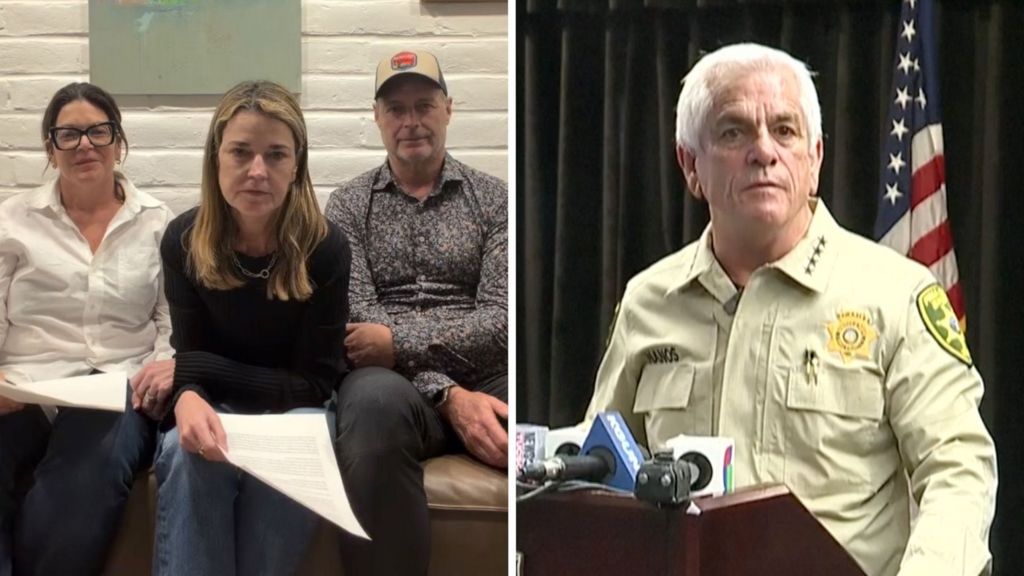
    Law enforcement agencies have intensified their investigation into the mysterious disappearance of Nancy Guthrie, mother of NBC News anchor Savannah Guthrie, with the FBI now examining two ransom notes received by the family. The case has taken a dramatic turn as authorities pursue multiple leads in their search for the missing woman.

    Police departments across jurisdictions have coordinated efforts, offering a substantial $50,000 reward for any information that could lead to resolving the case. This financial incentive aims to encourage potential witnesses to come forward with crucial details that might break the investigation open.

    The FBI’s involvement signifies the seriousness of the situation, with federal agents bringing additional resources and forensic capabilities to analyze the ransom communications. Law enforcement officials have maintained regular contact with the Guthrie family while carefully managing the flow of information to protect the integrity of their investigation.

    Community response has been significant, with local volunteers organizing search parties and distributing flyers throughout the area where Nancy Guthrie was last seen. The case has drawn national attention due to Savannah Guthrie’s high profile as a morning news anchor, putting additional pressure on authorities to produce results.

    Investigators continue to pursue all possible angles, from personal motives to random criminal activity, while urging the public to report any suspicious behavior or information, no matter how insignificant it might seem.

  • India to travel to Colombo despite Pakistan’s boycott call, captain Suryakumar Yadav says

    India to travel to Colombo despite Pakistan’s boycott call, captain Suryakumar Yadav says

    Indian cricket captain Suryakumar Yadav has confirmed his team’s intention to travel to Colombo for their scheduled T20 World Cup match against Pakistan, despite their arch-rivals’ formal boycott announcement. The statement came during a press conference at Mumbai’s Wankhede Stadium on Thursday, where India prepares to launch their campaign against the United States this Saturday.

    Yadav clarified India’s position regarding the controversial February 15 fixture: “We haven’t declined to play against Pakistan—they have initiated this boycott. Our travel arrangements are confirmed, and we will be present in Colombo as planned.”

    The tournament, jointly hosted by Sri Lanka and India, has encountered significant political complications during its lead-up. Bangladesh was previously disqualified for refusing to compete in India, prompting Pakistan’s government to order their team to boycott the high-profile match in solidarity with Bangladesh.

    According to tournament regulations, India must appear at the stadium prepared to play to secure the two points awarded for a match forfeiture. The teams have not engaged in bilateral cricket for over a decade, meeting exclusively during international tournaments.

    Yadav acknowledged India’s favorite status to retain the title they won two years ago, noting their strong recent form. However, he emphasized competitive caution: “While our performance suggests we’re favorites, there are nineteen other quality teams in this tournament. Every match demands our top-level performance.”

    The captain specifically referenced the United States’ stunning victory over Pakistan in the 2024 tournament, vowing that no opponent would be underestimated. “Each game carries tremendous importance,” Yadav stated, highlighting the competitive balance of the global event.

  • Trump’s nuclear arms control push with Russia hinges on China

    Trump’s nuclear arms control push with Russia hinges on China

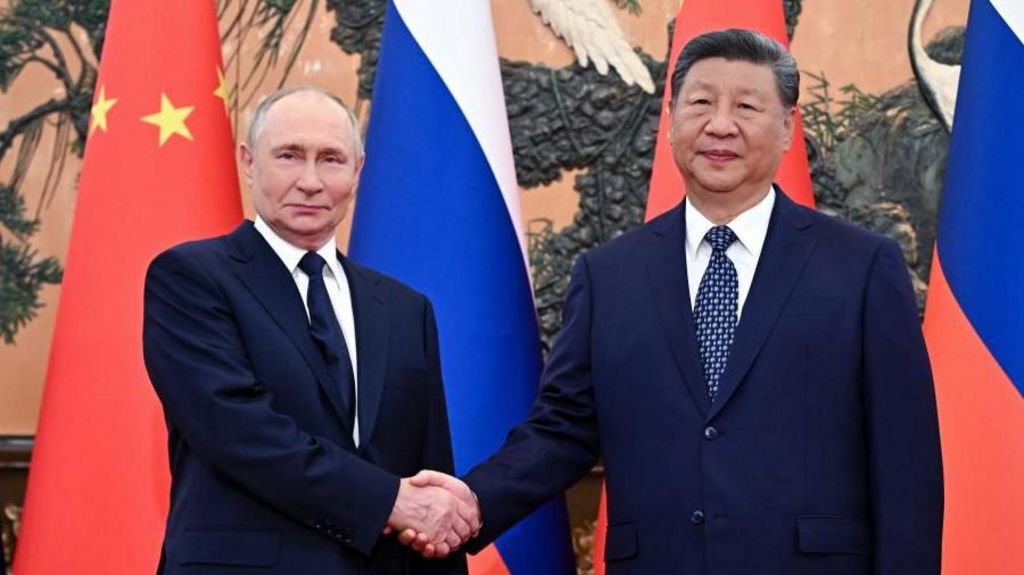
    The expiration of the New Strategic Arms Reduction Treaty (New START) has created an unprecedented nuclear governance vacuum between the United States and Russia, marking the first time in the 21st century that the world’s two largest nuclear powers operate without major arms control constraints. President Donald Trump’s administration now seeks to negotiate a comprehensive trilateral agreement involving China, a proposition that experts warn faces formidable diplomatic and technical challenges.

    The treaty’s lapse has triggered international concerns about potential nuclear proliferation and heightened geopolitical tensions. Former Obama administration negotiator Rose Gottemoeller characterized the situation as “a dangerous moment” due to the absence of concrete follow-up arrangements. The expiration eliminates critical verification mechanisms, including on-site inspections and data sharing protocols that enabled mutual monitoring of nuclear arsenals.

    Trump’s unconventional negotiation approach, deploying son-in-law Jared Kushner and envoy Steve Witkoff for arms control discussions in Abu Dhabi, has raised questions about the administration’s capacity to handle complex technical negotiations. Experts emphasize that establishing compliance and verification frameworks typically requires years of specialized diplomacy, not improvisational bargaining.

    The geopolitical landscape presents additional complications. Russia’s deepening alliance with China and ongoing Ukraine conflict have strained relations with Western powers. Meanwhile, China maintains its refusal to participate in trilateral talks until the US and Russia significantly reduce their existing arsenals. Beijing’s nuclear expansion program, projected to reach 1,000 warheads by 2030, adds urgency to arms control efforts.

    Historical precedent offers limited comfort. While brief gaps in arms control occurred during the Cold War, current tensions involving three nuclear powers create unprecedented complexity. The absence of restrictions on tactical nuclear weapons in Europe further compounds security concerns, especially given Russia’s ambiguous nuclear posture regarding Ukraine.

    The administration’s consideration of separate bilateral tracks with Russia and China suggests recognition of the trilateral approach’s difficulties. However, with both Moscow and Washington declaring themselves free from New START obligations, the path toward a new comprehensive treaty appears increasingly uncertain, potentially ending five decades of continuous bilateral nuclear arms control.

  • Venezuela advances amnesty bill that could lead to mass release of political prisoners

    Venezuela advances amnesty bill that could lead to mass release of political prisoners

    CARACAS, Venezuela — Venezuela’s National Assembly has taken significant steps toward approving a sweeping amnesty bill that could result in the liberation of hundreds of political prisoners, including opposition figures, journalists, and human rights activists detained under controversial circumstances.

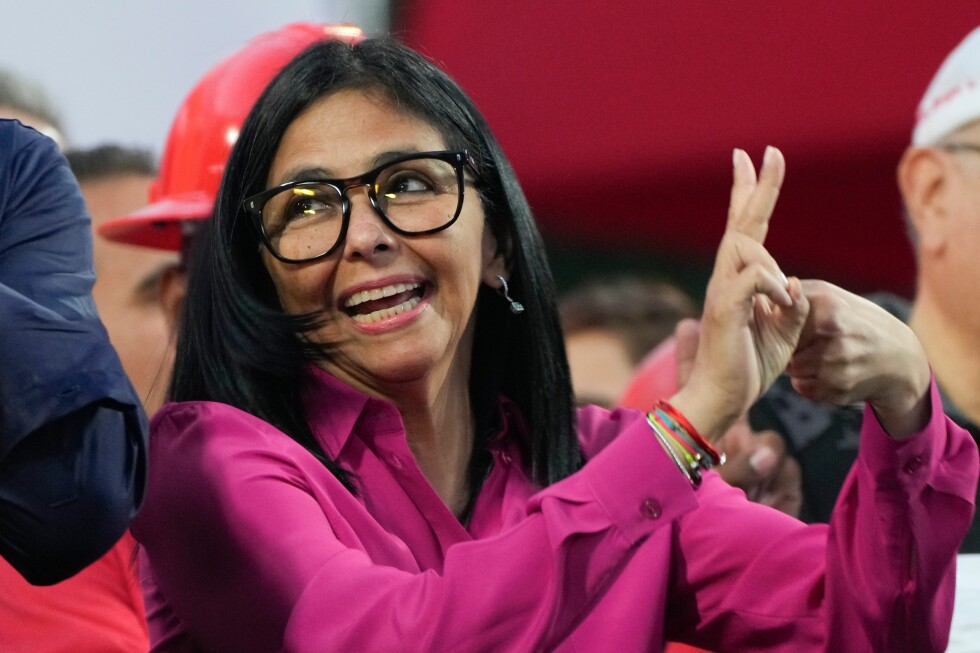
    The legislation, proposed by Acting President Delcy Rodríguez, passed its initial legislative hurdle on Thursday and now awaits a second debate before potentially becoming law. The move comes just weeks after the dramatic capture of former President Nicolás Maduro by U.S. military forces, marking a potential turning point in Venezuela’s prolonged political crisis.

    While human rights organizations and opposition groups have long demanded such amnesty measures—a position strongly supported by the United States—the specific contents of the bill remain undisclosed to the public. This lack of transparency has prompted cautious optimism among advocacy groups, who simultaneously call for greater disclosure about the legislation’s exact provisions.

    In a pre-recorded television address late last month, Rodríguez addressed gathered justices, magistrates, ministers, military leaders, and government officials, emphasizing the urgency with which the ruling party-controlled legislature would handle the bill. “May this law serve to heal the wounds left by the political confrontation fueled by violence and extremism,” she stated. “May it serve to redirect justice in our country, and may it serve to redirect coexistence among Venezuelans.”

    According to available reports, the proposed amnesty would cover a extensive period spanning from 1999 through the current year, encompassing both the administration of late President Hugo Chávez and his successor Maduro. The legislation would reportedly exclude individuals convicted of murder, drug trafficking, and serious human rights violations.

    Human rights organizations including PROVEA (Venezuelan Program for Education-Action in Human Rights) have issued statements stressing the urgent need for public disclosure of the bill’s contents, citing its profound potential impact on victims’ rights and Venezuelan society at large. These groups express particular concern that certain political detainees might be excluded from amnesty protections and are demanding detailed information about eligibility requirements before any final legislative vote.

  • UAE minister honours mother who went to class with her son at old school tent

    UAE minister honours mother who went to class with her son at old school tent

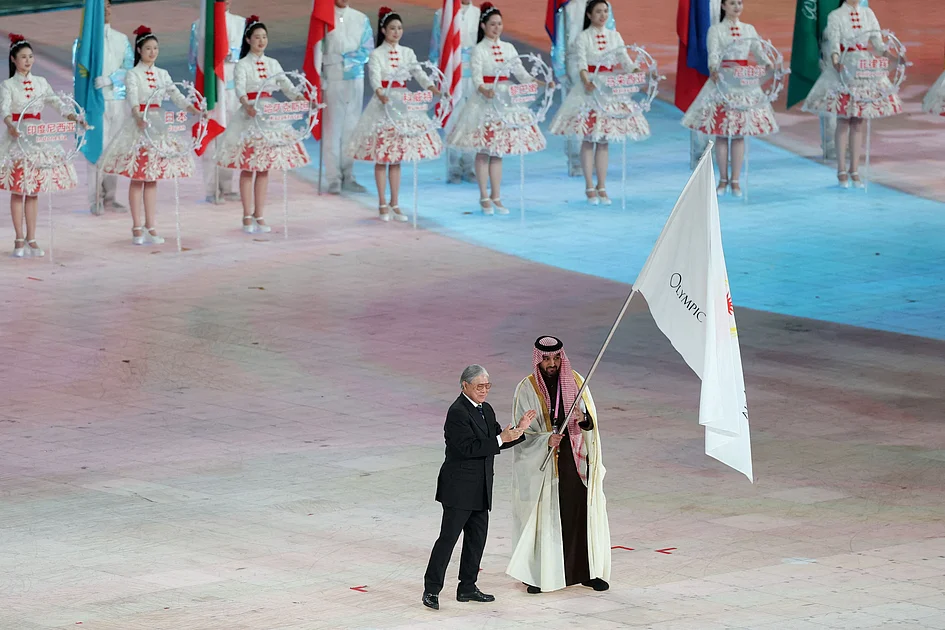
    In a profoundly moving tribute at the World Governments Summit, Sheikh Saif bin Zayed Al Nahyan, UAE Deputy Prime Minister and Minister of Interior, recognized Emirati mother Dhahira Al Ameri for her extraordinary dedication to education during the nation’s formative years. The ceremony during the “The Impregnable Fortress” session revealed a historic photograph of Al Ameri sitting with her young son under a simple tent in Al Wagan, Al Ain—one of the UAE’s first makeshift schools established when formal education remained a novel concept.

    Sheikh Saif personally addressed Al Ameri, emphasizing her remarkable perseverance despite lacking contemporary resources. “Dhahira, there was no one to help you, and you did not have what mothers have today,” he stated. “But you were keen to be with him.” This recognition highlighted the challenging conditions faced by early education pioneers who responded to the call of the late Sheikh Zayed bin Sultan Al Nahyan, the UAE’s Founding Father, to embrace education despite widespread uncertainty.

    The emotional impact deepened as Al Ameri’s son, now an adult, stood beside his mother on stage and shared how her sacrifice created an educational legacy. “I studied and graduated from America,” he announced, “and today, I have four daughters who are graduates of UAE University, and another daughter studying cybersecurity in Australia.”

    This narrative powerfully connects a mother’s determination in a desert tent classroom to multiple generations of academically accomplished Emirati women making global contributions. The story transcends personal achievement, embodying the UAE’s developmental journey through core values of leadership trust, women’s essential role in nation-building, and education as the fundamental catalyst for progress.

  • Japan’s Ogiwara tops qualifying for men’s big air as snowboarding kicks off at Olympics

    Japan’s Ogiwara tops qualifying for men’s big air as snowboarding kicks off at Olympics

    LIVIGNO, Italy — The 2026 Winter Olympics witnessed an extraordinary display of athletic prowess as snowboarding events commenced with the men’s big air qualifiers on Thursday. Hiroto Ogiwara, Japan’s 20-year-old phenom, delivered a stunning performance that secured his position atop the leaderboard with 178.5 combined points from his two best runs.

    Ogiwara, who previously revolutionized the sport at the 2025 Aspen X Games by landing the first-ever 2,340-degree jump (equivalent to six-and-a-half rotations) in competitive history, demonstrated why he’s considered the athlete to beat in this discipline. His technical mastery and aerial control left judges and spectators in awe.

    Local favorite Ian Matteoli provided Italian fans with thrilling moments, capturing second position with 174.5 points. The competition intensified with another Japanese contender, Kira Kimura, claiming third place at 173.25 points, narrowly edging out China’s reigning gold medalist Su Yiming, who finished fourth with 172.25 points.

    The American contingent faced challenges, with only Oliver Martin advancing to Saturday’s final after securing ninth position. The qualification format required athletes to execute three jumps off the massive 40-meter ramp, with their two highest scores determining advancement to the finals.

    The nighttime event in Livigno—a picturesque Alpine town transformed into an extreme sports arena—showcased athletes soaring under floodlights against a dramatic mountain backdrop. Big air, characterized by single massive jumps incorporating complex spins, flips, and board manipulations, represents one of three snowboarding park events alongside halfpipe and slopestyle competitions.

    Livigno will additionally host freestyle skiing aerials and moguls throughout the Olympic Games, cementing its status as a hub for winter action sports during the Milan Cortina Olympics.