作者: admin

  • Anthropic hits a $380B valuation as it heightens competition with OpenAI

    Anthropic hits a $380B valuation as it heightens competition with OpenAI

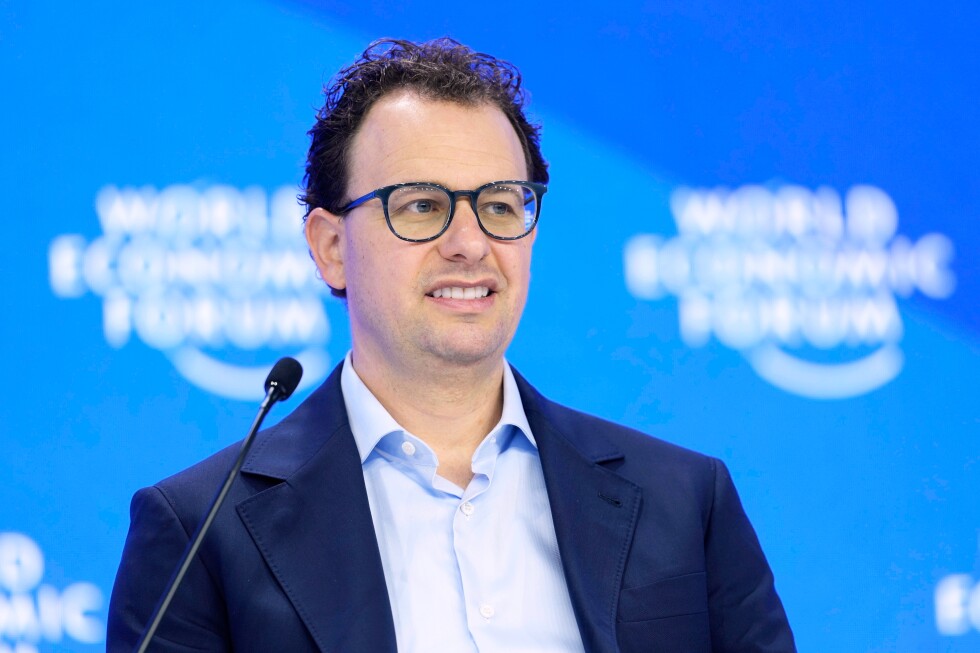
    Artificial intelligence firm Anthropic has achieved a monumental $380 billion valuation, positioning itself alongside industry rivals OpenAI and Elon Musk’s SpaceX as the world’s most valuable private companies. This valuation milestone follows Anthropic’s successful $30 billion funding round, spearheaded by Singapore’s sovereign wealth fund GIC and U.S. investment firm Coatue, with participation from numerous prominent investors.

    The substantial investment includes a segment of the $15 billion commitment announced by Nvidia and Microsoft in November, forming part of a strategic arrangement that obligates Anthropic to purchase approximately $30 billion in computing capacity from Microsoft. This infrastructure is essential for developing and operating advanced AI systems like Claude, Anthropic’s flagship chatbot. The company has also received significant backing from cloud computing giants Amazon and Google.

    According to Renaissance Capital, which specializes in IPO research, Anthropic now ranks as the third most valuable private company globally. OpenAI leads with a $500 billion valuation, while SpaceX maintains the top position following its recent merger with Musk’s AI venture xAI, creator of the Grok chatbot.

    Despite not yet achieving profitability, Anthropic projects remarkable revenue growth, anticipating $14 billion in sales over the coming year. This represents an extraordinary acceleration from generating its first revenue less than three years ago. Unlike OpenAI’s diversified revenue approach, which includes digital advertising, Anthropic has concentrated on developing Claude as a specialized workplace assistant for tasks such as software engineering.

    Founded in 2021 by former OpenAI employees, Anthropic has distinguished itself through its commitment to artificial general intelligence safety. The company recently established a $20 million bipartisan organization aimed at influencing AI regulation in the United States, reinforcing its focus on responsible AI development.

    Financial experts note that whichever company initiates an initial public offering first will gain significant advantages in capital raising and public recognition. However, this transition will also subject their business models to intensified scrutiny from public markets, where quarterly earnings reports could substantially impact stock performance.

  • What is the SAVE America Act that mandates voter ID?

    What is the SAVE America Act that mandates voter ID?

    The U.S. House of Representatives has approved the Safeguard American Voter Eligibility (SAVE) Act in a narrow 218-213 vote, introducing stringent citizenship verification requirements for voter registration as midterm elections approach. The legislation mandates that individuals present valid U.S. passports or birth certificates to establish citizenship when registering to vote, alongside requiring valid photo identification at polling stations.

    This legislative move has ignited intense partisan debate. Republican proponents, including former President Donald Trump who has consistently endorsed the measure, argue that such provisions are essential to prevent voter fraud and strengthen electoral integrity. “American citizens, and only American citizens, should decide American elections,” stated a White House social media post echoing this position.

    Conversely, Democratic opponents have characterized the bill as a form of voter suppression, expressing concerns that it could disenfranchise millions of eligible voters. Particular attention has been drawn to challenges facing married individuals who have changed their names and may lack matching documentation, with an estimated 21 million Americans reportedly lacking readily available citizenship proof.

    The bill faces significant obstacles in the Senate, where Majority Leader John Thune acknowledges insufficient support to reach the 60-vote threshold required for passage. Thune has explicitly dismissed suggestions to alter filibuster rules to facilitate the bill’s advancement. Further complicating its prospects, Republican Senator Lisa Murkowski has declared her opposition to the measure, diminishing its chances of successful passage through the upper chamber.

    The legislative proposal represents a renewed version of previously stalled efforts, establishing specific procedures for individuals with name changes to submit additional identity verification documents while imposing potential criminal penalties on election officials who register voters without obtaining required citizenship proof.

  • Saudi Arabia dismisses investment minister ahead of Vision 2030 plan update

    Saudi Arabia dismisses investment minister ahead of Vision 2030 plan update

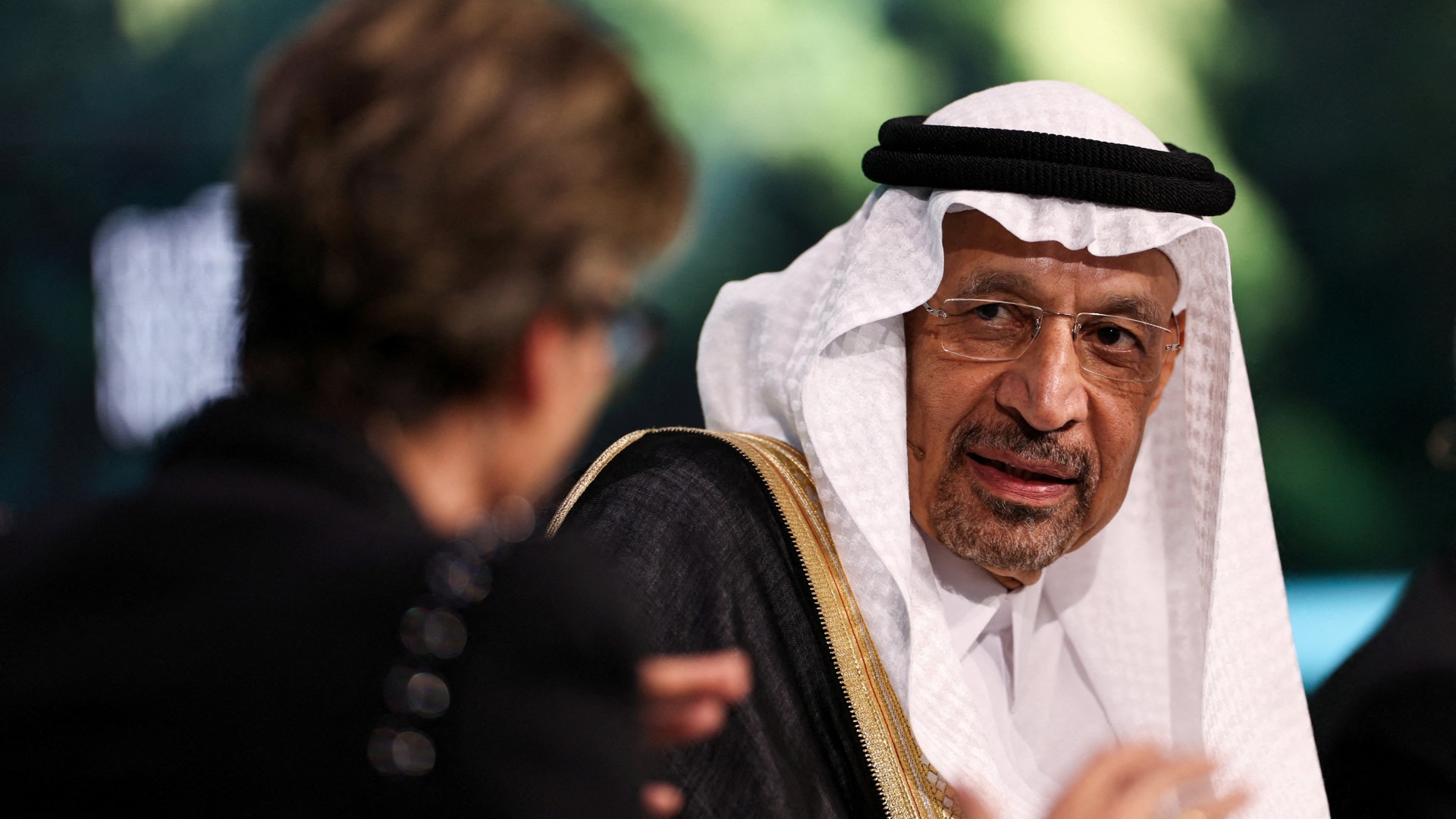
    In a significant cabinet reshuffle, King Salman of Saudi Arabia has issued a royal decree dismissing Khalid bin Abdulaziz Al-Falih from his position as Investment Minister. The move comes as the Kingdom recalibrates its economic strategy amid fiscal pressures and slower-than-expected growth.

    Al-Falih, a veteran energy executive with extensive government experience, has been replaced by Fahd bin Abduljalil bin Ali al-Saif, currently head of global capital finance at the sovereign Public Investment Fund (PIF). The new appointee previously led the fund’s investment strategy and economic insights division, bringing direct PIF experience to the role.

    While relieved of his ministerial portfolio, Al-Falih will retain his position as a minister without portfolio and remain a member of the cabinet. His departure from the investment ministry marks a notable shift in leadership during a critical period for Saudi Arabia’s economic transformation.

    The ministerial change coincides with preparations for a revised five-year plan under Crown Prince Mohammed bin Salman’s Vision 2030 initiative. This revision follows economic challenges including lower-than-anticipated revenues and a growth slowdown to 3.3 percent in 2025, down from 5.3 percent previously.

    According to sources familiar with the matter, persistently low oil prices have constrained the Kingdom’s capacity to finance its most ambitious projects. This fiscal pressure has prompted authorities to reassess several megaprojects, with some being scaled back or postponed entirely.

    Notable adjustments include the suspension of the Mukaab cube-shaped structure in Riyadh, downsizing of a proposed Neom ski resort, and scaling back of The Line—the 170-kilometer linear city concept. These modifications reflect a more pragmatic approach to the Vision 2030 implementation.

    Finance Minister Mohammed al-Jadaan defended the strategic revisions, stating in December that the government would not hesitate to ‘adjust, accelerate, prioritize, defer or cancel’ projects as needed to maintain economic stability.

    Despite these adjustments, several major initiatives continue to advance, including substantial investments in Syrian reconstruction projects and the expansive King Salman Gate development around Mecca’s Grand Mosque, which will feature new towers for prayer, accommodation, and hospitality services.

  • Trump administration reaches a trade deal to lower Taiwan’s tariff barriers

    Trump administration reaches a trade deal to lower Taiwan’s tariff barriers

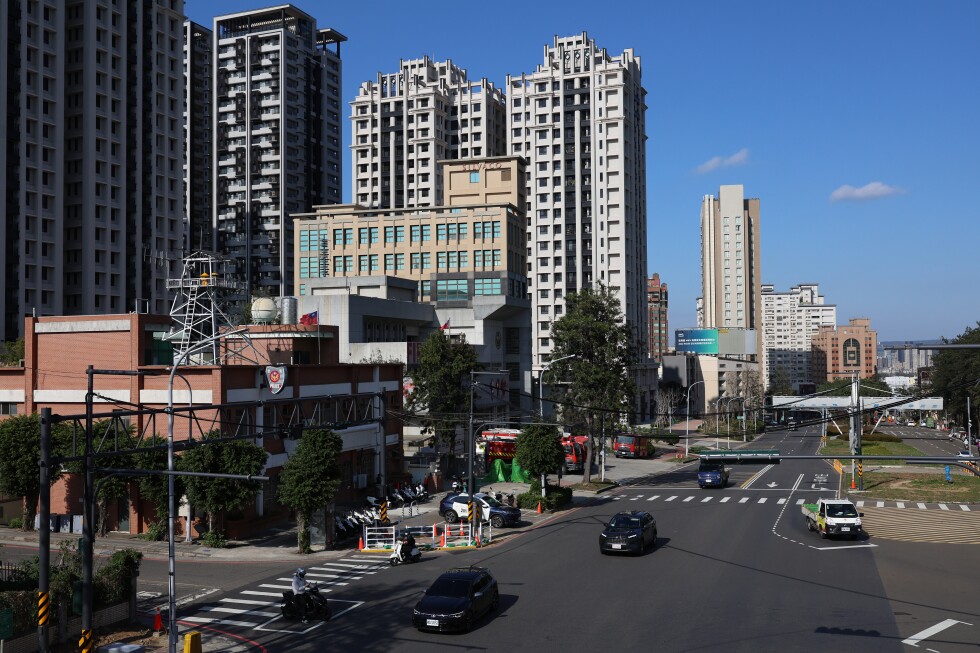
    In a significant diplomatic and economic development, the United States and Taiwan have formalized a comprehensive trade pact that substantially reduces tariff barriers while securing massive semiconductor investments in America. The agreement, signed Thursday under the auspices of the American Institute in Taiwan and Taipei’s Economic and Cultural Representative Office, represents a strategic deepening of economic ties between the two nations.

    The pact eliminates or reduces approximately 99% of Taiwan’s tariff barriers against U.S. goods, establishing a 15% tariff rate for most Taiwanese exports to the United States—aligning with rates applied to other Asia-Pacific partners including Japan and South Korea. The arrangement particularly benefits American automotive, pharmaceutical, and food industries seeking expanded market access in Taiwan.

    Central to the agreement is Taiwan’s commitment to $250 billion in direct investments across U.S. industries, complemented by an additional $250 billion in credit guarantees for smaller businesses. These investments, primarily focused on semiconductor production, artificial intelligence applications, and energy sectors, were instrumental in reducing originally contemplated U.S. tariffs from 32% to the agreed 15% rate.

    Taiwanese semiconductor manufacturing giant TSMC has pledged $165 billion toward establishing fabrication plants and a major research hub in the United States, directly supporting America’s artificial intelligence ambitions and addressing critical supply chain vulnerabilities. The arrangement includes preferential treatment for Taiwan regarding potential Section 232 investigation tariffs on computer chips and semiconductor manufacturing equipment.

    Both governments emphasized the strategic importance of the agreement. U.S. Trade Representative Jamieson Greer hailed the pact as advancing “economic and national security interests of the American people,” while Taiwanese officials noted it eliminates disadvantages from the previous lack of a free trade agreement. Taiwanese President Lai Ching-te emphasized protections for domestic agriculture, with 93 items maintaining existing tariff rates.

    The agreement emerges against the complex backdrop of cross-strait relations, with China maintaining its claim over Taiwan as sovereign territory. The deal precedes President Trump’s scheduled April visit to China and signals strengthened U.S.-Taiwan economic cooperation despite Beijing’s objections to formal diplomatic recognition of Taipei.

  • Nation’s satellite data reception coverage reaches new heights

    Nation’s satellite data reception coverage reaches new heights

    China has achieved a monumental advancement in space infrastructure with the successful commissioning of its northernmost satellite data receiving facility in Mohe, Heilongjiang province. The strategically positioned Mohe Satellite Data Receiving Station, developed by the Chinese Academy of Sciences’ Aerospace Information Research Institute, commenced full operations on December 12, marking a technological breakthrough in the nation’s Earth observation capabilities.

    Station director Shi Shengpu and his team are preparing to celebrate their first Spring Festival at the revolutionary facility, which represents China’s highest-latitude satellite reception installation. The station’s unique geographical positioning has expanded China’s satellite reception coverage by approximately 4 million square kilometers, dramatically enhancing observational capabilities in polar and high-latitude regions.

    The cutting-edge facility features three sophisticated satellite data receiving systems capable of processing S/X dual-band and dual-polarization data. Each system handles an average of more than 24 satellite tracks daily, supporting data reception for 25 national land observation satellites across multiple series including resource monitoring, environmental disaster reduction, and high-resolution imaging.

    By the end of 2025, the station had demonstrated exceptional performance metrics, successfully receiving data from 36,001 satellite tracks and acquiring over 1,775 terabytes of data with a remarkable success rate exceeding 99.79%. The facility boasts near-real-time transmission capabilities, fully automated reception systems, and extends daily reception time for single polar-orbiting satellites by approximately 24 minutes—a 20% increase in operational efficiency.

    This technological marvel significantly improves China’s capacity for critical applications including land surveys, environmental protection, weather forecasting, and disaster monitoring. The development, which required over three years of construction effort, positions China at the forefront of satellite data reception technology with key technical indicators reaching international advanced standards.

  • FTC warns Apple over alleged lack of conservative news

    FTC warns Apple over alleged lack of conservative news

    Apple Inc. finds itself at the center of a political storm as federal regulators question whether the tech giant’s news aggregation platform systematically disadvantages conservative media outlets. Federal Trade Commission Chair Andrew Ferguson has formally requested that Apple conduct a comprehensive review of its editorial policies following allegations of ideological bias in content curation.

    The regulatory inquiry stems from a Media Research Center report claiming Apple News excluded right-leaning publications from its prominently featured ‘Top Stories’ section throughout January. These allegations have gained traction within conservative circles, receiving endorsement from former President Donald Trump himself.

    In his official correspondence, Ferguson emphasized that while the FTC lacks authority to regulate speech directly, it maintains jurisdiction over consumer protection matters. He cautioned that companies promoting or suppressing content based on ideological considerations might violate regulations against material misrepresentations.

    Apple News, which boasts partnerships with over 3,000 publications and dominates the news app market in multiple English-speaking countries, utilizes algorithmic curation responsive to user interactions and preferences. The company maintains its selection criteria prioritize journalistic quality, excluding content that fails to meet widely accepted standards or contains factual inaccuracies.

    This development occurs against a broader backdrop of heightened scrutiny regarding tech platforms’ content moderation practices. While companies like X (formerly Twitter), Google, and Meta have faced accusations across the political spectrum, Apple had largely avoided similar controversies until now.

    Notably, Apple CEO Tim Cook has cultivated relationships with the Trump administration, contributing financially to the former president’s causes and presenting him with valuable gifts. Cook’s diplomatic efforts have previously helped navigate challenges including tariff disputes, making the current allegations particularly noteworthy given this established rapport.

    The FTC chair acknowledged the commission’s limited authority to mandate platform changes but emphasized the importance of transparency in how Apple represents its curation processes to consumers.

  • Pakistan PM to attend first meeting of Trump’s Gaza Board of Peace

    Pakistan PM to attend first meeting of Trump’s Gaza Board of Peace

    Pakistan’s Prime Minister Shehbaz Sharif will participate in the inaugural assembly of former U.S. President Donald Trump’s “Board of Peace” on February 19th in Washington, according to a confirmation from Pakistan’s foreign ministry. Foreign Minister Ishaq Dar will join the premier as part of the Pakistani delegation attending the high-profile diplomatic gathering.

    The Board of Peace initiative, launched by Trump in late January, was originally conceived to oversee interim governance arrangements in Gaza under his Middle East peace proposal. The former president has since expanded the board’s mandate to address broader international conflicts, with Trump serving as its chairman.

    Foreign Office spokesperson Tahir Andrabi stated during a weekly press briefing in Islamabad that Pakistan’s participation reflects its commitment to supporting Gaza-related initiatives within the UN Security Council framework. “We have joined the BoP in good faith,” Andrabi emphasized, noting that Pakistan represents a collective voice alongside seven other Islamic-Arab nations rather than acting unilaterally.

    The development comes amid mixed international reception to Trump’s diplomatic initiative. While the U.S. administration claims over twenty nations have committed to participate, several countries have approached the invitation with caution. Numerous geopolitical analysts express concern that the parallel diplomatic structure could potentially undermine existing United Nations conflict resolution mechanisms.

  • DEA supervisor arrested as US shutters Dominican Republic office during visa-fraud probe

    DEA supervisor arrested as US shutters Dominican Republic office during visa-fraud probe

    A senior U.S. Drug Enforcement Administration supervisor stationed in the Dominican Republic has been taken into custody amid a sweeping investigation into misconduct within a confidential informant visa program. The arrest of Melitón Cordero, confirmed by multiple officials speaking anonymously to The Associated Press, coincides with the Trump administration’s abrupt closure of the DEA’s Caribbean anti-narcotics operations.

    The investigation, spearheaded by the U.S. Department of Homeland Security, centers on alleged abuses of a program that permits foreign nationals with criminal associations to enter the United States as confidential sources. U.S. Ambassador Leah F. Campos announced the office’s suspension without initial elaboration, but later declared on social media platform X that she would not tolerate ‘even the perception of corruption,’ condemning the acts as a ‘disgusting and disgraceful violation of public trust.’

    Dominican Foreign Affairs Minister Roberto Álvarez clarified that the closure was unrelated to his government but stemmed from an internal U.S. probe. The development strikes a significant blow to bilateral security cooperation, given the Dominican Republic’s critical role as a narcotics transit zone. The partnership had recently strengthened, with President Luis Abinader authorizing U.S. operations within restricted airport areas to combat drug trafficking in November.

    The case echoes longstanding concerns about the informant visa program. A 2019 Justice Department inspector general report revealed severe management failures, noting that law enforcement had lost track of approximately 1,000 sponsored individuals, creating potential public safety and national security vulnerabilities due to their criminal connections.

  • Manila–Tel Aviv direct flight coming this year, says top Filipino official

    Manila–Tel Aviv direct flight coming this year, says top Filipino official

    In a significant development for bilateral relations and migrant worker welfare, the Philippines and Israel are accelerating efforts to establish a direct flight corridor between Manila and Tel Aviv before the end of the year. The breakthrough initiative, confirmed by the Philippine Department of Transportation (DOTr), aims to bridge the two nations directly for the first time.

    Acting DOTr Secretary Giovanni Lopez has publicly committed to prioritizing the project, emphasizing his department’s “firm dedication to implementing the direct route within the calendar year.” Lopez confirmed he will lead coordination efforts with Philippine Ambassador to Israel Aileen Mendiola, the Department of Foreign Affairs, and other relevant government agencies to expedite the process.

    The aviation link gained momentum following serious interest expressed by Arkia Airline, Israel’s second-largest carrier. Secretary Lopez revealed that preliminary discussions have already occurred with airline representatives alongside Ambassador Mendiola. While acknowledging standard regulatory procedures that typically require approximately six months to finalize, officials remain optimistic about the timeline.

    The initiative carries substantial socioeconomic importance for an estimated 30,000 Filipino workers employed in Israel across critical sectors including caregiving, agriculture, hospitality, and manufacturing. These overseas workers currently endure lengthy layovers—often exceeding six hours—through transit hubs like Dubai and Abu Dhabi when traveling between their workplace and homeland.

    Israeli Ambassador to the Philippines Dana Kursh has welcomed the aviation proposal, noting growing enthusiasm among Israeli travelers to experience the Philippines’ premier tourism destinations. The direct connection is expected to stimulate tourism exchange alongside providing immediate relief to the migrant worker community.

    The Philippine Department of Migrant Workers (DMW) recognizes the transformative potential of direct flights for worker welfare, particularly for caregivers like Aiza Villaluna who described the current transit process as exhausting. “It would be a big relief for us if there were a direct flight,” she stated, echoing sentiments shared by thousands of her compatriots.

  • Central govt to help build Shanghai into a green global shipping hub

    Central govt to help build Shanghai into a green global shipping hub

    In a significant move to position China at the forefront of maritime sustainability, ten central government ministries have jointly launched an ambitious action plan to transform Shanghai into a global green shipping hub by 2030. The comprehensive strategy, spearheaded by the Ministry of Transport, represents a major step in China’s decarbonization efforts within the international shipping industry.

    The initiative outlines specific quantitative targets, including developing Shanghai Port’s capacity to provide one million cubic meters of bonded liquefied natural gas (LNG) bunkering alongside achieving one million tons of methanol and biofuel bunkering capability. These infrastructure developments will establish Shanghai as a primary refueling station for vessels transitioning to cleaner energy sources worldwide.

    The action plan focuses on seven critical areas: green energy supply chain development, innovative service models, international standard implementation, operational safety protocols, technological innovation, market mechanisms, and regulatory frameworks. This multidimensional approach ensures Shanghai’s comprehensive transformation into a sustainable maritime center.

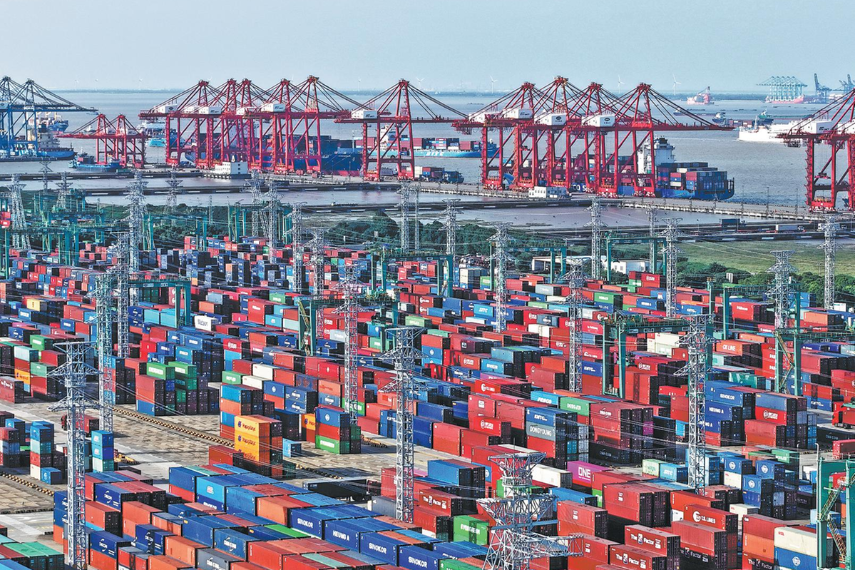
    According to the Shanghai Municipal Transportation Commission, this national support underscores China’s commitment to leading the global shipping industry’s green transition. The initiative aligns with broader environmental goals while enhancing Shanghai’s competitive position in international maritime trade. The development comes as Shanghai Port, already one of the world’s busiest container terminals, continues to demonstrate robust activity with constant vessel and truck movements throughout its operations.

    The green shipping hub project represents a strategic fusion of environmental stewardship and economic development, potentially creating new international partnerships and establishing China as a rule-maker in maritime sustainability standards. This development may influence global shipping routes and energy procurement decisions as major carriers seek compliant bunkering facilities for their fleets.