作者: admin

  • Museum reopens almost a year after major fire

    Museum reopens almost a year after major fire

    The Doagh Famine Village, an acclaimed open-air museum in Ireland’s County Donegal, has triumphantly reopened its doors nearly a year after a catastrophic fire ravaged its historical exhibits. This unique heritage site, which chronicles the journey of an Irish family from the Great Famine era to modern times, resumed operations on St. Patrick’s Day following an extensive 10-month restoration effort.

    The devastating blaze erupted on May 3 last year at the Ballyliffin site on the Inishowen Peninsula, requiring immediate response from Gardaí and fire services. With assistance from local residents, emergency personnel successfully contained the inferno, with authorities subsequently ruling out arson as a possible cause.

    Founder Pat Doherty, who previously inhabited one of the museum’s thatched cottages until 1984 before establishing the attraction in 1997, expressed profound gratitude for the overwhelming community support that facilitated the museum’s rebirth. ‘More than half of the village was destroyed in the fire,’ Doherty revealed to BBC Radio Foyle’s North West Today. ‘People just kept donating and donating – we actually had to turn items away at one point because we simply had too many.’

    The reconstruction required complete rebuilding of several key exhibits, including a replica Orange Hall and a safe house displaying historical information about the Northern Ireland peace process. Additionally, exhibits related to Ireland’s Travelling community, including traditional caravans, were entirely consumed by flames and required replacement.

    Doherty’s personal resilience mirrored that of his museum’s recovery – having suffered a stroke just weeks before the fire, he acknowledged moments when permanent closure seemed inevitable. ‘At one point I thought that was it – that it would be the end of it but people really drove us on,’ he confessed.

    The revived museum now offers enhanced exhibits while maintaining its educational mission, including demonstrations of traditional poitín distillation and multifaceted perspectives on Northern Ireland’s peace process. As a family-owned institution, its successful restoration stands as a testament to community solidarity and cultural preservation efforts across Ireland.

  • A timeline of attacks in Nigeria’s northeastern Borno state

    A timeline of attacks in Nigeria’s northeastern Borno state

    LAGOS, Nigeria — Northeastern Nigeria was struck by a devastating series of coordinated suicide bombings on Monday night, resulting in one of the deadliest attacks in recent memory for the conflict-ravaged region. Nigerian police confirmed Tuesday that at least 23 people were killed and more than 100 others sustained injuries in the simultaneous assaults that targeted multiple locations throughout Maiduguri, the capital of Borno state.

    The attack marks the latest in a prolonged pattern of violence that has plagued the region. The bombings specifically targeted a hospital and two separate markets, maximizing civilian casualties during peak hours of activity. While no group has immediately claimed responsibility, the tactical use of multiple suicide bombers aligns with the operational signature of Boko Haram and its splinter factions.

    This tragedy continues a grim chronology of violence in Borno state:

    – February 23, 2021: Suspected militants launched rocket-propelled grenades into populated areas including a university campus, killing 10
    – June 29, 2024: Female suicide bombers attacked a wedding, funeral, and hospital in Gwoza, leaving 32 dead and over 100 injured
    – January 26, 2025: A vehicle-borne explosive targeted Nigerian military convoys, resulting in significant soldier casualties
    – June 20, 2025: Restaurant bombing in Konduga killed 10 civilians
    – September 5, 2025: Nighttime assault on Darul Jamal village claimed over 60 lives
    – December 24, 2025: Mosque bombing during prayers killed 5 worshippers
    – January 26, 2026: Military ambush near Damasak resulted in 7 soldiers killed and 13 captured
    – March 16, 2026: Current multi-target bombing campaign across Maiduguri

    The persistent violence demonstrates the ongoing security challenges facing Nigerian forces despite government claims of containing extremist groups. The attacks specifically targeting civilian infrastructure and gatherings reflect a strategic shift toward maximizing psychological impact and undermining public confidence in security measures.

  • Bridge as witness: Following journalist Du Juan’s 22-year journey through Beijing’s pulse

    Bridge as witness: Following journalist Du Juan’s 22-year journey through Beijing’s pulse

    For over two decades, the architectural landmarks spanning Beijing’s waterways have silently documented the remarkable evolution of China’s capital through the unique perspective of journalist Du Juan. Her professional journey, intricately intertwined with the city’s development, offers a compelling narrative of urban transformation and personal growth.

    Beginning her career during a period of rapid modernization, Du Juan has utilized Beijing’s bridge network—from the historical Xizhimen crossing to the contemporary marvels of Guomao and the expanding infrastructure in Tongzhou—as both physical landmarks and metaphorical devices to frame her reporting. These structures have served as constant witnesses to the city’s accelerating pace, facilitating movement while simultaneously connecting communities across generations.

    Through her extensive body of work, Du has captured the essence of Beijing’s socioeconomic changes, documenting how infrastructure development has shaped urban life, influenced cultural practices, and redefined the relationship between citizens and their environment. Her reporting provides a nuanced chronicle of how the city has balanced preservation with progress, maintaining cultural identity while embracing modernization.

    The bridges themselves tell a parallel story of engineering achievement and urban planning, representing the intersection of tradition and innovation that characterizes contemporary Beijing. From their architectural designs to their functional adaptations, these structures mirror the city’s journey toward becoming a global metropolis while retaining its historical significance.

    Du’s longitudinal perspective offers invaluable insights into the human experience within a rapidly transforming urban landscape, making her work not just a personal professional history but a significant document of urban development in 21st century China.

  • Len Deighton, author of bestselling spy thrillers, dead at 97

    Len Deighton, author of bestselling spy thrillers, dead at 97

    LONDON — Len Deighton, the acclaimed author whose sophisticated and gritty spy novels defined a generation of thriller writing and remained on bestseller lists for decades, has passed away at age 97. His literary agent, Tim Bates, confirmed his death occurred on Sunday, though no specific cause was provided.

    Deighton’s literary career launched spectacularly with his 1962 debut novel, “The IPCRESS File,” which captured the cool, realistic tone of 1960s espionage fiction. The work was subsequently adapted into a successful film featuring Michael Caine in a star-making performance, propelling both author and actor to international acclaim and enduring careers.

    Bates memorialized Deighton as “a Titan” of literature, noting that he was “not only one of the greatest spy and thriller writers of the 20th century but also one of our greatest writers in any genre.”

    Born in 1929 to a working-class family in an affluent London neighborhood—his father worked as a chauffeur while his mother served as a part-time cook—Deighton developed early insight into the complexities and contradictions of Britain’s class structure. Before achieving literary fame, he pursued diverse vocations including Royal Air Force service during mandatory national service, art studies, and work as a waiter, pastry chef, and flight attendant. He initially found professional success as a book and magazine illustrator, creating the cover design for the first UK edition of Jack Kerouac’s seminal work “On the Road” in 1958.

    Deighton conceived “The IPCRESS File” during a vacation as personal entertainment. The novel, which followed a secret agent navigating bureaucratic obstacles and internal deception while investigating a Soviet kidnapping operation, ultimately sold millions of copies worldwide. His depiction of espionage as a messy, error-prone profession stood in stark contrast to the glamorous world of Ian Fleming’s James Bond novels.

    In a 1997 BBC interview, Deighton revealed he had never read a Bond book, yet coincidentally published his debut novel the same month the first 007 film “Dr. No” premiered. His gritty narrative approach, reminiscent of John le Carré’s morally complex spy world, resonated with contemporary audiences and benefited from what he described as a “backlash against Bond’s huge success.”

    Deighton continued his anonymous protagonist through several sequels including “Horse Under Water,” “Funeral in Berlin,” “Billion-Dollar Brain,” and “An Expensive Place to Die,” with multiple adaptations featuring Caine. In 1983, he introduced MI6 officer Bernard Samson in “Berlin Game,” initiating a ten-novel series that included “Mexico Set” and “London Match,” later adapted into the 1988 television series “Game, Set and Match.”

    His literary scope extended beyond contemporary espionage to World War II narratives, notably “Bomber” (1970), which presented the air war from both British and German perspectives, and “SS-GB” (1978), an alternative history novel imagining Nazi-occupied Britain that was adapted for television in 2017.

    Deighton authored over two dozen novels, concluding his final trilogy—”Faith,” “Hope,” and “Charity”—in 1996. He also produced historical nonfiction works including an analysis of President John F. Kennedy’s assassination and “Fighter: The True Story of the Battle of Britain.”

    Beyond literature, Deighton cultivated expertise in gastronomy, serving as food correspondent for The Observer during the 1960s and authoring several cookbooks targeted specifically at male audiences—an innovative concept at the time. His 1965 “Len Deighton’s Action Cook Book” featured recipes illustrated in comic strip format.

    Deighton was first married to illustrator Shirley Thompson before their divorce, later marrying Ysabele de Ranitz with whom he had two sons.

  • Suspected suicide attacks kill at least 23 in north-east Nigeria

    Suspected suicide attacks kill at least 23 in north-east Nigeria

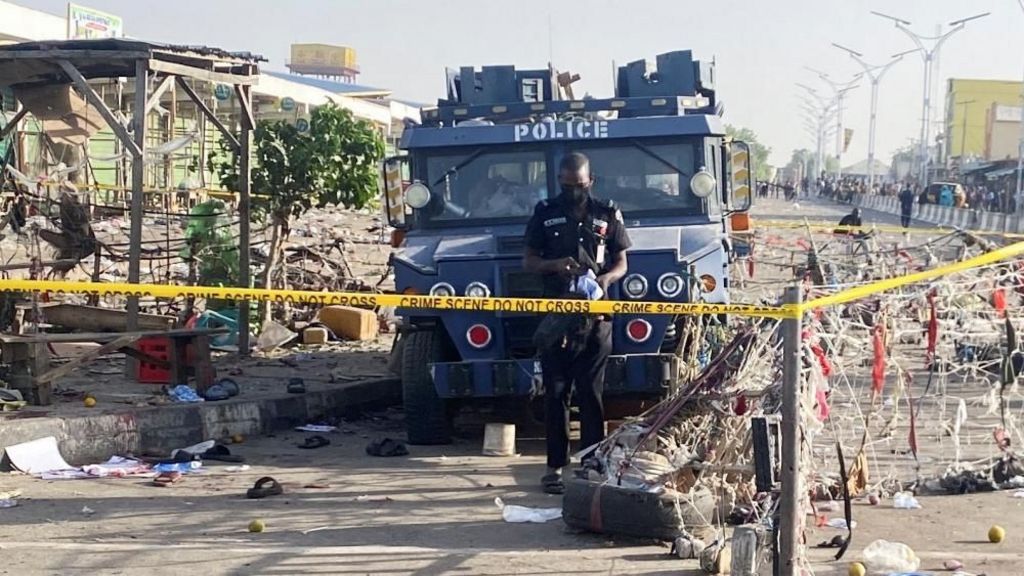
    In a devastating security breach, the northeastern Nigerian city of Maiduguri was struck by multiple suspected suicide bombings on Monday evening, resulting in significant casualties and shattering a period of relative calm. According to official police statements, the coordinated attacks claimed at least 23 lives and left 108 individuals wounded.

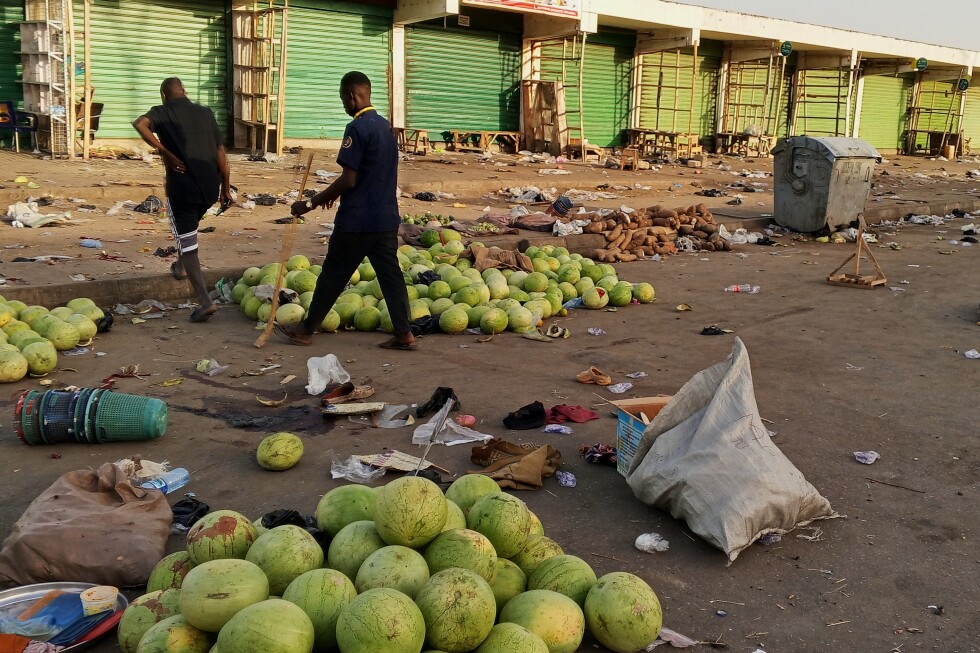
    The assaults targeted several of the city’s most frequented locations in rapid succession around 19:30 local time. The University of Maiduguri Teaching Hospital, a bustling weekly market, and a central post office were all hit within minutes of each other. These areas were particularly crowded with residents who had gathered following the breaking of the Ramadan fast.

    This series of explosions marks the most severe attack Maiduguri has experienced in recent years, delivering a profound psychological blow to a community that had begun to believe the worst of Islamist militant violence was behind them. The city, once the epicenter of Boko Haram’s insurgency, had enjoyed improved security following intensified military operations that pushed armed groups toward remote border regions.

    Borno state police confirmed in an official communiqué that preliminary investigations point to suicide bombers as the perpetrators, with efforts underway to definitively identify those responsible. Eyewitness Modu Bukar described the chaotic scenes following the market explosion: ‘We were sitting when we suddenly heard a loud explosion. Everyone immediately started running in fear. As we ran, people kept shouting that we should keep going.’

    Nigerian President Bola Tinubu issued a strong condemnation of the attacks on Tuesday, vowing that ‘Nigeria will not succumb to fear’ and promising that the culprits would be ‘located, confronted, and completely defeated.’

    The bombings occurred just hours after security forces repelled an overnight assault by suspected Islamist fighters on a military post in Maiduguri’s outskirts. The strategic coordination and urban penetration demonstrated in Monday’s attacks have raised serious concerns among officials about the persistent threat of violence, despite ongoing efforts by emergency and security agencies to reinforce citywide safety measures.

  • Asia braces for sweeping tariffs

    Asia braces for sweeping tariffs

    Multiple Asian economies are preparing for significant trade disruptions following the United States’ initiation of extensive Section 301 investigations, which could result in substantial tariffs on critical export sectors. This development comes in the wake of a landmark US Supreme Court decision on February 20 that declared “reciprocal tariffs” unlawful under current trade legislation.

    The investigations leverage Section 301 of the US Trade Act of 1974, which empowers the Office of the US Trade Representative (USTR) to examine allegedly unfair foreign trade practices. Upon identifying violations, the US government can implement tariffs or other trade restrictions to compel policy changes from trading partners.

    Malaysian Investment, Trade and Industry Minister Johari Ghani identified several vulnerable sectors including electrical and electronics, oil and gas, and plantation commodities such as palm oil. He emphasized that the Supreme Court ruling necessitates specific justification for tariffs rather than blanket impositions, stating that “if they claim it is due to trade surplus, they must specify the industry involved.”

    The USTR has launched two major investigations targeting 16 trading partners—including China, the European Union, Norway, Singapore, Cambodia, Indonesia, Malaysia, Bangladesh, Mexico, Japan and India—alleging structural excess capacity in manufacturing. A subsequent probe targets 60 economies over forced labor allegations.

    Singapore’s Ministry of Trade and Industry has challenged the factual basis of the investigations, noting significant discrepancies in trade data. While the USTR cited a $27 billion bilateral trade surplus for Singapore in 2024, official data from the US Bureau of Economic Analysis indicates Singapore actually maintained a trade deficit of approximately $27 billion with the United States.

    The investigations have drawn strong criticism across Asia. South Korea’s minor progressive Jinbo Party spokeswoman Son Sol condemned “the US’ unilateral act of aggression that shatters international trade order,” noting that the probes target key Korean sectors including automotive and semiconductor industries.

    Analysts from Singapore’s DBS Bank characterize the Section 301 moves as a “plan B” for the US administration following the Supreme Court’s rejection of reciprocal tariffs. The bank notes this approach aims to establish a more durable legal foundation for tariffs ahead of the July expiration of temporary global tariff measures.

    For smaller economies like Cambodia, where nearly 40% of exports destination is the US, the investigations highlight the urgent need for more resilient export strategies. Arnaud Darc, chairman of hospitality company Thalias, observed that “small economies rarely get to choose the moment their structural assumptions are tested.”

    In response to the trade pressure, South Korea’s National Assembly recently passed special legislation enabling $350 billion in US investments, fulfilling a commitment made previously in exchange for reduced tariffs. Trade Minister Yeo Han-koo emphasized that fulfilling investment promises represents the most effective approach to stabilizing tariff conditions.

  • China builds comprehensive groundwater monitoring system

    China builds comprehensive groundwater monitoring system

    China has successfully implemented a sophisticated nationwide automated groundwater monitoring infrastructure, representing a major advancement in environmental resource management. According to an announcement from the Ministry of Water Resources, this comprehensive system features extensive coverage across diverse groundwater types, complete monitoring parameters, and utilizes cutting-edge technology.

    Groundwater serves as an indispensable resource for China’s economic and social development while functioning as a strategic asset for maintaining ecological health. Between 2015 and 2020, Chinese authorities established more than 20,000 national-level groundwater monitoring stations, creating an integrated network capable of real-time surveillance and early warning capabilities specifically designed to combat groundwater over-extraction.

    The ministry reported significant environmental improvements resulting from sustained management efforts, including strict extraction controls and comprehensive protection measures. By the conclusion of 2025, groundwater levels across northern China demonstrated substantial recovery compared to 2020 benchmarks. Monitoring data revealed particularly impressive gains in managed areas, with shallow groundwater levels rising by an average of 3.76 meters and deep groundwater levels increasing by an average of 7.65 meters.

    This achievement represents a milestone in China’s environmental protection initiatives, demonstrating how technological innovation combined with rigorous policy implementation can produce measurable improvements in natural resource conservation. The automated system’s real-time capabilities provide unprecedented visibility into groundwater dynamics, enabling more responsive management of this critical environmental resource.

  • Fewer visitors travel to US amid tightened visa rules

    Fewer visitors travel to US amid tightened visa rules

    The United States is experiencing a significant downturn in international tourism as tightened visa regulations and additional fees discourage foreign visitors. According to data from the World Travel and Tourism Council, the US registered a 6% decline in foreign arrivals last year despite a 4% increase in global tourism elsewhere. This trend persisted into early 2026, with January figures showing a 4.8% year-on-year reduction according to the National Travel and Tourism Office.

    Industry analysts attribute the decline to multiple factors including stringent visa requirements, extended processing times, and the introduction of new fees. Particularly impactful is the ‘visa integrity fee’ of $250 implemented under the One Big Beautiful Bill Act for travelers from China, Mexico, Brazil, and India requiring non-immigrant visas. Erik Hansen of the US Travel Association noted this measure increases upfront visit costs by approximately 130%.

    The situation is further complicated by security-related travel restrictions. Since January 1, 2026, the US administration has paused immigrant visa issuance for nationals from 39 countries, including several World Cup qualifying nations such as Senegal, Côte d’Ivoire, Iran, and Haiti. While athletes and officials will receive visas under Presidential Proclamation 10998, ordinary fans from affected countries may be unable to attend the 2026 FIFA World Cup.

    Regional analysis reveals particularly sharp declines: Asian arrivals dropped 7.5% in 2025 compared to 2024, Canadian visitors fell 28% in January 2026 year-on-year, and Western European travelers from Germany and France also decreased. Only the UK showed modest growth with a 0.5% increase.

    This downturn presents economic concerns as the travel sector contributed $2.9 trillion to the US economy in 2024, supporting over 15 million jobs and accounting for 2.5% of GDP. The decline in high-spending Chinese tourists is particularly significant, as they have traditionally been among the biggest spenders globally, though recent trends show increased preference for domestic and regional Asian travel.

  • Sour soup from Guizhou makes a splash overseas too

    Sour soup from Guizhou makes a splash overseas too

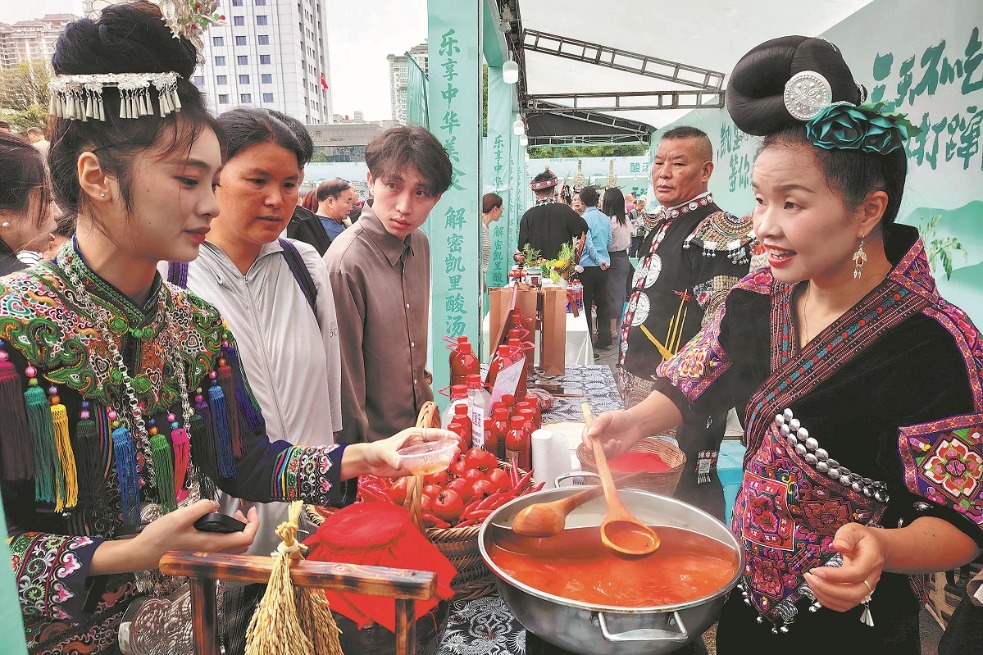
    What begins as an unfamiliar aroma evolves into an addictive culinary experience for those who dare to taste it. Kaili sour soup, a vibrant red delicacy from China’s Guizhou province, is captivating international palates while driving substantial economic growth in its native region.

    This traditional fermented soup, with roots stretching back over a millennium in the Qiandongnan Miao and Dong autonomous prefecture, represents both cultural heritage and culinary innovation. The signature red variation derives from natural fermentation of wild tomatoes (maolaguo) while the white version originates from rice. Blended with chili and litsea cubeba spices, the slow aging process yields a complex flavor profile—initially sour and spicy with a refreshing, subtly sweet finish.

    Deputy Zheng Peikun of the 14th National People’s Congress explains the historical context: ‘The tradition stems from times when salt was scarce, leading locals to develop fermentation techniques for seasoning. The saying goes: Three days without sour, and you’ll walk unsteady for sure.’

    Beyond its cultural significance as intangible cultural heritage, sour soup has evolved into an economic powerhouse. The Qiandongnan sour soup industry chain reached 8.15 billion yuan ($1.18 billion) in 2025, representing a staggering 221.4% year-on-year increase. This growth extends beyond China’s borders, with companies like Guizhou Yumeng Food Group exporting soup bases and instant rice noodles to Vietnam, Thailand, South Korea, Australia, the United States, Canada, and Spain, achieving 4.2 million yuan in export value.

    The international expansion continues through multiple channels. Restaurants featuring Guizhou sour soup have emerged in New York, Ho Chi Minh City, Bangkok, Phnom Penh, Kuala Lumpur, Madrid, and Melbourne. In Silicon Valley, restaurant operator Chen Yuzhu reports sour soup dishes as menu favorites. Innovative culinary fusions include sour soup-flavored spaghetti developed in collaboration with Milanese restaurants.

    During the recent National People’s Congress sessions, representatives highlighted the dish’s potential. NPC deputy Zhang Jizhi emphasized its health benefits as a natural source of probiotics and antioxidants that stimulate appetite and aid digestion. Provincial Party Secretary Xu Lin noted its visual appeal and refreshing qualities, advocating for broader national accessibility.

    The movement has gained organic momentum through events like the Village Super League soccer tournament, where foreigners’ initial hesitation transforms into enthusiastic adoption after tasting. Industry leaders like Chen Yang of Qiandaren Restaurant, which expanded to Ho Chi Minh City in January, recognize the dual appeal: satisfying homesick Chinese communities while aligning with local flavor preferences.

    With government support and growing international recognition, this traditional fermented soup appears poised for continued global expansion, carrying with it centuries of culinary wisdom and economic opportunity.

  • Scientists discover ‘baby star clusters’, offering new evidence for star formation

    Scientists discover ‘baby star clusters’, offering new evidence for star formation

    In a landmark astronomical discovery, researchers from China West Normal University have identified two exceptionally young star clusters located approximately 45,000 light-years from Earth in the peripheral regions of the Milky Way galaxy. Designated as Emei-1 and Emei-2, these celestial formations represent what scientists are calling ‘baby star clusters’ due to their remarkably recent emergence in cosmic terms.

    The findings, published in the prestigious journal Nature Astronomy, reveal that these clusters originated approximately 11 million years ago from a violent collision between two dense gas clumps within a high-velocity gas cloud streaming toward our galaxy. Associate Professor He Zhihong, the paper’s lead author, explained that the intense pressure generated by this cosmic impact created an extremely compressed environment that triggered the star formation process.

    What makes this discovery particularly significant is its challenge to conventional astronomical understanding. Previously, astronomers observing high-velocity clouds could detect only gaseous matter without any stellar components. The Emei clusters provide the first concrete evidence that such clouds can indeed foster star birth under specific extreme conditions, fundamentally altering scientific perspectives on stellar formation locations.

    Additionally, this breakthrough offers direct observational support for the theoretical framework suggesting that the Milky Way grows and nurtures new stars by accreting fresh gas from its intergalactic surroundings. The clusters’ distinctive blue coloration and exceptional brightness – characteristics of very young stars – further confirm their status as cosmic ‘newborns’ in the vast timeline of the universe.