作者: admin

  • Levi’s® reframes denim for the rhythm of women’s lives in the Middle East

    Levi’s® reframes denim for the rhythm of women’s lives in the Middle East

    Levi Strauss & Co. is strategically repositioning its denim offerings to align with the evolving lifestyle demands of women across the Gulf Cooperation Council (GCC) nations through its Fit for Life Season 3 initiative. This movement represents a significant departure from traditional heritage marketing toward practical, comfort-driven design philosophy that resonates with contemporary regional preferences.

    The campaign emerges in response to a noticeable transformation in Middle Eastern fashion sensibilities, where denim has transitioned into a wardrobe staple capable of adapting to multifaceted daily routines. Women increasingly prioritize garments that seamlessly transition from professional environments to social gatherings without compromising comfort or stylistic integrity. This shift toward versatile, all-day clothing has become particularly relevant during extended periods like Ramadan, where attire must remain appropriate from dawn until late-night festivities.

    Mir Zia Mahmood, General Manager for the Middle East at Levi Strauss & Co., emphasizes the campaign’s strategic direction: ‘Fit for Life Season 3 embodies our evolution from being perceived primarily as a denim heritage brand to becoming an integral part of women’s daily lives across the region. We’re focusing on designs that feel inherently natural, exceptionally comfortable, and highly adaptable to various social contexts and physical activities.’

    The collection introduces thoughtfully engineered silhouettes including the Middy Loose Boot, Loose Boot, Cinch Baggy, and Super Baggy Barrel designs that prioritize freedom of movement through hip and thigh areas while maintaining structural integrity. The Shaping Wide Leg option provides a softened contour, while the XL Skirt demonstrates denim’s expansion beyond traditional jeans into modest styling configurations prevalent throughout the region.

    Levi’s approach demonstrates sophisticated cultural intelligence by blending global brand authenticity with regional dressing conventions. The collection incorporates breathable fabrics, fluid layering options, and modest proportions that address both climatic considerations and cultural preferences without sacrificing contemporary aesthetic appeal.

    Rather than operating as a limited-term campaign, Fit for Life has evolved into an ongoing platform that strengthens the brand’s relationship with Middle Eastern consumers. This initiative underscores denim’s transformation from seasonal fashion item to foundational wardrobe element that consistently aligns with how women actually live, dress, and move through their daily routines across the GCC region.

  • Schools in India’s Noida face fresh bomb threats amid CBSE exams

    Schools in India’s Noida face fresh bomb threats amid CBSE exams

    Educational institutions across Noida and Greater Noida within India’s National Capital Region confronted renewed bomb threat incidents on Thursday, marking the latest in a series of security scares that have persisted for several weeks. The threatening emails arrived as students were actively participating in Central Board of Secondary Education (CBSE) board examinations, creating substantial disruption during this critical academic period.

    According to Noida police authorities, approximately twelve schools received identical threatening communications, prompting immediate implementation of emergency protocols. Students and faculty members were systematically evacuated to secure locations while specialized bomb disposal units and canine detection teams conducted comprehensive sweeps of the premises. Despite the thorough security response, no suspicious devices or materials were discovered during these operations.

    This security episode follows the recent apprehension of six individuals in Greater Noida earlier this month, who were operating an illicit online betting network utilizing sophisticated concealment methods including fabricated email accounts and Voice over Internet Protocol (VoIP) numbers to mask their identities.

    Police representatives have confirmed the restoration of normalcy across all affected institutions, emphasizing their commitment to treating all bomb threats with utmost seriousness regardless of their likely hoax nature. Authorities have concurrently issued public advisories urging citizens to disregard unverified rumors and rely exclusively on official information channels for updates regarding security matters.

    The recurring threat pattern has raised significant concerns about the psychological impact on students during examination season and the allocation of security resources to address potentially fraudulent threats.

  • Diriyah Contemporary Art Biennale transports visitors through time

    Diriyah Contemporary Art Biennale transports visitors through time

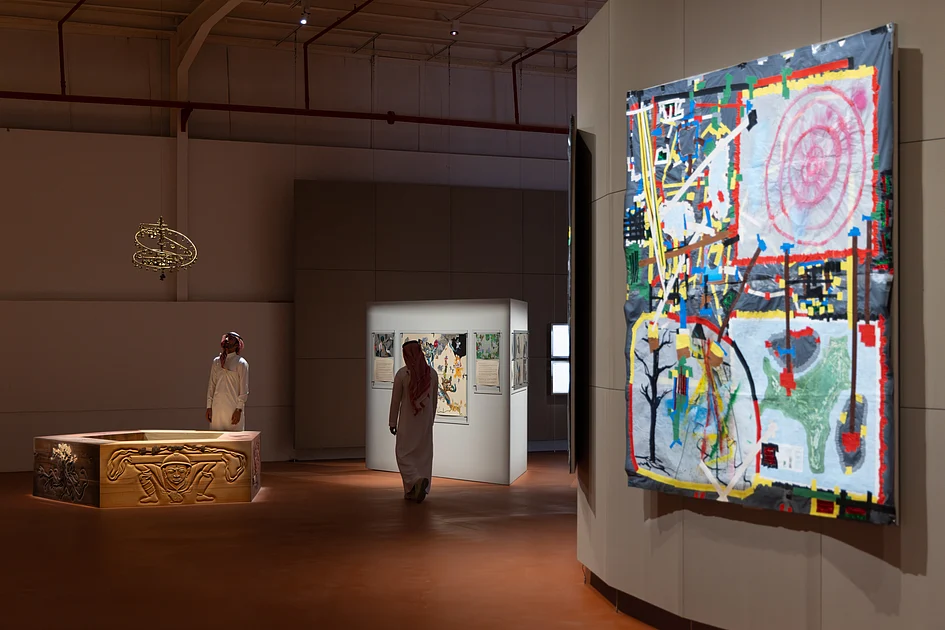
    RIYADH — The third Diriyah Contemporary Art Biennale, now open at JAX District’s repurposed warehouses until May 2, presents a profound exploration of movement, migration, and temporal transitions through diverse artistic mediums. Titled ‘In Interludes and Transitions’ (Arabic: ‘Fil hil wal terhal’), the exhibition features 68 international artists, including over 25 newly commissioned works, curated by Nora Razian and Sabih Ahmed.

    Bangladeshi artist Sarker Protick’s photographic series ‘Awngar’ investigates British colonial railway infrastructure in historic Bengal, connecting coal mining regions across Bangladesh and India. His luminous photographs examine how transportation networks shaped South Asian identity while subtly commenting on colonialism’s environmental legacy.

    Kosovar artist Petrit Halilaj presents ‘Very volcanic over this green feather,’ an installation born from childhood memories of the Kosovo War that transforms trauma into imaginative resistance. ‘Fantasy and invention are not escapes, they are necessities,’ Halilaj explained, describing his work as advocating ‘tenderness and vulnerability as political positions.’

    French sculptor Théo Mercier’s ‘House of Eternity’ creates archaeological fiction from 400 tonnes of locally sourced sand, resembling ancient desert monoliths. This paradoxical installation—both permanent and ephemeral—will be returned to its original dunes post-exhibition, highlighting sand as both allegory and exploited resource.

    The biennale’s opening ceremony featured Mohammed Alhamdan’s procession performance ‘Folding the Tents,’ with roaring Chasse cars heralding Saudi Arabia’s growing contemporary art scene. Notable video works include Raqs Media Collective’s ‘Something Rare to Lose’ and Saudi artist Ahaad Alamoudi’s dreamlike imagery exploring elusive pursuit.

    UAE connections appear through Abu Dhabi-born Afra Al Dhaheri’s plexiglass dining table and Abdullah Al Saadi’s ‘The Slipper’s Journey’ with found stones. Curators Razian (Jameel Arts Centre) and Ahmed (Ishara Art Foundation) bring extensive Gulf region experience, shaping the biennale into a platform for empathetic dialogue.

    Against global political tensions, this multi-month event invites rhythmic contemplation of shared human journeys—from Arabian nomadic traditions to modern migrations—affirming art’s capacity to document transformation while fostering continuity.

  • Microsoft error sees confidential emails exposed to AI tool Copilot

    Microsoft error sees confidential emails exposed to AI tool Copilot

    Microsoft has confirmed a significant security lapse in its AI-powered productivity tool, Microsoft 365 Copilot Chat, which mistakenly accessed and summarized confidential user emails. The incident, first reported by technology publication Bleeping Computer, exposed protected content from enterprise users’ draft and sent folders within Outlook desktop applications.

    The tech giant markets Copilot Chat as a secure generative AI solution for workplace environments, integrated across Microsoft’s ecosystem including Outlook and Teams. However, a configuration error caused the system to bypass established sensitivity labels and data loss prevention policies designed to prevent unauthorized access to confidential information.

    Microsoft responded swiftly to the breach, deploying a worldwide update to address what it described as a ‘code issue.’ Company representatives emphasized that the incident did not grant unauthorized access to protected data, stating: ‘Our access controls and data protection policies remained intact, though this behavior did not meet our intended Copilot experience.’

    The notification regarding this security flaw appeared on multiple support platforms, including the IT support dashboard for England’s National Health Service (NHS), suggesting potential impact on healthcare organizations. Microsoft assured that patient data remained secure throughout the incident.

    Industry experts have expressed concern about the accelerating pace of AI implementation in corporate environments. Nader Henein, data protection and AI governance analyst at Gartner, commented that ‘this sort of fumble is unavoidable’ given the rapid deployment of novel AI capabilities. He noted that organizations lack adequate tools to manage and secure each new feature effectively.

    University of Surrey cybersecurity expert Professor Alan Woodward highlighted the inherent risks of rapidly developed AI tools, stating: ‘There will inevitably be bugs in these tools, not least as they advance at break-neck speed, so even though data leakage may not be intentional it will happen.’ He advocated for privacy-by-default designs and opt-in-only approaches to such technologies.

    The incident, which Microsoft first identified in January, underscores the broader challenges facing organizations as they integrate increasingly sophisticated AI tools into sensitive work environments while maintaining data security protocols.

  • Digital publishing: How writers are discovering new ways to reach readers

    Digital publishing: How writers are discovering new ways to reach readers

    The global publishing landscape is undergoing a profound transformation as digital platforms empower a new generation of writers to bypass traditional gatekeepers and connect directly with millions of readers worldwide. This revolution, accelerated during pandemic lockdowns, has created unprecedented opportunities for diverse voices to flourish.

    When COVID-19 confined people to their homes, Delhi homemaker Varsha Shrivastava discovered her literary voice through Pratilipi, a mobile publishing application. Without formal training or publishing aspirations, she began typing stories on her phone that would eventually culminate in the ‘Murdon ki Train’ trilogy, amassing over 17 million reads. ‘It was my very first story, and I never imagined it would travel this far,’ Shrivastava reflects, noting how this accidental beginning launched her writing career.

    Her experience exemplifies a broader movement where digital platforms are creating entirely new storytelling ecosystems. Pratilipi, founded in Bengaluru a decade ago with the Sanskrit-derived philosophy of ‘copy’—suggesting stories both mirror and shape society—has grown into one of India’s largest self-publishing platforms. It now hosts literature in 12 regional languages including Hindi, Tamil, Malayalam, Marathi, Bengali, and English, featuring over 15 million stories from more than one million authors with nearly 10 million active readers.

    The platform’s impact extends beyond text, with successful adaptations into multiple media formats. Priya Yadav’s ‘Bedard Piya’ has been transformed into a generative AI-animated series with Teevra Studios, while Priti Jadhav’s ‘Charitraheen’ is being developed for screen adaptation through Roy Kapur Films. Seema Jain’s short story ‘Bahurani’ has had rights acquired by The Viral Fever (TVF), and Vinod Kumar Dave’s ‘Kaali Parchai’ has evolved into a motion-comic episodic series under Pratilipi Films.

    This democratization of publishing represents a fundamental shift from the traditional model where, according to Pratilipi CEO Ranjeet Pratap Singh, ‘less than one per cent of submissions would be published.’ Digital platforms have eliminated these barriers, allowing writers from any location to publish instantly, build readerships, receive real-time feedback, and generate income. The ecosystem includes international players like Amazon Kindle Direct Publishing, which has enabled global distribution, along with Google Play Books, Kobo Writing Life, and Apple Books.

    A particularly significant aspect of this transformation is the prominence of women writers, who constitute approximately 55% of Pratilipi’s authors and dominate its top performer lists. Many writing in their mother tongues, these women are finding not only readers but creative confidence and identity through platforms that celebrate stories rooted in lived experience rather than commercial predictability.

    The revolution continues to expand as niche interests flourish and success becomes determined by reader engagement rather than publisher approval. This seismic shift has created a fluid storytelling universe where literature becomes accessible to anyone with a story worth telling, fundamentally redefining what it means to be a published author in the digital age.

  • Gaza death toll was a third higher than official figures, says Lancet study

    Gaza death toll was a third higher than official figures, says Lancet study

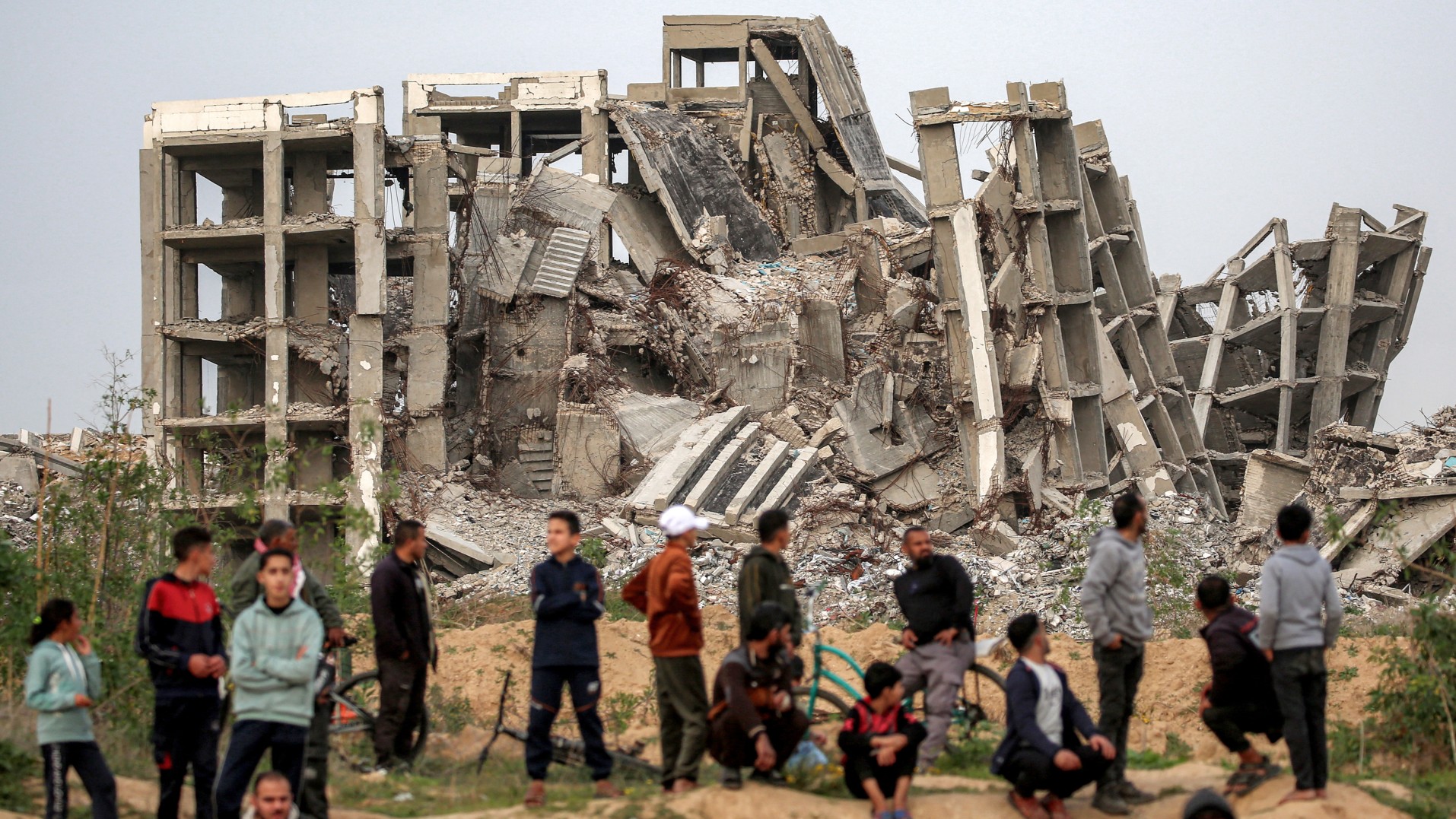
    A groundbreaking epidemiological study published in The Lancet Global Health journal has revealed a stark discrepancy in Gaza conflict mortality data, estimating that violent deaths during the first 16 months of hostilities significantly exceeded official reports. The comprehensive survey, conducted by an international team of demographers, economists, and epidemiological experts, calculated approximately 75,200 violent fatalities occurred between October 7, 2023, and January 5, 2025—representing a 35 percent increase over the Palestinian health ministry’s documented count of 49,090 during the same period.

    The Gaza Mortality Survey employed rigorous methodological approaches, interviewing 2,000 representative households encompassing 9,729 individuals across Gaza. Experienced Palestinian pollsters collected detailed familial mortality data, with findings indicating that 3.4 percent of Gaza’s population suffered violent deaths during the survey period. The research validated that demographic distributions reported by health officials—showing 42,200 women, children, and elderly victims comprising 56 percent of total fatalities—were remarkably accurate.

    Professor Michael Spagat, an economics expert at Royal Holloway and study co-author, highlighted additional conflict-related mortality, estimating approximately 8,200 further deaths attributable to indirect effects including malnutrition and untreated diseases. The research team emphasized that health ministry figures provided a conservative baseline rather than an overcount, with multiple independent methodologies confirming the reliability of administrative casualty recording systems despite extreme operational conditions.

    The findings gain further credibility through correlation with independent analyses, including a November estimate from the Max Planck Institute for Demographic Research that calculated 78,318 fatalities through December 2024. While Israeli authorities have historically questioned Palestinian health ministry data, a military official recently acknowledged approximately 70,000 Gaza deaths, aligning more closely with the new epidemiological findings than previous official estimates.

  • Is dopamine fasting key to doomscrolling and online addiction?

    Is dopamine fasting key to doomscrolling and online addiction?

    In an era of endless digital stimulation, a Dubai-based entrepreneur’s personal revelation highlights the neurological realities behind compulsive scrolling and impulse behaviors. Elissa, a 43-year-old expat mother of three, discovered her seemingly harmless phone habits were fundamentally altering her brain chemistry and emotional state.

    The turning point came when her youngest son observed that she appeared consistently angry when offline but smiled continuously during screen time. This prompted professional consultation that revealed her ‘me-time’ scrolling sessions were actually overstimulating her brain’s reward system through constant micro-releases of dopamine—the neurotransmitter responsible for pleasure and motivation.

    Contrary to popular psychology trends that villainize dopamine, specialists clarify this neurotransmitter isn’t inherently negative. Dr. Rajasekaran, a specialist psychiatrist at OPENMINDS Centre for Psychiatry, Counselling and Neuroscience, explains: ‘Dopamine is critical for motivation, cognition, and mood regulation. The issue emerges when modern stimuli—social media notifications, abundant entertainment options, and accessible pleasures—constantly trigger phasic dopamine releases.’

    This continuous high-intensity stimulation desensitizes dopamine receptors, making ordinary experiences feel less rewarding and creating cycles of compulsive behavior. The solution, however, isn’t the social media-popularized concept of ‘dopamine fasting’—a misleading term suggesting complete abstinence from dopamine-producing activities.

    Instead, experts recommend recalibrating the brain’s reward system through balanced activities that promote tonic dopamine release: steady-state pursuits like reading, exercise, or creative endeavors. Elissa’s successful intervention involved replacing scrolling with evening walks and reading, resulting in improved mood and presence that even her children noticed.

    The clinical approach focuses on restoring neurological sensitivity rather than eliminating dopamine itself. By reducing high-intensity stimulation, the brain gradually regains its ability to find satisfaction in everyday experiences, improving focus, emotional regulation, and overall mental wellness without resorting to extreme restrictions.

  • Parents forgive driver after son’s death in UAE, say ‘nothing will bring him back’

    Parents forgive driver after son’s death in UAE, say ‘nothing will bring him back’

    In a profound display of compassion amidst unimaginable grief, Indian expatriates in the UAE have chosen forgiveness over retribution following the accidental death of their only child. Sherafudheen and his wife, residents of Dubai, lost their 21-month-old son Alan in a tragic parking lot incident in Sharjah’s Muweilah area last week.

    The toddler, named after both the Syrian refugee Alan Kurdi and the mystic poet Rumi, was described by his father as ‘the light of our life’ in an exclusive interview with Khaleej Times. The family had waited six years for his arrival, making the loss particularly devastating.

    The accident occurred when Alan’s mother took him downstairs to dispose of garbage. The child, playing with a neighbor’s son of similar age, spotted a cat and impulsively ran toward the animal. Despite his mother’s calls to stop, Alan misinterpreted her pursuit as play and ran directly into the path of a vehicle exiting the parking lot.

    In an extraordinary decision, the grieving parents provided Sharjah police with a written statement absolving the driver of blame. ‘It wasn’t anyone’s fault,’ Sherafudheen explained. ‘It was an unfortunate incident involving momentary lapses of attention from all sides. Punishing the driver will not bring back our son.’

    The driver, also an Indian expatriate, had his passport temporarily retained but was released from custody following the family’s declaration. He has since maintained contact with the bereaved parents, checking on their wellbeing.

    Sherafudheen hopes his family’s tragic experience will serve as a cautionary tale for both parents and drivers throughout the UAE. ‘A momentary lapse of attention brought our whole world crashing down,’ he noted, emphasizing the need for heightened road safety awareness.

    The family had extensive plans for their future in the UAE, including religious pilgrimages and relocation to more affordable emirates. While these dreams have been shattered, the parents demonstrate remarkable resilience, stating they are ‘trusting God and trying to move forward.’ They plan to return to Dubai together once they have processed their grief, refusing to be separated during this difficult period.

  • Travel: What to see and visit in Switzerland apart from the Alps

    Travel: What to see and visit in Switzerland apart from the Alps

    While Switzerland’s Alpine landscapes draw millions annually, the country conceals remarkable cultural treasures beyond its famous peaks. With over 23 million visitors each year, most concentrate on mainstream destinations, yet these five lesser-known locations offer profound historical and architectural experiences.

    Murten (Morat): This medieval jewel in the Fribourg region presents impeccably preserved fortifications dating to 515 AD. Visitors can walk ancient ramparts constructed from gravel, tuff, and sandstone, offering panoramic views of Lake Murten. The town features a meticulously restored 1816 tower clock, Gothic architecture, and picturesque lakeside settings. Nearby Vully vineyards provide additional old-world charm.

    Saint-Ursanne: Nestled along the Doubs River in the Jura canton, this town legendarily founded by Irish monk Ursicinus features a central fountain monument to its patron saint. Designated the ‘Pearl of Jura,’ its heritage includes medieval churches, a dedicated hermitage, and the historically significant 1565 Tithing House with its remarkable staircase and updated 1788 interior features.

    Neuchatel: As the epicenter of Swiss watchmaking, this western capital blends technological innovation with medieval architecture. The old town contains the 12th-century Neuenburg Castle (now cantonal offices), a collegiate church, and the distinctive late-19th-century Red Church (Basilica of Our Lady). Weekend farmers markets showcase regional produce and specialties.

    Guarda: At 1,650 meters altitude in eastern Engadine, this unique village features decorative façade graffiti on well-preserved Engadine houses. With only 160 residents, its cobbled streets lead to the Schellen-Ursli Museum, inspired by Alois Carigiet’s 1945 children’s book, displaying period artifacts and vintage furnishings.

    Olten: Located 75km from Zurich along the Aare River, this Renaissance architecture showcase features half-timbered houses and the reconstructed 1803 wooden bridge originally built in 1295. The Haus Der Museen complex presents natural history, local archaeology, and regional development exhibits, while the Aare Gorge offers spectacular geological formations with accessible pathways.

  • Central government to investigate deadly Hubei fireworks shop blast

    Central government to investigate deadly Hubei fireworks shop blast

    China’s central government has initiated a high-level investigation into a catastrophic fireworks explosion in Hubei province that resulted in twelve fatalities. The incident occurred Wednesday afternoon at a retail establishment specializing in fireworks and firecrackers located in Zhengji township.

    In response to the severity of the tragedy, the State Council Work Safety Committee has formally classified the event as a major accident, triggering a specialized supervision protocol reserved for serious safety failures. A multi-agency task force comprising officials from the committee’s office, the Ministry of Emergency Management, the Ministry of Public Security, and the National Fire and Rescue Administration has been deployed to the accident site to direct investigation efforts and oversee rescue operations.

    Preliminary findings indicate the disaster began with an initial explosion that rapidly progressed to widespread combustion. While emergency response teams mobilized immediately following the blast, the precise sequence of events and underlying causes remain under active examination by investigators.

    The comprehensive supervision process aims to establish accountability, identify potential safety protocol violations, and develop enhanced preventive measures to avoid similar tragedies. China maintains stringent regulatory controls over fireworks production and distribution due to inherent safety risks, particularly during periods of heightened demand surrounding traditional cultural festivals and celebrations.