作者: admin

  • Tap to hear Spring Festival traditions in Shandong

    Tap to hear Spring Festival traditions in Shandong

    The rich cultural tapestry of Spring Festival traditions in Shandong province comes alive through an innovative auditory experience that invites participants to explore the region’s unique heritage. This immersive journey showcases how Eastern China’s cultural heartland preserves ancient customs through distinctive artistic expressions.

    Across Shandong’s diverse landscapes, centuries-old practices continue to thrive. The colorful steam of Jiaodong huabobo (flower-shaped steamed buns) represents both culinary artistry and symbolic meaning. Zibo’s radiant lanterns illuminate the festival nights with traditional craftsmanship, while Yantai’s intricate paper-cutting demonstrates extraordinary precision in folk art.

    The province’s cultural wealth further manifests through Linyi’s dough sculptures, where skilled artisans shape edible blessings into elaborate figures, and Juxian’s doorway streamers flutter with written wishes for the new year. Each craft embodies generations of storytelling and cultural transmission, with every sound and visual element carrying profound wishes for prosperity, health, and happiness.

    This auditory exploration provides a modern gateway to understanding how Shandong maintains its cultural identity while celebrating the Lunar New Year. The experience demonstrates the living nature of intangible cultural heritage, where ancient practices continue to evolve while maintaining their essential character and significance in contemporary society.

  • What to know about UK politician Peter Mandelson’s ties to his ‘best pal,’ the late Jeffrey Epstein

    What to know about UK politician Peter Mandelson’s ties to his ‘best pal,’ the late Jeffrey Epstein

    LONDON — Prominent British political figure Peter Mandelson, former UK ambassador to the United States, faces a criminal investigation regarding alleged misconduct in public office connected to his association with convicted sex offender Jeffrey Epstein. The investigation represents a significant development in the ongoing fallout from the release of over three million pages of Epstein-related documents by the U.S. Justice Department.

    Mandelson was apprehended at his London residence near Regent’s Park on Monday, marking the second high-profile arrest in connection with the Epstein case following the detention of Prince Andrew just four days prior. Authorities are examining whether Mandelson improperly shared sensitive government information with Epstein during his tenure as a senior minister in 2009, including confidential discussions about potential asset sales following the 2008 financial crisis and efforts to reduce banker bonus taxes.

    Financial records indicate Epstein may have transferred $75,000 to Mandelson or his husband between 2003 and 2004, though Mandelson claims no recollection of such transactions and questions the authenticity of the documentation.

    After nine hours of interrogation, Mandelson was released early Tuesday without formal charges. His legal representatives from Mishcon De Reya characterized the arrest as predicated on a “baseless suggestion” of flight risk, emphasizing Mandelson’s commitment to cooperating fully with investigators to clear his name.

    The scandal has created substantial political repercussions for Prime Minister Keir Starmer, who appointed Mandelson as Washington ambassador despite prior warnings about his Epstein connections. Starmer dismissed Mandelson in September after evidence emerged of continued communication with Epstein following his 2008 conviction. Mandelson subsequently resigned from the Labour Party and his House of Lords seat to prevent “further embarrassment,” though he retains his Lord title.

    The controversy has also impacted Mandelson’s commercial interests, with his lobbying firm Global Counsel entering bankruptcy proceedings after clients severed ties due to the Epstein association. Opposition figures have called for Starmer’s resignation over his judgment in the appointment, though the Prime Minister has maintained that Mandelson deceived him about the extent of his Epstein connections.

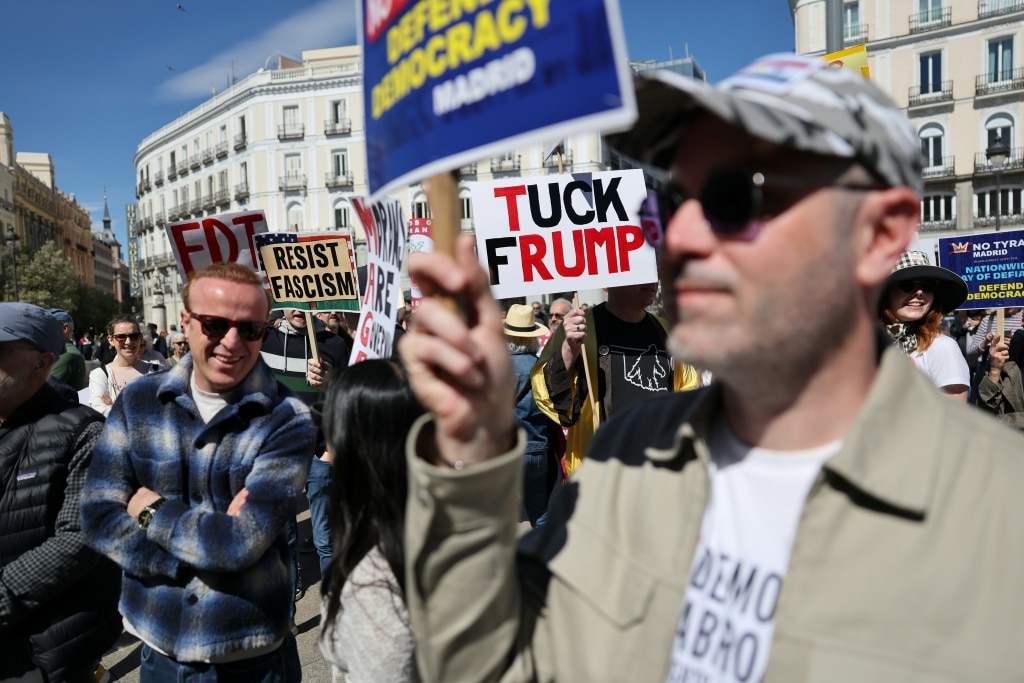
  • Trump seeks to strike back in crucial State of the Union

    Trump seeks to strike back in crucial State of the Union

    President Donald Trump prepares to deliver his first State of the Union address of his second term amid significant political challenges and a crucial midterm election cycle. The White House has indicated the speech will be extensive, with Press Secretary Karoline Leavitt stating Trump will present America as “strong, prosperous and respected” while celebrating the nation’s upcoming 250th anniversary.

    The address comes during a period of political vulnerability for the president, with recent Supreme Court decisions striking down key elements of his economic agenda and approval ratings remaining concerningly low. Despite these setbacks, the administration plans to highlight economic achievements including job creation, manufacturing growth, and inflation reduction, framing this period as a restoration of America’s “Golden Age.”

    International observers will be monitoring the address for signals regarding potential military action against Iran, as the United States maintains significant military presence pressing Tehran on nuclear negotiations. The administration’s “peace through strength” foreign policy approach, which has included interventions in Venezuela, is expected to feature prominently in the speech.

    The political atmosphere surrounding the address remains tense, with Democrats organizing various forms of protest and response. The event’s guest list has generated additional interest, with the administration inviting Olympic athletes and families representing various political causes, while some invitees have declined participation.

    With Republicans facing the potential loss of their narrow House majority in upcoming elections, which could jeopardize the remainder of Trump’s term and potentially lead to impeachment proceedings, this address represents a critical opportunity for the president to reshape his political narrative.

  • Galadari Brothers

    Galadari Brothers

    The Gulf Cooperation Council (GCC) region is experiencing a fundamental transformation in its food and beverage sector, driven by a new generation of digitally-native consumers who are rewriting the established rules of dining. This paradigm shift represents a dramatic departure from traditional restaurant dynamics that once dominated the regional landscape.

    A Digital Payment Revolution has become the cornerstone of this new dining ecosystem. According to a 2026 Visa report, an astonishing 80% of transactions in the UAE are now cashless, with smartphones replacing wallets as the primary payment method. This transformation spans from luxury establishments to modest kiosks, making seamless digital payment integration an absolute necessity rather than an optional feature for F&B operators.

    The emergence of Hyper-Convenience Culture has fundamentally altered consumption patterns. With internet penetration exceeding 90% across GCC nations, app-based food ordering has evolved from novelty to normalcy. Social media platforms have accelerated this digital migration, creating instant pathways from food discovery to purchase without leaving the application interface. Industry projections indicate online orders will constitute over 40% of total sales in certain food categories within this decade, fueling the rapid expansion of cloud kitchens that operate with significantly reduced overhead costs.

    Demographic forces are amplifying this transformation, with nearly 70% of the GCC population under age 35. This youth-dominated market prioritizes speed, personalization, and value over brand heritage alone. Research indicates approximately three-quarters of consumers have switched brands within the past year, demonstrating that promotional offers and perceived value frequently outweigh longstanding brand loyalty.

    The Visual Economy of dining has emerged as a critical factor, particularly among younger demographics. Food must not only satisfy taste buds but also serve as shareable digital content, with multi-colored desserts and limited-edition formats gaining popularity through platforms like TikTok and Instagram. This visual-centric approach has redirected marketing budgets toward creator partnerships and experiential launches that generate organic social media traction.

    Psychological engagement through Gamified Loyalty Systems represents another strategic shift. Points, badges, tier upgrades, and time-limited challenges have transformed routine purchases into progression journeys, with regional platforms increasingly integrating tiered rewards and digital scoring mechanisms to drive customer retention and gather valuable consumer data.

    This comprehensive transformation necessitates a Strategic Reset for F&B operators. Digital infrastructure has transitioned from optional to essential, promotional agility has become critical in value-driven markets, physical formats must accommodate delivery demands, and marketing strategies require interactive elements. Success in this new landscape will belong to the most adaptive operators who recognize that the region hasn’t merely upgraded its technology—it has fundamentally elevated its expectations of the dining experience.

  • Netanyahu announces Israel-India ‘hexagon of alliances’ against ‘radical axes’

    Netanyahu announces Israel-India ‘hexagon of alliances’ against ‘radical axes’

    Israeli Prime Minister Benjamin Netanyahu has unveiled a strategic international coalition termed the ‘hexagon of alliances,’ with India positioned as a central partner. This alliance framework, explicitly designed to counter radical axes in the region, was announced ahead of Indian Prime Minister Narendra Modi’s landmark visit to Israel.

    Netanyahu articulated the partnership’s foundation on the social media platform X, stating, ‘The bond between Israel and India is a powerful alliance between two global leaders. We are partners in innovation, security, and a shared strategic vision.’ He characterized the coalition as an axis of nations committed to stability and progress, explicitly opposing both ‘the radical Shia axis’ and an ’emerging radical Sunni axis.’ The alliance is reported to include Israel, India, Greece, Cyprus, and other unnamed Arab, African, and Asian states.

    Modi’s visit agenda includes addressing the Israeli parliament, a solemn visit to the Yad Vashem Holocaust memorial, and engagements with the Indian-Jewish community. In response to Netanyahu’s remarks, Modi affirmed the ‘deep bond’ and ‘multi-dimensional nature’ of bilateral relations, emphasizing a foundation of ‘mutual trust, innovation, and a shared aspiration for peace and progress.’

    Concrete collaborative initiatives were outlined, focusing on infrastructure development in Israel’s Negev region. Netanyahu announced the expedited construction of the Tzklag Airport and a new Israeli settlement, citing a ‘tremendous development momentum.’

    This deepening partnership is underpinned by substantial defense and economic ties. India has emerged as the world’s largest purchaser of Israeli weaponry, including drones, missile systems, and surveillance technology, with arms purchases surging 175% between 2015 and 2019. Recent high-level defense meetings have resulted in memoranda of understanding aimed at strengthening long-term cooperation. A September bilateral investment agreement further solidified economic links, which Israeli Finance Minister Bezalel Smotrich claimed would ‘open new doors for investors.’

    This strategic pivot marks a significant evolution in India’s foreign policy. Historically a supporter of the Palestinian cause at the United Nations, India has recently abstained from a UN resolution calling for a Gaza ceasefire. Concurrently, it has strengthened ties with Israel’s regional allies, notably signing a $3 billion liquefied natural gas deal and a defense agreement with the United Arab Emirates.

    The alliance’s formation occurs against a backdrop of intensified pressure on Iran. Following a U.S. tariff announcement on nations engaging with Iran, India seized three Iranian-linked oil tankers in the Arabian Sea. Subsequently, India issued an advisory urging all its nationals to depart Iran, signaling a potential recalibration of its historically close strategic ties with Tehran and highlighting the complex geopolitical realignments shaping the region.

  • White and pink flowers in full bloom in Guangzhou

    White and pink flowers in full bloom in Guangzhou

    The Haizhu Wetland in Guangzhou has undergone a spectacular transformation as thousands of bauhinia trees burst into simultaneous bloom, creating a breathtaking tapestry of white and pink blossoms. This annual natural phenomenon has turned the 3.2-kilometer stretch along the Shiliugang River into an immersive floral experience that attracts visitors from across the region.

    The early spring warmth has triggered a remarkable floral display throughout Guangdong’s capital city, with multiple species including tabebuia chrysantha, bauhinia variegate, and kapok trees contributing to the urban botanical spectacle. The synchronized flowering has created particularly dramatic scenes within the nationally protected Haizhu Wetland park, where delicate petals flutter through the air like natural confetti.

    Visitors can experience this seasonal marvel through multiple perspectives: walking along flower-lined riverbanks where petals cascade like gentle snowfall, or gliding through emerald waters on boats that provide panoramic views of the blossoming banks. The wetland management has capitalized on this natural event by launching a dedicated flower festival running from mid-February through late March, offering structured opportunities to appreciate both the bauhinia displays and complementary floral varieties.

    This ecological event demonstrates Guangzhou’s successful integration of urban development with natural preservation, creating accessible natural attractions within China’s densely populated metropolitan areas. The predictable timing of the bloom—corresponding with seasonal temperature changes—highlights the reliable rhythms of nature even within major urban centers.

  • Kerala to be renamed ‘Keralam’? India’s union cabinet approves name change proposal

    Kerala to be renamed ‘Keralam’? India’s union cabinet approves name change proposal

    In a significant administrative development, India’s Union Cabinet has granted approval for the proposed renaming of the southern state of Kerala to ‘Keralam,’ aligning the official nomenclature with its authentic Malayalam pronunciation. This decision marks a crucial milestone in a longstanding cultural-linguistic movement that has gained substantial political traction.

    The constitutional process, announced by Information and Broadcasting Minister Ashwini Vaishnaw on Tuesday, will now advance to the Kerala State Legislative Assembly for formal consideration. The timing of this development is particularly noteworthy as it precedes the state’s assembly elections scheduled for the first half of 2026.

    According to the established procedural framework, the President of India will formally refer the Kerala (Alteration of Name) Bill, 2026, to the state legislature for consultation as mandated under Article 3 of the Indian Constitution. This legislative mechanism requires the central government to seek state assembly perspectives before proceeding with parliamentary consideration.

    The initiative follows the Kerala Legislative Assembly’s unanimous resolution passed in June 2024, which formally endorsed the name change to better reflect the state’s linguistic heritage. The proposed alteration represents more than mere semantic adjustment—it embodies the preservation of regional cultural identity within India’s federal structure.

    Final implementation will require subsequent presidential recommendation and parliamentary approval through the designated constitutional amendment process. This development underscores the dynamic interplay between linguistic preservation, regional identity, and administrative processes in contemporary Indian governance.

  • US government drops case against Democrats in ‘illegal orders’ video

    US government drops case against Democrats in ‘illegal orders’ video

    In a significant legal development, federal prosecutors in Washington have terminated their prosecution against six Democratic lawmakers who produced a video encouraging military personnel to reject unlawful orders. The decision follows the failure of US Attorney Jeanine Pirro’s office to obtain a grand jury indictment against the defendants, all of whom are veterans with military or intelligence backgrounds.

    The controversy originated in November when the legislators released a 90-second video addressing concerns about American military operations targeting alleged narco-trafficking vessels near South American coastlines. These operations have reportedly resulted in over 130 fatalities since September. The video emphasized servicemembers’ obligation under the Uniform Military Code of Justice to refuse commands that violate U.S. or international law.

    Former President Donald Trump initially denounced the lawmakers as ‘traitors’ and suggested their actions warranted capital punishment, though he later clarified he wasn’t specifically threatening execution. Subsequently, Pirro’s office launched an investigation while the Pentagon initiated proceedings to demote Senator Mark Kelly, a former Navy captain and astronaut, which would have reduced his retirement benefits. A judge temporarily blocked this demotion in early February.

    The justice department had attempted to prosecute the group under statutes permitting up to ten years imprisonment for encouraging ‘insubordination, disloyalty, mutiny, or refusal of duty’ within the military. However, the grand jury declined to endorse the indictment. Legal representatives for Senator Elissa Slotkin had warned prosecutors that continuing the case would prompt claims of ‘vindictive and selective prosecution.’

    While the justice department retains the option to pursue charges in another jurisdiction, there were no indications of such action as of Tuesday. Pirro’s office declined to comment on the development. The accused lawmakers and their supporters have characterized the entire episode as an assault on free speech and an attempt to penalize political opponents.

  • Nigeria denies report it paid ‘huge’ ransom to free pupils in mass abduction

    Nigeria denies report it paid ‘huge’ ransom to free pupils in mass abduction

    The Nigerian government has issued a forceful denial of media reports claiming it paid substantial ransom money to Islamist militant group Boko Haram to secure the release of over 200 students and staff members abducted from St. Mary’s Catholic boarding school last November. Information Minister Mohammed Idris characterized the AFP news agency’s report as “completely false and baseless,” asserting that the allegations undermine the professionalism and integrity of the nation’s security forces.

    The controversial report, citing unnamed intelligence sources, suggested Nigeria had paid approximately 40 million naira ($30,000) per captive, with total payments reaching 2 billion naira ($1.5 million). The report further claimed the ransom was delivered via helicopter to Boko Haram’s enclave in Gwoza, Borno state—an assertion Minister Idris dismissed as “fiction.”

    In a separate security development, Police Chief Kayode Egbetokun, a close ally of President Bola Tinubu, has resigned citing “pressing family considerations” one year before his term expiration. His deputy, Tunji Disu, has been appointed acting chief amid escalating security challenges nationwide.

    The school abduction incident represents part of a broader pattern of kidnap-for-ransom operations that have become increasingly prevalent across Nigeria. Security analysts note that while Boko Haram remains most active in northeastern Borno state, splinter factions and criminal networks now operate extensively throughout Nigeria’s northwestern and north central regions.

    The controversy emerges during a period of heightened diplomatic scrutiny from the United States. A recent congressional delegation report presented at the White House recommended sweeping security and trade measures addressing what it described as “long-running persecution of Christians in Nigeria.” The report called for new bilateral security agreements, targeted sanctions, and legal reforms to protect religious freedom—recommendations the Nigerian government has yet to address publicly.

    Nigeria continues to grapple with the legacy of Boko Haram’s 2014 abduction of over 200 schoolgirls from Chibok, which sparked a devastating trend of mass kidnappings. Despite a 2022 law criminalizing ransom payments, enforcement remains challenging as families and intermediaries frequently negotiate with captors to secure loved ones’ release.

  • Ukraine remembers its dead as war enters a fifth year

    Ukraine remembers its dead as war enters a fifth year

    Ukraine solemnly commemorated the fourth anniversary of Russia’s full-scale invasion this week, honoring the fallen in a conflict with no end in sight. The nation observed a moment of silence at 10:00 local time, bringing Kyiv to a standstill as citizens gathered in Maidan Square and other memorial sites across the country.

    President Volodymyr Zelensky delivered a defiant address from the presidential palace’s subterranean corridors, asserting that “Ukraine never chose this war” while emphasizing the preservation of national sovereignty. “We have defended our independence, we have not lost our statehood,” he declared, acknowledging the staggering human cost while reaffirming Ukraine’s resilience.

    The military situation remains dire as the conflict enters its fifth year. Russian forces currently control approximately 20% of Ukrainian territory, though Moscow has failed to capture the entire Donbas region as initially intended. Kremlin spokesman Dmitry Peskov acknowledged that Russia’s war aims “haven’t been fully achieved yet,” while blaming Western support for Ukraine for escalating the conflict into a “confrontation between Russia and the West.”

    International support was visibly demonstrated as Zelensky hosted European leaders including Finnish President Alexander Stubb, Swedish Prime Minister Ulf Kristersson, and European Commission President Ursula von der Leyen. The so-called “Coalition of the Willing,” led by Britain and France and comprising approximately 35 nations, convened to discuss continued support, with some members expressing willingness to deploy troops to enforce any potential ceasefire.

    UK Prime Minister Keir Starmer, participating via video link, challenged the perception of Russian dominance, noting that Moscow had gained only “0.8% of land in Ukraine at a terrible cost to themselves of half a million losses” over the past year. Conversely, French President Emmanuel Macron expressed skepticism about near-term peace prospects, stating there was “no willingness on the Russian side to have a robust and solid peace.”

    The human toll continues to mount dramatically. BBC investigations have identified over 186,000 Russian soldiers killed, while UK defense estimates suggest total Russian casualties may reach 1.25 million. Ukrainian losses remain contested, with Zelensky acknowledging 55,000 battlefield deaths while other sources suggest the figure could approach 200,000.

    Civilian infrastructure remains under constant threat, with Ukraine urgently requesting additional Patriot interceptor missiles from the US after winter bombardments depleted defensive capabilities. The conflict has displaced millions and created Europe’s largest humanitarian crisis since World War II, with no diplomatic breakthrough appearing imminent despite multiple negotiation attempts.