作者: admin

  • Iran threat to ‘enemy oil lines’ raises fears over BTC pipeline

    Iran threat to ‘enemy oil lines’ raises fears over BTC pipeline

    A senior advisor to Iran’s Islamic Revolutionary Guard Corps (IRGC) commander has issued a stark warning that Tehran intends to target international oil supply lines, specifically threatening operations it deems supportive of its enemies. This declaration significantly escalates regional tensions already heightened by recent U.S. and Israeli military actions against Iran.

    According to senior Arab sources speaking with Middle East Eye, these threats raise substantial concerns about the security of the BP-operated Baku-Tbilisi-Ceyhan (BTC) pipeline. This critical infrastructure transports Azerbaijani crude oil—approximately 30% of Israel’s supply—through Georgia to the Mediterranean coast of Turkey. Analysts indicate that Azerbaijan’s geographical proximity makes this pipeline particularly vulnerable to Iranian intervention.

    The situation intensified on Monday when IRGC advisor Ebrahim Jabbari declared the strategic Strait of Hormuz effectively closed to navigation, threatening to “set ablaze” any vessels attempting transit. This narrow waterway, only 21 miles wide at its narrowest point, facilitates the passage of roughly 20% of global daily oil consumption and substantial natural gas shipments.

    Regional experts note that Iran perceives Azerbaijan as a conduit for Israeli operations against its interests, a concern that has grown in recent years. Investigations by the Stop Fuelling Genocide campaign and research groups including the Palestinian Youth Movement have documented continued oil shipments from Turkey’s Ceyhan port—the terminal endpoint of the BTC pipeline—to Israeli facilities near Ashkelon, despite Turkey’s official embargo announcement in May 2024.

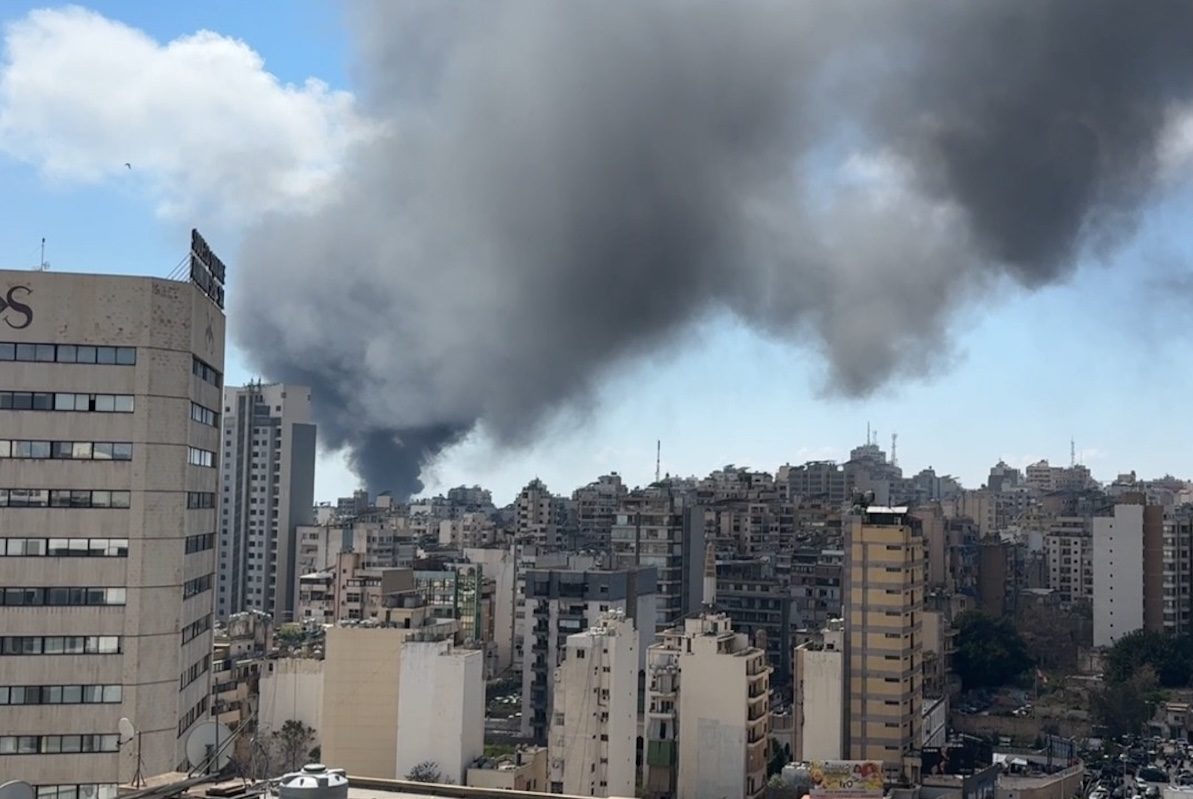
    Further complicating energy security, an Iranian drone attack reportedly caused a limited fire at Saudi Arabia’s crucial Aramco oil refinery in Ras Tanura on Monday. This incident triggered immediate market reactions, with European gas prices surging nearly 50% following Saudi Arabia’s precautionary closure of its largest refinery and Qatar’s temporary halt of liquefied natural gas production.

    The escalating conflict has already practical consequences for global shipping, with insurance providers withdrawing war-risk coverage for vessels operating in the Persian Gulf. Meanwhile, the IRGC claims to have targeted over 500 U.S. and Israeli sites using hundreds of drones and missiles, as U.S. President Donald Trump warns of an impending “big wave” of military action.

  • Unlike US, Iran ‘prepared itself for a long war’: security chief

    Unlike US, Iran ‘prepared itself for a long war’: security chief

    Amid escalating military actions initiated by the United States, Iranian security chief Ali Larijani has declared Tehran’s preparedness for an extended military confrontation while questioning Washington’s readiness for sustained warfare. The statement came following coordinated U.S.-Israeli airstrikes that targeted senior Iranian officials, including Supreme Leader Ayatollah Ali Khamenei, in operations described by observers as ‘carpet bombing’ of civilian areas.

    Larijani, Secretary of Iran’s Supreme National Security Council, utilized social media platforms to accuse former President Donald Trump of plunging the region into chaos through ‘delusional fantasies’ and prioritizing Israeli interests over American security. ‘With his delusional actions, he turned his self-made ‘America First’ slogan into ‘Israel First’ and sacrificed American soldiers for Israel’s power-hungry ambitions,’ Larijani stated.

    The current escalation follows a reportedly conciliatory pre-strike proposal from Iran that offered complete abandonment of enriched uranium stocks and full cooperation with international nuclear inspectors—terms exceeding those in the original nuclear agreement that Trump abandoned during his presidency. However, with diplomatic channels now severed, Iran has shifted toward maximizing military costs for the U.S. and Israel while deterring regional allies from joining the coalition.

    The conflict has already produced significant casualties, with four U.S. military personnel killed and four others seriously wounded in attacks at Kuwait bases. Iranian missile and drone strikes have affected all six Gulf nations hosting U.S. military installations, including Saudi Arabia, UAE, Qatar, Oman, and Bahrain, with some attacks extending into civilian infrastructure including international airports and residential areas.

    Regional analysts suggest Iran is employing a strategy of attrition, utilizing cheaper drone technology to deplete expensive U.S. and Israeli air defense systems. Security experts Amos C. Fox and Franz-Stefan Gady note that Iran’s strategy deliberately avoids the quick-strike timeline preferred by U.S. and Israeli forces, instead opting for prolonged engagement that could exhaust advanced interceptor stocks.

    Further escalating tensions, Iran has declared the Strait of Hormuz closed to all maritime traffic, potentially affecting 20% of global oil shipments and triggering significant price increases. Financial analysts predict potential doubling of oil prices should the closure persist, with possible global economic consequences.

    Despite Trump’s prediction of a four-to-five week conflict duration, defense officials have provided limited clarity on military objectives. The administration’s initial justifications—including claims of imminent Iranian attacks on U.S. troops and nuclear weapons development—have proven inaccurate according to verified reports.

    Regional experts warn that the removal of Iran’s leadership could empower more authoritarian elements or trigger violent power struggles. Daniel Brumberg of the Arab Center in Washington DC suggests possible outcomes include ‘an even more ruthless regime controlled by the security apparatus’ or national fragmentation, while scholar Shireen Hunter notes that permanent destabilization might align with Israeli regional objectives.

  • Some key figures about Nepal’s parliamentary election

    Some key figures about Nepal’s parliamentary election

    KATHMANDU, Nepal — Nepal commenced pivotal parliamentary elections on Thursday, marking a significant political transformation triggered by a youth-led uprising that toppled the previous administration. This electoral event occurs merely three years after the nation’s last national vote, following substantial political turmoil that culminated in governmental collapse in 2025, subsequently establishing an interim government that mandated fresh elections.

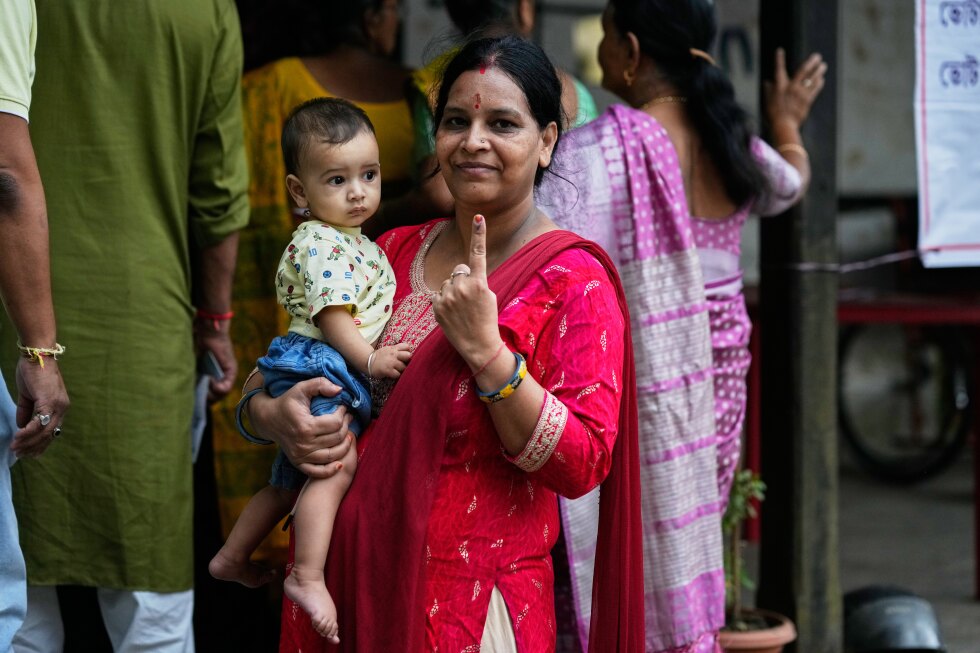
    The Election Commission reports approximately 18.9 million registered voters participating in this democratic process, demonstrating a notable increase of nearly one million voters compared to the November 2022 elections. Gender distribution reveals 966,000 male voters and 924,000 female voters, with an additional 200 individuals registered under the ‘others’ category, encompassing gender-diverse and LGBTQ+ community members.

    The substantial voter registration surge reflects heightened political engagement among youth, particularly those who spearheaded the September 2025 uprising that precipitated early elections. This movement has emerged as a central campaign issue, with political parties actively courting younger demographics through anti-corruption platforms and governance reform promises.

    Voters will directly elect 165 representatives to the House of Representatives, Parliament’s powerful lower chamber. The remaining 110 seats in the 275-member legislature will be allocated through proportional representation, where political parties appoint lawmakers based on their electoral vote share. Nepal’s political history demonstrates a pattern of coalition governments, with multiple parties typically combining forces to secure parliamentary majorities amid considerable instability—the nation has witnessed 15 different governments over the past two decades.

    This election presents a critical challenge to Nepal’s traditionally dominant parties—the Nepali Congress and the Communist Party of Nepal (Unified Marxist–Leninist)—both of which faced public discontent after participating in the ousted government. The National Independent Party, established in 2022, has gained substantial traction during campaigning, featuring former Kathmandu Mayor and ex-rapper Balendra Shah as its prime ministerial candidate.

  • China removes three retired generals from national advisory body

    China removes three retired generals from national advisory body

    In a significant political development preceding China’s annual Two Sessions meetings, the Chinese People’s Political Consultative Conference (CPPCC) has formally removed three high-ranking retired military officials from its ranks. The dismissed generals include Han Weiguo, former commander of the People’s Liberation Army Ground Force; Gao Jin, inaugural commander of the now-dissolved Strategic Support Force; and Liu Lei, former political commissar of the army.

    The CPPCC, China’s top political advisory body, conducted the removals through a formal vote on Monday, though authorities provided no specific explanation for the decisions. These actions represent unusual mid-term dismissals, as CPPCC delegates typically serve fixed five-year terms set to conclude in March 2028.

    This development marks the latest escalation in President Xi Jinping’s ongoing anti-corruption campaign within military ranks, which has intensified considerably in recent weeks. The removals follow a pattern of high-profile dismissals that have reshaped China’s military leadership structure, including last Thursday’s announcement of 19 officials being sacked, nine of whom were military figures.

    Han Weiguo, 70, commanded the PLA ground forces from 2017 until his retirement in 2021. Notably, both his successors have similarly been removed from their positions within the past two weeks. Liu Lei, also 70, served as political commissar during Han’s command tenure, while Gao Jin, 67, previously led the Central Military Commission’s Logistic Support Department before retiring in 2022.

    The timing of these dismissals, immediately before China’s most prominent annual political gathering where approximately 3,000 delegates convene, signals continued consolidation of military oversight and political alignment under President Xi’s administration.

  • Pakistanis at remote border describe scramble to leave Iran

    Pakistanis at remote border describe scramble to leave Iran

    Amid escalating regional hostilities, Pakistani nationals are undertaking a mass exodus from Iran through the remote Taftan border crossing, creating scenes of travel chaos and logistical challenges. The evacuation follows a series of powerful explosions that rocked Tehran over the weekend, prompting global embassies to issue advisories for their citizens to depart immediately.

    Eyewitness accounts from returning Pakistanis describe a tense atmosphere with visible missile launches near populated areas. Ameer Muhammad, a 38-year-old trader, reported to AFP on Monday that substantial crowd pressures and major transport problems emerged as Pakistani communities in Tehran and other Iranian cities began simultaneous evacuations.

    The geographical isolation of the Taftan border crossing—approximately 500 kilometers from Balochistan’s capital Quetta—has compounded evacuation difficulties. AFP journalists documented a continuous stream of individuals navigating large metal gates while hauling bulky luggage, with freight lorries forming extensive queues. The Iranian flag was observed flying at half-mast as military personnel maintained vigilant guard.

    Irshad Ahmed, a 49-year-old pilgrim, provided a firsthand account of witnessing missile launches from an army base adjacent to his Tehran hostel. His subsequent evacuation was facilitated by the Pakistani embassy, which organized safe passage to the border. This coordinated effort reflects the diplomatic response to the crisis, though evacuees reported varying perceptions of the immediate danger.

    Prime Minister Shehbaz Sharif has characterized the killing of Ayatollah Ali Khamenei as a violation of international law, emphasizing the longstanding convention that heads of state should not be targeted. In a statement on social media platform X, Sharif extended Pakistan’s sincere condolences to the people of Iran, acknowledging their ‘hour of grief and sorrow.’

    Contrasting perspectives emerged among evacuees regarding the severity of the situation. Saqib, a 38-year-old teacher at Tehran’s Pakistani embassy, noted that conditions were relatively normal before Saturday’s strikes, which ultimately precipitated their decision to depart. He described how the nighttime attacks resulted in precious lives lost, fundamentally altering the security calculus for Pakistani nationals in Iran.

  • The French village where Ayatollah Khomeini fomented Iran’s revolution

    The French village where Ayatollah Khomeini fomented Iran’s revolution

    Nearly five decades after Ayatollah Ruhollah Khomeini orchestrated Iran’s Islamic revolution from a quiet French village, Neauphle-le-Château continues grappling with its unexpected place in global history. Located just 40 kilometers west of Paris, this affluent community became the unlikely command center where the exiled cleric spent 120 days plotting the overthrow of Iran’s Shah Mohammad Reza Pahlavi in late 1978 and early 1979.

    The ayatollah’s arrival transformed this sleepy village into an international media spectacle. André, an 86-year-old resident who witnessed the events, recalls the sudden invasion of journalists and young Iranian students who flocked to the village. According to Iran specialist Bernard Hourcade of France’s CNRS research institute, France provided the ideal exile location precisely because Iranians could enter without visas.

    The revolutionary leader’s activities primarily involved recording incendiary speeches on cassette tapes that were smuggled into Iran, galvanizing opposition against the Shah’s regime. His presence brought heightened security measures, with police checkpoints and blocked roads disrupting village life. While some longtime residents like 87-year-old Michel acknowledge the inconvenience caused to direct neighbors, others minimize the historical significance, noting it was but a brief chapter in the village’s long history.

    The physical legacy remains contentious. The house where Khomeini stayed was destroyed in a mysterious explosion in February 1980, just months after his return to Iran. Though a commemorative signboard was installed years later, it was vandalized in 2023. Despite this, the village maintains an enduring connection to Iran—annual pilgrimages continue with 150-200 participants, including Iran’s ambassador, marking the anniversary of Khomeini’s return. In reciprocal recognition, Tehran has named a street after Neauphle-le-Château, where the French embassy now stands.

    Current residents like Lydie Kadiri, who arrived in 1999, note that the association remains inescapable. The village’s identity remains intertwined with those four months that changed Middle Eastern history forever, particularly as contemporary tensions between Iran and Western powers bring renewed attention to Khomeini’s legacy.

  • Post-Khamenei turmoil puts China’s energy security at risk

    Post-Khamenei turmoil puts China’s energy security at risk

    China’s energy security strategy faces immediate recalibration following the confirmed death of Iranian Supreme Leader Ayatollah Ali Khamenei and subsequent regional escalation. The Revolutionary Guards’ enforcement of a Strait of Hormuz closure has triggered substantial operational disruptions for the world’s largest manufacturing economy, which depends heavily on this transit route for crude imports.

    Industry analysts indicate the blockade will generate three immediate consequences: dramatically elevated shipping risks, surging insurance premiums, and increased oil delivery costs. More significantly, potential regime transformation in Tehran jeopardizes China’s access to discounted Iranian crude—a crucial economic advantage maintained through complex supply networks.

    Despite U.S. sanctions limiting Iran’s official exports, China has consistently imported approximately 1.38 million barrels daily (representing 13.4% of seaborne crude imports) through third-country transshipment points like Malaysia. This shadow supply chain, operated via sanctioned tankers, provides Iranian oil at $10-20 per barrel below global benchmarks. The pricing advantage proves particularly vital for Shandong province’s independent refineries (termed ‘teapots’), which constitute roughly one-quarter of national refining capacity.

    Foreign Ministry spokesperson Mao Ning articulated China’s diplomatic stance, emphasizing concerns about unauthorized military actions while avoiding direct confrontation. ‘China believes the sovereignty, security and territorial integrity of Gulf states should be fully respected,’ Ning stated, simultaneously denying reports of impending missile deals with Tehran.

    The crisis exposes China’s strategic vulnerabilities beyond energy pricing. Billions in infrastructure investments under the 25-year comprehensive cooperation plan face potential disruption, while alternative supply routes through Pakistan’s Gwadar port gain renewed strategic importance. Despite these challenges, analysts predict China will maintain strategic composure, prioritizing communication with Washington ahead of anticipated high-level diplomatic engagements.

  • South Africa, India eye T20 World Cup rematch as semi-finals begin

    South Africa, India eye T20 World Cup rematch as semi-finals begin

    The ICC T20 World Cup semifinals ignite with two monumental clashes that will determine this year’s championship contenders. Unbeaten South Africa, having dominated all seven previous matches, face New Zealand in Kolkata on Wednesday. This match represents a critical juncture in South Africa’s quest to shed their historical reputation for faltering in high-pressure situations and claim their maiden T20 World Cup title.

    Led by the formidable Aiden Markram, the South African squad carries momentum from last year’s World Test Championship victory, with eight members of that triumphant team present. Their comprehensive seven-wicket victory over New Zealand during the group stage, where they effortlessly chased 176 runs, positions them as strong favorites. The team seeks redemption after their heartbreaking seven-run defeat to India in the 2024 final, a match where they fell short despite needing just 26 runs from the final four overs with six wickets in hand.

    Meanwhile, defending champions India prepare for their semifinal battle against a resurgent England in Mumbai. The world’s top-ranked T20 team bears the enormous pressure of a billion-plus hopeful fans and the opportunity to achieve unprecedented back-to-back T20 World Cup victories on home soil. Under Suryakumar Yadav’s leadership, India has demonstrated remarkable resilience, particularly after their Super Eight loss to South Africa, responding with spectacular performances including a 256-run blast against Zimbabwe and a successful chase of 196 against the West Indies courtesy of Sanju Samson’s unbeaten 97.

    England enters the contest with growing confidence after winning all three Super Eight matches. Captain Harry Brook’s move to bat at number three has yielded spectacular results, including a century that powered England’s successful chase against Pakistan. Having previously played group matches in Mumbai, England brings valuable familiarity with the Wankhede stadium conditions.

    The tournament narrative builds toward a potential championship rematch between South Africa and India, creating unprecedented anticipation among cricket enthusiasts worldwide as the world’s best teams compete for T20 supremacy.

  • ‘Memories vary’: WFH chaos, Trump loom large over savage Liberal election review

    ‘Memories vary’: WFH chaos, Trump loom large over savage Liberal election review

    A confidential internal review commissioned by Australia’s Liberal Party to analyze its historic 2025 election defeat has been forcibly made public after Prime Minister Anthony Albanese tabled the document in parliament. The comprehensive assessment, compiled by party elders Pru Goward and Nick Minchin over several months, delivers a stark examination of strategic missteps and leadership challenges that contributed to the Coalition’s devastating loss.

    The report reveals profound internal dissatisfaction, with over two-thirds of surveyed party members expressing frustration with campaign management, policy confusion, and communication failures. It particularly highlights how Opposition Leader Peter Dutton became successfully characterized as ‘Trump-like’ by political opponents, a comparison that resonated negatively with Australian voters. This perception was exacerbated by policies including the proposed abolition of working-from-home arrangements and plans to cut 40,000 public service positions—measures that proved so unpopular they were subsequently reversed.

    Notably, the document indicates significant ambiguity regarding accountability for the controversial work-from-home policy, stating that ‘memories vary on who approved’ the initiative, which reportedly bypassed proper party room consultation. The review further notes that while Donald Trump’s re-election in the United States was initially welcomed within party circles, his subsequent implementation of sweeping public service cuts and global tariffs ultimately damaged the Australian opposition’s standing as voters drew unfavorable comparisons.

    The comprehensive assessment makes seventeen specific recommendations for organizational reform, including enhanced opportunities for ‘capable, talented women,’ improved internal review processes, and the establishment of a traveling advisory team to provide diversified counsel to the opposition leader. It emphatically states that the party ‘must never again allow the Parliamentary Leader and Office to effectively run the campaign’ alone.

    Opposition Leader Angus Taylor had previously defended the decision not to release the review, stating the party needed to ‘look forward and not backwards,’ though he acknowledged the election represented a ‘bad outcome’ with valuable lessons to be learned.

  • Australian shares slump as RBA governor’s inflation warning, Middle East conflict hits market

    Australian shares slump as RBA governor’s inflation warning, Middle East conflict hits market

    Australian financial markets experienced significant downward pressure on Tuesday as escalating geopolitical conflicts and sobering central bank commentary triggered a broad sell-off. The benchmark S&P/ASX 200 index plummeted 123.6 points, representing a 1.34% decline to settle at 9,077.30, while the broader All Ordinaries index fell 133.4 points (1.41%) to close at 9,297.20.

    The market deterioration was primarily fueled by mounting concerns over Middle Eastern instability, particularly regarding Iran’s conflict-related disruption of critical oil shipments to China. This development marks the second major energy supply shock for the world’s second-largest economy within weeks, following similar disruptions from Venezuela. The Australian dollar concurrently weakened against the US currency, trading at 70.87 US cents.

    Mining equities bore the brunt of the selling pressure amid growing apprehensions about global energy security. Market leaders BHP Group declined 2.62% to $57.70, Rio Tinto retreated 2.40% to $165.37, and Fortescue Metals Group slumped 4.49% to $19.58. Gold producers similarly relinquished previous gains, with Northern Star Resources falling 3.21%, Evolution Mining dropping 4.53%, and Newmont Corporation decreasing 2.02%.

    Travel and tourism stocks extended their declines as investors evaluated potential operational disruptions stemming from Middle Eastern conflicts. Qantas shares declined 1.81%, Webjet retreated 1.99%, and Flight Centre dropped 1.81% during the session.

    Compounding market anxieties, Reserve Bank of Australia Governor Michele Bullock delivered hawkish remarks at the Australian Financial Review Business Summit, emphasizing that inflationary pressures remain elevated despite current monetary policy settings. Governor Bullock characterized the upcoming March meeting as “a live meeting” while acknowledging the economy’s stronger-than-anticipated performance according to recent Australian Bureau of Statistics data.

    IG Markets analyst Tony Sycamore noted, “The ASX200 has taken a thumping today as investors decided to batten down the hatches and lock in profits after a fantastic February reporting season.” He added that market expectations for a 25-basis-point rate hike at the March meeting had surged to 33% from just 10% earlier in the day.

    Despite the broad market decline, Magellan Financial Group experienced exceptional gains, soaring 21.87% following announcement of merger plans with Barrenjoey. Conversely, Life360 shares plummeted 17.63% despite reporting substantial annual net income, while Pro Medicus shares declined 9.03% without company-specific news.

    The trading session concluded with only two of eleven sectors finishing positively, reflecting comprehensive risk aversion among investors weighing geopolitical uncertainties against domestic monetary policy concerns.