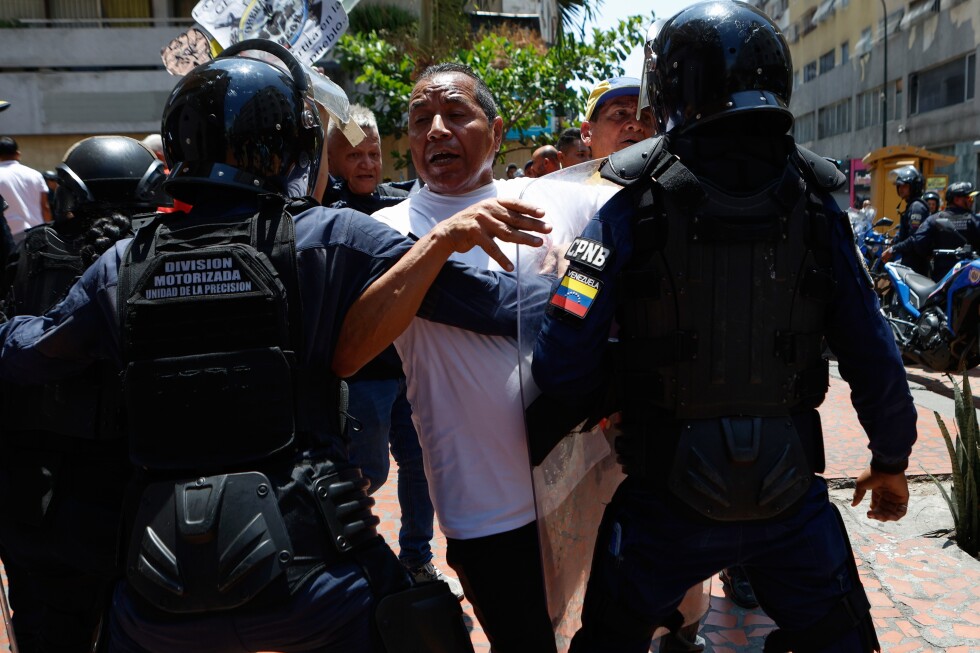
On a Thursday in downtown Caracas, thousands of public sector employees, union representatives and retired Venezuelans took to the streets, heading toward the Miraflores presidential palace to demand living wages and adequate, dignified pensions. Their demonstration was met with heavy police resistance, as National Security forces had pre-deployed across key downtown routes to block the protesters’ advance. The confrontation marked a sharp public rebuke of the interim government’s economic policies, coming just 24 hours after acting President Delcy Rodríguez addressed the nation on live television to call for worker patience amid ongoing efforts to rebuild Venezuela’s collapsed economy.
作者: admin
-
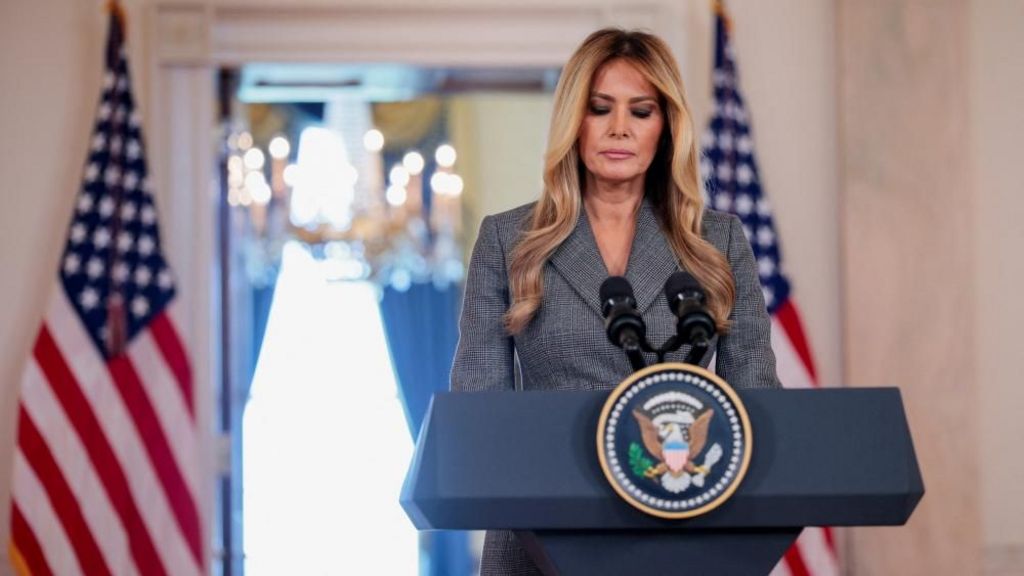
Melania Trump says rumours linking her to Epstein ‘need to stop’
In an unexpected, unscripted appearance at the White House on Thursday, former first lady Melania Trump issued a direct, public denial of any personal or professional connection to disgraced financier and convicted sex offender Jeffrey Epstein, demanding that all unsubstantiated rumors linking her to the case stop immediately.\n\nAddressing reporters on the South Lawn, Melania Trump pushed back against widespread online conspiracy theories that claim Epstein played a role in introducing her to her husband, former president Donald Trump. She labeled these claims as deliberately malicious attacks designed to damage her personal reputation, calling them “mean-spirited attempts to defame my reputation.”\n\nIn a clear, firm statement, she laid out her position on the Epstein case explicitly: “I have never had any knowledge of Epstein abuse of his victims. I was never involved in any capacity. I was not a participant.” She also confirmed that she herself was never victimized by Epstein, reiterating that her connection to the convicted trafficker is entirely non-existent, stating “I never had a relationship with Epstein” and adding that all claims suggesting otherwise “need to end today.”\n\nIn a surprising turn, the former first lady also used the appearance to call on Congress to launch formal hearings centered on the needs and testimonies of Epstein’s survivors of sex trafficking, a move that caught many political observers off guard. As of this report, no clear explanation has emerged for what prompted the sudden public statement, which comes amid renewed public interest in the Epstein case and lingering conspiracy theories surrounding his 2019 death in federal custody.\n\nThis is a developing story, with additional details expected to emerge in the coming hours as reporters follow up on the announcement and congressional leaders respond to Melania Trump’s call for hearings.
-
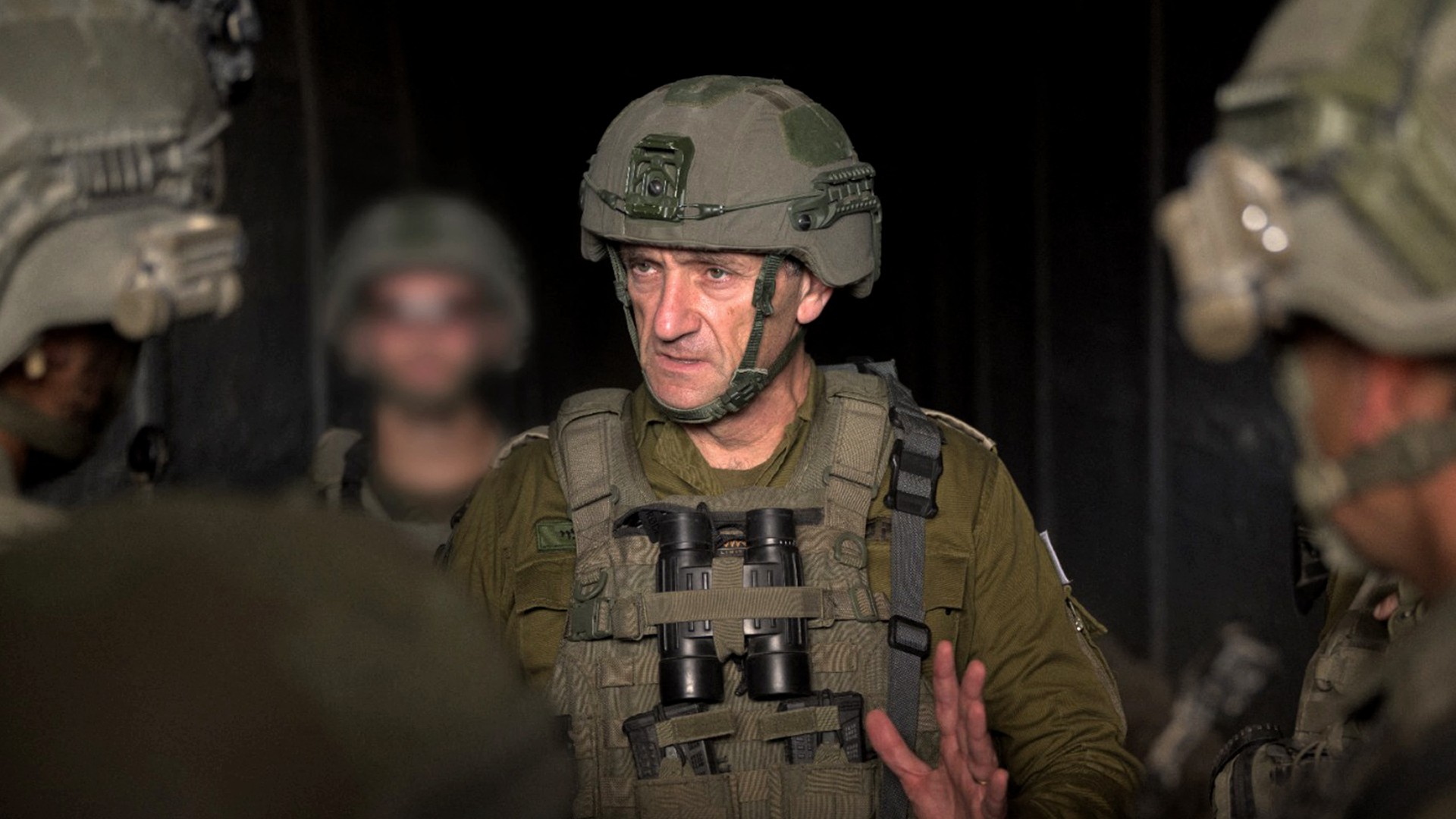
Hackers say they obtained at least 19,000 files from ex-Israeli army chief Halevi’s phone
An Iran-aligned cyber hacking collective known as the Handala Hack Team has announced it successfully breached the personal mobile device of Herzi Halevi, the former Chief of Staff of the Israel Defense Forces, claiming to have exfiltrated upwards of 19,000 confidential files in the operation. In an official statement published to the group’s website on Thursday, the hackers revealed their infiltration of Halevi’s device was the result of a multi-year surveillance and cyber operation that granted them unfettered access to what they describe as thousands of sensitive images and video recordings from closed-door high-level security meetings.
In the bold statement, the group claimed that Israel’s most closely guarded national security assets — from top-secret military facilities and crisis command centers to operational strategic maps — have been fully exposed to their team for an extended period. The breach is being described as one of the most impactful cyber incidents targeting a senior leader in Israel’s national security establishment to date, with portions of the stolen data already circulated and reviewed by Middle East Eye. The released materials include visual evidence of previously unreported meetings between Halevi and Arab regional officials.
One undated photograph places Halevi alongside Michael Kurilla, the former head of U.S. Central Command (Centcom), at a meeting held in Qatar, where a large official portrait of Qatar’s ruling Emir Sheikh Tamim bin Hamad Al Thani is clearly visible in the background. A second undated image shows Halevi visiting the iconic Sheikh Zayed Grand Mosque in Abu Dhabi, United Arab Emirates, while a released video recording captures a meeting between Halevi and Jordan’s Chief of the General Staff, Yousef Huneiti, on Jordanian soil. In the video, Halevi presents Huneiti with a historic dagger that originally belonged to a Jordanian soldier killed during the 1967 Six-Day War, a symbolic gesture that had not been reported publicly prior to the breach.
Alongside the diplomatic and security-related materials, the hacking group also released personal content pulled from Halevi’s device, including private family photos, national identification cards for Halevi and his wife, and what the group frames as embarrassing personal moments. One short video shows Halevi hiding under a piano in a private living room as a woman enters the space.
The Handala Hack Team says it is withholding a large volume of additional stolen data that has not yet been made public, including further visual proof of unreported secret meetings, detailed Israeli military strategic maps, and personal identifying information for senior Israeli military commanders. The group warned in its statement that all of this unreleased material, which includes clear, unobscured imagery of senior Israeli military personnel and combat pilots, will be published incrementally at a future time of its choosing.
This cyber breach is not an isolated incident for the Handala Hack Team, which has built a track record of targeting high-profile Israeli political and security figures. Previous claimed attacks include a breach targeting former Israeli Justice Minister Ayelet Shaked and a senior aide to long-time Prime Minister Benjamin Netanyahu. Last year, the group claimed responsibility for hacking a personal device used by former Israeli Prime Minister Naftali Bennett, releasing hundreds of his private chat messages and a 141-page contact list that included contact details for multiple international heads of state and world leaders. Bennett acknowledged the breach of his Telegram account at the time, but noted that the released content included a mix of authentic and forged materials.
Herzi Halevi stepped down from his post as IDF Chief of Staff in March 2025, after leading Israeli military operations in the Gaza Strip through the first 17 months of the ongoing conflict. He assumed the role of army chief in January 2023, while Kurilla held his position as Centcom commander from April 2022 through August 2025, placing the Qatar meeting between the two leaders within the timeframe of January 2023 to August 2025.
-
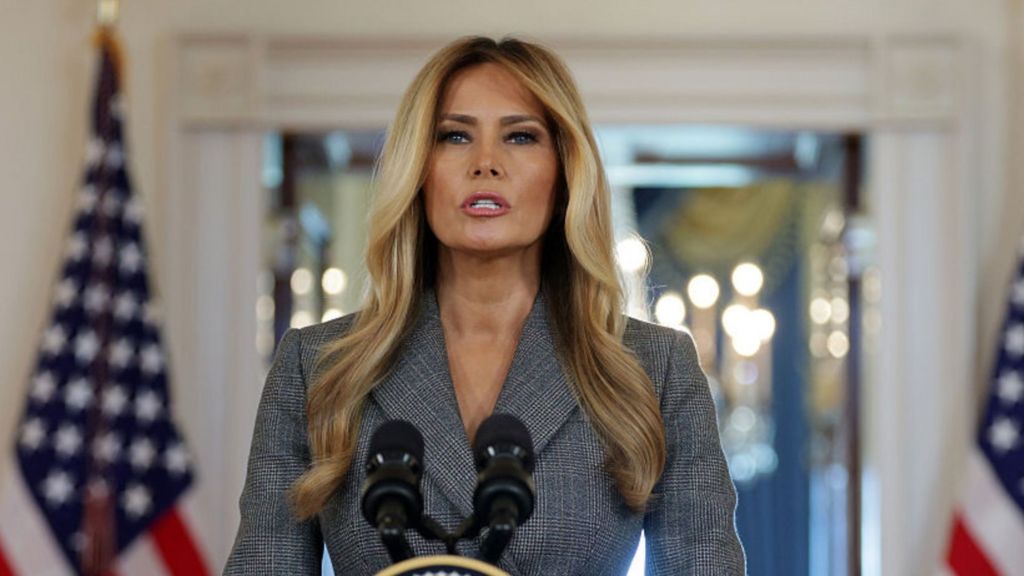
Melania Trump: ‘I never had a relationship with Epstein’
In a rare on-the-record statement to reporters on the White House grounds, former First Lady Melania Trump has issued a full and firm denial of any personal or professional connection to disgraced financier and convicted sex offender Jeffrey Epstein. Speaking directly to assembled media, Melania Trump pushed back firmly against lingering unsubstantiated claims that have circulated in public discourse linking her name to the late convicted felon, stating clearly that any such assertions are entirely false. The former first lady stressed that all rumors and unproven allegations connecting her to Epstein must cease immediately, ending any ambiguity around her position on the persistent speculation. This public denial comes as the latest chapter in ongoing public discussion surrounding Epstein’s extensive circle of connections, which has drawn continued scrutiny from media and investigators in years following his arrest and death in federal custody. As a high-profile public figure, Melania Trump’s choice to address the claims directly marks a break from her typical more reserved approach to responding to unsubstantiated tabloid rumors, highlighting the severity with which she views the allegations.
-
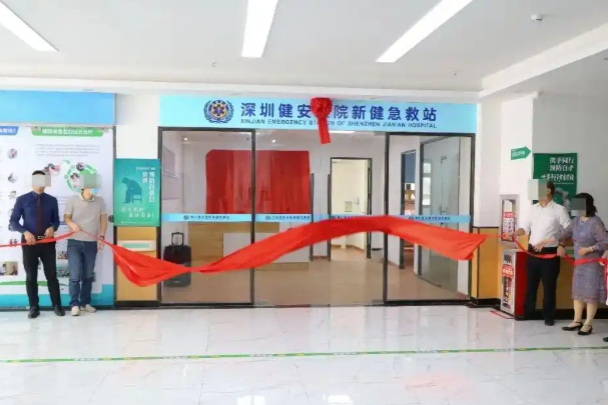
Shenzhen hospital fined after ambulance took patient to wrong hospital
A fatal medical emergency mistake in south China’s Shenzhen has resulted in heavy penalties for a private healthcare facility, following an official investigation that confirmed misrouting of an ambulance directly contributed to a deadly delay in care. Local health authorities announced the disciplinary actions on Wednesday, one year after the incident that sparked widespread public outcry.
On August 5 last year, 54-year-old Zhang, a local resident, contacted the city’s 120 emergency hotline after experiencing sudden, severe abdominal pain. Following standard protocol, the central dispatch center ordered the responding ambulance to transport Zhang directly to Longhua District People’s Hospital, the designated facility for her emergency case. Instead of complying with the dispatch order, the ambulance crew redirected the patient to Shenzhen Jian’an Hospital – the private institution that owns the ambulance.
By the time Zhang was finally transferred from the incorrect private facility to the originally assigned Longhua District People’s Hospital, she had already fallen into unconsciousness. Medical teams at the public hospital conducted emergency surgery and deployed all available rescue measures, but Zhang succumbed to an aneurysm the same afternoon.
Once details of the incident emerged online, the story spread rapidly across Chinese social media platforms, drawing intense public scrutiny and sparking broad discussion about accountability within pre-hospital emergency care systems. In response to public concern, Shenzhen’s municipal health commission and Longhua District’s health department launched a full, thorough investigation into the circumstances of the case. The probe confirmed that Shenzhen Jian’an Hospital had violated Shenzhen’s formal medical emergency management regulations by deliberately diverting the patient to its own facility instead of following the official dispatch order.
Per the official investigation conclusions, the Longhua District Health Bureau imposed a fine of 76,000 yuan (equivalent to approximately $11,115) on the private hospital. Separately, the municipal health commission ordered Shenzhen Jian’an Hospital to suspend all pre-hospital emergency medical services for a six-month period, a penalty that went into effect on March 18 this year.
In the wake of the tragedy, Zhang’s family has launched a civil lawsuit against the hospital, alleging wrongful death stemming from delayed rescue and improper transfer of the patient. Local judiciary authorities confirmed that the court has already commissioned an independent judicial appraisal of the medical injury, and will proceed with further legal proceedings once the appraisal results are finalized.
To prevent similar fatal mistakes from occurring across the city, Shenzhen’s health commission has launched a city-wide comprehensive inspection of all institutions that operate as part of the local pre-hospital emergency medical network. Any violations or non-compliance issues uncovered during the inspection will result in targeted penalties, ranging from mandatory rectification orders to temporary suspensions or permanent revocation of pre-hospital emergency service qualifications, depending on the severity of the infraction.
Concurrent with the facility inspection, the Shenzhen Emergency Center is conducting a full review of its existing emergency dispatch protocols and management systems, with plans to implement targeted updates to strengthen operational oversight and prevent future non-compliance by ambulance crews and affiliated healthcare institutions.
-
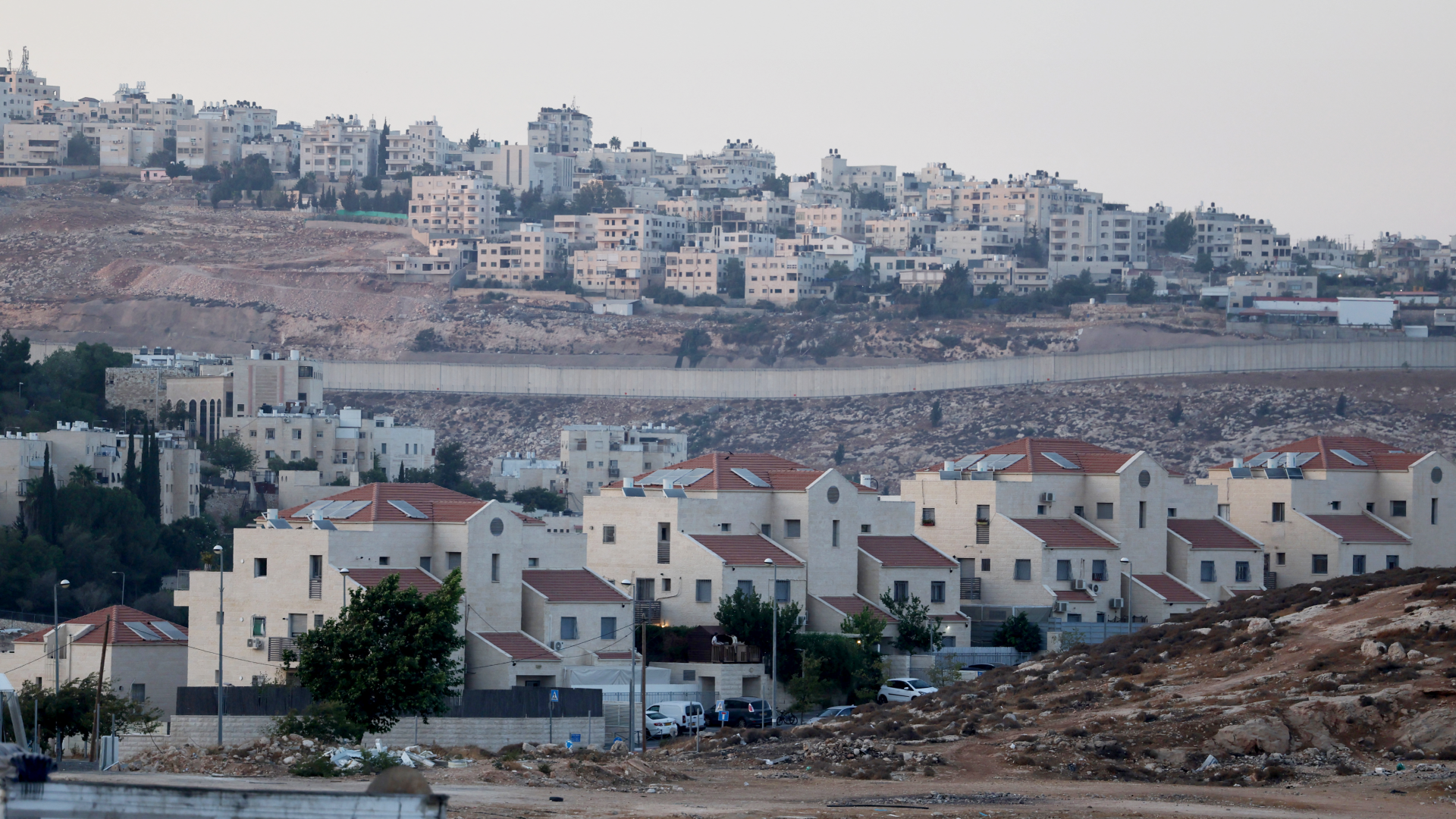
Israeli cabinet ‘secretly approves record number’ of new West Bank settlements
In a move that has deepened long-simmering tensions in the Middle East, Israel’s cabinet has quietly given final approval to 34 new Israeli settlements in the occupied West Bank — a single decision that breaks all previous records for settlement expansion in one sitting, Israeli broadcaster i24NEWS has reported. The unprecedented step comes amid Israel’s ongoing military campaign against Iran, and marks a dramatic acceleration of territorial expansion that critics warn eliminates any remaining path to a two-state solution for Israelis and Palestinians. The total number of settlements approved in this one vote already surpasses 63 percent of the all-time annual record set just last year in 2025, when 54 new settlements were greenlit.
Under international law, all Israeli settlements constructed in the West Bank, a territory occupied by Israel since the 1967 Six-Day War, are formally classified as illegal. This widespread international condemnation has done little to slow expansion under the current Israeli administration, which took office in 2022. To date, the government has approved a total of 102 new settlements since 2022, alongside the creation of nearly 200 unregulated settler outposts that have since been retroactively legalized by state authorities.
According to anonymous sources who spoke to i24NEWS, Eyal Zamir, the chief of staff of the Israel Defense Forces, attended the cabinet meeting where the vote took place. While Zamir did not issue an explicit formal objection to the settlement plan, he raised clear concerns about strained military personnel allocations to secure the new sites. He recommended that the government phase the rollout, authorizing a smaller number of settlements at a time rather than launching all 34 at once.
The Israeli cabinet intentionally classified the decision initially, a move widely interpreted as an attempt to avoid sharp international backlash at a moment when relations between Israel and its key ally the United States are already strained over the war in Iran. Details of the secret approval were ultimately leaked to the public this Thursday after receiving formal clearance from Israeli military censors. While the full list of locations for the new settlements has not yet been made public, early reports indicate that several sites are located in areas of the West Bank that have never before hosted Israeli settlements, including remote zones that are rarely accessed even by regular Israeli military forces.
This aggressive push into unoccupied territory comes as settlement expansion has ramped up sharply since the outbreak of the Israel-Gaza war in 2023. Peace Now, the leading Israeli anti-settlement peace advocacy organization, confirmed that 2025 saw a record-breaking 54 settlement approvals, shattering the previous annual record of nine set just two years prior in 2023. Twenty-six of those 2025 approvals were retroactively legalizing unauthorised settler outposts that had already been built illegally on Palestinian land. The group’s data also shows that unauthorised outpost construction surged in 2025, with 86 new outposts erected — a 39 percent increase from 2024, working out to an average of one to two new unauthorised outposts per week.
A recent United Nations report released March 17 documents the severe human cost of this accelerating expansion and rising settler aggression. Between November 2024 and October 2025 alone, the UN recorded that more than 36,000 Palestinians have been forcibly displaced from their homes in the West Bank amid a sharp spike in targeted attacks by Israeli settlers. Over the same 12-month period, 1,732 documented incidents of settler violence that resulted in Palestinian casualties or property damage were recorded — a 25 percent increase from the previous year.
In recent weeks, this violence has reached new levels of brutality. Dozens of Israeli settlers have carried out a wave of arson attacks against Palestinian property, including the burning of a Palestinian medical clinic, opened fire on civilian Palestinian residents, and vandalized a Palestinian school with hateful graffiti reading “Death to Arabs”. Data from the Palestinian Ministry of Health, compiled by Agence France-Presse, shows that at least 1,050 Palestinians have been killed in the West Bank by Israeli military forces or settlers since October 2023, including six additional fatalities recorded since the beginning of March 2026.
Lior Amihai, executive director of Peace Now, told independent outlet Middle East Eye that the 34-settlement approval is no accident, but a deliberate step toward permanent annexation of the entire West Bank. “They’re not hiding it. They’re actually very clear about it, and this is the de facto annexation that they’re doing, taking over the territories and ethnic cleansing the Palestinians from Area C,” Amihai explained, referencing the 60 percent of the West Bank that falls under full Israeli security and civilian control. Even with the initial attempt at secrecy, likely driven by a desire to avoid international pressure amid US tensions over the Iran war, Amihai said the current Israeli government makes no attempt to hide its end goal. “This government at large does not hide its intentions to destroy the possibilities of a Palestinian state and peace between Israelis and the Palestinians.”
This latest approval marks the largest single batch of settlements ever approved by an Israeli cabinet, cementing the current government’s legacy as the most aggressively pro-expansion administration in Israeli history. The move is expected to draw sharp condemnation from the international community, though it remains to be seen if it will result in any meaningful diplomatic or economic consequences for Israel.
-
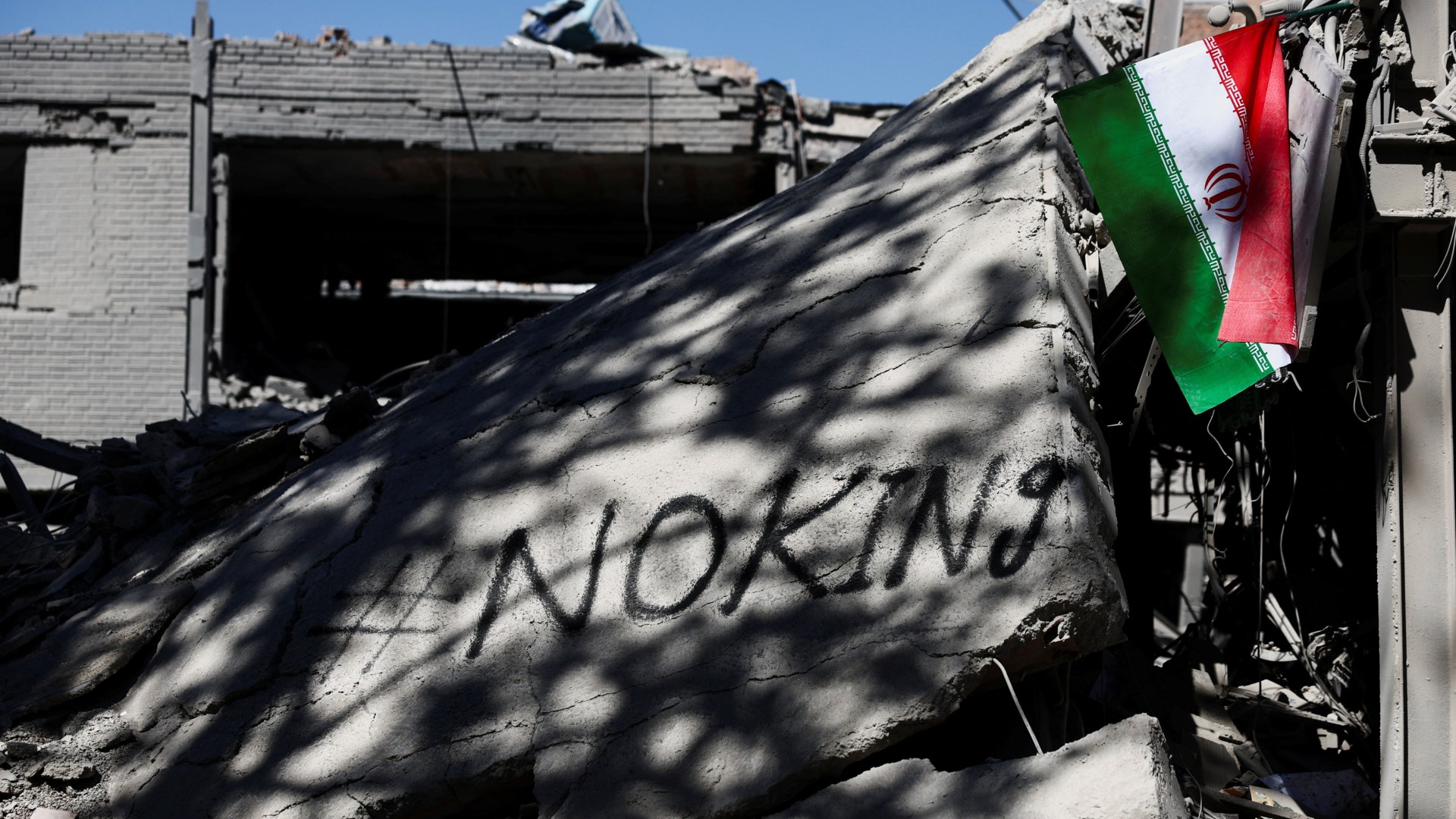
These Iranians supported the US-Israeli war. Now they realise their mistake
After weeks of devastating US-Israeli airstrikes across Iran, the announcement of a ceasefire has brought much-needed quiet to civilian communities across the country – but for a segment of Iran’s anti-establishment population that initially pinned hopes of political change on the foreign assault, the end of bombing has only delivered crushing disillusionment. For many who once framed external military action as a shortcut to systemic change, the destruction of civilian infrastructure and broken promises of targeted intervention have forced a painful reckoning.
Leila, a 25-year-old Iranian who requested a pseudonym for security reasons, is among those who now admit they were wildly wrong in their early assumptions. “I thought this was it – I thought the Islamic Republic was finally coming to an end,” she explained. Like many other opposition-aligned Iranians, she bought into the narrative that the strikes would be quick, decisive, and deliver immediate political transformation, even claiming she believed Washington and Jerusalem had already struck a post-conflict power-sharing deal with exiled opposition leader Reza Pahlavi. “I was wrong,” she says plainly.
Leila is far from alone. In the opening days of the conflict, a subset of Iranian opponents of the ruling government viewed former U.S. President Donald Trump and Israeli Prime Minister Benjamin Netanyahu as unlikely allies who could clear the path for the change they had long demanded during years of internal unrest. But as the campaign dragged on and the full scale of civilian and infrastructure damage came into view, those rosy expectations evaporated almost entirely.
Leila questions the logic of targeting the country’s basic civilian networks, pointing to the destroyed bridges, demolished railway lines, and flattened oil depots that dot the post-strike landscape. “How does that help change a government?” she asks. The contradiction between Trump’s past messaging and his eventual threats hit especially hard: back in January, at the peak of widespread anti-government protests that had been met with a brutal security crackdown, Trump took to social media to promise demonstrators that help was imminent. Just weeks before the ceasefire, he issued a terrifying public warning to Iran that “a whole civilization will die tonight, never to be brought back again” before backing down to agree to the pause in hostilities.
“In the span of just two months, we went from ‘help is on the way’ to threats about the destruction of Iranian civilization,” Leila said. The fallout has not only been political – it has torn apart personal relationships, too. She says she lost friendships over her decision to trust foreign powers, after she dismissed warnings from peers that Trump and Netanyahu would not act in Iran’s best interest, even accusing doubters of being sympathetic to the ruling establishment. Many of those bonds have never healed. “Now I feel like everything I believed in just collapsed,” she admits.
Twenty-nine-year-old Ali shared a nearly identical arc of hope followed by disillusionment. In the wake of the January nationwide protests – sparked by soaring inflation that escalated into widespread anti-government unrest, with conflicting death tolls putting fatalities between 3,117 (per Iranian government figures) and at least 7,015 (per the U.S.-based Human Rights Activists News Agency) – Ali came to believe external military force was the only path to change. “We thought war would finish everything,” he said. Instead, the strikes destroyed his family’s home, leaving him and his relatives homeless, though they escaped with their lives.
Ali had bought into claims that U.S. and Israeli military technology would enable precision strikes that avoided civilian casualties, targeting only regime figures and military sites. “Maybe when they realised they couldn’t change the system, they started hitting everything. Or maybe I was just naive,” he reflected.
Not all anti-establishment Iranians shared the initial optimism that foreign intervention would bring freedom. Forty-seven-year-old Maryam says she always knew the campaign would end in disaster. “Only blind people could think that a war started by Trump and Netanyahu would bring us freedom,” she argued. “Didn’t we see Gaza? Lebanon? Syria? How could anyone think this would be different?”
By the end of the strikes, U.S. and Israeli attacks had leveled critical national infrastructure: energy facilities, transportation links, steel and petrochemical plants, a Tehran synagogue, multiple hospitals, universities, schools, and hundreds of small local businesses. “Maybe we should be relieved that the explosions have stopped,” Maryam concedes. “But how do you rebuild a country after this?” She remains sharply critical of Iranians who initially backed the strikes, many of whom she says are now trying to distance themselves from their earlier support. “I cannot forgive that,” she says.
Fifty-four-year-old Abbas goes even further, arguing that the war has permanently ended any remaining political relevance for Reza Pahlavi, the son of Iran’s last monarch and a leading exiled opposition figure. “Reza Pahlavi did everything he could to reach to power,” Abbas said. “But he never condemned any of the US or Israeli attacks on Iran’s infrastructure.” He pointed to Pahlavi’s public praise for Trump, noting the opposition leader used every form of flattery to win U.S. support, only to be cast aside once Washington reached a ceasefire deal with the Tehran government. “I hope his supporters understand now: you can’t rely on someone who is willing to see his own people killed and his country destroyed just to get to power,” Abbas added.
For many ordinary Iranians, the ceasefire has brought a long-overdue sense of relief, even as deep uncertainty lingers. Thirty-four-year-old Niloufar, a Tehran resident who spent 40 days sheltering indoors to avoid airstrikes, says the announcement of a ceasefire still feels surreal. “When the ceasefire was announced, it felt unreal. Like something had lifted off my chest,” she said. “For the first time in 40 days, I was able to sleep peacefully.”
Despite the pause, sporadic explosions continue to be reported, and a recent Israeli strike in Lebanon that killed dozens has already been labeled a violation of the ceasefire terms by Iranian officials. Many Iranians remain skeptical that the truce will hold, and distrust runs deep on all sides. Thirty-one-year-old Mehdi says he trusts neither the U.S. and Israeli governments nor his own country’s ruling establishment. “I don’t trust the US or Israel. Honestly, I don’t even trust them more than our own government,” he said. He notes that negotiations were already underway before the strikes began, leaving him wondering why this round of talks should be trusted more than past efforts. “We were negotiating, then suddenly they attacked,” he said. “What if they negotiate again and then strike even harder?”
That sense of profound, widespread disillusionment defines the current moment for many opposition Iranians. Ali sums it up bluntly: “Before the war, we used to say things couldn’t get worse. Now we know they can. We thought war would solve everything. Now we know it’s not that simple.” He adds a final, sharp judgment: “And we learnt something else, too: Reza Pahlavi is a stupid and ineffective politician who shows little real concern for the lives of those of us still living inside Iran.”
-
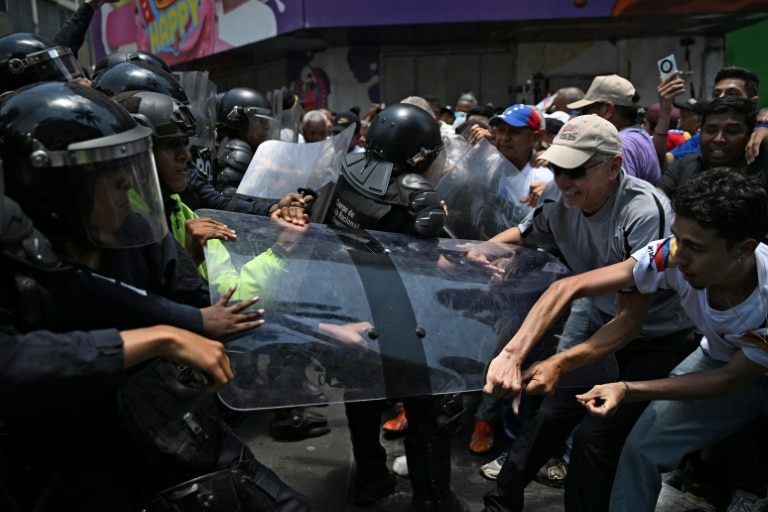
Venezuela police tear-gas protesters demanding salary rises
On April 8, 2026, a massive demonstration of roughly 2,000 Venezuelans marched through central Caracas toward the Miraflores Presidential Palace, demanding urgent increases to stagnant baseline salaries and pensions – only to be dispersed with tear gas by riot police, according to on-the-ground reporting from Agence France-Presse.
The confrontation marks the largest show of public dissent against interim President Delcy Rodriguez’s administration since August 2024, reflecting a sharp shift in public mood: after years of violent crackdowns on opposition under ousted former president Nicolas Maduro that deterred public protest, Venezuelans have begun to openly voice their long-simmering frustrations with economic hardship. As protesters pushed forward within kilometers of the presidential compound, helmeted riot police officers equipped with shields moved to block their path, triggering scattered clashes between demonstrators and law enforcement.
Rodriguez, who took power in January 2026 after Maduro was ousted and captured during a U.S. military raid, has already faced mounting criticism for failing to address Venezuela’s crippling cost-of-living crisis, which has left most working and retired citizens unable to cover basic needs. Just one day before the protest, Rodriguez addressed the nation on television to confirm a planned wage increase would take effect on May 1 – but she declined to reveal the size of the adjustment, a choice that further fueled public anger.
Venezuela’s official monthly minimum wage has remained frozen at 130 bolivars, equivalent to just $0.27 USD, since 2022. This figure is roughly 330 times lower than the United Nations’ $90 per month (equaling $3 per day) extreme poverty threshold. Even public sector workers, who earn up to $150 per month when including state-mandated bonuses, still take home far less than the $645 per month that independent economic estimates calculate a Venezuelan family needs to cover basic food costs alone. The nation currently grapples with annual inflation exceeding 600%, eroding any limited purchasing power workers have managed to retain.
Protesters emphasized that they are demanding increases to base salaries, not just adjustments to one-time or monthly bonuses – a workaround past administrations have repeatedly used to claim wage growth while leaving core pay stagnant. “Enough of this deception about salary increases. They want to pass off our government bonuses as a salary. That is completely unheard of,” 71-year-old retiree Mauricio Ramos told AFP, echoing the sentiment of many demonstrators.
The interim administration has framed its cautious approach to wage hikes as a measure to avoid worsening already sky-high inflation, a policy shaped in large part by U.S. influence. After the January raid, former vice president Rodriguez was endorsed by then-U.S. President Donald Trump to take power, in exchange for granting Washington expanded access to Venezuela’s vast oil reserves. Since taking office, she has followed through on commitments to roll back repressive policies from the Maduro era, granting amnesty to political prisoners and rolling out a series of market-aligned economic reforms. But these changes have yet to deliver tangible relief to everyday Venezuelans, who continue to struggle to afford essential goods including food and medicine.
Thursday’s demonstration signals a new wave of public assertiveness in Venezuelan politics. After the brutal crackdown on anti-Maduro protests that followed his disputed 2024 presidential election victory, public protests had largely ceased for nearly two years as citizens feared state repression. With the previous regime removed, that fear has begun to fade, allowing long-unmet demands for economic justice to move back into the public sphere.
-

KMT chairwoman emphasizes cross-strait peace creates new opportunities
During an official visit to Shanghai on April 8, 2026, Chinese Kuomintang (KMT) Chairwoman Cheng Li-wun reiterated that sustained cross-Strait peace is the foundation for unlocking unprecedented mutual opportunities for both sides of the Taiwan Strait, while emphasizing the natural complementary strengths that the Chinese mainland and Taiwan bring to collaborative development.
Speaking to reporters during a tour of Shanghai’s Yangshan Deep Water Port — a world-leading hub for intelligent, sustainable maritime shipping that launched commercial operations in 2005 — Cheng stressed that unnecessary tensions and miscommunication must not be allowed to hinder the shared progress of people on both sides. “We should not let unnecessary conflicts and misunderstandings limit our potential for progress and development,” Cheng stated, noting that both the mainland and Taiwan have built globally leading advantages across distinct industries and sectors, and that coordinated collaboration would allow both sides to maximize these strengths.
Yangshan Deep Water Port, which Cheng visited as part of her delegation’s itinerary, stands as a landmark example of the Chinese mainland’s advances in modern shipping infrastructure: it currently operates a global network of more than 350 international trade routes, connecting to major port hubs across over 200 countries and regions worldwide.
After observing firsthand the mainland’s cutting-edge progress in high-growth sectors including drone logistics, the low-altitude economy, and artificial intelligence, Cheng pointed out that deeper cross-Strait collaboration could open new pathways forward for Taiwan’s service industries and traditional manufacturing sectors, which currently face major growth bottlenecks. She underlined that technological innovation can drive much-needed industrial upgrading for Taiwan, while also noting that Taiwan has accumulated valuable practical experience in integrating technology with ecological conservation — expertise that could offer key insights for the mainland, particularly in the field of water resource management.
Looking ahead to future cross-Strait engagement, Cheng framed dialogue, reconciliation, people-to-people exchange and mutually beneficial cooperation as initiatives that can deliver transformative gains, even amid longstanding tensions. “Reconciliation, dialogue, exchange, and cooperation across the Taiwan Strait can bloom into the most beautiful flowers in the least likely places,” she said.
A day earlier, at a youth cultural exchange event held on Shanghai’s Yangpu Riverside, Cheng met with multiple young Taiwanese residents who shared their stories of pursuing higher education and launching new businesses on the mainland. She praised the group for their courage and celebrated their successful achievements in establishing roots across the Strait.
Cheng also shared a personal goal for her 2026 visit: that strengthened engagement would deliver the lasting gift of peace to people across Taiwan. “Peace makes everything people hope for possible,” she said, adding that stable, peaceful relations in the Taiwan Strait would not only benefit people on both sides, but also create new opportunities for the global community at large.
-
Global South forum hails China’s role
Against a backdrop of growing global debate over the future of the international order, development and policy experts from across the Global South have identified China’s emergence on the global stage as a transformative force reshaping modern development trajectories and cross-border cooperation frameworks.
These analysts agree that China’s decades-long domestic transformation, paired with its deepening engagement with developing economies, has become a central reference point in global conversations about alternative growth paths and much-needed reform to global governance systems.
Donald Ramotar, former president of Guyana, noted that China’s development success stems from its ability to calibrate national policies to shifting global conditions while never losing sight of core domestic priorities. “They had a very intense discussion on appreciating their position in the world and the balance of forces that existed,” Ramotar explained, emphasizing that China successfully opened its economy while building an entirely new development model aligned with its own national needs.
Ramotar added that China’s foreign policy has consistently centered on cooperation and reciprocal benefit, especially when partnering with low- and middle-income nations facing structural development barriers. “This advanced position of a win-win foreign policy has helped them link with many countries,” he said, pointing out that these equitable development partnerships have allowed participating nations to expand domestic productive capacity and deepen mutually beneficial trade ties.
Ramotar also highlighted China’s leadership in major multilateral initiatives, including the recent expansion of the BRICS bloc and cross-continental connectivity projects under the Belt and Road Initiative. He argued these efforts reflect a clear understanding that shared economic progress is inextricably linked to global stability: “Peace and economic development are directly connected.” China’s approach to engagement with the Global South, he added, is rooted in the core belief that shared growth drives long-term global stability and expands trade opportunities for all parties: “They believed that if they help other countries to develop and trade with them, both sides will advance.”
Siphamandla Zondi, a professor of politics and international relations at the University of Johannesburg, framed China’s long-range global outlook as a product of its unbroken history as a civilizational state, a foundation that enables multi-generational policy planning and a unique approach to international engagement that differs dramatically from the short-term, transactional approach common in many Western capitals.
“The Chinese are able to draw from a pretty intact history … and are able to plan on the basis of the next 300 years,” Zondi said, drawing a contrast with the lasting colonial disruption that has shaped long-term planning capacity in many African and Global South nations.
Zondi explained that China’s focus on inter-civilizational dialogue and collective self-reliance defines its cooperation with developing countries, adding: “They think about cooperation, coexistence and solidarity as a way of life.” For China, he noted, development remains the central organizing principle of global power and international influence, rejecting the zero-sum logic that has defined traditional great power competition.
Addressing the common framing of China’s rise in Western geopolitical analysis as a zero-sum challenge to existing power structures, Zondi noted that Beijing’s strategy focuses far more on enabling global production networks than on exercising coercive dominance. China’s unbroken civilizational roots allow it to approach global affairs from a long-term, cross-cultural perspective rather than a narrow, purely nation-state-centric outlook, he added, with intercultural dialogue positioned as a core tool for managing competition and addressing shared transnational challenges.
“They see the possibility for dialogue among civilizations as a way to resolve competition and challenges,” Zondi said. “The Chinese rise is not about rising to domination but rising to the center as an enabler.”
Helga Zepp-LaRouche, founder and leader of the Germany-based Schiller Institute, echoed these observations, noting that China’s proposals for global governance offer a much-needed alternative framework for the international community, one built on inclusion, sovereign equality, and mutual respect for all nations.
“It must not be always one winner and one loser; you can have win-win cooperation where everybody wins,” she said, pointing out that development-focused partnerships are growing increasingly attractive to nations working to close crippling infrastructure gaps and reduce widespread poverty.
Zepp-LaRouche also linked China’s remarkable domestic economic transformation to consistent, long-term investment in education, technological innovation, and cultural development — all of which she identified as core drivers of productivity and sustained long-term growth. She added that China’s policy trajectory reflects long-range development planning that transcends short-term geopolitical rivalry, a approach that has been reinforced by widespread public confidence in national long-term planning and progress.
“I have come to the conclusion that the Chinese people are not only content with their government, but they are extremely optimistic,” Zepp-LaRouche said, noting that most Chinese citizens expect future generations to enjoy even higher living standards.
Looking forward, the experts agreed that as the global system shifts toward a more diversified distribution of economic and political power, nations across the Global South will increasingly seek out practical, equitable development partnerships and new cooperative global platforms. China’s decades of development experience and cooperative policy approach, they concluded, will remain a critical reference point for global discussions about how to navigate this ongoing global transition.