作者: admin

  • Military push in Latin America raises concerns

    Military push in Latin America raises concerns

    The United States has initiated a new military coalition targeting drug cartels in Latin America, a strategic move that regional experts characterize as an effort to reestablish hemispheric dominance while potentially compromising regional stability. The “Shield of the Americas” summit, convened in Florida on March 7, featured President Donald Trump announcing the formation of a regional military partnership, framing it as an essential response to transnational criminal organizations posing critical threats to hemispheric security.

    Academic analysts challenge the official narrative, suggesting the anti-drug justification conceals broader geopolitical objectives. According to Cao Ting, Director of the Center for Latin American Studies at Fudan University, the emphasis on combating crime serves primarily to legitimize US interventionism while advancing Washington’s goal of strengthened regional control. This perspective finds support in the explicitly stated intentions within the US National Security Strategy to restore American preeminence throughout the Western Hemisphere.

    The proposed security framework reveals significant structural concerns regarding burden distribution and sovereignty. Niu Haibin of the Shanghai Institutes for International Studies notes the “uneven nature” of joint military operations that disproportionately assign responsibility for addressing drug production, transit, and consumption to Latin American nations. This approach, experts argue, effectively compromises the strategic autonomy of regional states in sovereign and security matters.

    The summit attendance pattern itself revealed political fractures, with notable absences from major regional powers including Brazil and Mexico. Their non-participation reflects apprehension about potential sovereignty violations through US military operations conducted within their territories. The gathering has accentuated existing political divisions across Latin America, particularly the growing ideological schism between left-leaning and right-leaning governments.

    Cuban President Miguel Diaz-Canel condemned the initiative as “reactionary and neocolonial,” characterizing it as both an assault on the Proclamation of Latin America and the Caribbean as a Zone of Peace and a threat to regional integration aspirations. Experts further warn that heightened US involvement may intensify pressure on left-wing governments, exacerbate political fragmentation, and increase overall regional uncertainty.

    The effectiveness of the newly established anti-drug mechanism faces serious questions due to the absence of critical narcotics-combating nations like Mexico and Colombia. Additionally, Trump’s warnings against “hostile foreign influence” gaining footholds in the hemisphere introduce another dimension of geopolitical tension. Analysts observe that while participating nations might share common ground on combating drug trafficking, consensus regarding broader security threats—particularly those related to alleged foreign influence—remains considerably more limited.

    Niu highlights the US tendency toward “pan-securitization,” framing diverse issues as security concerns to justify intervention, as demonstrated in approaches to Venezuela and the Panama Canal. This security narrative fundamentally conflicts with Latin American aspirations for active globalization participation and diversified economic partnerships. Forcing US security strategies upon the region, experts conclude, may ultimately generate increased tension in inter-American relations rather than enhanced cooperation.

  • Conflicts push up fuel costs in Australia

    Conflicts push up fuel costs in Australia

    Escalating military tensions in the Middle East are generating significant economic headwinds for Australia, with analysts warning of sustained pressure on consumer prices and broader economic stability through disrupted global supply chains.

    Economic experts indicate that joint US-Israeli military operations against Iran and subsequent regional instability are creating ripple effects that will impact the Australian economy through multiple channels. While Australia sources most refined fuel from Asian refineries, the global nature of oil pricing means domestic consumers remain vulnerable to international price fluctuations.

    Harry Murphy Cruise, Head of Economic Research and Global Trade at Oxford Economics Australia, explained: “The primary transmission mechanism is undoubtedly petroleum products. Even crude processed in Asian facilities often originates from the Gulf region, leaving Australian motorists exposed to price spikes that could exacerbate existing inflationary pressures.”

    Current data reveals concerning trends at fuel stations nationwide. New South Wales government monitoring indicates premium 95 gasoline reached A$2.29 per liter across NSW and the Australian Capital Territory this week, substantially higher than the A$2.12 recorded on March 4.

    The economic implications extend beyond pump prices. Commonwealth Bank analysis confirms automotive fuel price volatility significantly influences Australia’s Consumer Price Index, the primary inflation gauge. Higher transportation costs potentially create a dual impact: directly elevating certain prices while simultaneously reducing household disposable income for other expenditures.

    Shane Oliver, Chief Economist at AMP Financial Services, quantified the relationship: “Roughly each $1 per barrel increase in oil prices translates to approximately one cent per liter increase at Australian petrol stations. These increases impart a dampening effect on economic growth by forcing household budget adjustments.”

    In response to growing consumer concerns, the Australian Competition and Consumer Commission (ACCC) has intensified market surveillance. Commissioner Anna Brakey issued explicit warnings to fuel retailers: “Making false or misleading statements regarding price increases would violate Australian Consumer Law. We’ve communicated expectations to major fuel companies regarding pricing practices during these international developments.”

    Despite these challenges, Australia maintains certain economic buffers. Prime Minister Anthony Albanese noted the nation’s strengthened position with “the largest fuel reserves in 15 years,” while Cruise highlighted potential benefits for Australia’s liquefied natural gas export sector from elevated global gas prices.

  • Slavery exhibit is changing at the African American history museum as a loan agreement ends

    Slavery exhibit is changing at the African American history museum as a loan agreement ends

    The National Museum of African American History and Culture will soon repatriate a significant historical artifact to South Africa, marking the conclusion of a decade-long loan agreement. A 33-pound timber fragment from the São José-Paquete de Africa slave ship, currently displayed in the museum’s “Slavery and Freedom” exhibition, will be carefully prepared for transportation to its home institution at the Iziko Museums of South Africa later this year.

    The timber piece, which has been visually suspended above a dark void alongside original ship ballast since the museum’s 2016 opening, represents one of the first recovered wreckages of a sunken slave vessel. The São José met its tragic fate in December 1794 when the Portuguese ship, carrying over 400 captives from Mozambique destined for Brazilian slavery, struck rocks and sank near Cape Town. Approximately half of those aboard perished in the disaster, with survivors subsequently resold into slavery in the Western Cape region.

    Museum officials emphasize the change stems solely from conservation requirements and loan agreement expiration, not external political pressures. The initial five-year loan was extended in 2021 and formally concludes on July 1. Due to the timber’s fragile condition, specialists are constructing a custom protective crate for its transatlantic journey.

    While the wooden fragment will depart, other powerful artifacts from the vessel will remain on display for two additional years, including the ballast stones that counterbalanced human cargo. These will eventually be replaced by the ship’s original cargo manifesto, maintaining the exhibition’s narrative impact.

    The São José artifact was identified and studied through the Slave Wrecks Project, an international collaborative research initiative that confirmed the vessel’s association with the transatlantic slave trade. The display occupies a solemn space within the museum’s Middle Passage exhibition, addressing the horrific ocean crossing where millions of enslaved Africans lost their lives.

    Recent visitors expressed how the tangible nature of these artifacts transforms historical understanding from academic concept to emotional reality. Museum leadership acknowledges the timing might raise questions amid broader federal reviews of historical exhibits but maintains transparency about the purely conservation-based decision. The institution affirms that the powerful story of resilience and remembrance will continue despite the artifact’s return to its country of origin.

  • China Coast Guard vessel Sandu conducts patrols in South China Sea

    China Coast Guard vessel Sandu conducts patrols in South China Sea

    The China Coast Guard vessel Sandu has executed strategic patrol operations throughout the South China Sea, reinforcing Beijing’s maritime claims in the contested region. According to official reports from March 12, 2026, the patrols represent China’s ongoing commitment to protecting what it considers its sovereign territories and maritime interests.

    The Sandu, a key asset in China’s maritime enforcement fleet, conducted comprehensive formation collaboration training during these missions. Photographic evidence released by state media depicts law enforcement personnel actively engaged in operational exercises aboard the vessel on February 28, 2026, demonstrating China’s continued investment in maritime security capabilities.

    These patrols occur against the backdrop of persistent territorial disputes in the South China Sea, where multiple nations maintain overlapping claims. China’s coast guard operations have increasingly become the primary instrument for asserting Beijing’s claims in these strategically vital waterways, through which trillions in global trade passes annually.

    The deployment reflects China’s broader strategy of maintaining a constant presence in disputed areas, employing coast guard vessels rather than military ships to assert claims while minimizing overt military escalation. This approach has become a hallmark of China’s maritime strategy under President Xi Jinping’s administration.

    Analysts note that such patrols serve both practical enforcement purposes and symbolic functions, demonstrating China’s capability to maintain continuous operations far from its mainland shores. The South China Sea remains one of Asia’s most potential flashpoints, with competing claims involving Vietnam, the Philippines, Malaysia, Brunei, and Taiwan.

  • China’s green push a boost for Asia-Pacific

    China’s green push a boost for Asia-Pacific

    China’s ambitious decarbonization strategy is positioned to significantly influence energy transformation pathways across the Asia-Pacific region, according to energy analysts and regional experts. The comprehensive green development blueprint, formally presented in China’s government work report during the March 5 legislative session, establishes aggressive environmental targets including a 17 percent reduction in carbon intensity between 2026 and 2030.

    The policy framework outlines multi-faceted approaches to sustainable development, including the establishment of zero-carbon industrial complexes, creation of a national low-carbon transition fund, and strategic promotion of emerging green technologies including hydrogen power and sustainable fuel alternatives. The plan simultaneously implements stringent regulatory controls on high-emission industrial projects while accelerating nationwide green transition initiatives.

    Energy specialists highlight that China’s scale and manufacturing capabilities create unique demonstration value for developing economies throughout Asia. Yang Muyi, senior analyst at global energy think tank Ember, notes that “China’s transition can act as a ladder for progress across the Asia-Pacific, especially for developing economies” by demonstrating how to balance rapid systemic change with energy security requirements.

    The decarbonization agenda aligns strategically with recently upgraded regional trade frameworks. Peter TC Chang, formerly of the University of Malaya’s Institute of China Studies, observes that China’s 15th Five-Year Plan coordinates with the enhanced China-ASEAN Free Trade Agreement (CAFTA 3.0), which expanded cooperation into nine sectors including green economy initiatives during the October 2025 summit in Malaysia.

    This policy synchronization creates substantial opportunities for renewable energy collaboration, carbon trading mechanisms, and circular economy development between China and ASEAN members. Countries including Indonesia, Malaysia and Vietnam—with their considerable renewable resources and manufacturing capabilities—are particularly well-positioned to integrate into China’s expanding green value chains.

    Financial commitments underscore China’s leadership position in clean energy investment, with Ember reporting $625 billion allocated to renewable technologies in 2024 alone—the highest global investment volume. Chinese manufacturers currently produce approximately 60 percent of global wind turbines and 80 percent of solar panels, creating what analysts term a “ladder of affordability” that reduces clean technology costs for developing Asian economies.

    The urgency of energy transition has been amplified by geopolitical instability and fossil fuel price volatility, according to Joanna Santa Isabel, Asia network coordinator for environmental organization 350.org. She emphasizes that shifting toward affordable renewable alternatives has evolved from optional strategy to fundamental necessity, driven equally by climate imperatives and economic practicality.

  • Chile’s new president Jose Antonio Kast takes office

    Chile’s new president Jose Antonio Kast takes office

    In a historic transition of power, José Antonio Kast was formally inaugurated as Chile’s President on Wednesday, March 11, 2026, marking the commencement of his four-year presidential term spanning 2026-2030. The ceremonial proceedings unfolded at La Moneda Presidential Palace in Santiago, where the 60-year-old legal professional and former congressman received the presidential sash from Senate President Paulina Núñez.

    During his solemn oath-taking ceremony, President Kast made resolute commitments to ‘safeguard the nation’s sovereignty’ and ‘rigorously uphold constitutional principles and legal frameworks.’ His ascent to leadership represents a significant political shift from his predecessor Gabriel Boric’s administration.

    Political analysts immediately highlighted the formidable challenges awaiting the new administration, with pressing issues including national security enhancement, management of irregular migration patterns, economic revitalization strategies, and comprehensive governmental restructuring.

    Kast’s presidential journey demonstrates remarkable persistence, having previously contested the highest office unsuccessfully in both 2017 and 2021. His eventual electoral triumph came on December 14th, when he secured an unprecedented voter mandate in Chilean history, defeating opponent Jeannette Jara in the decisive runoff election. This record-breaking electoral performance signals substantial political transformation within the South American nation.

  • Africa eyes new sources of funding for health

    Africa eyes new sources of funding for health

    A significant shift is underway across Africa as nations reassess their approach to international health financing agreements. Zimbabwe, Zambia, and Kenya have recently taken decisive steps to reevaluate major health funding arrangements with the United States, signaling a broader continental movement toward more equitable partnerships.

    The trend emerged when Zimbabwe withdrew from negotiations on a proposed $367 million US health funding package, citing concerns over data sovereignty. Zambia followed by rejecting elements of a $1 billion bilateral health agreement, particularly provisions regarding sensitive health data sharing. Meanwhile, Kenya’s High Court suspended a similar health funding agreement with the US after consumer rights advocates raised alarms about the safety of citizens’ health data.

    According to Professor Carlos Lopes of the University of Cape Town’s Nelson Mandela School of Public Governance, these developments represent “a maturing and more assertive African approach to global health financing partnerships.” This shift reflects a strategic move away from aid dependency toward partnerships negotiated on more equal terms, with heightened emphasis on national ownership, predictable financing, and long-term fiscal sustainability.

    Melha Rout Biel, executive director of the Institute for Strategic and Policy Studies in South Sudan, emphasized that these actions demonstrate Africa’s growing unwillingness to accept funding proposals that don’t align with national or continental interests. “It is a sign that Africa can no longer be taken for granted to accept any offer that does not meet her national or continental interest,” Biel stated.

    The Africa Centres for Disease Control and Prevention has publicly supported Zimbabwe and Zambia’s positions, expressing concerns about transparency, data governance, and national sovereignty within the new US government health cooperation framework. Jean Kaseya, director-general of the African Union’s continental public health agency, recently affirmed that Africa CDC would support any country choosing to withdraw from or renegotiate the framework, particularly emphasizing the need for Africa to safeguard its public health information and pathogen data.

    Political analyst Deniz Akkas, based in Singapore, noted that while these decisions reflect specific national contexts, they may signal the beginning of a broader continental posture featuring stricter vetting of external financing arrangements and clearer boundaries around policy encroachment. Akkas maintained that this development, if handled correctly, could ultimately strengthen rather than weaken global health cooperation.

  • UN Security Council fails to pass resolution calling for immediate halt of military activities in Middle East

    UN Security Council fails to pass resolution calling for immediate halt of military activities in Middle East

    The United Nations Security Council encountered a significant diplomatic impasse on Wednesday when it rejected a draft resolution calling for an immediate cessation of military activities across the Middle East. The proposed measure, sponsored by Russia, urged all conflicting parties to halt hostilities and refrain from further escalation while condemning attacks targeting civilian populations and infrastructure.

    The voting outcome revealed deep international divisions, with the resolution receiving only four affirmative votes from Russia, China, Pakistan, and Somalia. The United States and Latvia cast opposing votes, while nine council members opted for abstention, effectively blocking the resolution’s passage.

    Russian Ambassador Vassily Nebenzia expressed profound disappointment with the outcome, stating that numerous Security Council members had failed to demonstrate sufficient resolve and wisdom to support the proposed text. The diplomatic setback occurred against the backdrop of escalating regional tensions triggered by joint U.S.-Israeli military operations against Iran that commenced on February 28, followed by Iran’s retaliatory measures throughout the region.

    In a contrasting development, the Security Council successfully adopted an alternative resolution presented by Bahrain on behalf of the Gulf Cooperation Council. This measure, which garnered 13 favorable votes with two abstentions, specifically condemned Iranian attacks against GCC member states and Jordan. The resolution demands Iran immediately cease hostilities against these nations and declares such actions violations of international law that pose serious threats to global security.

    Iran’s Permanent Representative Amir Saeid Iravani strongly objected to this resolution, characterizing it as a manifest injustice against his country. He asserted that Iran considers the measure both unjust and unlawful, arguing that it contradicts the United Nations Charter and established international law principles.

  • Tehran says 10,000 civilian sites hit as warnings broaden

    Tehran says 10,000 civilian sites hit as warnings broaden

    Iran has escalated its accusations against the United States and Israel, alleging their ongoing military campaign has destroyed nearly 10,000 non-military sites in a stark contradiction to their stated objective of ‘liberating’ the Iranian populace. The conflict, now in its twelfth day, has taken a dangerous new turn as Tehran issued expanded warnings, identifying major U.S. technology corporations with Israeli affiliations as potential legitimate targets for retaliation.

    According to an Al Jazeera report, the Iranian military command, through its Khatam al-Anbiya Headquarters, explicitly named firms including Google, Microsoft, Palantir, IBM, Nvidia, and Oracle. The warning extends to cloud service infrastructures located in Israeli cities and several Gulf nations. This cyber-front expansion follows an alleged attack on an Iranian financial institution, which Tehran claims resulted in civilian casualties. In response, Iranian authorities threatened to target U.S. and Israeli economic and banking centers within the region, issuing unprecedented public safety advisories for individuals to avoid proximity to such facilities.

    The humanitarian and environmental crisis within Iran is intensifying. The World Health Organization (WHO) Director-General, Tedros Adhanom Ghebreyesus, expressed grave concern over public health hazards stemming from damaged petroleum facilities. Reports of toxic ‘black rain’ in Tehran have prompted warnings from the Iranian Red Crescent Society, which described recent precipitation as potentially ‘highly dangerous and acidic,’ advising the capital’s 10 million residents to remain indoors.

    Diplomatic efforts to de-escalate the situation are underway. China’s special envoy for Middle Eastern affairs, Zhai Jun, met with UAE Deputy Prime Minister Sheikh Abdullah bin Zayed Al Nahyan. The UAE emphasized it is not a party to the conflict and should not be targeted, while appreciating China’s neutral stance and role in diplomatic shuttle efforts. Zhai reiterated China’s position that the sovereignty of all Gulf nations must be respected, attacks on civilians condemned, and that a ceasefire is the only viable path forward.

    Meanwhile, regional violence continues unabated. The UAE’s defense systems engaged incoming missiles and drones, with Dubai residents receiving emergency alerts to seek shelter. Israeli strikes extended across Lebanon, including a hit on a residential building in central Beirut. Maritime security agencies reported attacks on commercial vessels near Dubai and in the critical Strait of Hormuz, signaling a further expansion of the conflict’s geographic and economic impact.

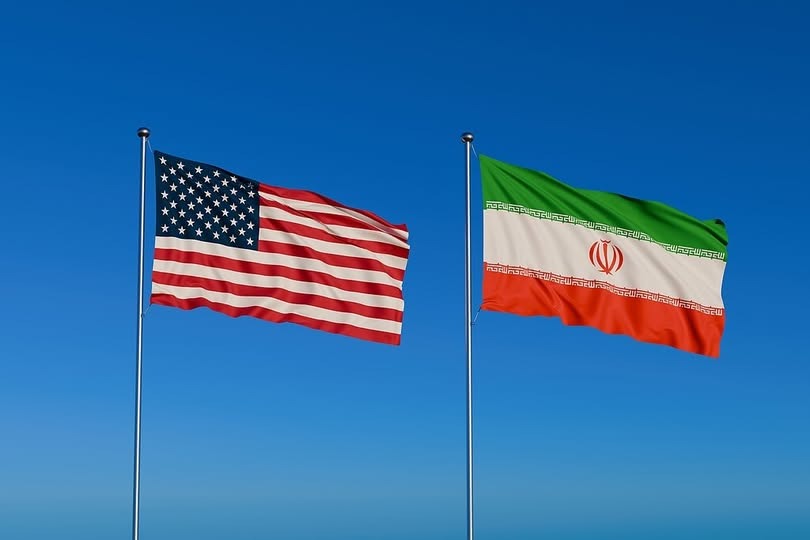
  • US sends mixed signals on Iran

    US sends mixed signals on Iran

    Washington’s contradictory messaging on the Iran conflict is generating international confusion and potentially extending hostilities, according to security analysts monitoring the situation. The administration’s inconsistent statements risk alienating allies and complicating resolution efforts.

    The divergence in official positions became starkly evident on Tuesday when Defense Secretary Pete Hegseth asserted military operations would continue indefinitely until achieving “total and decisive” victory over Iran. This hardline stance directly contradicted President Donald Trump’s earlier declaration that the conflict was “very complete, pretty much” and proceeding ahead of schedule.

    Security experts interpret these conflicting messages as a deliberate strategy. Jack Midgley, principal consultant at Midgley & Company and Georgetown University adjunct professor, suggests the administration is employing multiple narratives to avoid accountability for potential negative outcomes. “Hegseth’s message pleases the Israelis and the US hardcore right,” Midgley observed, “while Trump’s message is intended for the international community and markets.”

    The leadership transition in Tehran further complicates diplomatic prospects. Iran has appointed Mojtaba Khamenei, son of slain supreme leader Ali Khamenei, as the new supreme leader, creating additional uncertainty about future negotiations.

    Philip Gordon, former national security adviser to Vice-President Kamala Harris, noted at a Brookings Institution webinar that the administration has struggled to maintain consistent objectives, vacillating between nuclear non-proliferation concerns and regime change ambitions. This policy inconsistency has created what Gordon describes as “a moving target” for both allies and adversaries.

    Military analysts including Seth Jones of the Center for Strategic and International Studies warn that achieving substantial damage to Iran through exclusively aerial and naval campaigns remains “very difficult,” suggesting limited effectiveness of current military strategies.

    Midgley advocates for immediate de-escalation, arguing that denying nuclear capabilities to Iran can only be achieved through negotiated settlements, which remain impossible while attacks continue. The scale of recent strikes has destroyed trust, with Midgley noting, “The barrier is that Iran cannot trust the US or Israel to negotiate in good faith.”

    The proposed US naval escort mission through the Strait of Hormuz faces practical and political challenges. Midgley characterizes the plan as “unworkable and politically unacceptable,” warning it would place naval assets within range of Iranian anti-ship missiles while potentially trading American lives for oil security.

    Energy security concerns persist regardless of military developments. Clayton Seigle of CSIS warns of ongoing supply disruption risks, citing attacks on critical infrastructure including Saudi Arabia’s Ras Tanura refinery and Qatar’s Ras Laffan LNG terminal.