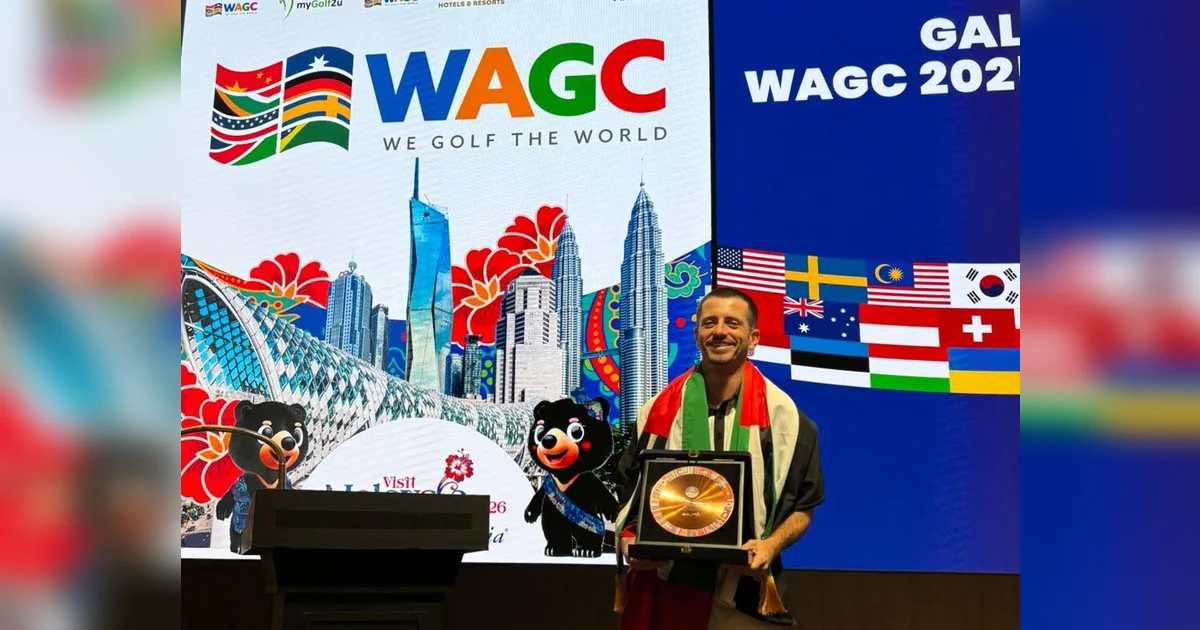
The United Arab Emirates (UAE) achieved a monumental milestone at the 2025 World Amateur Golfers Championships (WAGC) Grand Final in South Korea, securing its first-ever medal in the prestigious tournament. James Yeomans clinched the bronze medal in the Gross Overall Division, one of the most challenging categories, marking a historic moment for UAE amateur golf. The event, held on the scenic Jeju Island, saw 450 players from over 40 nations compete across four intense days of medal play. Team UAE, represented by a robust 30-player squad, celebrated its best-ever result, finishing 27th overall, with Yeomans’ achievement standing as the highlight of their campaign. The UAE’s participation has grown significantly, with the national program expanding from 20 finalists in 2023 to 30 in 2025, reflecting the burgeoning community of amateur golfers in the country. While Yeomans’ medal was the crowning glory, other UAE players, including Damien Flood and Victoria Johnson, narrowly missed podium finishes in their respective categories. The UAE’s WAGC journey continues with qualifiers for the next season set to begin on 23 November 2025 at Al Zorah Golf & Yacht Club in Ajman, which will also host the 2026 National Final. The 2026 WAGC Grand Final will take place in Desaru, Malaysia, with entries for qualifying rounds already open.
作者: admin
-
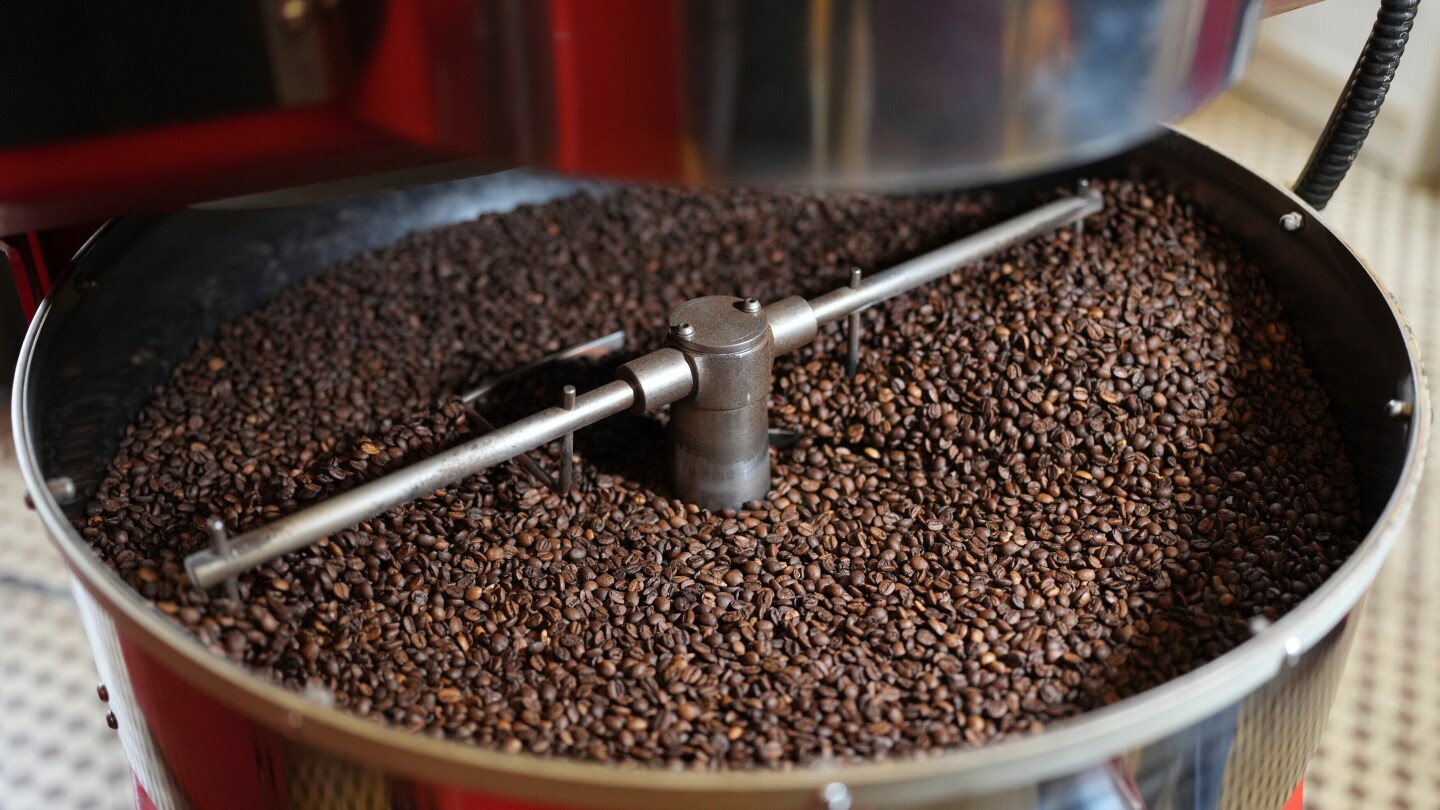
Brazilian coffee, beef and tropical fruit will still be tariffed 40%, says Brazil’s vice president
Brazilian Vice President Geraldo Alckmin announced on Saturday that key Brazilian exports to the United States, including coffee, beef, and tropical fruits, will continue to face a 40% tariff despite President Donald Trump’s recent decision to eliminate certain import taxes. This development follows Trump’s abrupt move on Friday to scrap levies imposed in April, which had initially subjected Brazilian goods to a 10% tariff. However, in July, Trump escalated the tariff to 40%, citing political motivations, including the trial of his ally, former Brazilian President Jair Bolsonaro, whom he labeled a victim of a “witch hunt.” Bolsonaro was later sentenced to 27 years in prison for attempting a coup in September. While Alckmin acknowledged the partial relief for products like orange juice, he emphasized that the 40% tariff remains a significant barrier for other exports. He described Trump’s latest decision as “positive” but highlighted the need to address the ongoing “distortion” in trade relations. The July tariff hike, which coincided with Brazil’s trade deficit with the U.S., strained bilateral ties to historic lows. However, recent diplomatic efforts, including a meeting between Brazilian President Luiz Inácio Lula da Silva and Trump in October, have signaled a thaw in relations. U.S. Secretary of State Marco Rubio and Brazil’s Foreign Minister Mauro Vieira also engaged in talks this week to advance negotiations. Meanwhile, the Trump administration defended the tariffs as a revenue-generating measure, denying their impact on rising consumer prices. In Brazil, industry leaders, such as the Brazilian Association of the Coffee Industry, pledged to monitor the situation closely to safeguard the competitiveness of their sector.
-
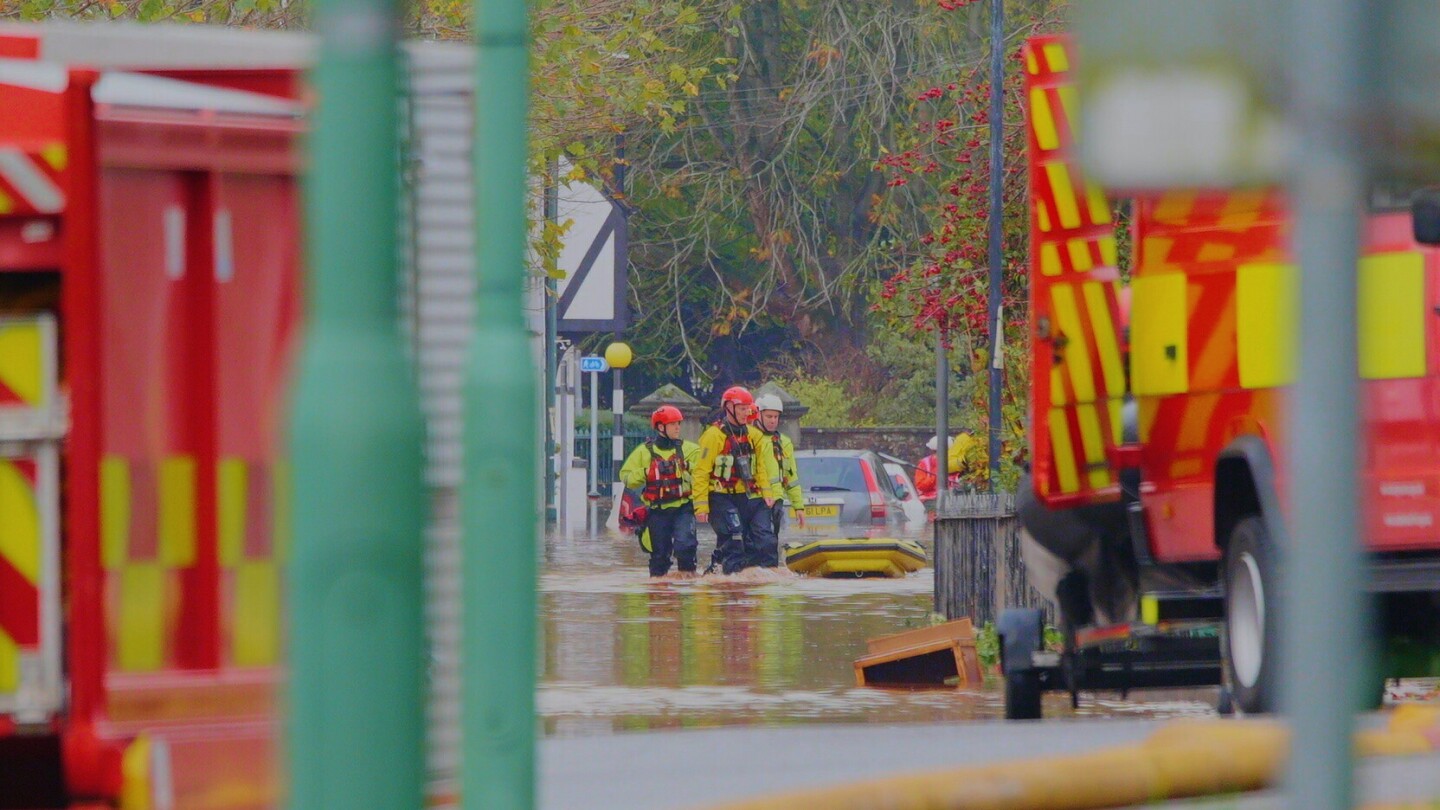
Dozens rescued or evacuated in Wales as Storm Claudia floods Monmouth
Severe flooding triggered by Storm Claudia has wreaked havoc across Wales and parts of Ireland, forcing dozens of residents to evacuate their homes. The town of Monmouth in Wales bore the brunt of the disaster as the River Monnow surged to unprecedented levels, inundating streets, submerging vehicles, and flooding businesses. Aerial footage captured the extent of the devastation, with muddy brown waters engulfing the town’s main thoroughfare.
-
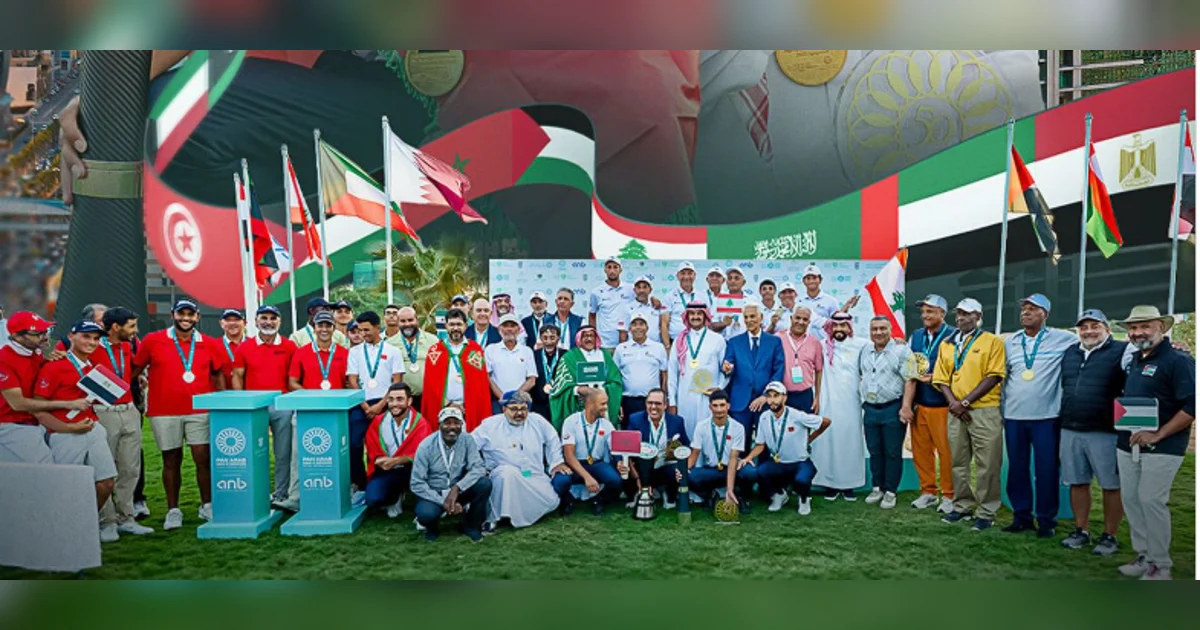
UAE claim podium finish at Pan Arab Golf Championship as Morocco lift men’s title
The UAE showcased their golfing prowess with a commendable bronze-medal finish at the 2025 Pan Arab Men’s and Senior’s Championship, held at Riyadh Golf Club in Saudi Arabia. The event, which marked the 50th anniversary of the Arab Golf Federation (AGF), saw Morocco clinch the Men’s Division title and Bahrain triumph in the Seniors category. A record-breaking 93 players from 13 nations competed in the Men’s Division, while 10 nations participated in the Seniors. The UAE’s Rayan Ahmad led his team to a standout performance, securing third place in the Men’s Team event. Morocco’s Youssef El Hali dominated the Men’s individual competition with a 16-under total of 200, narrowly edging out Egypt’s Issa Amr Abouelela, who closed with a spectacular 63. In the Seniors, Saudi Arabia’s Prince Khalid Al Faisal claimed the individual title by a single stroke over Bahrain’s Hamad Mubarak. The championship also featured the AGF’s General Assembly, where national representatives reviewed progress and elected a new Board of Directors, signaling a new era for Arab golf. Looking ahead, Ahmad is set to compete in the Faldo Junior Tour European Grand Final and the Tommy Fleetwood Pathway Series, aiming to build on his recent success.
-
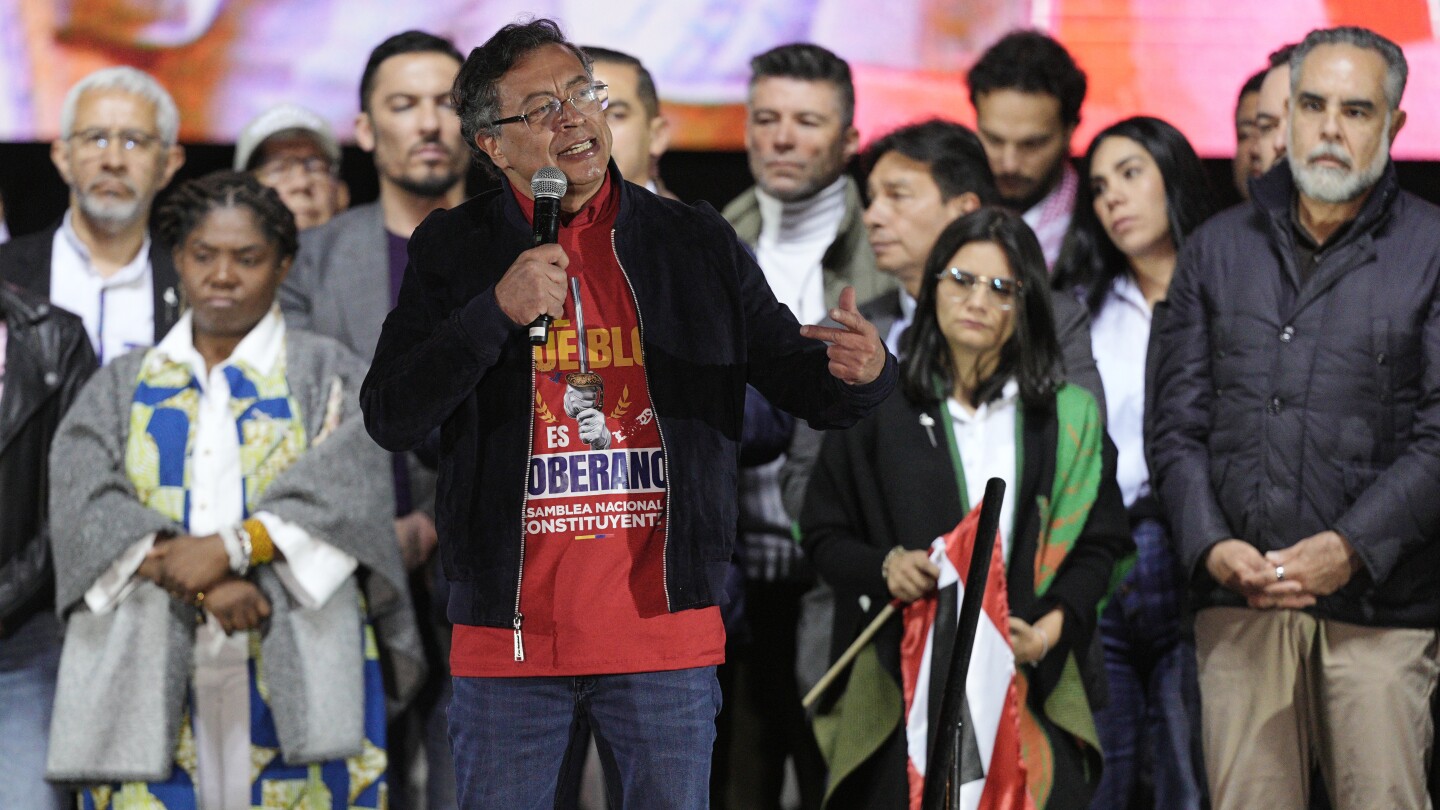
Colombian officials say 6 children were killed in an airstrike against a rebel group this week
In a tragic turn of events, Colombia’s human rights ombudswoman, Iris Marin, revealed on Saturday that six children were among those killed in a recent airstrike targeting the FARC-EMC rebel group in Guaviare province. The minors, reportedly forcibly recruited by the rebels, were allegedly used as “human shields” during the military operation. Marin urged both the Colombian government and rebel factions to adhere to international humanitarian law, emphasizing that children coerced into hostilities must be protected from military actions. The incident has reignited debates over the ethical implications of military strikes in conflict zones. Colombian Defense Minister Pedro Sanchez defended the operation, asserting that those involved in hostilities forfeit protection, regardless of age. This tragedy echoes a 2019 scandal where a former defense minister resigned after the government concealed the deaths of eight children in a similar airstrike. President Gustavo Petro, who initially suspended airstrikes to minimize civilian casualties, justified the recent operation as necessary to protect Colombian troops from an advancing rebel column. Despite his administration’s efforts to curb violence, the resumption of airstrikes underscores the ongoing struggle to control territories abandoned by the FARC following their 2016 peace agreement. Petro, a vocal critic of U.S. military actions in the Caribbean, argued that Colombia’s strikes target armed combatants posing direct threats to government forces and civilians.
-

China advises citizens to avoid Japan travel over Taiwan row; airlines offer refunds
China has issued a travel advisory urging its citizens to avoid visiting Japan, escalating tensions following controversial remarks by Japanese Prime Minister Sanae Takaichi regarding Taiwan. The diplomatic row began on November 7 when Takaichi suggested in parliament that a hypothetical attack on Taiwan could justify a military response from Japan under the principle of ‘collective self-defence.’ Taiwan, which China claims as its territory, lies just 100 kilometres from Japan’s nearest island. In response, Beijing summoned Japan’s ambassador, while Tokyo reciprocated by summoning China’s envoy over an inflammatory online post, later removed, from a Chinese diplomat. China’s embassy in Japan warned on Friday that recent provocative statements by Japanese leaders have ‘severely damaged the atmosphere for people-to-people exchanges’ and posed ‘significant risks to the personal safety and lives of Chinese citizens in Japan.’ The Ministry of Foreign Affairs and Chinese embassies in Japan have advised citizens to refrain from travelling to the country. Japan’s Chief Cabinet Secretary Minoru Kihara criticized the advisory as ‘inconsistent with the promotion of a strategic and mutually beneficial relationship.’ Meanwhile, China’s major airlines—Air China, China Southern, and China Eastern—have offered full refunds for Japan-bound flights through December 31. Takaichi, a conservative and vocal critic of China, has since tempered her rhetoric but defended her remarks as consistent with Japan’s long-standing policy. The dispute highlights the fragile relationship between the two nations, which are key trading partners but often clash over historical grievances, territorial disputes, and military concerns. The U.S. has maintained strategic ambiguity on Taiwan, while Japan’s previous leaders avoided direct commentary on the island’s defence. The situation remains tense as both sides navigate the fallout from the escalating diplomatic feud.
-
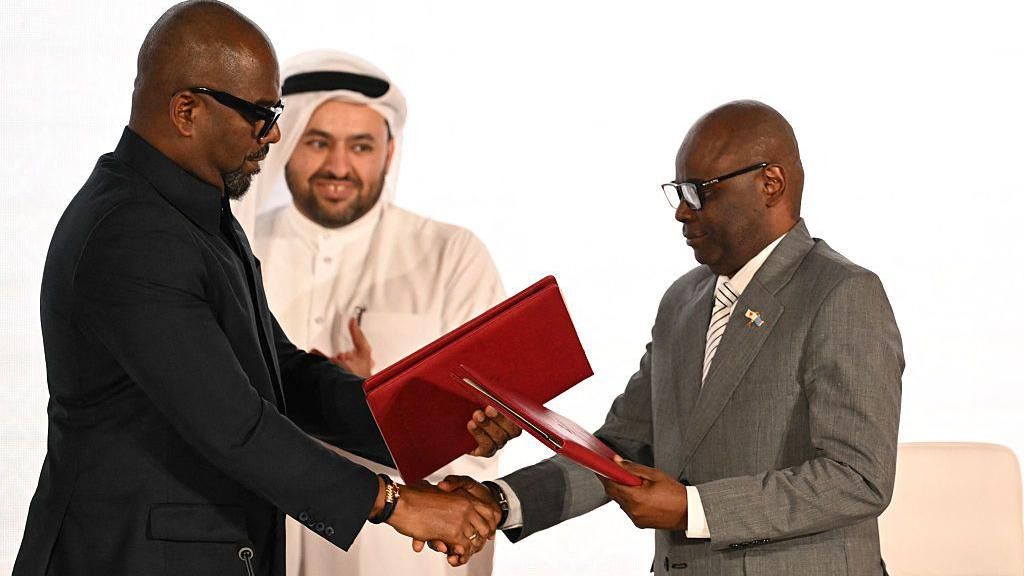
DR Congo and M23 rebels sign framework for peace in Qatar
In a significant development aimed at ending decades of conflict in the resource-rich eastern region of the Democratic Republic of Congo (DRC), the Rwandan-backed M23 rebels and the Congolese government have signed a peace framework in Doha, Qatar. The ceremony, attended by Congolese envoy Sumbu Sita Mambu and M23 secretary Benjamin Mbonimpa, marks a crucial step toward resolving one of Africa’s most protracted conflicts. Qatar, alongside the United States and the African Union, has been actively mediating the peace process. Earlier this year, the M23 captured key cities, including Goma and Bukavu, escalating tensions. The new framework, which builds on previous agreements signed in July and last month, outlines eight protocols addressing humanitarian access, the return of displaced people, and judicial protection. However, US Africa envoy Massad Boulos noted that many details remain unresolved, and progress on prisoner exchanges and ceasefire monitoring has been slower than anticipated. Kinshasa has demanded the withdrawal of Rwandan troops from its territory, while Kigali insists this can only occur once the Congo-based FDLR militia, linked to the 1994 Rwandan genocide, is disbanded. The M23, one of the largest factions in the conflict, has expressed support for the Qatar-mediated talks, emphasizing their focus on addressing the root causes of the crisis. Despite this progress, the region remains volatile, with thousands killed and hundreds of thousands displaced since January. The DRC government has reportedly sought US assistance in securing the region, offering access to critical minerals like coltan in exchange for security guarantees. Rwanda denies supporting the M23, despite substantial evidence, and claims its military presence is defensive. The peace framework represents a fragile hope for stability in a region long plagued by violence and exploitation.
-

UAE: Think diabetes is expensive? Medical bills only 5% of real cost, study shows
A groundbreaking study conducted by the University of Birmingham Dubai in collaboration with the World Health Organisation (WHO) has unveiled the staggering hidden costs of diabetes in the UAE. While medical expenses account for a mere 5.7% of the total burden, the remaining 94.3% stems from indirect losses such as reduced productivity, missed workdays, early retirement, and premature deaths. These findings highlight the silent yet profound impact of diabetes on individuals, families, and the national economy. The study, led by Dr. Khalifa Elmusharaf, associate professor and director of the Public Health Programme at the University of Birmingham Dubai, projects a steady rise in diabetes cases over the next two decades. By 2050, over 1.3 million UAE residents are expected to be living with the disease, with annual deaths potentially reaching 5,920. The economic burden of diabetes in the UAE reached $19.5 billion in 2023, with projections soaring to $30.3 billion by 2050. The study also warns that across the Middle East and North Africa (MENA), the financial toll of diabetes could escalate to $1.5 trillion by 2050, driven primarily by lost productivity rather than medical costs. Dr. Elmusharaf emphasized the urgent need for increased investment in prevention and early diagnosis to mitigate the growing human and economic costs. ‘This study sends a clear message to policymakers that diabetes is silently draining our economies,’ he stated. The research underscores the necessity for comprehensive strategies to address this escalating public health crisis.
-
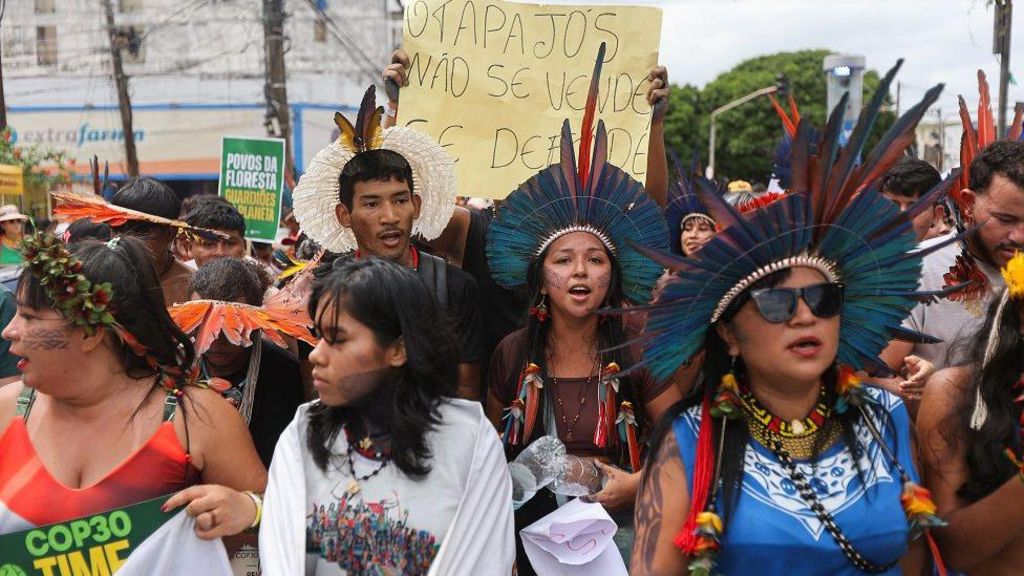
Thousands march outside COP30 summit in call for action
Thousands of climate activists descended upon the gates of the COP30 climate talks in Belém, Brazil, delivering a powerful message through music, chants, and symbolic protests. Under the scorching sun, demonstrators carried three giant coffins labeled ‘Oil,’ ‘Coal,’ and ‘Gas,’ flanked by grim reapers, symbolizing the death of fossil fuels. Indigenous groups held signs proclaiming ‘the answer is us,’ while inflatable elephants and anacondas weaved through the crowd. This marks the first time since 2021 that protesters have been permitted to demonstrate outside the UN climate talks, as the previous three summits were held in countries that restrict public protest.
Tuga Cíntia, a member of the theater group Hydra Dance from the Federal University of Pará, told the BBC, ‘We are holding a funeral for fossil fuels. Enough is enough with COP meetings and theory. It’s time for us to actually act.’ Indigenous communities, Brazilian youth groups, and international activists joined the march, amplifying calls for justice and the end of fossil fuel dependency.
Brianna Fruean, a climate activist from Samoa, emphasized the urgency of the situation: ‘Fossil fuels are still being burned. We know all too well what it’s like to live on the frontline of climate change.’ Ilan, from the NGO 350, echoed her sentiments, stating, ‘We are here after so many COPs, marching for justice, for the end of fossil fuels.’
The protest also highlighted indigenous rights, with signs demanding ‘demarcation now’ to secure legal ownership of ancestral territories. Hundreds of indigenous groups in the Amazon, recognized as vital protectors of biodiversity, participated in the march. Smaller protests occurred globally, including in the UK.
Security was tight at the COP30 venue, with riot police guarding the entrance. On Tuesday, protesters breached security lines, causing minor injuries to two staff and limited damage to the venue. Indigenous voices have been a focal point of the talks, with many groups expressing frustration that their concerns about deforestation, land protection, and resource extraction are being ignored.
Negotiations at COP30, hosted by Brazilian President Luiz Inácio Lula da Silva, aim to address climate change, but progress has been slow. Despite Brazil’s pledge to focus on the Amazon, the government recently granted permission to the state oil company to explore for oil at the mouth of the river. Additionally, a record number of fossil fuel lobbyists—1,600—are attending the summit, a 12% increase from last year.
In a notable absence, the US sent no delegation to the talks, following former President Donald Trump’s dismissal of climate change as ‘a con.’ Meanwhile, ten countries signed the Declaration on Information Integrity on Climate Change, an initiative to combat climate disinformation and promote evidence-based information. Brazil has promised the talks will deliver actionable outcomes, but with negotiations continuing into next week, the world watches to see if words will translate into meaningful action.
-
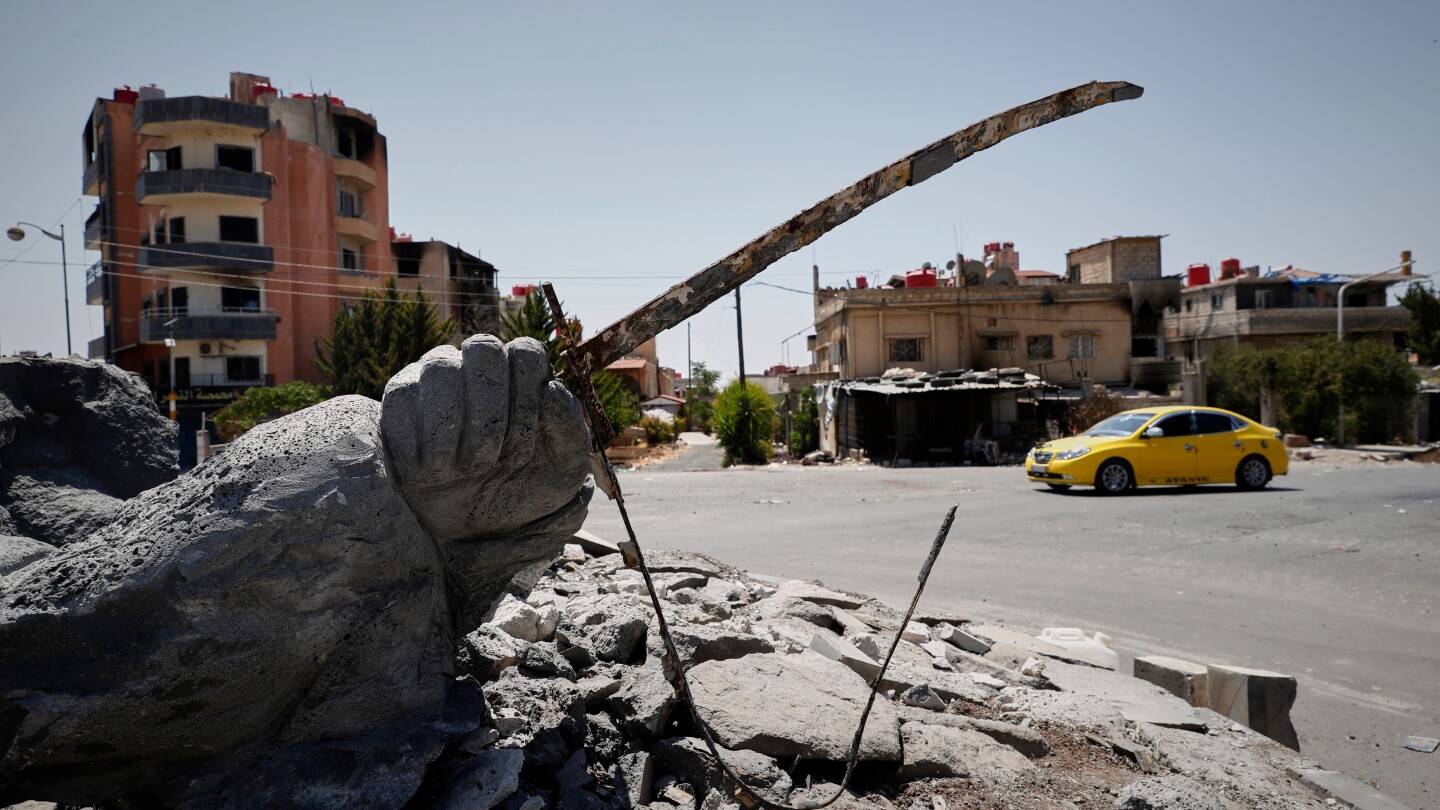
After Assad’s fall, Syrians and EU officials hold rare meeting in Damascus
In a groundbreaking event, representatives of Syria’s civil society convened in Damascus on Saturday for open discussions, facilitated by the European Union and the transitional government. This marked the first time such dialogues, previously held in Brussels, took place within Syria. The discussions addressed critical issues including sectarian tensions, ethnic divisions, and the casualties from various conflicts. The event, titled “The Day of Dialogue,” signifies a pivotal moment nearly a year after the fall of the 54-year Assad family rule, which was overthrown by insurgent groups in December. Historically, these meetings were boycotted by Bashar Assad’s government, but the current transitional authorities and civil society actively participated this time. Syrian Foreign Minister Asaad al-Shibani emphasized the significance of hosting these talks in Syria, stating, “The meeting that used to be held to talk about Syria is now being held in Syria.” He highlighted the solid partnership between Syria’s civil society and the EU. Michael Ohnmacht, the EU delegation’s chargé d’affaires, noted the participation of 500 individuals from diverse religious and ethnic backgrounds, calling it a positive step toward an inclusive future for Syria. Despite these advancements, Syria continues to grapple with sectarian violence, as seen in recent clashes in the coastal region and Sweida province, which resulted in hundreds of deaths. These incidents underscore the ongoing challenges in a 14-year conflict that has claimed half a million lives. Social Affairs Minister Hind Kabawat stressed that the dialogue marks the beginning of change and rebuilding, emphasizing the importance of partnership between the state and civil society. During sessions on transitional justice and the fate of the missing, Syrians demanded answers on unresolved issues, including the disappearance of over 130,000 people under Assad’s rule. Ethnic minorities, such as Kurds, shared experiences of decades-long state discrimination, while others highlighted violence against women from minority sects. Mazen Darwish, a prominent Syrian activist, acknowledged the end of Assad’s rule but cautioned against assuming a smooth future, urging Syrians to seize the current opportunity for change.