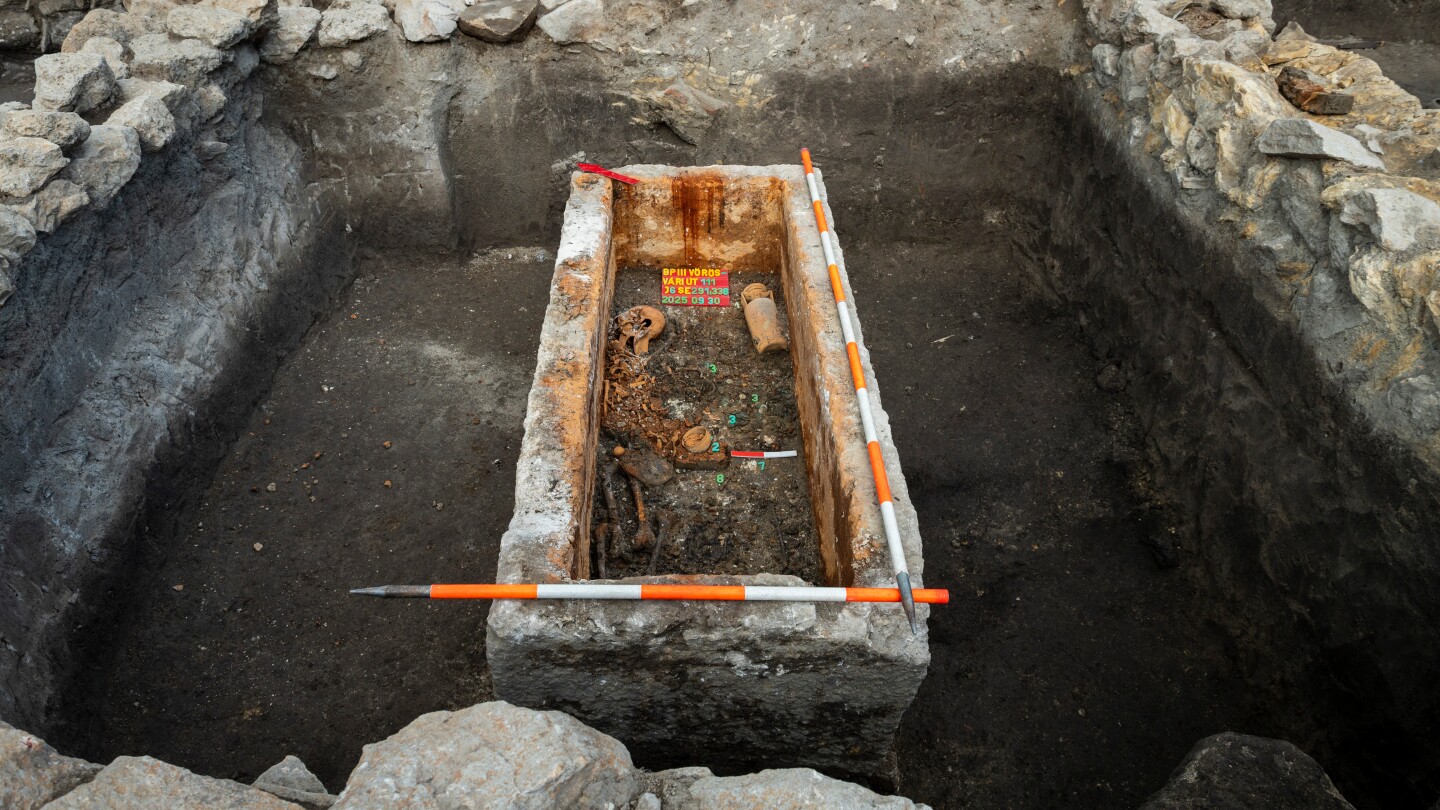
A remarkably well-preserved Roman sarcophagus, dating back approximately 1,700 years, has been discovered in Budapest, Hungary, shedding light on the life of a young woman and the Roman era she lived in. The limestone coffin was unearthed during a large-scale excavation in Óbuda, a northern district of Budapest that was once part of Aquincum, a thriving Roman settlement on the Danube frontier. The sarcophagus, found with its stone lid still intact and sealed with metal clamps and molten lead, contained a complete skeleton surrounded by dozens of artifacts, offering a rare glimpse into ancient Roman burial practices. Gabriella Fényes, the lead archaeologist of the excavation, emphasized the uniqueness of the find, stating that the sarcophagus was hermetically sealed and undisturbed, making it an exceptional discovery. The coffin was located among the ruins of abandoned houses in an area of Aquincum that was repurposed as a burial ground in the 3rd century. Nearby, researchers also uncovered a Roman aqueduct and eight simpler graves, though none matched the richness or pristine condition of the sealed tomb. The sarcophagus contained an array of objects, including two intact glass vessels, bronze figures, 140 coins, a bone hair pin, a piece of amber jewelry, and traces of gold-threaded fabric, all of which suggest the grave belonged to a young woman of high social status. Fényes noted that these items were likely given to the deceased by her relatives for her eternal journey, reflecting the care and love they had for her. The discovery is particularly significant as it provides insights into the Roman province of Pannonia, which encompassed much of modern-day Hungary. Anthropologists will now examine the remains to learn more about the woman’s age, health, and origins. Gergely Kostyál, a Roman-period specialist and coleader of the project, highlighted the rarity of finding an untouched sarcophagus from the 4th century, as it was common practice to reuse earlier sarcophagi. Excavators also removed a layer of mud from inside the coffin, which Fényes hopes may contain additional treasures, such as jewelry. For Fényes, the discovery is not only scientifically valuable but also emotionally resonant, offering a poignant glimpse into the devotion and love of an ancient people.
作者: admin
-
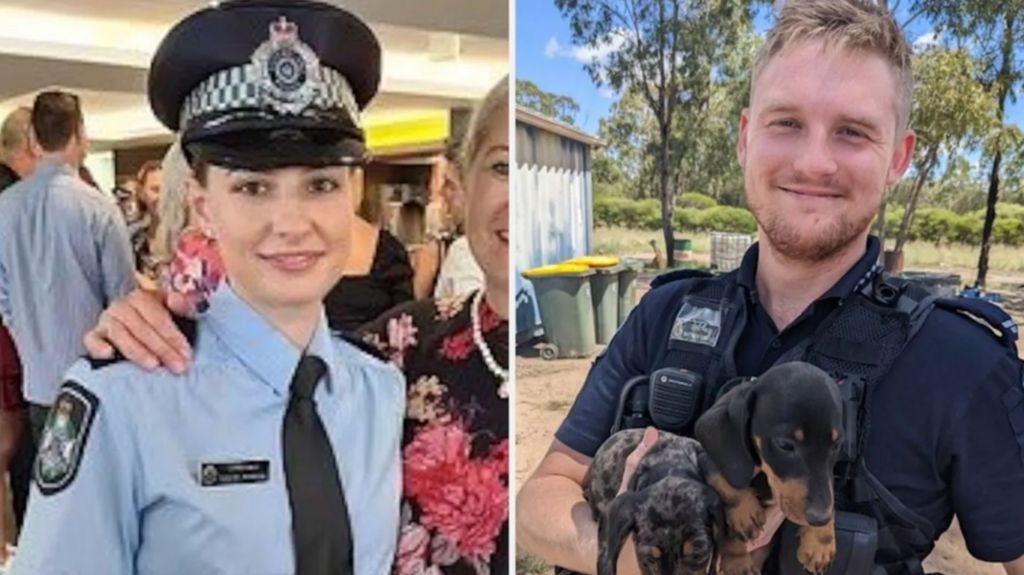
Murder of Australian police not an act of religious terrorism, coroner finds
In a tragic incident that shook rural Queensland in December 2022, police constables Matthew Arnold and Rachel McCrow were ambushed and killed during a routine property visit. The attack, carried out by Nathaniel, Gareth, and Stacey Train, initially sparked fears of a religious terror attack. However, Queensland State Coroner Terry Ryan has now clarified that the ambush was not an act of terrorism, despite the perpetrators’ extremist beliefs and conspiracy-driven motives. The coroner’s findings, released on Friday, shed light on the events leading to the deadly confrontation. The Trains, described as religious fanatics and conspiracy theorists, had fortified their property and prepared for a lethal encounter, viewing any police intervention as an ‘evil advance.’ The attack unfolded when Arnold, McCrow, and two other officers arrived at the Wieambilla property, approximately 270km west of Brisbane, to investigate a missing person report. Upon approaching the house, the officers were met with a barrage of gunfire. Arnold and McCrow were fatally shot, while a third officer sustained a leg injury. A neighbor, Alan Dare, who arrived at the scene, was also killed. The coroner acknowledged that the responding officers were ill-equipped to handle the situation, emphasizing the Trains’ meticulous preparation for violence. The inquest revealed that Gareth Train’s anti-government and conspiracy theories had intensified over the years, particularly during the COVID-19 pandemic, leading to his increasing isolation and radicalization. The coroner also criticized the failure of New South Wales police to share critical information that could have alerted Queensland authorities to the potential danger. In his recommendations, Ryan called for enhanced police safety measures, including the use of drones for risk assessments in remote areas. The incident has reignited debates over gun control in Australia, with experts warning of the erosion of strict regulations introduced after the 1996 Port Arthur massacre.
-

Men posing as India’s central bank officials pull off $800,000 heist
In a daring daylight robbery, armed men posing as officials from India’s central bank, the Reserve Bank of India, intercepted a cash-transport van in the bustling city of Bengaluru, Karnataka. The incident, which occurred on Wednesday afternoon, saw six men in an SUV stop the van on a busy road as it was transferring 70 million rupees ($800,000; £600,000) between bank branches. The van was carrying a driver, a cash custodian, and two armed security guards. The robbers, claiming to be RBI officials, demanded to verify the transport documents. They instructed the custodian and guards to leave their weapons in the van and enter the SUV, while the driver was told to continue driving with the cash. A few kilometers later, the gang forced the employees out of the SUV, returned to the van, and transferred the cash at gunpoint before fleeing the scene. The area had minimal CCTV coverage, complicating the investigation. Police are probing whether the gang used multiple vehicles and if the company employees were complicit. The SUV used in the heist had a fake number plate and a ‘Government of India’ sticker. Karnataka Chief Minister Siddaramaiah confirmed that the SUV has been recovered, but Home Minister G Parameshwara noted that the suspects likely switched vehicles to escape. Authorities remain confident in solving the case, drawing parallels to a recent high-profile gold theft in Vijayapura district, where 39kg of stolen gold was recovered and 15 individuals were arrested.
-

National games viewed as window to experience modern China
The 15th National Games, jointly hosted by Guangdong, Hong Kong, and Macao, have become a platform not only for athletic competition but also for showcasing China’s technological innovation and cultural integration. Held in Guangzhou and Shanwei, the event has drawn attention from cross-boundary visitors who were particularly impressed by the seamless integration of technology into everyday life.
Kinki Chan Tong-ieng, a Macao resident, visited Shanwei to support her son, Chan Man-hin, who was representing Macao in the sailing regatta. She was struck by the efficiency of facial recognition technology used for spectator check-ins and the convenience of mobile apps for real-time competition updates. ‘The process was smooth, secure, and incredibly efficient,’ she remarked.
Chan also highlighted the widespread use of technology on the mainland, especially in transportation and payments. ‘We used Didi for ride-hailing, which was transparent in pricing and quick to respond,’ she said, contrasting it with the limited availability of such services in Macao.
For Chan Man-hin, the games were more than just a competition; they were an opportunity to witness China’s rapid development firsthand. ‘I had the chance to interact with athletes from the mainland and Hong Kong, and their advice was invaluable,’ he shared. Despite the challenging sailing conditions, with waves reaching 2 to 3 meters, Chan emphasized the camaraderie among competitors and encouraged fellow Macao residents to experience such events.
The National Games have thus served as a window into modern China, blending sports, technology, and cultural exchange, leaving a lasting impression on participants and spectators alike.
-

Russian envoy Kirill Dmitriev: Putin propagandist or key to peace with Ukraine?
Kirill Dmitriev, a prominent Russian diplomat and head of the Russian Direct Investment Fund (RDIF), has emerged as a key figure in Russia’s efforts to end its diplomatic isolation in the West. At 50, Dmitriev stands out among Russian officials for his deep understanding of the United States, having studied and worked there for years. His unique blend of diplomatic acumen and commercial expertise has made him a pivotal player in U.S.-Russia relations, particularly during the Trump administration.
-
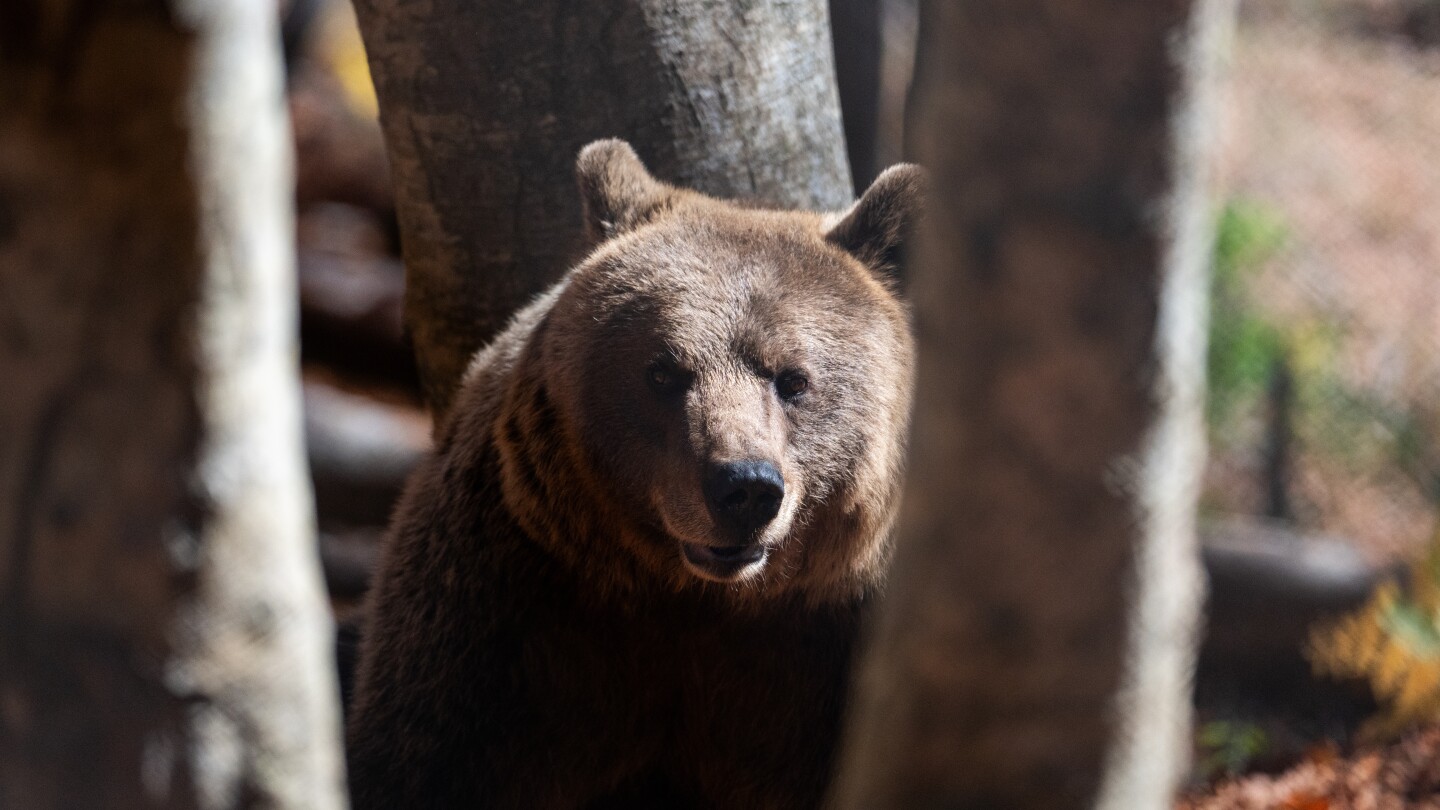
Bears in the backyard, wolves at the door: Greek villages have a growing predator problem
In the rural village of Levea, Greece, farmer Anastasios Kasparidis was met with a grim scene: three of his sheep lay dead, unmistakably mauled by a bear. The large paw prints in the soil confirmed the predator’s presence, a once-rare but now increasingly common occurrence in northwestern Greece. Kasparidis, who also reported losses of chickens and pigs among neighboring farmers, has since moved his remaining flock to a safer pen near his home. “The bears would eat them all,” he lamented. This incident underscores a growing tension in the region, where the resurgence of protected species like brown bears and wolves, celebrated by environmentalists, has sparked fears among rural residents for their livelihoods and safety. Brown bears, Greece’s largest predator, have seen their population quadruple since the 1990s, with an estimated 870 now roaming northern Greece, according to the environmental organization Arcturos. Wolves, too, have expanded their range, now found as far south as Athens and the Peloponnese. The recovery of these species has been bolstered by the increasing population of wild boars, whose numbers have surged due to reduced hunting, milder winters, and cross-breeding with domestic pigs. However, this wildlife rebound has led to more frequent human encounters, often resulting in fear and conflict. In Levea, residents report regular bear sightings, while wild boars frequently roam through the village. Similar stories emerge from nearby Valtonera, where community president Konstantinos Nikolaidis noted that wild animals now enter the village, making nighttime walks unsafe. The situation has prompted calls for extended hunting seasons and reduced protections for wolves, a move recently supported by EU lawmakers. Experts, however, caution against simplistic solutions. Panos Stefanou of Arcturos emphasized that habitat loss, food scarcity, and human depopulation in rural areas are key factors driving wildlife into human spaces. Measures like proper waste disposal, using deterrent lights, and avoiding feeding strays are recommended to mitigate conflicts. “Killing the animals is not what will solve the problem,” Stefanou stressed, advocating for a balanced approach to coexistence.
-
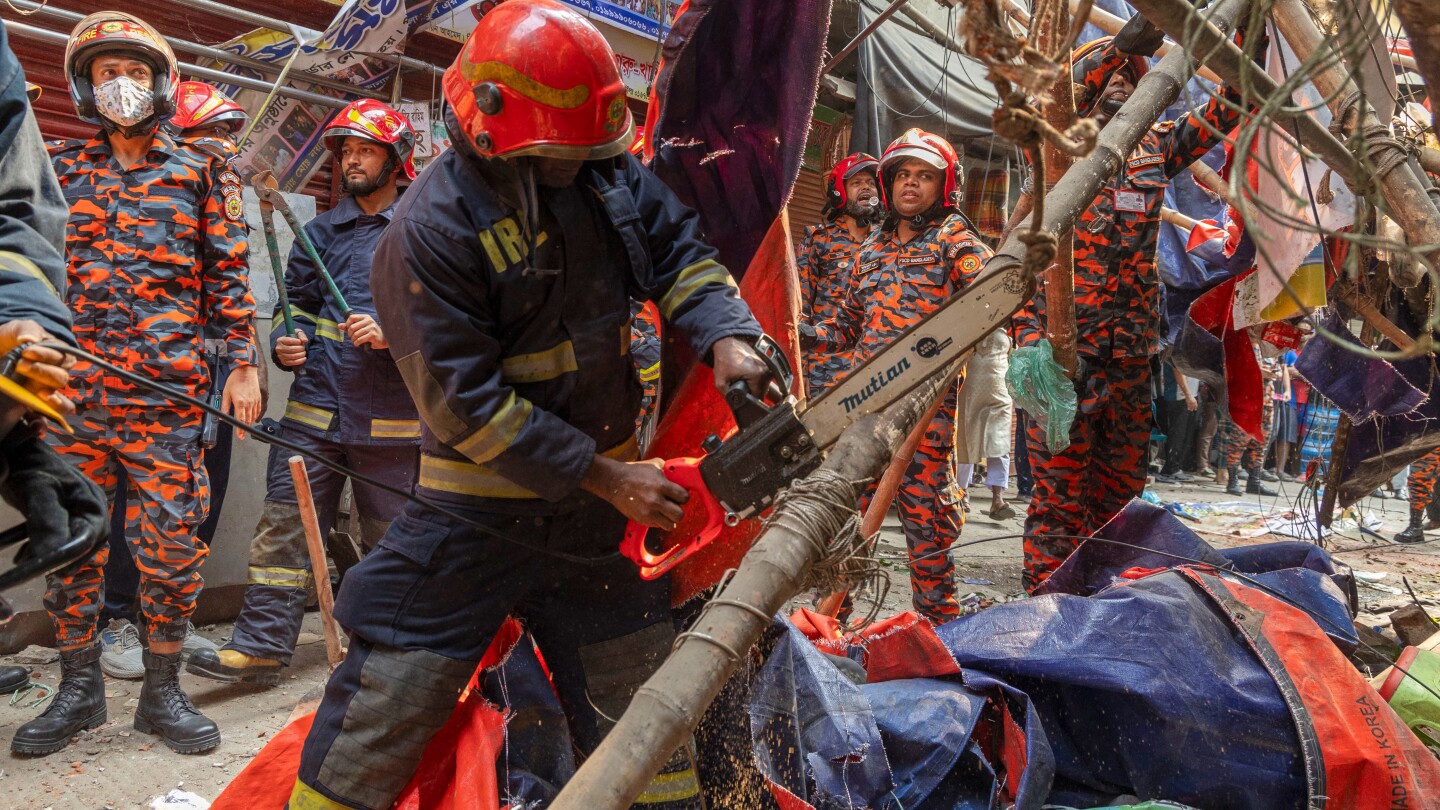
A 5.5 magnitude earthquake in central Bangladesh kills at least 6 people
A moderate 5.5-magnitude earthquake rattled central Bangladesh on Friday, resulting in the tragic loss of at least six lives and injuring dozens more, according to local authorities. The tremor, which occurred at 10:38 a.m., was centered in the Ghorashal area of Narsingdi district, approximately 25 kilometers (16 miles) from the capital city of Dhaka. The U.S. Geological Survey (USGS) reported the quake’s depth at 10 kilometers (6 miles). In Dhaka, buildings swayed violently, prompting terrified residents to flee into the streets for safety. DBC Television, based in Dhaka, detailed that the fatalities included three individuals who perished due to the collapse of a building roof and a wall, and three pedestrians who were struck by falling building railings. While northern and southeastern Bangladesh are recognized as seismically active zones due to the tectonic interactions between the Indian and Eurasian plates, the central region typically experiences fewer such events. This rare quake has raised concerns about the region’s preparedness for seismic activity.
-

Ten photos from across China: Nov 14 – 20
The Shenzhou XXI mission marked another milestone in China’s space exploration efforts as its return capsule safely touched down at the Dongfeng landing site in Inner Mongolia on November 14, 2025. The capsule carried astronauts Wang Jie, Chen Dong, and Chen Zhongrui, who had completed their mission in space. This event was captured in a series of ten photographs showcasing significant moments from across China during the week of November 14 to 20. The successful landing underscores China’s growing capabilities in space technology and its commitment to advancing human spaceflight. The images, released by Xinhua, highlight not only the return of the astronauts but also other notable events and scenes from various regions of the country, reflecting the nation’s progress and diversity.
-
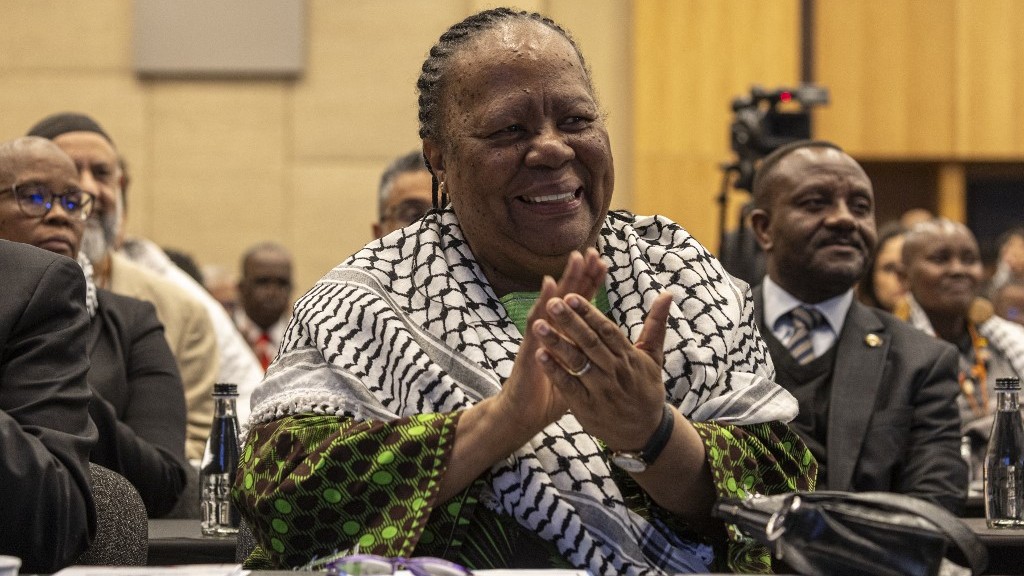
US revokes visa of former South African minister who initiated genocide case against Israel
The United States has revoked the visa of Naledi Pandor, South Africa’s former Minister of International Relations, in a move widely perceived as retaliation for Pretoria’s decision to bring Israel before the International Court of Justice (ICJ) on charges of genocide. Pandor, who led South Africa’s Department of International Relations and Cooperation from 2019 to 2024, confirmed the revocation on Thursday, just days before Johannesburg hosts the G20 Leaders’ Summit. The US decision to send a low-level delegation to the summit, rather than Secretary of State Marco Rubio, has already strained relations. Pandor, a key figure in South Africa’s ICJ case against Israel, received an email from the US Consulate stating her visa was canceled immediately. She expressed confusion over the decision but suggested it was linked to her advocacy for Palestine. ‘I understand that it has happened to other South Africans, too,’ she told Middle East Eye. The visa revocation follows years of diplomatic, financial, and political pressure from both the Biden and Trump administrations. In January 2024, the Biden administration dismissed South Africa’s ICJ case as ‘meritless,’ while the Trump administration suspended aid and expelled South Africa’s ambassador to the US. Pandor, a vocal critic of US and Israeli policies, has faced accusations of being a ‘lackey of Iran’ and has been the target of character assassination in conservative media. Despite the backlash, she remains steadfast in her support for Palestinian self-determination. ‘These are issues of principle, not convenience,’ she asserted. The Heritage Foundation, a right-wing US think tank, has called for cutting aid to South Africa, arguing that Pretoria’s foreign policy undermines US interests. Meanwhile, 160 lawyers accused South Africa of taking the ICJ case in exchange for bribes, a claim dismissed by Pandor and her supporters. The US State Department has yet to comment on the visa revocation.
-

‘Seeing friends drink shots brings back sister’s methanol death’
The untimely death of Simone White, a 28-year-old British traveler, has cast a somber shadow over her family and the global backpacking community. Simone, a trainee lawyer with a passion for exploring the world, tragically lost her life after consuming a methanol-laced shot at a hostel in Vang Vieng, Laos, a popular destination for young adventurers. Her brother, Zak White, shared the heartbreaking details of her final journey with BBC Newsbeat. Simone had embarked on what was meant to be a life-changing trip, reuniting with her friend Bethany Clarke after months apart. However, the joy of their reunion turned to tragedy when both fell ill after consuming free drinks at the Nana Backpacker Hostel. Simone was one of six tourists who succumbed to methanol poisoning, a toxic substance often illegally mixed with alcohol to reduce costs. Despite being placed on life support, Simone could not be saved. Zak recalls the shock and disbelief that followed, as his family struggled to comprehend the loss. The incident has left a lasting impact on Zak, who now experiences anxiety and PTSD in social settings involving alcohol. The White family’s quest for justice has been met with frustration, as investigations in Laos have yielded no clear accountability. Charges have been proposed against 13 individuals for food safety violations, but these do not directly address the fatal poisoning. Reports suggest the hostel may reopen under a new name, a prospect that deeply concerns Zak, who fears for the safety of future travelers. The tragedy has also prompted criticism of the UK Foreign Office’s efforts to raise awareness about methanol poisoning. While the department has identified 27 high-risk countries and collaborated with social media influencers, Zak believes more decisive action is needed. Simone’s family continues to mourn her loss, remembering her as a kind, caring, and principled individual whose absence leaves a profound void in their lives.