作者: admin

  • Germany suspects Russia is behind Signal phishing that targeted top officials

    Germany suspects Russia is behind Signal phishing that targeted top officials

    BERLIN — Tensions between Germany and Russia have taken a new turn following revelations that German federal authorities have identified Russia as the suspected perpetrator behind a coordinated phishing campaign that compromised hundreds of Signal accounts belonging to high-profile German figures, including senior government ministers, military personnel, and leading journalists. A German government spokesperson confirmed the official suspicion in statements to reporters, marking a rare public attribution of state-backed cyber malicious activity ahead of a formal legal investigation conclusion.

    The German Federal Public Prosecutor General’s office confirmed Saturday that it launched an initial preliminary probe into the cyber intrusions targeting private Signal accounts back in mid-February 2026. A spokesperson for the prosecutor’s office noted that the investigation is centered on initial allegations of espionage, though the office declined to publicly name the suspected state actor at this stage of the inquiry, and the German government has not yet issued a formal formal attribution of the attacks to Russia.

    Since Russia launched its full-scale invasion of Ukraine in February 2022, Germany and other European Union member states have faced a sharp rise in state-linked cyberattacks and other disruptive malicious activity attributed to Russia by Western security officials, creating a persistent threat to European political and governmental infrastructure.

    According to reporting from German weekly magazine Der Spiegel, which cited unnamed government sources, the campaign compromised roughly 300 Signal accounts held by individuals active in German political circles. No official list of affected individuals or confirmation of victim identities has been released to the public to date.

    Der Spiegel detailed the modus operandi of the phishing operation: targeted users received deceptive messages purporting to originate from Signal’s official security chatbot. The messages falsely claimed the user’s account had shown signs of suspicious activity, and urged immediate action to secure the account. Users who followed the embedded instructions — which included entering their account PIN and scanning a fraudulent QR code — unknowingly granted hackers access to link their accounts to an external device controlled by the threat actors.

    Once access was obtained, attackers were able to access the full archive of historical chat messages, monitor real-time ongoing conversations, and view stored user data including contact address books linked to the compromised accounts.

    As early as February 2026, Germany’s domestic intelligence agency, the Bundesamt für Verfassungsschutz (BfV), and the federal cybersecurity authority, the Bundesamt für Sicherheit in der Informationstechnik (BSI), issued a public warning about this specific style of phishing campaign, stating that the activity was “likely being carried out by a state-controlled cyber actor.” German news agency DPA also confirmed that German security officials personally contacted at-risk politicians to alert them that their accounts may have already been compromised by the operation.

    The German findings align with earlier warnings from neighboring European security services. In March 2026, Dutch intelligence and security agencies issued a public alert confirming that Russian state hackers were running a large-scale global phishing campaign targeting Signal and WhatsApp accounts belonging to international dignitaries, military personnel, and civil servants. Dutch authorities noted that domestic government employees were among the confirmed targets, and that journalists were also considered potential victims of the campaign.

    The Associated Press requested comment from the Russian embassy in Berlin regarding the allegations, but received no response. The Russian government has repeatedly and consistently denied accusations that it conducts state-sponsored espionage operations against foreign countries and their political leaders.

    In a separate development coinciding with the revelations, German Ambassador to Russia Alexander Graf Lambsdorff was summoned to meet with Russia’s Foreign Ministry on Monday morning, in connection with Russian accusations of improper contacts between German politicians and terrorist organizations. DPA reported that there is no established link between the summons and the newly publicized phishing attack revelations.

    Speaking ahead of the meeting, Lambsdorff stated, “I will, of course, comply with the summons. I consider it unlikely that the Russian side will be able to substantiate its accusations.” Relations between Germany and Russia have remained consistently strained for years, with tensions escalating dramatically following the 2022 full-scale invasion of Ukraine.

    This report was contributed by Ciobanu, reporting from Warsaw, Poland.
  • Sri Lankan monks arrested after 110kg of cannabis discovered in their luggage

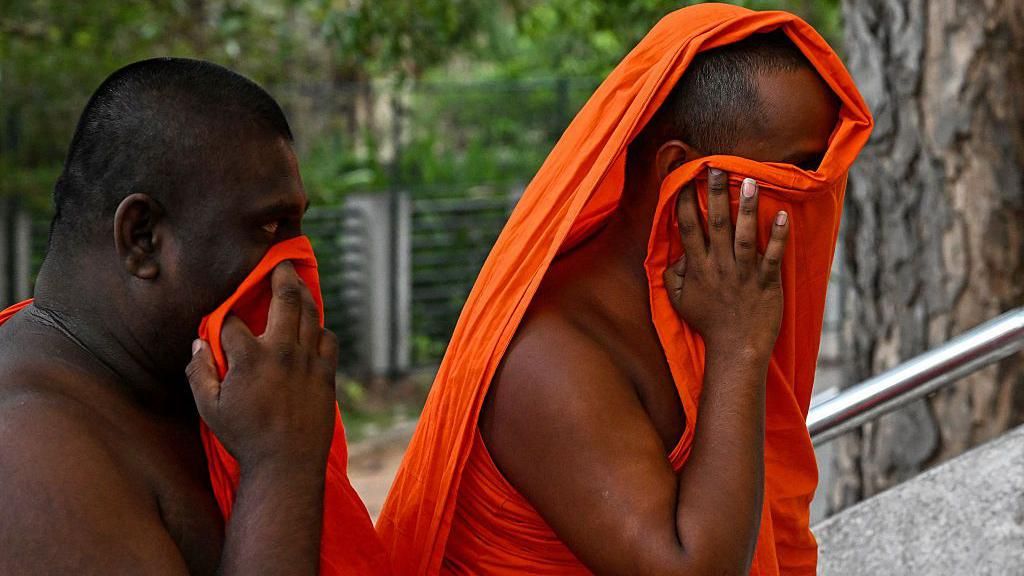
    Sri Lankan monks arrested after 110kg of cannabis discovered in their luggage

    In a landmark drug bust that has sent shockwaves through Sri Lanka’s Buddhist community, 22 Buddhist monks, most of whom are student monks from temples across the country, have been taken into custody at Colombo’s main international airport after customs officials uncovered 110 kilograms of high-potency cannabis hidden in their checked luggage.

    The detention unfolded on Saturday, when the group arrived back in Sri Lanka following an all-expenses-paid four-day recreational trip to Thailand, funded by an as-yet-unidentified sponsor. A subsequent search by customs teams revealed that each monk’s suitcase contained around 5 kilograms of Kush, a particularly strong strain of cannabis, cleverly concealed behind custom-built false walls inside the luggage compartments. The contraband was tucked between seemingly innocuous items including school supplies and confectionery, according to local law enforcement.

    Investigators have since taken a 23rd monk into custody in a Colombo suburb. Authorities say this 23rd suspect, who did not travel on the trip to Thailand, was the mastermind behind the smuggling operation. Per statements given to BBC Sinhala by the acting police spokesperson, the organizer told the participating monks that the hidden packages were charitable donations, and instructed them that a pre-arranged van would meet them upon arrival in Colombo to collect the parcels.

    Digital evidence recovered from the arrested monks’ mobile phones included photos and video footage showing the group enjoying their Thailand getaway in casual clothing, a find that has drawn additional public attention to the case. On Sunday, all 22 arrested monks appeared before the Colombo Magistrate’s Court, where they were remanded in official custody for a seven-day period to allow for extended investigative questioning.

    Law enforcement officials have noted an important caveat to the case: they currently suspect that most of the student monks may have been unaware that they were transporting illegal narcotics, having been unwitting pawns in the organized smuggling plot. Sri Lankan narcotics authorities confirm this is the first recorded incident where a large group of Buddhist monks have been arrested on suspicion of trafficking illegal drugs through the country’s main international airport, marking an unprecedented development for the island nation’s anti-drug enforcement efforts.

  • Russian fighters confirm withdrawal from northern Mali city after separatist attacks

    Russian fighters confirm withdrawal from northern Mali city after separatist attacks

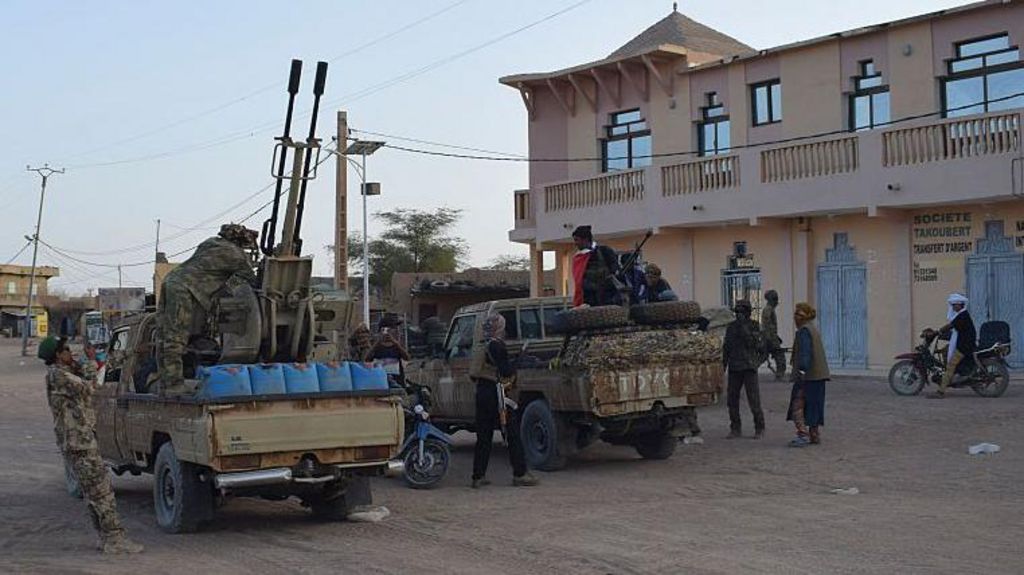
    A wave of coordinated cross-national attacks carried out by separatist fighters and Islamist militants over a single weekend in Mali has led to a landmark development: Russia’s Africa Corps has formally confirmed its full withdrawal alongside Malian government forces from the strategic northern city of Kidal.

    In a sequence of public posts shared across social media platforms, the Russia-aligned Africa Corps confirmed that both its own personnel and local Malian troops had exited the Kidal locality. The Azawad Liberation Front (FLA), the Tuareg separatist group leading the push for an independent northern state, announced Sunday that the Russian force had agreed to a permanent pullout. The separatist movement subsequently claimed full control of Kidal, releasing a statement declaring the city “now free” from government and allied control.

    Mali has grappled with decade-long instability, pitting government and allied forces against two overlapping threats: northern separatist movements led primarily by ethnic Tuareg factions, and violent insurgent groups affiliated with al-Qaeda and the Islamic State. This most recent outbreak of violence began Saturday, when reports of explosions and sustained automatic gunfire spread across multiple population centers nationwide, including the capital Bamako.

    Attacks were also documented in central Malian cities of Sevare and Mopti, as well as the northern Saharan fringe cities of Gao and Kidal. In Kati, a garrison town just outside the capital that hosts one of Mali’s largest military bases, Malian Defense Minister Sadio Camara was killed in a suicide truck bombing targeting his official residence. Security analysts confirm the FLA’s assault focused primarily on regional urban centers in the north, while Jama’at Nusrat al-Islam wal-Muslimin (JNIM), a jihadist insurgent group, carried out parallel strikes across multiple regions to stretch government defenses thin.

    Sporadic fighting continued in Kidal through Sunday, but shortly after clashes tapered off, FLA spokesman Mohamed Elmaouloud Ramadane announced the group had finalized a deal with the Russian Africa Corps to facilitate the force’s safe exit from the city. Ramadane had previously told the BBC the FLA maintained a presence in Kidal’s outer neighborhoods because Malian army units and Russian mercenary personnel remained deployed in the city center.

    Kidal holds deep symbolic importance for the Tuareg separatist movement: it served as the movement’s unofficial headquarters for more than a decade before Malian government troops, backed by Russian mercenary fighters, retook control of the city in late 2023. The separatist group now holds full administrative and military control of the urban center following the withdrawal.

    While confirming its exit from Kidal in a Monday post on the social platform X, the Africa Corps emphasized that counter-insurgency operations would continue across other parts of Mali, though it declined to provide further details on upcoming deployments or operational goals. The force added that all wounded personnel and heavy military equipment had been fully evacuated from Kidal ahead of the pullout.

    “The situation in the Republic of Mali remains complex,” the Africa Corps wrote in its statement, noting that multiple civilians had also been wounded in the fighting and were transferred to the corps’ medical facilities for treatment.

    The majority of the Africa Corps’ serving fighters are veterans of the Wagner Group, the infamous Russian private military firm that built a widespread presence across Africa over the past decade, contracted by local friendly governments to help suppress insurgent movements and stabilize central control. Following the 2023 death of Wagner leader Yevgeni Prigozhin in a plane crash, most of the group’s African operations were absorbed and reorganized by Russia’s Ministry of Defense, which formed the newly branded Africa Corps to continue the mission.

    Today, the Africa Corps is overseen by Russian Deputy Defense Minister Yunus-Bek Yevkurov, with day-to-day operations led by Maj-Gen Andrey Averyanov, a senior core leader of Russia’s GRU military intelligence directorate. Russia’s military support to friendly African governments has consistently been rewarded with access to the continent’s lucrative critical natural resources, including gold, diamonds, and uranium, a key input for Russian domestic nuclear energy production.

    Just like its predecessor the Wagner Group, the Africa Corps has faced repeated international accusations of systematic human rights abuses and mass atrocities against civilian populations across its areas of operation. Reported salaries for Africa Corps fighters deployed in Mali start at a minimum equivalent of $3,000 (£2,200) per month, a rate far higher than most local or even regular Russian military salaries.

    This report included additional reporting from Vitaly Shevchenko of BBC Monitoring, with original production by BBC Africa.

  • Performer describes locking eyes with Trump as they ducked for cover during shooting

    Performer describes locking eyes with Trump as they ducked for cover during shooting

    The 2026 White House Correspondents’ Association annual dinner, a staple gathering for Washington’s political and media elite held at the Washington Hilton hotel, descended into chaos Saturday night when gunshots rang out, leaving attendees and the public shaken by a brazen attempted attack targeting former U.S. President Donald Trump. In the aftermath of the incident, the performer on stage at the time of the shooting has shared a gripping first-hand account of the split-second terror that unfolded just feet from the former president.

    Oz Pearlman, a well-known mentalist who was mid-act when the shots erupted, told the BBC that he was interacting directly with Trump, First Lady Melania Trump, and White House Press Secretary Karoline Leavitt when the attack began. At that exact moment, Pearlman was in the middle of a signature mind-reading trick: he had just written his guess for the name of Leavitt’s upcoming baby on a slip of paper, preparing to reveal it to the audience. In an instant, the festive atmosphere shattered at the sound of gunfire.

    “I went down very quickly. And then the Secret Service brought President Trump down: I would say very effectively – but quite violently,” Pearlman recalled. The performer, who ended up mere centimeters from Trump on the venue floor, described the surreal, terrifying moment the pair locked eyes as shots continued to ring out. “We were about half-a-metre apart… face-to-face looking at each other on the ground, when I’m hearing shots and thinking to myself, ‘We’re about to die,’” he said.

    Pearlman added that the initial rush of Secret Service agents initially led him to believe an explosive device was set to detonate, rather than an active shooter situation. “It didn’t feel like they were looking for a shooter. It felt like they were looking to stop something from happening,” he explained. Within just two seconds of taking cover, agents evacuated Trump from the venue, while Pearlman and other nearby attendees crawled to safety on their own.

    In a post-incident interview with CBS’s *60 Minutes* Sunday, Trump downplayed the danger he faced, saying he “wasn’t worried” during the ordeal. “I understand life. We live in a crazy world,” the former president commented. He confirmed that both he and the First Lady followed security instructions to take cover on the floor before being evacuated.

    Law enforcement officials have identified the suspect as 31-year-old Cole Tomas Allen, a California resident who was arrested immediately after the shooting. According to two sources familiar with the investigation who spoke to CBS, the BBC’s U.S. news partner, Allen told authorities after his detention that he specifically intended to target current and former officials from the Trump administration. The shooting exchange occurred on a floor directly above the dinner ballroom, where Trump and hundreds of other attendees were gathered. Allen is scheduled to be arraigned at a Washington, D.C. court hearing Monday, where formal charges will be filed against him.

  • How special Sawe broke iconic sub-two-hour barrier

    How special Sawe broke iconic sub-two-hour barrier

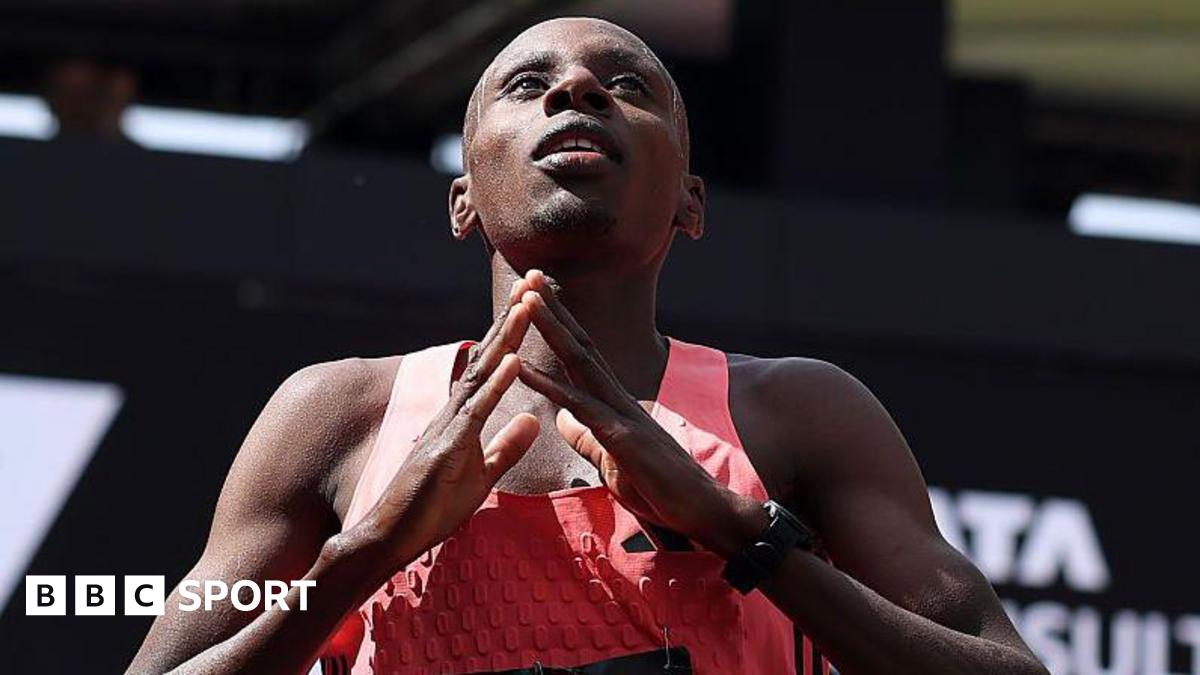
    On a crisp, ideal April Sunday morning in London, long-distance running entered a new era. Thirty-year-old Kenyan athlete Sabastian Sawe crossed the finish line of the London Marathon in 1 hour 59 minutes 30 seconds, becoming the first runner in history to complete a World Athletics-sanctioned competitive marathon in under two hours, shattering the previous world record by an astonishing 65 seconds. This milestone, long dismissed by many as an impossible barrier that would not fall in their lifetime, redefines the limits of human endurance. Even Sawe himself said the result exceeded his own expectations, noting that his primary goal entering the race was defending his 2025 title, not chasing a world record. “It was not in my mind. I was well prepared for this year’s London Marathon, but what came surprised me because I was not thinking to run a world record,” he told BBC Sport 24 hours after his historic run. When asked about his performance, Sawe added that even faster times are within reach: “It was possible to run faster yesterday. Even 1:58 is possible.”

    Sawe’s path to this iconic victory was far from straightforward. Born in Kenya’s Rift Valley to a maize-farming father, he was raised mostly by his grandmother and moved to Iten, Kenya’s famous running hub, in 2017 to pursue his athletic dreams. For years, his progress stalled, and the coronavirus pandemic left him struggling to make ends meet as races were postponed and injuries interrupted his training. A turning point came when his uncle, Ugandan 800m record holder Abraham Chepkirwok, introduced him to esteemed Italian coach Claudio Berardelli. Berardelli immediately recognized Sawe’s unique marathon potential and shifted his training away from the track, crediting the athlete’s rare physiological advantages paired with his relentless work ethic. Even now, with only four marathons under his belt, Berardelli insists Sawe has not yet reached his full potential.

    In the years before his London breakthrough, Sawe had already given hints of his extraordinary talent. In 2022, he entered the Seville Half Marathon as an untested pacemaker with no professional road race experience, dropped every competitor within the first 10 kilometers, and won the race with a new course record. In 2024, he ran the second-fastest marathon debut in history in Valencia, clocking 2:02:05 — just 12 seconds slower than the late Kenyan great Kelvin Kiptum’s debut, two years before Kiptum broke the world record in 2023. After his debut, Sawe notched wins at the 2025 London and Berlin Marathons, but his first attempt at the world record in Berlin was derailed by unseasonable 25°C heat. Even more remarkably, his 2026 London preparation was delayed by a stress fracture in his foot sustained after Berlin and a back injury that left him nearly ready to abandon training in January, pushing his full training start back to early February. Compounding the surprise of his record is the fact that the London course is widely considered slower than the flat, fast routes of Berlin and Chicago, and had not hosted a men’s marathon world record since 2002.

    This historic day was made even more extraordinary by the performances of other top runners. Debutant Yomif Kejelcha also finished under the two-hour mark, while half marathon world record holder Jacob Kiplimo crossed the line faster than Kiptum’s previous world record. Eliud Kipchoge, who became the first man to run a sub-two-hour marathon in a controlled, non-competitive exhibition event in 2019, congratulated the pair on Instagram, writing: “Seeing two athletes break the magical two-hour barrier at London Marathon is the proof that we are just at the beginning of what is possible when talent, progress and an unwavering belief in the human potential come together. Breaking the sub-two-hour barrier in the marathon has long been a dream for runners everywhere, and today you’ve made that dream come true.” London Marathon race director Hugh Brasher called the moment “unbelievable”, adding, “Nobody thought that a sub-two-hour marathon under World Athletics conditions would be done in their lifetime. This is sport and history in the making.” Former women’s marathon world record holder Paula Radcliffe echoed that sentiment, noting that the two-hour barrier had been debated for decades, with many questioning if it was even physiologically possible.

    Sawe’s breakthrough comes as much from cutting-edge innovation as it does from raw talent and relentless training. After crossing the finish line, he held up his Adidas Adios Pro 3 “supershoe”, which had his historic finishing time written on its side, acknowledging the role of footwear technology in his performance. Weighing just 97 grams, 30% lighter than the previous generation of the shoe, Adidas claims the model delivers an 11% greater forefoot energy return and a 1.6% improvement in running economy compared to its predecessor, and it retails for £450. Ethiopian star Tigst Assefa also wore the same shoe when she broke the women’s marathon world record on the same London course on Sunday. Beyond footwear, advances in endurance race fuelling have also helped push boundaries: Sawe consumed 115 grams of carbohydrates per hour during the race, following a pre-race breakfast of two honey-topped bread slices and tea, and he maintains a 200-kilometer weekly training volume at altitude, an effort he calls central to his progress. That consistent, high-volume training allowed him to hold an average pace of 2:50 per kilometer (4:33 per mile) for the full 26.2 miles, and even pick up speed in the final 5 kilometers between 35km and 40km, posting a split of 13:42 on his way to the finish line.

    Amid a wave of high-profile doping scandals involving top Kenyan distance runners — including women’s marathon world record holder Ruth Chepngetich — Sawe has moved proactively to prove his performance is clean. Sponsor Adidas committed $50,000 to the Athletics Integrity Unit, the global governing body’s anti-doping arm, to fund frequent out-of-competition testing for Sawe over a 12-month period leading up to the London Marathon. That program included 25 unannounced tests in the lead-up to his 2025 Berlin race, and continued at the same frequency through his London preparation. Sawe says transparency is non-negotiable for his career: “It’s very important to me because it gets out the doubt in my career of athletics and yesterday’s performance. It shows Sabastian Sawe is clean. It shows running clean is good, and we can run clean and we can run faster. It keeps the awareness that Sabastian Sawe is not to be doubted, and he is a clean athlete.”

    With just four marathons completed and his coach confirming there is far more speed left in the tank, the running world will be watching closely to see what Sawe achieves next. Already, he holds four of the 17 fastest marathon times in recorded history, and his landmark run in London has opened a new chapter for the sport, proving that the limits of human endurance are still far further than we once imagined.

  • AG: Gunman believed to target Trump

    AG: Gunman believed to target Trump

    On the evening of April 26, 2026, a chaotic shooting incident unfolded at the annual White House Correspondents’ Association (WHCA) dinner held at Washington Hilton, leaving the United States confronting another stark reminder of its growing crisis of politically motivated violence. The 31-year-old suspect, Cole Tomas Allen, a resident of Torrance, California, was taken into custody by law enforcement before he could reach the ballroom where former and current President Donald Trump, First Lady Melania Trump, Vice President JD Vance, and multiple senior cabinet members were gathered.

    According to statements from senior US law enforcement and acting Attorney General Todd Blanche, early investigations into the suspect’s electronic devices and interviews with his acquaintances confirm that Allen planned to target senior members of the Trump administration, with President Trump as his primary target. “It does appear that he did in fact have set out to target folks that work in the administration, likely including the president,” Blanche told reporters.

    Authorities have recovered a 1,000-word manifesto reportedly written by Allen, which was sent to the suspect’s family members minutes before he launched his attack. The document outlines a premeditated mass shooting plan that prioritized targets from the highest-ranking administration officials down to lower-ranking staff. Allen wrote, “I would still go through most everyone here to get to the targets if it were absolutely necessary,” while adding that he “really hope it doesn’t come to that”. The manifesto also explicitly rails against Trump administration policies, and Allen refers to himself as a “Friendly Federal Assassin” in the writings, confirming the attack was politically motivated. Investigators have also uncovered dozens of anti-Trump social media posts linked to Allen, and the manifesto includes critical commentary on political oppression that frames inaction against perceived injustice as complicity.

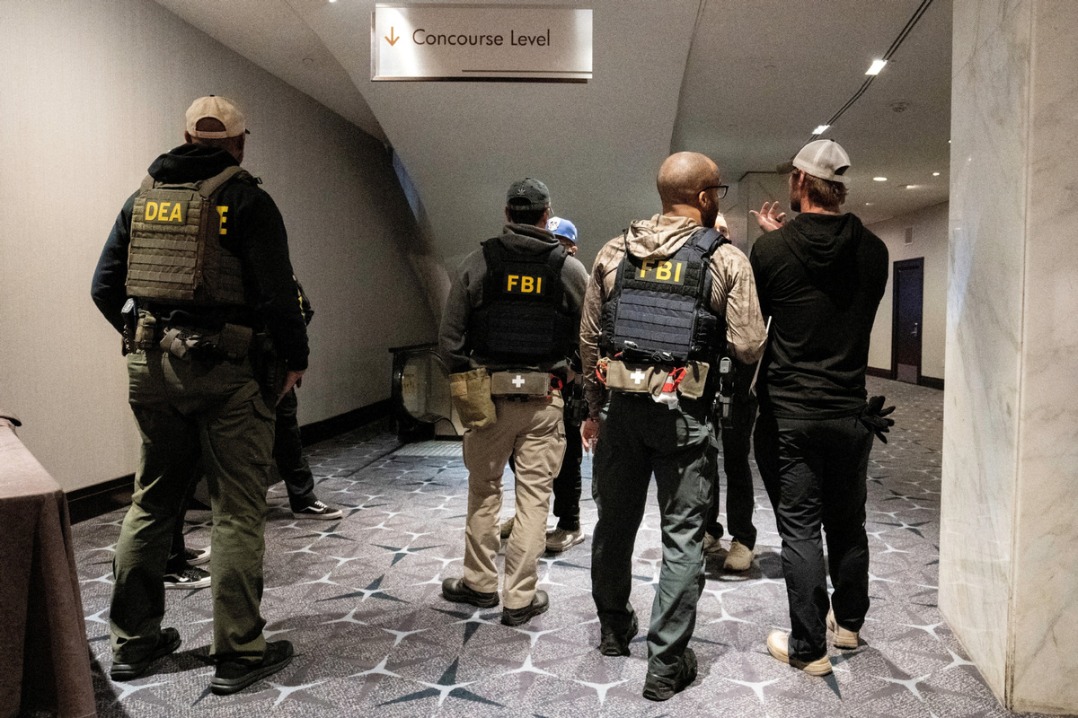
    Interim Washington Police Chief Jeffery Carroll confirmed that when Allen was apprehended in the hotel outside the WHCA dinner venue, he was carrying a shotgun, a handgun, and multiple bladed weapons. Investigators have secured a hotel room booked under Allen’s name and are conducting a forensic search to recover additional evidence. Allen is scheduled to appear at a federal court hearing in Washington, DC on Monday, and faces two severe federal charges: weapons possession during a violent felony, and assault of a federal officer with a dangerous weapon.

    One Secret Service agent was wounded in the incident after being struck by gunfire, but the agent survived thanks to the protection of a ballistic vest. Footage of the incident released to the public shows Allen opening fire as he advanced toward a security checkpoint, before being taken into custody by law enforcement out of public view, well before he could access the main ballroom.

    In comments made the day after the incident, President Trump stated that the suspect’s manifesto held anti-Christian beliefs and that the suspect “had a lot of hatred in his heart.” Trump, who had previously boycotted the WHCA media gala, noted after the attack that even amid the violence, the dinner had fulfilled its core purpose: “This was an event dedicated to freedom of speech that was supposed to bring together members of both parties with members of the press. And in a certain way, it did, because the fact that they just unified, I saw a room that was just totally unified.” Trump has also called for the event to be rescheduled amid the ongoing investigation, with the WHCA set to make a final decision on next steps. The incident has also bolstered Trump’s ongoing push to build a new dedicated event ballroom at the White House, as he criticized the Washington Hilton – located roughly a 10-minute drive from the White House and the site of the 1981 assassination attempt on President Ronald Reagan – for lacking adequate security. “It’s not particularly a secure building,” Trump said of the venue.

    This incident marks at least the third apparent plot against Trump in less than two years: he survived an assassination attempt at a 2024 campaign rally in Pennsylvania, and just months after that, another man was arrested for pointing a rifle at Trump during a golf trip in Florida.

    Saturday’s attack has also thrown a harsh spotlight on the systemic security gaps at the high-profile event. While all 2,600 dinner attendees were required to pass through metal detectors to access the basement ballroom, the hotel itself remained open to the general public, and anyone holding a ticket could enter the building without additional screening. Despite deploying hundreds of Secret Service agents to secure the event, Allen was still able to bring multiple firearms onto the same floor as the ballroom, where hundreds of senior lawmakers, cabinet officials, and public figures were gathered.

    Multiple commentators and news outlets have framed the incident as the latest proof of the accelerating trend of political violence across the United States. Just months before this attack, conservative activist Charlie Kirk was shot and killed at a public rally, and before that, Democratic Minnesota State Representative Melissa Hortman and her husband were murdered, with a state senator also wounded in the attack. A recent Reuters/Ipsos poll conducted after Kirk’s killing found that a large majority of US voters agree that increasingly inflammatory partisan political rhetoric is directly fueling the rise in violent attacks across the country.

  • East meets West in music event held at Chinese Embassy

    East meets West in music event held at Chinese Embassy

    On a recent Friday evening, the Chinese Embassy in Washington DC opened its doors for a one-of-a-kind cross-cultural gathering, “Tea for Harmony: East Meets West in Music”, turning the diplomatic venue into an immersive space where ancient Chinese traditions and Western artistic expressions converged. More than 200 invited guests from political, business, cultural and academic circles gathered to experience China’s traditional “Four Arts of Life” — tea ceremony, incense appreciation, floral arrangement and scroll painting display — before enjoying an innovative musical performance that wove Eastern and Western creative traditions together.

    The evening kicked off with interactive cultural experience zones, where attendees had the chance to sample rare tea varietals and watch master practitioners demonstrate gongfu cha, the time-honored skilled method of preparing tea. Rooted in centuries of Chinese cultural philosophy, these rituals prioritize mindfulness, tranquility and harmony between people and the natural world. Expanded for this special event, these hands-on segments allowed guests to engage directly with the understated, refined aesthetics of traditional Chinese lifestyle long before the main concert began.

    In a keynote address titled “A green leaf that spans the ages, A cup of tea shared with friends”, Chinese Ambassador to the US Xie Feng framed the event around the traditional Chinese solar term Guyu, or Grain Rain, tying the gathering to seasonal rhythms that have shaped Chinese agricultural and cultural life for millennia. He described tea as a core, enduring cultural symbol of Chinese civilization, breaking down the Chinese character for tea (茶) to illustrate its inherent representation of harmony between humanity and nature.

    “In sipping tea and savoring its taste, one needs to seek refinement and cultivate a noble character,” Xie noted in his address. “And in serving tea to others, one needs to show respect, sincerity and courtesy. So each small tea leaf is a gateway to profound Chinese philosophy.”

    Beyond its cultural meaning, Xie highlighted the modern dynamism of China’s tea sector, revealing that the country’s entire tea industry chain exceeded 1 trillion yuan (equivalent to roughly $146 billion) in total value last year. He positioned the evolving tea economy as a striking example of China’s new quality productive forces, pointing to innovations ranging from smart, tech-integrated tea gardens to the launch of the world’s first national digital platform for tracking tea carbon footprints. He also noted that innovative Chinese tea drink brands such as Heytea and Chagee have earned widespread popularity among American consumers in recent years.

    Shifting focus to China-US bilateral relations, Ambassador Xie traced the long historical ties between the two nations through the lens of tea, from the 18th-century voyage of the Empress of China, the first American ship to sail to China for trade, to the iconic tea gifts exchanged during US President Richard Nixon and National Security Advisor Henry Kissinger’s landmark visits to China in the 1970s that normalized bilateral relations.

    “Tea and coffee are not incompatible; when brought together, they can blend into creative drinks that take the world by storm,” Xie remarked. “It takes time to truly appreciate the fragrance of tea. Likewise, states need patience and steady resolve when engaging with one another.”

    He emphasized that while it is unrealistic for either China or the United States to remold the other in their own image, the two countries can still carve out a shared path to mutual prosperity. “As long as we follow the strategic guidance of our presidents, show mutual respect, stick to the bottom line of peaceful coexistence, and strive for the vision of win-win cooperation, we can gradually find a path leading to respective success and shared prosperity,” he concluded.

    The concert that followed the address brought Ambassador Xie’s message of cross-cultural fusion to life. China’s Juntianyunhe Ensemble shared the stage with American cellist Jacques-Pierre Malan and violinist Vadim Tchijik, crafting a program that paired the nearly 3,000-year-old traditional Chinese guqin, a seven-string zither, with Western string instruments. In pieces such as *Wandering Mind*, the improvisational back-and-forth between guqin and cello blended Eastern lyrical sensibilities with Western compositional structures, drawing loud, enthusiastic applause from the assembled audience.

    One of the evening’s most memorable performances, *A Galloping Steed*, used the Mongolian traditional horsehead fiddle (morin khuur) and rhythmic percussion to capture the untamed energy of the Central Asian grasslands. The closing number, *Fusion*, brought every musician and instrument together on stage for a one-of-a-kind artistic dialogue that crossed cultural divides purely through sound.

    Greg Bland, founder of local events platform ThingsToDoDC and co-organizer of the event alongside the Embassy Series, spoke to China Daily about the unique power of people-to-people cultural exchange. “Regardless of where we get along politically or historically right now … Chinese culture still brings us together,” Bland said. “Learning about it is like learning about a different person and learning about different people, and it helps build personal friendships.”

    Diego Uffel, a senior economist at the World Bank who attended the event alongside his artist wife, shared a similarly positive impression. “It was beautiful, the combination of different activities starting with the tea … and then a very welcome reception by the ambassador, which was a touching speech,” Uffel remarked. “In general, there are a lot of economic studies showing that the more we get to know each other, the more we find similarities, and then we get to understand each other better.”

  • Colombia offers record $1.4m-reward for rebel it blames for deadly bomb attack

    Colombia offers record $1.4m-reward for rebel it blames for deadly bomb attack

    A wave of brutal coordinated attacks that left 20 civilians dead in southwestern Colombia has triggered a massive manhunt, with national authorities offering the largest reward in the country’s history for information leading to the capture of the suspected mastermind. Colombian Defence Minister Pedro Sánchez announced the 5 billion peso ($1.4 million) bounty for Iván Jacob Idrobo Arredondo, the dissident rebel commander more widely known by his alias “Marlon”.

    Sánchez has formally accused Marlon of ordering Saturday’s deadliest attack—a roadside bomb detonation on the Pan-American Highway linking the cities of Cali and Popayán—along with a string of other violent incidents over the same weekend across Cauca and Valle del Cauca provinces. To date, government officials have not released public evidence or additional operational details supporting the accusation. Local authorities confirmed that the highway blast, which tore a massive crater in the road and destroyed multiple passenger buses and civilian vehicles, killed 15 women and five men, marking one of the deadliest attacks on innocent civilians in recent Colombian history.

    The targeted attack comes just over one month before Colombia’s national presidential election scheduled for May 31, injecting new volatility into an already tense political campaign. Marlon is a senior commander in an armed faction led by Iván Mordisco, the country’s most-wanted dissident rebel leader. Mordisco was originally a member of the Revolutionary Armed Forces of Colombia (Farc), but split from the group shortly before it signed a landmark 2016 peace deal with the Colombian government. Today, Mordisco’s faction is widely recognized as Colombia’s most powerful dissident rebel organization, with documented involvement in illegal mining, extortion, and large-scale drug trafficking operations across the country’s southwestern regions.

    Cauca Governor Octavio Guzmán called Saturday’s highway bombing “the most brutal and ruthless attack against the civilian population in decades”, echoing widespread public outrage over the violence. Colombian President Gustavo Petro, whose current term ends in August this year, labeled those responsible for the attacks “terrorists, fascists and drug traffickers” and immediately deployed additional military troops to the unrest-plagued region to step up security operations.

    Per Colombia’s constitution, Petro is barred from running for a second consecutive term, and he has thrown his support behind left-wing candidate Iván Cepeda in the upcoming election. Cepeda has campaigned on a platform of renewing negotiation efforts with rebel dissident groups, and recent opinion polling shows him holding a slim lead over a field of right-wing opposition candidates who have advocated for a far harder military-first approach to counter insurgency. If no candidate wins an outright majority in the May 31 vote, a run-off election will be held on June 21 to determine the country’s next president.

  • Chinese navy hospital ship treats over 26,000 in longest overseas medical mission

    Chinese navy hospital ship treats over 26,000 in longest overseas medical mission

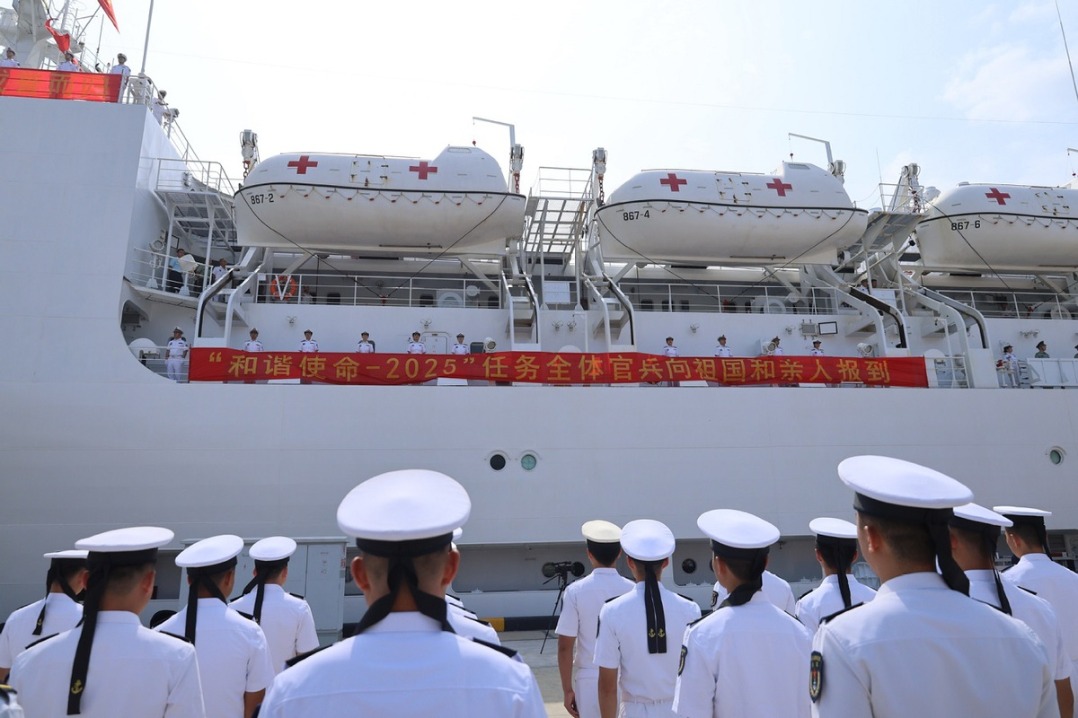
    On April 26, 2026, a cutting-edge Chinese People’s Liberation Army Navy hospital ship, the *Silk Road Ark*, cruised into the Sanya military port in Hainan Province, bringing an end to the longest overseas humanitarian medical deployment in the history of the Chinese Navy. The 234-day mission, codenamed Mission Harmony-2025, marked the first global voyage of the newly commissioned vessel, leaving a trail of improved public health and cross-cultural goodwill across six nations and two additional stopovers for professional collaboration.

    The warm, human impact of the mission is captured in a small, tender moment from Barbados, one of the Caribbean nations the ship visited. A four-year-old local girl, who had just received care from the vessel’s medical team and been gifted a hand-folded paper boat by her Chinese physician, asked if the large ship she was treated on was indeed a “boat that heals sickness,” just like the small paper toy she held. When her doctor confirmed it, she leaned forward gently and pressed a kiss to the paper boat’s side — a quiet, heartfelt reflection of the connection the mission built between Chinese medical workers and local communities.

    Launched in September 2025, the mission took the *Silk Road Ark* across the Pacific and Caribbean to six host nations: Nauru, Fiji, Tonga, Jamaica, Barbados, and Papua New Guinea. At each port of call, the ship’s fully trained medical team delivered a full spectrum of free, high-quality healthcare services to underserved local populations that often lack consistent access to advanced care. By the end of the deployment, the team had recorded 26,324 outpatient consultations, completed 2,724 elective and emergency surgical procedures, conducted 17,273 diagnostic tests and screenings, and provided continuous inpatient care for 136 patients with serious health conditions.

    Beyond direct patient care, the mission expanded its impact through professional and multilateral collaboration. During transit stops in Brazil and Chile, the *Silk Road Ark*’s medical crew held in-depth academic and clinical exchanges with local healthcare institutions, sharing best practices in emergency response, tropical disease management, and advanced surgical care. The vessel also participated in joint maritime humanitarian assistance exercises with the navies of Fiji, Tonga, and Brazil, strengthening regional capacity to respond to natural disasters and public health emergencies.

    This deployment marked the 11th iteration of Mission Harmony, the Chinese Navy’s flagship overseas humanitarian medical program first launched in 2010. For the previous 10 missions, the hospital ship *Peace Ark* led the program’s global outreach, delivering care to millions of people across dozens of countries over the past 16 years. The 2025 voyage of the *Silk Road Ark* not only set a new record for the longest deployment in the program’s history, but also marked the first time the newly commissioned vessel took on the role of leading the mission, expanding China’s capacity to deliver global humanitarian health support.

  • Beijing sees surging cross-border travel so far this year

    Beijing sees surging cross-border travel so far this year

    As of the end of the third week of April 2026, official data from Beijing’s border control authorities shows that the Chinese capital has recorded over 7 million combined entries and exits through its ports, marking a 13% increase compared to the same period in 2025. This robust growth signals a continued rebound in international travel connectivity for one of Asia’s most visited global destinations.

    According to statistics released by the Beijing General Station of Exit and Entry Frontier Inspection, foreign national travel has outpaced overall growth, with the total number of foreign entries and exits topping 2.28 million as of Sunday April 26, a 34% jump year-on-year. By April 25, more than 828,000 international travelers had entered Beijing through existing visa-free or temporary entry permit frameworks this year alone, accounting for more than 70% of all foreign arrivals to the capital.

    Industry and government analysts attribute the sharp uptick in cross-border travel and inbound tourism to Beijing to a series of progressive policy adjustments that have reduced entry barriers for international visitors. To date, the Chinese government has rolled out unilateral visa-free policies that benefit citizens of 50 countries, and expanded 240-hour transit visa-free access to travelers from 53 additional nations, bringing the total number of eligible countries for the transit program to 55. These streamlined policies have cut through red tape for leisure, business, and transit travelers alike, removing the time and cost burdens associated with pre-arrival visa applications.

    To accommodate the growing passenger volume and maintain smooth, efficient border operations, Beijing’s border inspection authorities have rolled out a suite of targeted service and infrastructure upgrades. Key improvements include the launch of an integrated one-stop service that combines temporary entry permit issuance and pre-clearance inspection for travelers taking advantage of the 240-hour transit visa-free program. Authorities have also added dedicated on-site support teams to guide first-time visitors through visa-free policy requirements and assist with digital and paper arrival card completion, cutting wait times and reducing friction for new international guests.

    Travel industry leaders in Beijing note that the sustained growth in cross-border travel is expected to deliver cascading benefits to the local economy, supporting gains in hospitality, retail, cultural tourism, and international business events in the coming months as the peak summer travel season approaches.