
作者: admin

  • South Korean e-commerce firm Coupang says 33.7 million customer accounts breached

    South Korean e-commerce firm Coupang says 33.7 million customer accounts breached

    South Korea’s dominant e-commerce platform Coupang has confirmed a significant cybersecurity incident compromising the personal data of approximately 33.7 million customer accounts. The company, often referred to as South Korea’s equivalent of Amazon, disclosed that unauthorized access to its systems originated from overseas servers beginning June 24th.

    The breach was detected on November 18th, prompting immediate notification to relevant authorities. According to Coupang’s official statement, the exposed information includes customer names, email addresses, phone numbers, shipping addresses, and limited order history data. Crucially, the company emphasized that financial payment details and login credentials remained secure throughout the incident.

    This security compromise affects a substantial portion of Coupang’s user base, considering the company reported 24.7 million active commerce customers during the third quarter. The platform’s ‘Rocket’ delivery service has made it an integral part of daily life for millions of South Korean consumers.

    Coupang’s investigation remains ongoing with collaboration from law enforcement and regulatory agencies. The company has not yet released details regarding potential mitigation measures for affected customers or the specific methodologies employed in the cyber intrusion.

  • Hong Kong fire death toll rises to 146 as thousands pay respects

    Hong Kong fire death toll rises to 146 as thousands pay respects

    Hong Kong is reeling from its most catastrophic fire disaster in over seven decades, with authorities confirming at least 146 fatalities after an inferno ravaged multiple residential towers in the Tai Po district. The death toll continues to climb as recovery teams work through the charred remains of Wang Fuk Court, where 150 residents remain unaccounted for and 79 others suffered injuries.

    The conflagration, which ignited Wednesday and required more than 2,000 firefighters to fully extinguish by Friday, reached temperatures exceeding 500°C (932°F). The blaze spread with unprecedented speed across seven of eight interconnected towers, facilitated by highly flammable plastic netting and bamboo scaffolding surrounding the buildings during ongoing renovations.

    Law enforcement agencies have launched multiple investigations into the tragedy. Eight individuals face corruption charges related to the renovation work, while three others have been detained on manslaughter allegations. Police indicate the engineering company overseeing the project may have demonstrated ‘gross negligence’ in safety protocols.

    Fire safety systems failed catastrophically during the emergency, with investigations revealing non-functional alarms across all eight towers. The absence of early warnings proved particularly devastating for the complex’s elderly residents, who comprise nearly 40% of the approximately 4,600 inhabitants.

    The international community has been impacted, with Indonesia’s consulate reporting seven nationals among the deceased and the Philippines confirming one citizen perished. The firefighting community mourns the loss of 37-year-old firefighter Ho Wai-ho, who collapsed during rescue operations.

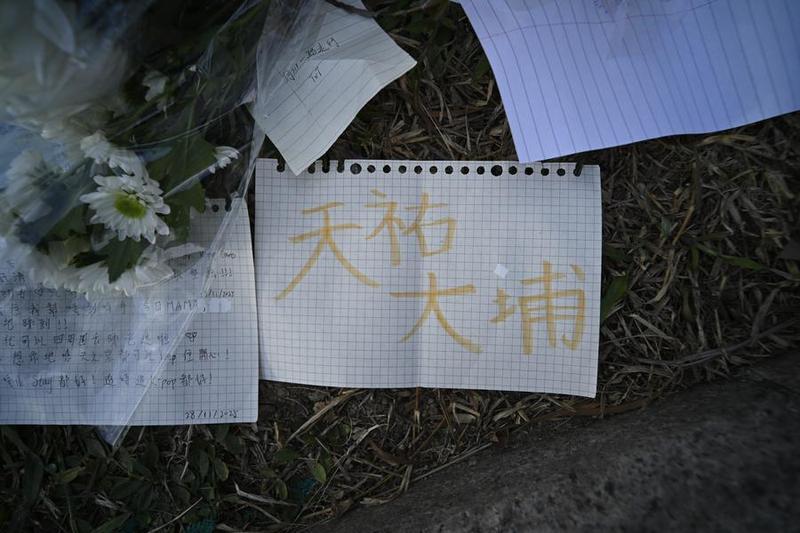
    As thousands gather in solemn procession—forming queues stretching nearly two kilometers—the city has declared an official three-day mourning period. Flags fly at half-mast while residents create makeshift memorials with flowers and handwritten tributes at the disaster site.

    The tragedy has ignited urgent debates about construction safety standards in dense urban environments, particularly regarding the widespread use of bamboo scaffolding and flammable cladding materials. Hong Kong’s buildings department has temporarily suspended work on 30 private projects pending comprehensive safety reviews.

  • Hong Kong mourns Tai Po fire victims as relief efforts continue

    Hong Kong mourns Tai Po fire victims as relief efforts continue

    Hong Kong has commenced an official three-day mourning period following the devastating residential fire at Wang Fuk Court in Tai Po, with memorial services beginning Saturday after firefighting and rescue operations were substantially completed.

    Chief Executive John Lee led the solemn ceremonies at government headquarters, where he joined principal officials and civil servants in observing a three-minute silence at 8:00 am. The national flag and Hong Kong Special Administrative Region flag were flown at half-mast in tribute to the victims of one of the city’s deadliest residential fires in recent history.

    The government has established condolence points across all 18 districts of Hong Kong, allowing citizens to express their grief and sign memorial books throughout the mourning period. These designated spaces have become focal points for community solidarity, with many residents leaving flowers and personal notes honoring those lost in the tragedy.

    According to the latest police statistics released Saturday afternoon, the catastrophic blaze has claimed 128 lives and left 83 individuals injured. In a positive development amid the tragedy, all 144 people previously reported missing have been accounted for and confirmed safe.

    Financial support for victims and relief efforts has reached approximately HK$1.1 billion (US$141.3 million), as announced by Deputy Chief Secretary for Administration Cheuk Wing-hing. The substantial fund consists of HK$800 million in public donations and HK$300 million in government grants, demonstrating both official and community commitment to supporting those affected by the disaster.

  • French farm has €90,000 worth of snails stolen

    French farm has €90,000 worth of snails stolen

    In a bizarre culinary crime that has disrupted France’s gourmet food industry, thieves have executed a precision theft at L’Escargot Des Grands Crus snail farm in Bouzy, near Reims. The agricultural burglary resulted in the loss of the entire inventory of fresh and frozen snails valued at approximately €90,000 (£79,000; $104,000), dealing a significant blow to the farm’s holiday operations.

    The sophisticated operation occurred during the overnight hours preceding Monday, with perpetrators methodically cutting through perimeter fencing before breaching multiple farm structures. According to Franceinfo reports, the comprehensive nature of the theft suggests careful planning and knowledge of the farm’s layout and valuable inventory.

    Jean-Mathieu Dauvergne, the farm’s managing director, revealed the devastating scope of the loss to investigators. “The criminals systematically cleared our storage facilities, taking both finished products from our retail space and raw materials from the production laboratory,” he stated. “This represented our complete holiday inventory—precisely calculated to meet seasonal demand without surplus.”

    The timing proves particularly damaging as French snail producers traditionally experience substantial sales increases during December, with consumers seeking the delicacy for Christmas and New Year celebrations. The farm supplies prestigious establishments including the Michelin-starred Les Crayères restaurant in Reims, alongside specialty food retailers and private clients.

    In an official statement released Thursday, the farm management expressed their shock and frustration: “This incident represents both a professional and emotional blow to our entire team. We are working tirelessly to rebuild our inventory and fulfill our commitments to valued customers during this critical period.”

    Local law enforcement agencies have launched a comprehensive investigation into the unusual agricultural theft. Meanwhile, the farm faces the challenging task of rapidly restocking their specialty products to meet holiday demand for the traditional French delicacy typically prepared with garlic butter or wine sauce.

  • India loses 19th consecutive toss as South Africa elects to field in 1st ODI

    India loses 19th consecutive toss as South Africa elects to field in 1st ODI

    In the inaugural match of the three-game ODI series held in Ranchi, South Africa’s interim captain Aiden Markram won the crucial toss and elected to field first against India on Sunday. This decision marks India’s 19th consecutive lost toss in international cricket.

    South Africa’s strategy appears influenced by anticipated dew conditions later in the evening, which typically favor chasing teams in day-night matches. The Proteas have implemented significant roster changes, resting regular captain Temba Bavuma and left-arm spinner Keshav Mahraj following their recent 2-0 Test series victory against the same opponents.

    India, under the leadership of stand-in captain Lokesh Rahul due to Shubman Gill’s injury, fields a formidable lineup including white-ball specialists Rohit Sharma and Virat Kohli. The home team has opted for a balanced bowling attack featuring three spinners—Ravindra Jadeja, Washington Sundar, and Kuldeep Yadav—complemented by pace bowlers Arshdeep Singh, Prasidh Krishna, and debutant Harshit Rana.

    South Africa’s playing XI features only one specialist spinner, Prenelan Subrayen, supported by four seamers in what appears to be a strategy to challenge India’s powerful batting lineup. Both teams have made calculated selections aiming to gain early advantage in the limited-overs contest.

  • The Polish ‘magicians of glass’ who create Christmas baubles for clients worldwide

    The Polish ‘magicians of glass’ who create Christmas baubles for clients worldwide

    In the southern Polish city of Częstochowa, a family-owned workshop transforms imaginative fantasies into tangible Christmas magic. GlitterLab, operating for over eight decades, specializes in creating extraordinary glass ornaments that defy conventional design limitations. Their client portfolio includes prestigious names like Swarovski, Galeries Lafayette, and Harrods, earning them the moniker “the magicians of glass.

    The company’s unique selling proposition lies in its manual production process, a closely guarded trade secret that ensures each piece remains utterly unique. Unlike mass-produced decorations, GlitterLab’s artisans begin with client drawings, transforming them into soft clay sculptures before selecting specialized combinations of materials including resin, wood, crystals, and metal.

    Third-generation owner Barbara Mostowska emphasizes the value of their European craftsmanship: “In an age when you can buy anything anywhere for next to nothing, something made from scratch here with honest work and thoughtfulness is truly valued by customers.” This artisanal approach commands premium prices, with exclusive designs like Harrods’ “Yellow Floral Bauble” retailing for £125 (approximately $168).

    The company draws inspiration from Częstochowa’s heritage as a pilgrimage site, considering themselves heirs to local artisan traditions. “The techniques we’re using can’t simply be learned,” the owners note. “They need to run in your DNA.”

    Seasoned designer Mariola Koła, with 42 years of experience, finds greatest satisfaction when clients approve designs without corrections. The ornaments frequently evoke childhood nostalgia, with descriptions promising “a time machine to a happy childhood.”

    Customer service representative Magdalena Kucharska observes the joyful nature of their business: “How can people get upset when we’re talking about Christmas baubles? We produce a product that brings happiness.” Mostowska envisions these creations as “jewelry for the home” that customers display year-round, transcending their seasonal purpose to become enduring art objects.

  • Covet an Italian masterpiece, but shy of the millions? How about a digital copy at supercar prices

    Covet an Italian masterpiece, but shy of the millions? How about a digital copy at supercar prices

    In an innovative fusion of art preservation and digital technology, Italian cultural organization Save the Artistic Heritage has launched a groundbreaking initiative offering certified digital reproductions of Renaissance masterpieces. Partnering with technical firm Cinello, the project enables affluent collectors to acquire precisely scaled digital replicas of iconic artworks, complete with authentication certificates signed by participating museums.

    The initiative addresses the financial challenges facing cultural institutions by implementing a revenue-sharing model that returns 50% of profits to source museums. Prices for these limited-edition digital artworks range from €30,000 to €300,000 (approximately $35,000-$347,000), with each masterpiece restricted to just nine certified copies—a number referencing traditional sculpture reproduction standards.

    Current offerings include Leonardo da Vinci’s ‘Lady with Disheveled Hair’ from the Pilotta Museum in Parma, priced at €250,000, alongside approximately 250 other Italian artworks from prestigious institutions including Milan’s Pinacoteca Ambrosiana and Naples’ Capodimonte Museum.

    The technology delivers exceptional visual fidelity through backlit screens matched to original dimensions in replica frames. While lacking physical texture, the reproductions reveal meticulous brushstroke details with remarkable luminosity. Milan’s Brera Art Gallery director Angelo Crespi notes the copies generate significant interest while remaining clearly identifiable as digital representations upon close inspection.

    This venture continues Italy’s historical leadership in art reproduction technologies, extending from the Alinari Archive’s photographic collections to the Vatican Museums’ high-resolution documentation of the Sistine Chapel. The model has already generated €300,000 for partner institutions over two years, providing crucial funding alternatives for museums like Brera, which receives only 10% of its €14 million budget from government sources.

    With patents secured across Europe, the United States, and China, organizers plan international expansion including a forthcoming U.S. nonprofit branch. Future ambitions include ‘Impossible Exhibitions’ featuring rarely loaned masterpieces, potentially bringing museum-quality experiences to remote global locations through digital dissemination.

  • Kyrgyzstan holds snap parliamentary vote as opposition faces crackdown

    Kyrgyzstan holds snap parliamentary vote as opposition faces crackdown

    Voters in Kyrgyzstan headed to the polls on Sunday for an unscheduled parliamentary election conducted under circumstances that critics describe as a systematic erosion of democratic norms. The electoral process unfolds against a backdrop of detained opposition leaders and shuttered independent media outlets, signaling a profound political shift in this Central Asian nation.

    President Sadyr Zhaparov, who has consolidated power since assuming office, appears poised to strengthen his parliamentary majority through this early ballot. Officials justified the expedited timeline by citing a need to avoid proximity to the scheduled 2027 presidential election.

    Substantial electoral reforms have reshaped the political landscape, with the nation divided into 30 constituencies each electing three representatives to the 90-seat Jogorku Kenesh (unicameral parliament). Among 467 registered candidates, a gender quota mechanism mandates the election of at least one female legislator per district.

    Political analysts attribute Zhaparov’s anticipated electoral success to Kyrgyzstan’s robust economic performance, partially driven by the country’s strategic positioning amid international sanctions against Russia. As a participant in Russian-led economic and security alliances and host to a Russian military installation, Kyrgyzstan maintains strong ties with Moscow while having previously accommodated a U.S. air base during Afghanistan operations. The nation remains one of the most economically vulnerable states to emerge from the Soviet collapse, heavily reliant on Russian economic assistance.

  • Sumatra residents loot for food and water after deadly floods

    Sumatra residents loot for food and water after deadly floods

    MEDAN, Indonesia — Desperate survivors of catastrophic flooding on Indonesia’s Sumatra island have resorted to looting essential supplies as aid delivery struggles to reach isolated communities, authorities confirmed Sunday. The devastating floods and subsequent landslides have claimed at least 303 lives, with officials warning the death toll will likely increase as recovery operations continue.

    The disaster, which struck nearly a week ago, has created unprecedented challenges for rescue teams. Inaccessible road networks, compromised communication infrastructure, and persistent adverse weather conditions have severely hindered relief efforts. The hardest-hit regions of Sibolga city and Central Tapanuli district remain particularly vulnerable due to delayed assistance.

    Disturbing social media footage captured residents navigating through hazardous floodwaters and damaged structures to access food, medical supplies, and fuel from compromised retail establishments. The looting incidents, first documented by North Sumatra Police on Saturday, occurred primarily before organized aid could reach stranded communities.

    Police spokesperson Ferry Walintukan explained the desperation behind these actions: ‘The looting happened before logistical aid arrived. Residents were unaware assistance was forthcoming and faced legitimate concerns about starvation.’

    The Indonesian government has mobilized substantial resources, deploying eleven helicopters from Jakarta for ongoing logistics distribution operations. Military aircraft have been conducting aerial supply drops to remote villages, where survivors have been seen desperately signaling for help. Additionally, four naval vessels have docked to support relief operations.

    Cabinet Secretary Teddy Indra Wijaya acknowledged the operational challenges: ‘Unpredictable weather continues to hamper our aid delivery, particularly to areas where land access remains completely severed.’

    Indonesia’s geographical position on the Pacific ‘Ring of Fire’ makes it exceptionally vulnerable to natural disasters, including frequent seismic activity, volcanic eruptions, and seasonal flooding that regularly triggers deadly landslides across the archipelago nation of 280 million people.

  • Swiss voters consider whether women, like all male citizens, must do national service

    Swiss voters consider whether women, like all male citizens, must do national service

    GENEVA — Swiss citizens have decisively rejected a landmark referendum that would have established gender-neutral mandatory national service, maintaining the country’s current system that primarily applies conscription requirements to men. The proposed “citizen service initiative” sought to transform Switzerland’s approach to civic duty by expanding compulsory service to include women and broadening the definition of national security to encompass environmental protection, food security, and elderly care.

    The initiative’s proponents argued that universal service would strengthen social cohesion and enhance Switzerland’s resilience against emerging threats including natural disasters, cyberattacks, energy shortages, and potential spillover from Russia’s war in Ukraine. Campaign organizers emphasized that “everybody takes responsibility to work for a stronger Switzerland that’s able to stand up to crises” amid growing individualism and societal fragmentation.

    However, the Swiss government and parliament mounted strong opposition, citing prohibitive costs and potential economic disruption. Official estimates projected the measure would nearly double both participant numbers (from approximately 35,000 to 70,000 annually) and associated costs (from 1 billion to 2 billion Swiss francs, equivalent to $1.25-2.5 billion).

    The government also raised gender equality concerns, noting that mandatory service would “place an extra burden on many women, who already shoulder a large part of the unpaid work of raising and caring for children and relatives.” Rather than advancing equality, authorities argued the measure would disproportionately affect women given existing workplace and societal disparities.

    Under Switzerland’s current system, young men must complete military service or join civil protection teams, with conscientious objectors permitted alternative service options. Women may volunteer for service but face no compulsory requirements. The defeated initiative would have also granted parliament authority to extend service obligations to foreign residents.

    The referendum outcome provides significant insight into European attitudes toward mandatory national duty at a time of heightened security concerns across the continent.