作者: admin

  • Two-goal Foden helps Manchester City overcome reliance on Haaland

    Two-goal Foden helps Manchester City overcome reliance on Haaland

    In a dramatic Premier League showdown at Etihad Stadium, Phil Foden delivered a masterclass performance that secured Manchester City’s crucial 3-2 victory over Leeds United on Saturday. The English midfielder netted twice, including a spectacular stoppage-time winner, demonstrating his growing importance to the squad as star striker Erling Haaland extends his goalless streak to three consecutive matches.

    Manager Pep Guardiola lavished praise on the 25-year-old phenomenon, describing him as ‘a gift’ to manage and highlighting his extraordinary development since joining the club as a teenager. ‘This season has been the Phil we met a long, long time ago,’ Guardiola reflected. ‘When he arrived at 16, 17 years old at the training sessions, it was, ‘Oh my God, what a player.”

    The victory comes at a critical juncture for City, who suffered recent defeats against Newcastle United and Bayer Leverkusen despite Haaland’s league-leading 14 goals this season. Guardiola emphasized Foden’s tactical flexibility and winning mentality as key differentiators: ‘Some players when the situation is uncomfortable, they make a step back. Phil is completely the opposite. He says, ‘Give me the ball because I want to dribble, I want to score, I want to win the game.”

    Foden’s resurgence has earned him a recall to the England national team for the first time since March, with both Guardiola and England manager Thomas Tuchel agreeing that his optimal position lies centrally behind the striker. ‘A guy who has this sense of goal has to be close to the ball,’ Guardiola affirmed, acknowledging Foden’s evolving role as a creative and scoring threat.

    The performance signals a potential strategic shift for City, suggesting reduced dependency on Haaland’s scoring prowess as Foden continues to demonstrate his capacity to deliver decisive moments in high-pressure situations.


  • ‘Tere Ishk Mein’ review: A bewildering tale of toxic love

    ‘Tere Ishk Mein’ review: A bewildering tale of toxic love

    Aanand L. Rai’s latest cinematic offering ‘Tere Ishk Mein’ presents audiences with a challenging dichotomy: either a nuanced exploration of destructive relationships or an incoherent narrative attempting to tackle too many themes simultaneously. Starring Dhanush as Shankar, a violence-prone college student immersed in campus politics, and Kriti Sanon as Mukti, a PhD researcher studying psychological rehabilitation, the film navigates troubled romantic waters where consent becomes negotiable and obsession masquerades as devotion.

    The narrative follows Shankar’s transformation from a petrol-bomb-throwing agitator to a UPSC aspirant, motivated solely by his unrequited fixation on Mukti. Their dynamic evolves through psychologically manipulative interactions, with Mukti initially maintaining professional boundaries while studying Shankar’s violent tendencies. The film’s Delhi ecosystem—from stark class divisions to IAS elitism—provides compelling backdrop to this toxic dance.

    Technical achievements shine through AR Rahman’s evocative musical score and standout performances, particularly Dhanush’s authentic portrayal of Tamil roots and Prakash Raj’s poignant supporting role as Shankar’s father. A particularly effective scene reveals Mukti’s privileged awakening when visiting Shankar’s humble dwelling.

    However, the screenplay collapses under its own ambitious weight, abandoning narrative logic for melodramatic contrivance. Mukti’s professional credibility diminishes as she continues assessing Shankar while pregnant and emotionally compromised—a scenario defying realistic defense protocol. The film’s third act introduces baffling metaphysical explanations about salvation (mukti) and sacrifice that feel unearned, while Shankar’s redemption as a fighter pilot seems conveniently miraculous rather than psychologically earned.

    The fundamental question remains whether ‘Tere Ishk Mein’ critiques toxic masculinity or inadvertently glorifies it. While the film acknowledges its characters’ flaws more explicitly than previous Rai works like ‘Raanjhana’, it ultimately drowns in its own philosophical aspirations, leaving audiences more bewildered than enlightened about modern romance’s complexities.

  • Pilot killed after reported mid-air plane collision in Australia

    Pilot killed after reported mid-air plane collision in Australia

    A fatal aviation incident occurred during a formation flight exercise near Sydney on Sunday, resulting in the death of one pilot after two light aircraft collided mid-air. The tragedy unfolded as four Van’s RV-7 aircraft were returning to Wedderburn Airport in southwestern Sydney suburbs.

    According to New South Wales police authorities, emergency responders discovered the deceased pilot’s body in bushland surrounding the airfield following the collision. Preliminary investigations confirm the victim was the sole occupant of the crashed aircraft.

    The Australian Transport Safety Bureau (ATSB) has launched a comprehensive investigation into the circumstances surrounding the collision between the two homebuilt kit planes. Aviation safety experts are examining why the formation flight turned tragic during what should have been a routine landing procedure.

    Remarkably, the second aircraft involved in the collision managed to land safely at Wedderburn Airport with its pilot escaping uninjured. The two remaining planes from the formation flight landed without incident.

    The RV-7 aircraft involved are popular among aviation enthusiasts for their performance characteristics and are typically constructed from prefabricated kits. This incident has raised questions about safety protocols during formation flying exercises, particularly involving amateur-built aircraft.

    Aviation authorities have cordoned off the crash site as investigators begin the meticulous process of determining the collision’s cause. The tragedy has sent shockwaves through Australia’s general aviation community, particularly among owners and operators of similar aircraft models.

  • Hondurans vote in election shadowed by Trump aid threats

    Hondurans vote in election shadowed by Trump aid threats

    Honduras is conducting pivotal general elections amidst unprecedented external pressure from former U.S. President Donald Trump, who has threatened to sever financial aid should his preferred candidate fail to secure victory. The electoral landscape features five presidential contenders, though the race has effectively narrowed to three principal candidates: leftist Libre Party’s former defense minister Rixi Moncada, centrist Liberal TV host Salvador Nasralla, and right-wing National Party businessman Nasry “Tito” Asfura.

    Trump has openly endorsed Asfura while issuing stark warnings on his Truth Social platform. “If he doesn’t win, the United States will not be throwing good money after bad,” Trump declared, adding that supporting the wrong leadership would yield “catastrophic results.” This intervention prompted sharp criticism from Moncada, who labeled Trump’s statements “totally interventionist” and accused him of meddling in Honduras’ sovereign affairs.

    The financial stakes are substantial. According to State Department records, the U.S. provided over $193 million to Honduras in the previous fiscal year, with $102 million allocated this year despite already-implemented aid reductions. Congressional data indicates the Trump administration has previously cut $167 million in economic and governance assistance earmarked for 2024-2025.

    Outgoing President Xiomara Castro, Honduras’ first female leader who is constitutionally barred from reelection, has endorsed Moncada as her successor. The 60-year-old lawyer has campaigned on protecting national resources from “21st-century filibusters who want to privatise everything” and combating systemic corruption.

    Asfura, former mayor of Tegucigalpa, has promised to foster “development and opportunities for everyone” while facilitating foreign investment. However, his party remains tainted by recent corruption scandals, including the 45-year U.S. drug trafficking sentence imposed on former President Juan Orlando Hernández. Asfura has attempted to distance himself from his predecessor, insisting the party bears no responsibility for Hernández’s “personal actions.”

    Current frontrunner Nasralla, making his fourth presidential bid, maintains that the 2017 election was stolen through fraud orchestrated by Hernández—though no irregularities were confirmed in partial recounts. The 72-year-old centrist has pledged to establish “an open economy” and sever ties with China and Venezuela if elected.

    These developments occur against escalating regional tensions. Trump recently declared Venezuela’s airspace “closed” despite lacking authority to enforce such measures, while U.S. military operations against alleged drug trafficking vessels have intensified.

    With polls showing 34% of voters undecided and all parties already alleging potential electoral fraud, National Electoral Council President Ana Paola Hall has urgently warned against “fanning the flames of confrontation or violence” as citizens cast ballots during the 10-hour voting window.

  • Dubai: Meet Indian expat who arrived 52 years ago when gold cost only Dh6 a gram

    Dubai: Meet Indian expat who arrived 52 years ago when gold cost only Dh6 a gram

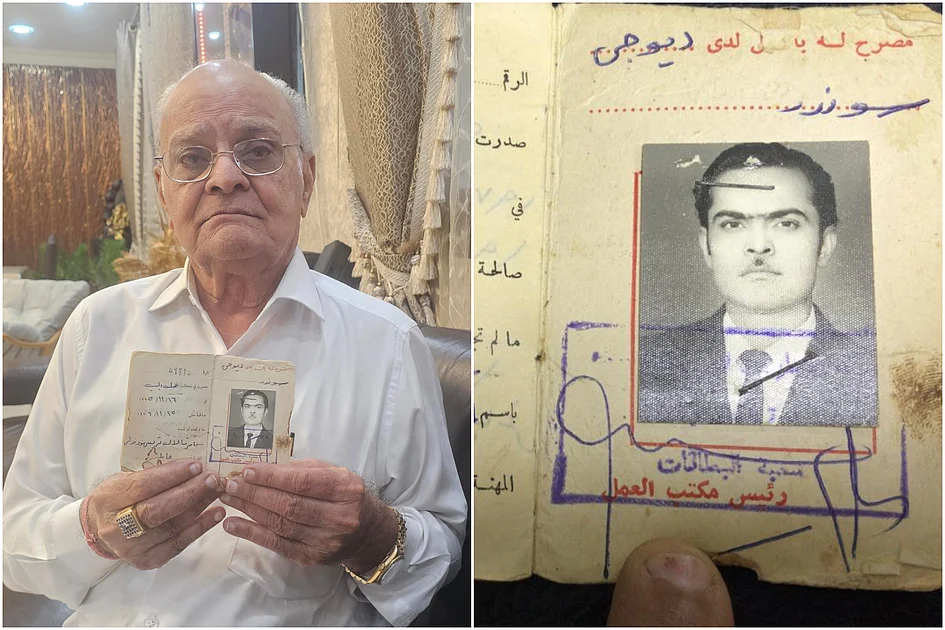
    In 1973, when gold traded at a mere Dh6 per gram, Amratlal Tribhovan Das arrived in Dubai with minimal possessions but immense ambition. Now, 52 years later, his manufacturing facility produces approximately 150 kilograms of gold ornaments monthly, supplying clients throughout the GCC region.

    Das vividly recalls his arrival on December 13, 1973, via an Air India flight from Mumbai. The Dubai he encountered contrasted sharply with today’s metropolis—a modest settlement with approximately ten gold shops lining Dubai Creek, where hand-paddled abras transported passengers for just 10 fils.

    Born in Gujarat’s Junagadh district in 1941, Das trained as a goldsmith in Mumbai before seizing emerging Gulf opportunities. His relocation occurred unexpectedly when his intended ship transport encountered mechanical issues, forcing him to utilize his expiring visa via air travel—a substantial investment costing Rs1,100 at the time.

    Initial attempts to establish a workshop in Dubai proved challenging, prompting relocation to Sharjah where electricity availability was limited to three-hour intervals per street. This obstacle inspired adaptive work patterns: crafting jewelry during powered hours and resting during outages.

    A pivotal shift occurred in 1976 when revised trade license regulations enabled entrepreneurial expansion. Das partnered with a relative, combining financial investment with artisanal expertise to establish a home-based workshop. This venture evolved into Yogesh Jewellers near Sharjah Cinema by 1980, eventually transitioning exclusively to manufacturing.

    Das’s craftsmanship gained recognition through an Italian-style bangle design that achieved remarkable popularity within two months of its introduction. This innovation established his reputation within UAE’s gold industry, continuing a nine-generation family legacy in goldsmithing.

    The expatriate’s journey mirrors Dubai’s transformation—from residency visas costing Dh10 in 1975 to contemporary global gold markets. Despite manufacturing expansion and 85 employees, Das cherishes the memory of purchasing his first Rado watch in 1979, which he continues to wear as a symbol of perseverance and realized dreams.

  • New Kuwait drug law imposes death penalty, life imprisonment

    New Kuwait drug law imposes death penalty, life imprisonment

    Kuwait has established one of the world’s most stringent anti-drug frameworks with legislation set to take effect December 15, 2025. The comprehensive law introduces extreme penalties including capital punishment and life imprisonment for serious narcotics offenses, while simultaneously creating innovative rehabilitation pathways for addicts.

    The legislative framework specifies severe consequences for importing, smuggling, manufacturing, or cultivating illicit substances, with financial penalties reaching two million Kuwaiti dinars. Particularly stringent measures target those exploiting minors in drug-related activities, utilizing drugs within institutional settings including rehabilitation centers and educational facilities, and coercing others into substance use.

    The legislation addresses sophisticated criminal operations by establishing enhanced penalties for managing drug trafficking organizations, planting narcotics on others to facilitate false accusations, and abusing public office for drug-related crimes. Additionally, the law criminalizes the fraudulent issuance of prescriptions for controlled substances.

    A distinctive feature of the legislation is its dual approach combining harsh penalties with treatment opportunities. Individuals struggling with addiction may seek treatment voluntarily or through confidential reports filed by relatives within the third degree of kinship. Sheikh Fahad Yousef Saud Al-Sabah, Kuwait’s First Deputy Prime Minister and Minister of Interior, emphasized the complete confidentiality of these reports, with severe penalties for malicious filings or unauthorized disclosures.

    The timing of this legislative overhaul follows numerous successful interdictions of drug smuggling operations throughout Kuwait. Minister Al-Sabah characterized the new framework as enabling security forces to ‘tighten the noose on criminal networks’ through the strongest punitive system in Kuwait’s history.

    Complementing the legal measures, Kuwait will launch an extensive public awareness campaign to educate citizens about the law’s provisions and available legal recourse mechanisms.

  • China recording rapid increase in flu cases

    China recording rapid increase in flu cases

    China is currently experiencing a significant upsurge in influenza cases, with health authorities reporting a rapid nationwide increase that is projected to intensify in the coming weeks. According to recent data from the Chinese Center for Disease Control and Prevention, the influenza positivity rate among patients presenting influenza-like symptoms has reached nearly 45% during the week beginning November 17, marking a substantial rise from the previous week’s 38% rate.

    The national health agency has classified the current flu epidemic at a medium intensity level, with several provinces already reporting high influenza activity. Health officials have identified a particular vulnerability among school-aged children, noting that infection clusters within educational institutions continue to multiply. Children between five and fourteen years old are demonstrating significantly higher positivity rates compared to other age demographics.

    While influenza dominates current respiratory concerns, other viruses including rhinovirus, respiratory syncytial virus, and enterovirus remain in circulation, though their transmission rates show a declining trend while maintaining noticeable presence.

    The China CDC has issued specific guidance for high-risk environments, urging nursery care facilities, schools, and elderly care institutions to implement rigorous health monitoring protocols and respond promptly to any detected infection clusters. Public health recommendations emphasize preventive measures, particularly advocating for vaccination among vulnerable populations including healthcare workers, elderly individuals, and those with preexisting medical conditions. The agency further advises mask-wearing in public spaces as an additional protective measure against respiratory virus transmission.

  • UAE marks Martyrs Day with nationwide minute of silence

    UAE marks Martyrs Day with nationwide minute of silence

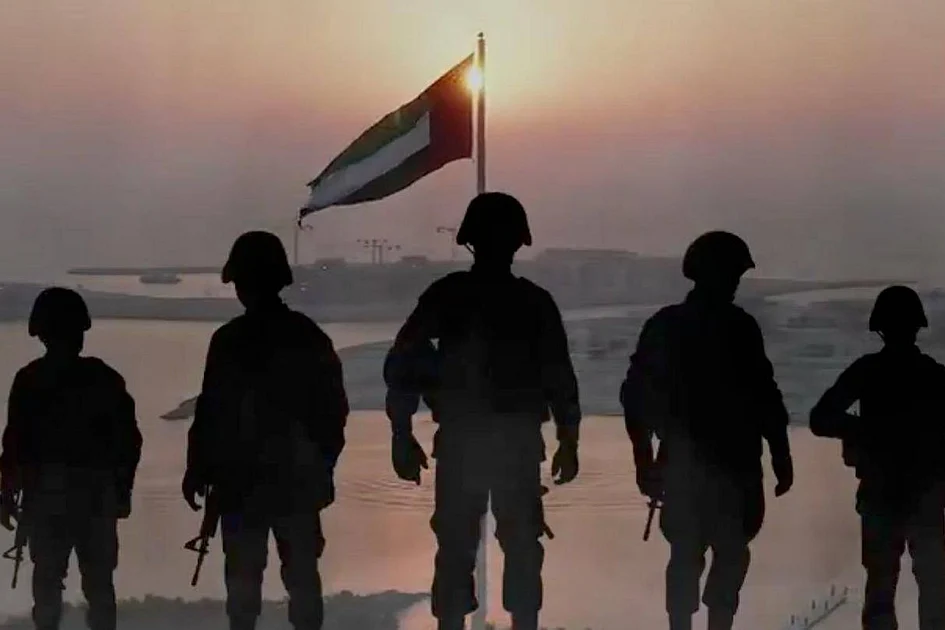
    The United Arab Emirates observed a profound nationwide moment of silence at 11:30 AM on Sunday, November 30th, 2025, to honor citizens who sacrificed their lives in service to the nation. The solemn tribute marked the country’s annual Commemoration Day, with flags across all seven emirates lowered at 8:00 AM and raised again following the reflective silence accompanied by the national anthem.

    This day of national remembrance, established on November 30th each year, commemorates the ultimate sacrifice of Salem Suhail bin Khamis Al Dahmani, recognized as the first Emirati martyr who fell while defending the Union’s sovereignty over Greater Tunb island in 1971. The observance celebrates not only the heroes themselves but also the core values they embodied: duty, loyalty, and national belonging.

    In his official address, UAE President Sheikh Mohamed bin Zayed Al Nahyan emphasized that the nation honors these martyrs who demonstrated exceptional courage while protecting the UAE’s security and fundamental values. The President noted that their legacy continues to inspire pride among both their families and the broader Emirati community, asserting that the most meaningful tribute lies in sustained national unity and continued progress toward the country’s development and stability.

    The Ministry of Defense reinforced this sentiment through social media channels, describing Martyrs Day as ‘a renewed pledge of loyalty and appreciation’ to those who gave everything for their country. Accompanying video tributes featured children of fallen heroes, highlighting the ongoing support provided by national leadership to martyrs’ families.

    Wahat Al Karama (Oasis of Dignity) in Abu Dhabi, situated opposite the Sheikh Zayed Grand Mosque, served as a focal point for commemorations. The memorial’s architectural design—featuring large structures leaning on one another—symbolizes the inseparable bond between the nation’s leadership and its people while serving as a permanent testament to collective sacrifice.

    Defense Ministry Undersecretary Lieutenant General Ibrahim Nasser Al Alawi emphasized that the annual observance ensures the bravery of fallen heroes remains eternally present in the national consciousness, strengthening the country’s resolve and keeping its flag held high. Participants noted that the day reinforces social cohesion and serves as a powerful reminder that contemporary peace and security were secured through the sacrifices of previous generations.

  • Indonesia searches for hundreds missing in deadly floods

    Indonesia searches for hundreds missing in deadly floods

    Southeast Asia is grappling with a humanitarian catastrophe of immense proportions following the devastating impact of an exceptionally rare tropical storm, Cyclone Senyar. Torrential cyclonic rains triggered catastrophic flooding and lethal landslides across the region nearly a week ago, with Indonesia’s island of Sumatra bearing the brunt of the destruction.

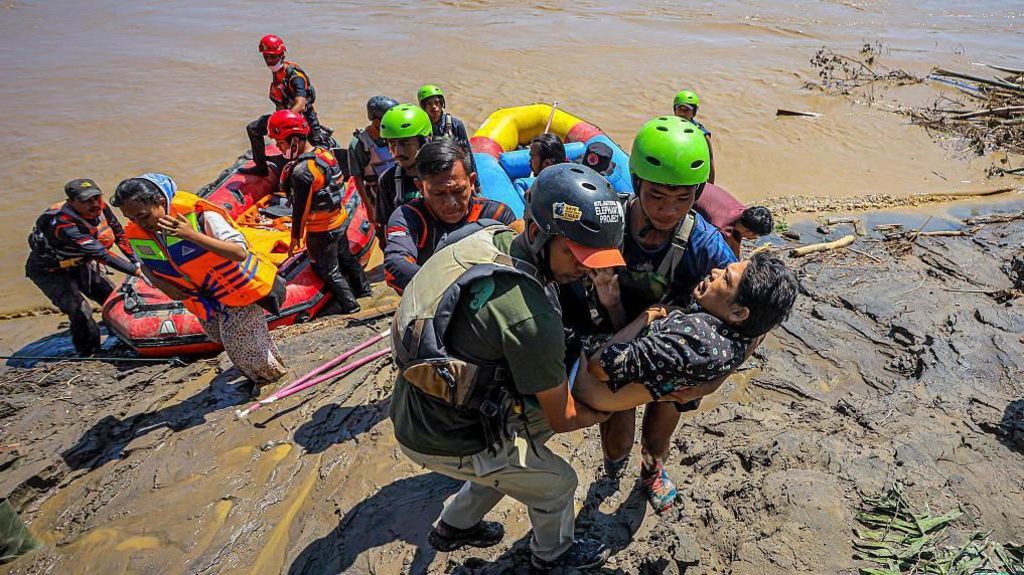
    The Indonesian government confirms the death toll has surged past 440, while rescue teams are engaged in a desperate search for at least 400 individuals reported missing, many feared buried under massive mudslides. The National Disaster Management Agency identified the provinces of Aceh, North Sumatra, and West Sumatra as particularly hard-hit areas where numerous people remain unaccounted for.

    Aid distribution faces significant logistical challenges. While assistance is being delivered by air and sea, numerous villages remain completely isolated and have yet to receive any help. Agency head Suharyanto specifically highlighted Central Tapanuli and Sibolga as cities requiring urgent attention due to their isolated conditions, with ships expected to reach Sibolga on Monday.

    The situation has grown increasingly desperate in some areas. Police spokesperson Ferry Walintukan acknowledged reports of looting, with residents breaking into shops to secure food and water. Police units have been deployed to restore order. ‘The looting happened before logistical aid arrived,’ Walintukan explained. ‘Residents didn’t know that aid would come and were worried they would starve.’

    In villages like Sungai Nyalo, approximately 100km from West Sumatra’s capital Padang, floodwaters have receded but left behind a landscape blanketed in thick grey mud, covering homes, vehicles, and agricultural land. Despite the devastation, many residents like 55-year-old Idris have chosen to remain, reluctant to abandon their homes even as clearing operations have yet to begin.

    The crisis has drawn international response, with Malaysia sending critical medical supplies to the devastated Aceh province. In a significant technological assistance move, tech billionaire Elon Musk has pledged to provide free Starlink satellite internet services to support emergency communications throughout the disaster response.

    The regional impact of the severe weather is extensive. Neighboring Thailand reports at least 170 flood-related fatalities, while Malaysia has also recorded several deaths. The Philippines faces a dual crisis, with floods killing over 200 people this month sparking massive anti-corruption protests involving tens of thousands of citizens. Sri Lanka is simultaneously confronting one of its worst weather disasters in years, with at least 193 lives lost to floods and mudslides.

  • New gas pipeline to benefit southern Xinjiang

    New gas pipeline to benefit southern Xinjiang

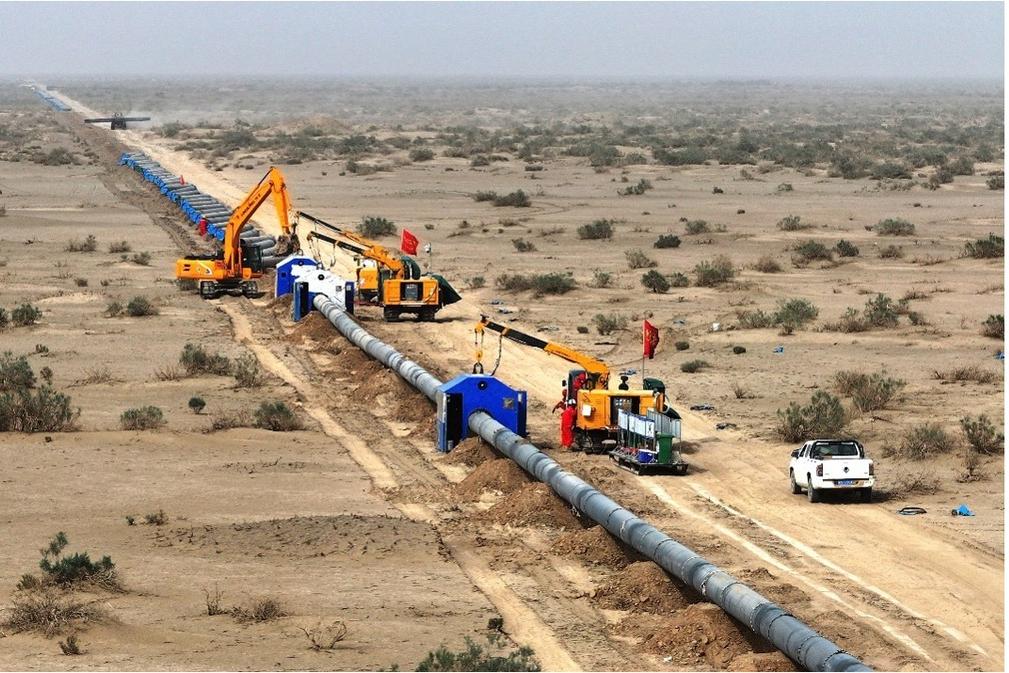
    China National Petroleum Corporation (CNPC) has inaugurated a major natural gas infrastructure project in Xinjiang, marking a significant advancement in regional energy security. The newly commissioned 378-kilometer pipeline, constructed by CNPC’s Tarim Oilfield division, commenced operations on Sunday following an eight-month construction period that began on March 10.

    The pipeline establishes a critical energy corridor stretching from the Yingmaili oil and gas field transmission station in Aksu prefecture to the Sancha distribution station in Kashgar prefecture. This strategic route along the southern foothills of the Tianshan Mountains incorporates substantial infrastructure development, including 11 newly constructed valve chambers and distribution stations, complemented by the expansion of three existing natural gas facilities.

    With an impressive maximum daily supply capacity of 7.2 million cubic meters, the pipeline creates a secondary supply route specifically designed to alleviate chronic gas shortages throughout the region. The project represents a substantial upgrade to the area’s energy infrastructure, addressing long-standing limitations in transmission capacity and pipeline coverage.

    Kang Chun, Chief Expert at Tarim Oilfield, emphasized the project’s transformative potential: “This infrastructure will directly enhance living standards for over two million residents across multiple ethnic groups. The pipeline services five counties and cities, including Aksu city and Bachu county, plus two agricultural and pastoral regiments, ensuring reliable access to clean energy for diverse communities.”

    The project demonstrates China’s continuing investment in western regional development while supporting the country’s broader transition toward cleaner energy sources. The enhanced natural gas distribution network is expected to reduce dependence on traditional solid fuels, contributing to improved air quality and environmental outcomes across southern Xinjiang.