作者: admin

  • Trump says US to investigate Israel’s assassination of Hamas official as ceasefire violation

    Trump says US to investigate Israel’s assassination of Hamas official as ceasefire violation

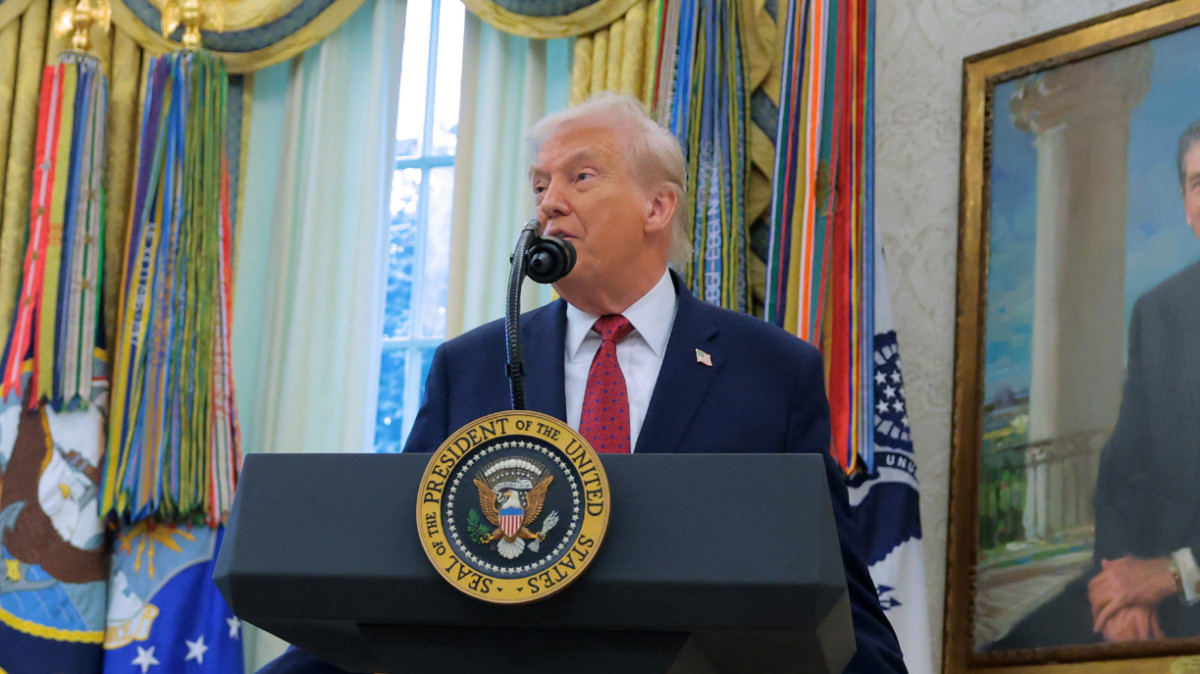
    The United States has initiated an examination into whether Israel’s targeted killing of a senior Hamas military official constitutes a violation of the ongoing Gaza ceasefire agreement, according to statements from President Donald Trump on Monday.

    The operation in question resulted in the death of Raad Saad, a high-ranking member of Hamas’s armed wing, the al-Qassam Brigades. Israeli forces targeted Saad’s vehicle near al-Nabulsi square in western Gaza City on Saturday, eliminating what Reuters described as the second-highest ranking official within Hamas’s military hierarchy, subordinate only to current military chief Izz al-Din al-Haddad.

    This incident represents one of at least 738 documented violations of the October 10th ceasefire agreement, which was internationally guaranteed by Egypt, Qatar, and the United States. According to Gaza’s Government Media Office, these violations have resulted in over 350 Palestinian fatalities since the ceasefire took effect.

    Complicating the fragile truce further, Israel has implemented severe restrictions on humanitarian aid entering Gaza and maintained the closure of the critical Rafah border crossing with Egypt. The assassination of Saad presents particular complications for the Trump administration’s Middle East strategy, which had previously remained largely silent on Israel’s ceasefire violations.

    The administration’s diplomatic efforts have included unusual backchannel communications, with Middle East Eye reporting in October that US envoy Steve Witkoff and Presidential son-in-law Jared Kushner met senior Hamas officials, including Khalil al-Hayya, at Egypt’s Sharm el-Sheikh resort. During these discussions, American representatives allegedly provided personal guarantees regarding war termination to Hamas leadership.

    Concurrently, the Trump administration has advanced a controversial proposal to partition Gaza through the establishment of “Alternative Safe Communities” in the Israeli-occupied portion of the territory. This plan, developed by Kushner allies dispatched to Tel Aviv, has raised concerns among key regional powers including Qatar, Saudi Arabia, Indonesia, Egypt, and Turkey.

    These nations’ support is crucial for the deployment of an international stabilization force to Gaza, which received United Nations Security Council approval in November but remains non-operational. While US officials project a 2026 readiness date, President Trump asserted the force is already active, claiming “more and more countries are coming into it” and would provide troops upon his request. This assertion contradicts accounts from Western and Arab officials and analysts consulted by Middle East Eye, none of whom were aware of any operational international force in Gaza.
  • Shares are mostly lower in Europe and Asia ahead of US jobs and inflation reports

    Shares are mostly lower in Europe and Asia ahead of US jobs and inflation reports

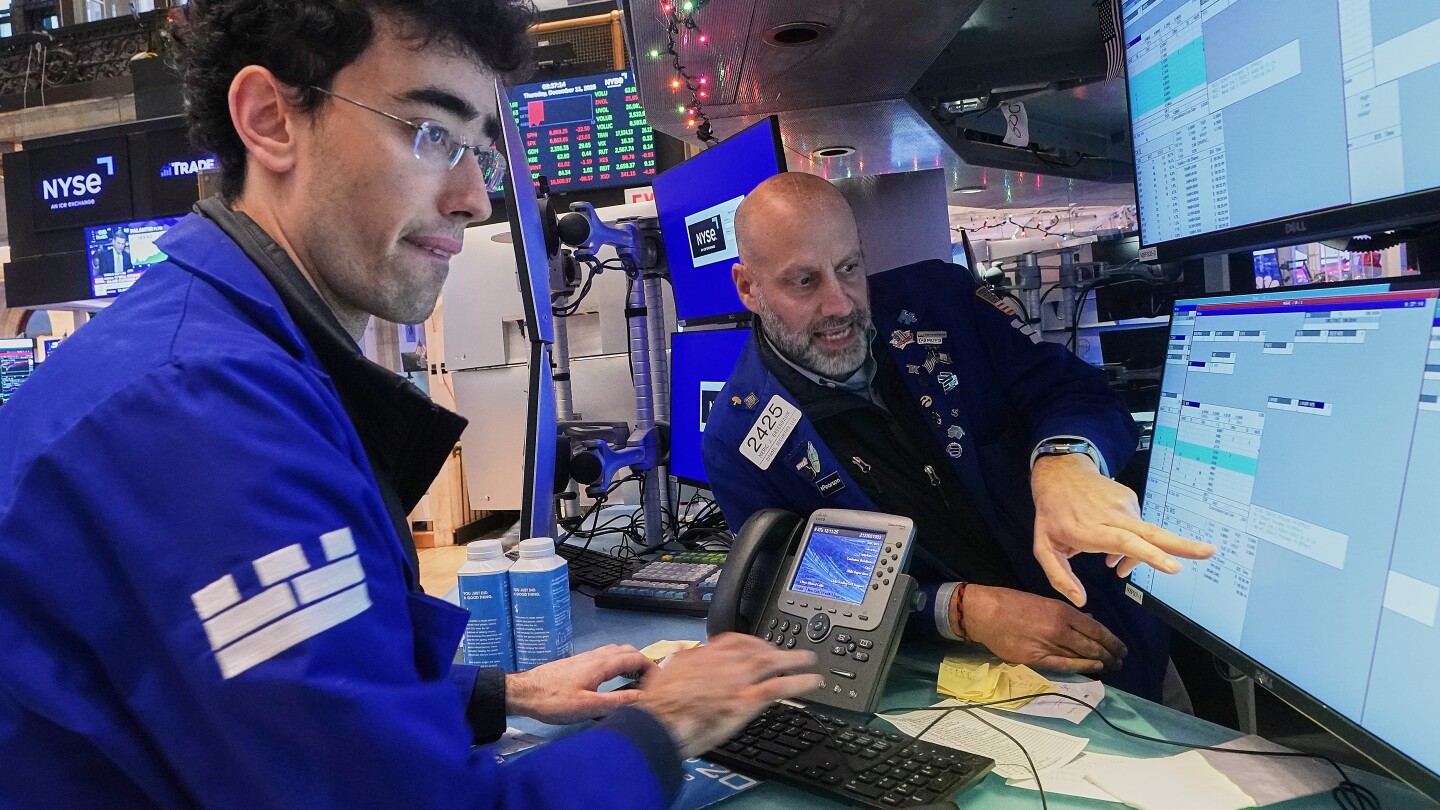
    Financial markets across Europe and Asia experienced broad declines on Tuesday as investors adopted a cautious stance ahead of pivotal U.S. employment and inflation reports that could significantly influence future interest rate decisions.

    European benchmarks showed mixed but predominantly negative movement. Germany’s DAX index dropped 0.4% to 24,142.20 while Britain’s FTSE 100 slipped 0.3% to 9,722.23. France’s CAC 40 managed a marginal gain of 0.1%, reaching 8,129.43.

    Asian markets faced more substantial pressure. Tokyo’s Nikkei 225 declined 1.6% to 49,383.29 despite the S&P Global Flash purchasing managers index showing improvement to 49.7 from November’s 48.7, though remaining below the 50-point expansion threshold. Chinese markets retreated following disappointing November economic indicators showing retail sales growth at just 1.3% year-over-year, the slowest pace since 2022.

    Hong Kong’s Hang Seng dropped 1.5% to 25,235.41, while Shanghai’s Composite index fell 1.1% to 3,824.81. South Korea’s Kospi experienced the most significant decline, shedding 2.2% to 3,999.13 as technology shares, including SK Hynix (-4.3%) and Samsung Electronics (-1.9%), faced substantial selling pressure.

    The market apprehension stems from heightened sensitivity to upcoming U.S. economic data and potential policy shifts. Investors are particularly focused on the Bank of Japan’s Friday meeting, where an interest rate hike is widely anticipated—a move that could disrupt global bond, currency, and cryptocurrency markets.

    Adding to market concerns, iRobot shares plummeted 22% in premarket trading following the company’s Chapter 11 bankruptcy filing, compounding Monday’s 73% decline. The robotic vacuum manufacturer has struggled against intensifying competition despite assurances of uninterrupted device operations during restructuring.

    Meanwhile, artificial intelligence stocks displayed volatility amid growing skepticism about whether massive investments in chips and data centers will generate adequate returns. Nvidia gained 0.7% while Oracle fell 2.7% and Broadcom dropped 5.6%.

    Commodity markets also showed weakness with U.S. benchmark crude oil falling $1.08 to $55.74 per barrel and Brent crude declining $1.06 to $59.50. Currency markets saw the U.S. dollar weaken to 154.84 Japanese yen from 155.21, while the euro strengthened slightly to $1.1760 from $1.1755.

  • Ambition to ashes: Luthra brothers return to India to face justice over Goa fire

    Ambition to ashes: Luthra brothers return to India to face justice over Goa fire

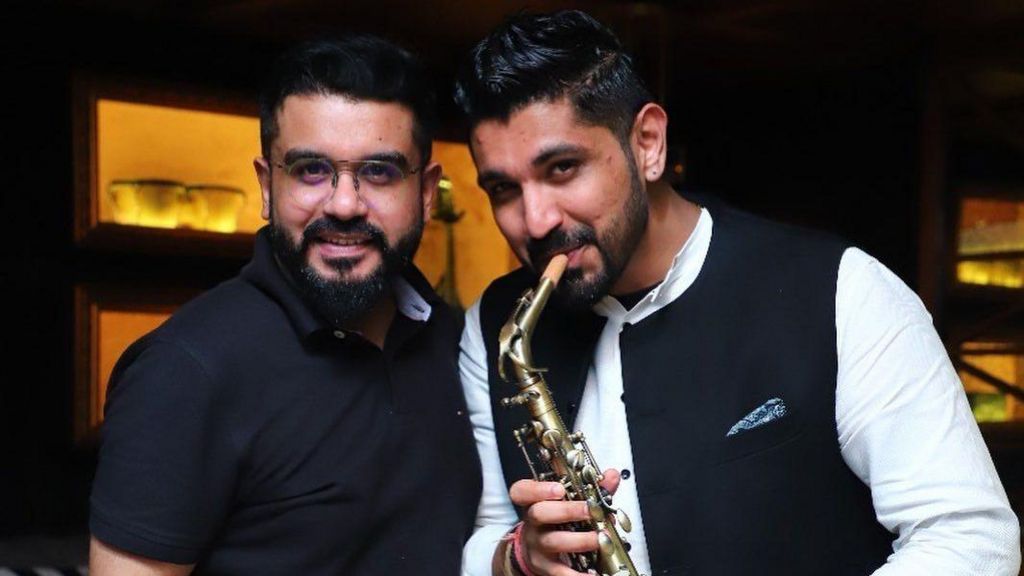
    The once-promising entrepreneurial journey of Saurabh and Gaurav Luthra has taken a devastating turn following the catastrophic fire at their Goa nightclub that claimed 25 lives on December 7th. The brothers, who were recently deported from Thailand to face justice in India, now stand at the center of one of India’s most scrutinized hospitality industry tragedies.

    Growing up in a modest northern Delhi neighborhood, the Luthra brothers displayed early entrepreneurial instincts that eventually transformed them into nightlife impresarios. Their father, paralyzed and bedridden, watched as his sons built a hospitality empire that began with a simple cafe in Hudson Lane in 2016. The success of their initial venture, which quickly became a student favorite, propelled them to establish Dramebaaz shortly afterward.

    Their breakthrough arrived with Romeo Lane, an upscale nightclub concept that masterfully blended Bollywood glamour with accessible luxury. The brand expanded rapidly across India, reaching cities like Noida, Meerut, Lucknow, and Dehradun, and even extending to Dubai in 2023. The Goa property, Birch by Romeo Lane, represented their most ambitious project yet—a sprawling tropical escape featuring open spaces, ponds, and premium amenities.

    Saurabh, the public face of the operation, cultivated an image of success through carefully curated social media presence. His Instagram account showcased ribbon-cutting ceremonies, celebrity encounters, and the trappings of entrepreneurial success that earned him recognition in Economic Times’ “40 under 40” list and a feature in Forbes India. Gaurav maintained a lower profile, focusing on financial management and day-to-day operations.

    However, their rapid expansion faced mounting regulatory challenges, particularly in Goa. The Birch property had been subject to multiple complaints regarding noise violations, environmental concerns about sewage discharge into the ecologically sensitive Baga River, and allegations of illegal construction. Just months before the fire, Goa’s Tourism Department had ordered demolition of parts of their Vagator property for encroaching on public beach land.

    The brothers’ immediate flight to Phuket hours after the tragedy sparked international manhunt efforts, with Interpol issuing notices against them. They maintain their innocence, claiming they never intended to evade justice and have been “erroneously portrayed” as villains in a broader tragedy. Legal documents reveal their defense strategy: they argue being “licensees, not operators” without direct control over safety regulations.

    As investigations continue, the Luthra brothers’ story serves as a cautionary tale about ambition, regulatory oversight, and the devastating consequences when safety protocols are potentially compromised in pursuit of expansion.

  • Americans like artificial Christmas trees even though few are made in US and prices are up

    Americans like artificial Christmas trees even though few are made in US and prices are up

    In a Fairfield, California workshop, Mark Latino oversees the production of Christmas tinsel on vintage machinery—a rare domestic operation in an industry dominated by overseas manufacturing. As CEO of Lee Display, a family business established in 1902, Latino represents a shrinking segment of American-made holiday decorations while navigating the complexities of global trade dynamics.

    Recent tariff implementations have illuminated the fragile economics of artificial Christmas tree production, triggering 10-15% price increases according to the American Christmas Tree Association. Despite these cost pressures, industry leaders confirm that large-scale production won’t return to U.S. shores due to fundamental structural challenges.

    Chris Butler, CEO of National Tree Co., explains the predicament: ‘Artificial trees require intensive labor and specialized components that simply aren’t manufactured in the United States.’ With over 80% of American households opting for artificial trees—a statistic consistent for 15 years—the industry faces a delicate balance between consumer price sensitivity and production realities.

    The migration of tree manufacturing began in the 1990s, first to Thailand and subsequently to China, where 90% of global production now occurs. The process remains remarkably hands-on, requiring 1-2 hours per tree for needle molding, branch assembly, and light attachment—tasks performed by workers earning $1.50-$2 hourly in China.

    Balsam Brands CEO Mac Harman illustrates the cost disparity: ‘Our feasibility study showed an $800 tree would cost $3,000 if manufactured domestically.’ The company couldn’t even source American-made gloves for fluffing branches, highlighting the depth of the supply chain challenge.

    While some companies are diversifying production to Cambodia, tariffs have followed this migration too—with rates fluctuating between 19-49%. The industry response has included workforce reductions, price increases, and operational cutbacks. Harman reports U.S. sales declines of 5-10% despite growth in international markets, suggesting tariffs have dampened domestic demand.

    For small operators like Lee Display, which produces approximately 10,000 trees annually alongside commercial displays, the tariffs still impact imported components like lights. Yet Latino values the control domestic production provides: ‘Everything here is either my fault or my careful planning.’

    As Butler summarizes the consumer mindset: ‘Putting a ‘Made in the U.S.A.’ sticker on the box won’t do any good if it’s twice as expensive. If it’s 20% more expensive, it won’t sell.’ This reality ensures that despite tariff pressures, America’s Christmas trees will continue bearing international origins for the foreseeable future.

  • US contractor behind ‘Alligator Alcatraz’ was frontrunner for Gaza aid project: Report

    US contractor behind ‘Alligator Alcatraz’ was frontrunner for Gaza aid project: Report

    A Florida-based contractor previously responsible for constructing a migrant detention facility nicknamed ‘Alligator Alcatraz’ had been positioned to oversee a massive $1.7 billion aid distribution operation in Gaza, according to investigative reporting. Gotham LLC, the company behind the controversial Everglades detention center, held an advantageous position in the bidding process to become the ‘Master Contractor’ for humanitarian and commercial shipments into the Palestinian territory.

    The proposal, orchestrated by political appointees within an initiative led by Jared Kushner and his Gaza liaison Rabbi Aryeh Lightstone, envisioned supplying 600 truckloads of aid daily. The contractor would have charged substantial fees—$2,000 per humanitarian load and $12,000 for commercial shipments—though the funding source remained unspecified in project documents.

    Gotham’s owner, Matt Michelsen, who has extensively profited from government contracts including COVID-19 lockdown initiatives, abruptly withdrew from the bidding process following media inquiries. The company’s detention facility in Florida’s Big Cypress National Preserve, constructed in just eight days amidst python and alligator-inhabited marshlands, featured rows of bunk beds enclosed by chain-link fencing before being ordered shut by a federal judge in August.

    The aid management plan notably excluded career diplomats and humanitarian experts, instead relying on former members of Elon Musk’s ‘Department of Government Efficiency’ (Doge) team. These officials, including a 25-year-old Princeton graduate and conservative Jewish-American activist, operated from luxury beachfront hotels in Tel Aviv while developing plans for Gaza housing compounds termed ‘Alternative Safe Communities.’

    This approach echoes previous US intervention models in Iraq and Afghanistan, relying on private contractors funded by taxpayer dollars to execute large-scale international initiatives.

  • Trump condemned for saying Rob Reiner, wife Michele brought on own murder

    Trump condemned for saying Rob Reiner, wife Michele brought on own murder

    In a moment that blurred the lines between reality and illusion, actress Millie Bobby Brown executed a stunning vanishing act aboard the world’s fastest roller coaster during her Abu Dhabi visit. The Stranger Things star, accompanied by her husband Jake Bongiovi, experienced the record-breaking Formula Rossa ride at Ferrari World on Yas Island, where she apparently disappeared mid-ride, leaving Bongiovi completely bewildered.

    The incident occurred as the couple reached the attraction’s maximum velocity of 240 km/h (149 mph), with Brown seemingly evaporating from her seat during the high-speed journey. Eyewitness accounts and subsequent video evidence confirm Bongiovi’s genuine astonishment as he turned to find his wife’s seat unexpectedly empty.

    Theme park officials and special effects experts suggest the disappearance may be connected to Yas Island’s ongoing ‘Summer Beyond Belief’ promotion, which features augmented reality experiences and technological marvels throughout the entertainment destination. The Formula Rossa coaster, known for its acceleration that rivals Formula One race cars, appears to have been the stage for an elaborate mixed-reality prank orchestrated by the actress and park management.

    Brown, who has previously demonstrated her passion for elaborate practical jokes on social media, collaborated with park technicians to create the illusion using precisely timed projection mapping and augmented reality elements that synchronize with the coaster’s movement. The technological marvel demonstrates Abu Dhabi’s growing reputation as a hub for entertainment innovation, blending cutting-edge technology with world-class attractions.

    The viral moment has generated significant attention on social media platforms, with fans praising both the technical execution and Bongiovi’s authentic reaction. Park representatives have confirmed the existence of several hidden augmented reality experiences throughout Yas Island, encouraging visitors to discover other magical moments during their summer visits.

  • BBC visits flower-lined Bondi Pavilion after attack

    BBC visits flower-lined Bondi Pavilion after attack

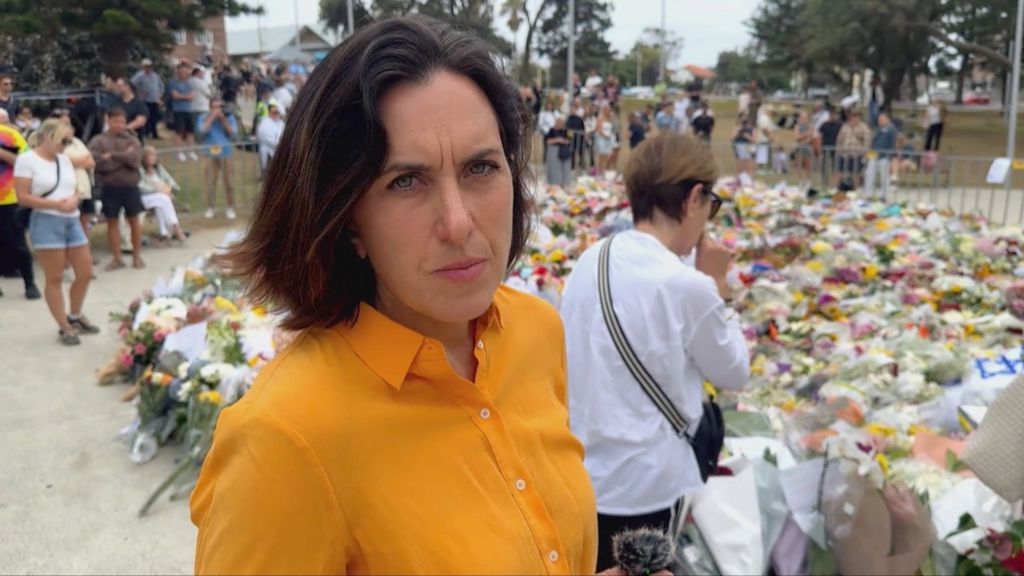
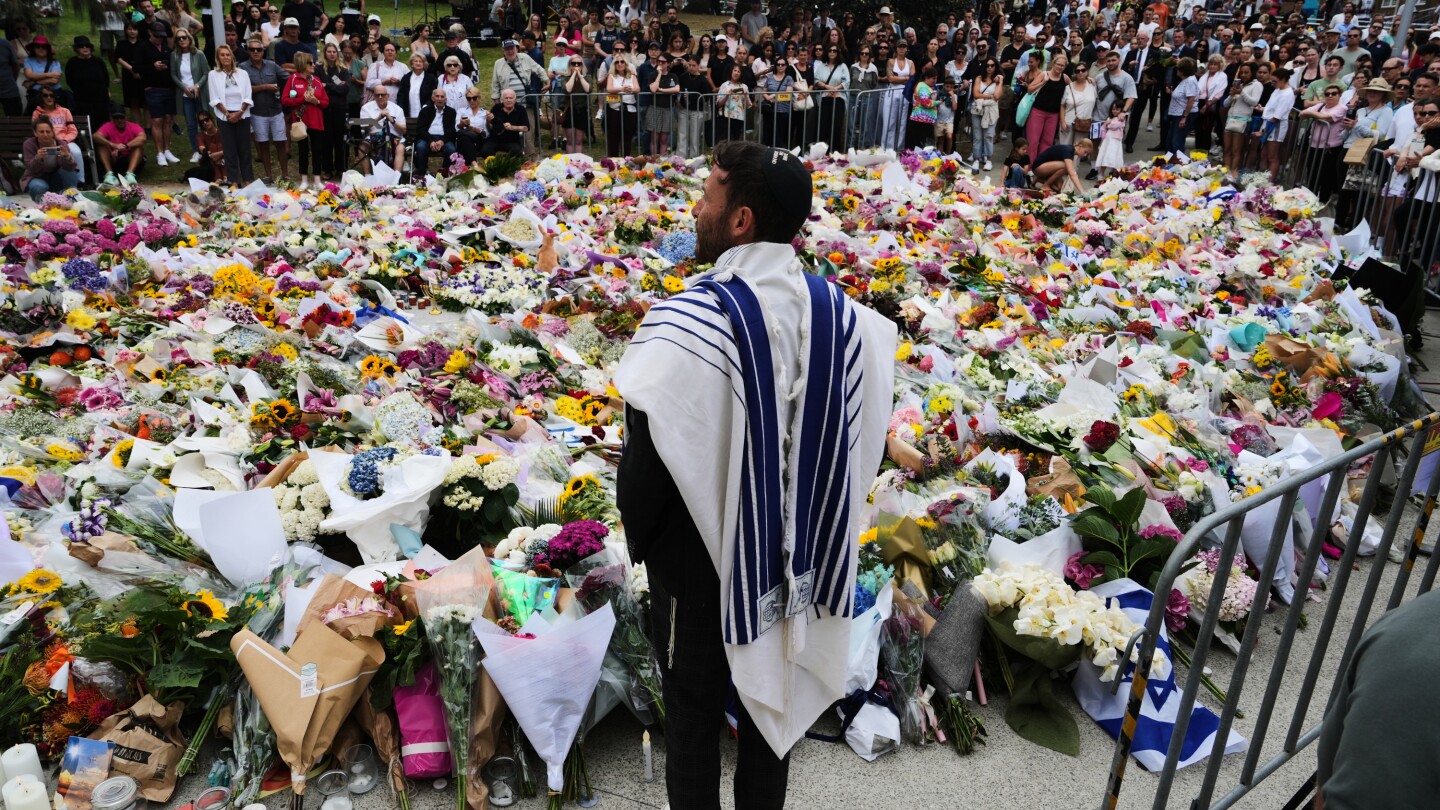
    The Bondi Pavilion, an iconic community and cultural hub in Sydney’s eastern suburbs, has been transformed into a sprawling memorial site following Saturday’s devastating attack. Hundreds of local residents and visitors have created a spontaneous sea of floral tributes and flickering candles along the pavilion’s exterior, honoring the 15 victims who lost their lives in the Bondi Junction stabbing incident.

    This powerful display of communal grief has drawn international attention, with BBC News documenting the emotionally charged scene where well-wishers continue to arrive throughout the day. The makeshift memorial continues to grow as people place bouquets, handwritten notes, and personal mementos alongside the growing collection of tributes.

    Community leaders have noted that the floral tribute represents more than just mourning—it symbolizes Sydney’s resilience and collective determination to stand united against violence. The Bondi Pavilion, typically associated with beachside leisure and cultural events, has temporarily become sacred ground for reflection and solidarity.

    Local authorities have established designated areas for the memorial while ensuring public access to the site. Mental health support services have been made available nearby for those affected by the tragedy, with counselors noting the importance of such communal rituals in the healing process.

  • US FDA approves AstraZeneca, Daiichi’s breast cancer drug as first-line treatment

    US FDA approves AstraZeneca, Daiichi’s breast cancer drug as first-line treatment

    In a significant advancement for oncology therapeutics, the U.S. Food and Drug Administration has granted expanded approval to the targeted cancer drug Enhertu for first-line treatment of HER2-positive metastatic breast cancer. The Monday authorization permits its use in combination with Roche’s Perjeta (pertuzumab) for adult patients with advanced HER2-positive breast cancer confirmed through FDA-approved diagnostic testing.

    Developed through collaboration between Daiichi Sankyo and AstraZeneca, Enhertu (famously known as trastuzumab deruxtecan) initially received FDA endorsement in December 2019 as a third-line intervention for HER2-positive breast cancer patients. This latest regulatory milestone represents a substantial therapeutic elevation, moving the drug combination to the forefront of treatment protocols for this aggressive cancer subtype.

    The expanded indication addresses a critical unmet need in oncology by providing clinicians with a powerful first-line therapeutic option for patients presenting with advanced HER2-positive disease. This approval follows comprehensive clinical data demonstrating the combination’s efficacy in targeting HER2-positive cancer cells through complementary mechanisms of action.

    Medical experts anticipate this regulatory decision will reshape treatment paradigms for newly diagnosed advanced HER2-positive breast cancer patients, potentially establishing the Enhertu-Perjeta combination as a new standard of care in frontline metastatic settings.

  • Australian police say Bondi Beach mass shooting was inspired by Islamic State

    Australian police say Bondi Beach mass shooting was inspired by Islamic State

    Australian federal authorities have officially classified the devastating mass shooting at Sydney’s Bondi Beach during a Hanukkah celebration as a terrorist act inspired by Islamic State ideology. Federal Police Commissioner Krissy Barrett confirmed the assessment on Tuesday, revealing critical evidence that prompted this designation.

    The attack, which occurred on Sunday, resulted in 15 fatalities and left numerous victims hospitalized. Authorities identified the perpetrators as a father and son duo, aged 50 and 24 respectively. During the incident, the older suspect was fatally shot by responding security forces, while his son remains under medical treatment and investigation.

    Prime Minister Anthony Albanese addressed the nation at a press conference, explaining that the determination of terrorist motives emerged from concrete evidence collected by investigators. Among the most significant findings were Islamic State flags discovered within the suspects’ vehicle, which has been seized for forensic examination.

    The human toll continues to mount, with medical officials reporting that 25 attack survivors remain hospitalized across Sydney. Ten of these victims are listed in critical condition, fighting for their lives amidst a coordinated medical response.

    This tragedy represents one of Australia’s most severe security incidents in recent years, particularly notable for occurring during a Jewish religious observance at a popular public venue. The declaration of terrorism marks a significant development in understanding the motivations behind the brutal assault that has shocked the nation and drawn international condemnation.

  • UAE consumers drive premium spending as Saudi Arabia focuses on value

    UAE consumers drive premium spending as Saudi Arabia focuses on value

    A striking divergence in consumer behavior is reshaping retail markets across the Gulf region, with the United Arab Emirates and Saudi Arabia developing distinctly different spending patterns according to NielsenIQ’s latest State of the Nation report for Q3 2025.

    United Arab Emirates consumers are demonstrating a pronounced preference for premium products across multiple categories. The Fast-Moving Consumer Goods (FMCG) sector experienced a robust 7.7% revenue surge over the past year, while Technology & Durables (T&D) posted a healthy 6.9% increase. This trend reflects a sophisticated consumer base actively trading up for quality and variety, particularly within grocery purchases. Both value and premium FMCG segments in the UAE expanded by more than 20%, indicating growth across the entire spending spectrum.

    Conversely, Saudi Arabian shoppers are adopting a more pragmatic approach to everyday purchases while showing greater willingness to splurge on technology. The kingdom’s FMCG market grew modestly at 1.7% year-on-year, driven by value-conscious choices. However, technology spending surged by 4.5%, with premium categories including smartphones, televisions, and tablets leading this expansion. This creates a unique market dynamic where Saudi consumers balance frugality in daily essentials with aspirational technology purchases.

    Category performance highlights these contrasting trends. Saudi Arabia’s grocery growth is propelled by Pet Care (+13%), Snacking (+6%), and Beverages (+3%), while the UAE demonstrates balanced growth across categories. The technology sector in both markets shows consumers increasingly comfortable with significant online purchases, with digital channels now representing nearly one-third of T&D revenues.

    Retail channel preferences are also evolving across the region. Modern Trade maintains dominance with approximately 70% of regional FMCG sales, but e-commerce is gaining substantial traction. Online sales now contribute 11.9% of FMCG revenue in the UAE and 5.6% in Saudi Arabia. Traditional trade continues to play a significant role, accounting for 18% of sales in the UAE and 23% in Saudi Arabia.

    According to Andrey Dvoychenkov, General Manager at NielsenIQ APP, these trends present strategic opportunities for retailers and suppliers. Brands must develop tailored approaches for each market: emphasizing premium technology offerings during seasonal peaks in Saudi Arabia, while optimizing pricing architecture and maintaining robust omni-channel presence in the UAE. Understanding these nuanced consumer behaviors will be critical for capturing growth in the region’s dynamic economies.