作者: admin

  • La Nina conditions may hit rain, lead to drought

    La Nina conditions may hit rain, lead to drought

    Meteorological authorities warn that eastern and southern regions of China face heightened drought risks throughout winter and into spring 2026 due to persistent La Nina conditions in the equatorial Pacific. While climate experts confirm the unlikely development of a full-scale La Nina event, the existing oceanic cooling pattern continues to disrupt normal precipitation distribution across affected regions.

    The National Climate Center’s monitoring data indicates that La Nina conditions became established in October 2025, characterized by unusually cool sea surface temperatures across the central and eastern equatorial Pacific. According to Zhang Daquan, Deputy Director of the center’s climate prediction division, meteorologists utilize the Nino 3.4 index as the standard measurement for such phenomena, with values dropping below -0.5°C indicating La Nina conditions.

    Climate scientists emphasize the critical distinction between La Nina conditions and official La Nina events. The latter requires the Nino 3.4 index to remain below the -0.5°C threshold for five consecutive months—a duration not expected in the current scenario. Forecast models project the cooling pattern will persist for two to three months before transitioning toward neutral conditions around February or March 2026.

    The meteorological mechanism involves La Nina generating cyclonic circulation anomalies over the western North Pacific and South China Sea. This atmospheric configuration produces prevailing northeasterly winds that impede moisture transport from tropical regions—China’s primary winter vapor source. Consequently, precipitation deficits are anticipated across eastern and southern provinces.

    Contrary to public assumptions linking La Nina with severe winter cold, temperature projections indicate near-average or slightly above-average winter temperatures nationwide. Zhang clarified that multiple factors beyond La Nina—including Arctic sea ice coverage, Eurasian snow accumulation, and natural atmospheric variability—collectively influence China’s seasonal climate patterns.

    The National Climate Center anticipates increased temperature volatility throughout winter, featuring more pronounced alternations between cold spells and warm periods. This variability occurs alongside the predicted precipitation reduction, creating complex weather challenges for agricultural and water resource management sectors.

  • Zelenskyy and some 30 countries to approve compensation body for Ukraine damages

    Zelenskyy and some 30 countries to approve compensation body for Ukraine damages

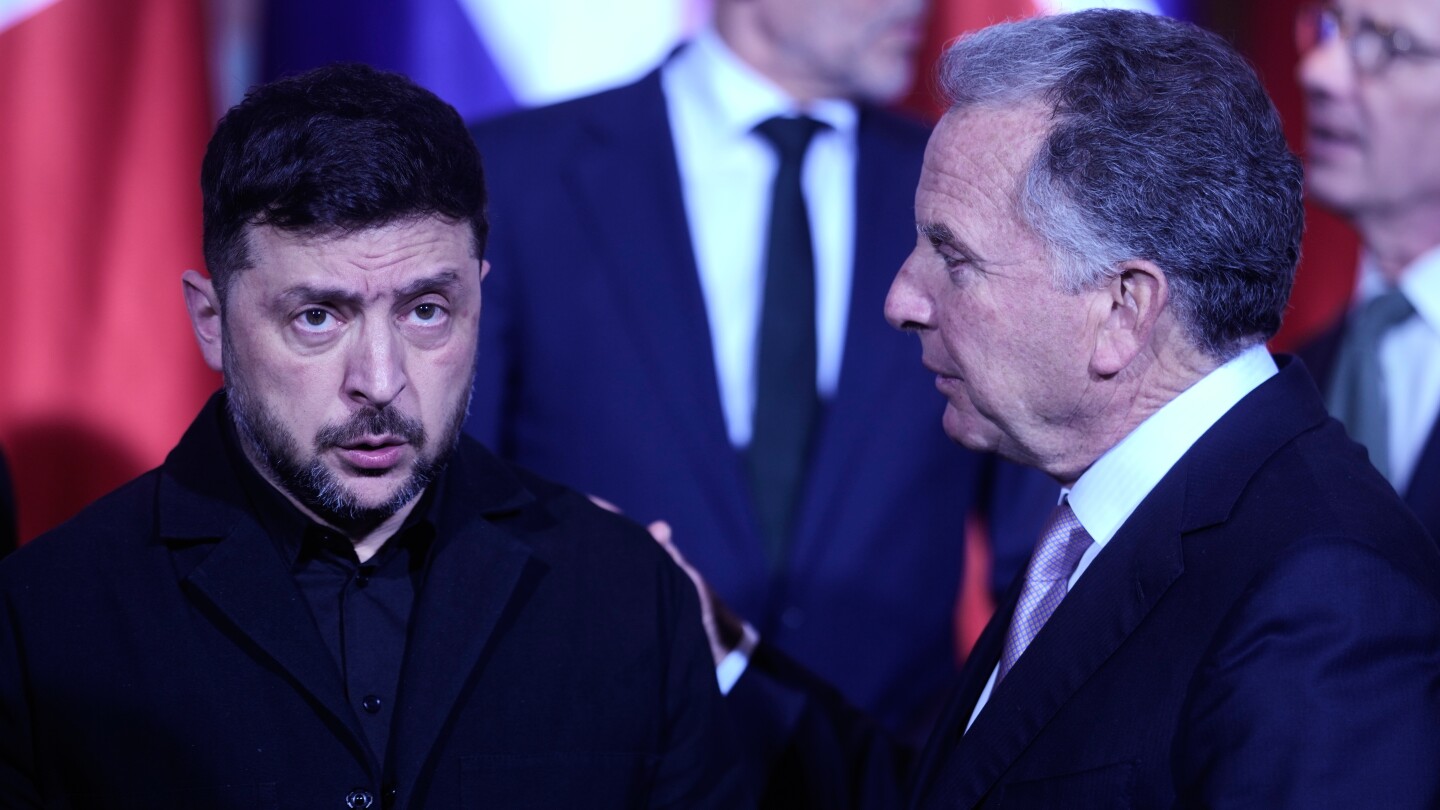
    THE HAGUE, Netherlands — In a significant multilateral development, Ukrainian President Volodymyr Zelenskyy alongside representatives from approximately thirty nations is poised to formally establish an international compensation body to address damages resulting from Russia’s invasion of Ukraine. The ceremonial signing in The Hague occurs amidst complex diplomatic maneuvers, including recent peace discussions involving U.S. special envoy Steve Witkoff, Jared Kushner, and German Chancellor Friedrich Merz.

    President Zelenskyy demonstrated strategic flexibility by expressing willingness to suspend Ukraine’s NATO membership aspirations in exchange for concrete Western security guarantees, though he firmly rejected territorial concessions to Russia. “These security arrangements represent a viable mechanism to deter future Russian aggression,” Zelenskyy stated during a press interaction. “This position itself constitutes a substantial compromise from our perspective.”

    The newly formed International Claims Commission, operating under the auspices of the Council of Europe’s human rights framework, will process Ukrainian claims for compensation regarding damages, losses, or injuries sustained since Russia’s full-scale invasion commenced in February 2022. This mechanism builds upon the existing Register of Damage for Ukraine established during the 2023 Council of Europe summit in Iceland, which has already cataloged approximately 80,000 claims.

    Despite the political consensus, critical funding questions remain unresolved. While the Council of Europe maintains that Russia should ultimately bear financial responsibility, no clear enforcement mechanism exists to compel Moscow’s compliance. One prominent proposal involves utilizing frozen Russian assets worth tens of billions of dollars currently held in European jurisdictions.

    The commission requires ratification from twenty-five nations to become operational, though over thirty countries—including European nations, Mexico, Japan, and Canada—are expected to participate initially, representing unprecedented support for a Council of Europe treaty initiative. The European Union has additionally indicated its intention to join the compensation framework.

    Parallel to these reparations efforts, many participating nations have endorsed the establishment of a specialized international court under Council of Europe jurisdiction to prosecute senior Russian officials alleged to have committed crimes during the invasion. President Zelenskyy’s diplomatic agenda in the Netherlands further includes addressing the Dutch parliament and meeting with King Willem-Alexander.

  • Struggling patient breathes easier after critical surgery

    Struggling patient breathes easier after critical surgery

    A groundbreaking medical intervention in China’s remote southwestern region has dramatically transformed the life of a 62-year-old patient suffering from a rare combination of serious health conditions. Mr. Zha, a resident of Malipo county in Yunnan’s Wenshan Zhuang and Miao Autonomous Prefecture, has experienced remarkable improvement after Shanghai-based surgeons successfully removed a massive 1.3-kilogram tumor from his neck.

    The patient had been battling severe respiratory complications caused by Madelung’s disease—an uncommon disorder characterized by symmetric fat deposits—further complicated by advanced laryngeal cancer. His condition had progressively worsened, with local medical practitioners struggling to provide effective treatment as his neck swelled to an alarming size, severely constricting his airway.

    The turning point came in mid-October when a specialized medical team from Shanghai’s prestigious Eye and ENT Hospital of Fudan University arrived in Wenshan as part of a national healthcare initiative. Dr. Xu Chengzhi, who led the surgical intervention, described the critical condition upon initial examination: ‘During our free medical consultation on October 20, we encountered a patient whose neck had expanded to bucket-like proportions, with his airway compressed to a narrow slit.’

    This medical mission represents a broader national effort orchestrated by China’s National Health Commission. Since July, over 80 mobile medical teams have been deployed to underserved regions with limited healthcare infrastructure. The three-week program in Wenshan combined direct patient care with knowledge transfer, allowing Shanghai’s medical experts to both treat complex cases and enhance local medical capabilities through training and collaboration.

    Following the intricate surgery, Mr. Zha reported immediate relief and significantly improved breathing capacity, marking a profound enhancement in his quality of life despite necessary postoperative precautions.

  • Sydney taekwondo instructor gets life sentence for murdering student and parents

    Sydney taekwondo instructor gets life sentence for murdering student and parents

    In a landmark ruling at the New South Wales Supreme Court, 51-year-old Kwang Kyung Yoo received a life imprisonment sentence without parole eligibility for the brutal murder of his 7-year-old taekwondo student and the child’s parents. Justice Ian Harrison delivered the unprecedented sentence on Tuesday, citing the extreme nature of the crimes and the need for community protection.

    The court heard how Yoo, operating under the moniker ‘Master Lion’ at his Lion’s Taekwondo and Martial Arts Academy in western Sydney, committed the triple homicide in February of last year. Driven by financial envy toward the Korean immigrant family’s economic success, Yoo strangled the young boy and his 41-year-old mother within his martial arts studio before proceeding to the family residence, where he fatally stabbed the 39-year-old father.

    Justice Harrison characterized the killings as “horrific and violent acts, senselessly cruel and cynical, perpetrated without a trace of human compassion.” Despite Yoo’s subsequent expressions of remorse and claims of being “held captive by sin,” the judge emphasized that the severity of the crimes warranted permanent incarceration.

    The investigation revealed Yoo’s elaborate deception patterns extending beyond the murders. Evidence presented during November sentencing hearings detailed how the instructor fabricated stories about meeting Australian billionaire Gina Rinehart, qualifying for the 2000 Sydney Olympics, and owning luxury vehicles. Psychological evaluations indicated these falsehoods escalated as Yoo struggled with cultural and parental expectations of success from his South Korean background.

    Yoo’s arrest followed his admission to a hospital with injuries sustained during the fatal confrontation at the family home, where he initially claimed to have been attacked in a supermarket parking lot. Police apprehended him at the medical facility after discovering the mother’s Apple watch and the family’s BMW in his possession.

    The sentencing marks a rare application of life without parole in New South Wales, where murder convictions typically carry standard nonparole periods of 20-25 years. The victims’ identities remain protected under state laws safeguarding child crime victims.

  • UN envoy calls on Japan to retract Taiwan comments

    UN envoy calls on Japan to retract Taiwan comments

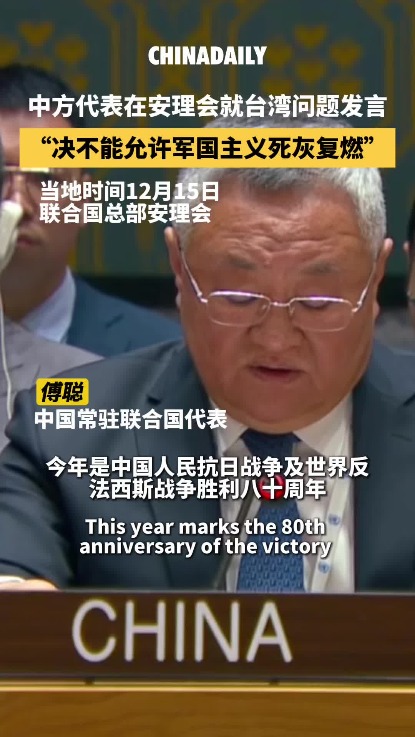
    China’s Permanent Representative to the United Nations, Ambassador Fu Cong, has issued a stern rebuke of Japanese Prime Minister Sanae Takaichi’s recent characterization of Taiwan as a potential military contingency for Japan. During Monday’s UN Security Council debate on Leadership for Peace, Fu demanded immediate retraction of these statements and warned Japan against persisting on this “wrong path.”

    The diplomatic confrontation stems from Prime Minister Takaichi’s unprecedented declaration to the Japanese parliament last month that a “Taiwan contingency” could constitute a “survival-threatening situation” for Japan, potentially justifying military intervention. This marked the first explicit threat of force toward China by a postwar Japanese leader.

    Ambassador Fu framed these comments within historical context, noting the international community’s ongoing reflection on World War II lessons. “Militarism and fascism once brought unprecedented catastrophes to humanity,” Fu stated, adding that any attempts to “whitewash or overturn the history of aggression challenge the bottom line of human conscience.”

    The Chinese envoy emphasized the necessity of upholding the postwar international order and UN Charter principles, including sovereign equality of states and opposition to unilateralism. His remarks coincided with former UN Secretary-General Ban Ki-moon’s criticism of the Security Council’s dysfunctionality, particularly citing the repeated use of veto power to shield allies from accountability.

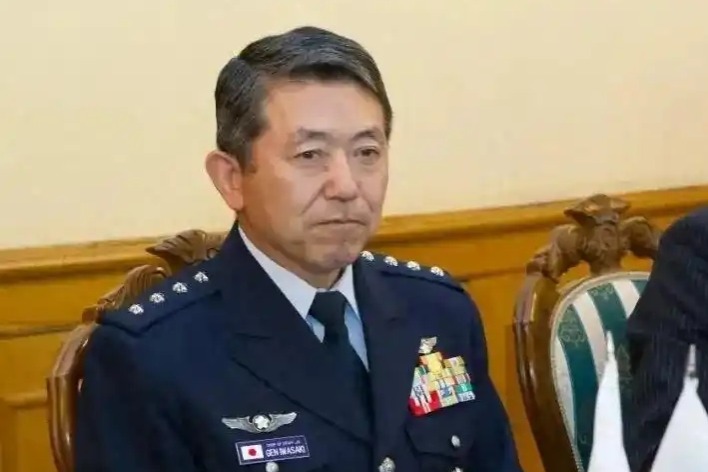
    In parallel developments, China announced immediate sanctions against Shigeru Iwasaki, former chief of Japan’s Self-Defense Forces Joint Staff, for colluding with Taiwan independence forces. The measures include freezing all his assets in China, responding to his March appointment as a “political consultant” for Taiwan authorities.

    The diplomatic exchange highlights escalating tensions in East Asia, with China reinforcing its position that Taiwan represents an absolute “red line” in international relations that must not be crossed.

  • Sanctions on Japan’s former senior official announced

    Sanctions on Japan’s former senior official announced

    China has enacted comprehensive sanctions against Shigeru Iwasaki, former Chief of the Joint Staff of Japan’s Self-Defense Forces, for his alleged collusion with Taiwanese separatist elements. The measures, announced by China’s Foreign Ministry on Monday, December 15, 2025, took immediate effect following the release of an official decree.

    The sanctions package includes the freezing of all movable and immovable properties and assets held by Iwasaki within Chinese territory. Additionally, Chinese organizations and individuals are expressly prohibited from engaging in any transactions or cooperative endeavors with the former Japanese official. Iwasaki will also be denied Chinese visas and entry into the country.

    Foreign Ministry spokesman Guo Jiakun articulated China’s position during a press briefing in Beijing, emphasizing that Taiwan represents a fundamental core interest and an inviolable red line in Sino-Japanese relations. The sanctions were implemented pursuant to China’s Anti-Foreign Sanctions Law, with authorities asserting that Iwasaki’s activities constituted serious violations of the one-China principle and the foundational political documents governing China-Japan relations.

    Official statements characterized Iwasaki’s acceptance of a political advisory role with Taiwan’s administration as a provocative act that amounts to blatant interference in China’s internal affairs. Despite multiple diplomatic protests to Japanese authorities, Iwasaki reportedly persisted in his engagements with Taiwanese separatist factions, ultimately necessitating the punitive measures.

  • Policy support urged to boost marriage rate

    Policy support urged to boost marriage rate

    Demographic experts are urging comprehensive policy reforms to address China’s persistently low marriage rates, highlighting the need for financial incentives and workplace culture transformations. Recent data from the National Bureau of Statistics reveals approximately 6.1 million couples registered marriages in 2024, with a modest increase observed during the first three quarters of 2025 compared to the previous year.

    Professor Jiang Quanbao of Capital University of Economics and Business identifies a fundamental demographic challenge: “China’s population of marriageable age—primarily those born after 1990—is contracting significantly. Contemporary youth exhibit markedly different attitudes toward matrimony than previous generations, increasingly opting to delay or forego marriage entirely.”

    The financial burden associated with traditional marriage practices presents a substantial barrier. Young couples face mounting pressures from housing costs, ceremonial expenses, and the custom of ‘bride price,’ compounded by rising childrearing expenditures. Simultaneously, evolving social norms have seen women achieving higher educational attainment and pursuing professional ambitions, further reshaping marital expectations.

    In response, authorities have implemented several supportive measures, including streamlined marriage registration procedures eliminating previous geographical restrictions. Financial interventions include annual subsidies of 3,600 yuan per child under age three, while the forthcoming 15th Five-Year Plan (2026-2030) emphasizes cultivating positive attitudes toward family formation through optimized incentives.

    Workplace discrimination remains a critical concern. Beijing financial analyst Wang Xuanyi, 29, notes: “Female employees frequently encounter career penalties associated with pregnancy, as some employers view childbearing employees as operational burdens.”

    Experts propose a multifaceted approach involving housing subsidies, tax benefits, and settlement allowances for newlyweds. Professor Jiang emphasizes the necessity of “fully implementing optimized maternity leave systems and encouraging shared parental responsibilities to mitigate the ‘motherhood penalty’ affecting women’s career progression.”

    Additional recommendations include expanding childcare services, relationship education programs, and community-organized social events to foster healthy perspectives on marriage and facilitate connections among young adults.

  • Xi stresses importance of raising minors’ moral standards

    Xi stresses importance of raising minors’ moral standards

    Chinese President Xi Jinping has emphasized the critical importance of fostering intellectual and moral development among minors, declaring it a fundamental strategic priority for the nation’s future. In a significant directive, President Xi called for coordinated efforts across society to establish environments conducive to the healthy development of young people.

    The comprehensive approach underscores the sustained attention given to youth development since the 18th National Congress of the Communist Party of China in 2012. President Xi highlighted the substantial progress achieved through various implemented measures while outlining the path forward on this new developmental journey.

    Central to this initiative is the persistent application of the Thought on Socialism with Chinese Characteristics for a New Era to shape young minds. The strategy emphasizes strengthening collaborative mechanisms involving educational institutions, family units, and broader societal structures. This integrated approach aims to guide minors toward embracing lofty ideals, embodying core socialist values, and cultivating strong moral character and behavior patterns.

    The ultimate objective focuses on nurturing a new generation comprehensively developed in moral, intellectual, physical, and aesthetic dimensions, instilled with a diligent spirit capable of fully advancing socialist construction and perpetuating the socialist cause.

    President Xi urged Party committees, governmental entities at all levels, and relevant departments and organizations to synergize their efforts in creating optimal social conditions for minors’ healthy development. These directives were formally communicated during a symposium on intellectual and moral development work convened in Beijing, attended by senior Party officials including Cai Qi, member of the Standing Committee of the Political Bureau, and Li Shulei, head of the CPC Central Committee Publicity Department, who presided over the proceedings.

  • Eight killed in latest strikes on alleged drug boats, US military says

    Eight killed in latest strikes on alleged drug boats, US military says

    The United States Southern Command has confirmed conducting lethal military strikes against three vessels allegedly involved in drug trafficking operations in the Pacific Ocean, resulting in eight fatalities. The operation, part of an intensified counter-narcotics campaign, targeted boats transiting along recognized narco-trafficking corridors according to official statements.

    Recent months have witnessed approximately 20 similar engagements across both the Pacific and Caribbean regions, with estimated casualties exceeding 90 individuals. This escalation forms a central component of President Donald Trump’s strategic offensive against criminal organizations allegedly facilitating narcotics transportation toward American territories.

    Legal experts have raised substantial concerns regarding compliance with international armed conflict regulations. A particularly controversial incident occurred on September 2nd, involving consecutive strikes against a single vessel. Survivors from the initial engagement were reportedly eliminated in the subsequent attack, prompting condemnation from multiple international law specialists.

    BBC Verify has consulted several prominent legal authorities who concluded that the secondary strike likely constituted an extrajudicial killing under established international legal frameworks. A former International Criminal Court chief prosecutor characterized the broader campaign as representing systematically planned assaults against civilians during peacetime conditions.

    The White House has defended these operations as legally justified actions consistent with armed conflict legislation, emphasizing the necessity of protecting American citizens from cartels allegedly “attempting to deliver poisonous substances to United States shores.”

    Geopolitical tensions have simultaneously intensified between the Trump administration and Venezuela, with accusations of state-sponsored narcotics trafficking and recent deployment of thousands of military personnel alongside the USS Gerald Ford within strategic proximity to Venezuelan territory. A December 10th seizure of an oil tanker off Venezuela’s coast, alleged to be part of an illicit network transporting sanctioned petroleum, has been denounced by Venezuelan Foreign Minister Yvan Gil as “international piracy” and an attempted resource appropriation.

  • India charges Pakistan-based militant groups in Pahalgam attack

    India charges Pakistan-based militant groups in Pahalgam attack

    India’s National Investigation Agency (NIA) has formally charged two Pakistan-based militant organizations and six individuals for orchestrating the April tourist massacre in Pahalgam, Indian-administered Kashmir, that resulted in 26 fatalities and brought nuclear-armed India and Pakistan to the brink of war.

    The comprehensive 1,597-page chargesheet, submitted to a special court in Jammu on Monday, names Lashkar-e-Taiba (LeT) – designated as a terrorist organization by the United Nations – and The Resistance Front (TRF) with planning, facilitating, and executing the attack. The document also identifies six individuals, including three who were eliminated by security forces shortly after the incident.

    Among those charged is Sajid Jatt, whom the NIA describes as a ‘Pakistani terrorist handler,’ along with two other suspects who have been in NIA custody since June. According to agency statements, interrogation of these individuals revealed that the three armed assailants were Pakistani nationals affiliated with the banned LeT network.

    The accused face multiple charges under India’s criminal code and stringent anti-terrorism legislation, including waging war against the nation. The NIA’s extensive eight-month investigation has traced the conspiracy back to Pakistan, with further inquiries ongoing.

    The April 22 attack transformed the popular tourist meadow of Baisaran, approximately 7km from Pahalgam town, into a killing field. Militants specifically targeted and executed 25 male Hindu tourists, along with a local Muslim pony handler who attempted to assist the victims.

    This incident represents one of the deadliest militant attacks in Indian-administered Kashmir since 2019 and triggered significant diplomatic consequences. India subsequently revoked the 1960 Indus Waters Treaty, while Pakistan responded by withdrawing from the 1972 Simla Agreement on bilateral dispute resolution. These actions precipitated a four-day conflict involving missile and drone exchanges between the neighboring nations, ultimately concluding with a fragile ceasefire.

    The Kashmir region remains a persistent flashpoint between India and Pakistan, with both nations asserting full claims over the territory while controlling only portions of it. The countries have engaged in two major wars over the disputed region throughout their history.