作者: admin

  • A look at the US military’s unusually large force near Venezuela

    A look at the US military’s unusually large force near Venezuela

    The United States has initiated its most substantial military mobilization in the Caribbean region in decades, deploying approximately 15,000 personnel as part of an intensified counter-narcotics operation targeting Venezuelan drug trafficking networks. This strategic buildup represents the Trump administration’s most assertive military response to the narcotics trade in the Western Hemisphere.

    Naval forces constitute the operation’s backbone, featuring an impressive armada of 11 warships led by the USS Gerald R. Ford—the Navy’s most advanced aircraft carrier. The carrier strike group is complemented by five destroyers, three amphibious assault ships, and two cruisers, creating an unparalleled maritime presence. The amphibious readiness group transports a full Marine expeditionary unit equipped with specialized aircraft including Osprey tilt-rotor aircraft, Harrier jets, and various helicopter squadrons capable of executing both troop transport and precision strike missions.

    The naval firepower includes Tomahawk cruise missiles with significant strike range capabilities, while a nuclear-powered submarine operates covertly in South American waters, further enhancing the mission’s strategic reach.

    Air operations have similarly expanded with advanced aircraft deployed to Puerto Rico’s strategic airfields. The Marine Corps has stationed F-35B Lightning II stealth fighter jets, while Navy EA-18G Growler electronic warfare aircraft provide electronic countermeasures capabilities. Most significantly, MQ-9 Reaper drones—capable of extended endurance and precision strikes—have been actively conducting surveillance and targeting operations.

    The aerial component also includes P-8 Poseidon maritime patrol aircraft and the heavily armed AC-130J Ghostrider gunship, capable of delivering precision firepower against ground targets. Demonstrative flights by B-52 Stratofortress and B-1 Lancer bombers, including one mission explicitly labeled a ‘bomber attack demonstration,’ underscore the operation’s serious intent.

    In a particularly provocative maneuver, US F/A-18 fighter jets recently conducted extended flights over the Gulf of Venezuela, bringing American airpower within 150 miles of Venezuelan territory—the closest approach since operations commenced.

    The Pentagon maintains operational secrecy regarding specific troop distributions, but confirms that nearly 10,000 personnel are deployed aboard vessels, with additional support from various military branches and government agencies. This comprehensive military response represents the Trump administration’s tangible implementation of its narco-terrorism charges against Venezuelan leadership.
  • Violence breaks out in Bangladesh after death of youth protest leader

    Violence breaks out in Bangladesh after death of youth protest leader

    Bangladesh has been plunged into political turmoil following the targeted assassination of Sharif Osman Hadi, a prominent youth movement leader whose death has triggered widespread protests and violent demonstrations across the capital. The 32-year-old senior figure of the student protest group Inqilab Mancha was fatally shot by masked assailants while departing from a mosque in Dhaka last week, succumbing to his injuries on Thursday during medical treatment in Singapore.

    The timing of Hadi’s assassination carries profound political significance, occurring merely one day after Bangladeshi authorities announced the schedule for the nation’s first elections since the 2024 uprising that ousted former Prime Minister Sheikh Hasina. Hadi had been preparing to contest the elections as an independent candidate, positioning himself as a vocal critic of neighboring India where Hasina remains in self-imposed exile.

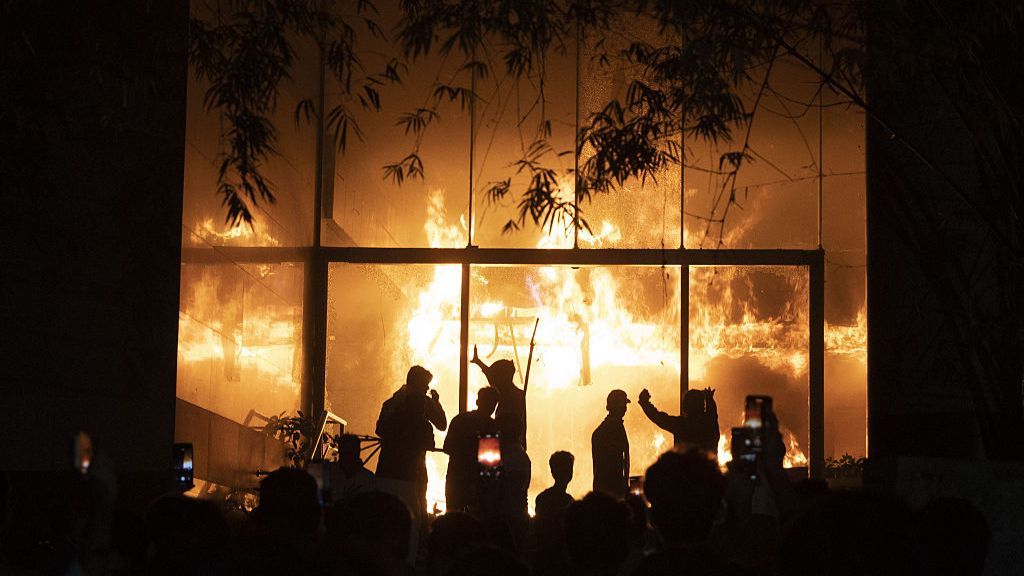
    As news of Hadi’s death circulated on Thursday, hundreds of supporters converged upon a central square in Dhaka, transforming their grief into angry demonstrations. The protests rapidly escalated into violence as enraged crowds vandalized the offices of leading Bangladeshi newspapers The Daily Star and Prothom Alo, with one building set ablaze. A police officer confirmed to BBC Bangla that ‘hundreds of people have gathered here and carried out the attack,’ prompting the deployment of military troops to restore order. Firefighters conducted rescue operations to evacuate journalists trapped within the besieged buildings.

    Nobel laureate Muhammad Yunus, who heads the interim caretaker government, declared Hadi’s death ‘an irreparable loss for the nation’ in a televised address. ‘The country’s march toward democracy cannot be halted through fear, terror, or bloodshed,’ Yunus asserted, while the government declared Saturday a day of national mourning. Yunus had previously characterized the shooting as a premeditated attack, stating shortly after the incident that ‘the objective of the conspirators is to derail the election’ and warning that ‘no form of violence intended to disrupt the election will be tolerated.’

    The assassination represents a critical juncture for Bangladesh’s fragile political transition. Hasina fled to India on August 5th last year following weeks of student-led protests that ended her 15-year increasingly authoritarian rule. In a significant development last November, she was sentenced to death for crimes against humanity after being convicted of permitting lethal force against protesters, resulting in approximately 1,400 deaths during the unrest.

    Investigations into Hadi’s assassination are ongoing, with authorities confirming several detentions in connection with the shooting. The incident has drawn condemnation from across Bangladesh’s political spectrum, with parties collectively urging the interim government to bring the perpetrators to justice and ensure the electoral process proceeds without further violence.

  • Return of ‘Make Europe Great Again’ trades hinges on German comeback

    Return of ‘Make Europe Great Again’ trades hinges on German comeback

    The much-anticipated ‘Make Europe Great Again’ (MEGA) trade momentum faces critical tests as investors await concrete evidence of Germany’s fiscal stimulus effectiveness and potential Ukraine peace developments. Despite recording substantial inflows exceeding $86 billion into European equities throughout 2025, investment patterns have significantly moderated with merely $23 billion entering markets during the past six months according to Barclays-tracked EPFR data.

    European markets initially outperformed U.S. counterparts during early 2025, fueled by collective defense spending increases, Germany’s groundbreaking borrowing rule revisions, and dampened confidence in American assets following Trump administration tariffs. This convergence created the ideal conditions for the MEGA phenomenon that investors had long anticipated.

    However, as tariff concerns gradually diminished, European equities resumed their traditional pattern of underperformance relative to U.S. markets. The euro similarly retreated from its September peak near $1.20, remaining below this four-year high watermark.

    Market analysts identify Germany’s March fiscal policy overhaul as a potential game-changer for the European economy. The nation, representing approximately one-quarter of the EU’s collective GDP, significantly relaxed spending constraints to accelerate infrastructure and defense investments. Yet concerns emerge regarding allocation priorities, with current expenditures favoring social spending over transformative infrastructure projects that would generate more durable economic benefits.

    Zurich Insurance Group’s euro zone market strategy head Ross Hutchison noted budgetary plans appear ‘not as ambitious as we would have liked,’ reflecting widespread investor caution. Execution risks remain substantial given Germany’s historical underdelivery on investment commitments, recently prompting three leading economic institutes to downgrade 2026 growth forecasts citing limited spending momentum and sluggish structural reforms.

    Valuation metrics reveal pervasive pessimism, with German stocks showing zero gains during the second half of 2025 despite a 20% annual advance. European equities currently trade at approximately 35% discount to U.S. counterparts based on forward earnings—hovering near record disparity levels.

    Schroders fund manager Dominique Braeuninger acknowledges this creates substantial upside potential, noting ‘the bar is very low’ for positive surprises. Additional momentum could emerge from projected STOXX 600 earnings recovery following 2025 contractions, based on LSEG I/B/E/S estimates.

    Geopolitical factors including potential Ukraine conflict resolution present another catalyst. Citi data indicates European equity funds remain 14% below pre-war asset levels, with recent inflows recovering merely one-tenth of departed capital. Peace negotiations or ceasefire agreements could trigger sentiment improvements, though initial impacts would likely concentrate in energy-sensitive sectors benefiting from lower prices. Reconstruction opportunities exceeding $500 billion over the next decade present additional long-term potential.

    Currency markets reflect similar uncertainties, with the euro registering its strongest annual gain since 2017 at 13% appreciation against the dollar throughout 2025 before plateauing since June. Goldman Sachs projects further advancement to $1.25 primarily driven by dollar weakness, while UBS anticipates retreat to $1.14 citing insufficient reasons for dollar sell-offs.

    Amundi’s global FX head Andreas Koenig emphasizes the enduring dominance of U.S. monetary policy, stating ‘Most of the time FX is more dominated by what happens in the U.S. and what the Fed does.’ The European Central Bank’s policy trajectory, German stimulus implementation, and Ukraine developments will collectively influence euro dynamics, though dollar strength remains the predominant factor.

  • China launches $113 billion free-trade experiment on Hainan island

    China launches $113 billion free-trade experiment on Hainan island

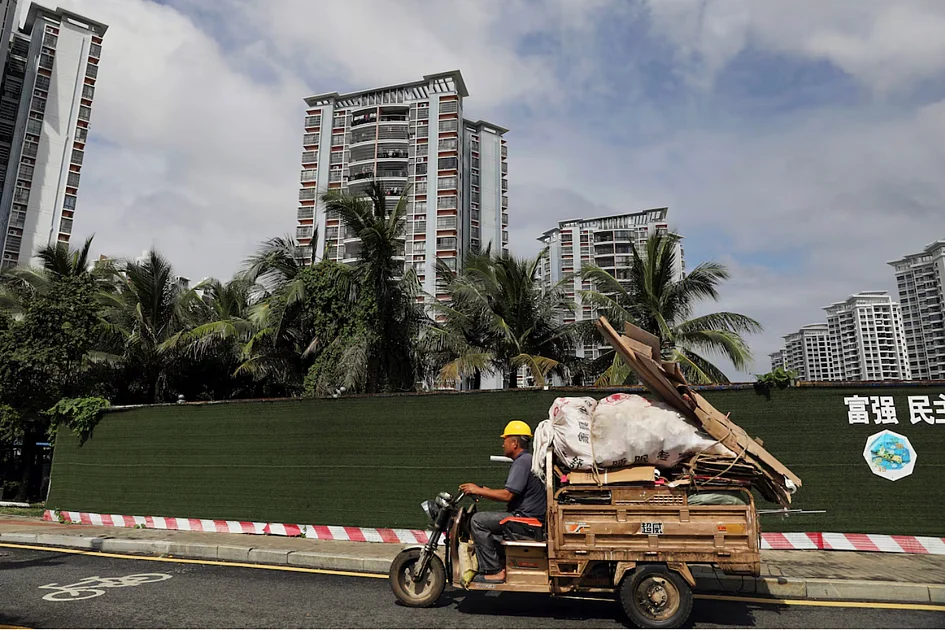
    China has initiated a groundbreaking economic experiment by transforming its southern island province of Hainan into a massive free trade port, marking one of Beijing’s most ambitious market liberalization efforts to date. The newly launched Hainan Free Trade Port, with an economy comparable to the world’s 70th largest nation, has been officially separated from mainland customs processing in a strategic move to establish a Hong Kong-style commercial hub.

    The project represents a significant component of China’s broader strategy to enhance its free-trade credentials and potentially join the Comprehensive and Progressive Agreement for Trans-Pacific Partnership (CPTPP). Under the new framework, foreign goods achieving at least 30% local value-added content can enter China’s massive consumer market tariff-free, while international firms gain access to service sectors traditionally restricted on the mainland.

    Chinese Vice Premier He Lifeng characterized the initiative as a “major strategic decision” and “vital gateway” for China’s new era of global economic engagement. The timing appears strategically significant, coming amid ongoing trade tensions with the United States and China’s efforts to diversify its $19 trillion economy while strengthening its position in global supply chains.

    Economic analysts note that Hainan’s transformation serves multiple strategic purposes: boosting foreign investment amid a 10.4% year-on-year decline in FDI during the first three quarters of 2025, enhancing China’s regional trade connectivity with Southeast Asia, and creating a testing ground for market liberalization policies that could eventually expand nationwide.

    However, experts caution that significant challenges remain. The island province, with its $113 billion GDP, must compete with established hubs like Hong Kong ($407 billion economy) while lacking comparable legal systems and financial openness. Additionally, trade negotiators question whether CPTPP members will view the project as sufficient evidence of China’s commitment to economy-wide reforms required for membership in the high-standard trade bloc.

  • EV trends to expect in 2026: The year electric mobility truly matures

    EV trends to expect in 2026: The year electric mobility truly matures

    The global automotive landscape is undergoing a radical transformation as electric vehicles transition from niche innovation to mainstream transportation. Projections indicate electric mobility will capture 26.7% of the global market share in 2026, accelerating to 42% by 2030 and eventually reaching 83% dominance by 2040 according to Auto Vista data.

    This evolution is being fueled by five critical developments that will define the 2026 EV ecosystem. First, emerging markets including the Middle East and Africa are experiencing accelerated adoption as financing options expand and cost-effective models enter these regions. The Gulf Cooperation Council (GCC) has emerged as one of the world’s fastest-growing EV markets, with sales penetration doubling from 2% to 4% in 2024. Remarkably, 91% of current battery-electric vehicle owners in the GCC would consider another EV for their next purchase.

    Second, charging infrastructure—historically a significant barrier—is undergoing revolutionary improvements. Ultra-fast charging hubs are proliferating across urban centers and intercity routes, while interoperable networks are eliminating the need for multiple apps and payment systems. User satisfaction rates have reached unprecedented levels: 95% in the UAE, 94% in Saudi Arabia, and 97% in Qatar.

    Third, artificial intelligence is fundamentally enhancing the ownership experience. AI-powered systems now optimize routing, automate charging schedules, perform predictive maintenance, and adjust energy consumption in real-time based on driving patterns and environmental conditions.

    Fourth, vehicle design is evolving beyond traditional automotive architecture. Manufacturers are creating sleek exteriors with minimalist, multi-functional interiors that function as mobile living spaces rather than conventional transportation cabins.

    Finally, automakers are increasingly engineering vehicles for extreme weather conditions. The 2026 model year will feature heat-pump HVAC systems, enhanced insulation, and advanced battery chemistries specifically optimized for performance in temperature extremes, ensuring consistent range reliability regardless of climate.

  • Rights group seeks US sanctions on Bahrain minister for torture of detainees

    Rights group seeks US sanctions on Bahrain minister for torture of detainees

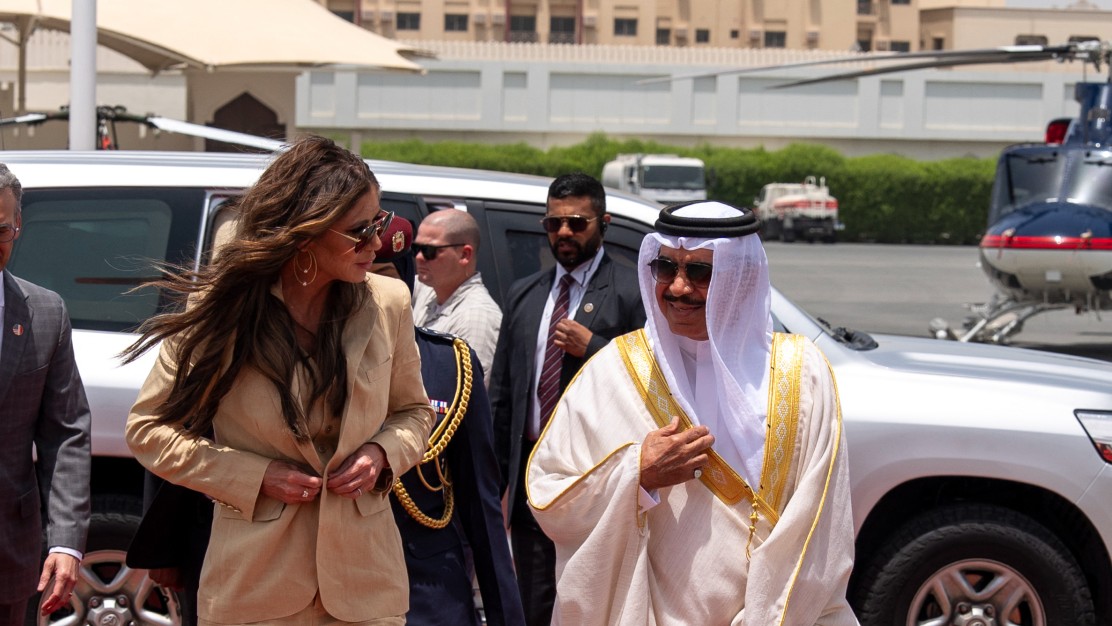
    Human Rights First (HRF), a prominent US-based advocacy organization, has formally submitted a comprehensive dossier to the Trump administration calling for targeted sanctions against Bahrain’s Interior Minister Sheikh Rashid bin Abdullah Al Khalifa. The submission, delivered on Thursday, presents evidence alleging the minister’s direct oversight of systematic torture practices within Bahrain’s detention facilities since 2011.

    The documentation accuses Minister Al Khalifa, who has led Bahrain’s interior ministry since 2004, of supervising torture and cruel treatment of political prisoners despite Bahrain’s status as a signatory to the UN Convention Against Torture. According to HRF’s statement obtained by Middle East Eye, prisoners have faced severe beatings to extract confessions and been systematically denied essential medical care, resulting in multiple fatalities.

    HRF President and CEO Uzra Zeya emphasized that “torture and cruel treatment in Bahrain’s prisons have continued well past the crackdown on the country’s 2011 uprising.” The organization contends that US law mandates visa bans and financial sanctions against foreign officials implicated in gross human rights violations.

    The recommendation builds upon longstanding concerns expressed by senior US lawmakers, including previous communications from figures such as Senator Marco Rubio and Senator Ron Wyden. In 2021 correspondence with the State Department, these legislators expressed alarm about Bahrain’s violent repression and warned that systemic abuses could undermine both domestic stability and US strategic interests, particularly regarding the US Navy’s Fifth Fleet stationed in Bahrain.

    HRF’s submission argues that Minister Al Khalifa meets the legal threshold for sanctions under both the Global Magnitsky Act and Section 7031(c) of US law, which authorizes visa restrictions against foreign officials involved in significant human rights violations. The organization advocates for a policy shift away from what it describes as an “illusion of stability sustained by impunity” toward measures that prioritize accountability and behavioral change.

    This development follows the UN Committee Against Torture’s recent observations expressing deep concern about “consistent reports indicating that persons in custody are subjected to torture or ill-treatment” in Bahrain and the “reported lack of accountability, which contributes to a climate of impunity.” Middle East Eye has contacted both the Bahraini government and US State Department for comment regarding these allegations.

  • DAW Construction showcases PRC infrastructure expertise at Big 5 Global 2025

    DAW Construction showcases PRC infrastructure expertise at Big 5 Global 2025

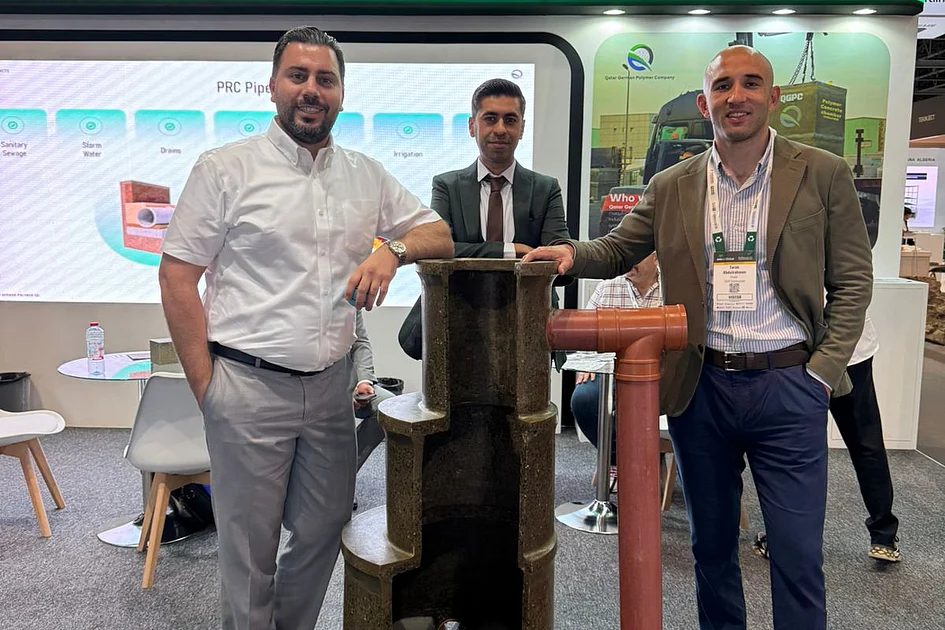
    Dubai-based Dar Alwd Construction (DAW) made a significant impact at Big 5 Global 2025 by demonstrating its pioneering infrastructure solutions centered on advanced Polymer Resin Concrete (PRC) technology. The event served as a strategic platform for the construction firm to highlight its engineering expertise and sustainable material applications aligned with the UAE’s national development goals.

    In collaboration with Qatar German Pipes Company (QGPC), DAW presented comprehensive case studies showcasing PRC implementation across critical infrastructure projects. This next-generation material exhibits exceptional durability, corrosion resistance, and extended service life while substantially reducing maintenance requirements. Current applications span sewerage networks, stormwater management systems, access chambers, manholes, and pipeline infrastructure across prominent developments including Al Juraiana and Nomad by Shurooq.

    The environmental advantages of PRC position it as a cornerstone material for sustainable infrastructure development. With minimal water absorption characteristics, reduced lifecycle emissions, and a significantly lower carbon footprint compared to conventional concrete, PRC directly supports the UAE’s Net Zero 2050 strategic initiative. The material’s extended operational lifespan further enhances its sustainability credentials while delivering superior performance under demanding conditions.

    Tarek Musbah Abdul Rahman, General Manager of DAW Construction, emphasized the company’s commitment to innovation: ‘Big 5 Global enables us to demonstrate how advanced materials transform infrastructure delivery. Our PRC experience proves that material innovation, backed by robust execution capabilities, achieves long-term performance and durability while supporting national infrastructure objectives.’

    Looking toward 2026, DAW plans to expand PRC implementation across upcoming projects, reinforcing its dedication to engineering excellence and sustainable construction practices. The company continues to integrate advanced materials and innovative engineering approaches to develop resilient, future-ready infrastructure solutions throughout the UAE.

  • Pakistan Educational and Cultural Board honoured

    Pakistan Educational and Cultural Board honoured

    DUBAI – The Pakistan Educational and Cultural Board (PECB) has been distinguished with the Gold Category Award during the second phase of the Ethraa Empowerment Programme, an initiative orchestrated by Dubai’s Community Development Authority (CDA). The accolade was presented during a formal ceremony at Emirates Towers on December 17, 2025, in recognition of PECB’s exemplary performance and distinguished social services within the community.

    Hessa bint Essa Buhumaid, Director-General of the CDA, conferred the award and emphasized in her keynote address the critical importance of community partnership, civil society enhancement, and the instrumental role non-profit organizations play in advancing social development—core tenets of both Dubai and the wider UAE national vision.

    The Gold Category Award specifically honors institutions that exhibit superior service quality, sustainable governance frameworks, and the delivery of comprehensive support services to priority demographic groups. PECB, which oversees the Pakistan Education Academy and English Language Private School, stood out for its alignment with these rigorous criteria.

    Chairman Hassan Hokal and Vice-Chairman Rashid Ashraf accepted the award on behalf of PECB. They were accompanied by the principals of both institutions, Shamaela Ahmad and Muhammad Atif.

    In his acceptance speech, Mr. Hokal expressed profound gratitude to the CDA, noting that initiatives like the Ethraa Programme significantly bolster public confidence in non-profit entities while incentivizing continuous improvement in service quality. He described the recognition as a tangible manifestation of the Dubai Government’s commitment to social development, inclusivity, and sustainable community progress.

    Mr. Hokal further attributed this achievement to the concerted efforts of PECB’s leadership, board of governors, management, educators, and staff, acknowledging that support from students, parents, volunteers, and the broader community has been fundamental to their success.

    The Ethraa Programme serves as a strategic platform for promoting social welfare, institutional transparency, and community service, resonating with the vision of the Dubai Government and its leadership. PECB’s gold-tier selection underscores the organization’s successful integration into Dubai’s social development strategy and its substantial contributions to education and communal service.

    Looking forward, PECB reaffirmed its dedication to expanding its educational and social initiatives in accordance with governmental visions centered on tolerance, harmony, and sustainable development, pledging to maintain the highest professional standards in community service.

  • Dembele, Yamal to vie for Globe Soccer Awards in Dubai

    Dembele, Yamal to vie for Globe Soccer Awards in Dubai

    Dubai is set to host football’s elite at the 16th annual Globe Soccer Awards on December 28th at the luxurious Atlantis The Royal hotel. The exclusive ceremony will crown winners across multiple categories following an unprecedented global voting process that garnered over 30 million fan votes.

    The awards feature intense competition across nine core categories including Best Men’s Player, Best Women’s Player, and various club honors. Paris Saint-Germain emerges as a dominant force with multiple nominations following their UEFA Champions League victory. The French club contends for Best Men’s Club alongside Barcelona, Chelsea, Flamengo, and Liverpool.

    Individual accolades showcase fascinating matchups with PSG’s Ousmane Dembélé and young Barcelona phenom Lamine Yamal both vying for top honors. In the coaching category, PSG’s Luis Enrique faces formidable competition from Real Madrid’s Xabi Alonso, Arsenal’s Mikel Arteta, Barcelona’s Hansi Flick, and Chelsea’s Enzo Maresca.

    The women’s categories feature Barcelona and Spain midfielder Aitana Bonmatí attempting an unprecedented third consecutive Best Women’s Player victory against strong contenders including Arsenal’s Mariona Caldentey and Alessia Russo.

    Adding significant star power to the event, Portuguese superstar Cristiano Ronaldo has confirmed his attendance. The Al Nassr forward also appears as a finalist in the Best Middle East Player category alongside notable footballers Salem Al-Dawsari, Karim Benzema, and Riyad Mahrez. Organizers promise a game-changing edition filled with surprises as the global football community gathers to celebrate the year’s outstanding achievements.

  • ‘The Voice of Hind Rajab’ review: Why the Gaza docufiction is a hard watch

    ‘The Voice of Hind Rajab’ review: Why the Gaza docufiction is a hard watch

    Acclaimed director Kaouther Ben Hania’s groundbreaking docufiction ‘The Voice of Hind Rajab’ has emerged as one of the most psychologically challenging cinematic experiences of the year, forcing audiences to confront the brutal realities of the Gaza conflict without the comfort of emotional detachment. The film reconstructs the tragic final hours of five-year-old Palestinian girl Hind Rajab, who became trapped in a vehicle with six deceased family members after Israeli Defense Forces attacks, through an innovative blend of dramatic reenactment and authentic audio recordings.

    The narrative unfolds primarily through the perspective of Red Crescent rescue workers, whose increasingly desperate attempts to coordinate a safe evacuation reveal the bureaucratic and moral complexities of operating in active war zones. Palestinian actors Saja Kilani, Motaz Malhees, and Amer Hlehel deliver powerful performances as emergency responders navigating the impossible balance between protocol and human compassion. Hlehel’s portrayal of coordinator Mehdi proves particularly nuanced, presenting a character who must maintain clinical detachment despite overwhelming circumstances.

    Ben Hania’s directorial approach masterfully maintains tension throughout the production, interspersing moments of human connection and even humor among rescue workers with the grim reality of their mission. The film’s most controversial aspect—the incorporation of actual emergency calls and battlefield footage—creates an unprecedented immediacy that has left international audiences and festival jurors deeply affected. Following its Venice Film Festival premiere, the production received a historic 20-minute standing ovation, though many viewers acknowledged difficulty processing the raw emotional impact of the authentic audio elements.

    The director’s deliberate choice to focus on the rescue team’s perspective rather than recreating Hind’s direct experience demonstrates sophisticated narrative restraint, allowing audiences to comprehend the horror through the responders’ emotional breakdowns rather than explicit visual depiction. This technique ultimately creates a more profound meditation on trauma, empathy, and the psychological toll of humanitarian work in conflict zones. The film stands as both a memorial to a tragic individual loss and a broader commentary on the human cost of geopolitical conflicts.