作者: admin

  • Australia announces gun buyback scheme in wake of Bondi attack

    Australia announces gun buyback scheme in wake of Bondi attack

    In response to the nation’s deadliest mass shooting in decades, the Australian government has initiated a comprehensive firearm buyback program—the most significant since the landmark Port Arthur massacre of 1996. Prime Minister Anthony Albanese announced the scheme following Sunday’s terrorist attack at Bondi Beach, where two assailants motivated by Islamic State ideology opened fire at a Jewish festival, killing 15 people and injuring dozens.

    The attack has been formally declared a terrorist incident by authorities, who identified the perpetrators as a father-son duo. Naveed Akram, 24, faces 59 criminal charges including 15 counts of murder and one count of committing a terrorist act. His father Sajid was killed during the confrontation with law enforcement.

    Revealing concerning statistics, Prime Minister Albanese stated that Australia now hosts over 4 million firearms—exceeding the number present during the Port Arthur tragedy that claimed 35 lives. ‘We know that one of these terrorists held a firearm licence and possessed six guns, despite residing in suburban Sydney,’ Albanese emphasized. ‘There’s no legitimate reason why someone in that situation needed that many firearms.’

    The security situation intensified on Thursday when counter-terrorism officers apprehended seven men in Sydney’s Liverpool suburb who had traveled from Victoria and were known to police. NSW Police Deputy Commissioner David Hudson indicated that while Bondi Beach was among locations the group might have visited, no specific malicious intent had been established. Authorities utilized rarely invoked national security powers to intercept the group preemptively, discovering only a knife during the operation.

    The national cabinet—comprising federal, state, and territory leaders—has unanimously agreed to strengthen gun control measures in the attack’s aftermath, signaling a renewed commitment to Australia’s traditionally strict firearm regulations.

  • Dubai: How the iconic Meydan prepares for big races

    Dubai: How the iconic Meydan prepares for big races

    As the first light of dawn breaks over Dubai, the Meydan Racecourse awakens to a symphony of rhythmic hoofbeats and the quiet hum of meticulous preparation. Each morning at 6 AM, this iconic sporting venue transforms into a theater of precision where champions are forged through an elaborate ballet of human dedication and equine athleticism.

    The morning tranquility is punctuated by the powerful strides of thoroughbreds circling the track, their breathing creating steam clouds in the cool morning air. Close behind, tractors perform a crucial maintenance ritual—smoothing the sand surface to erase hoof imprints and create optimal racing conditions. According to Mohamed Abbas Youssef, Racecourse Facility Manager, this daily resurfacing eliminates potential obstacles, allowing horses to achieve maximum performance without compromising safety.

    From a modest viewing deck typically reserved for VIPs, observers can witness the intimate details of training sessions—the visible exertion of muscles, the focused intensity in the animals’ eyes, and the distinctive sound of their heavy breathing resembling human exertion at peak performance.

    The preparation regimen begins far earlier than most realize. Veteran horse trainer Julio Olascoaga starts his day at 2:45 AM, a full hour before the first equine athletes arrive. His responsibilities encompass comprehensive fitness management—designing exercise programs, monitoring nutritional intake, and conducting physical assessments to determine race readiness.

    With 35 horses currently under his supervision, Olascoaga organizes them into five training groups. These athletes train daily with only one rest day per week, undergoing high-intensity “fast work” sessions every 7-10 days to evaluate competitive readiness. All training concludes by 8:30 AM to avoid Dubai’s intensifying heat and humidity.

    The international character of the Dubai Racing Carnival brings additional complexity to scheduling. “We accommodate horses from Europe, America, and South America,” Olascoaga explains. “International arrivals typically come pre-conditioned, requiring mainly maintenance training alongside our local Meydan thoroughbreds.”

    While the racing season officially runs from November through March to capitalize on cooler temperatures, the preparation cycle begins much earlier—typically in early July—demonstrating the extensive lead time required to develop championship-caliber performers. This hidden world of dawn preparations represents the unsung foundation upon which the glamour of international horse racing is built.

  • US sanctions two ICC judges for rejecting Israel’s appeal against Gaza investigation

    US sanctions two ICC judges for rejecting Israel’s appeal against Gaza investigation

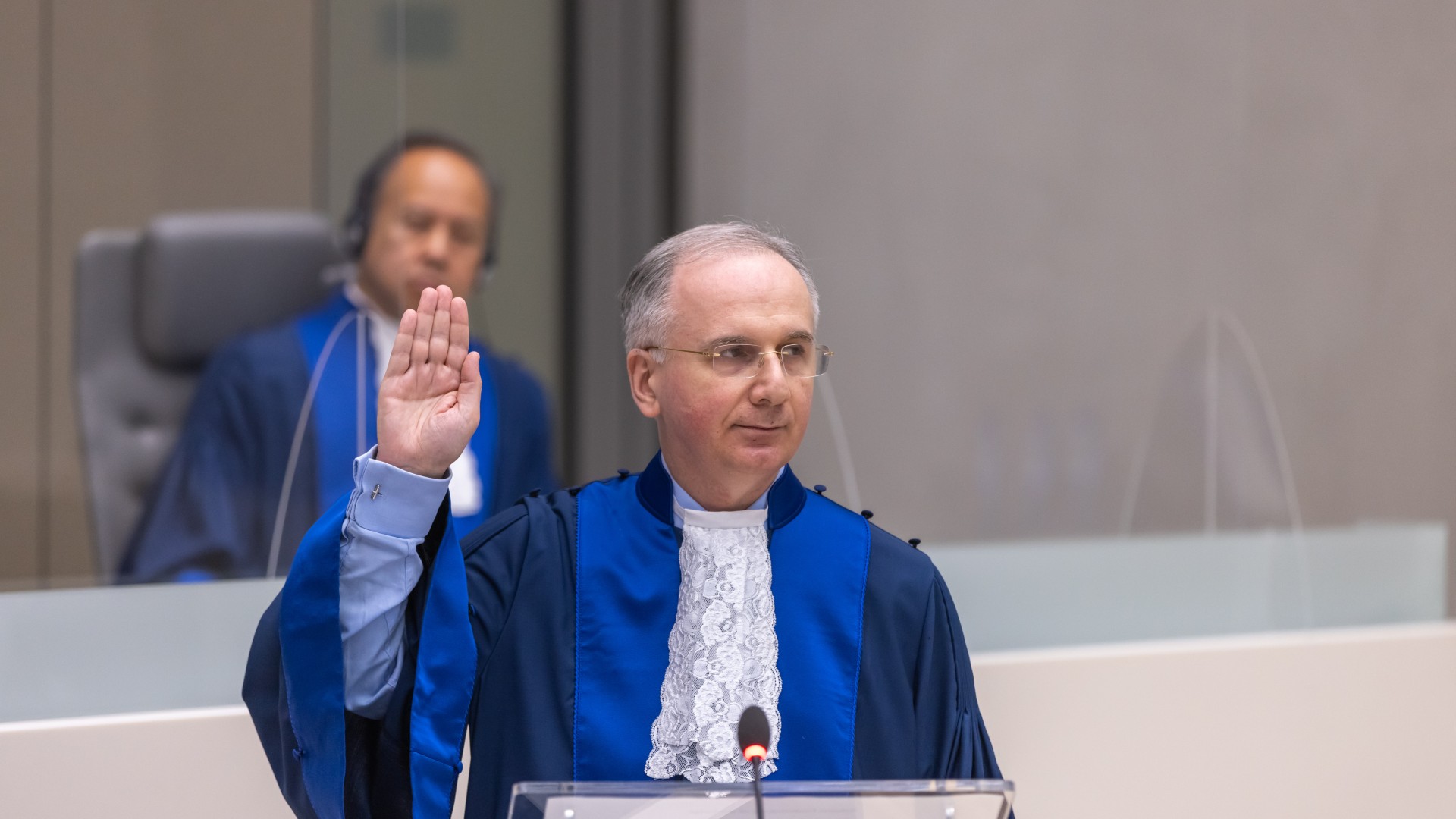
    The United States has intensified its confrontation with the International Criminal Court by imposing sanctions on two additional judges involved in the Gaza war crimes investigation. Judges Gocha Lordkipanidze of Georgia and Erdenebalsuren Damdin of Mongolia, both members of the ICC’s appeals chamber, were targeted following their recent decision to reject Israel’s appeal against the investigation into alleged crimes in Gaza post-October 2023.

    This development marks a significant escalation in the ongoing standoff between the Trump administration and the international judicial body. The sanctioned judges were part of the majority that dismissed Israel’s arguments challenging the validity of the investigation that previously resulted in arrest warrants for Israeli Prime Minister Benjamin Netanyahu and former Defence Minister Yoav Gallant in November 2024.

    US Secretary of State Marco Rubio issued a statement condemning what he characterized as “politicized actions targeting Israel” that “set a dangerous precedent for all nations.” The statement emphasized Washington’s rejection of the court’s jurisdiction over US and Israeli nationals and promised “significant and tangible consequences” for what it termed ICC “lawfare and overreach.”

    The sanctions have created substantial practical difficulties for affected officials, including frozen assets, travel bans, and exclusion from global financial systems. Peruvian judge Luz del Carmen Ibanez Carranza, previously sanctioned for her role in the Afghanistan investigation, revealed the personal impact including inability to use credit cards, banking systems utilizing US dollars, or money transfer services like Western Union.

    Despite these measures, ICC officials remain resolute. Judge Carranza stated that the sanctions have actually strengthened judicial solidarity, noting that “we are more united than ever” in maintaining their independence and continuing their duties.

    The legal foundation of the investigation traces back to Palestine’s 2018 referral, with the ICC initiating formal proceedings in 2021. Since November 2023, seven additional nations—South Africa, Bangladesh, Comoros, Bolivia, Djibouti, Chile, and Mexico—have filed separate referrals supporting the investigation.

    Israel’s appeal centered on procedural arguments, claiming the prosecutor should have issued fresh notifications after the new referrals pursuant to Article 18(1) of the Rome Statute. The appeals chamber unanimously determined that the original 2021 notification adequately covered subsequent developments, including post-October 2023 events, making additional notifications unnecessary.

    The ICC has implemented confidential countermeasures to protect its operations from sanction impacts, though specific details remain undisclosed to preserve their effectiveness. With these latest sanctions, all but one member of the appeals chamber (Judge Tomoko Akane of Japan) now face US restrictions, creating unprecedented challenges for international justice mechanisms.

  • TikTok owner signs deal to sell US business

    TikTok owner signs deal to sell US business

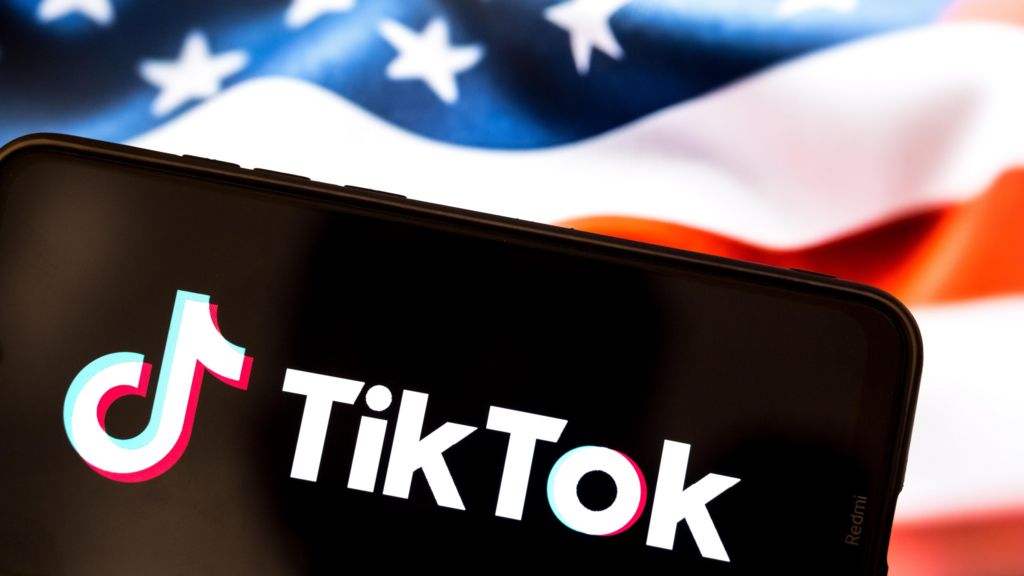
    In a monumental resolution to years of geopolitical tension, TikTok’s Chinese parent company ByteDance has formally agreed to divest the majority of its U.S. operations to a consortium of American and global investors. The arrangement, detailed in an internal memo from CEO Shou Zi Chew to staff on Thursday, culminates extensive negotiations prompted by longstanding national security concerns in Washington.

    The newly formed joint venture will see ByteDance’s ownership drop to 19.9%, effectively transferring control to U.S. entities. Technology giant Oracle, investment firm Silver Lake, and Abu Dhabi-based strategic investment company MGX will each acquire 15% stakes. The remaining 30.1% will be distributed among existing ByteDance investor affiliates, creating a diversified ownership structure that satisfies regulatory requirements.

    This agreement aligns with preliminary terms disclosed in September 2024, when President Donald Trump intervened to postpone enforcement of legislation that would have prohibited the application’s operations without a sale. The original ban, enacted during the Biden administration in April 2024, was scheduled to take effect on January 20, 2025, but faced multiple administrative delays to facilitate negotiation progress.

    A critical component involves Oracle’s licensing of TikTok’s proprietary recommendation algorithm, ensuring operational continuity while addressing security apprehensions regarding foreign control over user data and content dissemination mechanisms. The White House has acknowledged this technological arrangement as vital to protecting national interests.

    The transaction is scheduled for formal closure on January 22, 2025, preserving platform access for TikTok’s extensive American user base of over 170 million. Company leadership emphasizes that this resolution safeguards both national security priorities and the application’s role in global digital community building.

    International diplomatic engagement played a role in the outcome, with President Trump noting direct communication with Chinese President Xi Jinping, who reportedly endorsed the ownership transition. Neither the White House nor Oracle provided additional commentary when solicited for response.

  • Why Gen-Z believes financial literacy goes beyond budgeting, credit rating

    Why Gen-Z believes financial literacy goes beyond budgeting, credit rating

    A profound generational shift in financial understanding is emerging as Generation Z challenges conventional notions of economic literacy. Moving beyond traditional concepts of budgeting and credit management, this digitally-native cohort embraces a more holistic perspective that acknowledges both technological opportunities and systemic constraints within global wealth structures.

    The contemporary financial landscape presents unprecedented accessibility through digital investment platforms and mobile trading applications. While previous generations faced significant barriers to market participation, Gen Z navigates an ecosystem where cryptocurrency tokens, stablecoins, and micro-investing opportunities are merely a smartphone download away. This technological democratization, however, exists within an unequal global framework where true financial empowerment remains constrained by geographic and socioeconomic factors.

    Digital platforms provide psychological gratification through immediate visual feedback on investment performance, creating dopamine-driven engagement patterns. Yet this accessibility simultaneously fosters disconnection from interpersonal financial relationships and community-based economic systems. The generation’s financial consciousness has been shaped by witnessing market volatilities portrayed as high-stakes entertainment rather than substantive economic activities.

    Gen Z’s financial philosophy recognizes the inherent limitations of current economic structures modeled on imperialistic wealth pyramids. Their perspective acknowledges that traditional success metrics—six-figure salaries, credit ratings, and digital wealth representations—exist alongside global crises including climate-induced famines and humanitarian emergencies. This generation consequently emphasizes understanding one’s position within broader economic systems rather than merely pursuing individual wealth accumulation.

    The redefined financial literacy incorporates awareness of material conditions affecting society’s most vulnerable segments. It values entrepreneurial ideation and innovation while recognizing that sustainable economic progress requires addressing foundational inequalities. This approach maintains that professional achievements and financial metrics, while necessary for navigation within existing systems, should not constitute life’s ultimate purpose.

    Ultimately, Gen Z’s financial paradigm emphasizes human connections, community support, and personal relationships as authentic measures of prosperity. This perspective maintains that while economic participation remains necessary, true wealth encompasses life’s fundamental experiences: love, companionship during illness, and shared human moments that transcend monetary valuations.

  • UAE was secret buyer of billion dollar Israeli defence deal: Report

    UAE was secret buyer of billion dollar Israeli defence deal: Report

    France-based Intelligence Online has identified the United Arab Emirates as the previously undisclosed customer in a monumental $2.3 billion defense agreement with Israel’s Elbit Systems, originally announced in November. The eight-year contract represents one of the most significant arms deals between the two nations since normalizing relations through the Abraham Accords.

    The procurement centers on Elbit’s advanced J-Music aircraft protection system, which employs cutting-edge laser technology to neutralize surface-to-air missile sensors targeting both civil and military aircraft. This sophisticated electronic defense capability substantially enhances the UAE’s aerial security infrastructure.

    Despite Israel’s ongoing military operations in Gaza—actions characterized by numerous Arab leaders and UN experts as genocidal—the UAE has maintained its defense cooperation with Israeli firms. This stance distinguishes Abu Dhabi from neighboring Gulf states, with analysts noting the Emirates’ willingness to disrupt regional consensus regarding Israel.

    The partnership extends beyond Elbit Systems to include collaborations with Emirati state-owned defense conglomerate Edge, which has actively pursued Israeli technology partnerships even during the Gaza conflict. In November 2021, Edge partnered with Israel Aerospace Industries to develop unmanned vessels for anti-submarine warfare, and recently acquired a 30% stake in Israeli drone detection specialist Thirdeye Systems.

    This deepening military relationship has drawn attention in Washington, where officials express concern over the UAE’s simultaneous strengthening of defense ties with China. The Gulf nation recently conducted its third joint air force drill with China, while US intelligence assessments indicate continued Chinese military presence at Abu Dhabi facilities potentially serving dual purposes.

    The convergence of Israeli technology transfer and Emirati-Chinese military cooperation creates complex geopolitical considerations for US policymakers, particularly regarding the potential diversion of advanced defense systems to strategic competitors.

  • UAE: Meet Syrian software engineer using digital art to promote inclusive design

    UAE: Meet Syrian software engineer using digital art to promote inclusive design

    In the United Arab Emirates, Syrian graphic designer and software engineer Radi Charafli is revolutionizing the concept of inclusive design through digital art. Born with a motor disability, the 28-year-old creative professional has transformed his physical limitations into a powerful catalyst for reimagining accessibility in artistic and technological spaces.

    Charafli recently served as both curator and featured artist for the groundbreaking ‘Dome of Inclusion’ initiative—an innovative architectural installation designed to challenge public perceptions of disability through multisensory engagement. The sustainable structure, composed of interlocking hexagons and pentagons, symbolized six core principles (collaboration, creativity, inclusion, empowerment, innovation, and unity) and five key disability areas spanning sensory to neurodiversity.

    The artist’s journey into digital creation began at age 14 when diminishing manual dexterity forced a transition from traditional drawing to digital tools. ‘Digital design allowed me to create with precision that my hands alone could no longer achieve,’ Charafli explains. Now with over seven years of professional experience across Middle Eastern and European markets, he describes his work as ‘visual storytelling’ that inherently prioritizes accessibility.

    Collaborating with fellow artists of determination Aldana Alhashmi and Ashar Hussain, Charafli transformed the dome’s empty structure into an immersive experience. His digital vectors were enhanced with 3D-printed elements specifically to accommodate visitors with visual impairments. ‘The main challenge was translating digital designs into physical tactile experiences,’ he notes, emphasizing that inclusive design must be foundational rather than supplemental.

    As both software engineer and designer, Charafli practices what he preaches, utilizing AI and voice commands to navigate his digital world. ‘I don’t use my phone with my hands. These tools are essential, and designers need to think about them from the beginning of any project,’ he states, positioning the UAE as a global leader in this accessibility paradigm shift.

    Beyond technical compliance, Charafli’s mission focuses on human dignity and changing perceptions. Through his artwork, he demonstrates that movement and strength transcend physicality, residing equally in mental and emotional realms. ‘Art can communicate messages that words sometimes cannot,’ he concludes, proving that creative expression knows no physical boundaries.

  • Runs aplenty: New Zealand declares at 575 and West Indies 110-0 after Day 2 of the 3rd test

    Runs aplenty: New Zealand declares at 575 and West Indies 110-0 after Day 2 of the 3rd test

    MOUNT MAUNGANUI, New Zealand — Devon Conway delivered a masterclass in test cricket batting, smashing an extraordinary 227 runs to propel New Zealand to a formidable 575-8 before declaring on day two of the third test against the West Indies. This monumental innings marked Conway’s second test double century, surpassing his previous highest score of 200 made during his debut test at Lord’s in 2021.

    The left-handed batsman’s marathon effort spanned 508 minutes at the crease, facing 367 deliveries and striking 31 boundaries. His dominant performance formed the cornerstone of New Zealand’s imposing total, which included a massive 323-run opening partnership with Tom Latham, who contributed 145 on the opening day.

    Despite the daunting target and challenging light conditions, West Indies openers responded with remarkable aggression, racing to 110 without loss in just 23 overs before stumps. Brandon King led the charge with an unbeaten 55 from 63 balls, while John Campbell remained not out on 45, showcasing the visitors’ fighting spirit.

    The match situation intensified as West Indies faced bowling limitations with spearhead Kemar Roach sidelined by a hamstring injury and batsman Shai Hope absent due to illness. Justin Greaves emerged as the most effective West Indies bowler, claiming 2-83 from 29 overs.

    New Zealand’s declaration strategy nearly backfired as their pace attack struggled with inconsistent lengths, allowing the West Indies openers to score freely. Zak Foulkes proved particularly expensive, conceding 39 runs from just six overs.

    Rachin Ravindra, who remained unbeaten on 72 with six fours and two sixes, acknowledged the challenge ahead: ‘We would have liked a wicket at the end but that’s the way the cookie crumbles. They both batted well and showed the ability to punish when we missed.’

    The match continues with New Zealand leading the three-match series 1-0 after drawing the first test and securing a nine-wicket victory in the second.

  • Dubai alerts residents to avoid stepping out unless ‘necessary’ till Friday noon

    Dubai alerts residents to avoid stepping out unless ‘necessary’ till Friday noon

    Dubai authorities have escalated emergency preparedness measures as meteorological forecasts indicate deteriorating weather conditions across the United Arab Emirates. The Dubai Police Department has issued an official directive strongly advising residents to refrain from non-essential outdoor activities until Friday at noon due to anticipated severe weather patterns.

    Meteorological authorities project rapid weather deterioration within hours, with the National Centre of Meteorology (NCM) activating a yellow alert status effective until 4:00 PM Friday. The warning specifically identifies western and coastal regions, including Fujairah, as high-risk zones for intense precipitation and electrical storms. Concurrently, powerful winds are forecast to generate substantial dust and sand dispersion, significantly compromising horizontal visibility across affected areas.

    Temperature metrics are expected to drop considerably, with Abu Dhabi anticipating ranges between 17°C and 22°C, while Dubai and Sharjah may experience temperatures of 16-23°C and 15-21°C respectively. This thermal decrease accompanies the predicted precipitation events, creating potentially hazardous conditions for transportation and outdoor activities.

    The advisory emerges within a broader context of regional emergency preparedness initiatives, including recent cancellations of public gatherings such as the Simbang Gabi event originally scheduled for Thursday. These precautionary measures reflect enhanced coordination between meteorological services and civil protection agencies aiming to minimize weather-related risks to public safety and infrastructure.

    Authorities continue to monitor atmospheric developments closely, with digital communication channels remaining active for real-time updates. The coordinated response demonstrates the UAE’s evolving emergency management protocols designed to address increasingly volatile weather patterns in the region.

  • Stigma of Ukraine’s forgotten soldiers who ‘died the wrong way’

    Stigma of Ukraine’s forgotten soldiers who ‘died the wrong way’

    Beneath Ukraine’s official death toll of over 45,000 soldiers since Russia’s 2022 invasion lies a silent epidemic of military suicides that remains undocumented in state statistics. While officials describe these cases as isolated incidents, human rights advocates and grieving families estimate the numbers reach into the hundreds, creating a secondary tragedy shrouded in stigma and institutional neglect.

    Kateryna (name changed) embodies this hidden crisis. Her son Orest, a bookish 25-year-old with academic aspirations, was deemed unfit for service initially due to poor eyesight. In 2023, a recruitment patrol re-evaluated and deployed him as a communications specialist. Shortly after arriving near Chasiv Yar in Donetsk, he died from what the army classified as a ‘self-inflicted wound’—a designation his mother finds implausible.

    The classification carries severe consequences: families receive no compensation, military honors, or public recognition. ‘In Ukraine, it’s as if we’ve been divided,’ Kateryna explains. ‘Some died the right way, and others died the wrong way.’ She continues writing daily letters to her deceased son, now exceeding 650, her grief compounded by the official stigma.

    Mariyana from Kyiv shares a parallel tragedy. Her husband Anatoliy volunteered repeatedly until accepted despite lacking military experience. Deployed as a machine-gunner in the brutal Bakhmut sector, he returned from missions psychologically transformed. After losing part of his arm and hospitalized, he took his own life following a phone call with his wife. Denied a military burial, Anatoliy joined the growing ranks of unacknowledged casualties. ‘The war broke him,’ Mariyana states. ‘He couldn’t live with what he’d seen.’

    An online support community now connects approximately 200 families bereaved by military suicides. Oksana Borkun, who runs the network, notes widespread discrimination: ‘If it’s suicide, then he’s not a hero—that’s what people think. Some churches refuse to hold funerals. Some towns won’t put up their photos on memorial walls.’ Many families report inconsistencies in death investigations, with some mothers discovering unexplained bruises on bodies.

    Military chaplain Father Borys Kutovyi has witnessed at least three suicides within his command, emphasizing that ‘every suicide means we failed somewhere.’ He notes that recruited soldiers, unlike career servicemen, often lack psychological preparedness for combat trauma.

    Ukraine’s Commissioner for Veterans’ Rights Olha Reshetylova receives reports of three to four military suicides monthly, acknowledging systemic failures: ‘They’ve seen hell. Even the strongest minds can break.’ She confirms some investigations may conceal murders under the guise of suicide and advocates for comprehensive reform of military psychological services, though acknowledges this requires years to implement.

    As these families fight for truth and recognition, Reshetylova offers a forward-looking perspective: ‘These people were your neighbors, your colleagues. They’ve walked through hell. The warmer we welcome them, there will be fewer tragedies.’