作者: admin

  • Germany suspends military approval for long stays abroad for men under 45

    Germany suspends military approval for long stays abroad for men under 45

    Against the backdrop of shifting European security dynamics following Russia’s full-scale invasion of Ukraine, Germany has moved to roll back a little-noticed provision of its newly reinstated military service framework that sparked widespread public pushback in recent days.

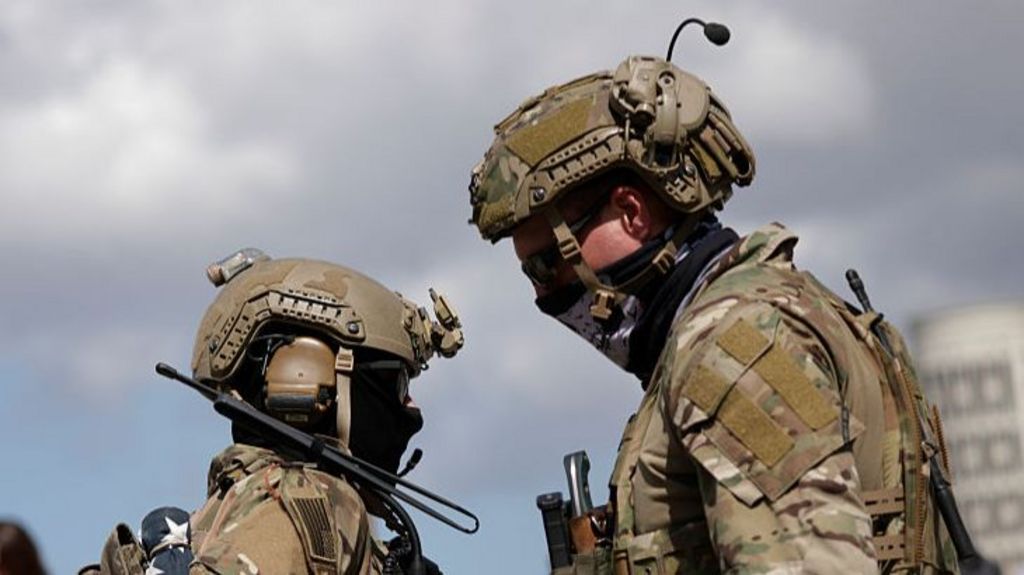
    The Military Service Modernization Act, which entered into force on January 1 this year, was designed to strengthen German and European defense capabilities in response to heightened regional security threats stemming from the ongoing war in Ukraine. In principle, the legislation brings back compulsory conscription after years of an all-volunteer force, though active conscription will only be triggered if voluntary recruitment falls short of the German armed forces’ targets.

    Under the law’s original fine print, a previously little-publicized requirement mandated that all German males aged 17 and older secure prior official approval before taking any trip or extended stay abroad lasting longer than three months. This provision flew under the public radar until a major German newspaper broke the story last week, igniting a fierce public debate over civil liberties and the scope of the new conscription framework. As of this week, the rule has never actually been enforced against any German citizen, defense officials confirmed.

    On Monday, German Defense Minister Boris Pistorius, a member of the Social Democratic Party, announced a broad exemption to the controversial requirement in comments to the German Press Agency (DPA). Pistorius emphasized that regardless of age — whether 17, 45, or any age between those thresholds — all military-age men retain full freedom of movement, and no advance approval is currently required for international travel of any length. Extended stays abroad also will not need to be reported to defense authorities, he added.

    “During this peacetime period, there will be no permission procedures. We are suspending the permission requirement as long as military service is voluntary,” Pistorius stated. He added that the German government will develop tailored emergency protocols to activate the rule only in the event of a national security crisis, framing the original inclusion of the provision as a legitimate precautionary measure to prepare for unforeseen security contingencies.

    The new law has already rolled out preliminary steps toward its goal of expanding Germany’s military capacity: since January, all 18-year-old Germans have received a mandatory questionnaire for men (voluntary for women) asking about their willingness to serve in the armed forces. Starting in July 2027, all 18-year-old men will also be required to complete a mandatory medical fitness examination to assess their eligibility for potential military service, should conscription be activated in the future.

    This military expansion aligns with the top security priority laid out by German Chancellor Friedrich Merz, who has publicly stated his goal to build the most powerful conventional military force across Europe, in a bid to bolster collective European defense amid ongoing regional tensions.

  • Survey finds 60 percent of Americans view Israel unfavourably following Iran war

    Survey finds 60 percent of Americans view Israel unfavourably following Iran war

    Weeks into the joint US-Israeli military campaign in Iran, a newly released Pew Research Center survey has documented a dramatic, sustained shift in American public opinion, with a clear majority of US adults now holding unfavorable views of the State of Israel. Data collected in late March, published Tuesday evening just as a ceasefire agreement between Washington and Tehran was announced, shows 60% of Americans now view Israel unfavorably — up 7 percentage points from 2023 and a nearly 20-point jump from 2022 levels.

    The erosion of public support extends to Israeli Prime Minister Benjamin Netanyahu as well. The survey finds that six in 10 Americans have little to no confidence that Netanyahu will act appropriately in global affairs, marking a 7-point increase in disapproval since last year and a 20-point rise since early 2023. Partisan gaps have widened alongside this overall shift: half of all Democratic respondents now report holding no confidence at all in Netanyahu, up from 37% just 12 months prior, while 80% of Democrats and Democratic-leaning independent voters now view Israel unfavorably. That marks a steep climb from 69% in 2023 and just 53% in 2022.

    Perhaps the most striking finding for Israel’s long-term standing in US politics is the deep generational divide that cuts across both major American political parties. A majority of all US adults under the age of 50, regardless of partisan affiliation, now hold negative views of both Israel and Netanyahu. Even among young Republicans — a voting bloc that was reliably pro-Israel as recently as three years ago — 57% now view Israel unfavorably, up from 50% last year, and only 30% express confidence in Netanyahu’s leadership on the world stage.

    The most dramatic shift can be seen in the share of Americans holding intensely negative views of the country: the proportion of respondents who say they have a “very unfavorable” opinion of Israel has nearly tripled since 2022, rising from 10% to 28% today.

    This shifting public mood has unfolded against a backdrop of escalating regional conflict that has had tangible global impacts. By the time the survey was fielded, the US-Israeli war in Iran had already entered its second month, leaving more than 4,000 people dead, sending global oil prices soaring, and destroying critical civilian infrastructure across Iran. Growing public discussion of Israel’s extensive influence over US political and policy decision-making has also reshaped popular perceptions of the country.

    Weeks before the survey was published, the controversy over Israel’s role in the conflict spilled into the open when a senior former Trump administration intelligence official resigned in protest over the war, claiming US leaders had been manipulated into launching the conflict by an Israeli-aligned and pro-war “echo chamber.” Joseph Kent, then-director of the National Counterterrorism Center — the US agency responsible for coordinating all federal counterterrorism intelligence, which falls under the oversight of Director of National Intelligence Tulsi Gabbard — outlined his opposition in a public resignation letter. “I cannot in good conscience support the ongoing war in Iran,” Kent wrote. “Iran posed no imminent threat to our nation, and it is clear that we started this war due to pressure from Israel and its powerful American lobby.” In the final days of March, a coalition of anti-war US military veterans issued a similar rebuke, condemning what they described as disproportionate Israeli influence guiding American military policy in the Middle East.

  • Watch: Cold-blooded trespasser found lurking in Florida pool

    Watch: Cold-blooded trespasser found lurking in Florida pool

    A surprising and unsettling discovery unfolded at a Tampa, Florida, home this week, when a local resident made an unexpected find: a large, 9-foot alligator hiding out in the property’s pool enclosure. According to local law enforcement reports, the homeowner first spotted the cold-blooded intruder while checking their backyard early in the day, and immediately contacted the Tampa Police Department to report the dangerous trespasser.

    Once officers arrived at the scene, they confirmed that the fully grown alligator had wandered into the residential pool area from nearby wild wetland habitats common across the Florida peninsula. Rather than attempting to move the animal themselves, authorities called in a licensed nuisance alligator specialist, who safely captured and removed the alligator from the property without incident.

    Local wildlife experts note that alligator incursions into residential areas are not uncommon in Florida, especially during warmer months when the reptiles are more active and roam farther in search of food or new territory. Officials remind homeowners who encounter alligators on their property to keep a safe distance and never attempt to approach or move the animal on their own, instead contacting local authorities or licensed wildlife removal professionals immediately.

  • Suspects who allegedly threw bomb outside NYC mayor’s home wanted to kill 60 people, prosecutors say

    Suspects who allegedly threw bomb outside NYC mayor’s home wanted to kill 60 people, prosecutors say

    A planned deadly terrorist attack targeting New York City was derailed by law enforcement before any harm could be done, after two young American men allegedly plotted to detonate explosives at a protest outside the mayor’s official residence in the name of the Islamic State, federal prosecutors have confirmed.

    An unsealed indictment released Tuesday lays out the full scope of the conspiracy against 18-year-old Emir Balat and 19-year-old Ibrahim Kayumi, both Pennsylvania residents who are US citizens. The foiled plot unfolded on March 7 outside Gracie Mansion, the official home of New York City Mayor Zohran Mamdani, where an anti-Islam protest was being held. According to court documents, the pair attempted to set off two homemade explosive devices that failed to detonate as planned, leaving no injuries and allowing authorities to take both suspects into custody immediately. Security footage captured one of the men being detained just seconds after he ignited one of the dud devices. At the time of the attempted attack, Mamdani and his wife Rama Duwaji were not present at the residence.

    Prosecutors allege the attack was planned to inflict mass casualties in service of IS ideology. Captured dashcam audio from the pair’s vehicle recorded one of the suspects stating plainly, “All I know is I want to start terror, bro. I want to petrify these people.” The indictment details that Balat told his co-conspirator the attack could kill anywhere from 8 to 16 people, and as many as 30 to 60 if the bombing site was crowded. Law enforcement officials further allege the pair hoped their attack would outpace the deadliness of the 2013 Boston Marathon bombing, which killed three people and injured hundreds.

    Following their arrest on March 7, both suspects voluntarily waived their constitutional right to remain silent, according to official court records. In a written statement after being taken into custody, Balat explicitly pledged allegiance to the Islamic State and called for the death of non-believers, according to a criminal complaint obtained by the BBC. Kayumi similarly admitted his affiliation with IS, confirmed he regularly consumed the group’s extremist propaganda on his personal phone, and acknowledged that IS ideology was a core motivating factor for the attempted attack.

    A search of the vehicle the pair used to travel to New York City turned up a cache of evidence confirming the conspiracy: three days of recorded dashcam footage, a handwritten notebook detailing bomb construction, and an unexploded third bomb. The notebook did not only outline the Gracie Mansion plot, prosecutors say: it also contained multiple alternative attack plans, including ramming a vehicle into crowds at festivals, parades, protests, or other large public gatherings.

    Mamdani has publicly confirmed that the two suspects traveled to New York City with the explicit intent to carry out an act of terrorism. As of this report, Balat and Kayumi remain in federal custody following their March 7 arrest, awaiting further legal proceedings.

  • BTS turned millions on to K-pop. But now it’s caught between Korea and the world

    BTS turned millions on to K-pop. But now it’s caught between Korea and the world

    It has been nearly three years since the seven members of BTS stepped away from group activities to complete mandatory military service and pursue individual musical projects. On March 21, the world’s biggest K-pop act made their official return to the Seoul stage, launching what will become the largest K-pop world tour in history with a free teaser show that drew tens of thousands of fans in-person and more than 18 million concurrent live stream viewers. Standing against an LED backdrop framing Seoul’s historic royal palace gate, member J-Hope kicked off the comeback with a bold declaration: “BTS 2.0 is just getting started!”

    What followed the triumphant comeback reveal, however, has been a public reckoning with identity that exposes the competing pressures pulling at the band: between Korean and global audiences, artistic authenticity and commercial success, individual creative instincts and the strategic goals of their industry powerhouse agency Hybe, and their unofficial role as South Korea’s most recognizable face of soft power. At the center of the debate is their new full-length album *Arirang*, named for one of Korea’s most beloved traditional folk songs, which has sparked intense discussion over whether the band has drifted too far from their K-pop roots to chase global mainstream appeal.

    The album opens with *Body to Body*, a hip-hop-driven track that samples the iconic *Arirang* folk melody. For supporters, the heavy focus on rap evokes the raw, early sound that first made BTS famous. But critics at home argue that the record lacks genuine connection to its Korean cultural roots, pointing to its extensive use of English lyrics and a long roster of high-profile international collaborators, from American DJ Diplo to Australian songwriter Kevin Parker and Spanish musician El Guincho. Many Korean long-time fans accuse Hybe and the band of prioritizing the lucrative Western music market at the cost of the distinct Korean storytelling that originally defined their work. Reception outside of South Korea has been far more divided, with many international critics praising the album as a bold experimental return to form. The BBC’s review called the rap-heavy track *Hooligan* audacious and the Jersey club-inspired *FYA* “deliciously dark”, and both the album and its lead single *Swim* have already broken global streaming records and climbed to the top of Billboard charts.

    The tension around the album’s direction was laid bare in a candid behind-the-scenes documentary released ahead of the comeback, which captured open disagreements between the band members and Hybe leadership over the project’s creative vision. Members expressed public uncertainty about the creative choices: Jimin admitted he did not know if the album’s direction was correct, while Suga noted Hybe pushed for a more overt emphasis on the *Arirang* motif, and RM said he had a visceral negative reaction to tying the band to such a culturally monumental track. Those doubts were ultimately set aside after intervention from Hybe chairman Bang Si-hyuk, the founder who originally assembled the seven-member group in 2013, when the band was formed by a then-little-known agency far outside the circle of South Korea’s top entertainment powerhouses. Bang argued that BTS’s status as a once-in-a-generation global icon and their Korean identity are both undeniable, just as their core audience has shifted from primarily domestic to predominantly global.

    For long-time observers of BTS, the current debate over identity is rooted in the band’s unique 13-year trajectory. The group debuted in 2013 with seven young members, three of whom were still teenagers, and cut their first full album *Dark & Wild* in a makeshift Los Angeles studio, leaning into raw, beat-heavy hip-hop with punchy Korean lyrics that spoke directly to young people’s struggles with academic pressure, mental health and ambition. That authenticity, paired with their early, aggressive use of social media to connect directly with fans when they could not secure prime TV appearances, built a fiercely loyal global fandom called ARMY that turned the band into a global phenomenon. Through albums like the *Love Yourself* series, centered on messages of self-acceptance and mental health, they turned their personal journey into a global movement, speaking at the United Nations, performing at the White House, and becoming de facto cultural ambassadors for South Korea. They transformed Hybe from a small startup into a global entertainment powerhouse worth billions, with revenue spanning music, merchandise, endorsements and original content.

    After their three-year hiatus, during which all members completed military service and released successful solo projects that leaned into individual artistic strengths, BTS’s return to group work carries high stakes. Their upcoming 85-date world tour, kicking off this week in Goyang with three opening shows expected to draw 120,000 fans that sold out within minutes, will be the largest K-pop world tour ever staged, spanning five continents over 12 months. Even as the album sparks debate, many fans remain excited for the return of the group they have watched grow up alongside them. Some long-time Korean fans acknowledge the missing narrative throughline that defined earlier albums, but still jump at the chance to see BTS perform live again, while casual fans say they are just thrilled to have the group back together.

    Music critics largely agree that regardless of how the comeback lands, BTS’s legacy is already secured. Before BTS broke through globally, K-pop was a niche regional industry; today, it is a billion-dollar global phenomenon, a shift that industry observers credit directly to BTS’s trailblazing work. What remains to be seen is whether the band can pull off the high-wire balancing act of satisfying competing expectations, and how much further they can push the boundaries of their global success.

  • Nigeria begins mass trial of 500 terrorism suspects

    Nigeria begins mass trial of 500 terrorism suspects

    Seventeen years after the Boko Haram insurgency first ignited in Nigeria’s northeast, the West African nation has launched one of the largest mass terrorism prosecutions in its history, moving to try more than 500 people linked to widespread militant violence that has torn through communities across the country.

    For decades, a glaring gap in Nigeria’s counterterrorism efforts has left families and affected communities frustrated: despite thousands of deaths and widespread displacement from bombings, raids, and ransom kidnappings, very few people accused of involvement in militant attacks have ever faced legal prosecution. Many detained suspects have spent years behind bars without ever appearing in court, fueling public anger and persistent rumors that accused militants are often quietly released to return to violent activity.

    That long-standing inaction took a sharp turn on Tuesday, when the mass trial opened at Nigeria’s capital Abuja’s High Court. According to federal Attorney General Lateef Fagbemi, 227 suspects were formally arraigned before a panel of 10 judges on the opening day, with the full proceedings set to unfold in successive phases. Extraordinary security measures were put in place for the session: suspects were transported in heavily armored convoys escorted by a combined force of military personnel, police officers, and intelligence agents, while international observers, representatives from human rights organizations, and members of the Nigerian Bar Association were granted access to monitor the process.

    The charges brought against the defendants cover a wide range of alleged ties to militant activity. While most of the accusations are linked to direct participation in attacks across northern Nigeria, other suspects face counts of facilitating terrorism through financing militants, trafficking illegal arms, and providing critical logistical support. In an early development, five of the accused have already received prison sentences ranging from seven to 20 years after entering guilty pleas, admitting to crimes including selling livestock, supplying food, and sharing intelligence with militant networks.

    In a statement ahead of the proceedings, Attorney General Fagbemi emphasized that the unprecedented scale of the trial demonstrates the Nigerian federal government’s unwavering commitment to ending decades of unaddressed militant violence. “The federal government is committed to ensuring that due process is followed while bringing those involved in terrorism to justice,” he said.

    The opening of the trial comes as Nigeria continues to grapple with near-daily militant violence. Just one day after the proceedings began, gunmen suspected to be linked to local kidnapping gangs and Islamist militant networks raided rural villages in Shiroro district of Nigeria’s western Niger State, killing at least 20 residents, according to local witnesses and AFP reporting. Since the Boko Haram insurgency first emerged in 2009, insecurity has spread far beyond the northeast, leaving vast rural areas across the country vulnerable to frequent attacks, kidnappings for ransom, and gang violence that has killed hundreds of people just in 2026 alone.

    Security analysts have broadly welcomed the mass trial as a turning point in Nigeria’s long fight against insurgency. Retired army major Bashir Galma, a leading Nigerian security expert, told the BBC that the proceeding marks a “positive development” and a “significant milestone” for the country’s counterterrorism efforts. He noted that for years, Nigerians have repeatedly raised demands to resolve the backlog of unprosecuted terror suspects held in long-term detention. “This will bring some level of peace for people whose loved ones were killed or injured,” Galma said, adding that the trial also addresses long-circulating rumors that suspects are regularly released to resume their terrorist activity.

    Even with this progress, Galma cautioned that some defendants may still be released in the coming months, as many of the suspects were arrested years ago, a legal circumstance that judges are required to consider during sentencing.

  • Furry companions welcome: China launches upgraded pet travel service on bullet trains

    Furry companions welcome: China launches upgraded pet travel service on bullet trains

    BEIJING – In a major shift to meet evolving consumer demand from pet owners across the country, China’s national high-speed rail network has launched an expanded, upgraded pet transport service that now reaches 121 major stations and 250 daily trains, operator China Railway Express Co., Ltd. announced Wednesday.

    The rollout follows a 12-month pilot program that launched exactly one year prior, on April 8, 2025. During the trial period, the service successfully moved more than 15,000 cats and dogs across participating lines, earning consistent positive feedback from travelers who had long struggled to bring their animal companions along on intercity trips. The pilot’s strong uptake confirmed the widespread unmet need for formal pet-friendly travel options on China’s busiest rail network.

    Under the newly formalized service, pet owners now have two flexible transport options to fit different travel scenarios: accompanied travel, for passengers who are boarding the same train as their pet, and unaccompanied consignment, for owners who are not traveling alongside their animal.

    To ensure safety and comfort for all passengers, the service has clear eligibility requirements: only healthy, domestic-bred cats and dogs are permitted, with a maximum weight of 15 kilograms, a maximum shoulder height of 40 centimeters, and a maximum body length of 52 centimeters.

    For passengers choosing accompanied travel, booking is integrated directly into existing rail ticketing systems: travelers can search the national 12306 mobile app or website to identify trains marked with a dedicated pet-friendly icon, purchase their own passenger ticket, and reserve a transport slot for their pet on the same service in a single process.

    For unaccompanied consignment, owners can book their pet’s slot through the official “China Railway Express” WeChat mini-program between two and five days ahead of the scheduled departure date.

    The expansion adds 11 new stations to the pet-friendly network, including mid-sized cultural and industrial hubs such as Tangshan, Tai’an, and Yan’an, alongside 50 additional high-speed services including major intercity routes G41 and G688. In total, the upgraded service now covers 121 high-speed railway stations and 228 trains nationwide.

    In a statement accompanying the launch, China Railway Express noted that the expansion is a direct response to rapidly growing consumer demand for pet-inclusive travel options, as pet ownership has become increasingly common across Chinese households in recent years. The upgrade marks one of the most significant changes to China’s rail passenger policies in recent years, aligning public transport services with shifting lifestyle trends across the country.

  • Ningxia students continue 31-year tradition with 54-km trek to honor martyrs

    Ningxia students continue 31-year tradition with 54-km trek to honor martyrs

    As Qingming Festival, China’s annual traditional occasion for honoring ancestors and fallen heroes, approaches each year, a moving and long-standing tradition unfolds across the mountainous terrain of Ningxia Hui Autonomous Region in northwest China. For 31 consecutive years, thousands of participants have undertaken a grueling 54-kilometer round-trip trek to reach the Renshanhe Martyrs Cemetery, turning physical endurance into a powerful act of remembrance for the nation’s fallen soldiers.

    This year’s journey kicked off in the pre-dawn darkness at 5 a.m. on April 3, when more than 3,000 participants gathered in Guyuan city to set off for the cemetery located in Pengyang county. Covering the 54-kilometer round trip takes approximately 17 hours of nonstop walking through steep, rugged upland terrain, a challenge that tests both physical stamina and mental resilience for everyone taking part. What began as a small, student-led initiative has evolved over more than three decades into a beloved, cross-community annual event deeply rooted in local collective memory.

    The tradition traces its origins back to 1995, when a small group of students from two local middle schools first organized the trek to connect younger generations with the sacrifices of previous generations. Over the following decades, what started as a small student memorial activity gradually expanded beyond school campuses to draw participants from all sectors of the local community. According to local government officials, 2025’s event retained this inclusive spirit: alongside participating students, the trek included young community volunteers and more than 700 individuals from a wide range of professional and social backgrounds.

    Widely described locally as a “walking ideological and political class”, the annual trek does more than honor fallen heroes — it gives participants a hands-on opportunity to reflect on history, build collective resilience, and pass down stories of national sacrifice to younger generations. For 31 years, this extraordinary act of remembrance has remained a powerful reminder of the enduring connection between Ningxia’s local communities and the martyrs who gave their lives for the nation.

  • 3 dead, 1 missing after 40-meter scaffolding collapse near Tokyo

    3 dead, 1 missing after 40-meter scaffolding collapse near Tokyo

    A devastating industrial accident has shaken Kawasaki City, the port-side neighbor of Japan’s capital Tokyo, leaving three construction workers dead and one still unaccounted for after a massive 40-meter scaffolding structure collapsed during scheduled crane dismantling work at a local steelmaking complex.

    Local Japanese media confirmed the incident unfolded shortly after 4:30 p.m. local time on Monday, April 7 2026, at the waterfront industrial site located in Kanagawa Prefecture. When the structure gave way, five workers who were carrying out on-site operations fell from the height. Emergency response teams were quickly dispatched to the accident location, and managed to pull four of the five workers from the collapse site to transport them to nearby medical facilities. Unfortunately, medical personnel pronounced three of the rescued workers dead upon arrival or shortly after admission. The fifth worker remains missing, with search and rescue teams working under the assumption that they fell into the adjacent waters of Tokyo Bay.

    Preliminary investigations into the cause of the collapse point to a catastrophic failure of a critical crane component. At the time of the incident, crews were in the process of dismantling a large cargo crane used to load and unload goods from cargo vessels visiting the steel plant. A 500-tonne cylindrical counterweight, which was installed on the crane to maintain structural balance during operations, became detached and fell from the crane structure. The force of the hundreds-of-tonne weight striking the platform is what triggered the collapse of the surrounding scaffolding, according to initial reporting from Japan’s public broadcaster NHK.

    Japanese law enforcement authorities have launched a full investigation into the tragedy, with a key focus on whether proper industry safety protocols were followed throughout the dismantling project. Investigators are examining whether sufficient risk assessments were completed, whether structural supports were properly installed before work began, and whether all on-site workers received adequate safety training ahead of the high-risk operation. Meanwhile, search and rescue teams continue their urgent efforts to locate the missing worker, with coastal patrol units and dive teams deployed to search the surrounding waters.

    The accident marks one of the deadliest industrial incidents in Japan’s greater Tokyo region this year, renewing discussions about workplace safety standards for large-scale demolition and dismantling projects across the country’s industrial sector.

  • Former Sinochem executive prosecuted for bribery, abuse of power

    Former Sinochem executive prosecuted for bribery, abuse of power

    China’s Supreme People’s Procuratorate announced Wednesday that Feng Zhibin, the 62-year-old former deputy general manager of Sinochem Group, has been formally prosecuted on three criminal charges: bribery, influence trading, and abuse of power by a state-owned enterprise personnel.

    The corruption case against Feng was first investigated and closed by the National Commission of Supervision, China’s top anti-graft watchdog, before being transferred to prosecutorial authorities for review. Following a designation from the Supreme People’s Procuratorate, the Heilongjiang Provincial People’s Procuratorate approved Feng’s arrest, and the Daqing People’s Procuratorate has now lodged a public indictment with the Daqing Intermediate People’s Court, bringing the high-profile case one step closer to trial.

    Prosecutors laid out detailed allegations of Feng’s misconduct spanning his decades-long tenure in senior leadership roles at the major state-owned conglomerate. Over his career, Feng held a string of key positions at Sinochem, including assistant general manager, general manager of the group’s investment department, chairman and general manager of Sinochem Lantian Corporation, general manager of Sinofert Holding Limited, and ultimately deputy general manager of the parent Sinochem Group, before becoming chairman of Sinochem International Corporation in 2016. According to the indictment, Feng abused the authority granted by these posts to secure illicit benefits for third parties in exchange for accepting large sums of money and high-value assets.

    Even after stepping down from his official roles, prosecutors say Feng continued to exploit the influence of his former senior positions. He is accused of leveraging his past status to pressure other sitting state functionaries into granting illegal benefits to associates, once again accepting substantial improper payments and valuables in return.

    The prosecution adds that as a senior employee of a state-owned enterprise, Feng’s deliberate abuse of power for personal gain has caused severe financial losses to Sinochem Group and inflicted major damage on national interests. Legal officials note that Feng’s actions meet the criteria for criminal liability on all three charges brought against him.

    Feng’s career at Sinochem began in 2000, when he joined the group and quickly rose through the corporate ranks. In June 2018, he officially resigned from all his positions at the conglomerate, citing personal reasons. Formal anti-graft investigations into Feng were launched in July 2025, and he was expelled from the Communist Party of China in January 2026 as investigations uncovered evidence of his wrongdoing.

    Headquartered in Beijing, Sinochem Group operates as a wholly owned subsidiary of Sinochem Holdings Corporation, one of China’s core centrally administered state-owned enterprises overseen by the State-owned Assets Supervision and Administration Commission of the State Council. A leading market player in China’s energy and chemical sectors, Sinochem also maintains major business footprints in urban infrastructure operations and non-banking financial services.