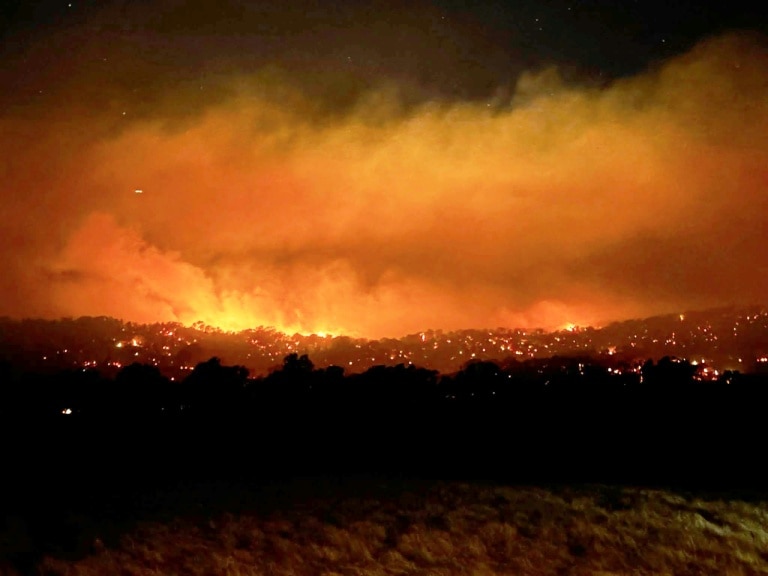
Australian authorities have escalated warnings to millions of residents across southeastern regions as a severe heatwave creates what firefighters describe as potentially ‘catastrophic’ bushfire conditions. The Country Fire Authority has declared the highest possible danger rating across parts of Victoria state, with temperatures expected to exceed 40°C (104°F) in multiple areas.
Fire officials compared the current conditions to those that preceded the devastating 2019-2020 ‘Black Summer’ bushfires that ravaged Australia’s eastern seaboard. Country Fire Authority Chief Officer Jason Heffernan emphasized the extreme severity of the situation, stating that ‘catastrophic is as bad as it gets’ in terms of fire danger ratings. He warned that under these conditions, fires would be unpredictable, uncontrollable, and fast-moving once ignited.
Emergency Management Commissioner Tim Wiebush echoed these concerns, noting that hot, dry winds would significantly accelerate fire spread. Acting Victoria Premier Ben Carroll urged residents to prepare evacuation plans immediately, describing bushfire conditions as intensely frightening experiences that no one should have to endure.
The crisis has already manifested in multiple fronts. Firefighters are currently battling blazes across Victoria and New South Wales, with authorities fearing property losses near the rural town of Longwood, approximately 150 kilometers north of Melbourne. Government meteorologist Sarah Scully reported that an extreme heat band had settled across the region, accompanied by dry thunderstorms capable of igniting new fires without producing meaningful rainfall.
The environmental impact extends beyond human communities. Wildlife groups reported hundreds of baby bat fatalities in South Australia earlier this week due to the oppressive temperatures. This heatwave occurs against the backdrop of Australia’s documented 1.51°C temperature increase since 1910, which climate researchers attribute to accelerating extreme weather patterns. This trend continues despite Australia’s status as one of the world’s largest exporters of gas and coal, fossil fuels identified as primary drivers of global warming.