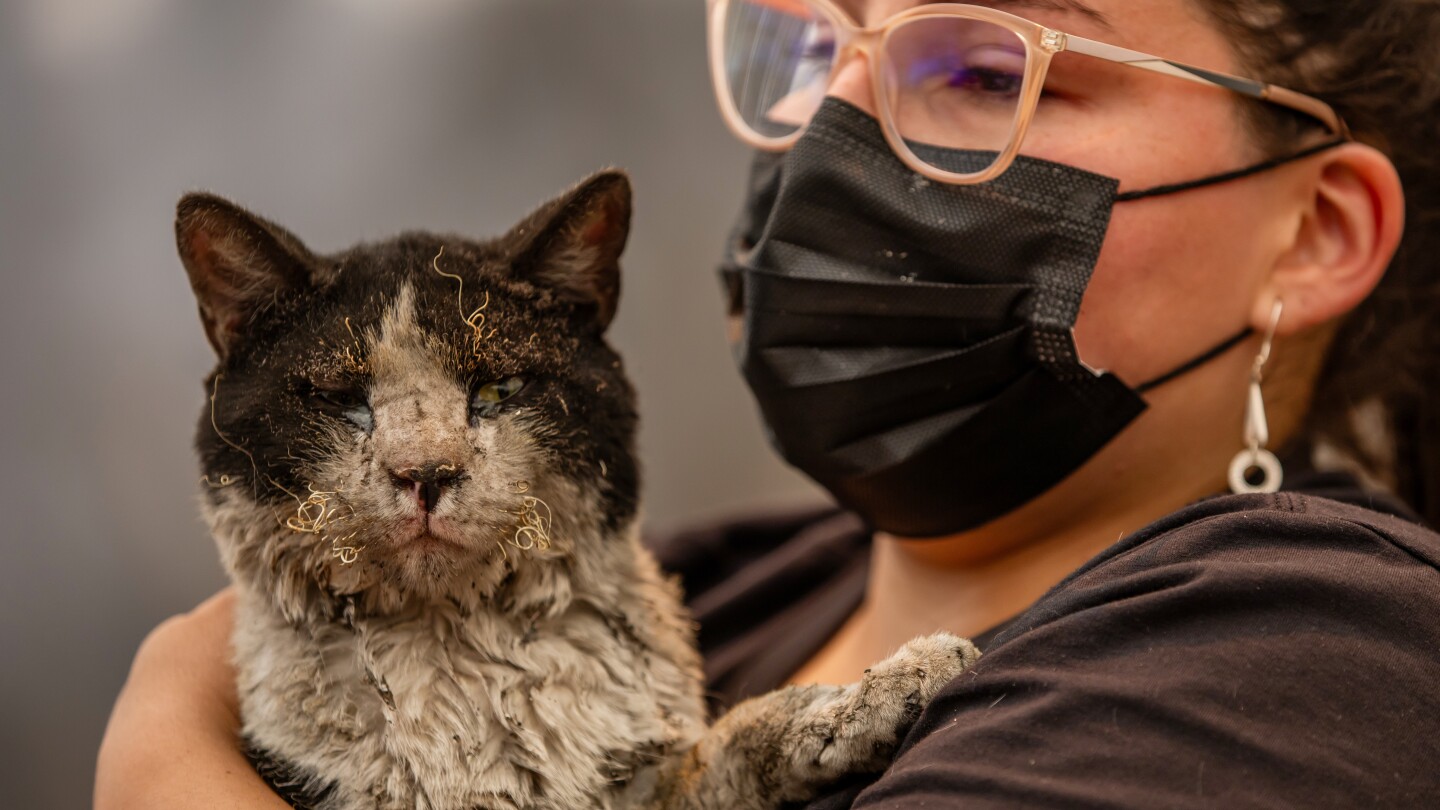
In the fire-ravaged town of Lirquén, Chile, a critical rescue operation is underway to save animals caught in one of the nation’s most devastating wildfire emergencies. National police canine units and volunteer teams have established mobile veterinary clinics to provide emergency care to pets and wildlife suffering from severe burns, dehydration, and smoke inhalation.
The makeshift medical facility, operating from a small van, treats a continuous stream of cats, dogs, and other animals arriving with burned paws and whiskers, conjunctivitis from toxic fumes, and severe dehydration after days trapped under debris. According to Dr. Angiella Scalpello, veterinarian with the investigative police’s canine squad, their primary mission involves locating and treating animals discovered in rubble, ash, or those that escaped with owners but sustained injuries during the massive fires.
Lirquén, a community of approximately 20,000 residents in south-central Chile, has endured catastrophic damage with 80% of the town consumed by flames. The Trinitarias fire, spanning over 140 square kilometers in the Bío Bío region, represents the most destructive among approximately 30 active wildfires nationwide. Official reports indicate the fires have resulted in at least 20 fatalities and nearly 300 human injuries.
Veterinarian Juan Vivanco reported that rescue teams frequently discover cats sheltering in small spaces that miraculously survived both the initial inferno and subsequent days without care. However, the timeframe for successful rescues remains extremely limited. “We’ve also found several pets already deceased… it happens regularly,” Vivanco acknowledged.
Treatment protocols include intravenous fluids, vital sign monitoring, and wound care, with the most critical cases transported to established veterinary hospitals. Volunteer Vanessa Morales described transporting severely burned animals, including a kitten with all four paws and tail burned, highlighting the emotional toll on rescue workers.
Beyond medical treatment, the mobile clinic serves as a coordination point for residents seeking missing pets amid the chaos. Yasna Hidalgo searches for her grandmother’s two dogs left behind during an emergency evacuation, while Kevin Carrasco brought his poodle Chica for treatment of fire-related conjunctivitis despite the family’s successful escape from their completely destroyed home.
This disaster echoes Chile’s previous wildfire tragedy two years prior that claimed over 130 lives, marking what authorities now consider one of the nation’s most serious emergencies in recent years.