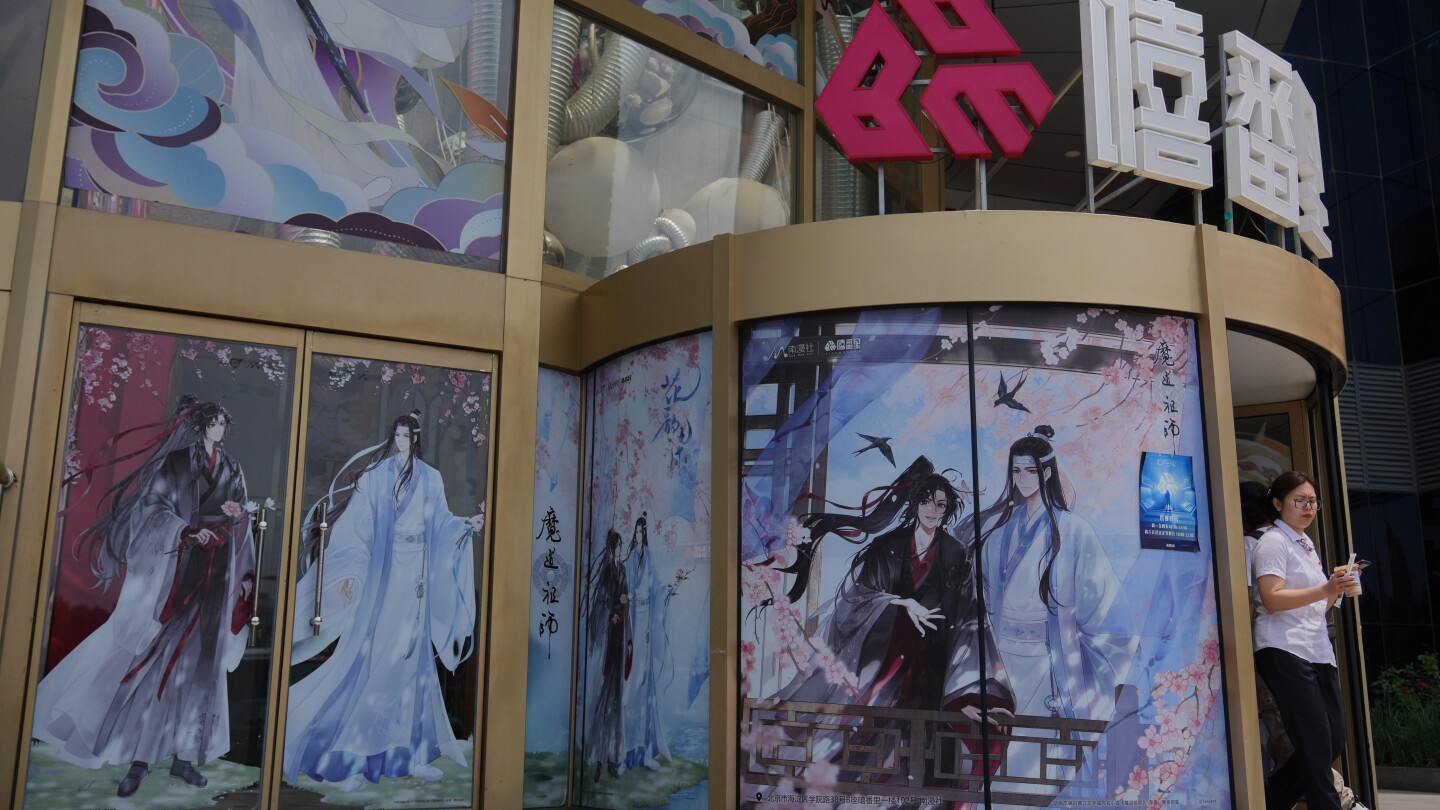
For Cindy Zhong and countless young Chinese women, a quiet evening once meant immersing themselves in the world of Danmei, a genre of same-sex romance stories primarily written and consumed by straight women. However, this literary escape is now under threat as the Chinese government intensifies its crackdown on the genre, leading to the disappearance of beloved authors and their works. Danmei, often referred to as ‘Boys Love’ in English, has long served as a space for women to explore idealized relationships, free from the constraints of traditional gender roles. Scholars suggest that these stories resonate with Chinese women as a form of escapism from societal pressures to marry and conform. Aiqing Wang, a senior lecturer at the University of Liverpool, notes, ‘Women turn to Danmei for pure love, especially as they face pressure from families, peers, and society to get married and have kids.’ The genre, once a niche subculture, has seen a surge in popularity in recent years, with novels adapted into blockbuster TV series and translated into Western languages. However, its growing visibility has also drawn the attention of Chinese authorities. Over the past year, dozens of Danmei writers have been interrogated, arrested, and charged with producing and selling obscene materials. Many have stopped publishing, and websites hosting these stories have either shut down or removed content, leaving only the tamest narratives behind. ‘Chinese female readers can no longer find a safe, uncensored space to place our desires,’ lamented Zhong, an educator in her 30s. Despite the crackdown, Danmei’s influence persists, with some authors publishing their work abroad and readers finding creative ways to access it. Experts argue that the genre’s impact on female consciousness and the desire for unapologetic storytelling is irreversible. ‘The awakening of female consciousness, the desire of reading and not being ashamed of what they want to read is irreversible,’ said Xi Tian, an associate professor of East Asian Studies at Bucknell University.
As China cracks down on stories about men in love, female fans mourn the idealized romances